ORLANDO, Fla. (AP) — The patient in Room 373 refuses to leave.
Tallahassee Memorial Healthcare earlier this month sued the patient, saying she has refused to depart her hospital room since being discharged last October. The hospital also has asked a state judge in Tallahassee for an injunction ordering the patient to vacate the hospital room and authorizing the county sheriff's office to assist if necessary.
The hospital said that resources have been diverted from helping other patients because of her occupation of the room.
“Defendant's continued occupancy prevents use of the bed for patients needing acute care,” the hospital said in the lawsuit.
According to the lawsuit, the woman was admitted to the hospital for medical treatment and a formal discharge order was issued Oct. 6 after it was determined that she no longer needed acute care services. The hospital has repeatedly made efforts to coordinate her departure with family members and offered transportation to obtain necessary identification, the lawsuit said.
Rachel Givens, an attorney for the hospital, said Wednesday that the hospital had no comment. Hospital spokeswoman Macy Layton said Wednesday that the hospital couldn't discuss active legal matters, in response to emailed questions, including about what type of identification the patient needed. The lawsuit doesn't say what the patient was treated for, what her hospital bill was or how she was able to stay at the hospital for more than five months despite being discharged.
No attorney was listed for the patient, who is representing herself. Phones numbers listed in an online database for the patient were disconnected. No one answered the phone when a call was put through to her room at the hospital.
An online court hearing on the lawsuit is scheduled for the end of the month.
Under the federal Emergency Medical Treatment and Labor Act, hospitals that receive Medicare funds must provide treatment that stabilizes anyone coming to an emergency department with an emergency medical condition, even if the patient doesn't have insurance or the ability to pay. Hospitals can be investigated by the federal Centers for Medicare & Medicaid Services for violations.
The patient can be discharged when the clinicians have determined that any further care can be provided as an outpatient, “provided the individual is given a plan for appropriate follow-up care as part of the discharge instructions,” the federal agency said in an operations manual.
Follow Mike Schneider on the social platform Bluesky: @mikeysid.bsky.social.

FILE - A sign is seen outside Tallahassee Memorial Hospital on Feb. 3, 2023, in Tallahassee, Fla. (AP Photo/Anthony Izaguirre, File)
NEW YORK (AP) — U.S. stocks are sinking Wednesday after a discouraging report said inflation was primed to worsen, even before the war with Iran sent oil prices spiking.
The S&P 500 fell 0.5% and was on track for its first loss this week. The Dow Jones Industrial Average was down 404 points, or 0.9%, as of 2:05 p.m. Eastern time, and the Nasdaq composite was 0.5% lower.
Stocks held onto their losses after the Federal Reserve decided to keep its main interest rate steady, instead of resuming cuts meant to give the job market and economy a boost. Fed officials, though, did indicate they could lower rates once by the end of the year, the same as they were signaling before the war began.
Worries had been rising that the Fed could indicate zero cuts for 2026 given how much oil prices have soared. A barrel of Brent crude has jumped from roughly $70 per barrel to as high as $109.95 on Wednesday. The price for a barrel of benchmark U.S. crude got as high $98.67 before receding to $94.60, down 1% from a day before.
Oil and natural gas prices have spiked because of the war's disruptions to the Persian Gulf's energy industry. Iran’s state television said Wednesday that the Islamic Republic would be attacking oil and gas infrastructure in Qatar, Saudi Arabia and the United Arab Emirates after an attack on facilities associated with its offshore South Pars natural gas field.
If the disruptions keep oil and gas prices high for long, they could send a debilitating wave of inflation crashing into the global economy.
A report released Wednesday morning showed that inflation pressures were already worsening before the war began. It said inflation at the U.S. wholesale level unexpectedly accelerated last month to 3.4%, and those cost increases could hit U.S. households if producers pass them all along.
Such numbers were likely factors in staying the Fed's hand on Wednesday. A cut to rates would have given the economy and investment prices a boost, and President Donald Trump has been angrily calling for them. But lower interest rates would also worsen inflation.
Only one Fed voter wanted to lower rates this time around, and the tally was 11-1 to keep rates steady.
The Iran war has made it difficult for anyone to make economic forecasts. Gasoline prices are soaring and will push up inflation for at least the next month or two. The average price for a gallon of gasoline spiked again overnight, reaching $3.84. It was well under $3 last month.
Global oil flows remain largely constrained, ING Bank analysts Warren Patterson and Ewa Manthey wrote in a research note on Wednesday, even as hopes were growing that Iran might be allowing more vessels through the Strait of Hormuz, a key waterway for global oil and gas transport.
Roughly a fifth of the world’s crude oil passes through the strait, which has been largely closed as Iran blocks ships linked to the U.S., Israel and their allies.
On Wall Street, mixed profit reports helped keep the market in check.
Macy’s jumped 4% after reporting stronger profit and revenue for the latest quarter than analysts expected. The retailer behind Bloomingdale’s and Bluemercury is in the midst of a turnaround plan to drive growth under CEO Tony Spring.
But General Mills fell 3.1% after the company behind the Pillsbury, Progresso and Wheaties brands reported a weaker profit for the latest quarter than analysts expected. CEO Jeff Harmening is investing in its brands in hopes of driving growth, and it’s sticking with its forecast for profit over the full fiscal year.
In the bond market, Treasury yields ticked higher following the higher-than-expected update on inflation at the wholesale level. The yield on the 10-year Treasury rose to 4.21% from 4.20% late Tuesday and from just 3.97% before the war with Iran started.
In stock markets abroad, indexes fell in Europe following a stronger finish in Asia. They reacted to the rise in the price of crude, which accelerated as trading headed westward around the world.
Tokyo’s Nikkei 225 rallied 2.9% after the government reported exports in February were higher than expected. South Korea’s Kospi leaped 5%.
AP Business Writers Chan Ho-him and Matt Ott contributed.

Christopher Lagana works on the floor at the New York Stock Exchange in New York, Wednesday, March 18, 2026. (AP Photo/Seth Wenig)

Traders work on the floor at the New York Stock Exchange in New York, Tuesday, March 10, 2026. (AP Photo/Seth Wenig)
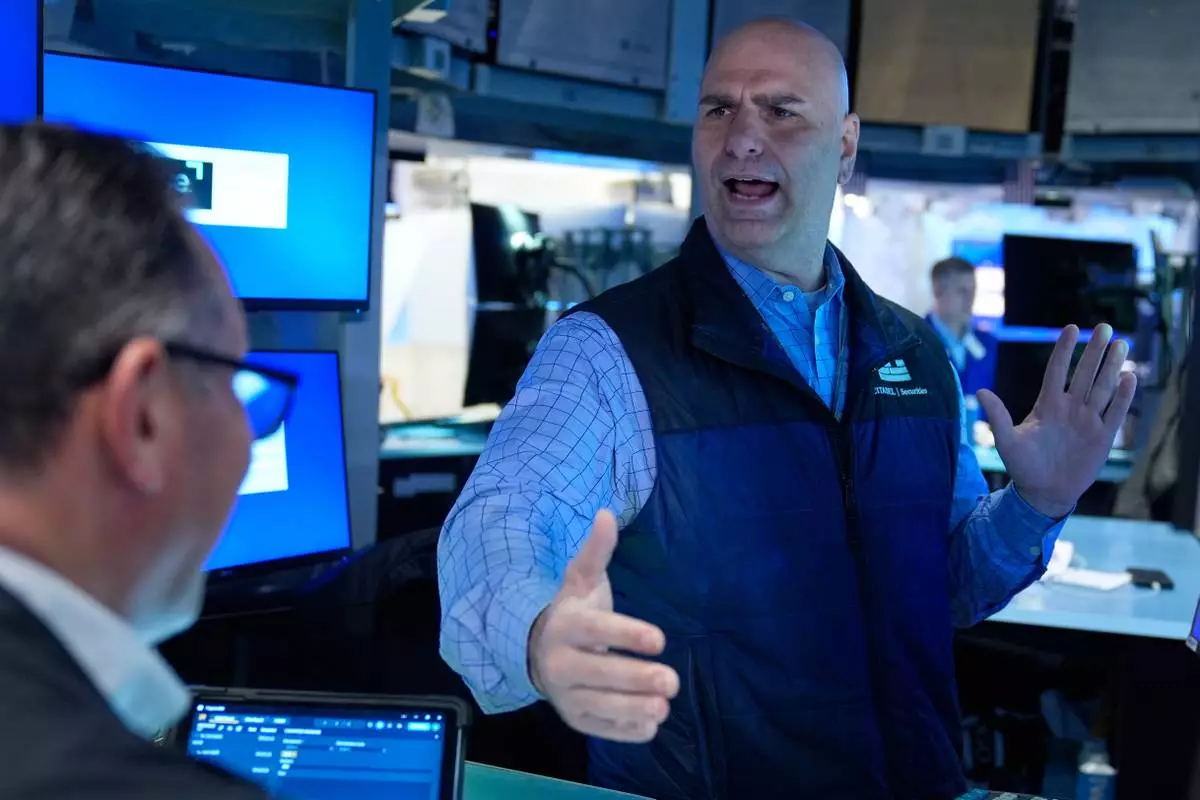
Philip Finale works on the floor at the New York Stock Exchange in New York, Tuesday, March 10, 2026. (AP Photo/Seth Wenig)
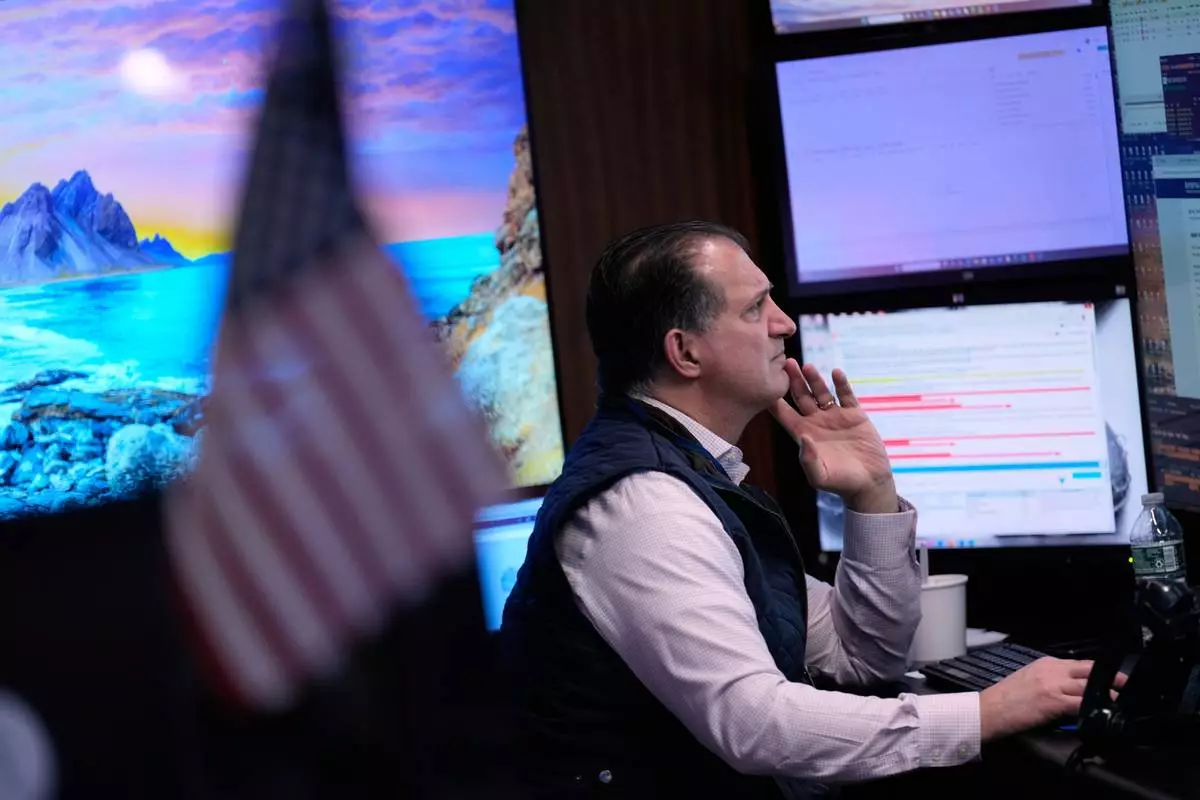
Traders work on the floor at the New York Stock Exchange in New York, Tuesday, March 10, 2026. (AP Photo/Seth Wenig)
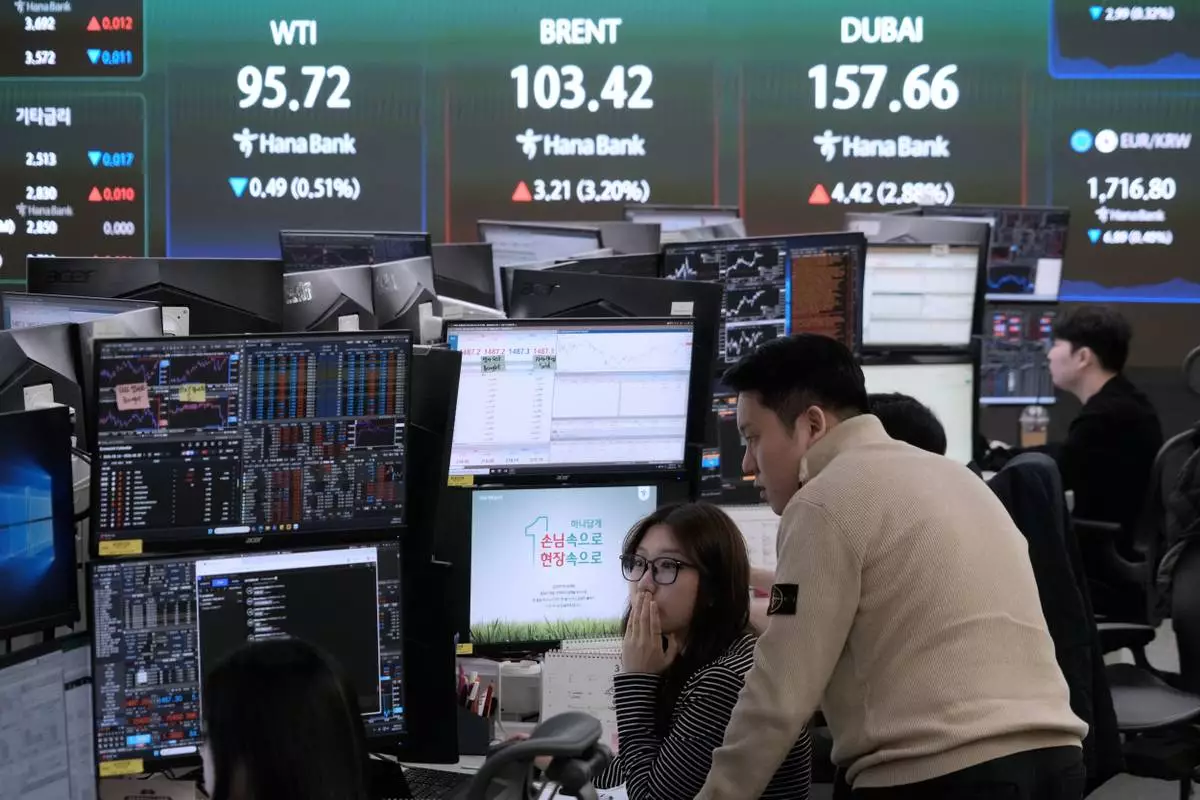
Currency traders watch monitors near a screen showing international oil prices at the foreign exchange dealing room of the Hana Bank headquarters in Seoul, South Korea, Wednesday, March 18, 2026. (AP Photo/Ahn Young-joon)
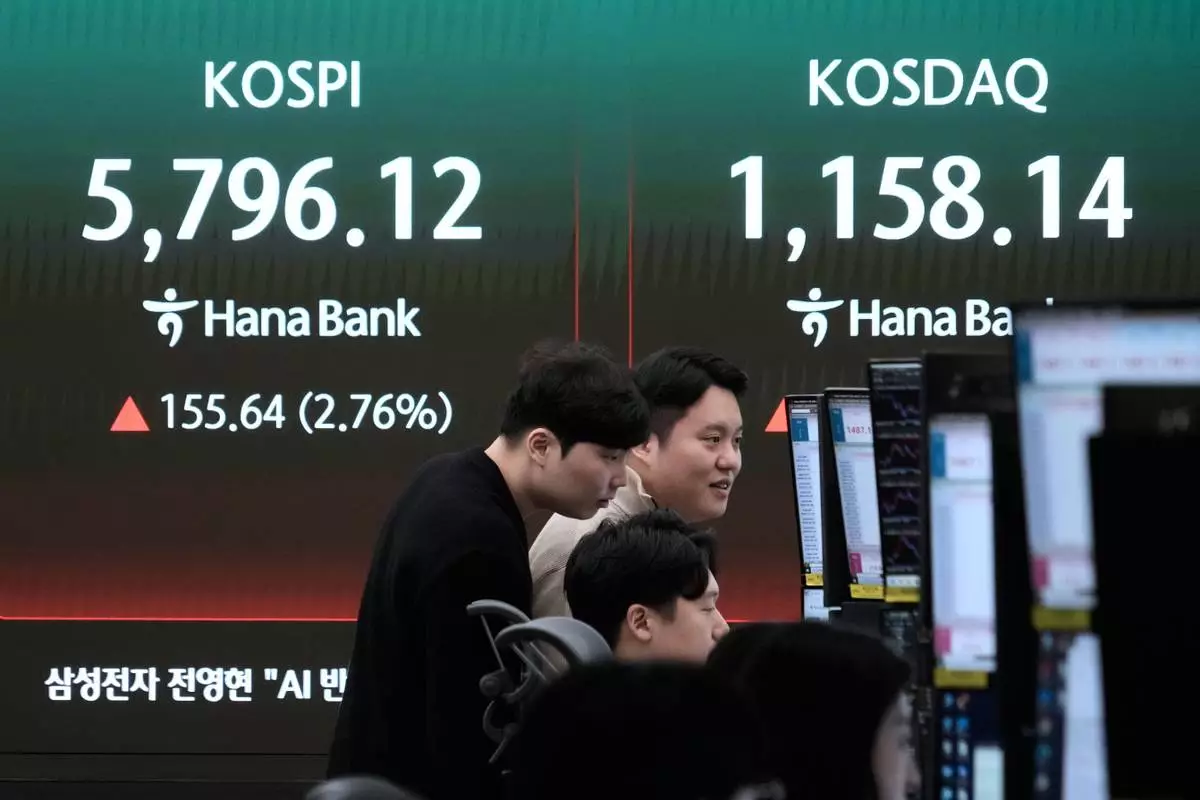
Currency traders watch monitors near a screen showing the Korea Composite Stock Price Index (KOSPI), left, at the foreign exchange dealing room of the Hana Bank headquarters in Seoul, South Korea, Wednesday, March 18, 2026. (AP Photo/Ahn Young-joon)
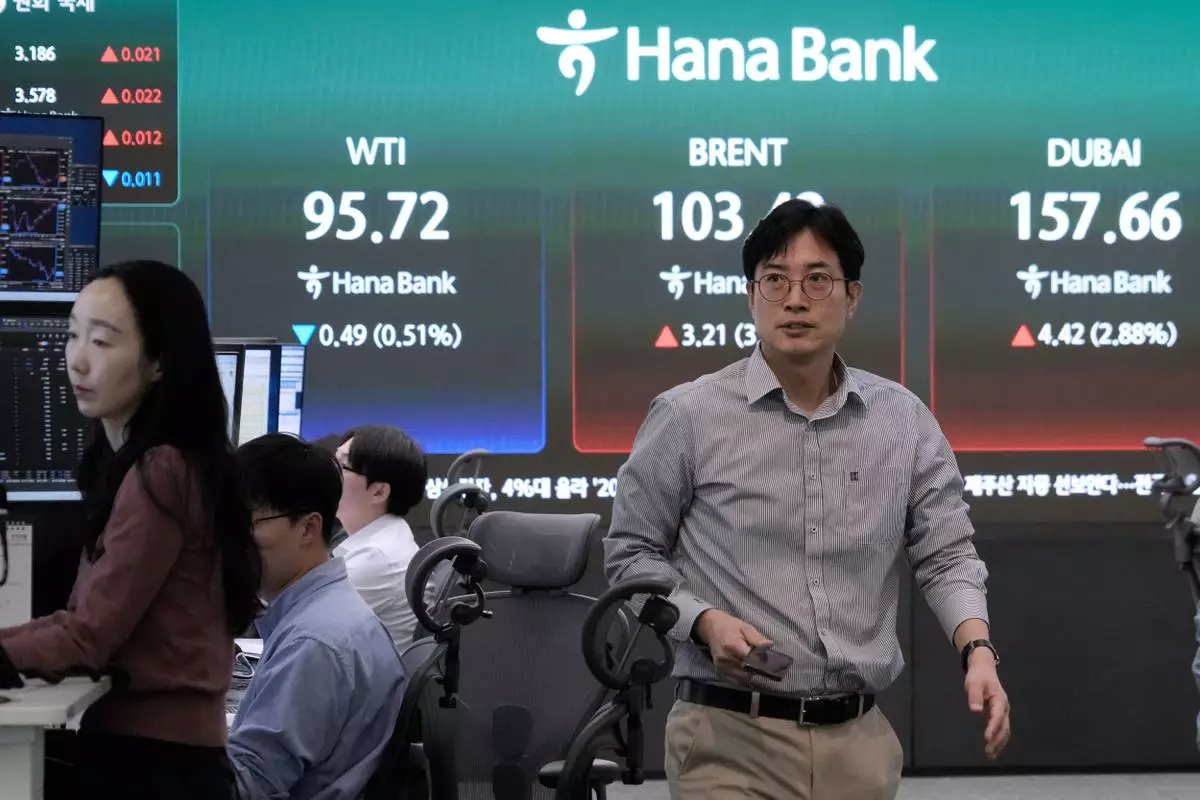
A currency trader passes by a screen showing international oil prices at the foreign exchange dealing room of the Hana Bank headquarters in Seoul, South Korea, Wednesday, March 18, 2026. (AP Photo/Ahn Young-joon)
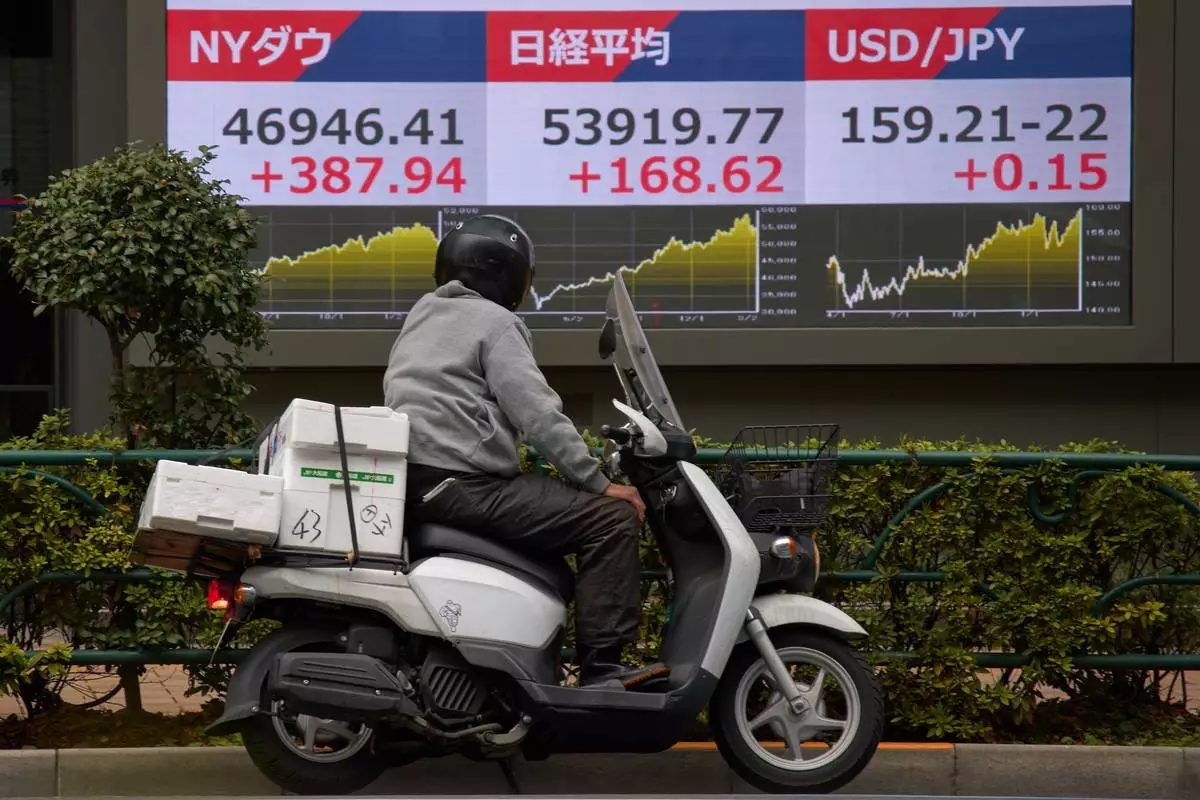
A person looks at a stock price monitor showing New York Dow and Nikkei indexes also US dollar Japanese yen exchange rate at a security company Tuesday, March 17, 2026, in Tokyo. (AP Photo/Eugene Hoshiko)
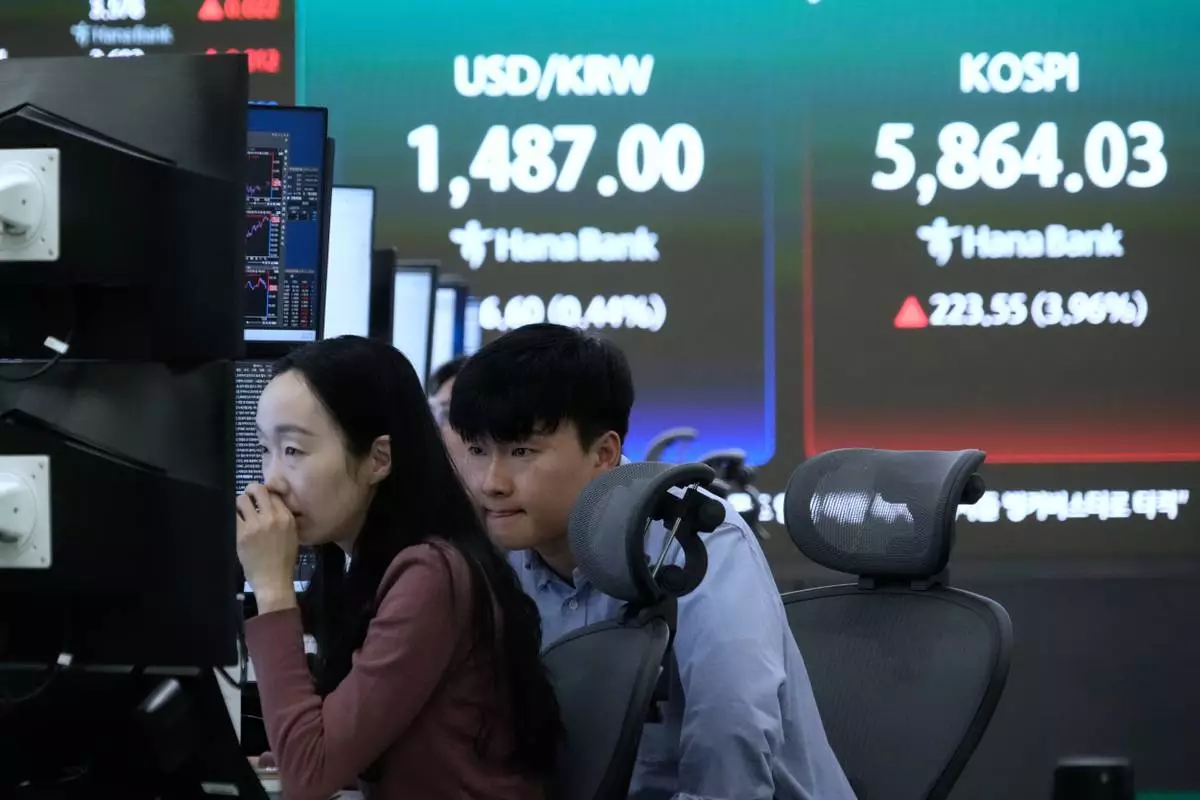
Currency traders watch monitors near a screen showing the Korea Composite Stock Price Index (KOSPI), top right, at the foreign exchange dealing room of the Hana Bank headquarters in Seoul, South Korea, Wednesday, March 18, 2026. (AP Photo/Ahn Young-joon)