NEW YORK (AP) — The COVID-19 pandemic's early death toll was much higher than the official U.S. count, according to a new study that spotlights dramatic disparities in the uncounted deaths.
About 840,000 COVID-19 deaths were reported on death certificates in 2020 and 2021. But a group of researchers — using a form of artificial intelligence — estimate that as many as 155,000 unrecognized additional deaths likely occurred in that time outside of hospitals. That would mean about 16% of COVID-19 deaths went uncounted in those years.
The overall findings, published Wednesday by the journal Science Advances, were close to estimates from other studies of pandemic deaths during that time. But the authors of the new study tried to determine exactly which deaths were more likely to be missing from the official tallies.
The answer: The undiagnosed dead were more likely to be Hispanic people and other people of color, who had died in the first few months of the pandemic, and who had been in certain states in the South and Southwest — including Alabama, Oklahoma and South Carolina.
Six years after the coronavirus swept through the U.S., barriers remain for many of the same people, said Steven Woolf, a Virginia Commonwealth University researcher not involved in the study.
“People on the margins continue to die at disproportionate rates because they can’t access care,” he said in an email.
While hospital patients were routinely tested for COVID-19, many who grew sick and died outside of hospitals were not tested — often because at-home testing was not readily available early in the pandemic, said one of the study's authors, the University of Minnesota's Elizabeth Wrigley-Field.
In some parts of the country, death investigations are handled by elected coroners who don't necessarily have the specialized training that medical examiners do. Some research has suggested partisan opinions could affect whether a sick person or their family members sought COVID-19 testing, and whether coroners pursued postmortem coronavirus testing. Indeed, some coroners said families had pressed them not to list COVID-19 as a cause of death.
“Our antiquated death investigation system is one key reason why we fell short of accurate counts, particularly outside of big metropolitan areas,” said Andrew Stokes of Boston University, the senior author on the paper.
The Centers for Disease Control and Prevention data count more than 1.2 million COVID-19 deaths since the pandemic erupted in early 2020. More than two-thirds of those reported deaths occurred in 2020 and 2021.
The count has long been debated, as false claims on social media said the number of COVID-19 deaths was inflated. Adding to the rancor was President Donald Trump, who in August 2020 retweeted a post claiming only 6% of reported deaths were actually from COVID-19 — a post Twitter later removed.
To be sure, there were other kinds of pandemic deaths. For example, uninfected people died from other medical conditions because they could not get care at hospitals overloaded with COVID-19 patients. People with drug addictions died of overdoses as a result of social isolation and losing access to treatment. Other studies that have estimated the actual number of pandemic deaths have taken those deaths into account.
But Stokes and his collaborators wanted to focus on the deaths of people infected by the coronavirus. They used machine learning to sift through the death certificates of infected patients who died in hospitals and then used patterns observed in those records to evaluate death certificates of people who died outside hospitals and whose deaths were attributed to things like pneumonia or diabetes.
Scientists' understanding of the strengths and weaknesses of machine learning-reliant research is still evolving, but Woolf called this team's use of it “intriguing.”
The Associated Press Health and Science Department receives support from the Howard Hughes Medical Institute’s Department of Science Education and the Robert Wood Johnson Foundation. The AP is solely responsible for all content.
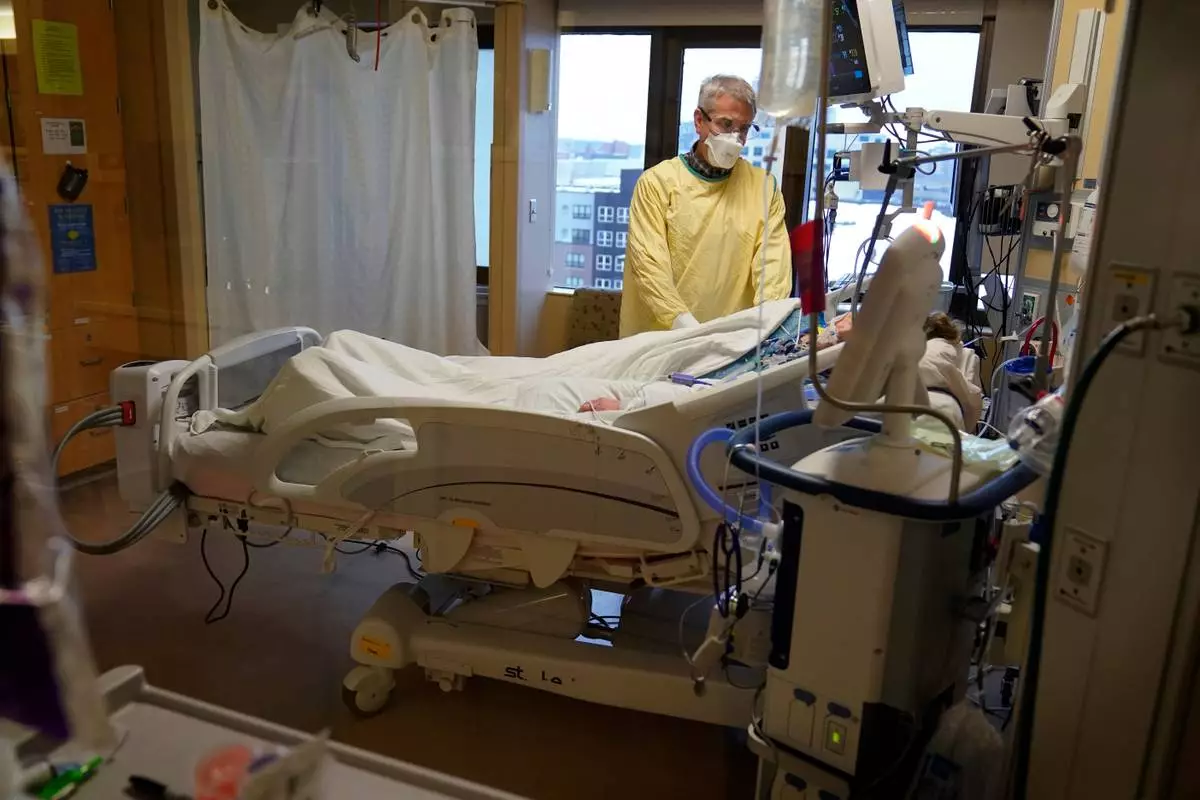
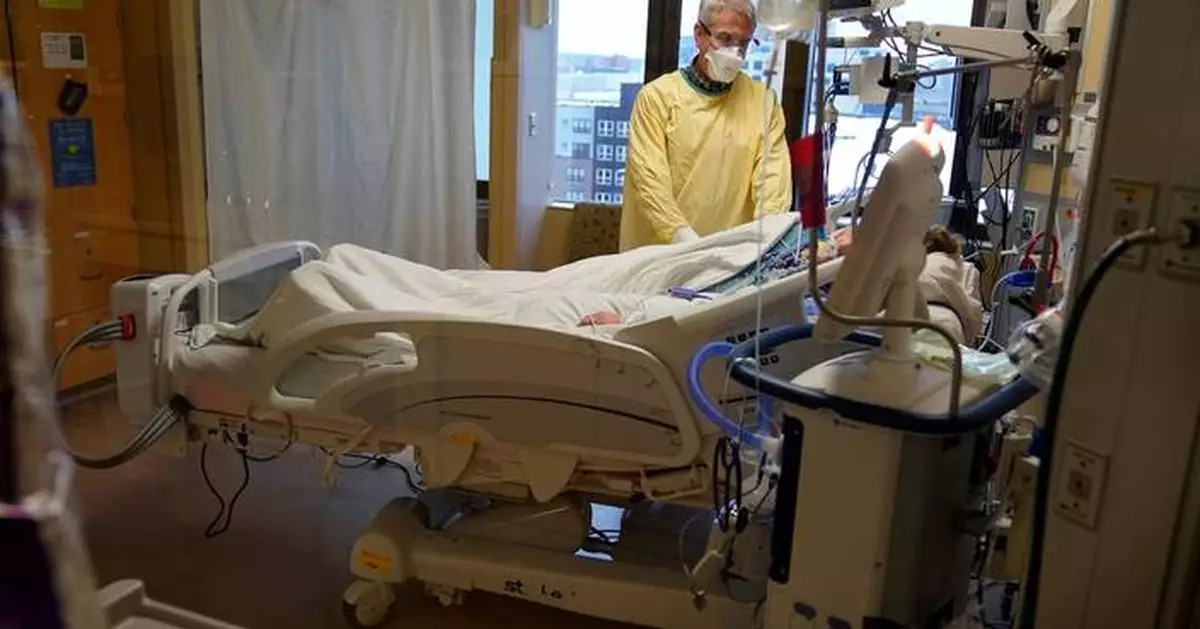
FILE - Steve Grove, a chaplain at Hennepin County Medical Center, prays in a COVID-19 patient's room, Dec. 10, 2021, in Minneapolis. (AP Photo/Charlie Neibergall, File)
DOVER AIR FORCE BASE, Del. (AP) — President Donald Trump is paying his respects on Wednesday at a Delaware military base as the remains of six U.S. service members killed in the crash of a refueling aircraft are returned to their families.
It will be the second time since launching the war with Iran on Feb. 28 that the Republican president will attend the solemn military ritual known as a dignified transfer, which he once described as the “toughest thing” he has had to do as commander in chief.
Upon landing in Dover, Trump was greeted on the tarmac by Col. Jamil Musa, Commander, 436th Airlift Wing, Dover Air Force Base, and Col Martha “Jeannie” Sasnett Commander, Air Force Mortuary Affairs Operations, Dover Air Force Base and headed to the ceremony — which was closed to the press.
All six crew members of a KC-135 Air Force refueling aircraft were killed last week in a plane crash over friendly territory in western Iraq while supporting operations against Iran. They were from Alabama, Indiana, Kentucky, Ohio and Washington state.
“Every person on that aircraft carried a weight most Americans will never see, and they carried it with professionalism, courage, and a level of quiet excellence that deserves to be recognized,” retired Lt. Col Ernesto Nisperos, a friend of one of those killed, said in a text message Wednesday.
The crash brought the U.S. death toll in Operation Epic Fury to at least 13 service members. About 200 U.S. service members have been injured, including 10 severely, the Pentagon has said.
Trump last traveled to Dover Air Force Base on March 7 for the dignified transfer of six U.S. service members who were killed by a drone strike at a command center in Kuwait. He saluted as flag-draped transfer cases containing the remains of the fallen service members were carried from military aircraft to vehicles waiting to take them to the base's mortuary facility to prepare them for their final resting place.
“It's the bad part of war,” he told reporters afterward. Asked then if he worried about having to make multiple trips to the base for additional dignified transfers as the war continued, he said, “I'm sure. I hate to do it, but it's a part of war, isn't it?”
U.S. Central Command, which oversees military operations in the Middle East, said that the crash followed an unspecified incident involving two aircraft in “friendly airspace” over Iraq but that the loss of the aircraft during a combat mission was “not due to hostile or friendly fire.” The circumstances were under investigation. The other plane landed safely.
The crash killed three people assigned to the 6th Air Refueling Wing at MacDill Air Force Base in Florida: Maj. John A. “Alex” Klinner, 33, who served in Birmingham, Alabama; Capt. Ariana Linse Savino, 31, of Covington, Washington; and Tech. Sgt. Ashley Pruitt, 34, of Bardstown, Kentucky.
Klinner, who left behind a wife, a 2-year-old son and 7-month-old twins, was known for his steady command and goofy nature, as well as a willingness to help others. Pruitt’s husband described her as a “radiant” woman who lit up the room. Savino was a friend, mentee and “source of positive energy” who was proud of her Puerto Rican heritage and inspired young Latinas, said Nisperos, who is serving as spokesman for her family.
“She had had this warmth that made you feel seen, a strength that showed up in everything she touched, and a spark — that spice — that made her unforgettable,” Nisperos said. “If you knew her, even for a moment, you knew you were in the presence of someone who was going to change the world.”
The three others were assigned to the 121st Air Refueling Wing at Rickenbacker Air National Guard Base in Columbus, Ohio: Capt. Seth Koval, 38, a resident of Stoutsville, Ohio, who was from Mooresville, Indiana; Capt. Curtis Angst, 30, who lived in Columbus; and Master Sgt. Tyler Simmons, 28, of Columbus.
Koval grew up dreaming of becoming a pilot, according to his wife, who described him as a loving, generous “fixer of all things.” Angst’s family said his life was defined by service, generosity and “a genuine love for people.” Simmons loved confiding in his 85-year-old grandmother and working out with her, Sen. Jon Husted said Tuesday, when he and Sen. Bernie Moreno honored the Ohio airmen on the Senate floor.
“To the mom and dad of these three young soldiers, I can’t even process what you’re going through. I can’t even imagine the emotions that you’re feeling,” Moreno said. “Just know that America is grateful beyond words for the sacrifice that your heroic young sons made.”
Associated Press writers Holly Ramer in Concord, N.H., and Hallie Golden in Seattle contributed to this report.
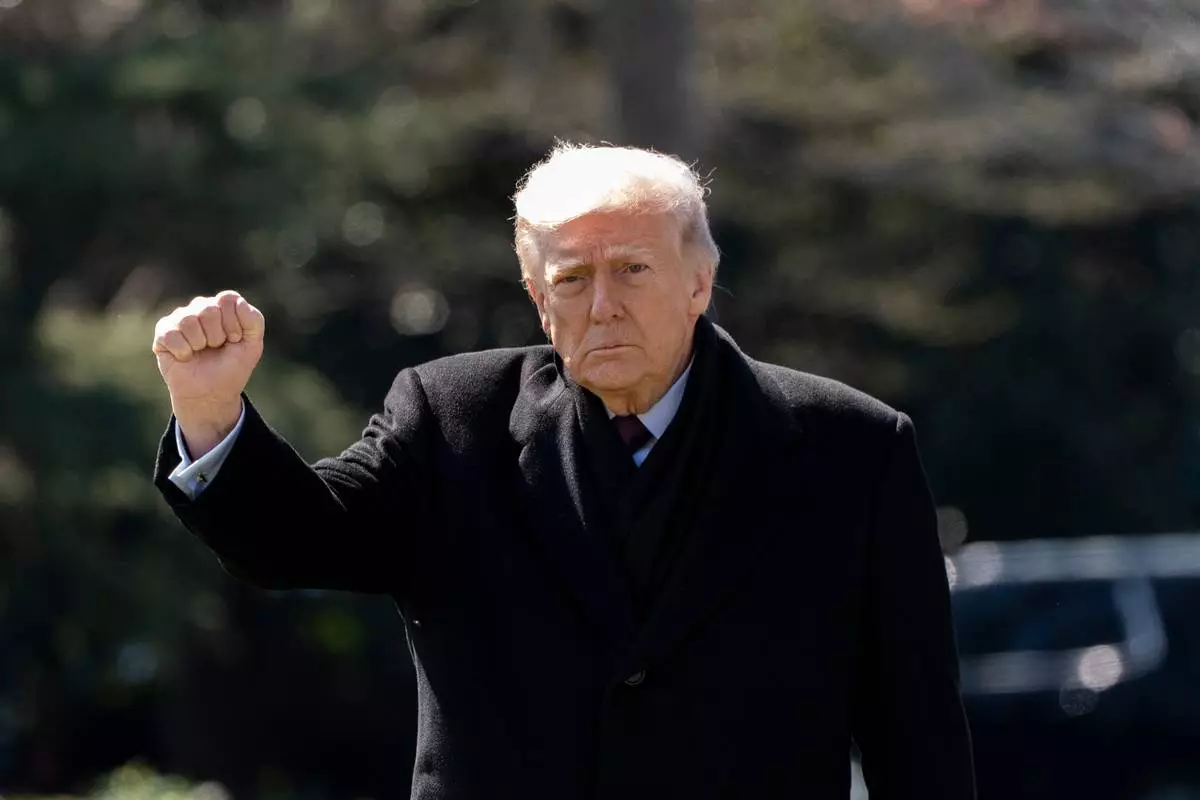
President Donald Trump pumps his fist as he walks to depart on Marine One from the South Lawn of the White House, Wednesday, March 18, 2026, in Washington. (AP Photo/Alex Brandon)
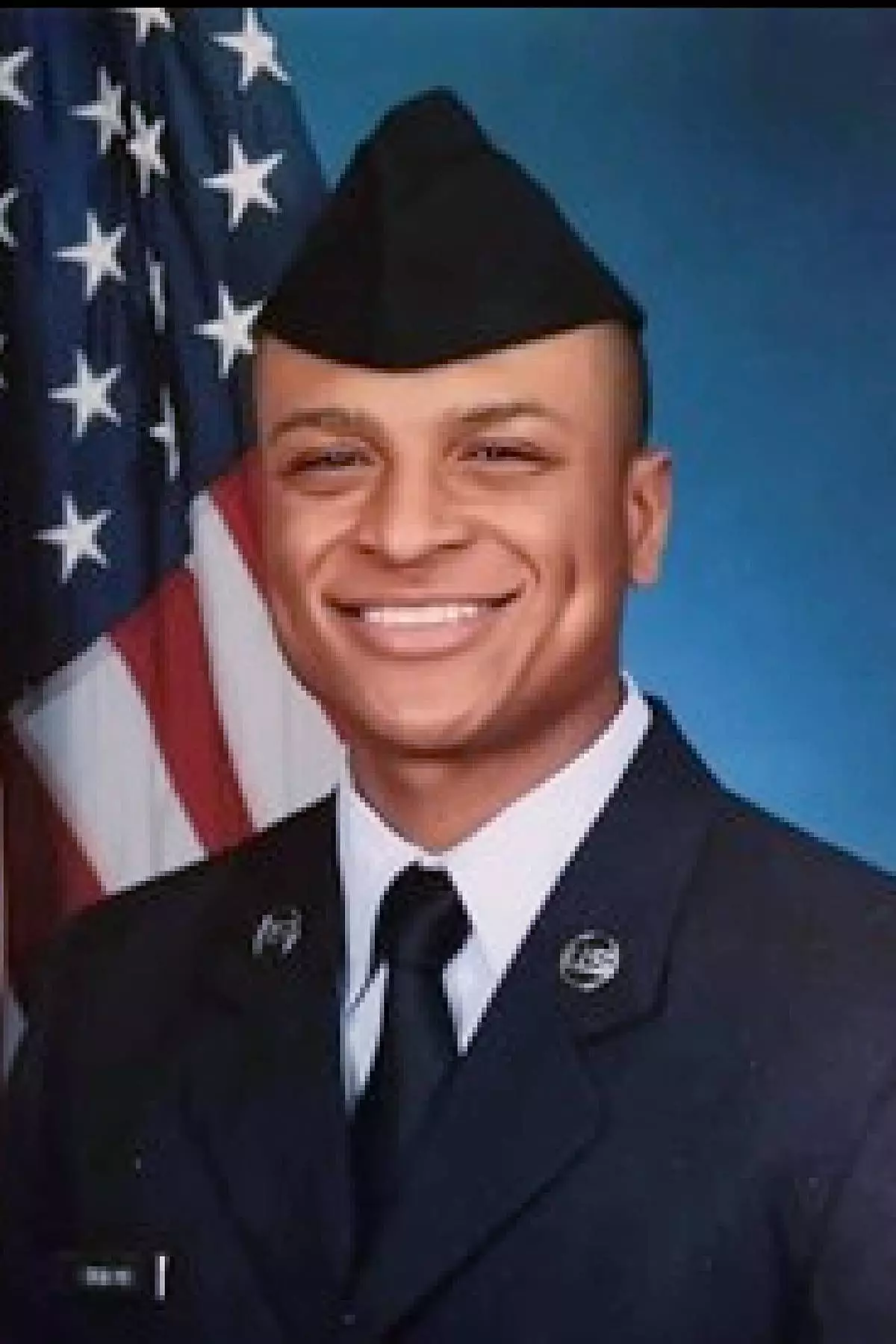
This image provided by the Ohio National Guard shows Tech Sgt. Tyler Simmons. (Ohio National Guard via AP)
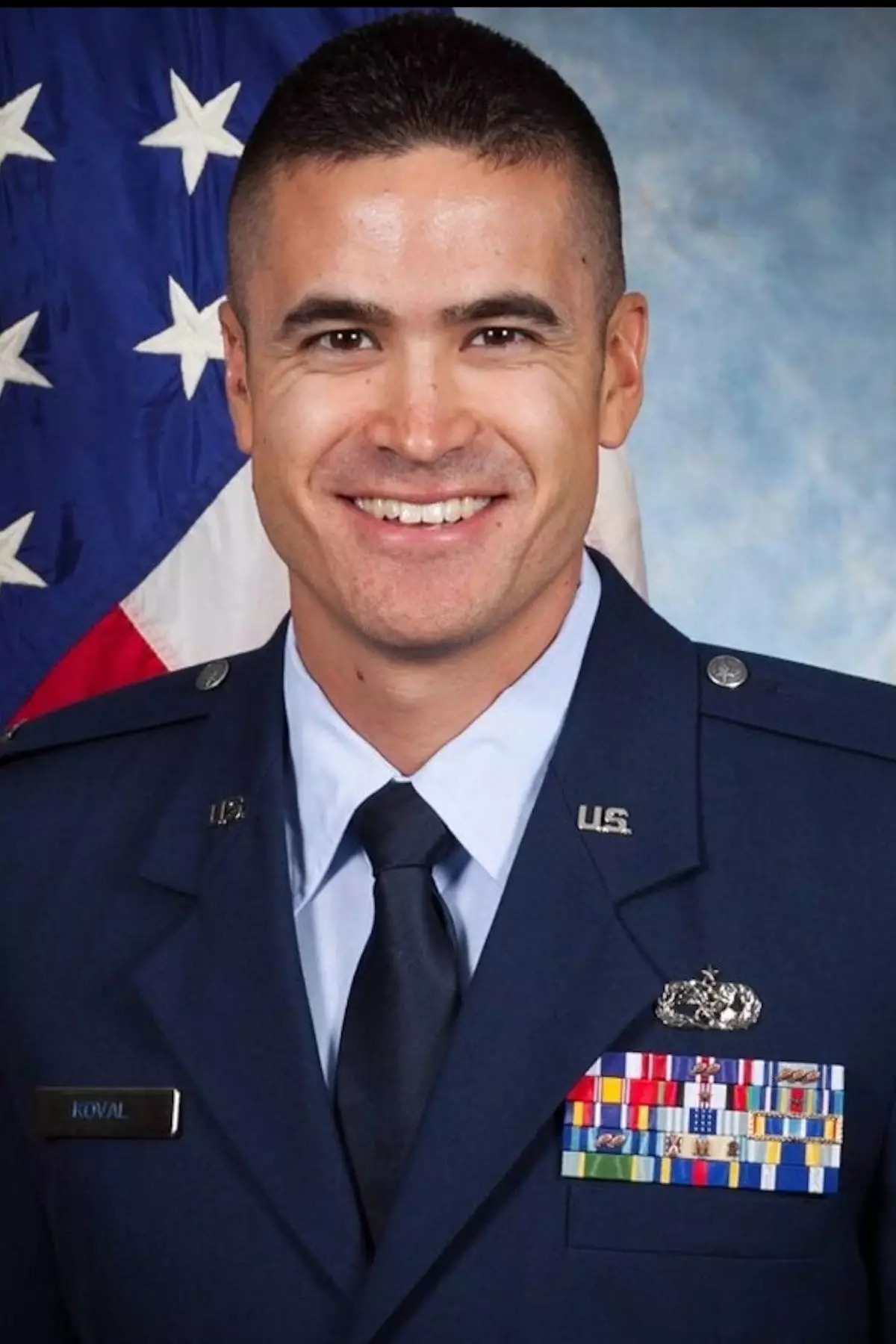
This image provided by the Ohio National Guard shows Capt. Seth R. Koval. (Ohio National Guard via AP)
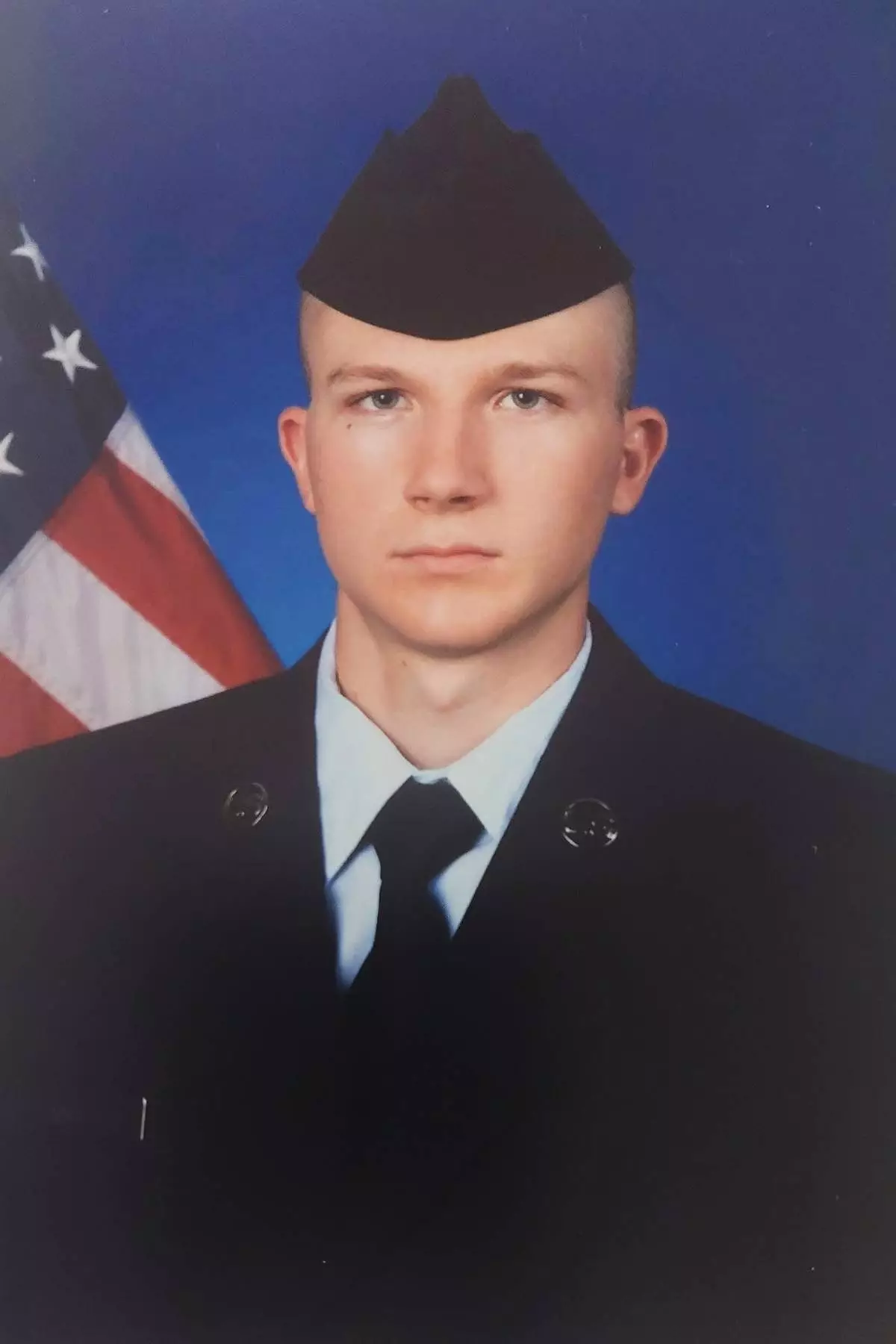
This image provided by the Ohio National Guard shows Capt. Curtis J. Angst. (Ohio National Guard via AP)
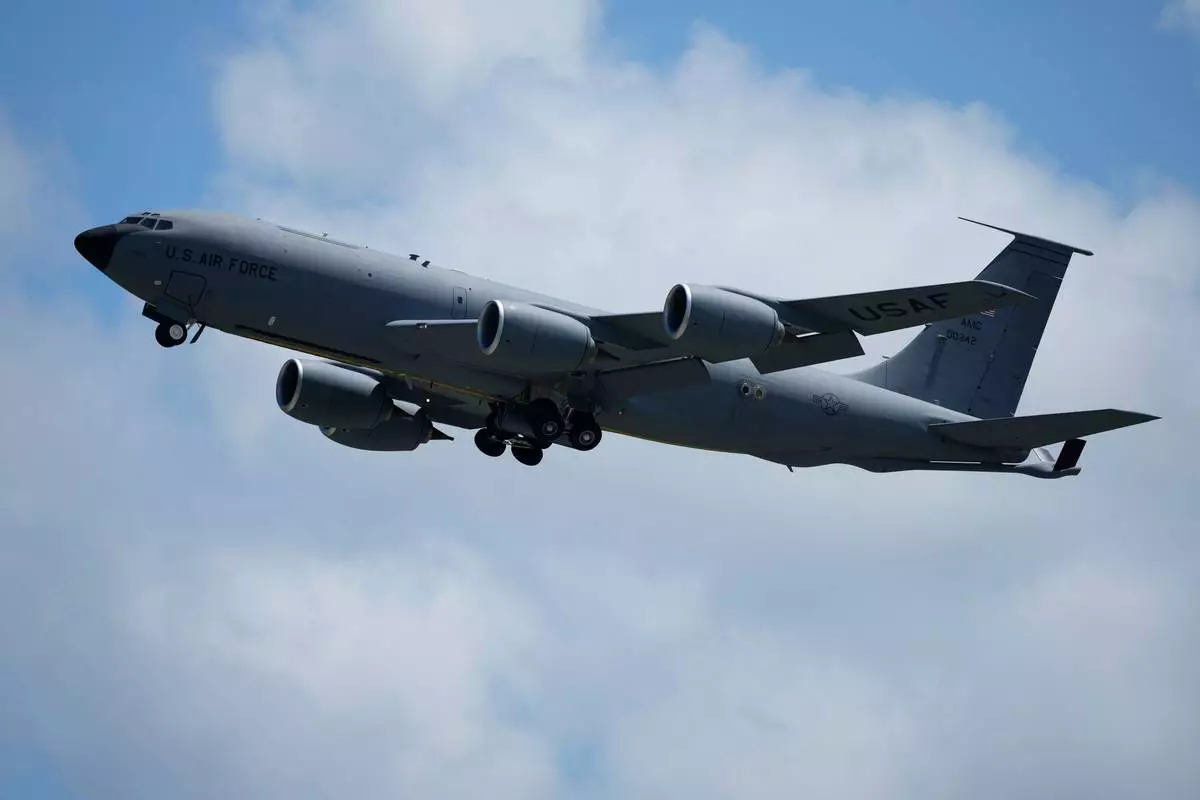
FILE - A U.S. Air Force KC-135 Stratotanker refueling tanker aircraft takes off from the Kadena Air Base airfield in Kadena town, west of Okinawa, southern Japan, Wednesday, Aug. 30, 2023. (AP Photo/Hiro Komae, File)
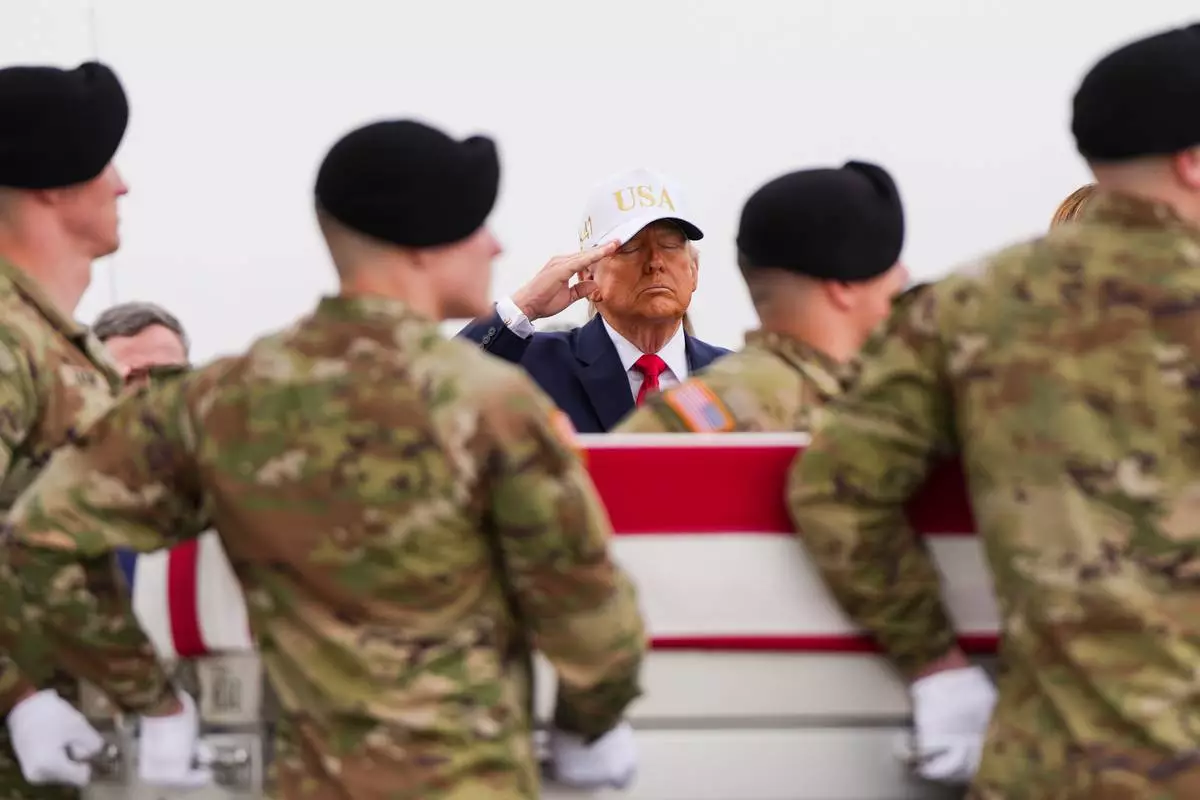
FILE - President Donald Trump salutes as an Army carry team moves a flag-draped transfer case with the remains of Sgt. Declan Coady, 20, of West Des Moines, Iowa, who was killed in a drone strike at a command center in Kuwait after the U.S. and Israel launched its military campaign against Iran, during a casualty return, March 7, 2026, at Dover Air Force Base, Del. (AP Photo/Julia Demaree Nikhinson, File)
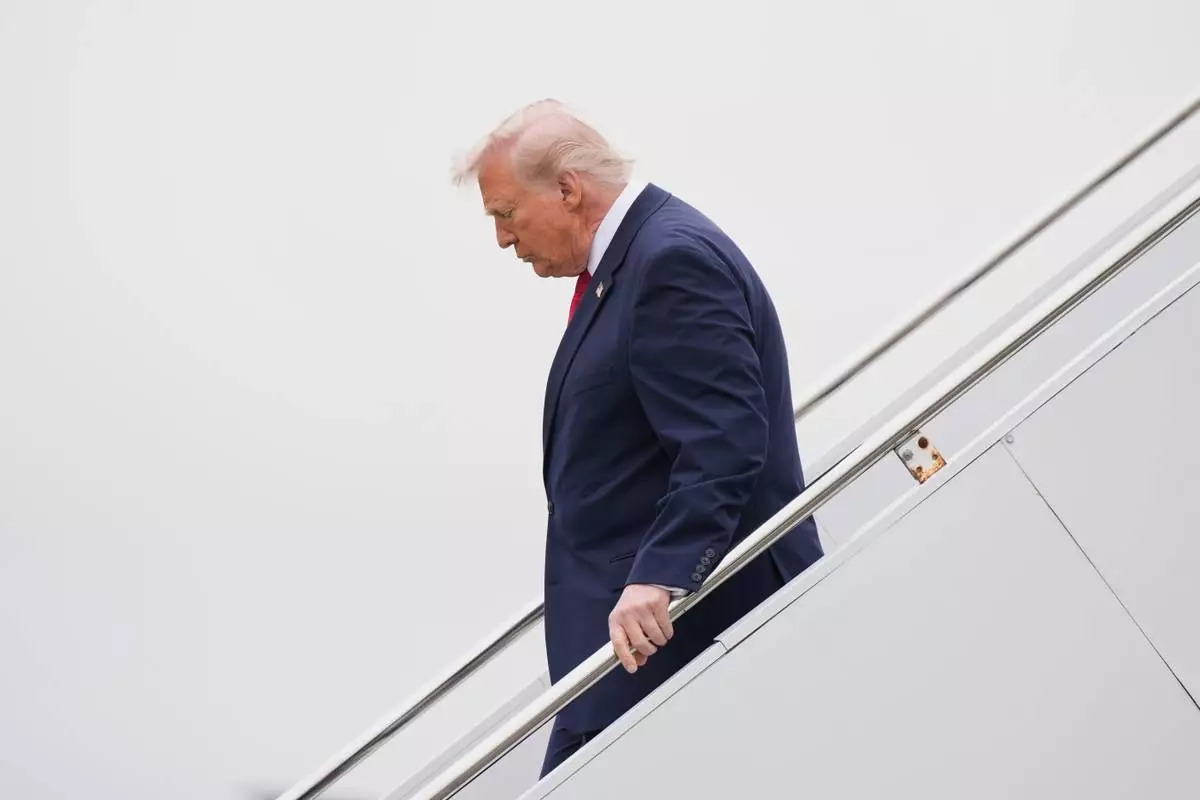
President Donald Trump steps off Air Force One, Saturday, March 7, 2026, at Dover Air Force Base, Del. (AP Photo/Mark Schiefelbein)