ROME (AP) — Five southern European nations are seeking an urgent solution for an unmanned Russian tanker drifting in the Mediterranean, warning the European Commission that it poses a major environmental threat, according to a letter confirmed by Spain’s government on Wednesday.
The Arctic Metagaz is part of Russia’s so-called “shadow fleet” transporting sanctioned fossil fuels. The tanker, carrying liquefied natural gas, was badly damaged in a suspected sea drone attack near Maltese waters earlier this month.
In early March, Russia blamed an attack by Ukrainian sea drones for hitting one of its tankers carrying liquefied natural gas in the Mediterranean Sea off Libya.
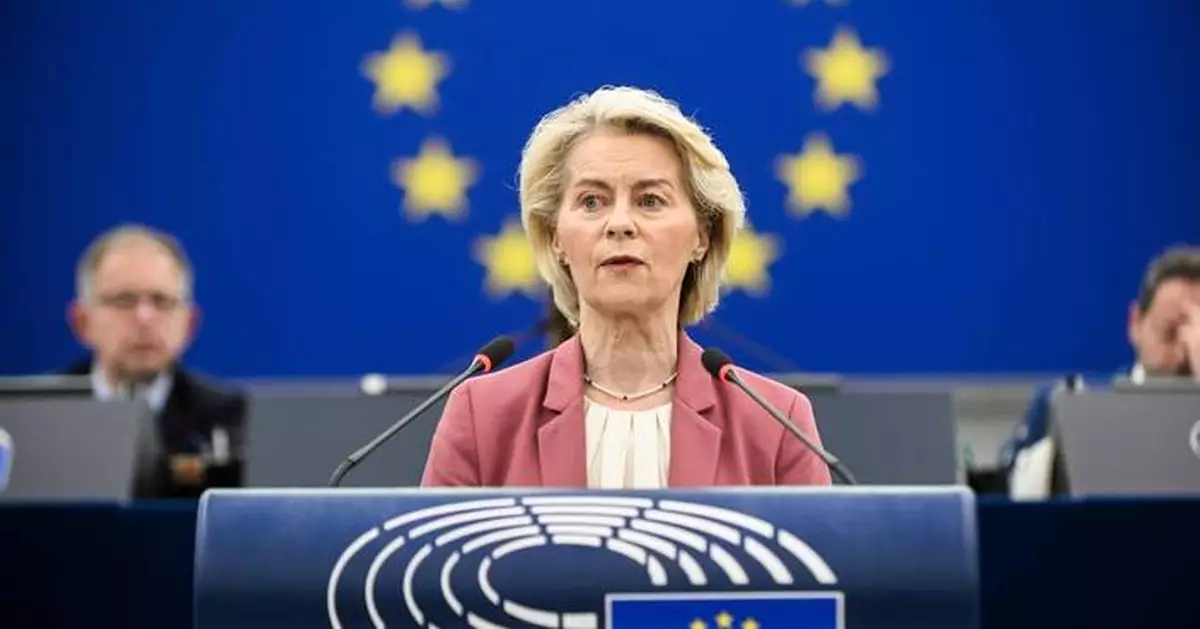
In a joint letter sent to European Commission President Ursula von der Leyen, the leaders of Italy, Spain, Malta, Greece and Cyprus warned that the vessel poses an “imminent and serious risk” of a major ecological disaster, and requested to activate the bloc’s civil protection mechanism.
In addition to the Spanish government, three EU government officials confirmed the contents of the letter. The three officials spoke on condition of anonymity because they were not authorized to speak publicly.
The five leaders urged a coordinated EU-level response to mobilize resources quickly, citing the tanker’s damaged condition and hazardous cargo as key concerns.
“The precarious condition of the vessel, combined with the nature of its specialized cargo, gives rise to an imminent and serious risk of a major ecological disaster in the heart of the union’s maritime space,” they wrote in the letter.
All crew members survived but the damaged tanker, which was carrying LNG and other fuels, is now drifting without crew and a payload of explosive fuel.
In their letter, the five leaders highlighted broader risks posed by vessels operating outside international standards, warning of threats to maritime safety and the environment across the Mediterranean.
The leaders said they intend to raise these issues at this week’s European Council meeting, expressing willingness to cooperate with the commission to ensure “a swift, European-led resolution.”
Earlier this week the tanker was adrift between Malta and the Sicilian island of Lampedusa, while it is now moving closer to Libya, Maltese media reported on Wednesday.
Italy’s undersecretary to the premier's office Alfredo Mantovano told an Italian radio program on Monday that Malta had imposed a ban on approaching within 7 kilometers (4.3 miles) from the tanker, “because the vessel could explode at any moment.”
Elena Becatoros in Athens and Menelaos Hadjicostis in Nicosia, Cyprus contributed to this report.
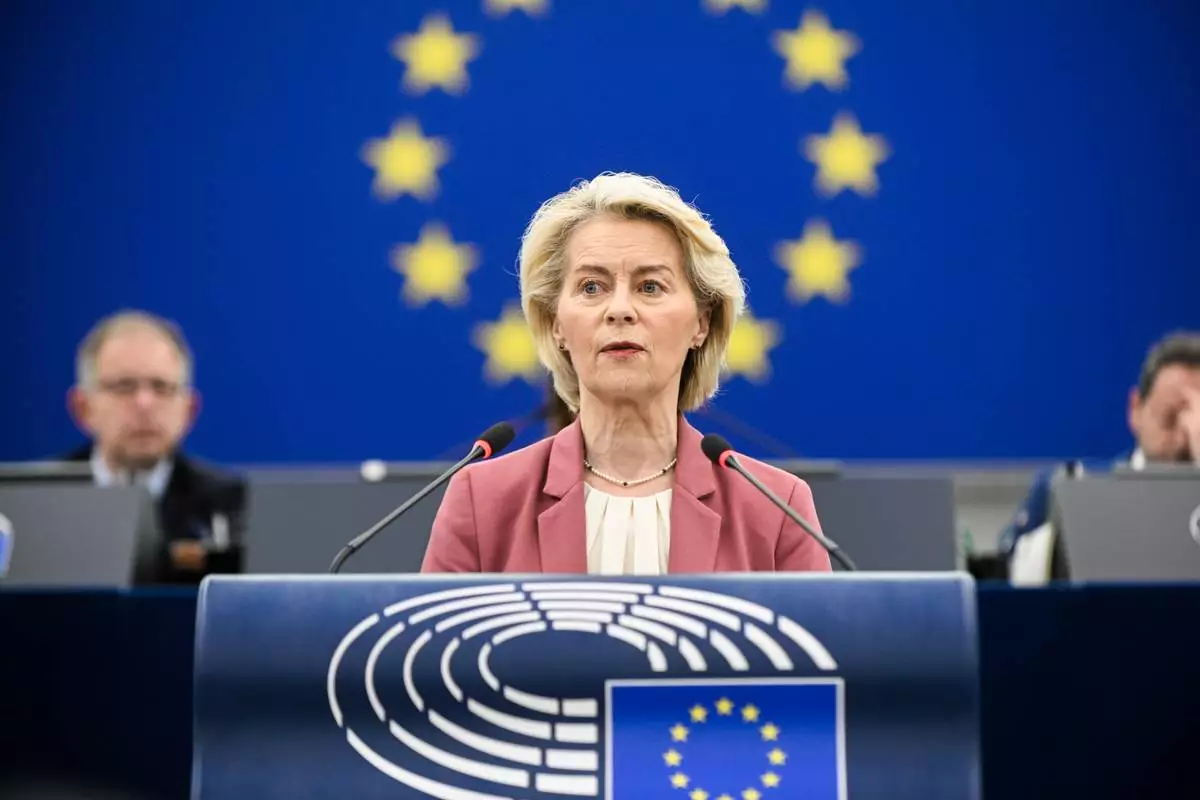
European Commission President Ursula von der Leyen speaks during a joint debate on the European Council and the situation in the Middle East, at the European Parliament in Strasbourg, eastern France, Wednesday, March 11, 2026. (AP Photo/Pascal Bastien)
HAVANA (AP) — A mix of uncertainty, anger and hope simmered in Cuba on Wednesday following comments by U.S. President Donald Trump this week saying that Washington could take “imminent action” against the island's government.
Trump, whose government has come at its Caribbean adversary more aggressively than any U.S. government in recent history, has effectively cut Cuba off from key oil shipments in an effort to force regime change. The blockade has had devastating effects on the civilians Trump and Secretary of State Marco Rubio say they want to help, leaving many desperate.
Island-wide blackouts have roiled Cubans already grappling with years of crisis, and lack of gasoline and basic resources has crippled hospital and slashed public transport.
Matilde Visoso, a single mother caring for a sick daughter, said she's been left reeling by the island's spiraling crisis, and wants change in the Caribbean nation.
“Cuba is waiting for Trump and Marco Rubio, because we can’t wait any longer. It’s too much — there is a lot of repression, there is a lot of hunger," the 64-year-old homemaker said. “Cuba is in tears.”
Trump has said he can do "whatever he wants" with Cuba. The administration is looking for President Miguel Díaz-Canel to leave as the U.S. continues negotiating with the Cuban government, according to a U.S. official and a source with knowledge of talks between Washington and Havana. They spoke on condition of anonymity because they weren’t authorized to discuss sensitive talks.
No details have been offered about who the administration might like to see in power.
U.S. Secretary of State Marco Rubio also said the Cuban government’s socialist economic model needs to “change dramatically.” While the Cuban government places heavy restrictions on the country’s private sector, decades of U.S. sanctions have crippled Cuba’s economy.
The administration's pressure on Cuba came more than two months after his administration’s military raid that captured then Venezuelan President Nicolás Maduro in January, and a few weeks after the launch of joint U.S.-Israeli military strikes against Iran on Feb. 28.
Díaz-Canel lashed back at Trump's comments late Tuesday night, writing on a post on X that the Trump administration “publicly threatens” Cuba’s government almost daily with overthrowing it, and any act of aggression “will clash with an impregnable resistance.”
Others like 62-year-old doctor Jesús García cast doubt that the Trump administration would remove Díaz-Canel from power or intervene in Cuba, rolling his eyes at Trump comments.
“Americans can say whatever they want. The ones who decide what is done here in Cuba are the Cuban people,” García said.
What seemed to connect pretty much everyone in Cuba was a deep sense of uncertainty in the face of seismic shifts. Cubans have grown accustomed to endemic crisis on the island, and drawing up new ways to adapt to ever-shifting challenges. But many say things have reached a breaking point and are demanding answers from a government increasingly backed into a corner.
One small relief has been aid shipments from activist groups and allied governments like Mexico. Over night, five tons of medical equipment, solar panels and other aid arrived to the island. according to Cuban state television. But such shipments are only a fraction of what is needed and don't solve the country's wider struggle to keep the lights on.
María del Carmen Companioni, 51, said in the face of a political back and forth between the two government, regular Cubans like her are left struggling with the soaring prices and no clear pathway forward.
“Really, all of this has people very alarmed and in a bad state. No one knows what is going to happen," she said.
Seung Min Kim, Aamer Madhani and Will Weissert contributed to this report from Washington.
Follow AP’s coverage of Latin America and the Caribbean at https://apnews.com/hub/latin-america

People hang out on the sidewalk during a blackout in Havana, Tuesday, March 17, 2026. (AP Photo/Ramon Espinosa)
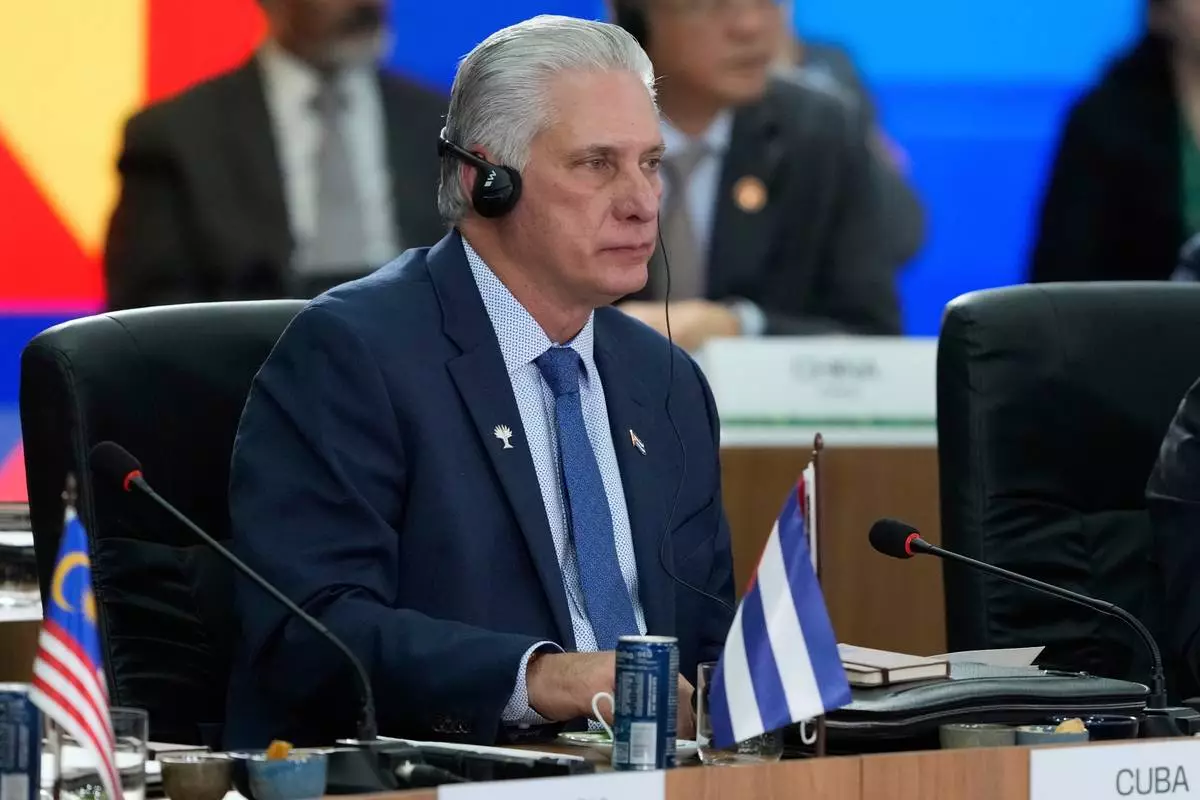
FILE - Cuba's President Miguel Diaz-Canel attends the 17th annual BRICS summit in Rio de Janeiro, July 6, 2025. (AP Photo/Eraldo Peres, File)

A woman dances as she waits with a group to enter a charity center to eat a meal, during a blackout in Havana, Tuesday, March 17, 2026. (AP Photo/Ramon Espinosa)

A man charges his phone and his fan with a solar panel during a blackout in Havana, Tuesday, March 17, 2026. (AP Photo/Ramon Espinosa)