WASHINGTON (AP) — In the escalating war in Iran, the State Department’s Bureau of Near Eastern Affairs would ordinarily be at the center of the geopolitical fray.
Typically led by a veteran diplomat, the bureau’s role would be to coordinate U.S. foreign policy across an 18-country region, much of which has become a chaotic battlefield scarred by drone and missile strikes as the U.S. and Israel remain locked in conflict with Iran.
Click to Gallery
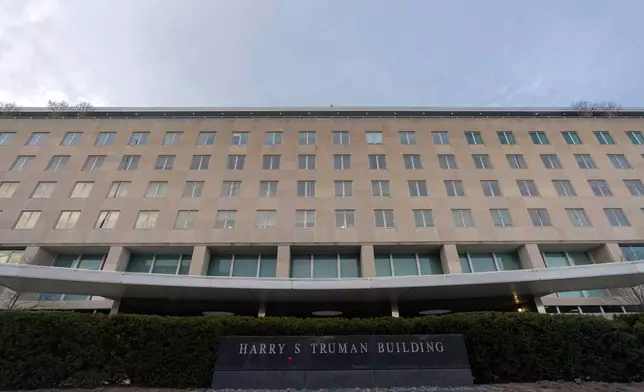
FILE - The U.S. Department of State building is seen in Washington, Dec. 7, 2024. (AP Photo/Jose Luis Magana, file)
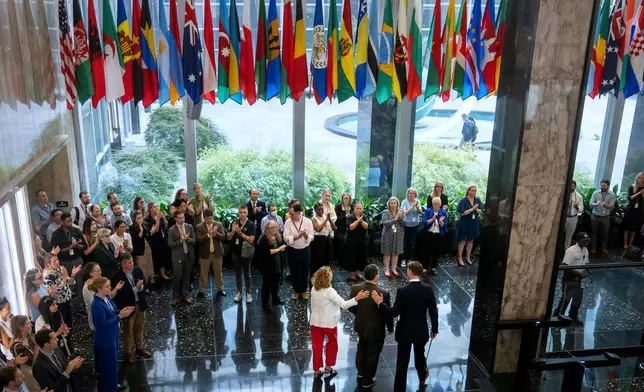
FILE - State Department employees applaud as their colleagues walk through the lobby of the State Department headquarters in the Harry S. Truman Building, July 11, 2025, in Washington. (AP Photo/Mark Schiefelbein, file)
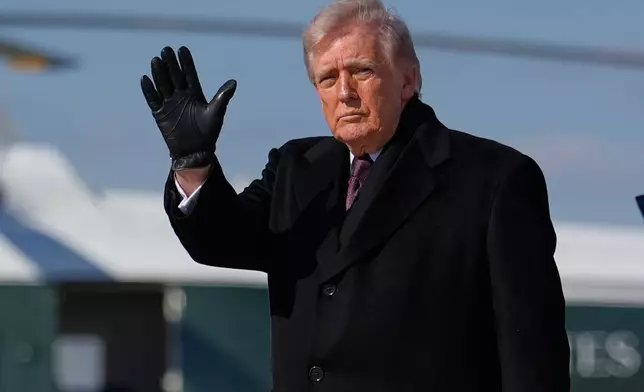
President Donald Trump waves after arriving on Air Force One, Wednesday, March 18, 2026, at Joint Base Andrews, Md., after attending the casualty return at Dover Air Force Base, Del., for the six crew members of an Air Force refueling aircraft who died when their plane crashed in western Iraq while supporting operations against Iran. (AP Photo/Julia Demaree Nikhinson)
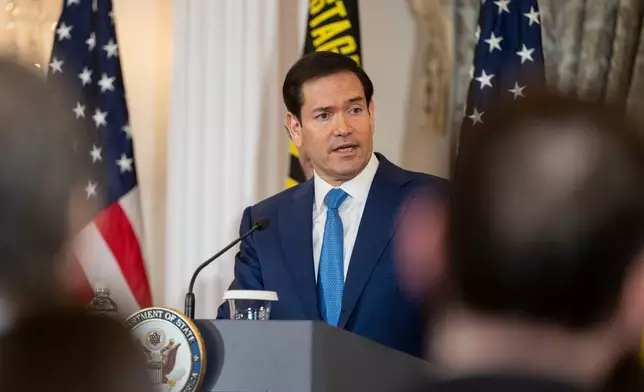
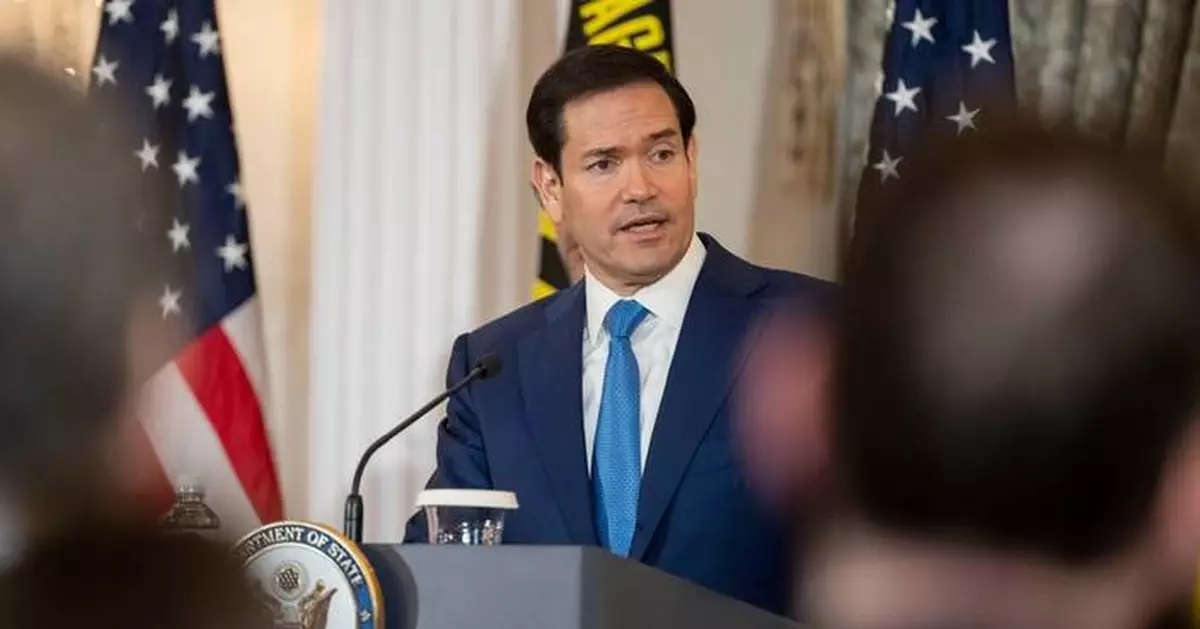
Secretary of State Marco Rubio speaks during a U.S. Hostage and Wrongful Detainee Flag Raising ceremony at the State Department, Monday, March 9, 2026 in Washington. (AP Photo/Kevin Wolf)
The Trump administration for a time put Mora Namdar, a lawyer of Iranian descent with limited management experience, in charge before later moving her to a different post. One of her credentials was her contribution to Project 2025, a conservative think tank’s blueprint for the second Trump administration. Namdar’s last Senate-confirmed predecessor was a longtime Middle East expert who had been with the department since 1984 and had served as the U.S. ambassador to the United Arab Emirates.
Now that bureau is also working with far fewer resources. The administration’s most recent budget proposed a 40% cut to the bureau, though Congress eventually enacted less dramatic cuts. The administration also eliminated the dedicated Iran office, merging it with the Iraq office.
These kinds of personnel and management choices — coupled with President Donald Trump's moves to shrink government and confine decision-making to a tight circle — are limiting the ability of the United States to handle a global emergency, according to interviews with more than a dozen current and former U.S. officials, many of whom recently left government.
In divisions of the State Department that typically would handle the Iran response, numerous veteran diplomats with decades of collective experience were fired, retired or were reassigned — replaced by more junior officials or political appointees. The administration cut more than 80 staffers in Near Eastern Affairs, according to numbers compiled by a State Department employee who was terminated last year based on surveys of colleagues. (The department does not release official figures on Foreign Service officer staffing levels but did not dispute the number.)
The Trump administration has left the assistant secretary position in charge of Near Eastern Affairs vacant, along with key ambassadorships in the Middle East. Four of the five supervisors in the bureau have temporary titles.
The current and former officials, some of whom asked for anonymity to discuss sensitive internal matters during an active conflict, paint a portrait of an understaffed government workforce struggling to execute the president’s agenda. Those who remain tell colleagues that their analyses, recommendations and advice go unheeded.
The State Department vigorously disputed those assessments.
“As far as we can tell, AP’s entire ‘report’ on the evacuations does not include any conversations with people actually involved. Instead, it relies on ‘outside’ or ‘former official’ sources that have no idea what they are talking about. We walked AP through specific inaccuracy after specific inaccuracy — indeed how the whole premise was wrong," State Department spokesman Tommy Pigott said.
The State Department saw a departure of more than 3,800 employees since Trump took office through a combination of reductions in force, staffers taking the Fork in the Road deferred resignation plan and ordinary retirements. According to estimates by the American Foreign Service Association, the labor union that represents foreign service officers, senior foreign service ranks were disproportionately represented in the layoffs compared to their share of the overall workforce.
“He’s making choices without the larger expertise of the United States government that would flag issues of consequence,” said Max Stier, CEO of the nonpartisan Partnership for Public Service, a nonprofit group that studies federal workforce issues. “Sometimes government is slow-moving because there are a lot of different factors that need to be balanced against each other.”
For instance, the administration appears to have been caught off guard by what would happen once the U.S. struck Iran — something Trump himself acknowledged this week when he expressed surprise that Tehran retaliated with strikes on American allies in the region. “Nobody expected that. We were shocked. They fought back,” Trump told reporters this week.
Pigott said staffing reductions “are not having any negative impact on our ability to respond to this operation, our ability to plan, and our ability to execute in service to Americans.” He added that the department “rejects the premise that key decisions were made without meaningful input from experienced professionals.”
But Iranian retaliation on U.S. allies was predictable, according to former officials, as well as previous wargames and conflict models run by both the U.S. military and private organizations. The National Security Council, which Trump has pared, typically would have presented the president with analysis from experts within the bureaucracy.
Instead, decisions are made by a small group of officials close to the president without the planning or coordination of the larger machinery of government, including Secretary of State Marco Rubio, who also serves as the president's national security adviser.
“In the Trump Administration, decisions are made by President Trump and senior administration officials and not by no-name bureaucrat leakers who whine to the press about not being consulted about highly classified operations,” White House spokesperson Dylan Johnson said.
“In the time that I was there, there was no policy process to speak of,” said Chris Backemeyer, who served in Near Eastern Affairs as a deputy assistant secretary of state before resigning last year. Backemeyer was a major proponent of the Iran deal that Trump abandoned. He recently left government to run for Congress as a Democrat in Nebraska.
“They did not want to hear any advice from career people,” said Backemeyer.
Namdar was later moved to be the head of consular affairs, the part of the department responsible for providing assistance to American citizens overseas and issuing visas to foreign visitors.
When the U.S. made the decision to strike Iran, Ambassador to Israel Mike Huckabee offered embassy staff in Jerusalem the opportunity to evacuate — a sign that he knew strikes were coming. But some other embassies in the region did not make similar arrangements — leaving nonessential personnel and their families stranded in a war zone.
The department said it has been issuing travel warnings since January and was fully staffed to handle the crisis the moment the strikes were launched.
Still, little planning appears to have gone into how to evacuate the Americans who were living, working, visiting or studying in many of the countries that became engulfed in the conflict — in part because the White House seems to have underestimated the possibility of the strikes expanding into a prolonged multi-country war, as evidenced by Trump's own remarks.
After Iranian attacks on allies like Saudi Arabia, Qatar and the United Arab Emirates, the State Department began calling for Americans to leave the region. But numerous former Consular Affairs staffers say such planning should have begun long before U.S. strikes started.
In a statement posted to social media, Namdar only told Americans to evacuate several days into the conflict, when airspace was largely closed and many commercial flights were unavailable.
“The messaging that went out to American citizens — after the U.S. struck Iran — was woefully late and, initially, confusing," Yael Lempert, who served as U.S. ambassador to Jordan until 2025 told the AP. Lempert was one of five former ambassadors who spoke Thursday about the department's failures at an event hosted by the American Academy of Diplomacy in Washington.
“They failed to anticipate that Iran would respond to asymmetrically by attacking U.S. government diplomatic facilities and personnel and the wider U.S. American community in the region," said John Bass, who was the ambassador to Afghanistan during Trump’s first term.
“If you go back and look at the history of U.S. foreign policy and national security mistakes, including a number of the mistakes that President Trump has identified as core mistakes in the last 25 years, you will see that they often resulted from deficits in the decision making process, where leadership did not have access to the best information and to a wide range of views,” he said.
Other poorly executed evacuations, such the Biden administration's withdrawal from Afghanistan, have drawn criticism.
But this time they're compounded by the loss of experienced people, officials say. Consular Affairs has lost more than 150 jobs in the Trump administration due to a combination of reductions in force, dismissals of probationary employees and retirements, according to a U.S. official who asked for anonymity — though other parts of the department were hit much harder.
The department notes that it has offered assistance to nearly 50,000 Americans impacted by the conflict, with more than 60 flights evacuating citizens from the region. In total, the department says more than 70,000 Americans have been able to return home since the outbreak of hostilities on Feb. 28.
“The loss of experienced personnel through these RIFs has clearly undermined the Bureau of Consular Affairs' ability to fulfill its most important mission, to protect Americans abroad," Sen. Jeanne Shaheen, the top Democrat on the Senate Foreign Relations Committee, said in a statement.
Language skills at the department are also atrophying. Thirteen Arabic speakers and four Farsi speakers, all trained at taxpayer expense, were among employees let go, according to a draft letter being circulated by former foreign service officers.
It can cost $200,000 to train a foreign service officer in a language. The letter estimates that the total number of people fired by the State Department in the name of efficiency received more than $35 million in taxpayer-funded language training and more than $100 million in total training and other career development.
The State Department has set up two temporary task forces to deal with the crisis in the Middle East. One aims to bolster the capacities of Near East Affairs and another is aimed at helping Consular Affairs evacuate Americans.
A group of more than 250 Foreign Service officers were part of the administration’s reduction-in-force last year but still remain on the State Department’s payroll. Many have volunteered to return to the department to work on either a task force or do any other job that needs to be done with the outbreak of a global crisis.
“I haven’t been given any separation paperwork. I still have an active clearance. I could go back to the department tomorrow, either to backfill or staff a task force,” said one foreign service officer who asked for anonymity because they are still technically on the department's payroll and are not authorized to speak to the press. “I will do the scutwork jobs.”
The department hasn’t responded to their offer but said in a statement that the task force is “fully staffed.”
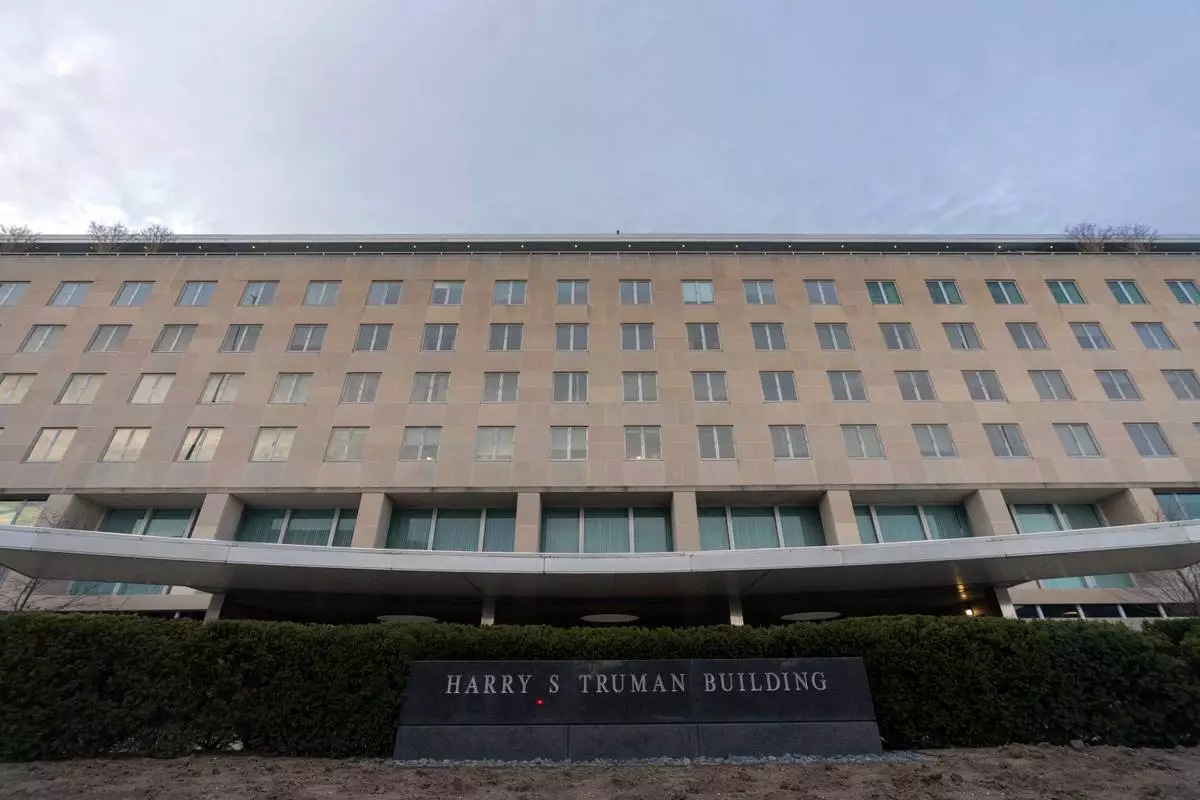
FILE - The U.S. Department of State building is seen in Washington, Dec. 7, 2024. (AP Photo/Jose Luis Magana, file)
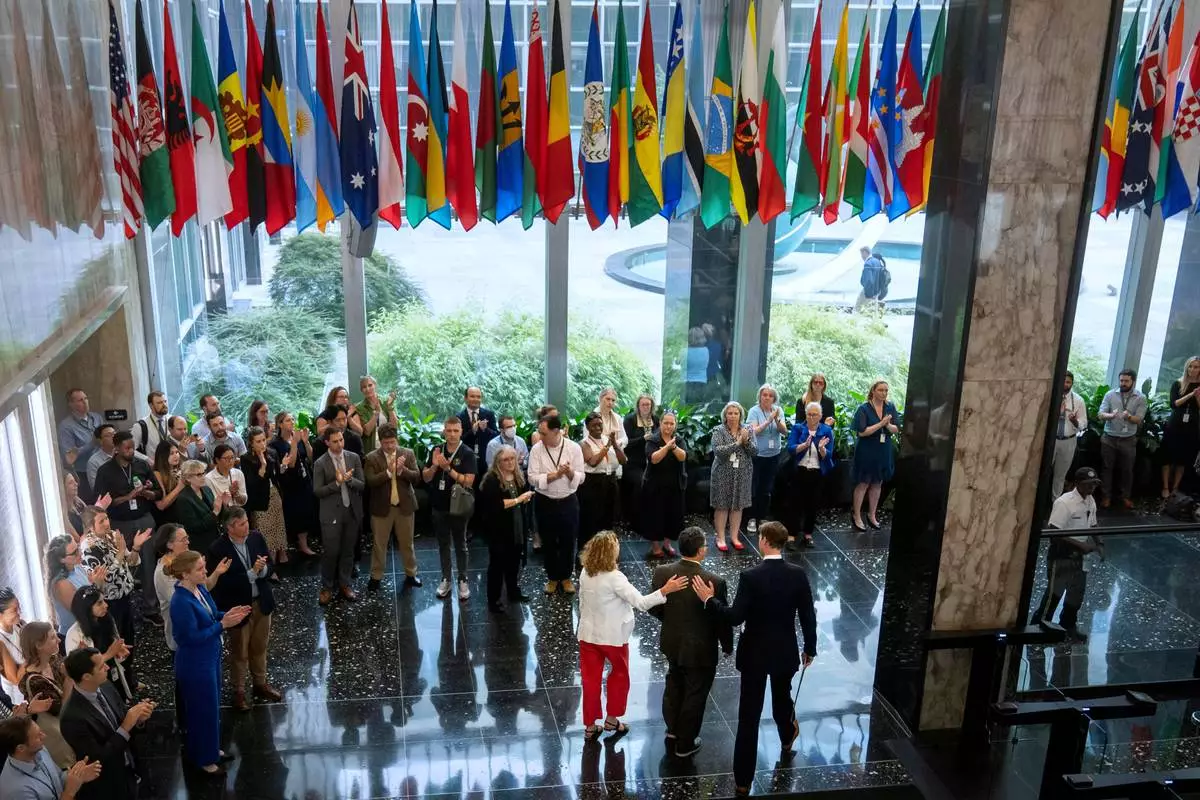
FILE - State Department employees applaud as their colleagues walk through the lobby of the State Department headquarters in the Harry S. Truman Building, July 11, 2025, in Washington. (AP Photo/Mark Schiefelbein, file)
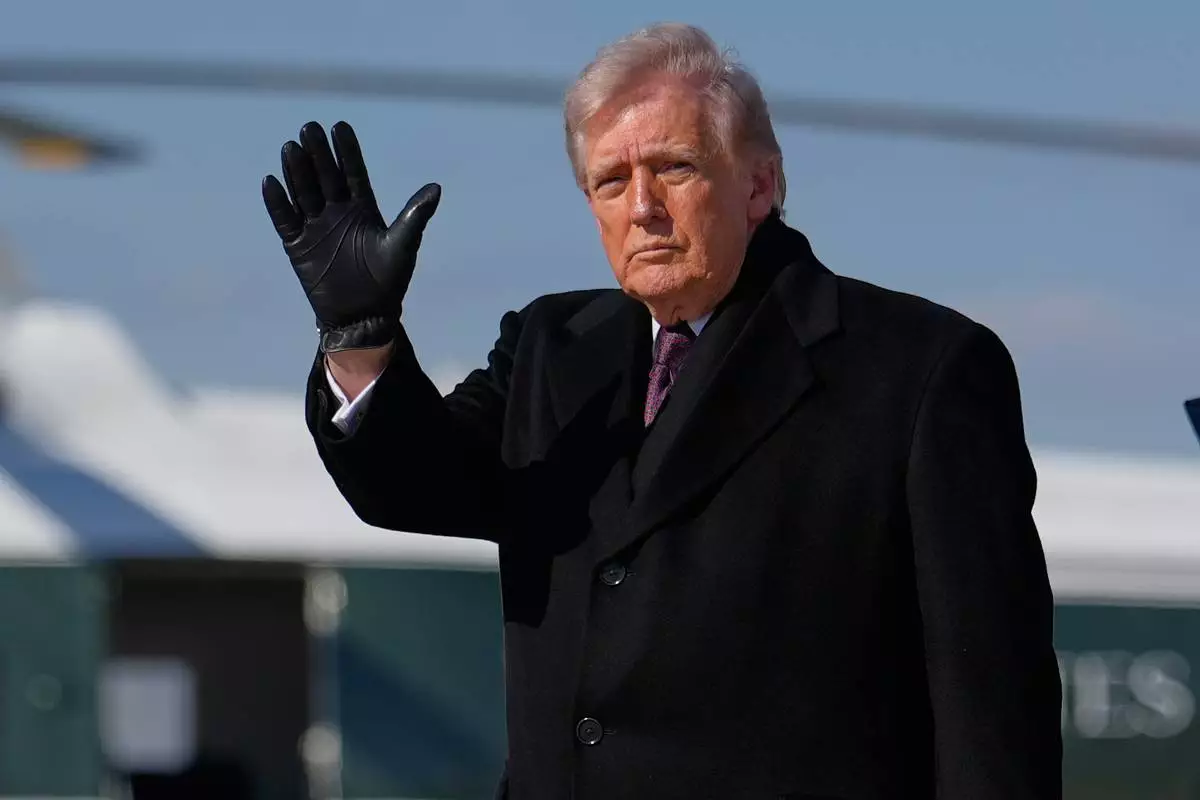
President Donald Trump waves after arriving on Air Force One, Wednesday, March 18, 2026, at Joint Base Andrews, Md., after attending the casualty return at Dover Air Force Base, Del., for the six crew members of an Air Force refueling aircraft who died when their plane crashed in western Iraq while supporting operations against Iran. (AP Photo/Julia Demaree Nikhinson)
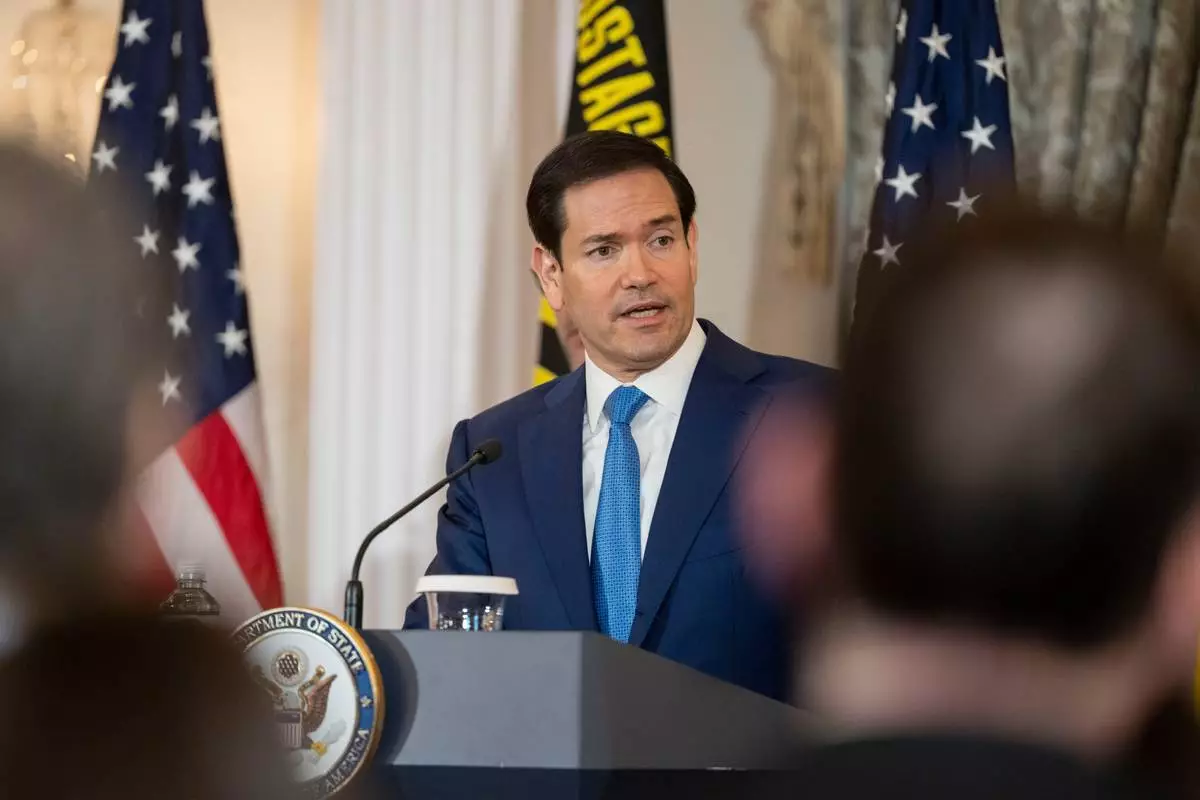
Secretary of State Marco Rubio speaks during a U.S. Hostage and Wrongful Detainee Flag Raising ceremony at the State Department, Monday, March 9, 2026 in Washington. (AP Photo/Kevin Wolf)