SAN FRANCISCO & BOSTON--(BUSINESS WIRE)--Mar 20, 2026--
Coralogix and Skyflow are launching a strategic partnership designed to help organizations safeguard sensitive customer data within logs. This collaboration ensures robust data protection without compromising the ability to perform searches, investigations, or leverage AI-driven operations.
This press release features multimedia. View the full release here: https://www.businesswire.com/news/home/20260320221562/en/
Logs and telemetry play a critical role in debugging, incident response, security analysis, and AI workflows. However, they often contain sensitive customer data, embedded both in structured fields and unstructured text. While many observability tools mitigate this risk through redaction, this approach comes at a cost—eliminating exposure but also stripping away context. The result? Logs become more difficult to query, correlate, and operationalize effectively.
Coralogix and Skyflow take a fundamentally different approach: protect sensitive customer data by default while preserving the usability of observability data across humans and AI systems.
“The traditional approach of redaction creates a false trade-off between safety and usefulness,” said Anshu Sharma, CEO of Skyflow. “Once sensitive data is stripped out, teams lose the ability to search effectively, investigate incidents, or let AI agents reason over what actually happened. As a Runtime AI Data Control Platform, Skyflow ensures sensitive customer data stays governed and isolated, while observability data remains fully usable.”
Ariel Assaraf, Coralogix CEO, said: “Coralogix customers rely on observability data as a trusted system of record—supporting engineers, security teams, and the growing demands of AI-driven automation. They shouldn’t have to choose between safeguarding sensitive customer data and maintaining operational efficiency. By partnering with Skyflow, we ensure they can achieve both seamlessly.”
Why Traditional Approach Falls Short
In conventional observability pipelines, sensitive customer data is simply masked or completely removed breaking functionality:
Instead of permanently removing sensitive values, Skyflow replaces them with consistent, privacy-preserving tokens, allowing logs to remain searchable and analyzable while the underlying data is centrally controlled, access-governed, and auditable.
Data Residency and Sovereignty by Design
Coralogix already enables customers to deploy observability workloads in specific geographic regions to meet data residency requirements. By combining this with Skyflow’s runtime data control capabilities, organizations can continue to meet strict data sovereignty obligations —ensuring sensitive customer data is governed, isolated, and accessed only under policy, while observability data remains local, usable, and compliant across regions. This approach helps organizations operating in regulated or multi-region environments reduce cross-border data exposure while maintaining full visibility and operational effectiveness.
Built for AI-Driven Observability
The joint approach enables organizations to:
The result is observability that is privacy-safe by design, operationally effective, and ready for AI-native workflows.
About Coralogix
Coralogix is a leading observability platform that helps organizations understand, visualize, and act on their logs, metrics, and traces in real time. By uniting high-performance analytics with AI-driven intelligence through its multi-agent assistant Olly, Coralogix enables customers to achieve operational excellence, strengthen data and cloud observability, enhance digital experiences, and reduce observability costs at scale.
Thousands of teams worldwide—including leaders in fintech, e-commerce, gaming, and SaaS —trust Coralogix to power their cloud-native observability. www.coralogix.com
About Skyflow
Skyflow secures the flow of data across datastores, models, and agents. The company is trusted by Fortune 500 and growth startups across financial services, healthcare, travel & hospitality, and retail. www.skyflow.com

Protect sensitive customer data by default while preserving the usability of observability data across humans and AI systems.
What a difference a year makes.
Home teams are 7-1 entering Friday in the conference semifinals. Detroit is up 2-0 on Cleveland, Oklahoma City is up 2-0 on the Los Angeles Lakers, New York is up 2-0 on Philadelphia and San Antonio got a 1-1 split with Minnesota.
In other words, games went largely as seedings suggested they would.
That wasn't the case last season, when home teams went 2-6 in Games 1 and 2 of the conference semifinals. This is only the third time in the last 16 postseasons when home teams went 7-1 to start Round 2.
On Friday, it's a pair of Game 3s: New York at Philadelphia and San Antonio at Minnesota.
— Game 3, New York at Philadelphia, 7 p.m. EDT (Prime)
Series: New York leads 2-0.
Odds: 76ers by 1.5.
An overlooked part of New York's Game 2 win: After three consecutive blowout victories by the Knicks going back to Round 1, they dug deep in the fourth quarter — holding Philadelphia to 4 for 19 shooting in the final 12 minutes on Wednesday night.
— Game 3, San Antonio at Minnesota, 9:30 p.m. EDT (Prime)
Series: Tied 1-1.
Odds: Spurs by 4.5.
Expect a bounceback game from Anthony Edwards, if his knee allows. He was never in rhythm in Game 2 (at least, not the way he was at times in the Game 1 win) and the Timberwolves were minus-33 in his 24 minutes.
— Game 3, Detroit at Cleveland, 3 p.m. EDT (NBC/Peacock)
Series: Detroit, 2-0.
Odds: Cleveland by 4.5.
The Pistons have won five consecutive postseason games for the first time since 2008 — and three of them were while facing elimination in Round 1. Cleveland is now 2-10 in conference semifinal games over the past three seasons.
— Game 3, Oklahoma City at LA Lakers, 8:30 p.m. EDT (ABC)
Series: Oklahoma City, 2-0.
Odds: Oklahoma City by 8.5.
The Lakers are furious with elements of the officiating right now, and that might go one of two ways in Game 3. They'll either come out inspired on Saturday and make this a series, or the anger could work against them.
— Pistons 107, Cavaliers 97 for 2-0 series lead.
— Thunder 125, Lakers 107 for 2-0 series lead. The Lakers are angry.
A breakdown of this season's NBA awards:
— Twyman-Stokes Teammate of the Year: DeAndre Jordan, New Orleans.
— Hustle Award: Moussa Diabaté, Charlotte.
— Defensive Player of the Year: Victor Wembanyama, San Antonio.
— Clutch Player of the Year: Shai Gilgeous-Alexander, Oklahoma City.
— Sixth Man of the Year: Keldon Johnson, San Antonio.
— Sportsmanship Award: Derrick White, Boston.
— Most Improved Player: Nickeil Alexander-Walker, Atlanta.
— Rookie of the Year: Cooper Flagg, Dallas.
— Executive of the Year: Brad Stevens, Boston.
Among the announcements still to come:
— Most Valuable Player: Gilgeous-Alexander, Wembanyama or Denver's Nikola Jokic.
— Coach of the Year: Detroit's J.B. Bickerstaff, San Antonio's Mitch Johnson or Boston's Joe Mazzulla.
Defending champion Oklahoma City (-165) is favored to win the NBA title, according to oddsmakers.
The Thunder are followed by San Antonio (+325), New York (+800), Detroit (+1500), Minnesota (+5000), Cleveland (+6000), Los Angeles Lakers (+10000) and Philadelphia (+10000).
Favorites are 34-22 through Thursday in the 2026 NBA playoffs, a .607 winning percentage that might look pretty good on paper.
That is, until one looks at other recent playoff seasons.
Underdogs are on pace to have their best winning percentage in a playoff season in more than a decade. The last time underdogs won outright this often was the 2014 playoffs, when they won 44.9% of the time.
— Sunday: NBA draft lottery.
— May 10-17: NBA draft combine.
— May 17 or 19: Eastern Conference finals begin on ESPN and ABC.
— May 18 or 20: Western Conference finals begin on NBC and Peacock.
— June 3: Game 1, NBA Finals on ABC. (Other finals dates: June 5, June 8, June 10, June 13, June 16 and June 19).
— June 23: Round 1, NBA draft
— June 24: Round 2, NBA draft
“LeBron has the worst whistle of any star player I've ever seen.” — Lakers coach JJ Redick, on how LeBron James is officiated.
— LeBron James has attempted five free throws in the first two games of the series against Oklahoma City. It's the second fewest he's ever taken in the first two games of any of his 57 career playoff series. He took four in Games 1 and 2 vs. Golden State in 2023.
— The Pistons are 25-4 this season when Duncan Robinson makes at least four 3-pointers.
AP NBA: https://apnews.com/nba
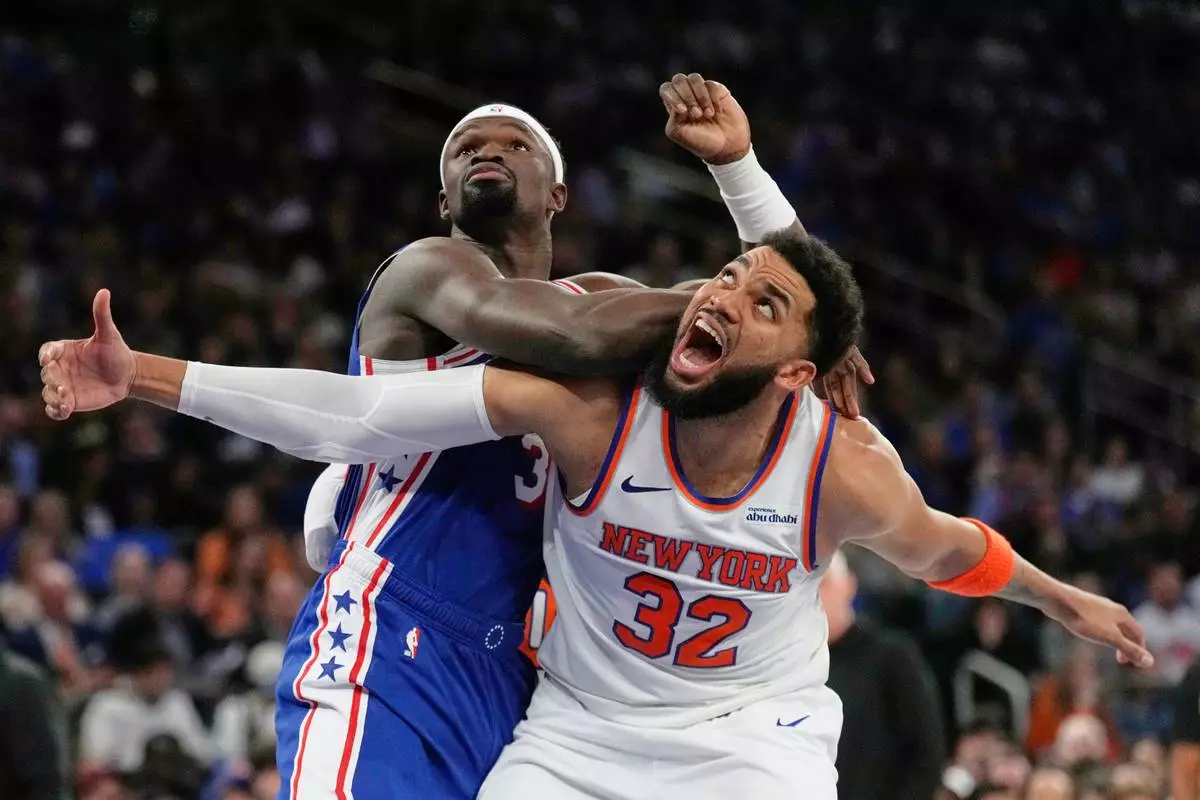
Philadelphia 76ers' Adem Bona, top, fouls New York Knicks' Karl-Anthony Towns during the second half of Game 1 in a second-round NBA basketball playoffs series Monday, May 4, 2026, in New York. (AP Photo/Seth Wenig)
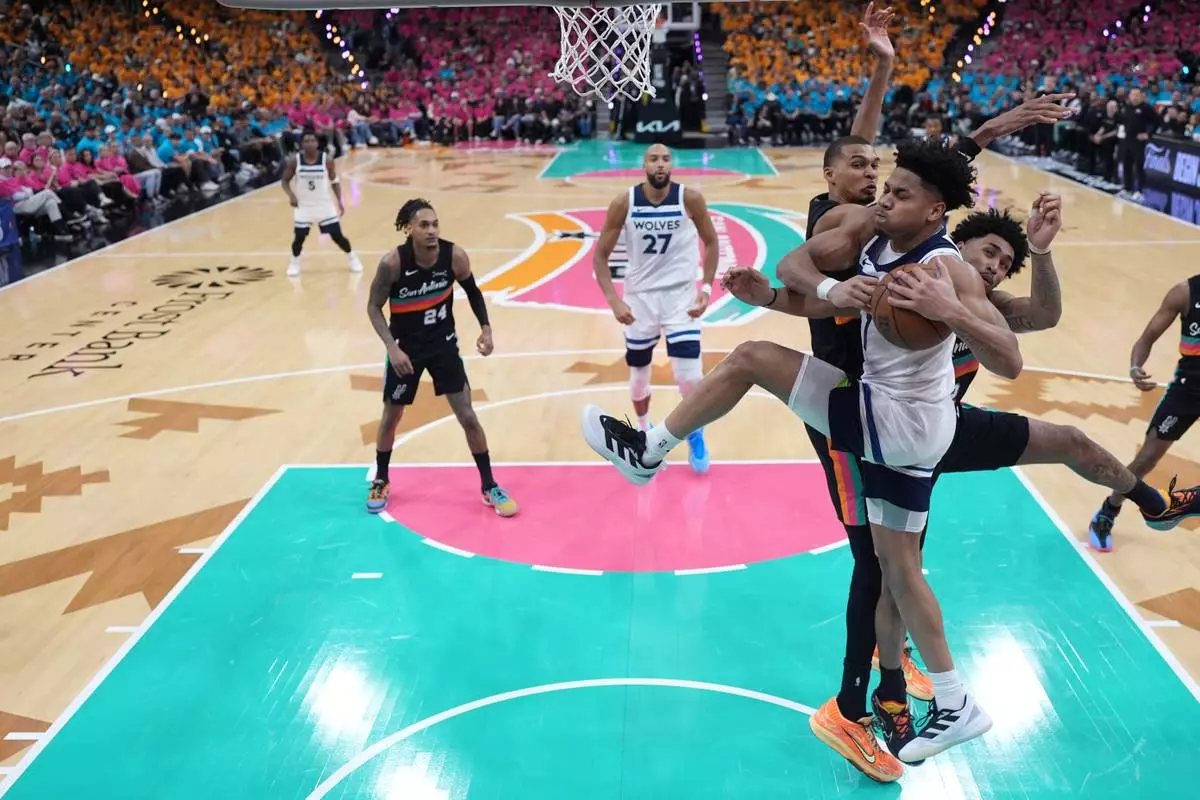
Minnesota Timberwolves guard Terrence Shannon Jr. (1), front, handles the ball as San Antonio Spurs guard Dylan Harper (2), middle, and forward-center Victor Wembanyama (1), back, defend during the second half in Game 1 of a second-round NBA playoffs basketball series in San Antonio, Monday, May 4, 2026. (AP Photo/Eric Gay)
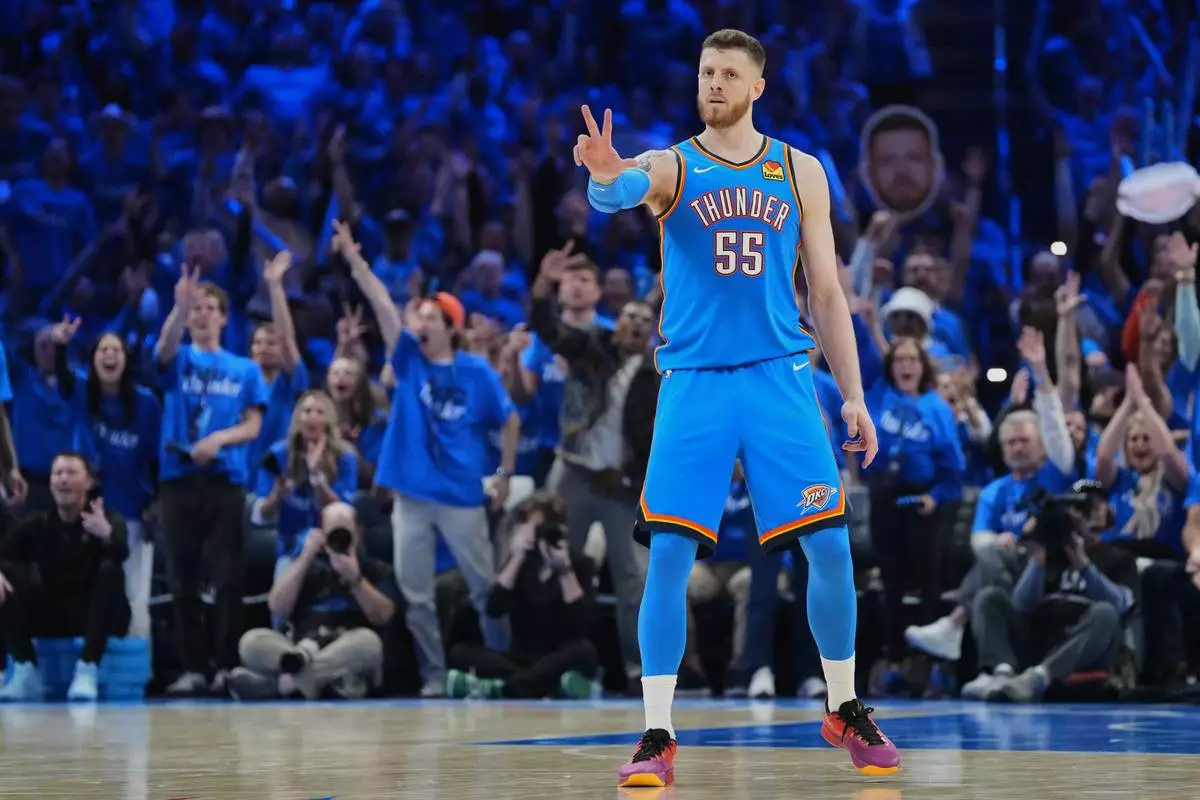
Oklahoma City Thunder center Isaiah Hartenstein (55) and fans celebrate a basket in the second half of Game 1 in a second-round NBA basketball playoffs series against the Los Angeles Lakers Tuesday, May 5, 2026 in Oklahoma City. (AP Photo/Kyle Phillips)
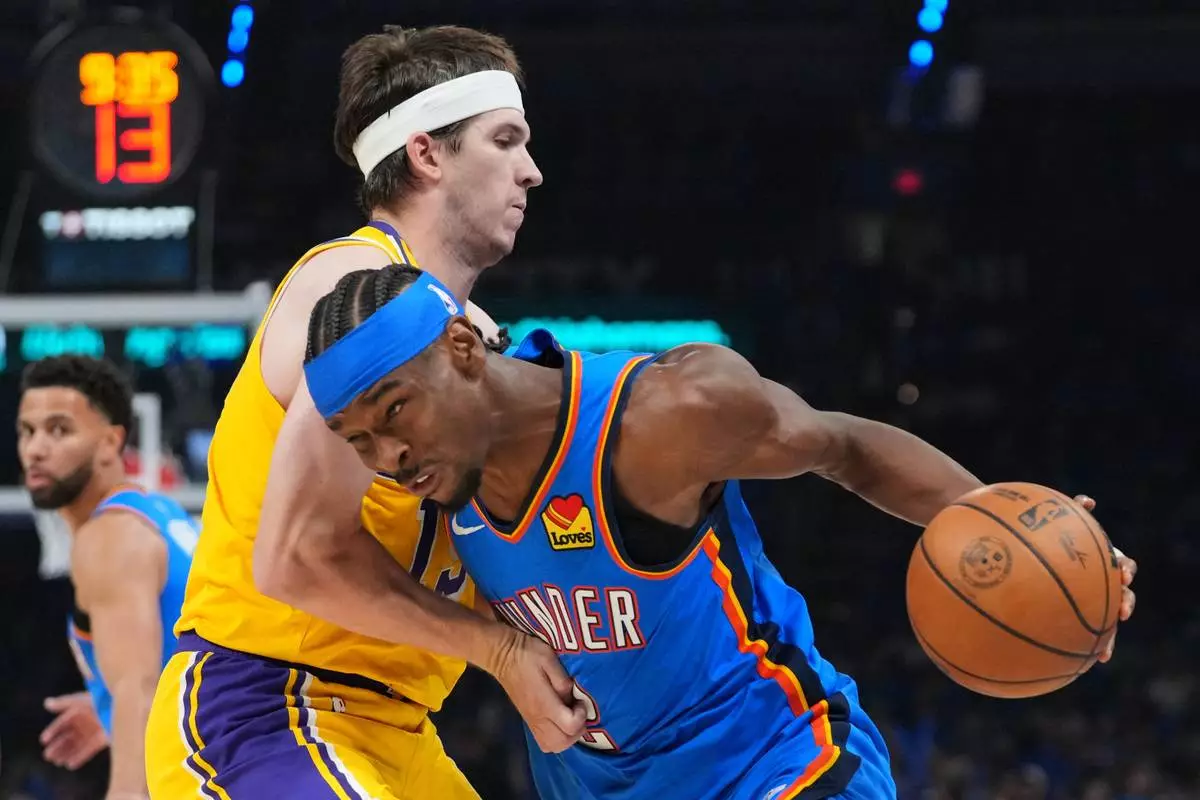
Oklahoma City Thunder guard Shai Gilgeous-Alexander, right, drives to the basket as Los Angeles Lakers guard Austin Reaves, left, defends second half of Game 1 in a second-round NBA basketball playoffs series Tuesday, May 5, 2026 in Oklahoma City. (AP Photo/Kyle Phillips)
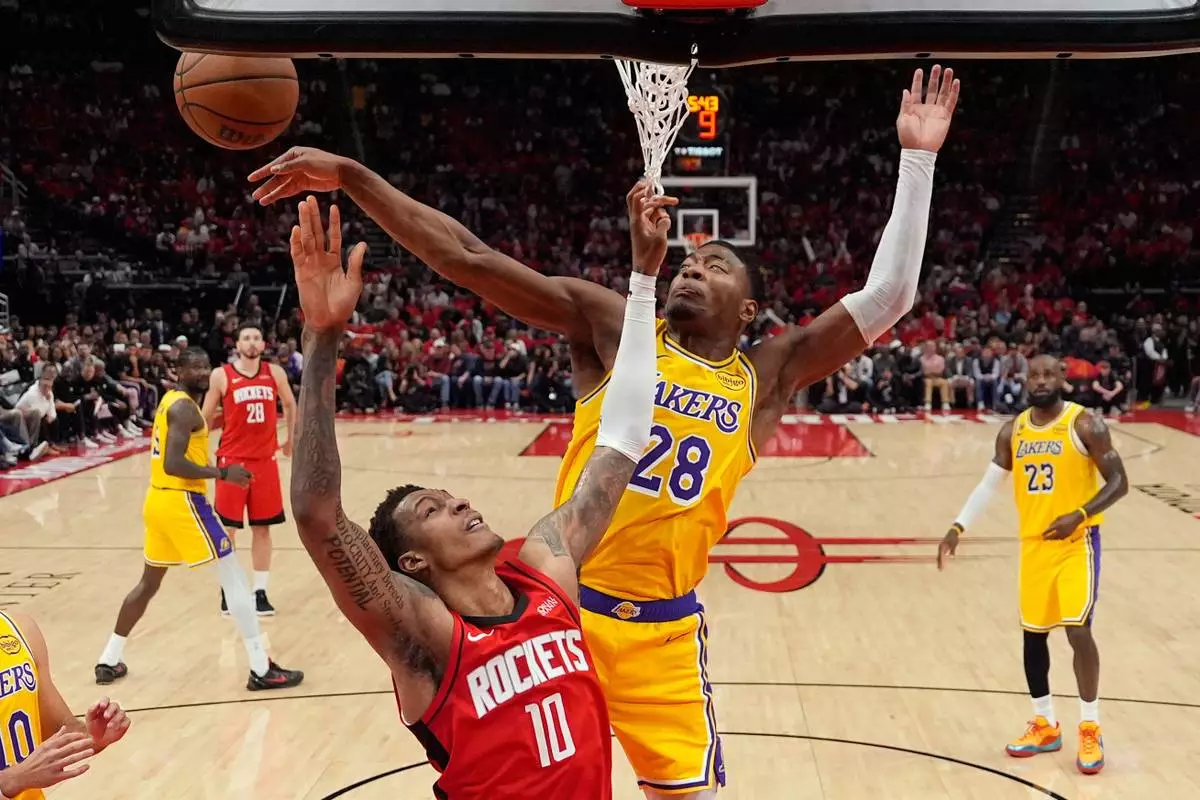
Los Angeles Lakers forward Rui Hachimura (28) blocks a shot by Houston Rockets forward Jabari Smith Jr. (10) during the first half of Game 6 of a first-round NBA playoffs basketball series in Houston, Friday, May 1, 2026. (AP Photo/Ashley Landis)
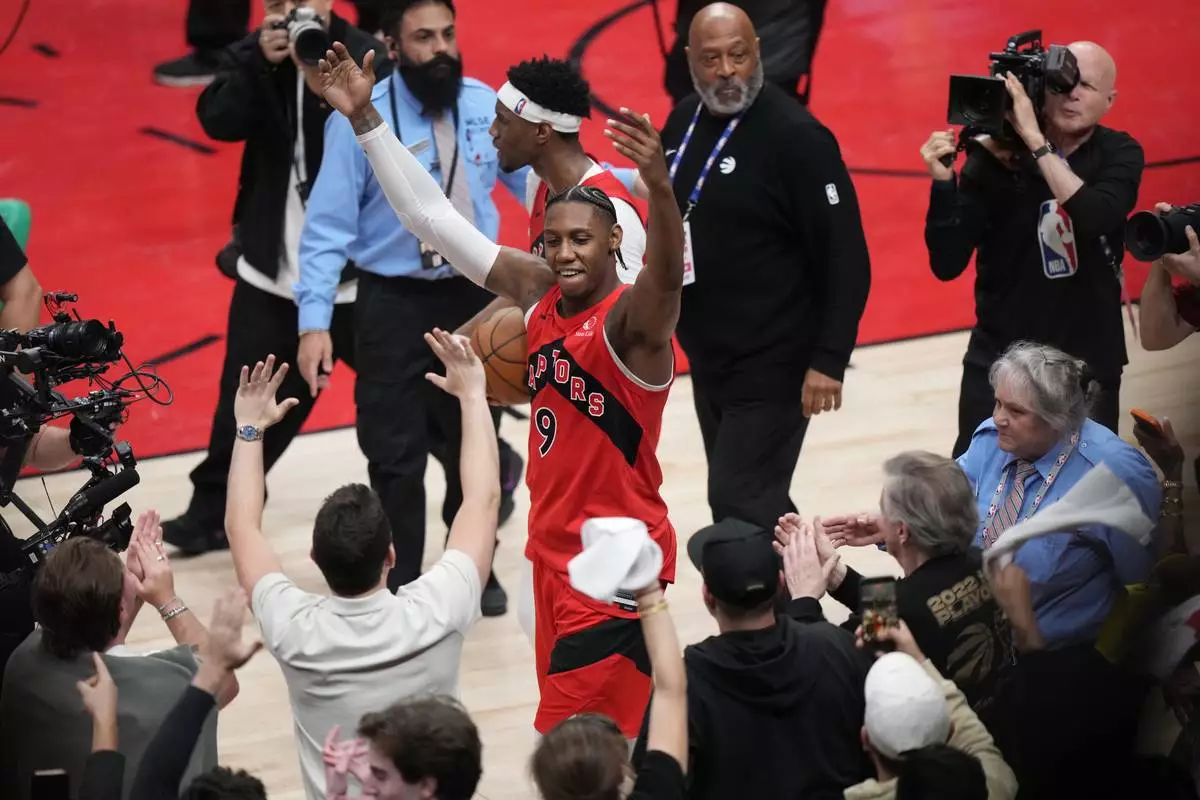
Toronto Raptors' RJ Barrett (9) celebrates with fans after a win over the Cleveland Cavaliers in Game 6 in the first round of an NBA basketball playoffs series in Toronto, Friday, May 1, 2026. (Nathan Denette/The Canadian Press via AP)
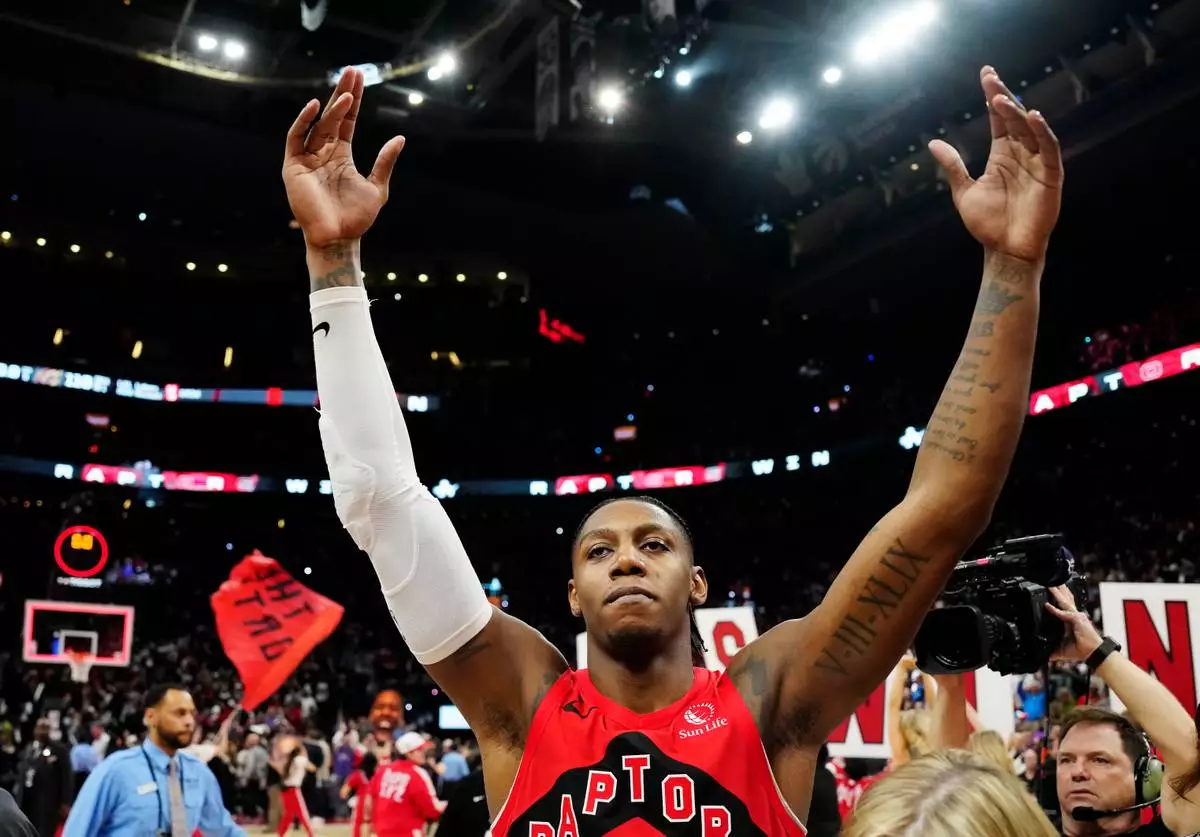
Toronto Raptors' RJ Barrett (9) celebrates after defeating the Cleveland Cavaliers in overtime of Game 6 in the first round of an NBA basketball playoffs series in Toronto on Friday, May 1, 2026. (Frank Gunn/The Canadian Press via AP)
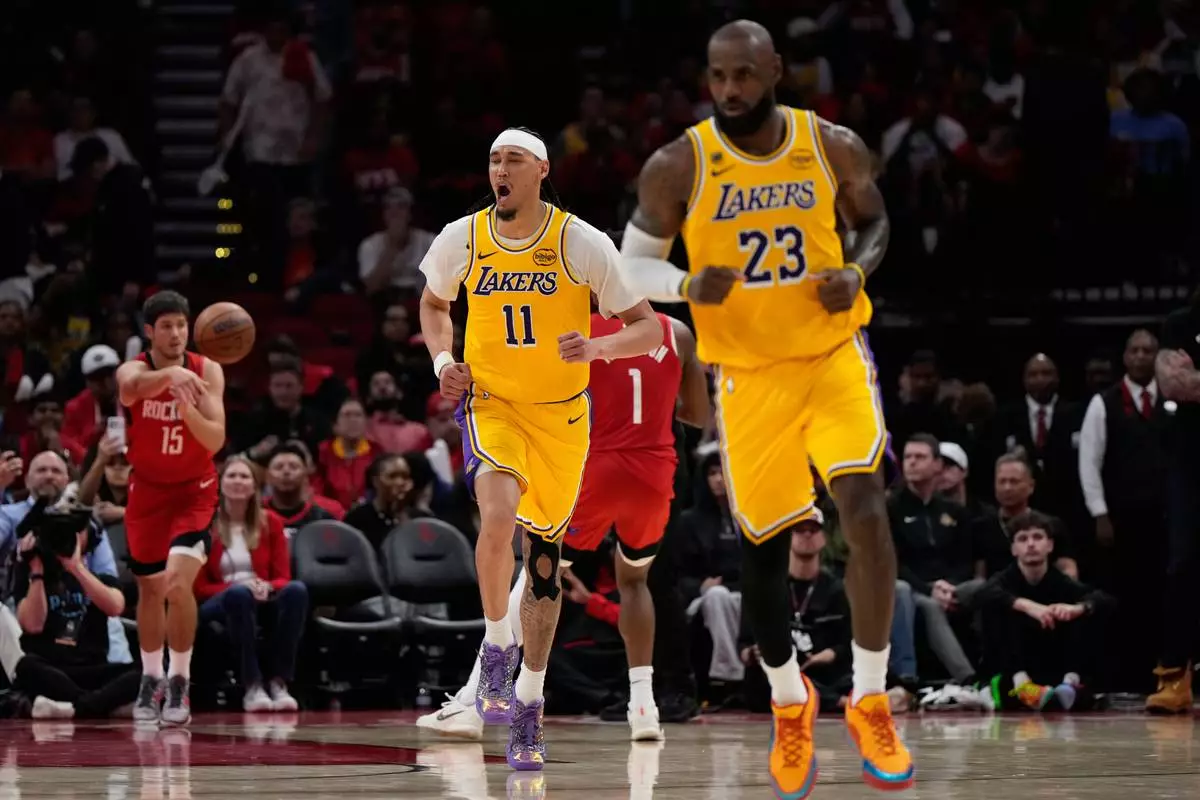
Los Angeles Lakers center Jaxson Hayes (11) celebrates during the second half of Game 6 of a first-round NBA playoffs basketball series against the Houston Rockets in Houston, Friday, May 1, 2026. (AP Photo/Ashley Landis)
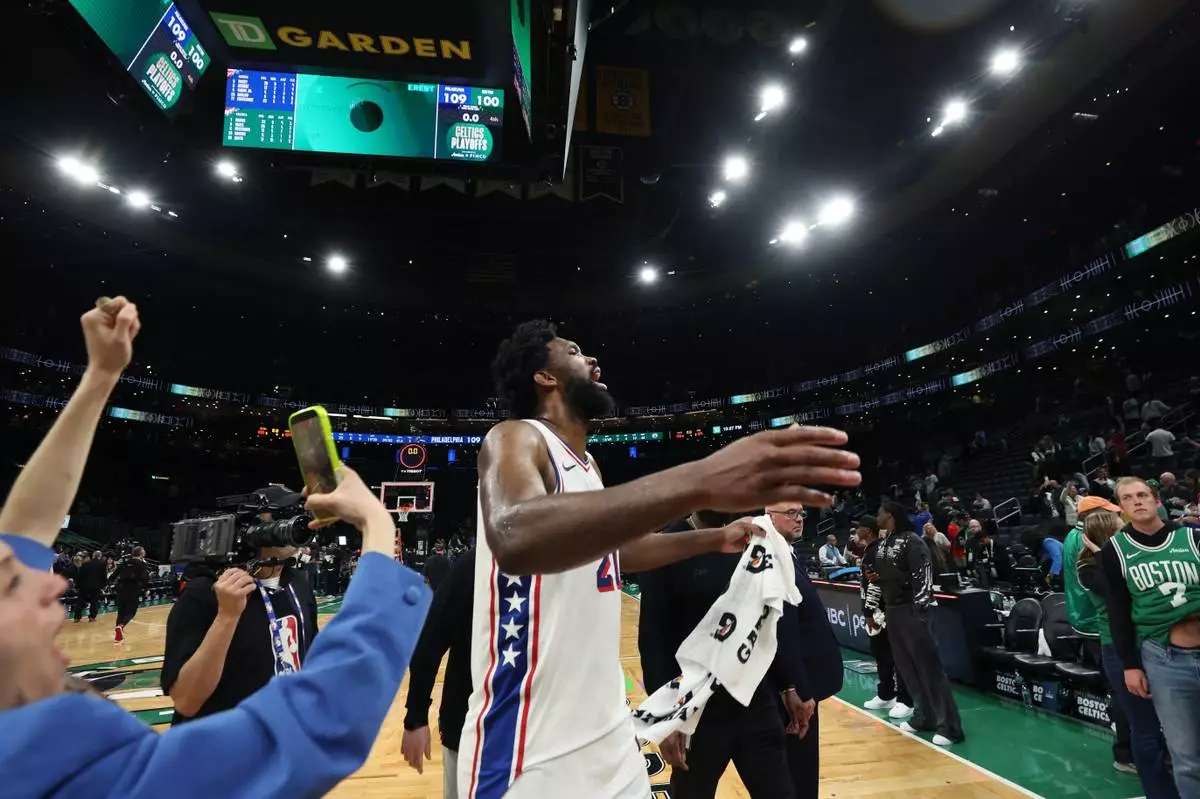
Philadelphia 76ers' Joel Embiid celebrates following his team's victory over the Boston Celtics after the Game 7 in a first-round NBA basketball playoffs series, Saturday, May 2, 2026 in Boston. (AP Photo/Jim Davis)
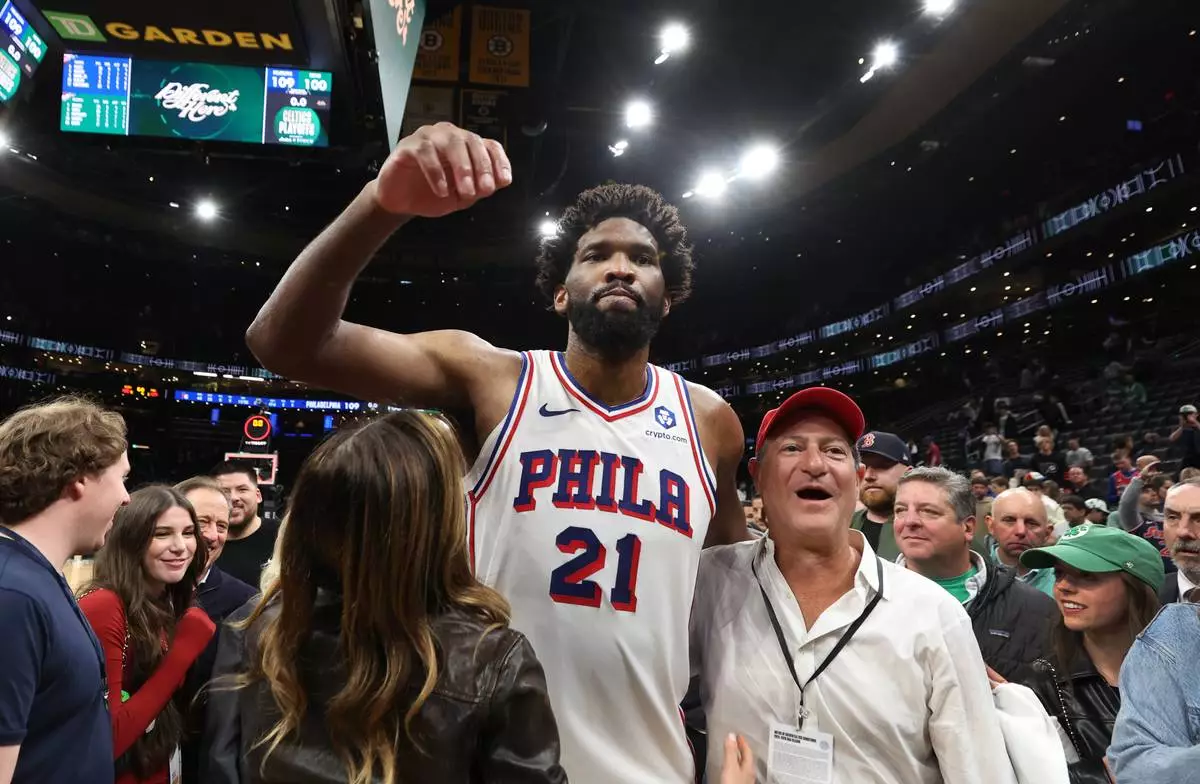
Philadelphia 76ers' Joel Embiid celebrates following his team's victory over the Boston Celtics after the Game 7 in a first-round NBA basketball playoffs series, Saturday, May 2, 2026 in Boston. (AP Photo/Jim Davis)
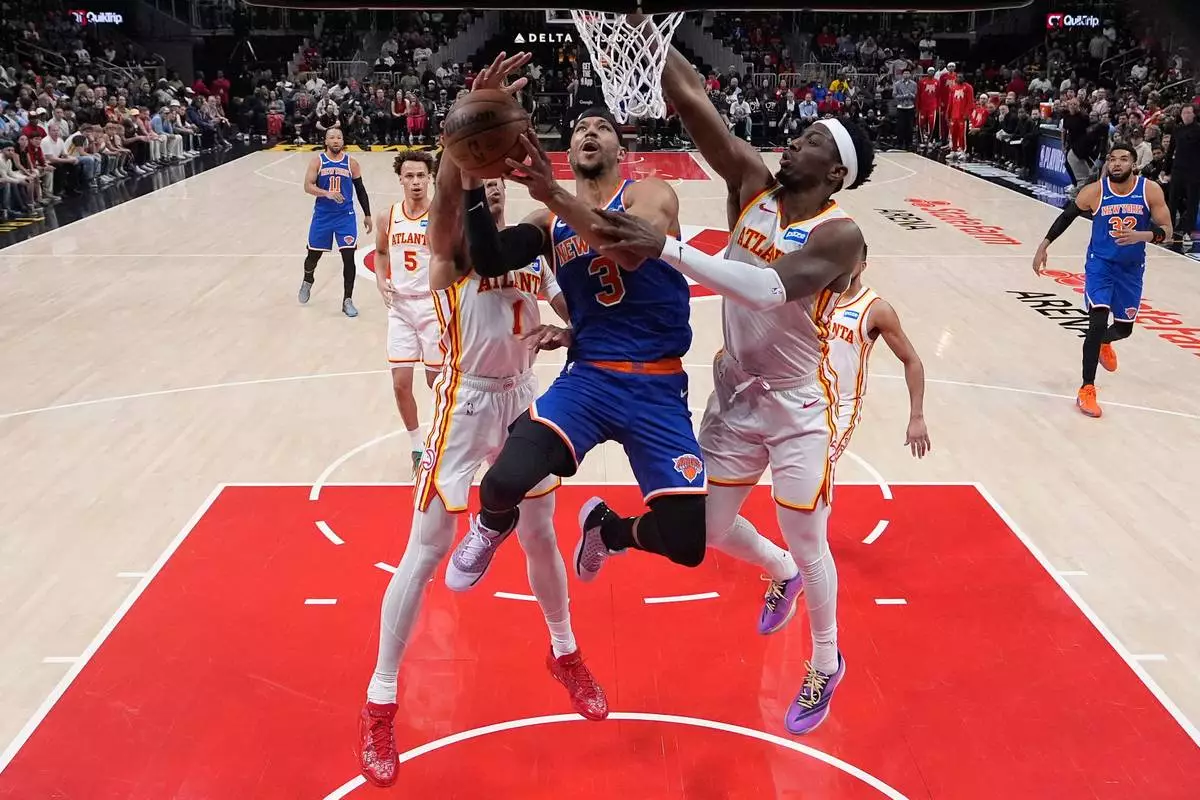
New York Knicks guard Josh Hart (3) shoots during Game 6 in a first-round NBA basketball playoffs series Thursday, April 30, 2026, in Atlanta. (AP Photo/Brynn Anderson)
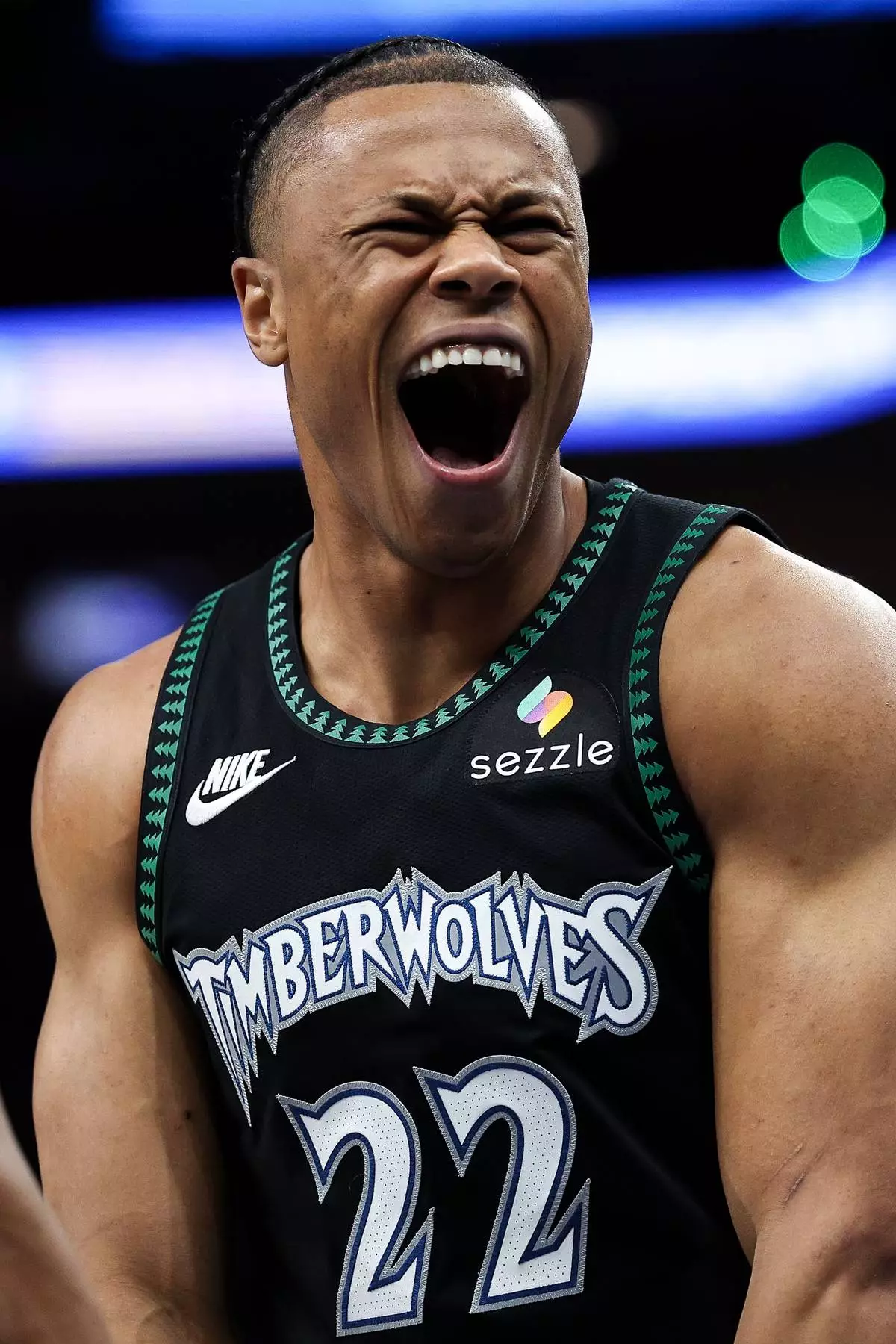
Minnesota Timberwolves guard Jaylen Clark (22) celebrates a basket against the Denver Nuggets during the second half of Game 6 of a first-round NBA basketball playoffs series, Thursday, April 30, 2026, in Minneapolis. (AP Photo/Matt Krohn)
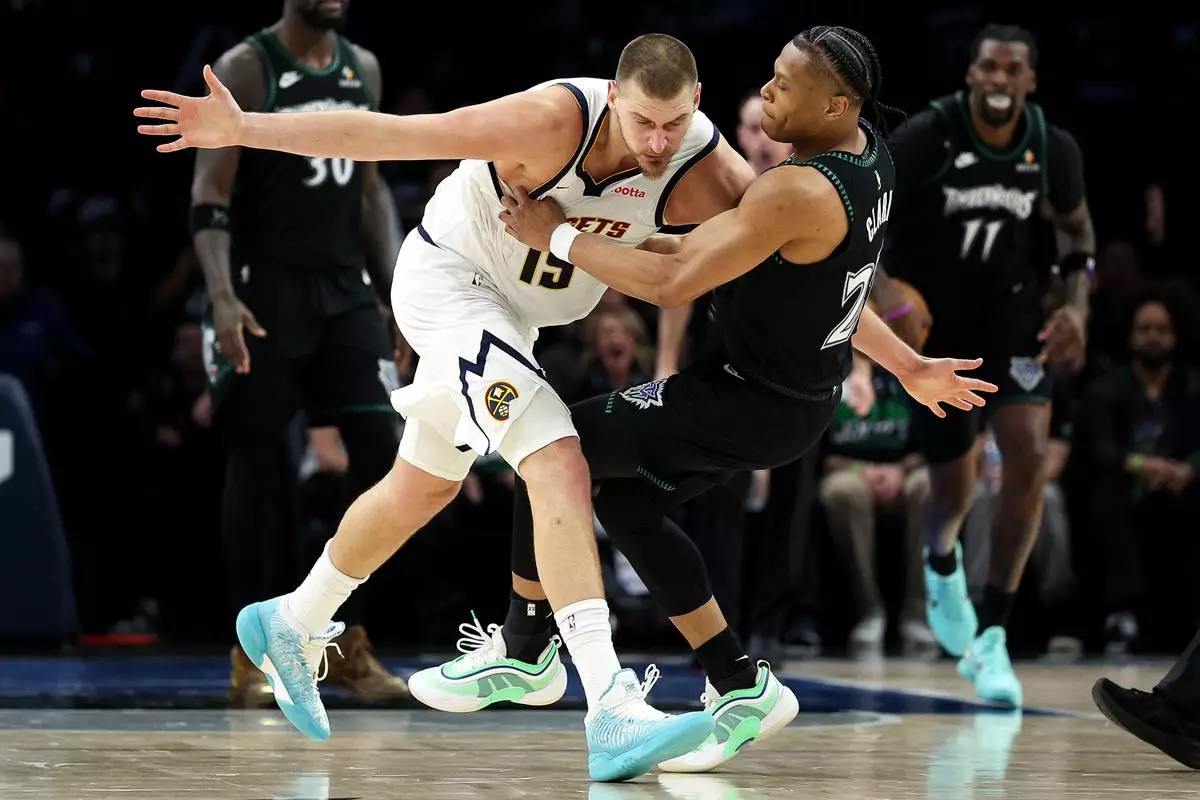
Denver Nuggets center Nikola Jokic, left, and Minnesota Timberwolves guard Jaylen Clark (22) get into an altercation during the second half of Game 6 of a first-round NBA basketball playoffs series, Thursday, April 30, 2026, in Minneapolis. (AP Photo/Matt Krohn)
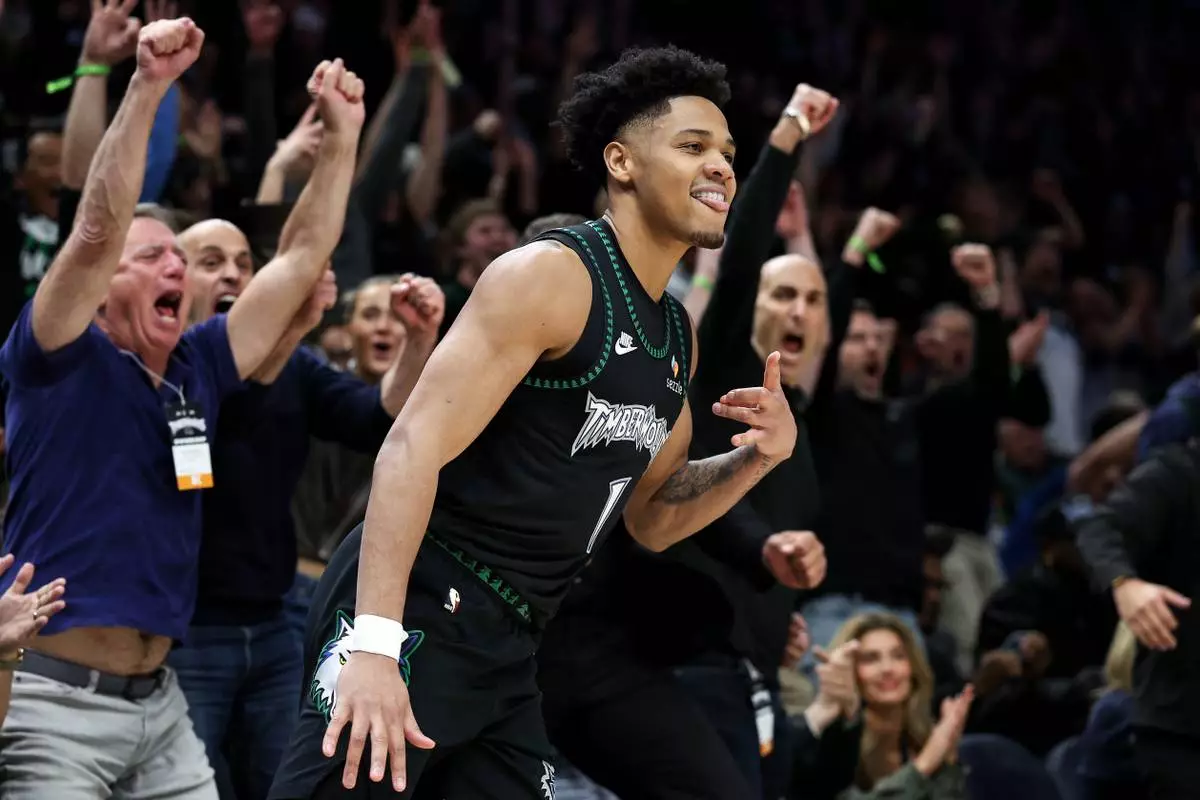
Minnesota Timberwolves guard Terrence Shannon Jr. (1) celebrates his three-point basket against the Denver Nuggets during the second half of Game 6 of a first-round NBA basketball playoffs series, Thursday, April 30, 2026, in Minneapolis. (AP Photo/Matt Krohn)
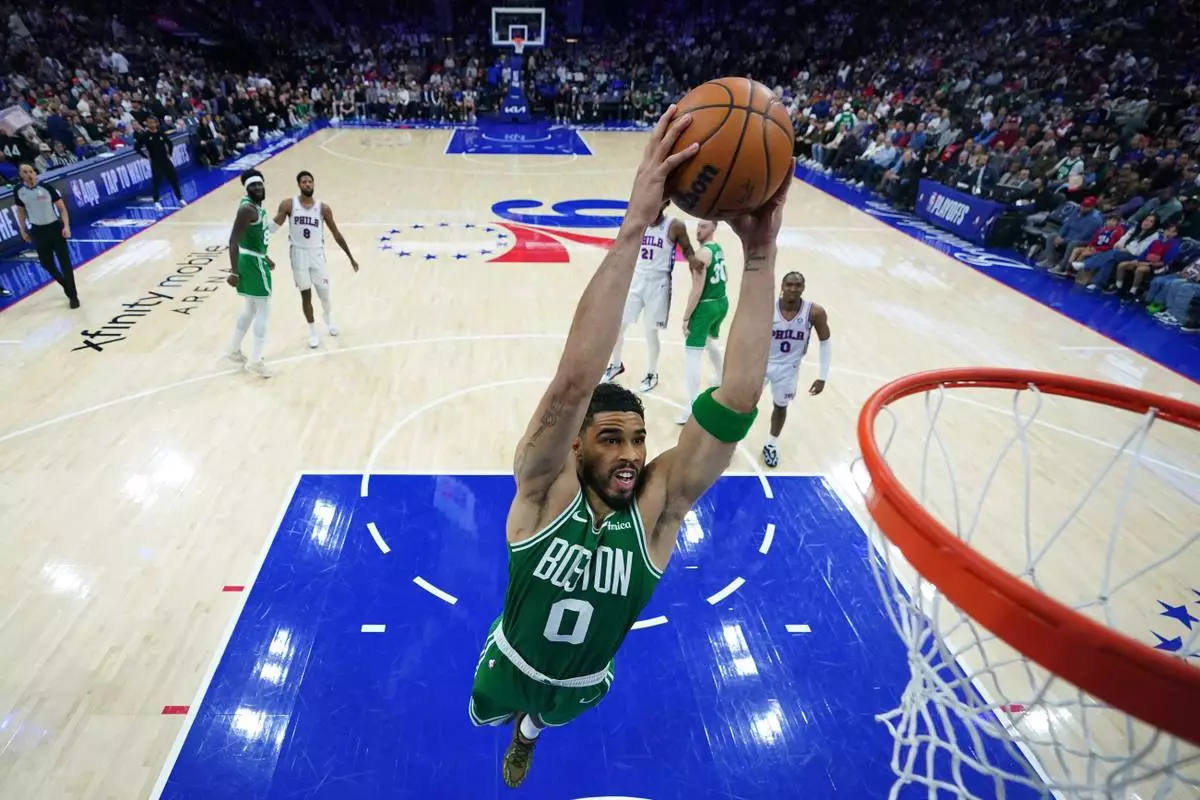
Boston Celtics' Jayson Tatum goes up for a dunk during the second half of Game 6 in a first-round NBA basketball playoff series against the Philadelphia 76ers Thursday, April 30, 2026, in Philadelphia. (AP Photo/Matt Slocum)
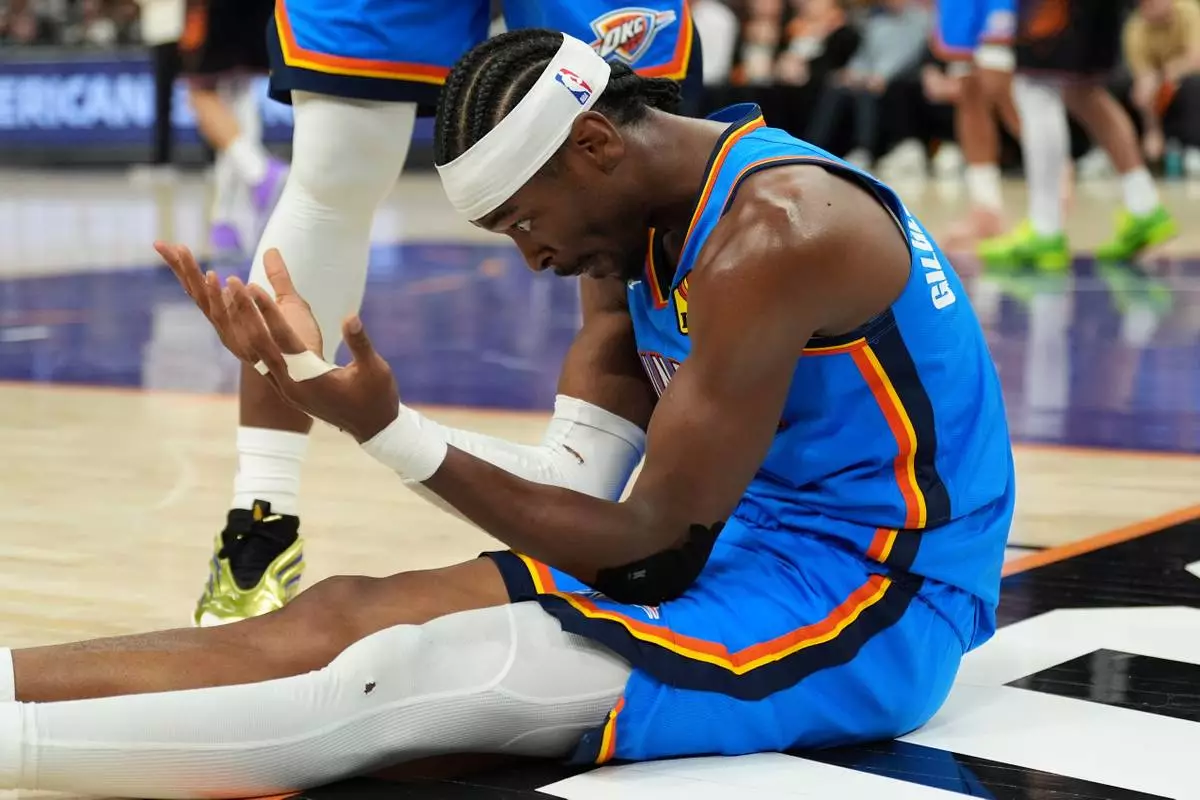
Oklahoma City Thunder guard Shai Gilgeous-Alexander celebrates a scores against the Phoenix Suns during the second half of Game 4 in a first-round NBA playoffs basketball series, Monday, April 27, 2026, in Phoenix. (AP Photo/Ross D. Franklin)
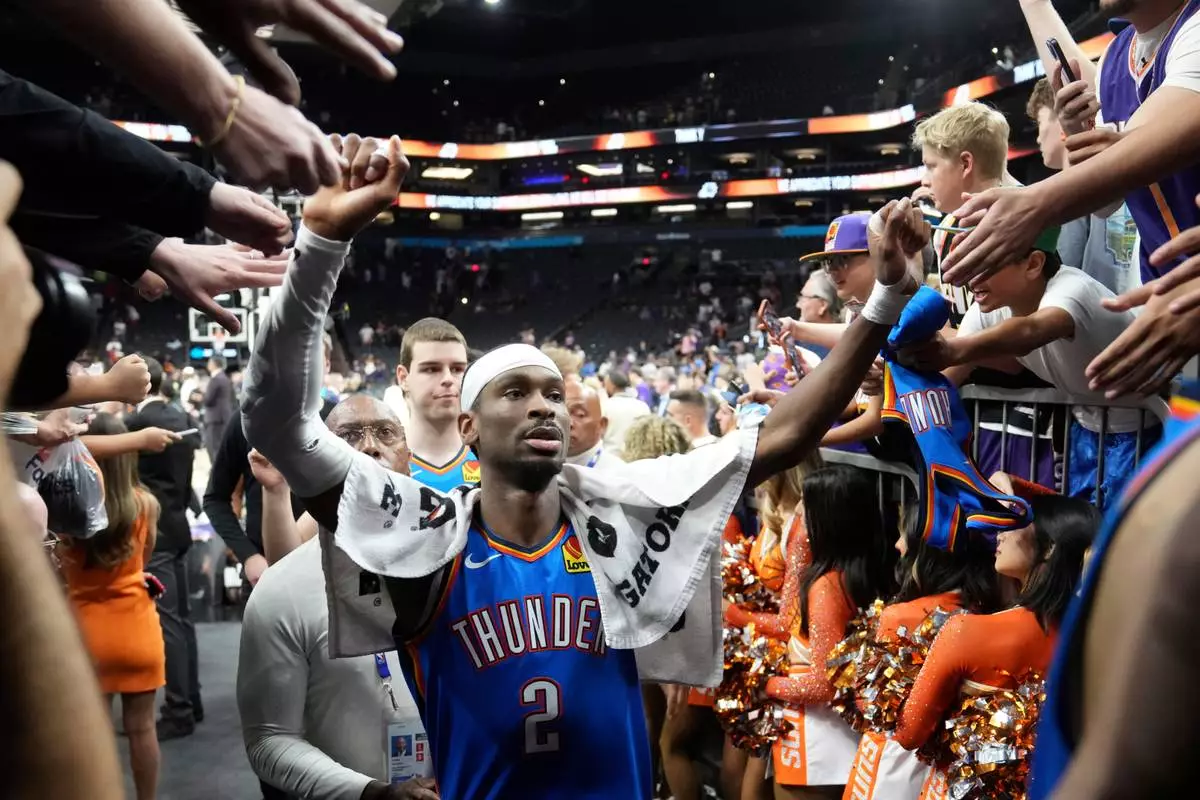
Oklahoma City Thunder guard Shai Gilgeous-Alexander celebrates with fans after Game 4 in a first-round NBA playoffs basketball series against the Phoenix Suns, Monday, April 27, 2026, in Phoenix. (AP Photo/Ross D. Franklin)
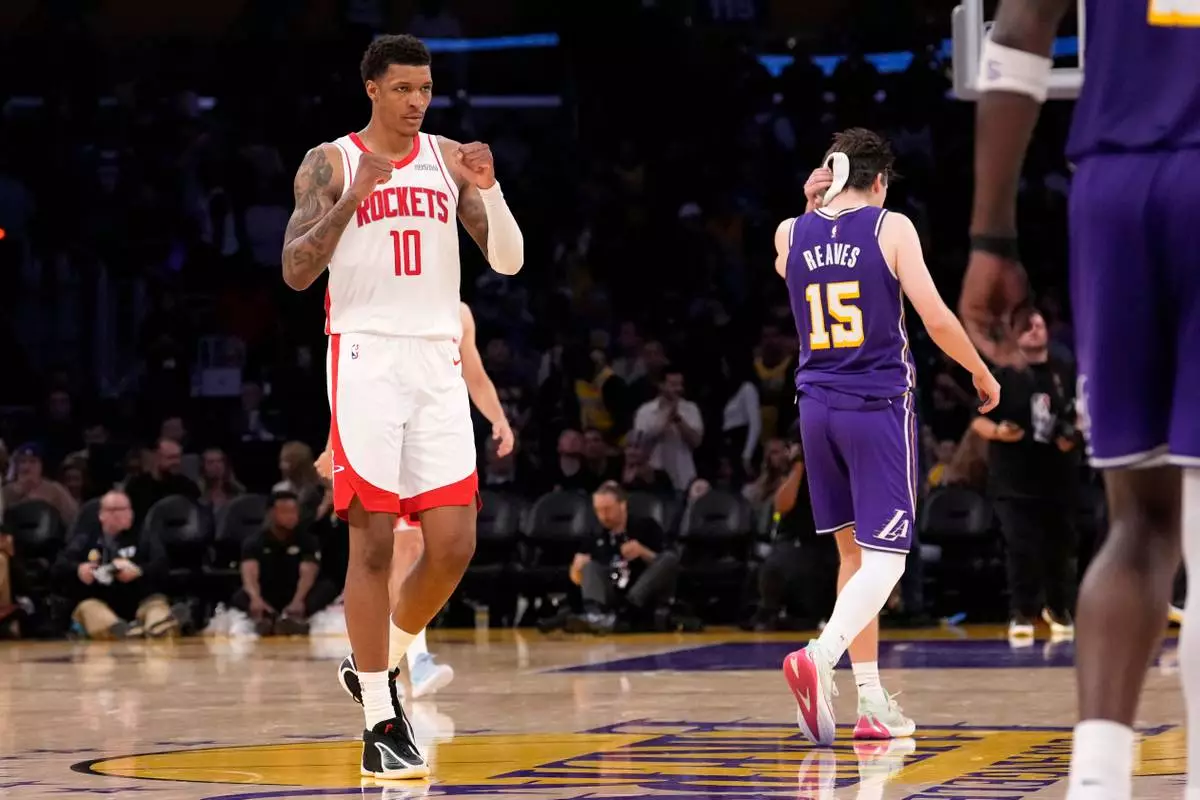
Houston Rockets forward Jabari Smith Jr., left, celebrates as Los Angeles Lakers guard Austin Reaves walks off after the Rockets defeated the Lakers in Game 5 of a first-round NBA playoffs basketball series Wednesday, April 29, 2026, in Los Angeles. (AP Photo/Mark J. Terrill)
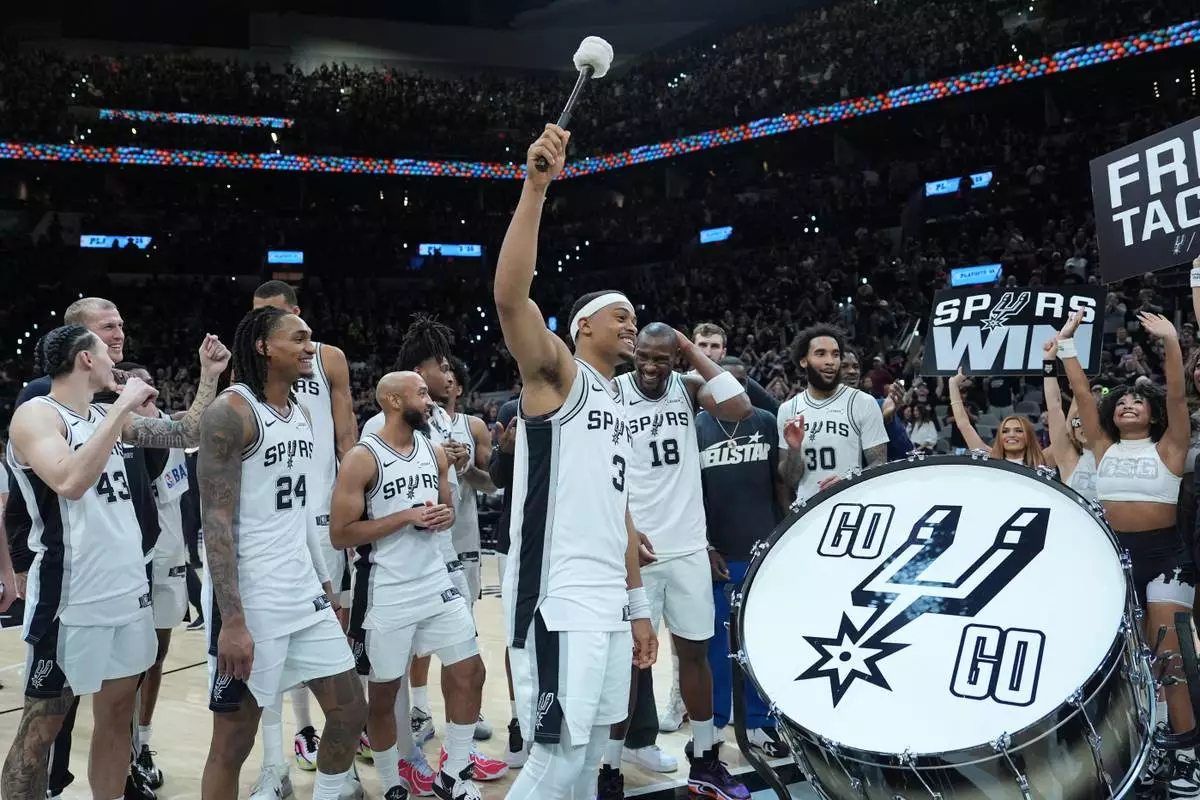
San Antonio Spurs forward/guard Keldon Johnson (3) celebrates with teammates after Game 5 of a first-round NBA playoffs basketball series against the Portland Trail Blazers in San Antonio, Tuesday, April 28, 2026. (AP Photo/Eric Gay)
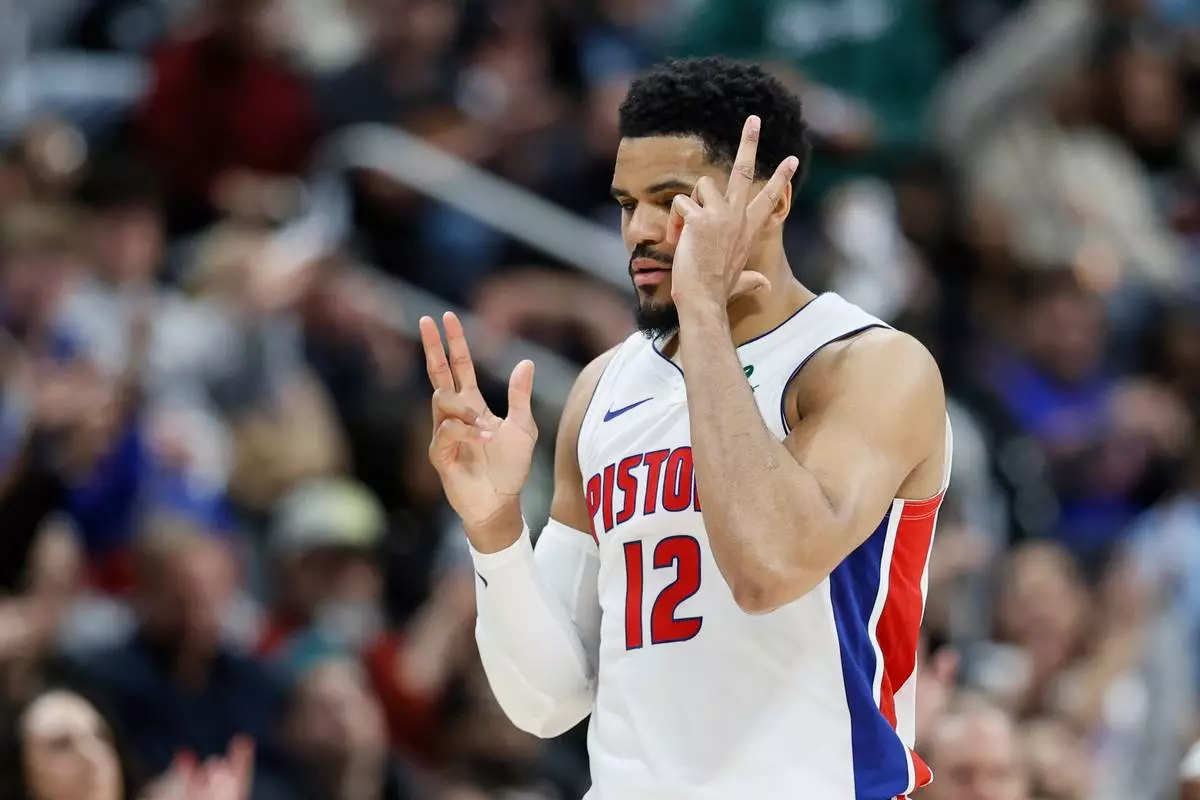
Detroit Pistons forward Tobias Harris (12) celebrates after scoring against the Orlando Magic during the fourth quarter in Game 5 of a first-round NBA basketball playoffs series Wednesday, April 29, 2026, in Detroit. (AP Photo/Duane Burleson)
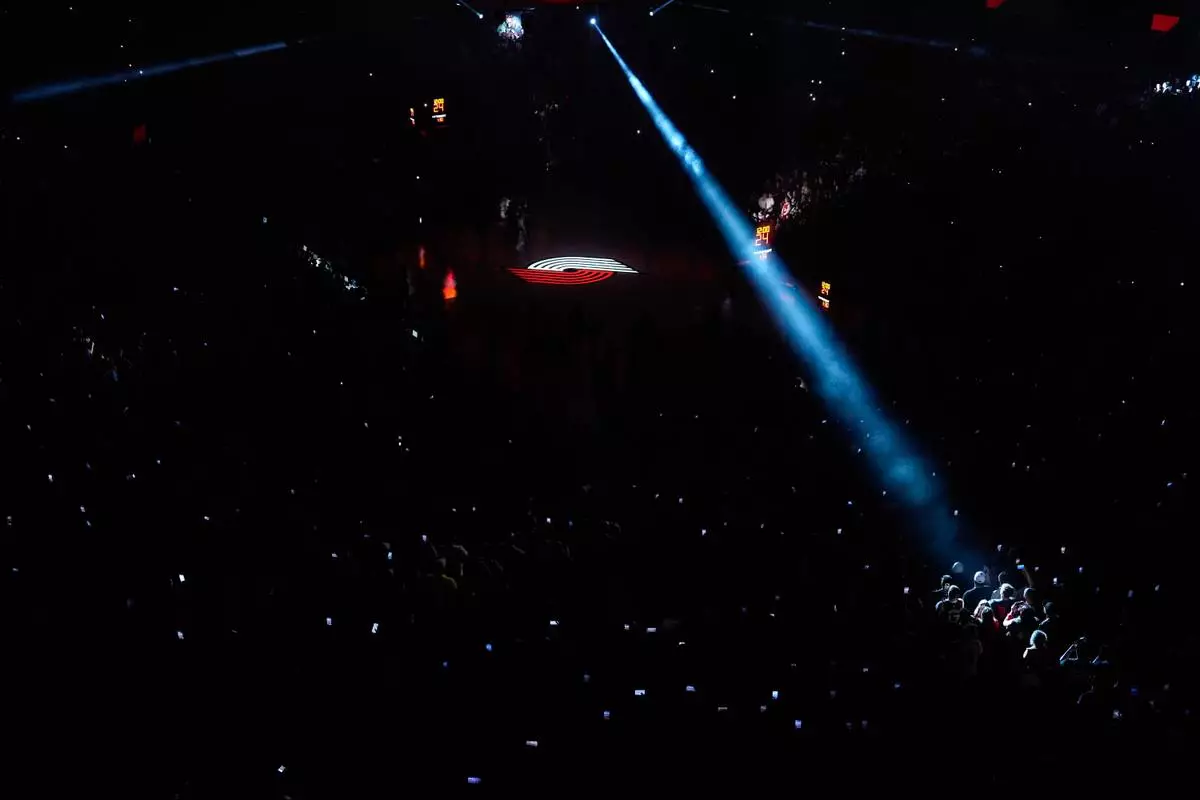
Fans watch Portland Trail Blazers player introductions before Game 4 of a first-round NBA basketball playoffs series against the San Antonio Spurs, in Portland, Ore., Sunday, April 26, 2026. (AP Photo/Jenny Kane)
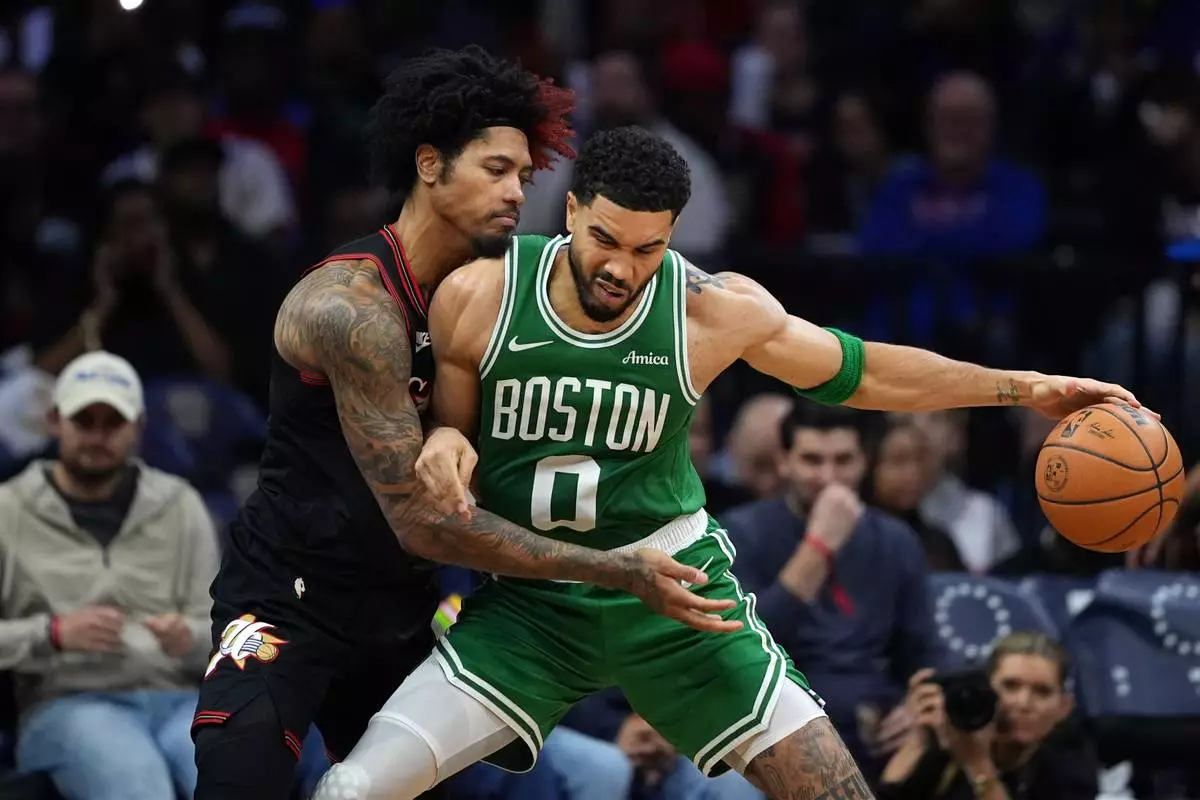
Boston Celtics' Jayson Tatum, right, tries to get past Philadelphia 76ers' Kelly Oubre Jr. during the second half of Game 4 in a first-round NBA basketball playoffs series Sunday, April 26, 2026, in Philadelphia. (AP Photo/Matt Slocum)
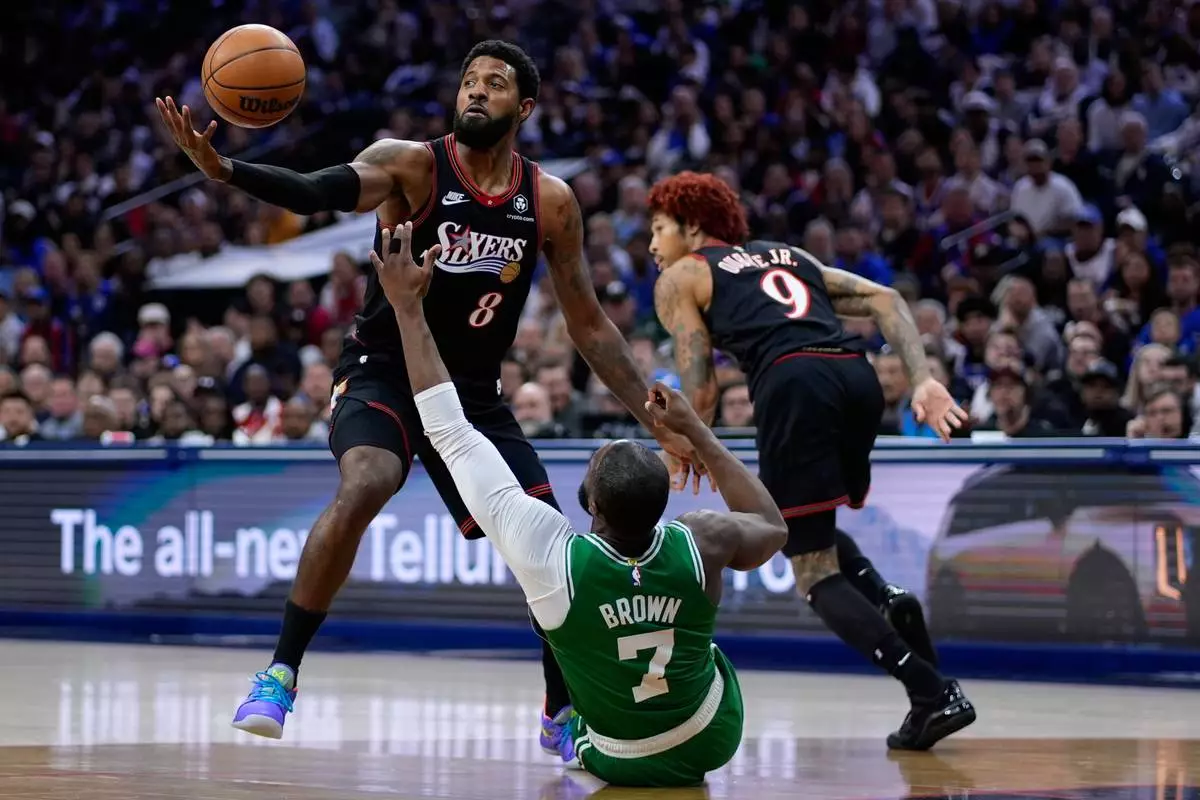
Philadelphia 76ers' Paul George (8) and Boston Celtics' Jaylen Brown (7) reach for a loose ball during the first half of Game 4 in a first-round NBA basketball playoffs series Sunday, April 26, 2026, in Philadelphia. (AP Photo/Matt Slocum)
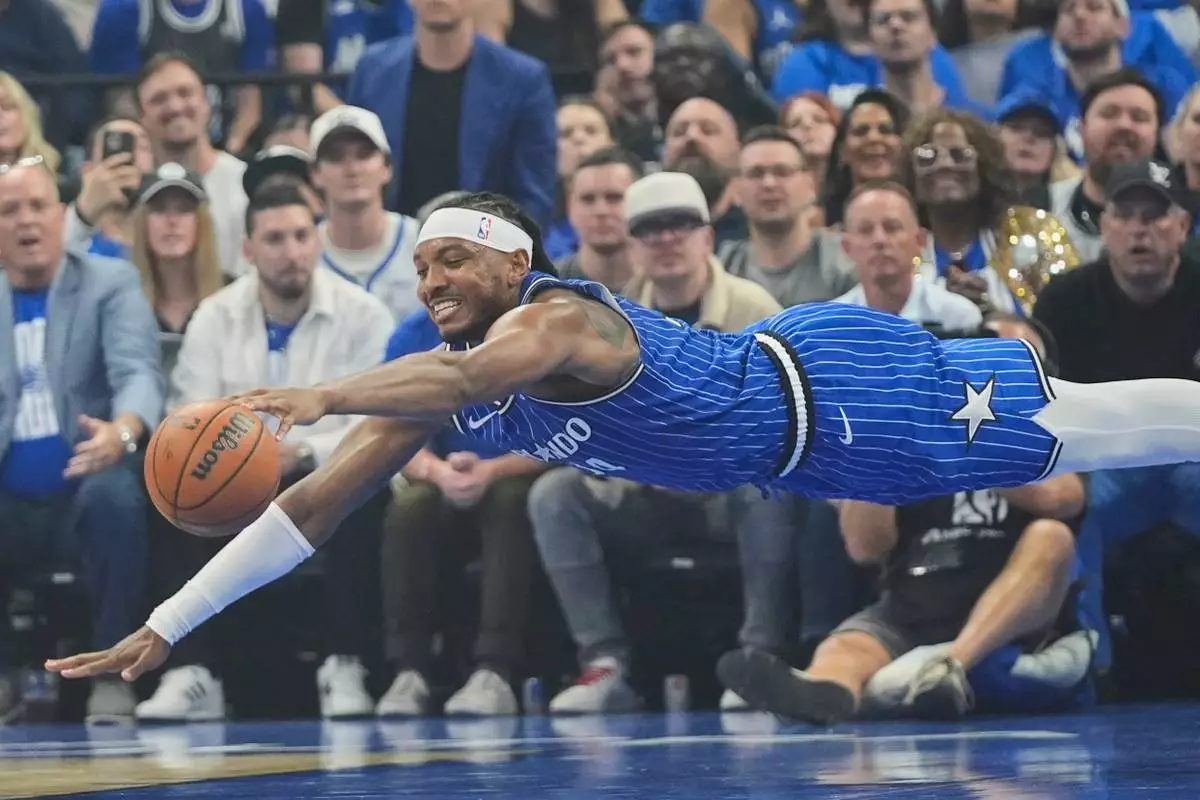
Orlando Magic center Wendell Carter Jr. dives for a loose ball during the first half in Game 4 of a first-round NBA basketball playoff series against the Detroit Pistons, Monday, April 27, 2026, in Orlando, Fla. (AP Photo/John Raoux)
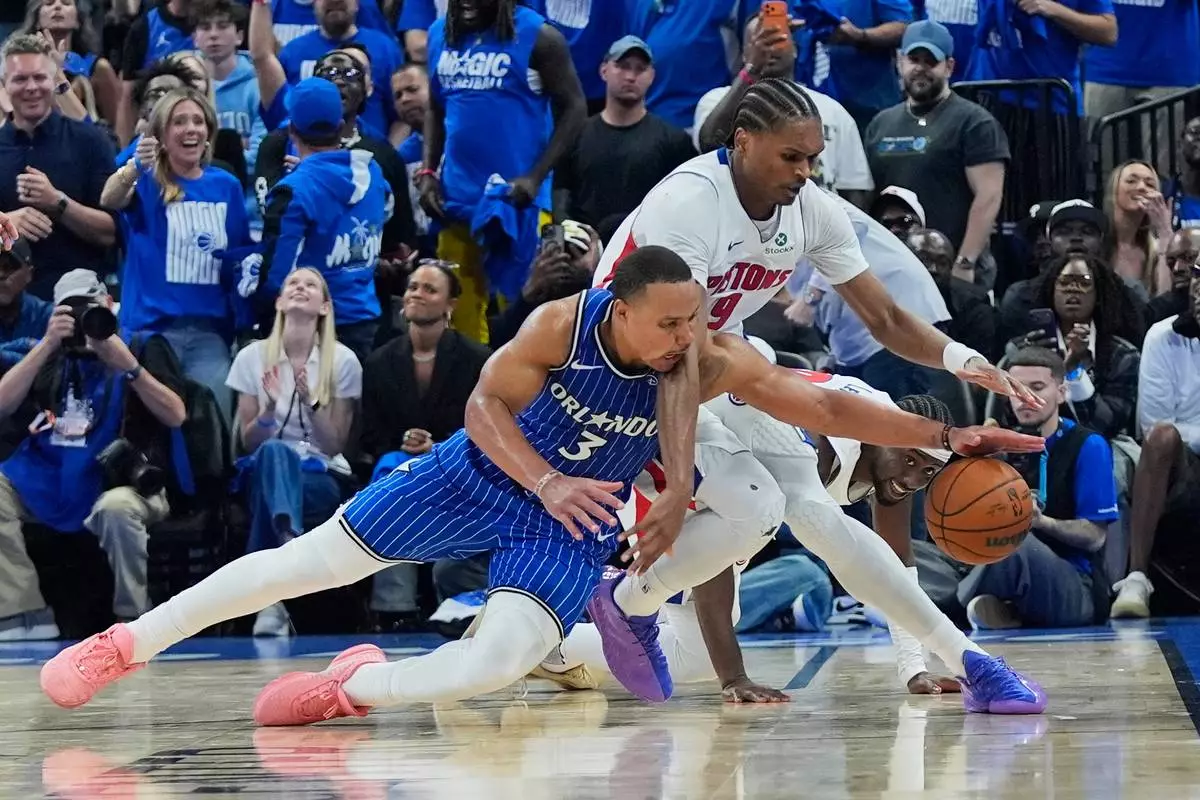
Orlando Magic guard Desmond Bane (3) goes after a loose ball against Detroit Pistons guard Ausar Thompson during the second half in Game 4 of a first-round NBA basketball playoff series, Monday, April 27, 2026, in Orlando, Fla. (AP Photo/John Raoux)
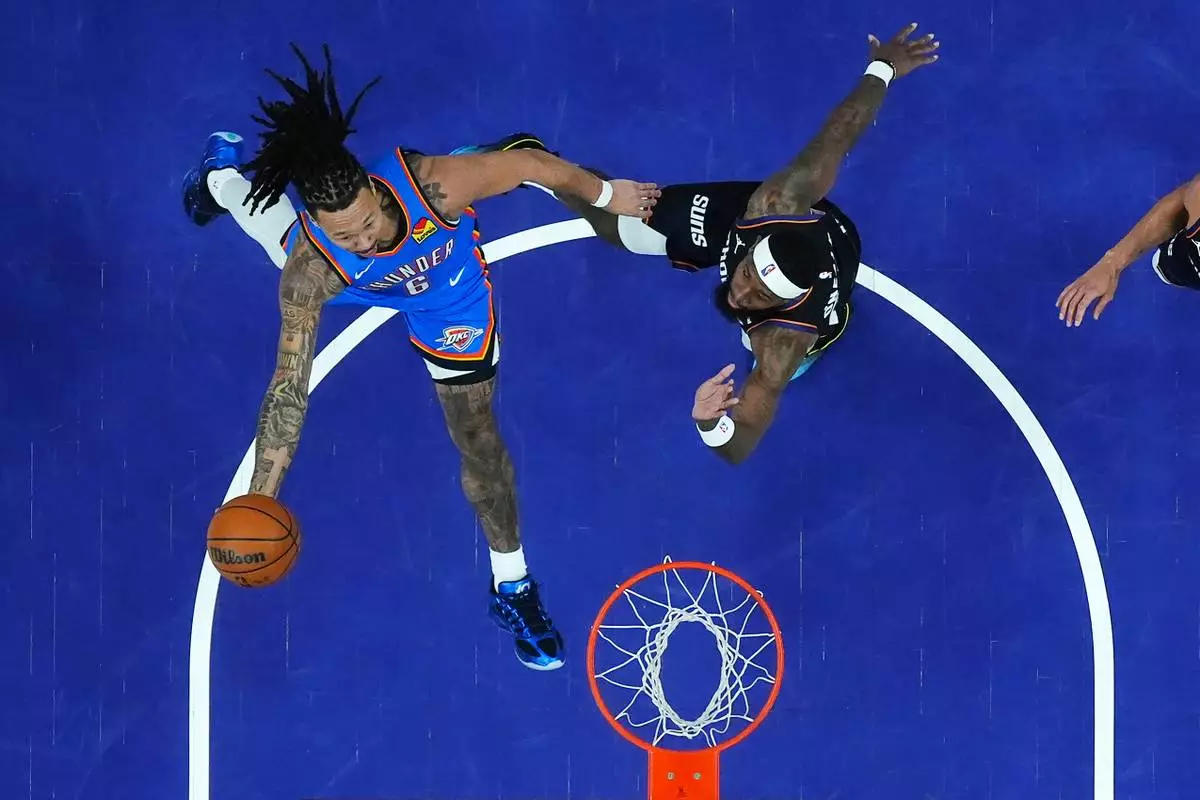
Oklahoma City Thunder forward Jaylin Williams (6) scores against Phoenix Suns forward Royce O'Neale during the second half of Game 3 of a first-round NBA playoffs basketball series, Saturday, April 25, 2026, in Phoenix. (AP Photo/Ross D. Franklin)
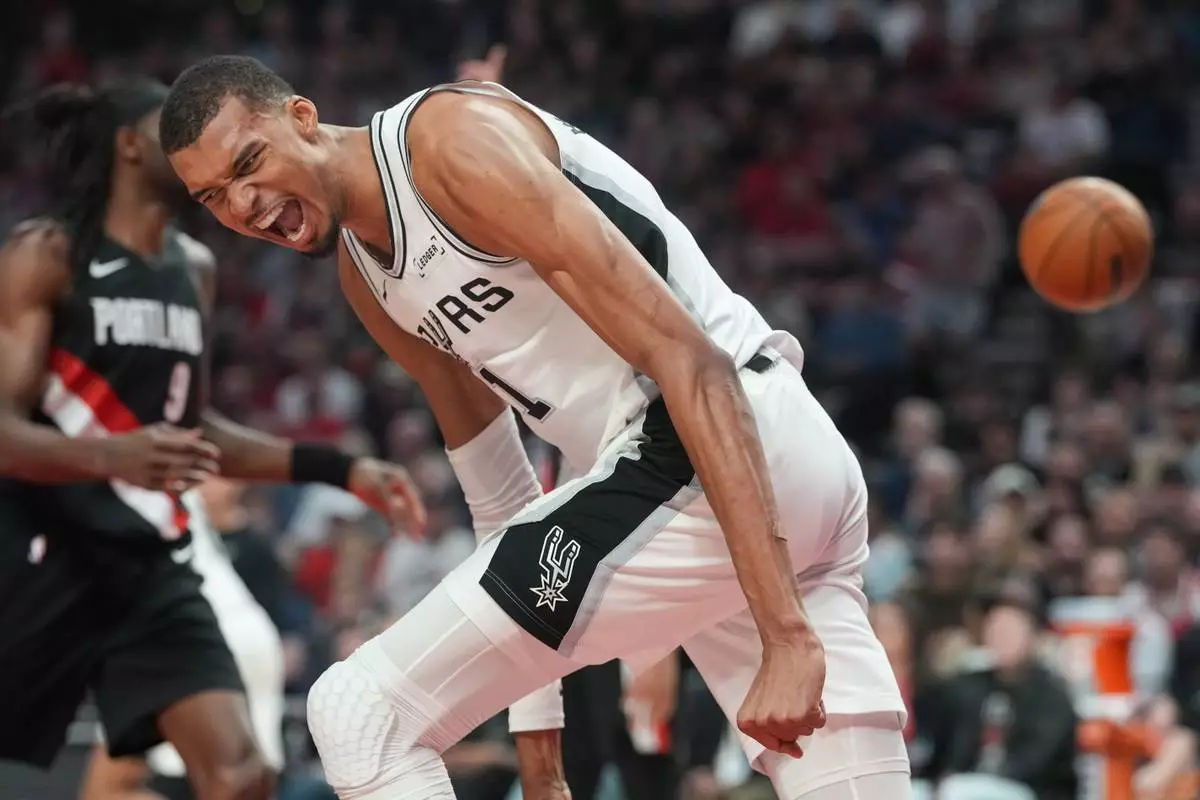
San Antonio Spurs center Victor Wembanyama reacts after a shot during the first half in Game 4 of a first-round NBA basketball playoffs series against the Portland Trail Blazers, in Portland, Ore., Sunday, April 26, 2026. (AP Photo/Jenny Kane)
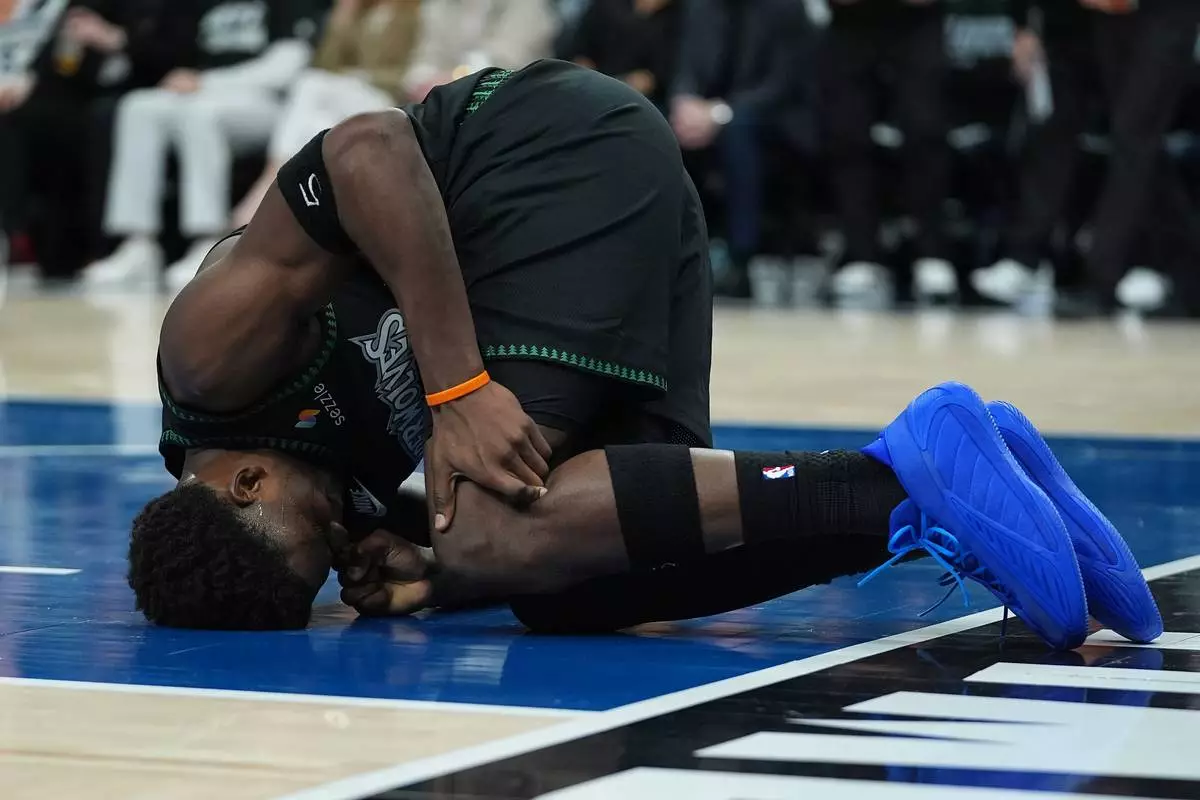
Minnesota Timberwolves guard Anthony Edwards kneels on the court after sustaining an injury during the first half of Game 4 of a first-round NBA basketball playoff series against the Denver Nuggets, Saturday, April 25, 2026, in Minneapolis. (AP Photo/Abbie Parr)
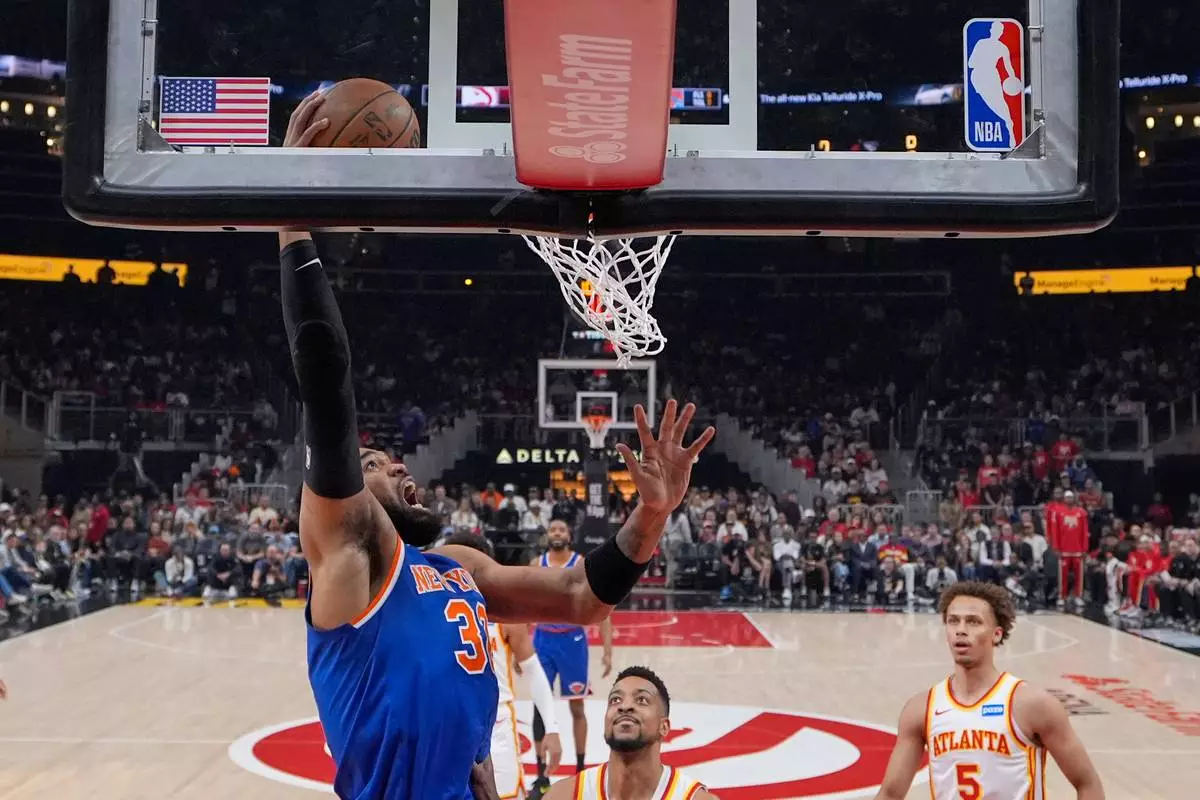
New York Knicks center Karl-Anthony Towns (32) shoots against Atlanta Hawks forward Onyeka Okongwu (17) during the first half of Game 4 in a first-round NBA playoffs basketball series Saturday, April 25, 2026, in Atlanta. (AP Photo/Brynn Anderson)
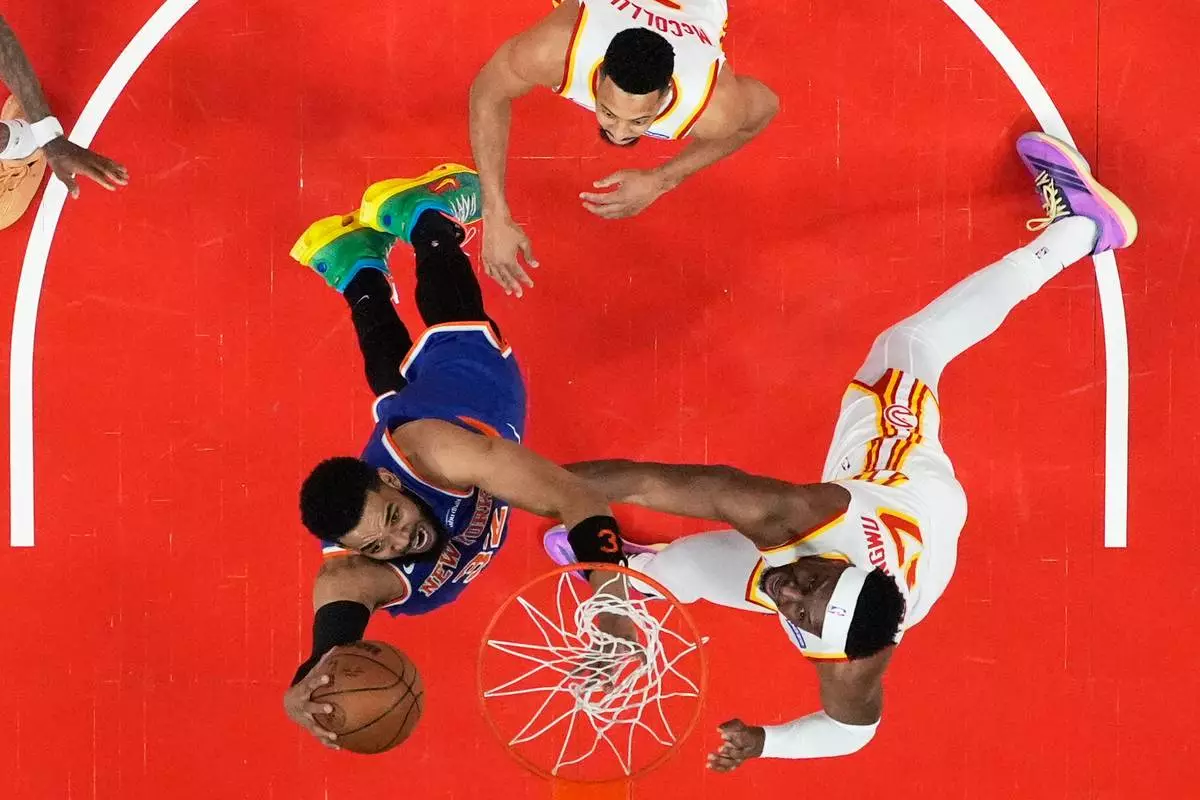
New York Knicks center Karl-Anthony Towns (32) shoots against Atlanta Hawks forward Onyeka Okongwu (17) during the first half of Game 4 in a first-round NBA playoffs basketball series Saturday, April 25, 2026, in Atlanta. (AP Photo/Brynn Anderson)
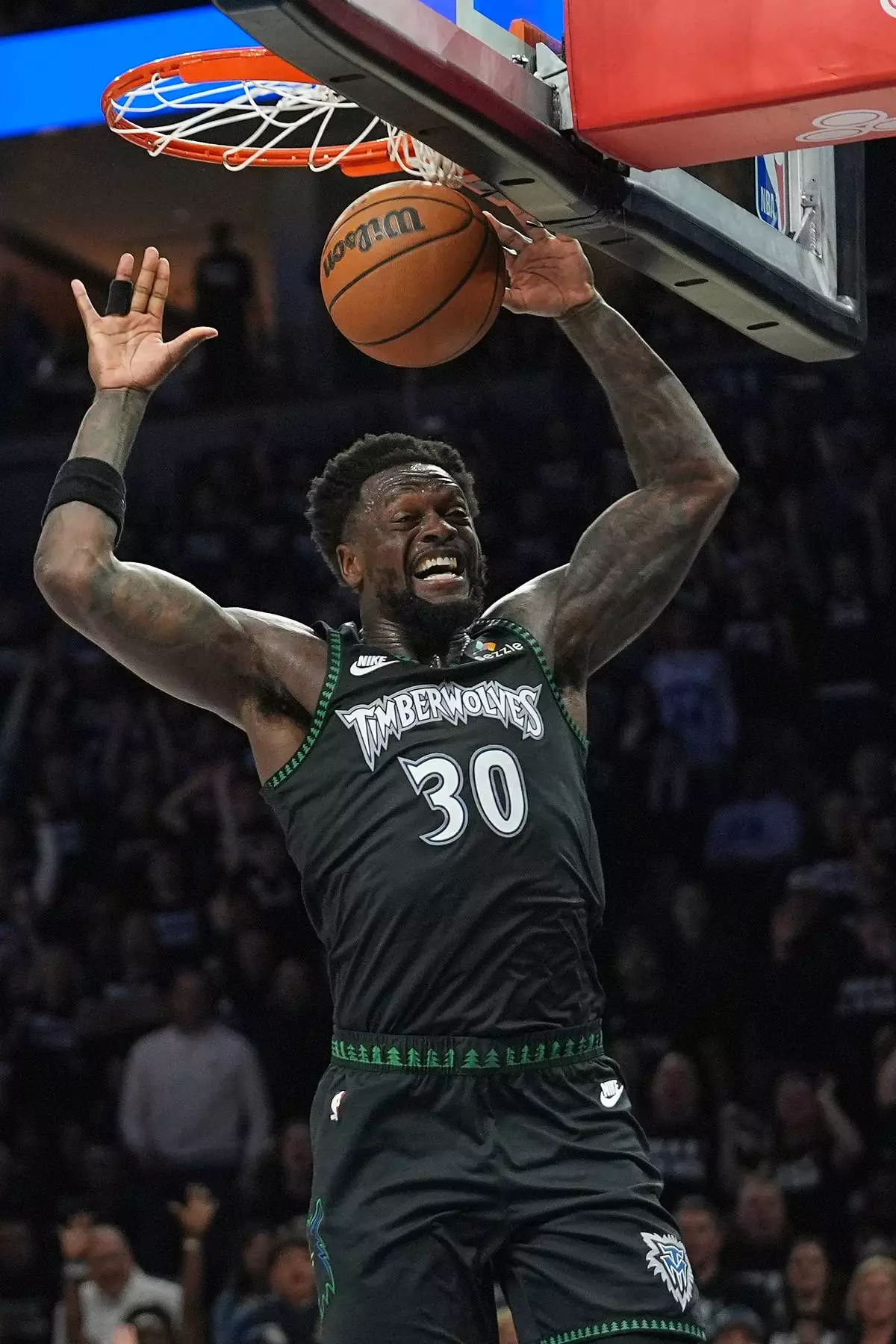
Minnesota Timberwolves forward Julius Randle dunks during the second half of Game 4 of a first-round NBA basketball playoff series against the Denver Nuggets, Saturday, April 25, 2026, in Minneapolis. (AP Photo/Abbie Parr)
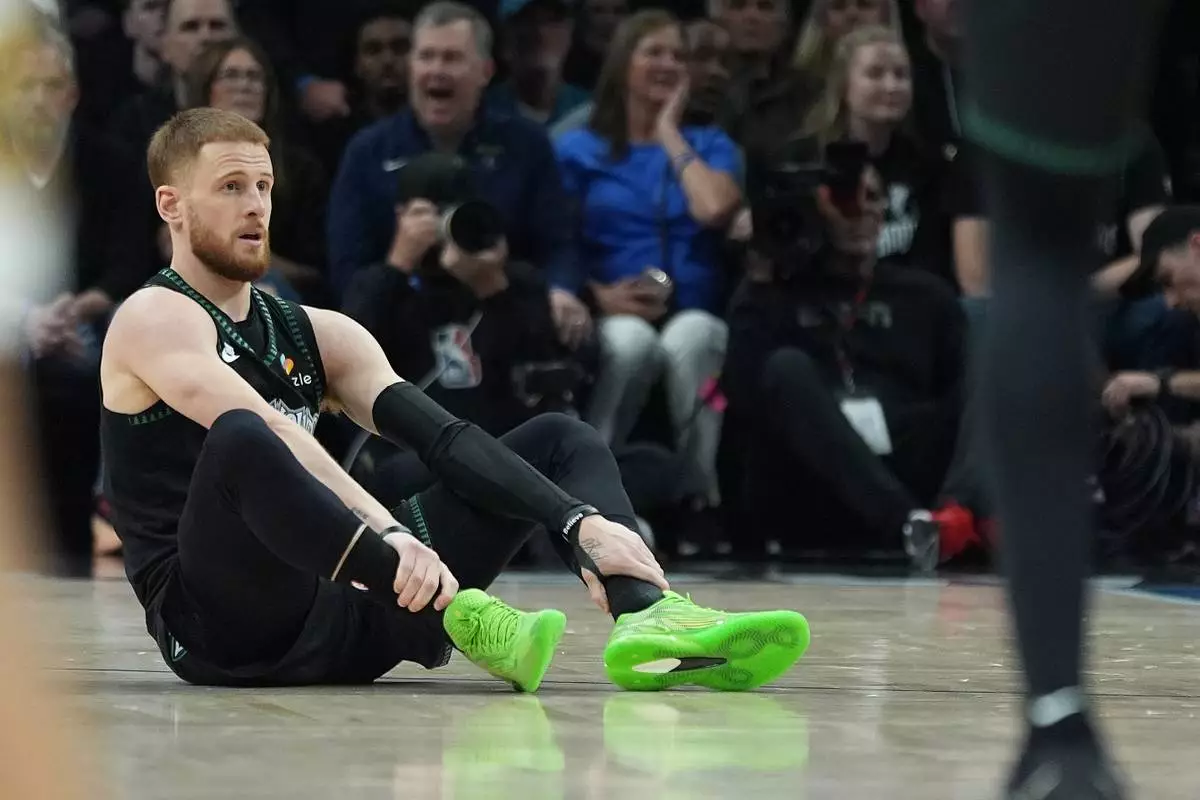
Minnesota Timberwolves guard Donte DiVincenzo (0) sits on the court after sustaining an injury during the first half of Game 4 of a first-round NBA basketball playoff series against the Denver Nuggets, Saturday, April 25, 2026, in Minneapolis. (AP Photo/Abbie Parr)
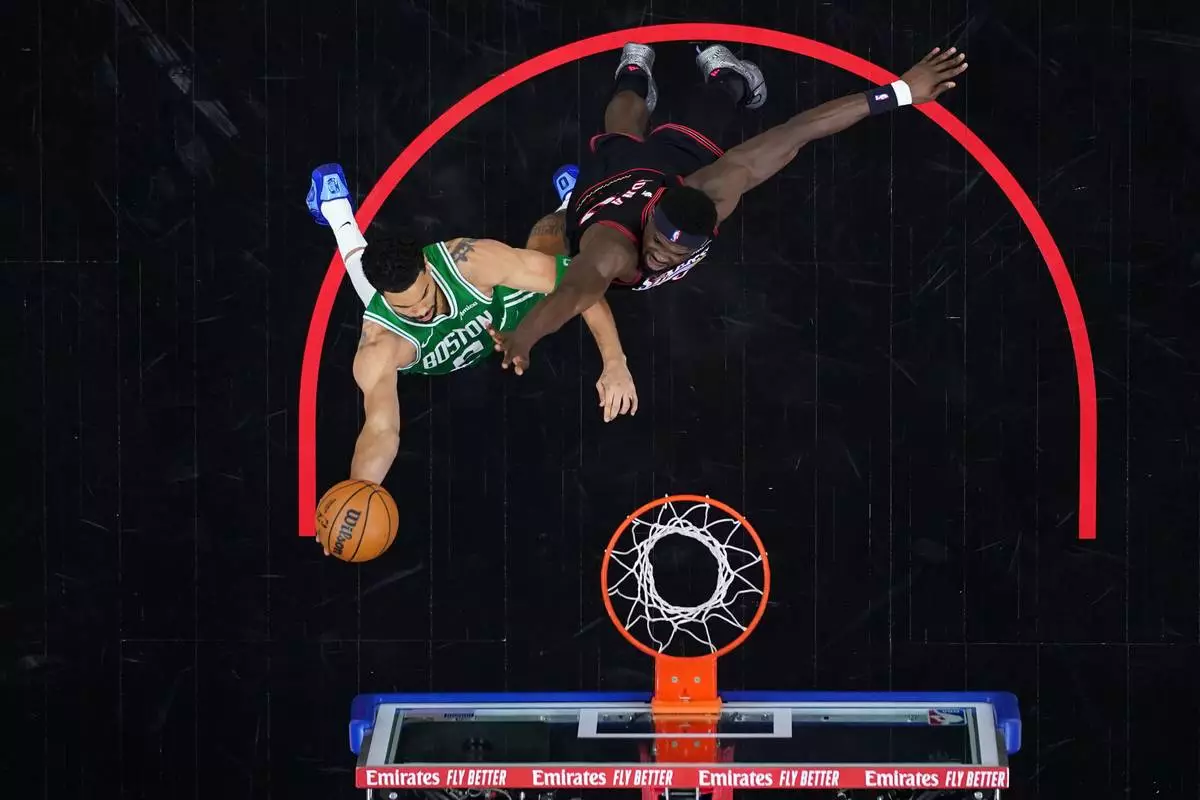
Boston Celtics' Jayson Tatum, left, goes up for a shot past Philadelphia 76ers' Adem Bona during the second half of Game 3 in a first-round NBA playoffs basketball series Friday, April 24, 2026, in Philadelphia. (AP Photo/Matt Slocum)
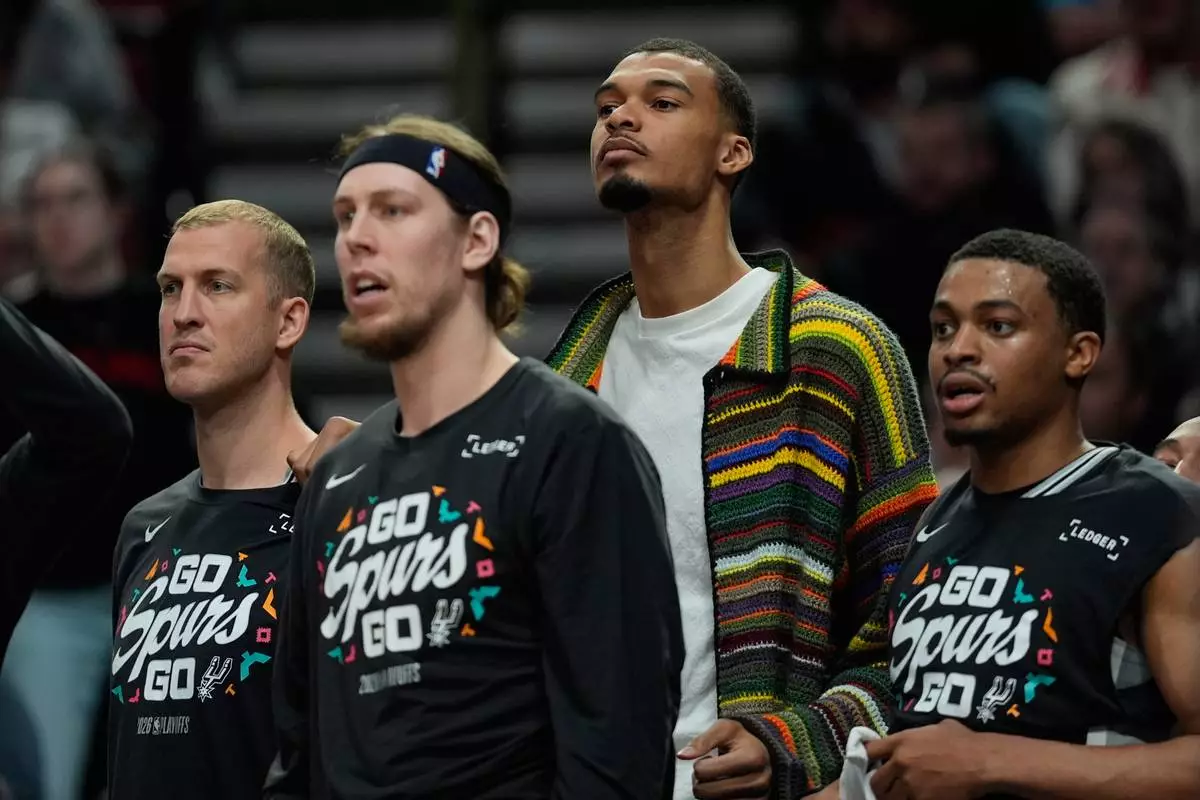
San Antonio Spurs forward Victor Wembanyama, center, wears street cloths on the bench as he sits out Game 3 of a first-round NBA playoffs basketball series against the Portland Trail Blazers in Portland, Ore, Friday, April 24, 2026. (AP Photo/Jenny Kane)
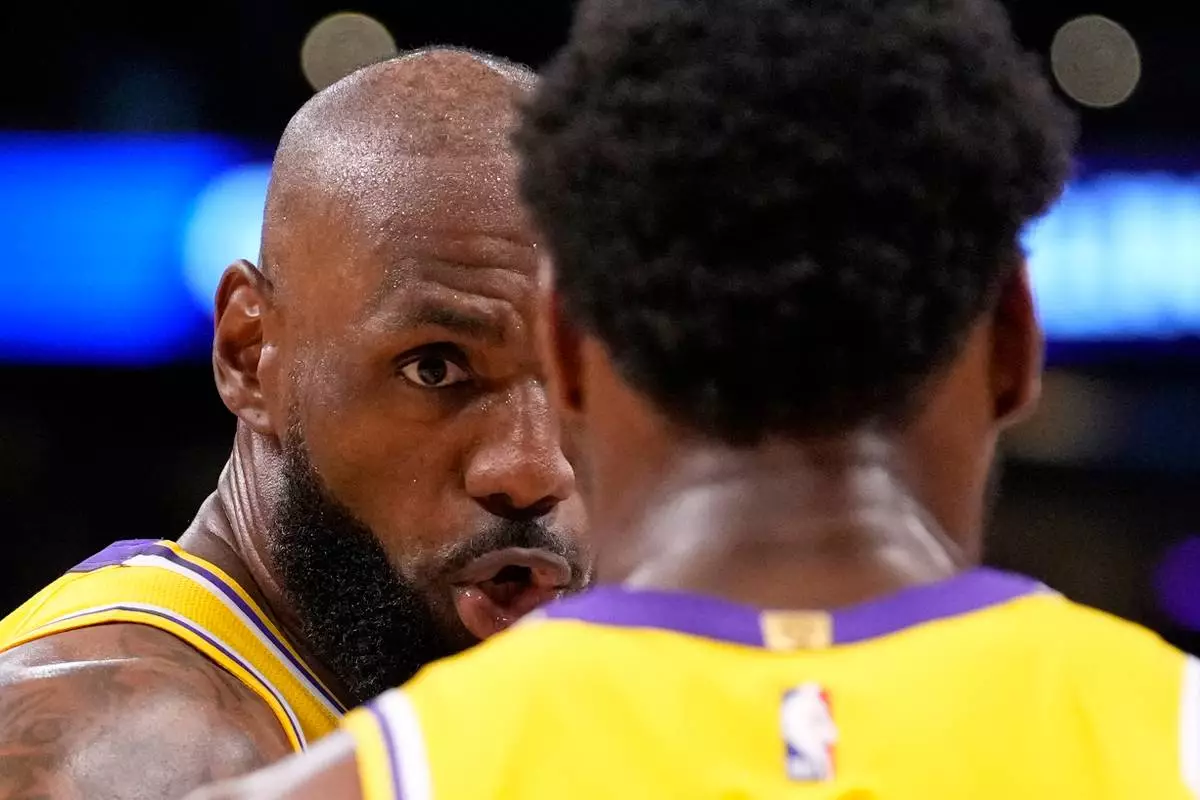
Los Angeles Lakers forward LeBron James, left, talks to guard Bronny James during the first half in Game 1 of a first-round NBA playoffs basketball series against the Houston Rockets, Saturday, April 18, 2026, in Los Angeles. (AP Photo/Mark J. Terrill)
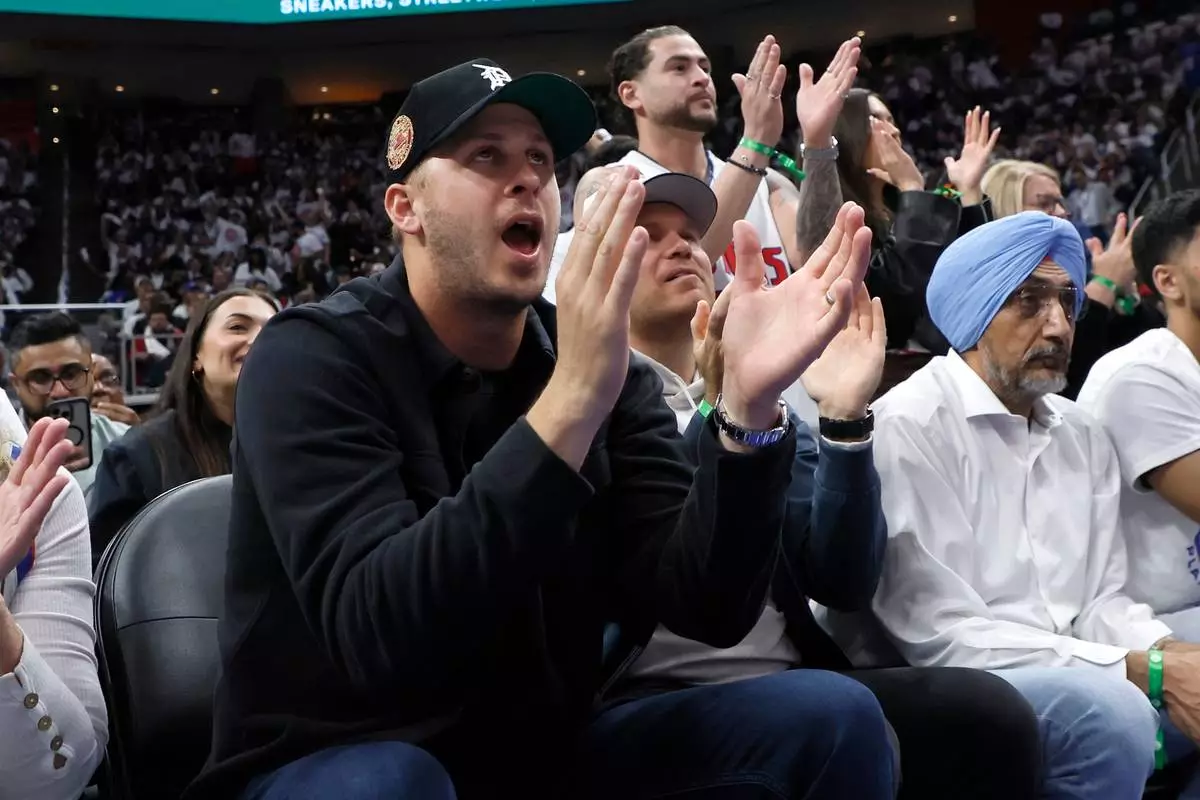
Detroit Lions quarterback Jared Goff cheers on the Detroit Piston during the second half in Game 2 of a first-round NBA basketball playoffs series against the Orlando Magic Wednesday, April 22, 2026, in Detroit. (AP Photo/Duane Burleson)
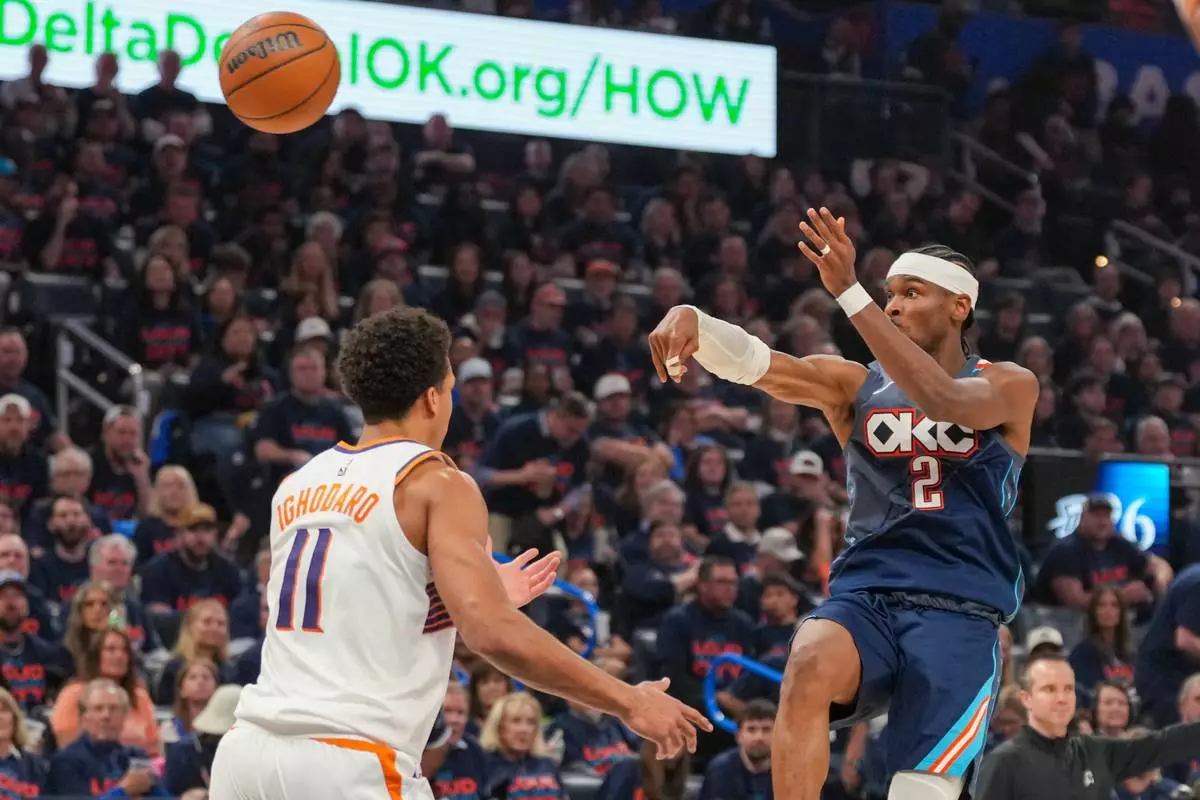
Oklahoma City Thunder guard Shai Gilgeous-Alexander (2) passes over Phoenix Suns forward Oso Ighodaro (11) during the second half in Game 2 of a first-round NBA playoffs basketball series Wednesday, April 22, 2026, in Oklahoma City. (AP Photo/Kyle Phillips)
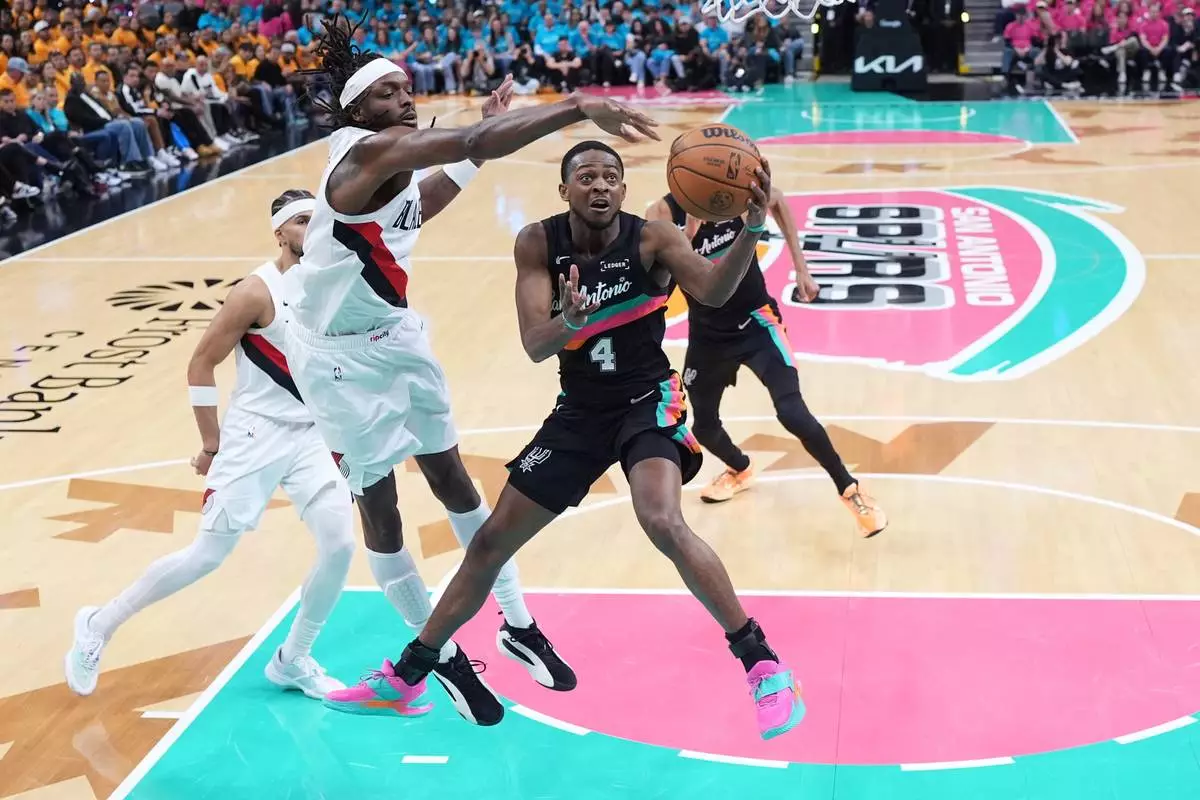
San Antonio Spurs guard De'aaron Fox (4) drives to the basket past Portland Trail Blazers forward Jerami Grant, left, during the second half in Game 1 of a first-round NBA playoffs basketball series in San Antonio, Sunday, April 19, 2026. (AP Photo/Eric Gay)
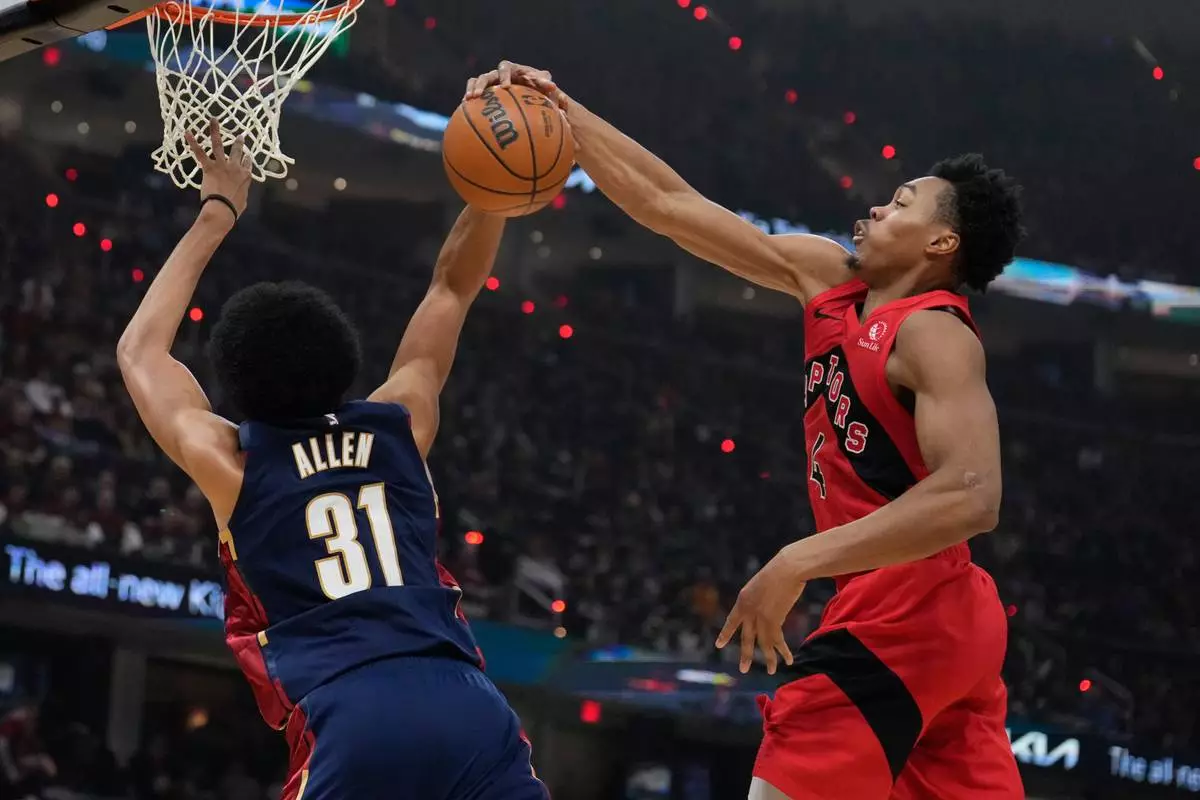
Toronto Raptors forward Scottie Barnes (4) blocks a shot by Cleveland Cavaliers center Jarrett Allen (31) in the second half in Game 2 of a first-round NBA basketball playoffs series in Cleveland, Monday, April 20, 2026. (AP Photo/Sue Ogrocki)
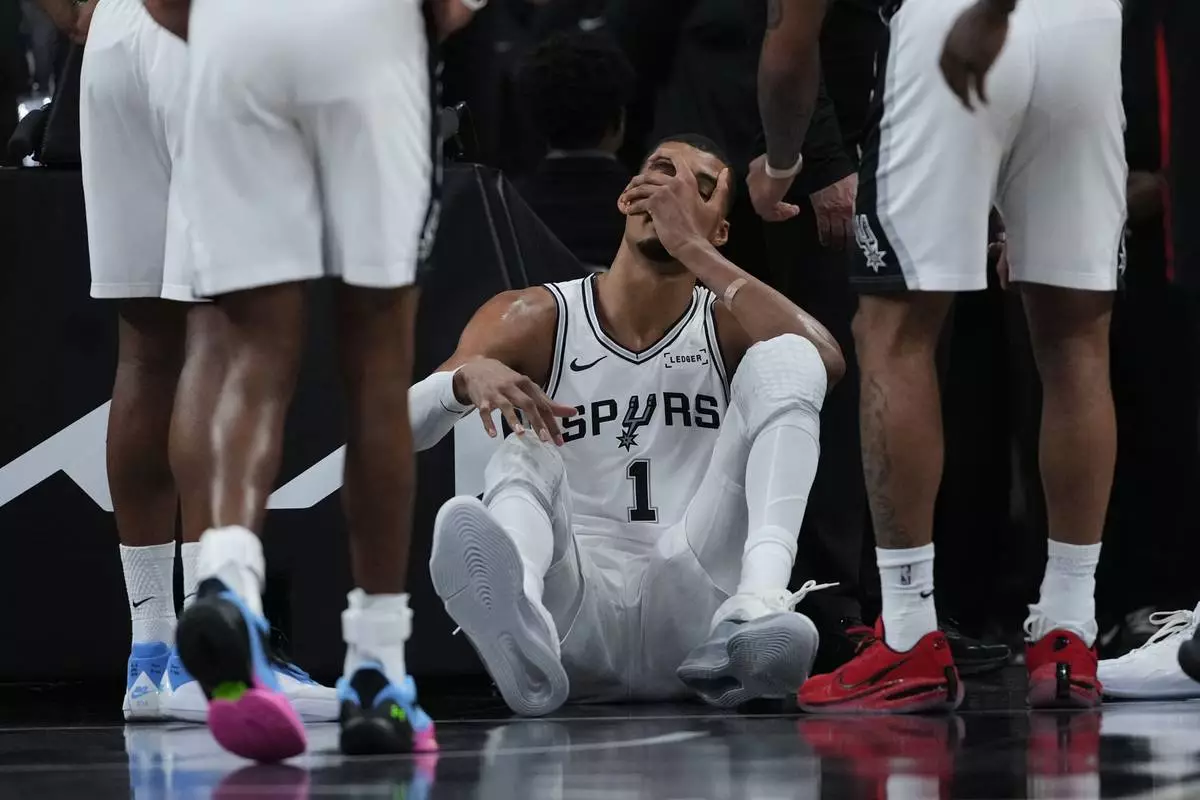
San Antonio Spurs forward Victor Wembanyama (1) sits on the court after a hard fall during the first half in Game 2 of a first-round NBA playoffs basketball series against the Portland Trail Blazers in San Antonio, Tuesday, April 21, 2026. (AP Photo/Eric Gay)
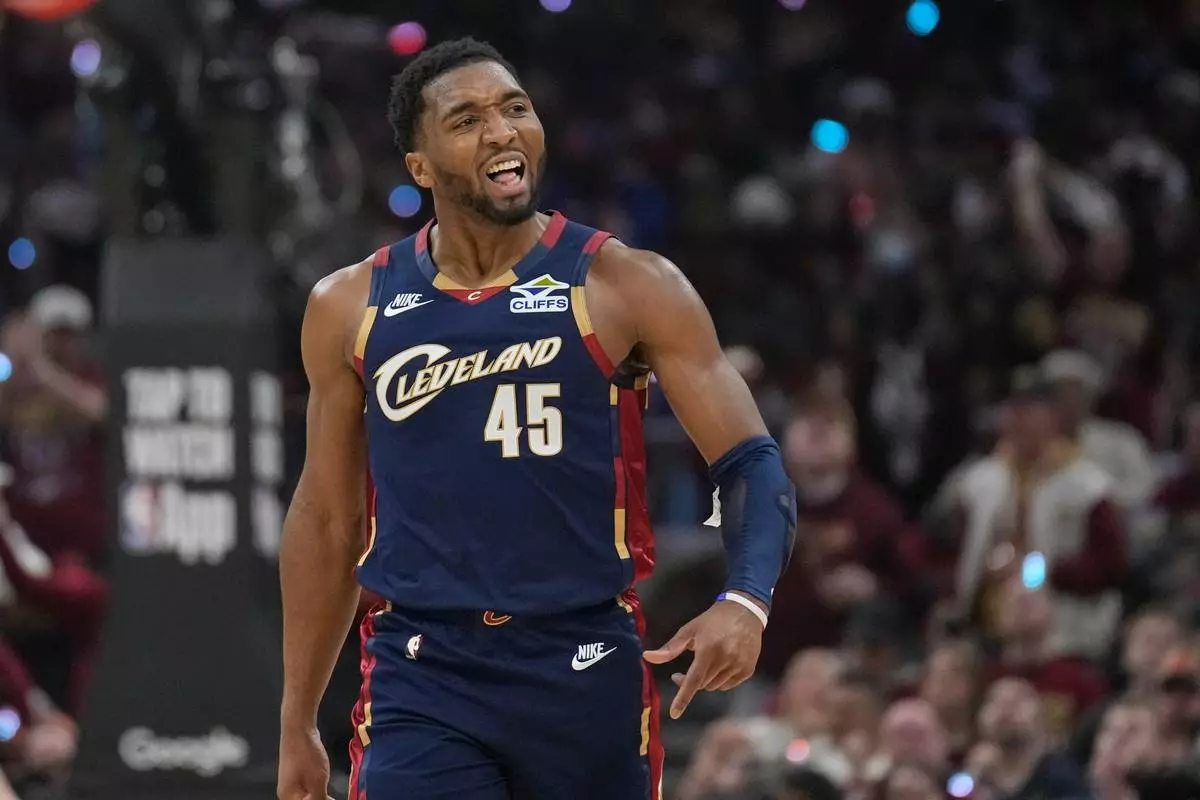
Cleveland Cavaliers guard Donovan Mitchell (45) gestures to the crowd in the first half in Game 2 of a first-round NBA basketball playoffs series against the Toronto Raptors in Cleveland, Monday, April 20, 2026. (AP Photo/Sue Ogrocki)
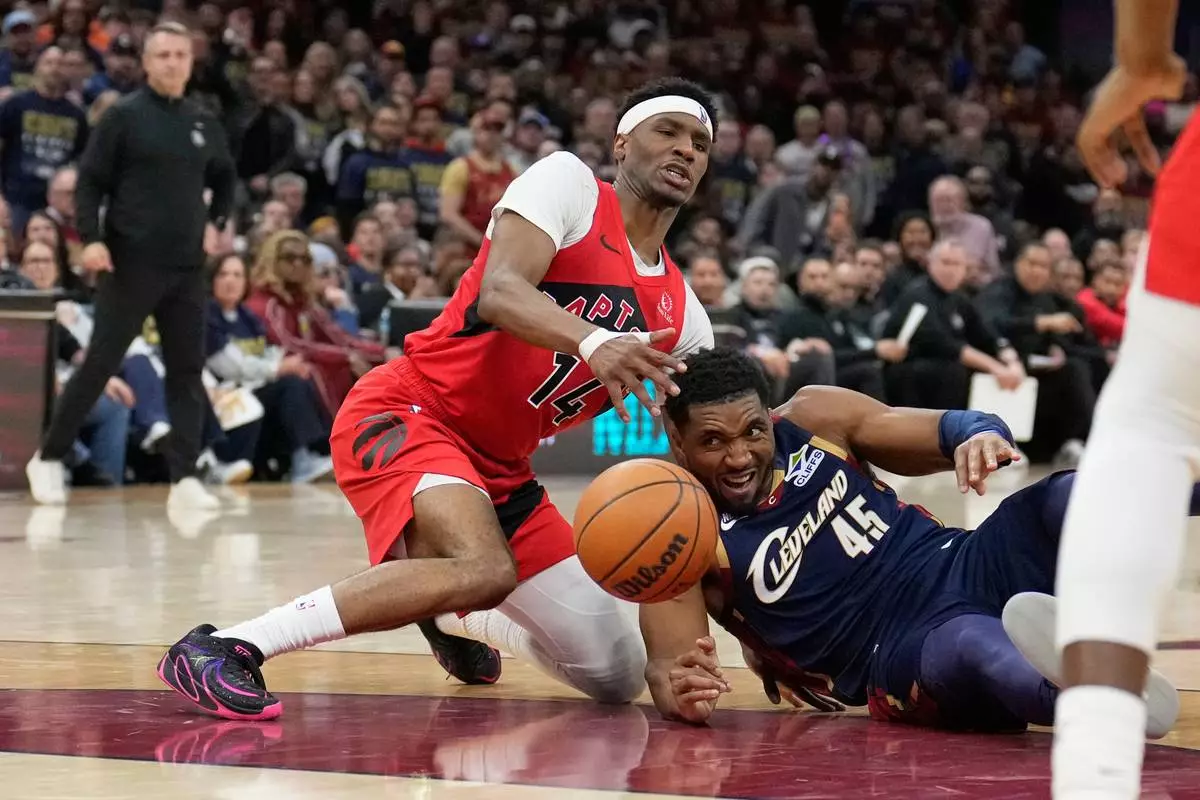
Toronto Raptors guard Ja'kobe Walter (14) and Cleveland Cavaliers guard Donovan Mitchell (45) reach for the ball in the second half in Game 2 of a first-round NBA basketball playoffs series in Cleveland, Monday, April 20, 2026. (AP Photo/Sue Ogrocki)
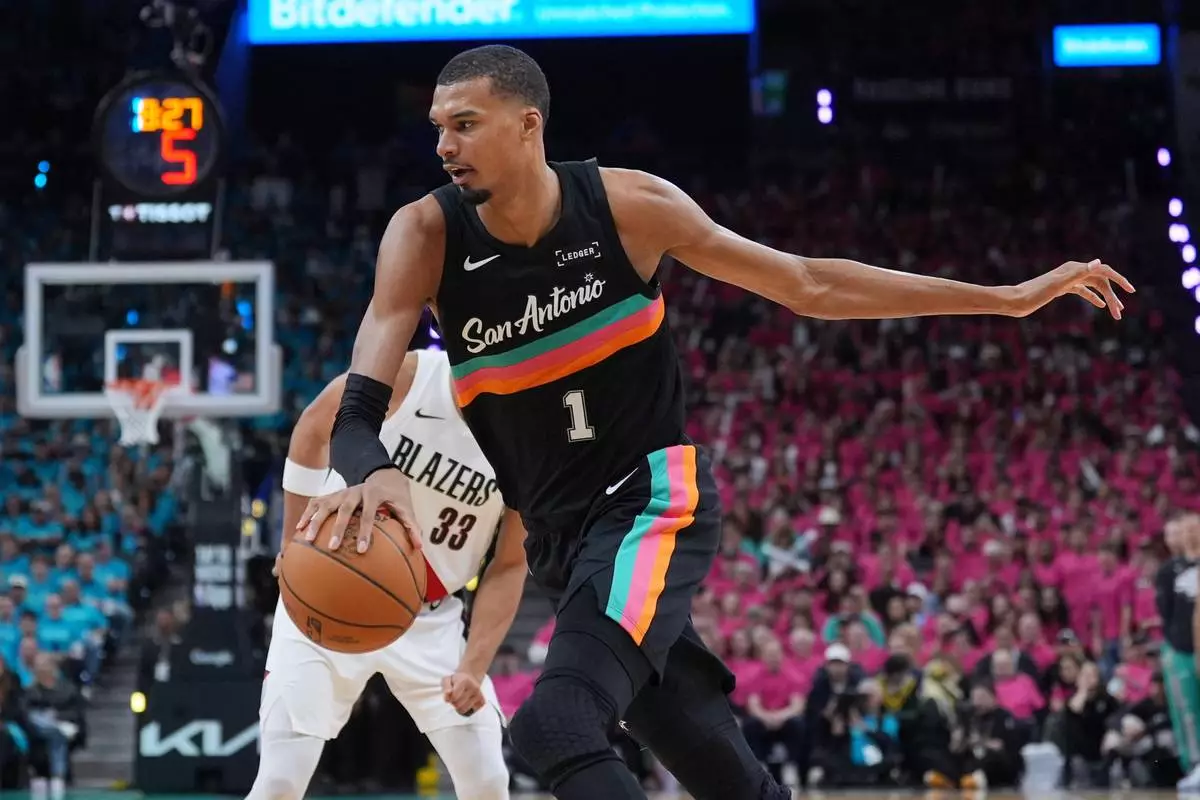
San Antonio Spurs forward Victor Wembanyama (1) drives past Portland Trail Blazers forward Toumani Camara (33) during the second half in Game 1 of a first-round NBA playoffs basketball series in San Antonio, Sunday, April 19, 2026. (AP Photo/Eric Gay)
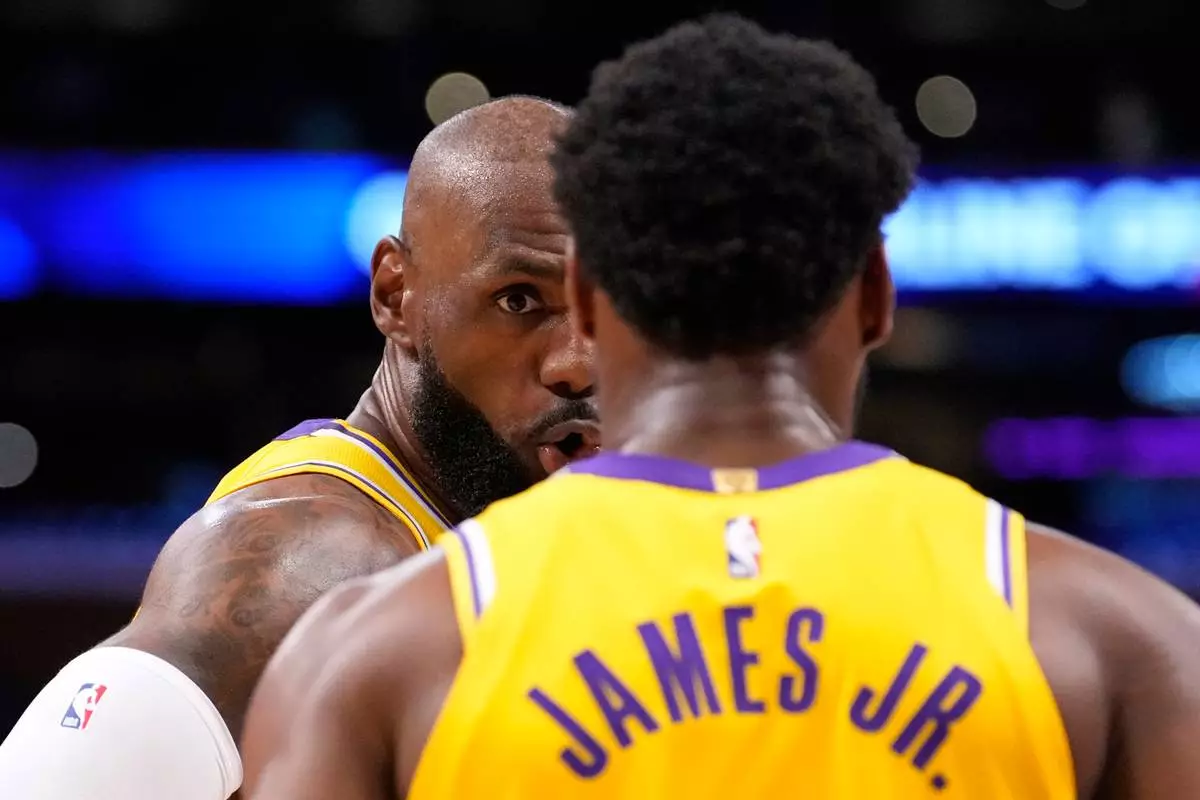
Los Angeles Lakers forward LeBron James, left, talks to his son guard Bronny James during the first half in Game 1 of a first-round NBA playoffs basketball series against the Houston Rockets, Saturday, April 18, 2026, in Los Angeles. (AP Photo/Mark J. Terrill)
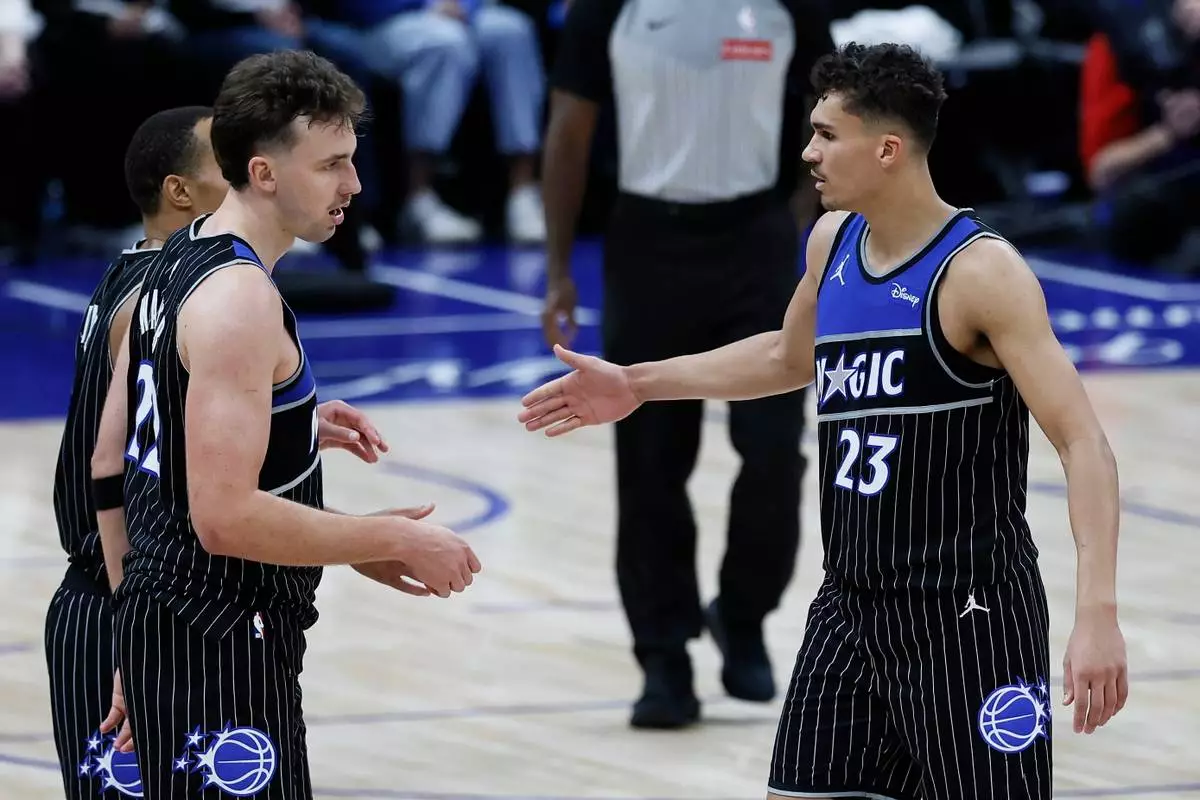
Orlando Magic forward Franz Wagner (22) and forward Tristan da Silva (23) celebrate after a win over the Detroit Pistons in Game 1 of a first-round NBA basketball playoffs series, Sunday, April 19, 2026, in Detroit. (AP Photo/Duane Burleson)
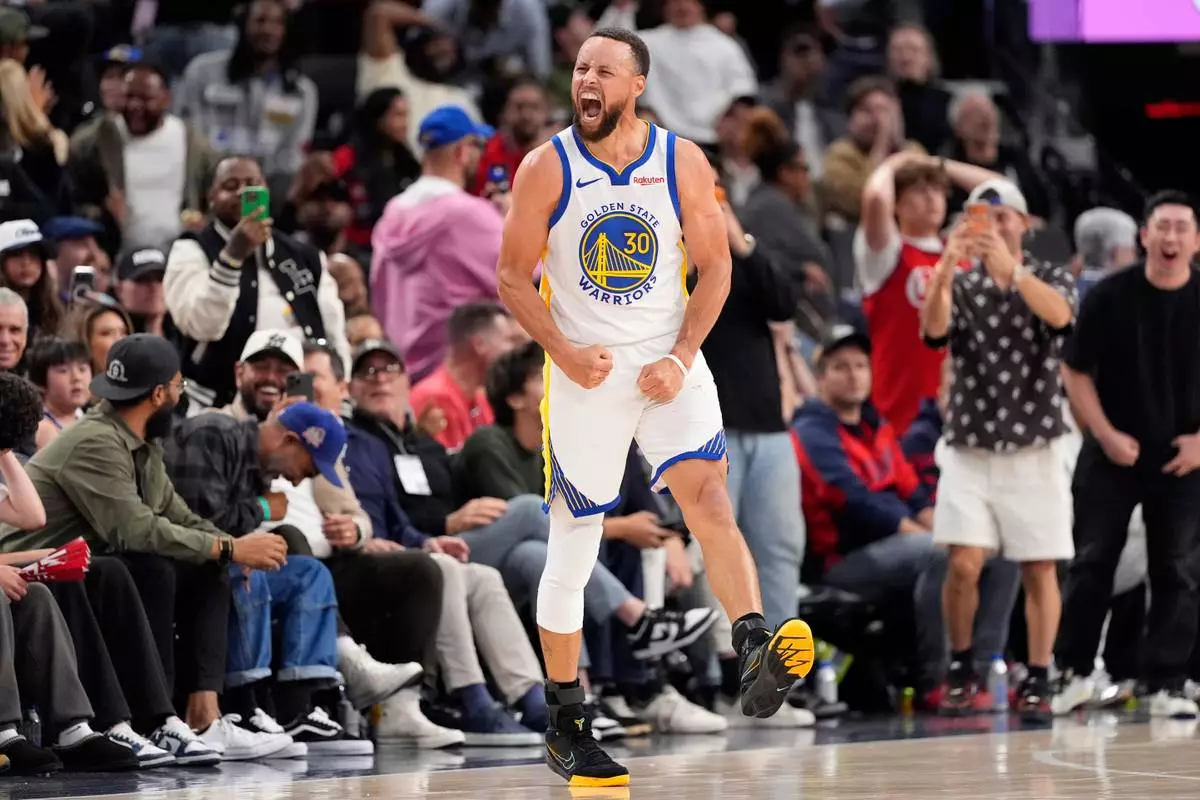
Golden State Warriors guard Stephen Curry celebrates after scoring during the second half of an NBA play-in tournament basketball game against the against the Los Angeles Clippers, Wednesday, April 15, 2026, in Inglewood, Calif. (AP Photo/Mark J. Terrill)
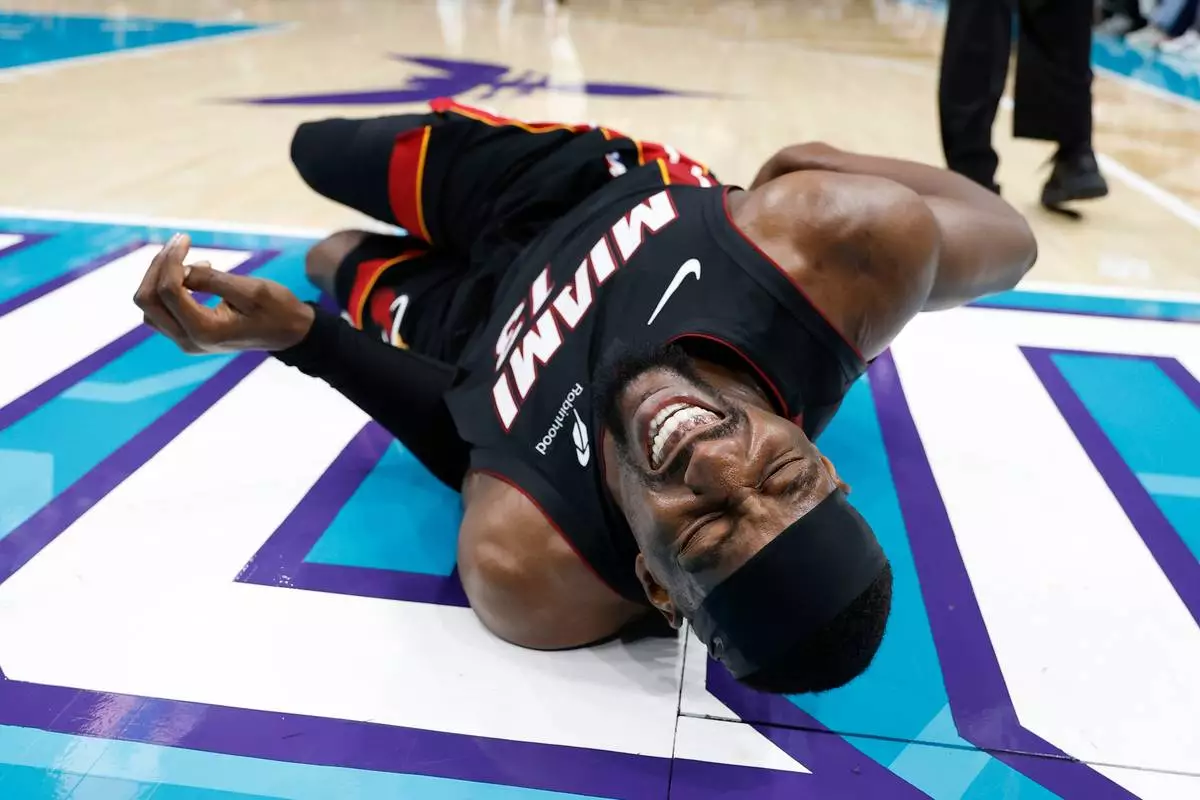
Miami Heat center Bam Adebayo (13) lies on the court during the first half of an NBA play-in tournament basketball game against the Charlotte Hornets in Charlotte, N.C., Tuesday, April 14, 2026. (AP Photo/Nell Redmond)
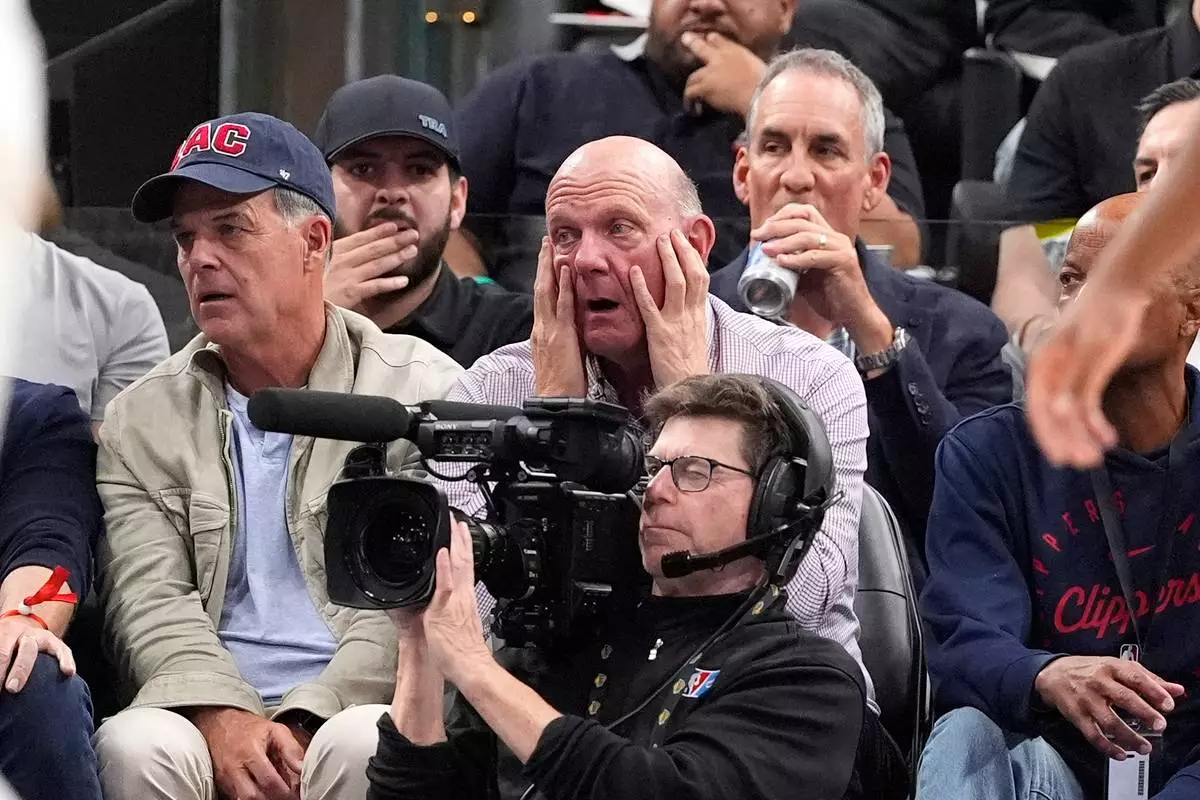
Los Angeles Clippers owner Steve Ballmer watches in the closing minutes of an NBA play-in tournament basketball game between the Clippers and the Golden State Warriors Wednesday, April 15, 2026, in Inglewood, Calif. (AP Photo/Mark J. Terrill)
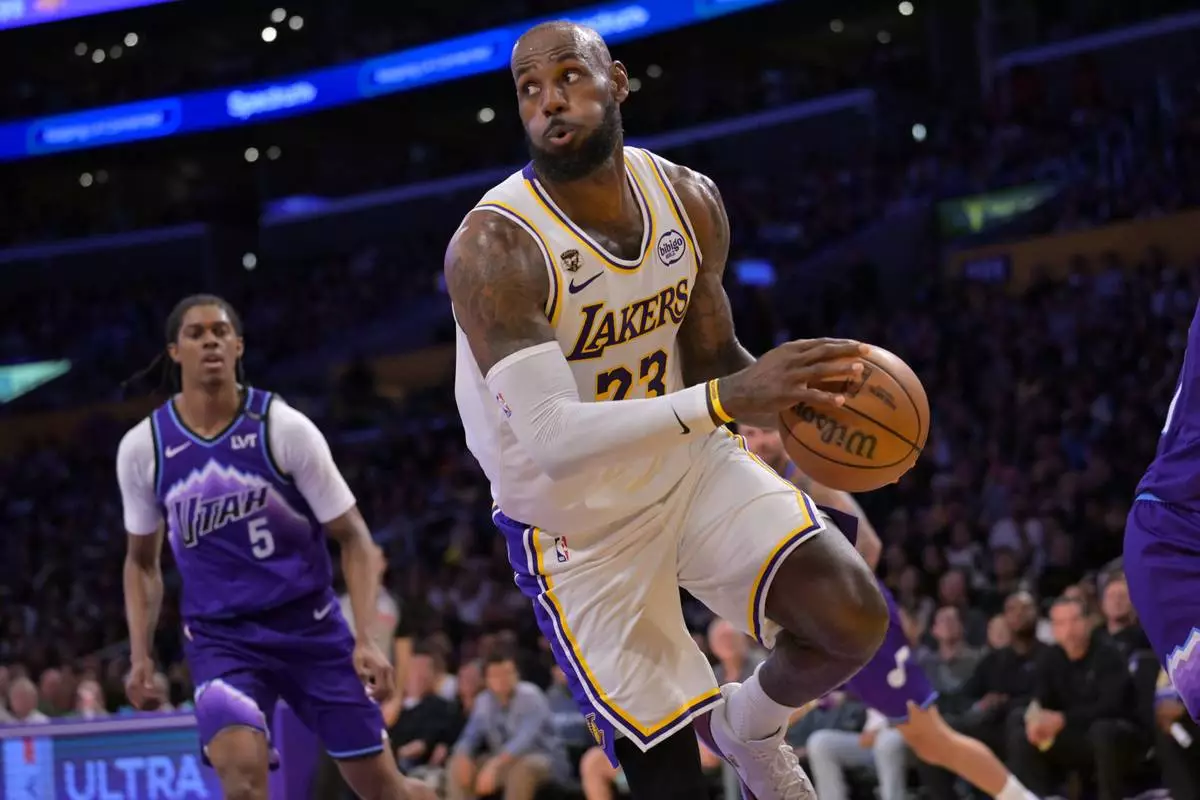
Los Angeles Lakers forward LeBron James looks to make a pass during the first half of an NBA basketball game against the Utah Jazz, Sunday, April 12, 2026, in Los Angeles. (AP Photo/Jayne Kamin-Oncea)
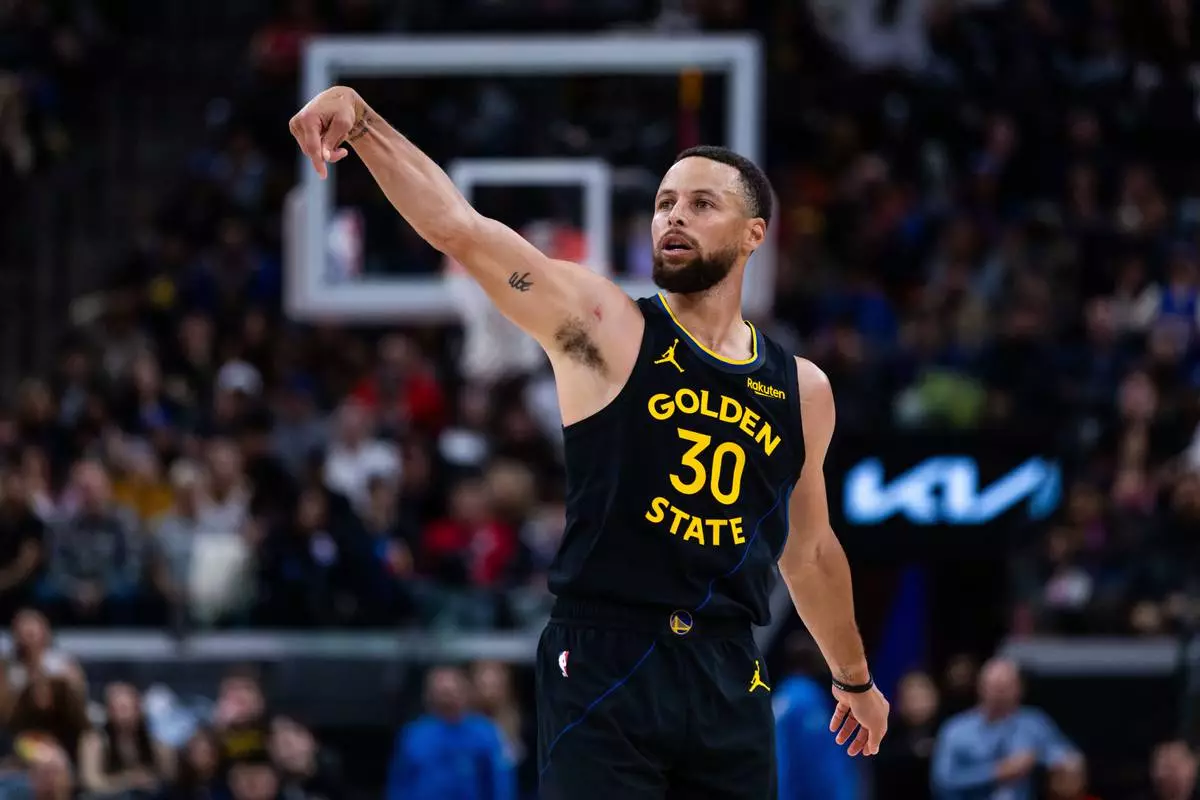
Golden State Warriors guard Stephen Curry (30) shoots against the Los Angeles Clippers during the second half of an NBA basketball game, Sunday, April 12, 2026, in Inglewood, Calif. (AP Photo/Ethan Swope)