China's Minister of Commerce Wang Wentao met with global pharmaceutical leaders in Beijing for a high-level dialogue.
The meeting brought together policymakers and senior executives from multinational drugmakers including Novartis, AstraZeneca, Roche, Boehringer Ingelheim and Organon.
"The pharmaceutical industry is vital to human health, we welcome your views and suggestions on development in China,” Wang said while addressing participants at the high-level dialogue.
Drawing growing global attention, China is now one of the world’s fastest-evolving markets and is signaling openness by inviting deeper engagement from multinational companies already investing in the country, according to U.S. pharmaceutical officials.
"For the innovative pharmaceutical sector, China has become one of the world's largest and fastest evolving markets, playing an increasingly global role," said Stephen J. Ubl, president and chief executive officer of the Pharmaceutical Research and Manufacturers of America (PhRMA).
From cutting-edge biotech to large-scale manufacturing, global firms say China’s appeal lies in its unique combination of scale and capabilities.
"Key factors in this evolution include China's large patient population, scientific talent, clinical research capacity, and investments in science and healthcare," said Ubl.
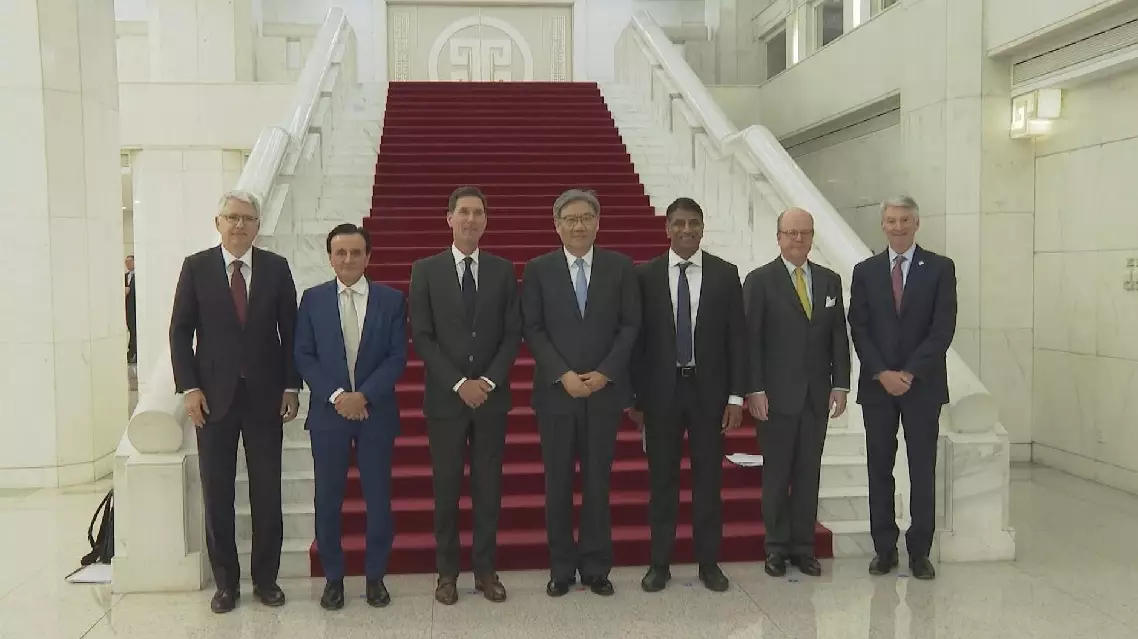
China’s commerce minister meets global pharma leaders
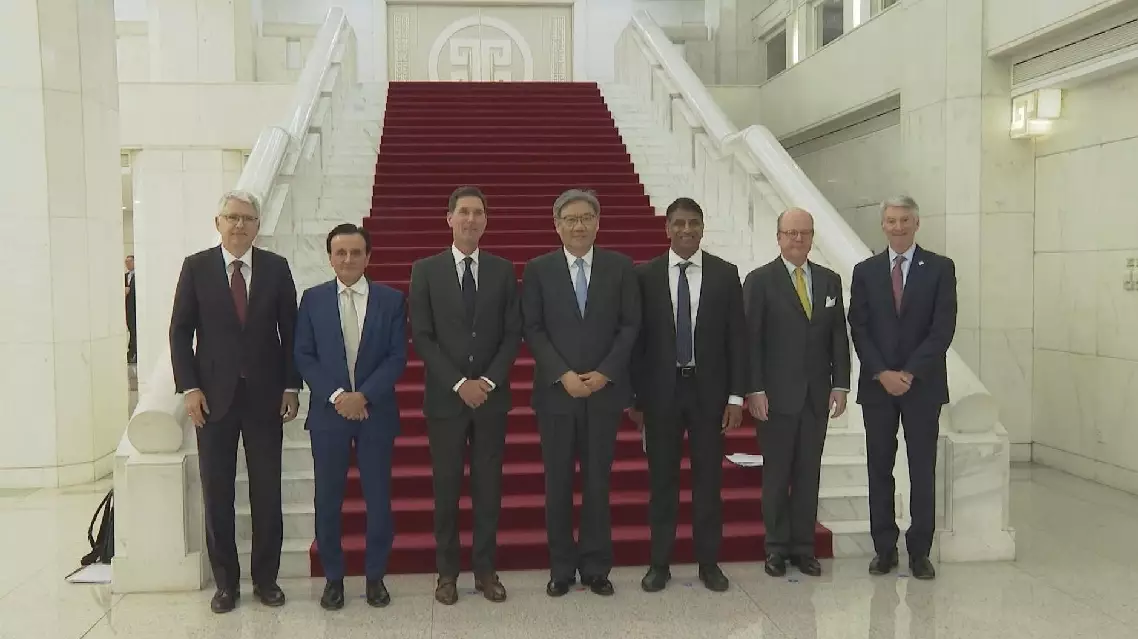
China’s commerce minister meets global pharma leaders
While floodwaters began to recede across parts of Bangkok on Wednesday, thousands of residents in the capital's low-lying suburbs remained marooned, grappling with severe disruptions to electricity, clean water, and essential services in neighborhoods accessible only by boat.
A severe nationwide flooding swept through 42 Thai provinces between Sept 16 and 28, impacting 1.8 million people and leaving at least 8 people dead, according to the Department of Disaster Prevention and Mitigation.
Officials reported that 28 provinces, primarily across Thailand's central, northern, eastern, and northeastern regions, remain affected by the disaster.
In the Lat Krabang district on Bangkok's eastern edge, just kilometers from the Suvarnabhumi Airport, streets remain submerged deep enough to swallow cars.
For the tens of thousands of people living there, the danger is not the rising water, but the grueling daily struggle to survive.
"It's devastating. Nobody can make a living. I have no money right now; all I have left is myself," said Mu Boonpitaksorn, a local resident.
With roads submerged and utility lines cut, small boats have become the communities' only connection to the outside world, delivering food, drinking water and medicine while serving as a crucial lifeline for evacuations.
"They are losing hope. That's what I think. This is one of the largest disaster area for the moment. People with disability, elderly people, family with younger children, it's much difficult for them to stay on into the community as they used to," said Weerasak Kowsurat, secretary general of the Friends in Need (of "PA") Volunteers Foundation.
Although temporary shelters have been established across the capital to offer safety, food, and dry ground to the displaced, evacuees face the reality of walking away from everything they could not carry.
"It's all gone. I have nothing left. Absolutely nothing. Fridge, washing machine, fan, air conditioner… nothing left at all. Inside my home is all mud. It's too much, it's beyond despair," said Sumontha Huanarvorn, an evacuee.
Even as Bangkok gradually dries out, the floodwaters continue to separate families from their homes, belongings, and routines, leaving residents waiting desperately for roads to reappear, and hoping they will eventually lead back to the life they knew before the deluge.
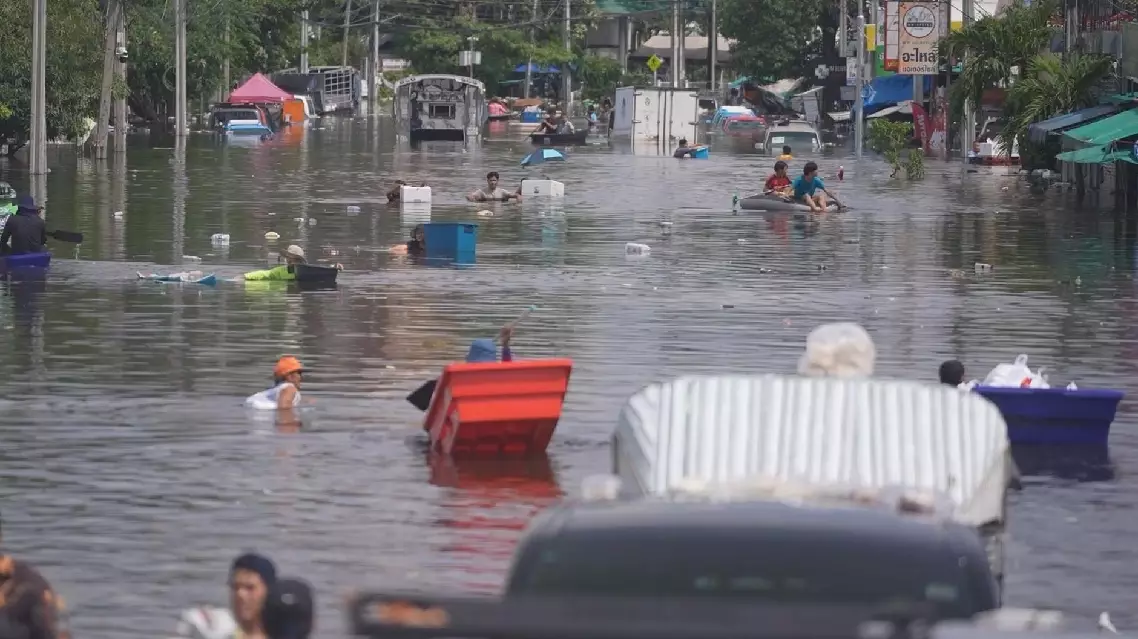
Bangkok suburbs endure daily struggle as floodwaters linger