China has announced new exploration results showing significant rare earth reserves in the Maoniuping mining area in its southwestern province of Sichuan, along with rich deposits of other key mineral resources.
According to mineral exploration results released by China's Ministry of Natural Resources on Thursday, a total of 9.6656 million tons of rare earth oxides, along with 27.1354 million tons of fluorite and 37.2277 million tons of barite, were identified in the Maoniuping mining area in Mianning County, Sichuan.
Fluorite, as an important mineral raw material in modern industry, is widely used in aerospace, refrigeration, medicine, electronics, machinery and nuclear energy. Meanwhile, barite's primary use is in the oil and gas drilling industry, and it also has important applications in the chemical, filler and medical imaging fields.
The Maoniuping rare earth mine has the world's second-largest reserves of light rare earth resources among producing mines, second only to the Bayan Obo deposit in north China's Inner Mongolia Autonomous Region.
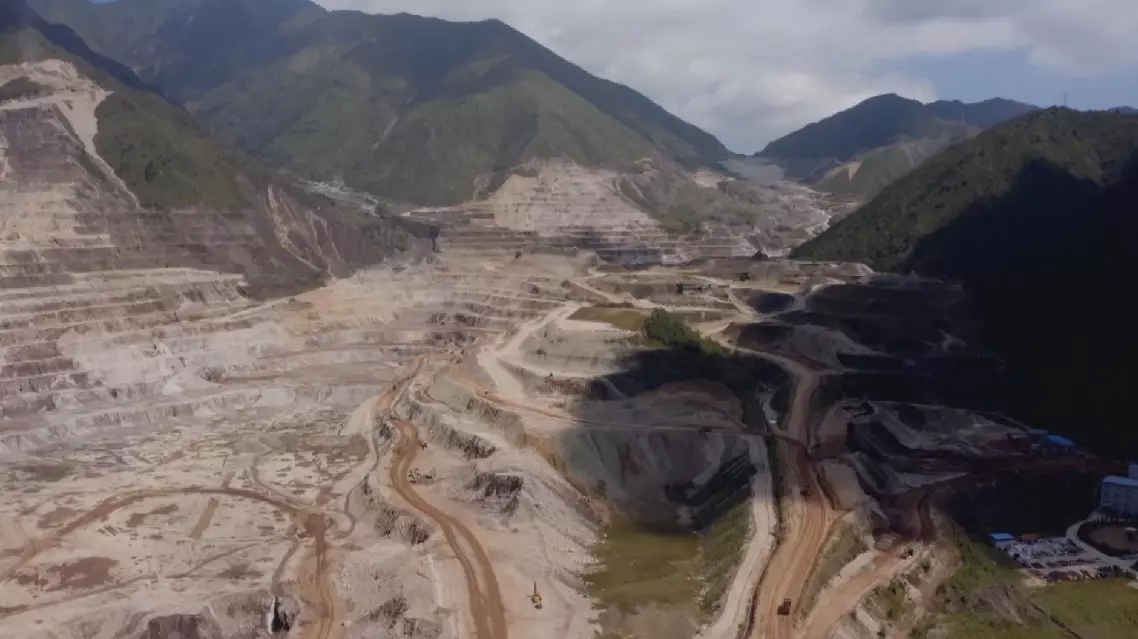
China reports major rare earth reserves in Sichuan
China reports major rare earth reserves in Sichuan
Turkmenistan and China place great importance on cultural exchanges between the two countries, with significant achievements made in the education sector, Turkmen national leader Gurbanguly Berdimuhamedov said in Beijing on Wednesday.
At the invitation of President Xi Jinping, Berdimuhamedov, chairman of the People's Council of Turkmenistan, the supreme representative organ of people's power in the Central Asian country, paid a goodwill visit to China from March 17 to 19.
In an interview with China Media Group (CMG), Berdimuhamedov noted that the two countries have made substantial achievements in cultural and educational exchanges and expect further progress.
"Turkmenistan and China both highly value exchanges and cooperation in the fields of culture, science and technology, and education, and both provide sustained and strong national support for these efforts, which is only natural and logical. This focus is vividly reflected in our various cultural days and themed years, as well as in the mutual visits and performances of artists from both countries, the jointly organized art festivals, and the numerous academic seminars," said Berdimuhamedov.
"The two sides now are actively discussing to establish a Chinese cultural center in Turkmenistan and a Turkmen cultural center in China. I would like to particularly stress the fruitful results in education cooperation. Currently, more than 10,000 Turkmen citizens are studying at various Chinese higher education institutions and educational organizations, and nine higher education institutions plus 10 secondary schools in Turkmenistan now offer Chinese-language programs," he said.
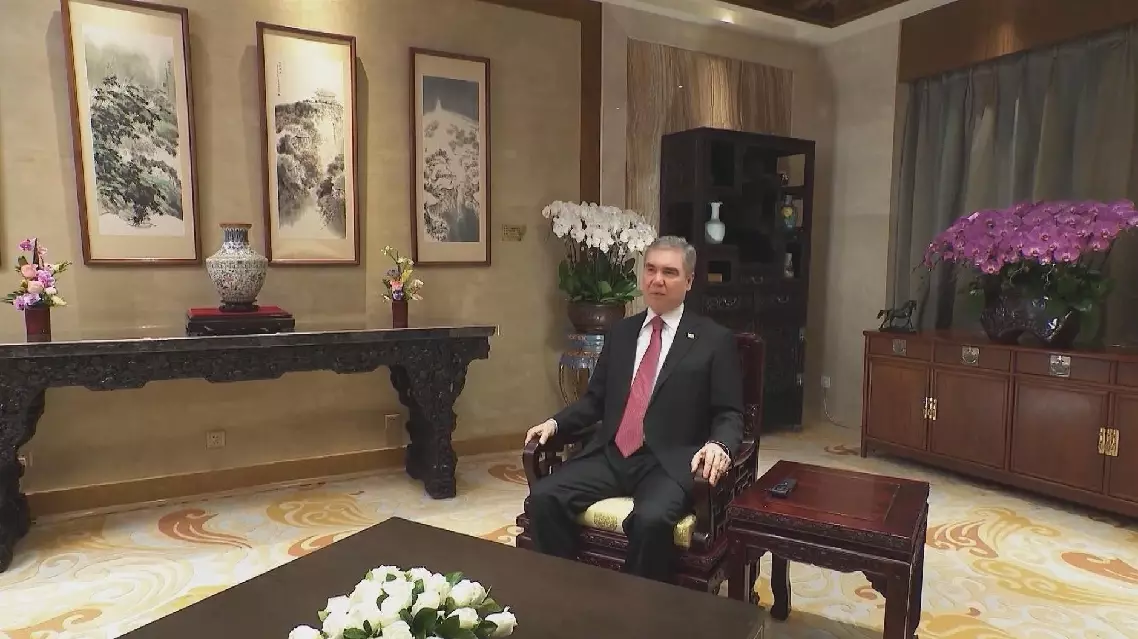
Turkmenistan, China highly value bilateral cultural exchanges: Turkmen national leader