As the World Water Day is observed on Sunday, a smart farm in eastern China demonstrates how technology can slash water use in agriculture to conserve precious water resources.
In Hangzhou, capital city of east China's Zhejiang Province, a smart farm is equipped with more than 200 sensors and four Internet of things (IoT) micro base stations. The system monitors soil moisture, plot size and water levels, and then automatically determines irrigation volume and timing. Farmers can irrigate crops with a single tap on their phones. Greenhouses at the farm employ aeroponic technology, a new cultivation technology that replaces soil with nutrient solutions.
With aeroponics, automated systems adjust spraying frequency based on light, temperature, humidity and crop growth stage. Any unused solution is recycled through a closed water circulation system, which is filtered and redistributed, minimizing waste and manpower.
"Compared with traditional soil cultivation, our greenhouses achieve a 95-percent water-saving rate and 90 percent fertilizer savings. In terms of labor demand, one person can now manage two greenhouses covering about 0.5 hectares, whereas conventional farming would require four workers," said Wu Siyi, a farming technician.
As one example of innovative initiatives, the farm contributes to the country’s water conservation efforts, which are central to China’s national water network strategy.
By 2030, China aims to cut water consumption per 10,000 yuan (1,428 U.S. dollars) of GDP and per 10,000 yuan of industrial output by more than 10 percent from 2025 levels, the Ministry of Water Resources' national water conservation office said on January 20, 2026.
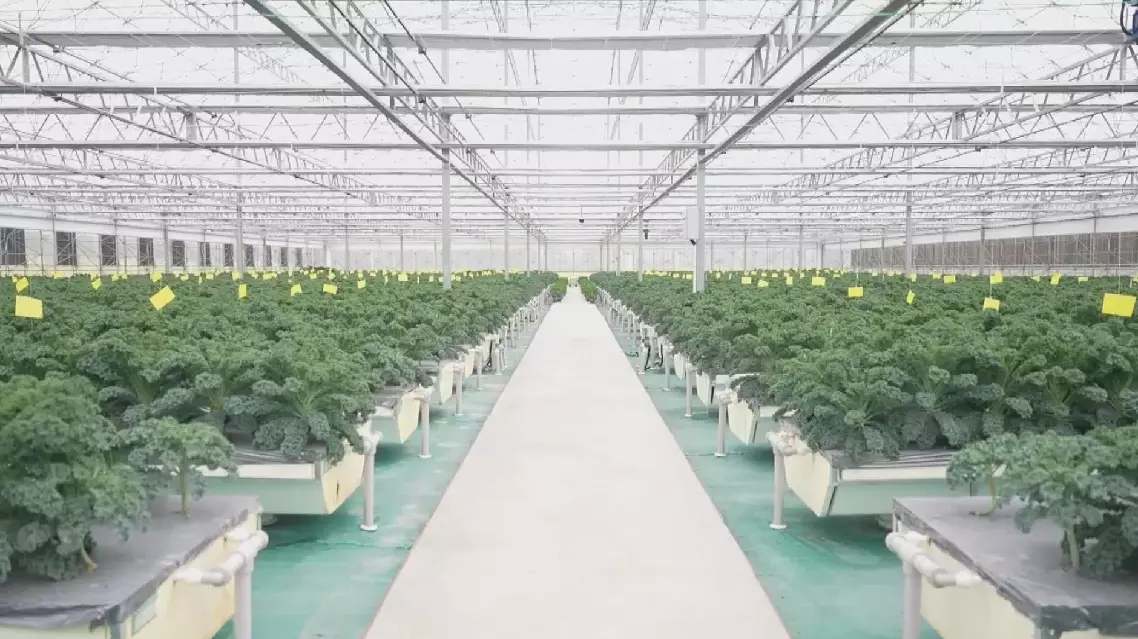
Technology helps farm save water in eastern China