From AI-powered mattresses to wearable sleep trackers and sound therapy sessions featuring singing bowls, crystal bowls and wave drums, Chinese consumers are turning to a growing range of sleep solutions, driving rapid growth in the country's sleep economy.
Data from Meituan, a leading on-demand delivery platform, show that since January this year, searches for "sleep experience venues" and "sleep therapy" have increased by 227 percent and 349 percent year on year, respectively.
Among consumers, those aged 25 to 35 have the strongest demand for ways to improve sleep, accounting for nearly 50 percent.
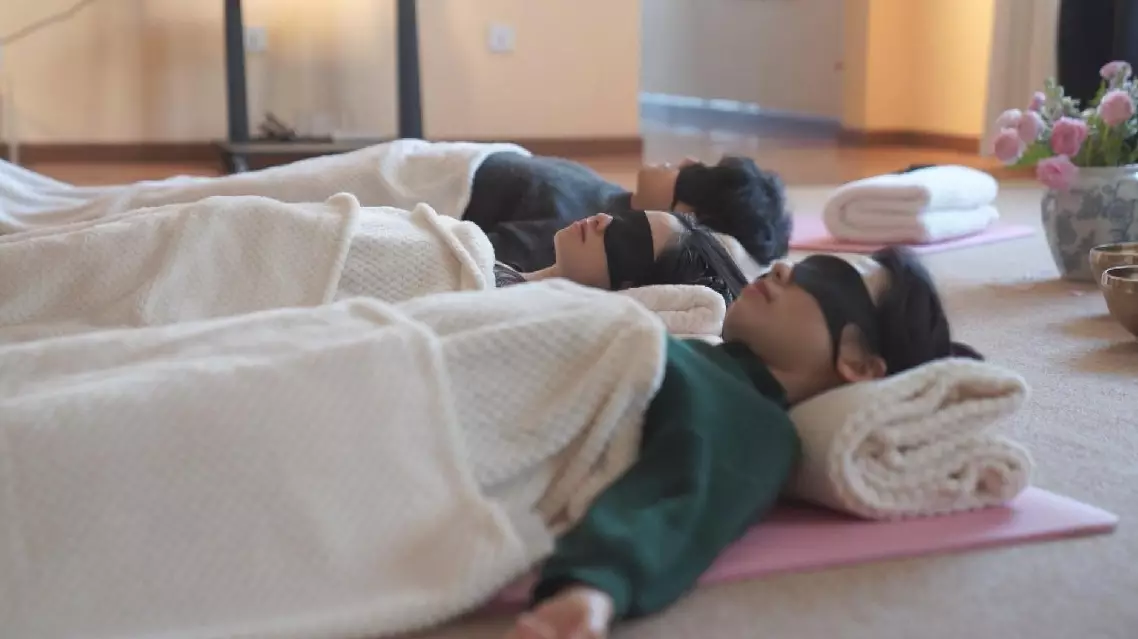
In a sleep therapy experience store in Beijing, many consumers relax to the sounds of singing bowls, crystal bowls, wave drums, handpans and other healing instruments.
"When you hear this kind of sound, you will gradually relax," said a customer at the sleep therapy store.
"This year's revenue has doubled compared to last year, and the customer traffic has also increased exponentially. We also organize group activities," said Zhang Huan, manager of a sleep therapy experience store in Beijing.
In addition to sleep aid services, products designed to help people get better rest are also becoming increasingly popular.
Data from the business information platform Tianyancha show that over 60 million Chinese companies currently specialize in helping people sleep better.
According to iiMedia Research, China's "sleep economy" market is expected to reach 658.68 billion yuan (about 95.65 billion U.S. dollars) in 2027.
Among popular sleep aid products are smart mattresses.
Equipped with AI sensing systems, some smart mattresses can not only automatically adjust support based on the body's contours, but also offer functions such as massage, night light control and wake-up modes, making sleep more personalized and technology-driven.
"We're getting married and need to buy new furniture. We're looking for a smart mattress because I think young people like us are under a lot of pressure these days," said a young shopper browsing mattresses at the store.
"Smart electric mattresses' transaction volume has risen extremely rapidly on our online platform, with a year-on-year increase of 206 percent. Meanwhile, smart anti-snoring pillows and smart sofas have registered year-on-year growth of over 30 percent," said Li Qingyu, purchasing manager of home furnishings at Chinese e-commerce giant JD.com.
One of the most popular sleep aid gadgets is monitoring devices, which have become a common tool for many people to manage their rest.
At an electronics store, many consumers show interest in smart bracelets, which can record the duration of deep and light sleep in real time, track data such as the number of nighttime awakenings and breathing quality and provide personalized improvement suggestions.
"When you combine the data with how you feel, you can understand whether you didn't rest well yesterday or if your workout intensity was too high -- you can analyze it,” said a user of a sleep monitoring device.
"Now we're using better hardware sensors for monitoring. Besides, we've used AI algorithms to make sleep data evaluation more accurate," said Lei Xiaochen, head of the sports and health lab at tech firm Xiaomi.
China sees surge in sleep tech, therapy as consumers seek better rest