Global pharmaceutical giants are accelerating investment in China in an effort to cash in the country's new five-year blueprint that prioritizes biomedicine and other emerging strategic industries.
Fresh commitments follow signals from the 15th Five-Year Plan (2026–2030), approved in mid-March by national lawmakers, which sets the course for economic and social development.
The blueprint directs foreign capital toward advanced manufacturing, modern services, and high-tech sectors, while underscoring biomedicine as a pillar of China's emerging strategic industries.
Earlier in March, U.S. pharmaceutical giant Eli Lilly unveiled plans to invest 3 billion U.S. dollars over the next decade to scale up its supply chain and manufacturing capacity in China, including the local large-scale production of an innovative oral drug.
"We recently announced a 3-billion-dollar investment in a partnered manufacturing facility here. We've launched many products and now expect to launch all of our products within weeks of U.S. approval," David Ricks, the chair and chief executive officer of Eli Lilly and Company, said in a meeting with Chinese Commerce Minister Wang Wentao in Beijing on Friday.
When meeting with Wang on Saturday, Stephen J. Ubl, president and CEO of the Pharmaceutical Research and Manufacturers of America, underscored sustained commitment to strengthening cooperation with China's Ministry of Commerce (MOFCOM), and supporting the country's initiative of building a Healthy China by 2035.
"We remain committed to deepening engagement with MOFCOM to support the innovation ecosystem in China and the Healthy China 2035 initiative," said Stephen J. Ubl, president and CEO of Pharmaceutical Research and Manufacturers of America.
French pharmaceutical giant Sanofi has recently launched its first China Innovation and Operation Center in Chengdu, southwest China's Sichuan Province.
Olivier Charmeil, CEO of Sanofi, emphasized the country's enduring strengths.
"China continues to show resilience, scale and long-term direction. Over the next decade, China will play a critical role in pharmaceutical innovation," said Charmeil.
The latest moves build on a series of major investments by multinational pharmaceutical companies.
British drugmaker AstraZeneca has pledged to invest 100 billion yuan (about 14.5 billion U.S. dollars) in the country through 2030 to expand its manufacturing and research and development facilities.
Last October, Sanofi broke ground on a new insulin active pharmaceutical ingredient (API) manufacturing base in the Beijing Economic-Technological Development Area, with a total investment of 1 billion euros.
"I lived in China in 2008, 2009, and 2010 as the general manager, and at that time we would hope for new innovation from our company to be approved within four years of U.S. approval. And now we hope for approval within four weeks. There's just been a dramatic change speeding up the regulatory processes and harmonizing Chinese regulations with the global standard. And we have high expectations for this year, really driven by our breakthrough innovations," said Ricks.
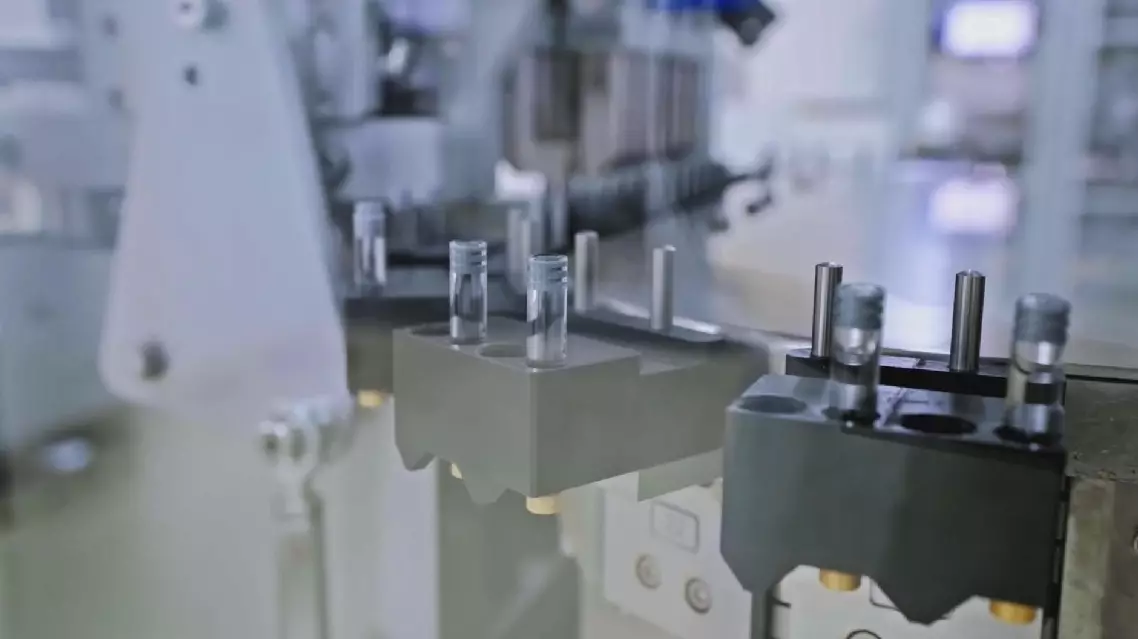
Global pharmaceutical giants step up investment as China's new Five-Year Plan takes shape
Global pharmaceutical giants step up investment as China's new Five-Year Plan takes shape