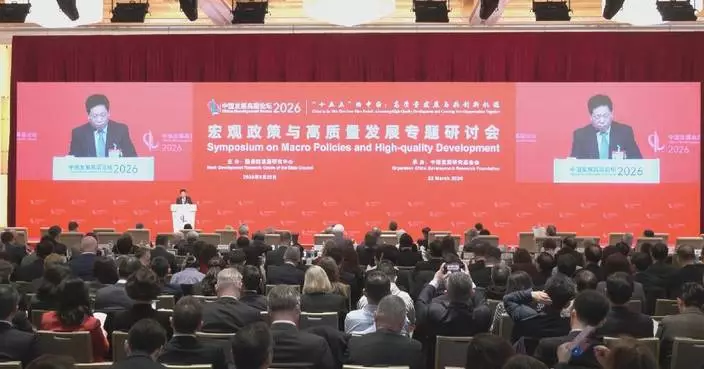
The Boao Forum for Asia (BFA) Annual Conference 2026 has adopted a green and intelligent approach in event operations, with all the venues powered by renewable electricity and a number of AI-powered systems deployed.
Themed "Shaping a Shared Future: New Dynamics, New Opportunities, New Cooperation", this year's BFA annual conference is scheduled to run from Tuesday to Friday in the coastal town of Boao, in Qionghai City, south China's Hainan Province.
This year marks the start of China's 15th Five-Year Plan period (2026–2030), the first full year since the launch of island-wide special customs operations at the Hainan Free Trade Port (FTP), and the 25th anniversary of the forum's founding, attracting global attention to the event.
Thousands of representatives from government, business and academia are set to attend the conference, where they will discuss the theme and build consensus on cooperation.
The conference will focus on four core topics and feature more than 50 sub-forums, roundtables and dialogue sessions.
Notably, green and smart operations will be a key feature of this year's event. All venues will be powered by 100 percent renewable electricity throughout the conference, with total power consumption expected to reach about two million kilowatt-hours, equivalent to reducing carbon dioxide emissions by around 1,200 tonnes. Meanwhile, a number of AI-powered systems will be deployed for the first time.
"We use a smart power supply platform as a 'central brain' to coordinate operations, deploying drone fleets, intelligent tunnel inspection robots and submarine cable inspection robots to achieve full monitoring of power supply equipment. The system can also isolate faults and restore power within milliseconds," said Chen Ruizhong, head of the on-site power supply support team for the forum.
The forum's press center will open on Monday afternoon, with more than 1,100 journalists from over 20 countries and regions across the world registered to cover the event.
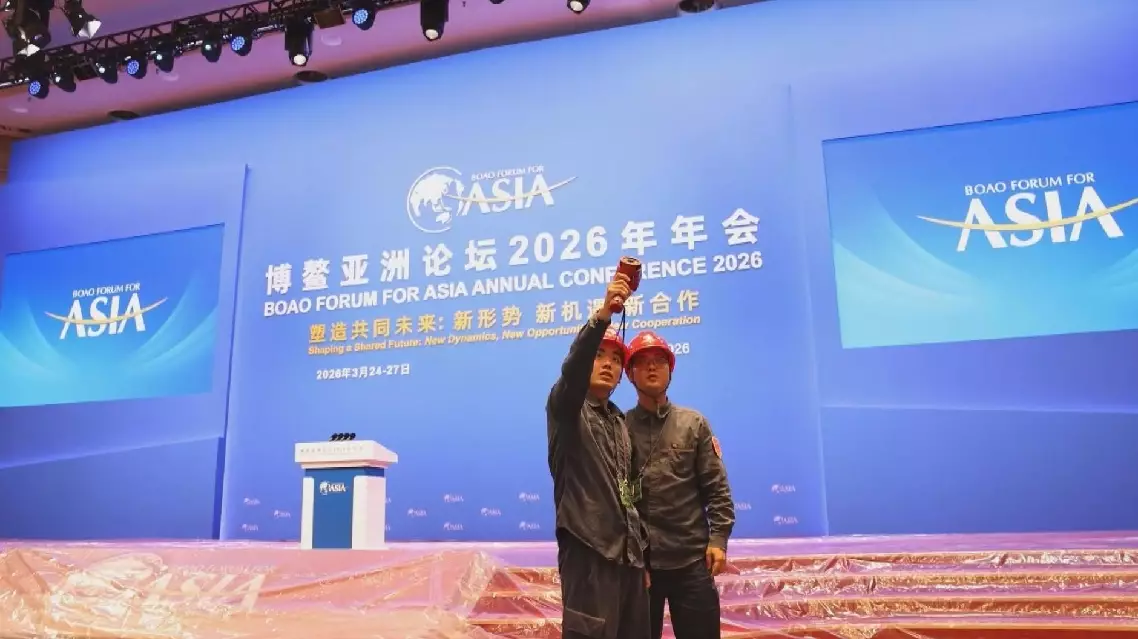
BFA Annual Conference 2026 adopts green, intelligent approach in event operations
China's first full-chain domestic solution-process polyolefin elastomers (POE) industrial device has entered trial operation in north China's Tianjin Municipality, according to China Petrochemical Corporation (Sinopec), world's largest oil refiner and China's top aviation fuel producer, on Sunday. Sinopec said that the facility will help reduce China's reliance on imported materials and significantly ease the import dependence of strategic emerging industries such as photovoltaics on this key material.
Often referred to as "industrial gold", POE is a high-performance material that combines the processability of plastic with the high elasticity of rubber. It is an essential component in the manufacturing of photovoltaic (PV) modules, lightweight automotive parts and high-end packaging. "POE is known as 'industrial gold.' Our device adopts the solution-process POE technology and metallocene catalyst independently developed by us. At the same time, we adopted a domestic automatic control system, ensuring that all equipment in the production chain were made in China," said Wang Xiaowei, director of the Research Institute of Sinopec Tianjin Branch.
Driven by the photovoltaic and new energy vehicle industries, China's POE consumption increased from 640,000 tons in 2021 to 1.11 million tons in 2025, with an average compound annual growth rate of 14.7 percent, making it the world's largest POE consumer market.
Due to high technical barriers, China has long relied on imports for POE, with import dependency reaching 76 percent in 2025.
"After the plant goes into operation, our products can be used in strategic emerging industries, enabling the light transmittance of photovoltaic encapsulation films to reach 93.5 percent or higher. At the same time, they contribute to automotive lightweighting. After application, the products can reduce weight by more than 15 percent compared with traditional materials. Additionally, they can be used in lithium battery separator coatings and charging pile cable insulation layers, allowing us to better meet safety standards," said Wang.
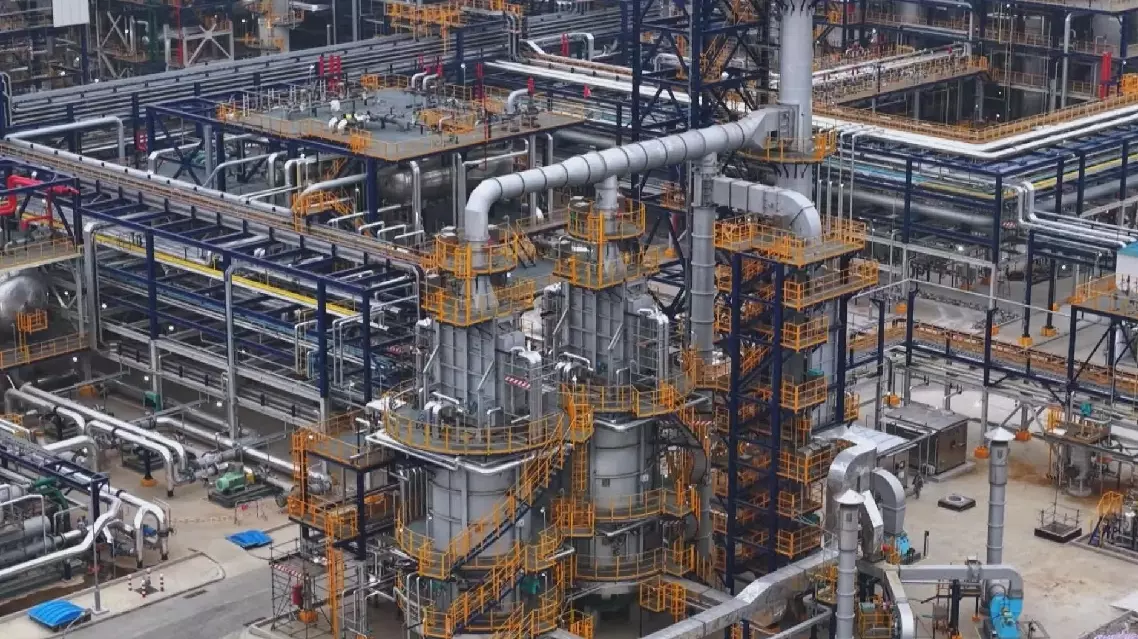
China energy giant reports breakthrough in PV, EV material production