A decade of dedicated ecological restoration work has transformed the Yangtze River and its tributaries in Chongqing, turning once-polluted waters into thriving habitats while promoting green development across the region.
The Yangtze River Economic Belt, spanning 11 provincial-level regions, serves as a crucial development corridor for China. In southwest China's Chongqing Municipality, a strategic shift prioritizing ecological protection over excessive development has yielded significant results, revitalizing both the river system and local communities.
Peng Shiliang, a local photographer who has documented the city for nearly half a century, has witnessed these dramatic changes firsthand, particularly along the Yangtze.
"Back then, the water was clear in the 1970s and 80s. But by the 1990s, with industrial development, the river became much more polluted," said Peng.
The turning point came ten years ago when President Xi Jinping emphasized prioritizing ecological protection in the region, setting a new course for sustainable development. Since then, Chongqing has launched comprehensive cleanup campaigns, targeting heavily-polluted tributaries like the Tiaodeng River.
"Locals used to say the water was as black as ink, you could even write calligraphy with it," said Dong Xiaoxia, head of the pipeline division at the Jiulongpo District Housing and Urban-Rural Development Bureau.
In 2017, authorities removed approximately 240,000 square meters of illegal structures along riverbanks and constructed 34 kilometers of sewage pipelines to capture wastewater. Building on this infrastructure, ecological restoration measures were introduced, including an underwater "forest" system designed to naturally reduce pollutants.
"Building on these efforts, we introduced ecological restoration measures such as an underwater 'forest' system. By creating a network of aquatic plants, it helps reduce pollutants in the water," Dong added.
These restoration efforts extend beyond tributaries to the main stem of the Yangtze itself. Once muddy and littered, riverbanks have been transformed into multi-layered landscapes featuring flood-tolerant vegetation, enhancing resilience against natural disasters while supporting biodiversity.
"We carefully selected plant species and applied soil stabilization techniques. This has made the river area more resilient, able to withstand floods and droughts, while naturally restoring itself and supporting biodiversity as an ecological barrier," said Kang Yi, a project manager with the China 19th Metallurgical Group.
Today, these restored banks serve as havens for residents and thriving habitats for diverse bird species.
Meanwhile, businesses along the river are adopting greener practices. The newly opened Huangqian Port operates as a low-carbon facility, utilizing hydrogen-powered trucks to reduce emissions.
"Thirty hydrogen-powered trucks are now in regular operation. Together, they have traveled 190,000 kilometers and cut 200 tonnes of carbon emissions," said Li Bo, deputy general manager of Chongqing Huangqian Port Logistics Company.
Through Peng's lens, the river is reclaiming its former splendor, attracting visitors from near and far. However, he emphasizes that the conservation journey requires continued public participation.
"We all need to start with ourselves, not littering, not discharging untreated water. If everyone did this, it would make a big difference," Peng said.
Supported by smart systems that monitor the river in real time, Chongqing's vigilant approach ensures a brighter future for the Yangtze, blending technology with community action to sustain this vital ecological artery.
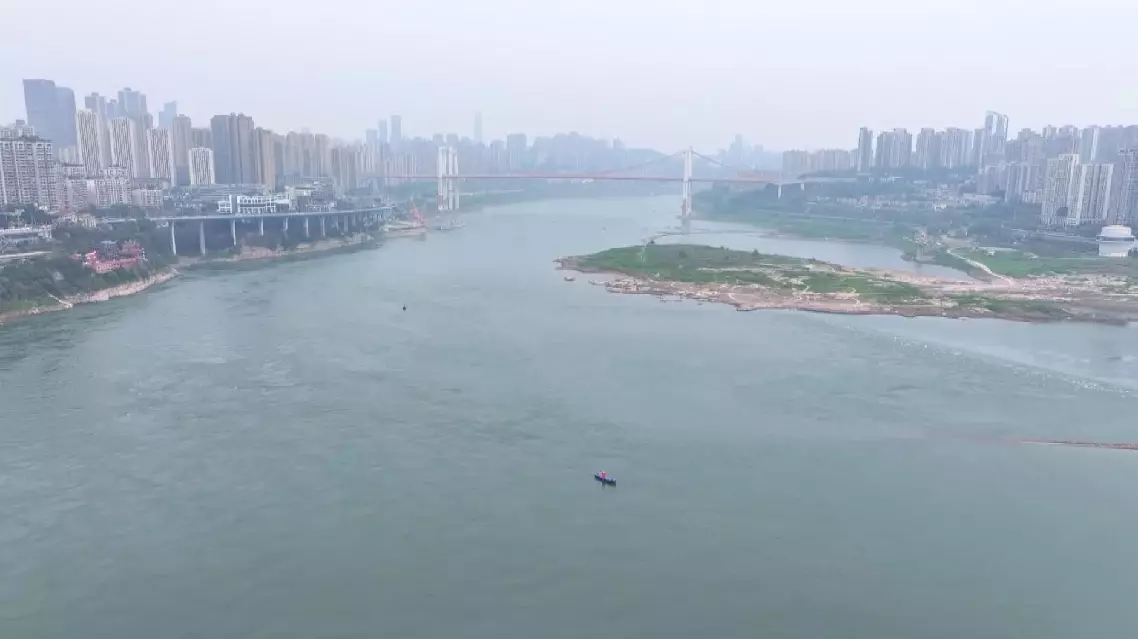
Decade-long efforts transform ecosystem along Chongqing section of Yangtze River