As the companies in South China's Guangdong-Hong Kong-Macao Greater Bay Area (GBA) are accelerating their layout in emerging sectors such as aerospace, embodied intelligence, and quantum technology, they are also making a strategic shift from immediate recruitment to long-term talent pools building with deep university-industry collaboration.
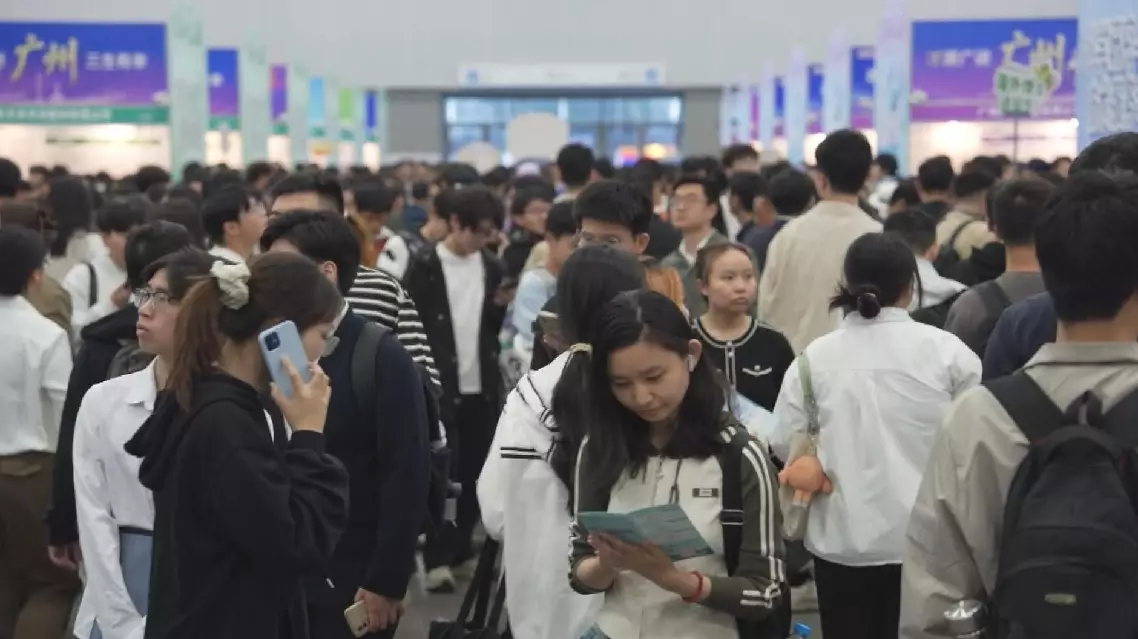
As the region fast-tracks development in future industries, the demand for high-end R&D and skilled professionals has significantly surged. Enterprises are no longer just filling immediate vacancies but are building talent pools by partnering with universities, creating significant opportunities for job seekers while securing their own competitive edge.
One general intelligent robotics company recently offered 120 high-salary positions globally, targeting top-tier talent in algorithms, hardware, and product manufacturing. With the booming rise of the embodied intelligence sector, the company expects its annual production scale to reach 10,000 units this year, necessitating an early layout for talent reserves.
"There is an explosive demand for such talents in the market right now. It's not just our company, the entire industry is in a race to recruit talents," said Ge Zhenwei, head of brand business at AI² Robotics (Shenzhen) Technology Co.
Beyond immediate recruitment drives, more chain master enterprises are turning to pre-joint training programs with universities to build a steady talent pool, with some even launching collaborative training for students starting from their freshmen year of university.
Sunwoda Electronic Co., Ltd., a leading lithium battery enterprise, has brought together job demands from 84 upstream and downstream enterprises in its industrial chain, and is advancing in-depth pre-training programs with partner colleges and universities. The company, whose core business covers new energy vehicles, computing and integrated energy storage, still faces a talent gap of more than 15,000 technical positions including equipment operation and process quality control. It has now partnered with 35 colleges and universities nationwide for joint talent training.
Under the collaborative program, students complete about 80 percent of basic job-related training at school, with the remaining 20 percent of practical skills training finished at the company's training bases, allowing them to directly join the production line upon graduation.
"We are mainly focusing on pre-joint talent training with schools, in a bid to shorten the onboarding cycle for our skilled workers and reduce the cost of talent cultivation," said Liu Yanyu, training director of Sunwoda Electronic Co., Ltd.
"This model can shorten the onboarding cycle by about 50 percent. It can also improve our talent retention rate, and the candidates who finally join our team have a much higher degree of job matching," she added.
The university-industry collaboration model not only helps enterprises lock in talent in advance, but also prompts higher education institutions to adjust their curriculum in line with market demand to improve students' employability and job adaptability.
"We want to learn about the market demand for professionals in our majors, and incorporate it into our talent training plans, to help students quickly adapt to the professional knowledge requirements in different application scenarios," said Wang Maoyang, dean of the School of Economics and Management at Xinyu University in east China's Jiangxi Province.
China's Greater Bay Area builds talent pools for future industries