GRAND RAPIDS, Mich.--(BUSINESS WIRE)--Mar 23, 2026--
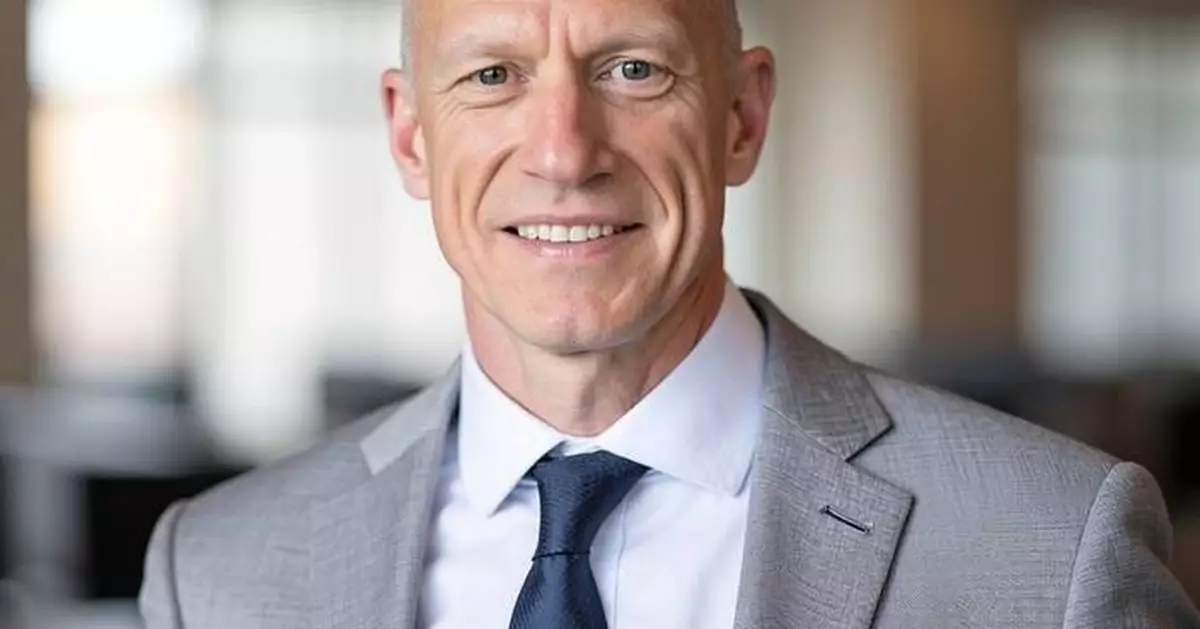
After a nationwide search, Priority Health, a Michigan-based, nationally recognized nonprofit health plan serving 1.4 million members, has named Brian Steele, D.O., as senior vice president and chief medical officer. He will join Priority Health on April 6, 2026.
This press release features multimedia. View the full release here: https://www.businesswire.com/news/home/20260323448577/en/
Dr. Steele will lead Priority Health’s clinical and pharmacy programs, the development and coordination of population health programs and chronic disease management strategies. His unique experience of successfully partnering with care providers will help further Priority Health’s mission of improving health, enhancing the member experience and enabling access to affordable, high-quality health care.
Dr. Steele is a senior health care executive and business strategist with a record of leading clinical transformation, advancing value-based care and delivering measurable improvements in quality, affordability and member experience across payer and provider operations.
He most recently served as chief medical officer for Collaborative Health Systems, a Centene Corporation, where he led clinical strategy, quality and network initiatives, medical management and provider engagement across multiple markets.
“Brian brings a unique blend of clinical depth, payer expertise and data-driven innovation that will accelerate our strategy and amplify our impact for our members, providers and the communities we serve,” said Nick Gates, president of Priority Health. “His track record in quality, affordability and operational excellence makes him an outstanding leader for the next stage of our growth.”
Dr. Steele received a bachelor’s degree in mathematics from Allegheny College and a Doctor of Osteopathic Medicine from the Philadelphia College of Osteopathic Medicine.
“Priority Health’s mission and vision to make health affordable and accessible resonate deeply with me,” said Steele. “I look forward to partnering with our teams and providers to expand high-performing programs, advance population health and deliver improved outcomes that reduce the cost of care.”
About Priority Health:
Our members are at the heart of everything we do. With 40 years in business, Priority Health is the second-largest health plan in Michigan and the third-largest provider-sponsored health plan in the nation, offering an extensive portfolio of health benefits options for employer groups and individuals, including Medicare and Medicaid plans. Serving 1.4 million members in Michigan, Indiana, Ohio and Wisconsin, Priority Health offers a broad network of primary care physicians and continues to be recognized as a leader for quality, customer service, transparency and product innovation. Learn more about affordable, quality health coverage options from Priority Health. Visit the Priority Health newsroom for the latest news.
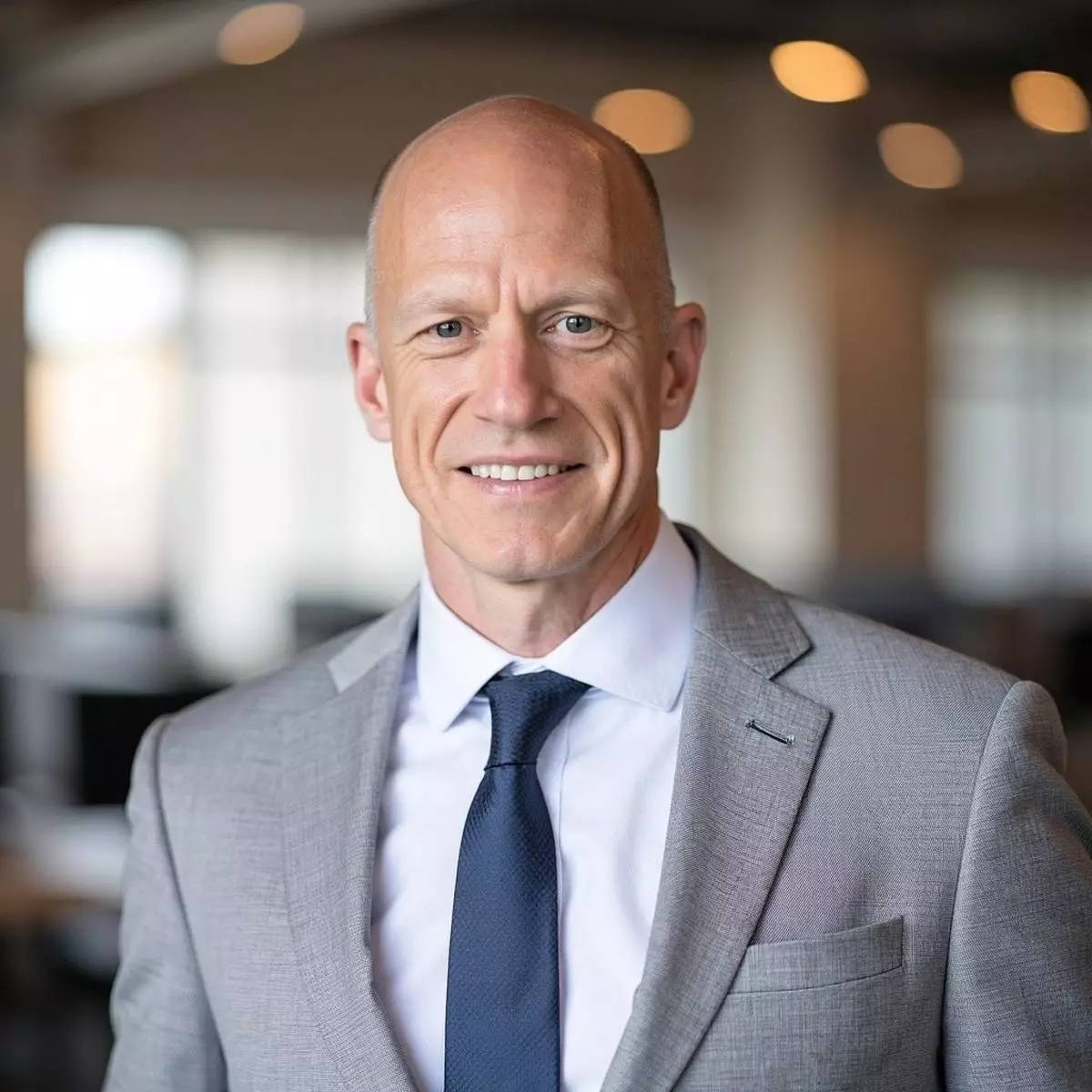
Brian Steele, D.O.
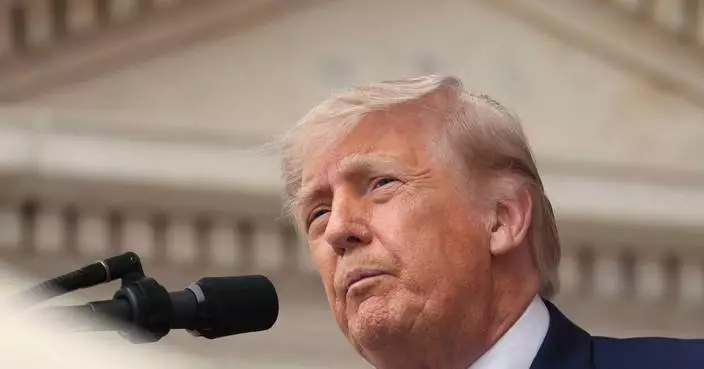
U.S. President Donald Trump has extended his deadline for Iran to reopen the Strait of Hormuz, saying the U.S. will hold off striking power plants in the country for five days.
In his announcement on Truth Social, Trump also held out the possibility of a resolution to the war — though Iranian officials denied there were negotiations. Trump later told reporters that Iran wants “to make a deal,” and claimed U.S. envoys have been holding talks with a “respected” Iranian leader.
Shortly after Trump’s social media announcement — hours before the deadline was set to expire — Iranian state television declared that the American leader had backed down “following Iran’s firm warning.”
Relief ripped through financial markets on Monday. Oil prices are easing, and stock prices are jumping on Wall Street following severe losses elsewhere in the world prior to Trump’s announcement.
Trump also said the U.S. would seek to retrieve Iran’s enriched uranium under a potential deal and end its nuclear program, telling reporters: “We want to see no nuclear bomb, no nuclear weapon. Not even close to it.”
The death toll from the war has risen to more than 1,500 people in Iran, more than 1,000 people in Lebanon, 15 in Israel and 13 U.S. military members, as well as a number of civilians on land and sea in the Gulf region. Millions of people in Lebanon and Iran have been displaced.
Here is the latest:
“All I’m saying is, we are in the throes of a real possibility of making a deal,” Trump said as he wrapped his extended exchange with reporters before boarding Air Force One.
“And I think, if I were a betting man I’d bet for it. But again, I’m not guaranteeing anything,” he said.
Speaking to reporters on Monday, Trump said the U.S. would retrieve Iran’s enriched uranium as part of a potential agreement with the Islamic Republic.
“It’s very easy, if we have a deal with them, we’re going down and we’ll take it ourselves,” Trump said as he departed from a weekend in Florida.
Trump said any deal with Iran would include ending the country’s nuclear capabilities.
“We want to see, no nuclear bomb, no nuclear weapon. Not even close to it,” he said.
Trump told reporters Monday his Middle East special envoy Steve Witkoff and Trump’s son-in-law Jared Kushner conducted talks Sunday into the evening.
He said talks would continue today.
Trump did not name any official or officials representing Tehran. Trump said the U.S. has not talked to Supreme Leader Ayatollah Mojtaba Khamenei.
Trump said if a deal is reached with Iran, the U.S. will move to take Iran’s enriched uranium critical to its disputed nuclear program.
The U.N. peacekeeping force in southern Lebanon, known as UNIFIL, said Monday that a building at its headquarters in the coastal town of Naqoura was struck by a projectile. The U.N. said it believes it “was fired by a non-state actor,” an apparent reference to the Lebanese militant group Hezbollah.
Hezbollah and Israeli forces have fought at multiple points along the border since Israel launched a renewed ground incursion into southern Lebanon. The UNIFIL statement said that “over the past 48 hours, peacekeepers have recorded intense gunfire and explosions” in the Naqoura area, and “bullets, fragments, and shrapnel have hit buildings and open areas inside our headquarters. ... As a result, peacekeepers have been restricted to shelters to avoid injury.”
UNIFIL spokesperson Kandice Ardiel said peacekeepers have also observed or heard ground combat around the villages of Khiam, Odaisseh, Mays al-Jabal, Markaba and Taybeh.
The head of Russia’s state nuclear corporation Rosatom said Monday it will evacuate more workers from Iran’s Russia-built nuclear power plant but will also keep some.
Alexei Likhachev, who said last week that Rosatom had 480 workers at the plant in Bushehr, announced that evacuations this week will leave just a few dozen Rosatom workers at the plant.
Last week, Likhachev reported a strike hit close to the working nuclear reactor without causing damage or injuries. Kremlin spokesman Dmitry Peskov told reporters that Russia had urged the U.S. to avoid hitting the plant, warning it could trigger “irreparable” consequences.
“Remarks by the U.S. president are part of efforts to reduce energy prices and buy time to implement his military plans” the newspaper said.
“While there have been initiatives by regional countries to de-escalate tensions, Iran’s response has been clear: It did not start the war and all such requests should be directed to Washington.”
U.S. markets reversed course and shot higher before the opening bell and oil futures tumbled after Trump extended his deadline for Iran to reopen the crucial Strait of Hormuz. He said the U.S. would hold off on strikes against Iranian power plants and other energy infrastructure.
Futures for the S&P 500 and Dow Jones Industrial Average soared 2.6% before the opening bell. Oil prices tumbled as much as 10% at one point. Benchmark U.S. crude slid $8.23 to $90 a barrel. Brent crude, the international standard, tumbled $9.02 to $103.17 a barrel.
Shortly after Trump’s announcement, the Israeli military said it was carrying out another wave of strikes on targets in Iran’s capital, Tehran.
Two Iranian semiofficial news agencies close to the paramilitary Revolutionary Guard claimed that there had been no negotiations — direct or indirect — with Washington as described by Trump.
The Fars and Tasnim news agencies instead portrayed the American president as backing down due to Iran’s threats.
“Since the start of the war, messages have been sent to Tehran by some mediators, but Iran’s clear response has been that it will continue its defense until the required level of deterrence is achieved,” Tasnim’s report said. “No negotiations have taken place and none are underway. ... With this kind of psychological warfare, neither the Strait of Hormuz will return to prewar conditions nor will calm return to energy markets.”
Trump’s announcement of “productive conversations” with Iran and the postponement of a deadline for the country to reopen the strait is only the latest shift from a leader who has often been contradictory in his objectives.
Trump’s post on his Truth Social platform Monday said he would hold off on strikes for five days amid talks with Iran, roughly 12 hours ahead of the previous deadline he had set.
The president sometimes contradicts himself in the same speech, social media post or even sentence. His mixed signals about the Iran war Friday raised more questions about his administration’s strategy.
Iranian state television offered Tehran’s first reaction to Trump’s decision to extend his deadline for reopening the Strait of Hormuz.
The deadline should have been around 0000 GMT Tuesday. Instead, Trump on Monday said he extended it by five days.
Reacting to the news, Iranian state television said in a graphic on screen: “U.S. president backs down following Iran’s firm warning.”
Oman’s top diplomat says his country, which has long mediated between the U.S. and Iran, is working to secure safe transit through the Strait of Hormuz. He did not elaborate.
Foreign Minister Bad Albusaidi also wrote in a social media post that Iran is not to be blamed for the war.
“Whatever your view of Iran, this war is not of their making. This is already causing widespread economic problems,” he wrote.
China’s Middle East envoy pinned the blame squarely on the U.S. and Israel for a war he said has dealt a heavy blow to the global economy and shipping lanes.
“We all know who started this war,” Zhai Jun told reporters in Beijing after a recent trip to Saudi Arabia, the UAE, Bahrain, Kuwait and Egypt.
Asked about the biggest obstacle to a ceasefire, he quoted a Chinese saying. “To untie a belt, the person who tied it is needed,” he said, repeating his government’s call for the U.S. and Israel to halt their military actions immediately and return to negotiations.
Zhai said the ongoing fighting made his delegation’s trip an unusual one, including witnessing missile interceptions above them. “We heard explosions and sirens for the first time in a real war, he said.
Trump added that the suspension of his threat to attack Iranian power plants was “subject to the success of the ongoing meetings and discussions.”
Trump’s announcement came as the United Arab Emirates reported its air defenses were attempting to intercept new incoming Iranian fire Monday afternoon.
Prior to Trump’s announcement, Iranian Foreign Minister Abbas Araghchi acknowledged talking by phone with his Turkish counterpart, Hakan Fidan. Turkey has been an intermediary before in negotiations between Tehran and Washington.
Trump made the announcement on his Truth Social website Monday, just hours ahead of a deadline later in the day.
Writing in all capital letters, he said the U.S. and Iran have had “very good and productive conversations” that could yield “a complete and total resolution” in the war. Talks will continue “throughout the week,” Trump said.
Speaking in Parliament, Prime Minister Narendra Modi on Monday compared the challenges caused by the war to those faced during the COVID-19 pandemic and said India needs to be equally prepared this time.
Modi said the country’s power plants have adequate coal reserves and that all power supply systems are being closely monitored as summer approaches and demand rises. He said India’s fertilizer stocks remain sufficient.
“This war is not in the interest of humanity. India is encouraging all sides to end war peacefully,” Modi said.
Associated Press journalists heard explosions across multiple points in Iran’s capital, Tehran, on Monday afternoon. It wasn’t immediately clear what was hit.
Bahrain's Defense Ministry said the projectiles were fired in the last 24 hours.
The Kremlin said Monday that any U.S. strikes on Iran’s Russia-built nuclear power plant could trigger “irreparable” consequences.
Asked about Trump’s warning to “obliterate” Iran’s power plants if it doesn’t fully open the Strait of Hormuz, Kremlin spokesman Dmitry Peskov told reporters that the “catastrophically tense” situation in the region could only be settled by political and diplomatic means.
Peskov warned that any strikes on nuclear facilities would be “extremely dangerous and fraught with possibly irreparable consequences,” adding that Russia has “conveyed relevant signals” to the U.S.
Ofer “Poshko” Moskovitz was killed on Sunday in Misgav Am, a northern community on the border with Lebanon.
The army said Monday that following an examination it determined that Moskovitz was hit by Israeli artillery fire due to “operational errors,” including directing the fire “at an incorrect angle” and not following protocol.
“As a result, five artillery shells were fired at the Misgav Am ridge instead of toward the enemy target,” the army said in a statement. It expressed regret over the “very severe” incident.
“The deliberate destruction of infrastructure in Lebanon represents a blatant Israeli policy of collective punishment,” the Egyptian Foreign Ministry said in a Monday statement.
It criticized Israel’s “systemic and deliberate” strikes, including on bridges on the Litani River in south Lebanon.
The wife of Prime Minister Benjamin Netanyahu flew to Washington early Monday for a meeting of dozens of first spouses organized by first lady Melania Trump.
According to the prime minister’s office, Netanyahu will be in the states for two or three days and is expected to return to Israel immediately afterward. The White House said the meeting of first spouses will focus on supporting children through the “safe and innovative use of technology.”
The strike on the bridge Monday in the southern village of Qaaqaaiyet al-Jisr cut a main link between the southern city of Nabatiyeh and al-Hujair valley region farther south.
The state-run National News Agency gave no further details about the latest strike on a bridge on the Litani river to be destroyed in recent days.
On Sunday, Israel struck the Qasmiyeh bridge near the southern port city of Tyre.
Lebanese President Joseph Aoun called Israel’s new targeting of bridges in the south “a prelude to a ground invasion.”
Iran’s Defense Council issued the statement as concern in Tehran grows about the potential arrival of U.S. Marines to the region.
“Any attempt by the enemy to target Iran’s coasts or islands will, naturally and in accordance with established military practice, lead to the mining of all access routes ... in the Persian Gulf and along the coasts,” the council said.
The U.S. has been trying to reopen the Strait of Hormuz, the narrow mouth of the Persian Gulf, to energy shipments. The Marines could come ashore to seize either islands or territory in Iran to support that mission. Israel also has suggested a ground operation could take part in the war.
Jamal Abdi, head of the National Iranian American Council, described President Donald Trump’s threat to strike Iran’s energy facilities as a “collective punishment.”
“Threatening to bomb Iran’s power plants is a threat to millions of civilians,” he said. “This is not a ‘targeted’ strike. This is collective punishment.”
A senior United Nations official said the war in the Middle East has “far reaching” impact on millions of people particularly in developing countries in Asia and Africa.
A Monday statement by Jorge Moreira da Silva, executive director of the U.N. Office for Project Services, detailed the ripple effects of the war, now in its fourth week, including “exponential price hikes in oil, fuel and gas.”
“Our world is the most violent it has been since the Second World War,” he said, calling for diplomacy. “There is no military solution.”
He warned that the number of hungry people is likely to increase by tens of millions this year as the widening war threatens remittance flows.
The war also displaced 3.2 million people in Iran and 1 million in Lebanon, he said.
As Trump’s 48-hour deadline to bomb power-generation sites in Iran over the opening of the Strait of Hormuz approaches, there are several electrical sites that could be targets in the Islamic Republic. About 80% of all power generated in Iran is created at plants powered by natural gas.
Those plants have continued working, even after Israel last week bombed Iran’s South Pars offshore natural gas field in the Persian Gulf.
Among the top natural gas plants are Damavand Power Plant, Shahid Salimi Neka Power Plant and Shahid Rajaee Power Plant – all around Iran’s capital, Tehran.
Knocking those plants offline could affect businesses and homes in Tehran, as well as halt gas stations and other crucial sites.
A cargo ship carrying vehicles sails through the Arabian Gulf toward the Strait of Hormuz in the United Arab Emirates, Sunday, March 22, 2026. (AP Photo)
Israeli security forces survey the site that was struck by an Iranian missile in Dimona, southern Israel, Sunday, March 22, 2026. (AP Photo/Ariel Schalit)
A displaced girl feeds a baby as other children stand at tents sheltering people who fled Israeli airstrikes in Dahiyeh, in Beirut's southern suburbs, along the wall of the Pine Residence, the official residence of the French ambassador, in Lebanon. (AP Photo/Hassan Ammar)
Smoke and flames rise from an Israeli airstrike that hit the Qasmiyeh Bridge near the coastal city of Tyre, Lebanon, Sunday, March 22, 2026. (AP Photo/Mohammad Zaatari)