PHILADELPHIA (AP) — Dr. Kermit Gosnell, an abortion clinic doctor sentenced to life for killing three babies who had been delivered alive, died earlier this month at a Pennsylvania hospital, prison officials said Monday.
Gosnell's grimy West Philadelphia clinic became known as the “house of horrors." Former employees testified he routinely performed illegal abortions past Pennsylvania’s 24-week limit, that he delivered babies who were still moving, whimpering or breathing, and that he and his assistants dispatched the newborns by “snipping” their spines, as he referred to it.
Department of Corrections spokesperson Maria Bivens said Gosnell, 85, died March 1 at a hospital outside the prison system. He had most recently been incarcerated at the State Correctional Institution-Smithfield, about 60 miles (96.5 kilometers) south of Pittsburgh. A cause of death was not disclosed.
Gosnell had portrayed himself as an advocate for poor and desperate women. In addition to three counts of first-degree murder, he also was convicted of multiple other crimes, including violations of Pennsylvania’s abortion laws.
Conditions at his clinic became known during a 2010 investigation of prescription drug trafficking. Investigators described a foul-smelling place with bags and bottles of fetuses and jars of body parts, along with bloodstained furniture and dirty medical instruments.
State authorities had failed to conduct routine inspections of all its abortion clinics for 15 years by the time Gosnell’s facility was raided. In the scandal’s aftermath, two top state health officials were fired and Pennsylvania imposed tougher rules for clinics.
Gosnell did not testify at his 2013 trial, but his defense attorney argued that none of the fetuses was born alive and that any movements were posthumous twitching or spasms.
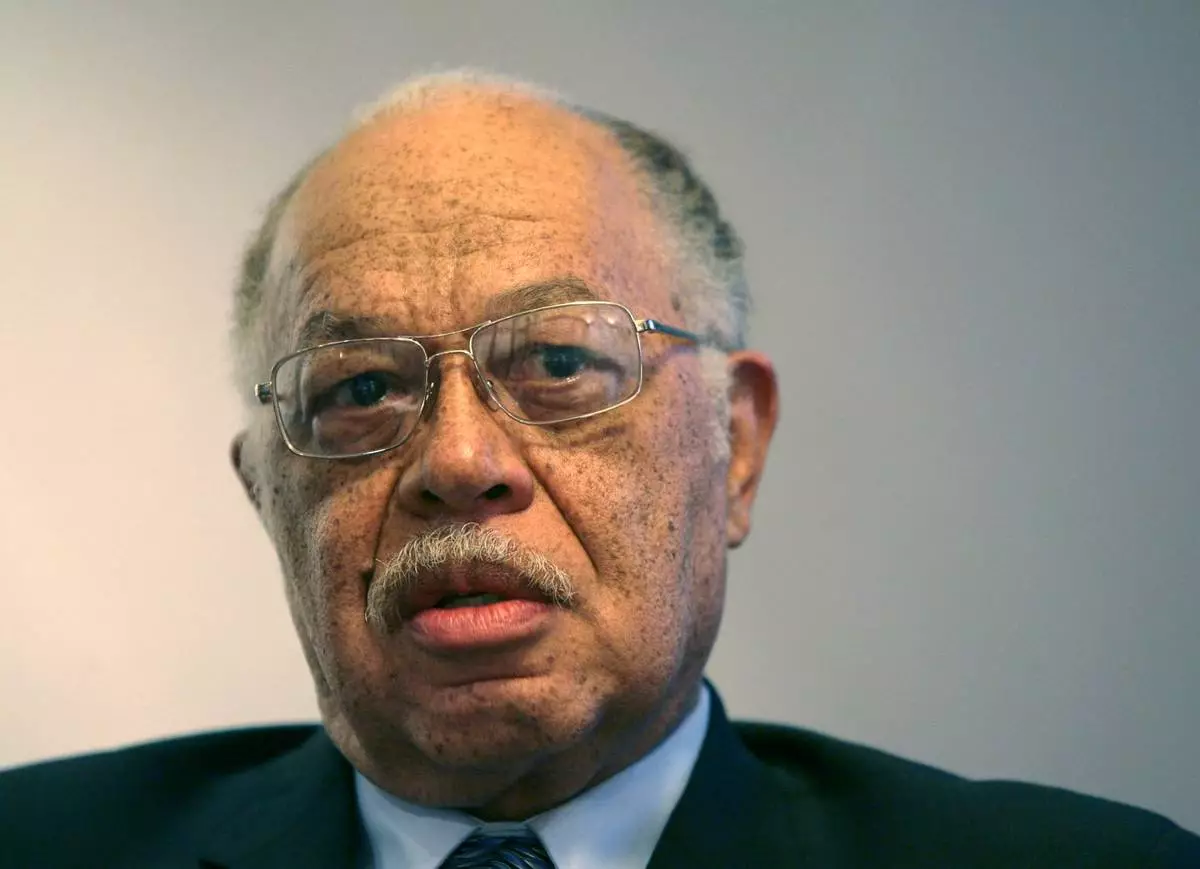
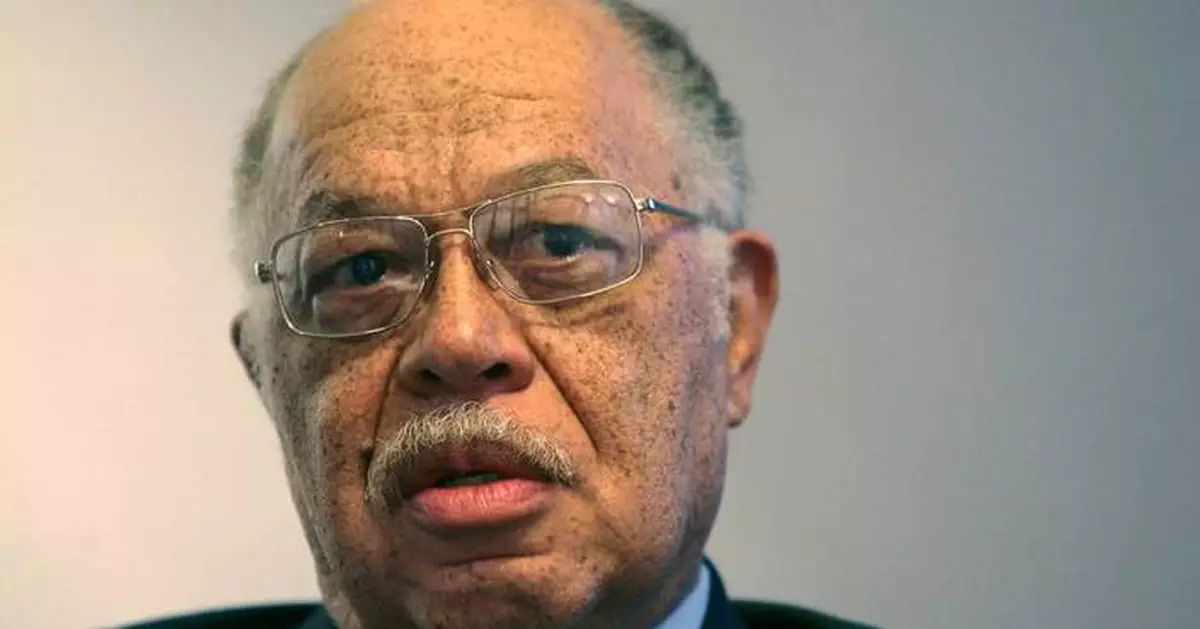
FILE - Dr. Kermit Gosnell is seen during an interview with the Philadelphia Daily News at his attorney's office on March 8, 2010, in Philadelphia. (Yong Kim/Philadelphia Daily News via AP, File)
MELBOURNE, Australia (AP) — The European Union and Australia on Tuesday agreed on the final text of a free trade agreement, some two years after negotiations broke down over Australian demands for more red meat market access and complaints about Australian products labeled with traditionally European names such as prosecco.
The breakthrough comes as both the EU and Australia seek to diversify their trading networks and reduce their economic reliance on China and exposure to uncertain U.S. tariffs.
European Commission President Ursula von der Leyen and Australian Prime Minister Anthony Albanese signed the agreement at the Australian Parliament House after protracted negotiations that began in 2018. The leaders said the pact demonstrated that both sides benefitted from rules-based trade.
“Today we are telling an important story to a world that is deeply changing. A world where great powers are using tariffs as a leverage and supply chains as vulnerabilities to be exploited," von der Leyen told reporters.
"In our story, open rules based trade delivers positive some outcomes. Trust matters more than transactions,” she added.
Albanese said the context in which the agreement was reached was an important factor in allowing negotiations that collapsed in October 2023 to restart.
“This is both the European Union and Australia asserting that we believe in free and fair trade, that we understand that trade advances the prosperity of both trading entities who are involved, that it is in our interest to get this done,” Albanese said.
The leaders also announced a new defense partnership that will bring closer military cooperation and the start of negotiations toward Australia becoming an associate of the research and innovation funding program Horizon Europe.
Albanese said the defense partnership would provide a framework for the EU and Australia to cooperate on global challenges, marking as areas of collaboration defense industries, maritime security, cyber security, countering terrorism and combating hybrid threats such as disinformation.
“It shows our shared commitment to global peace and security, including reaffirming our steadfast support for Ukraine in the face of Russia’s illegal full-scale invasion,” Albanese said.
Albanese said the pact also removed tariffs on key Australian exports including wine, seafood and horticulture.
The EU will open two tariff rate quotas of a total of 30,600 metric tons (33,731 U.S. tons) for Australian red meat, with 55% of that duty free.
Under the trade deal, Australian producers of prosecco, traditionally a sparkling wine from northern Italy, will be banned from using the name on exports 10 years after the pact takes effect.
A start date for the pact has not been announced.
The pact will also help the EU secure supplies of critical raw materials including lithium and tungsten.
Hazel Moir, an economist from the Australian National University’s Center for European Studies, said that both the Europeans and Australians were keen to reach a deal in response to U.S. President Donald Trump's push to impose global tariffs.
“What’s changed is all of Trump’s behavior on tariffs. So everyone got nervous and they wanted to do other things,” Moir said.
Moir said it was too soon predict the impact on bilateral trade, as the agreement's full text has not yet been released.
An EU free trade deal with four South American countries will begin on May 1 after more than a quarter-century of negotiations and new global economic uncertainty.
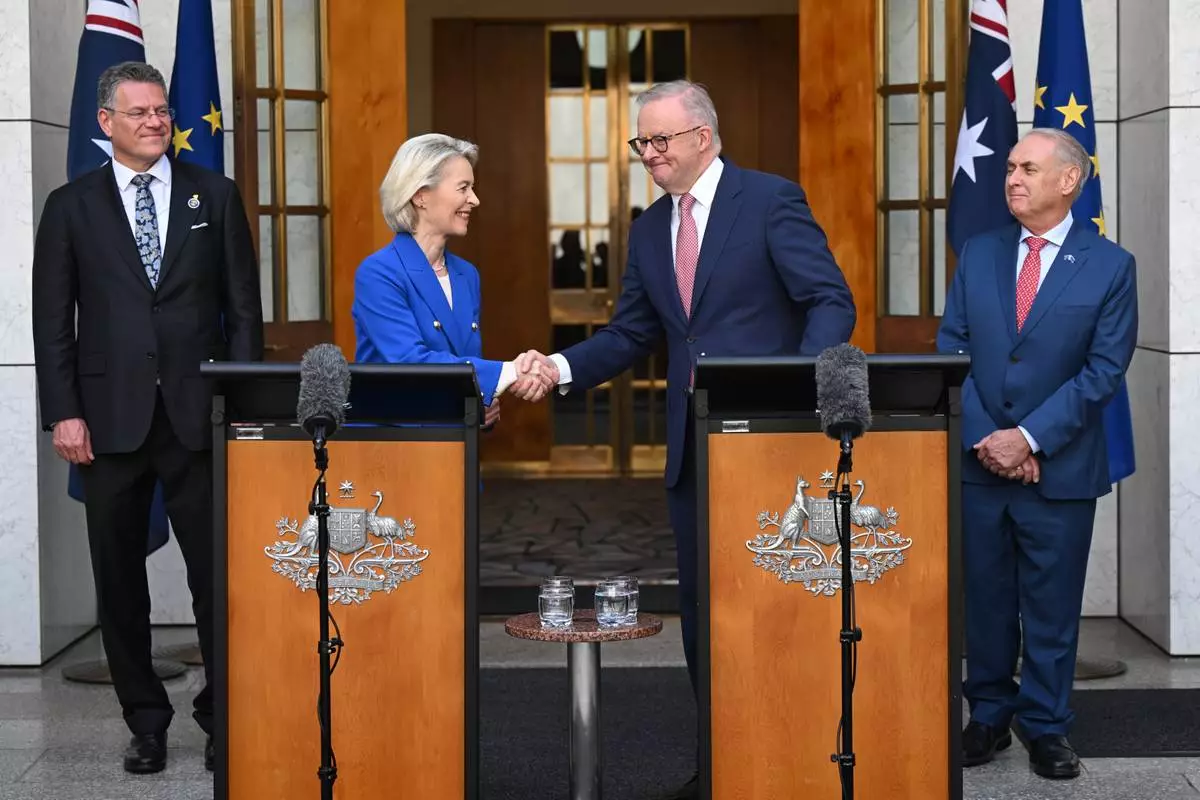
European Commission President Ursula von der Leyen, center left, and Australian Prime Minister Anthony Albanese shake hands after an agreedment on the final text of a free trade agreement at Parliament House in Canberra, Tuesday, March 24, 2026, as EU Commissioner for Trade and Economic Security Maros Sefcovic, left, and Australian Minister for Trade, Don Farrell, right, look on. (Lukas Coch/AAP Image via AP)
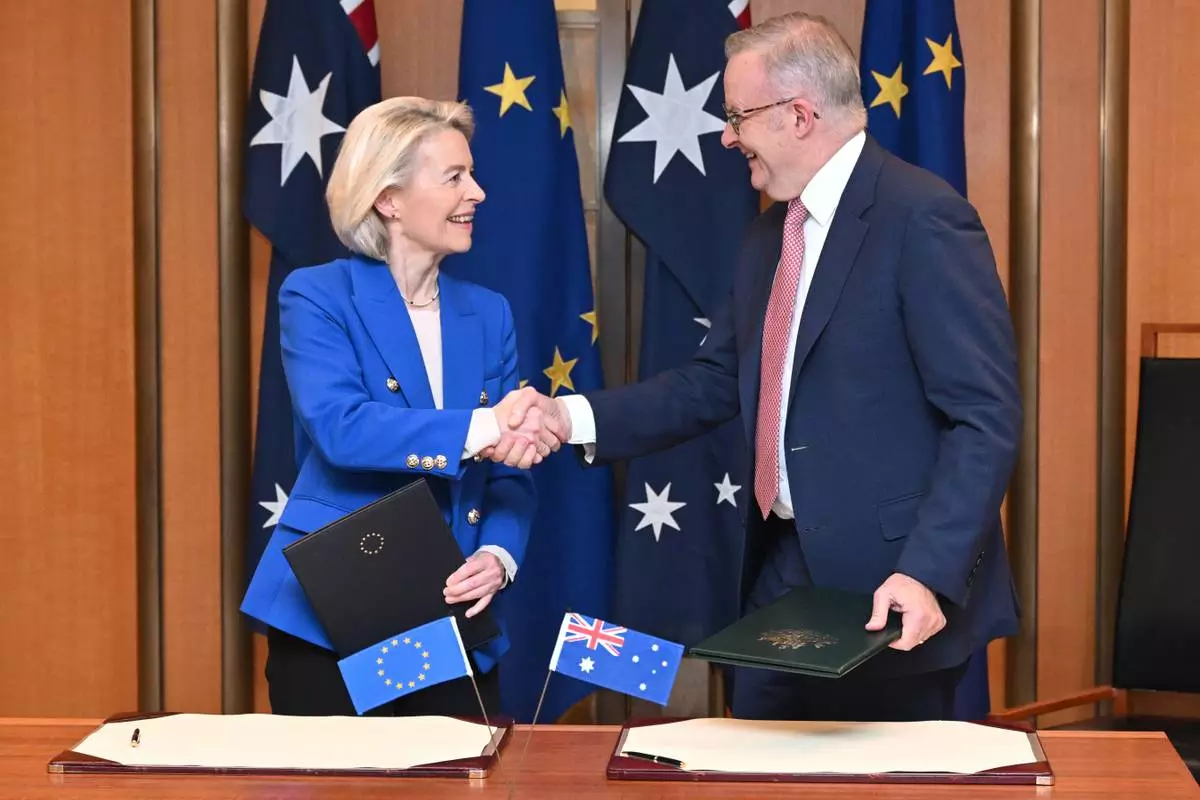
European Commission President Ursula von der Leyen, left, and Australian Prime Minister Anthony Albanese shake hands after signing a joint statement during a ceremony at Parliament House in Canberra, Tuesday, March 24, 2026. (Lukas Coch/AAP Image via AP)