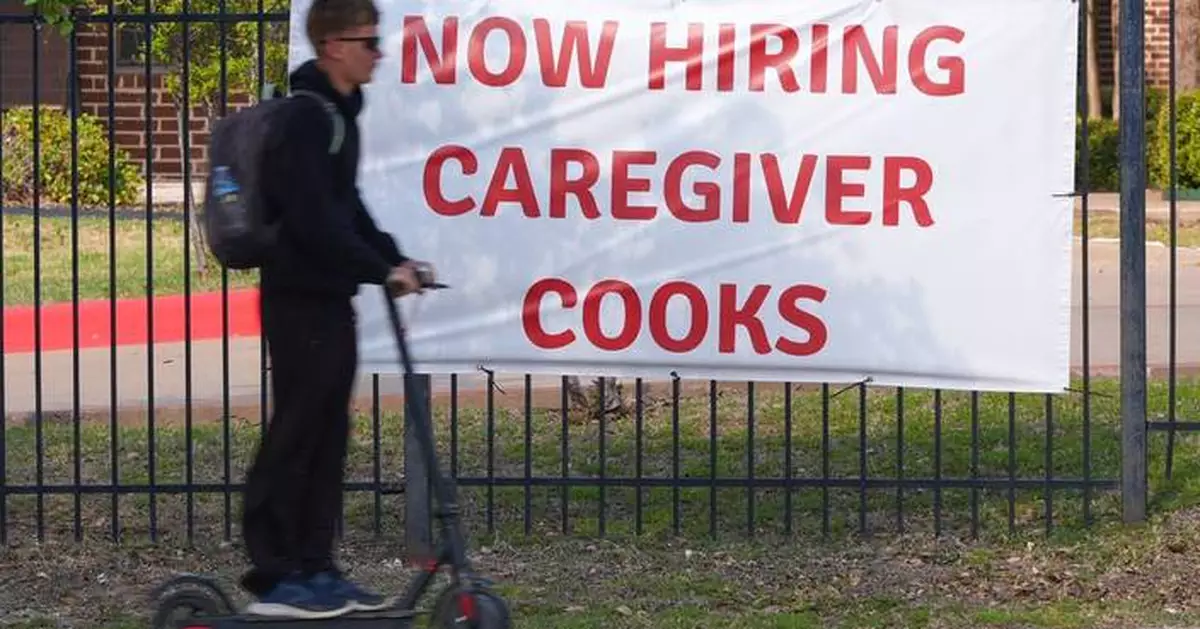
WASHINGTON (AP) — Americans' outlook on the job market has turned increasingly pessimistic, a surprisingly negative shift given the low unemployment rate but one that likely reflects an ongoing hiring drought.
Just 28% of workers in a quarterly Gallup survey conducted late last year said now is a “good time” to find a quality job, with 72% saying it is a bad time. Those figures are a sharp reversal from just a few years ago, in mid-2022, when 70% said it was a good time.
Americans have quickly gotten more pessimistic: As recently as late 2024, just under half of workers still said it was a good time to search for a job. The current survey was conducted during the final three months of 2025, long before the Iran war that has sent oil and gas prices soaring and threatens to slow the economy as Americans redirect more of their dollars to filling gas tanks and away from other spending.
The figures help explain other surveys that show Americans have a largely bleak view of the economy, even as many headline measures suggest it has been growing and job losses are low.
Job pessimism is especially pronounced among college graduates. The shift is likely because hiring in many white-collar professions has been unusually weak for the past two years, in areas such as software, customer service and advertising.
The survey found a split based on education levels, with just 19% of workers with a college degree thinking that now is a good time to find a quality job, while 35% of workers without a college degree are optimistic.
A separate Gallup survey of U.S. adults overall found that college graduates' optimism about the job market is the lowest it's been since 2013. Meanwhile, the gap in job market sentiment between Americans with and without a college degree was at its widest in that survey since Gallup started asking the question in 2001.
Just about 2 in 10 workers ages 18-34 think now is a good time to find a job, compared to about 4 in 10 workers ages 65 and older who say the same.
Gallup’s survey is consistent with what economists call the “low-hire, low-fire” job market: Businesses are largely holding onto their workers and measures of layoffs remain quite low. As a result, older workers are largely secure in their jobs. But hiring is also quite sluggish, making it harder for younger workers to break in and find permanent work.
It also found that younger workers are much likelier than older workers to say they're actively looking for a new job or watching for opportunities. Most Gen Z and Millennial workers say they're at least watching for opportunities, while about three-quarters of baby boomers say they're not looking at all.
The Gallup results come as government data shows that overall hiring is at its weakest level in more than a decade. The Labor Department tracks a “hiring rate,” or the proportion of people who are hired each month as a percent of those with jobs. The hiring rate dropped to 3.2% last November, around when Gallup conducted its survey, the lowest since March 2013. It was 3.9% before the pandemic.
A hiring rate at that 3.2% is quite low: When it was last reached in March 2013, the unemployment rate was 7.5%, as millions of Americans were still struggling to find work after the 2008-2009 Great Recession. It suggests it is much harder to find a job now than the unemployment rate would indicate.
Government data also shows that there are more unemployed people — 7.4 million — than available jobs, at 6.9 million. That is a reversal from the first few years after the pandemic, when vacancies outnumbered those out of work.
Gallup's survey also found that workers have a dimmer view of their current life and future prospects than at any point since 2009, when the firm began measuring the workforce's life evaluations.
Other surveys echo Americans' generally dark view of the economy. The Conference Board's consumer confidence survey was just 91.2 in February, not far from its pandemic-era lows and down from nearly 130 before the pandemic.
More people believe jobs are “easy to get” than “hard to find,” the Conference Board's survey finds, but the gap has narrowed steadily in recent years.
The Gallup poll of 22,368 U.S. adults who are working full-time and part-time for organizations in the U.S. was conducted Oct. 30-Nov. 13, 2025, using a sample drawn from Gallup's probability-based panel. The margin of sampling error for all respondents is plus or minus 1.0 percentage points.
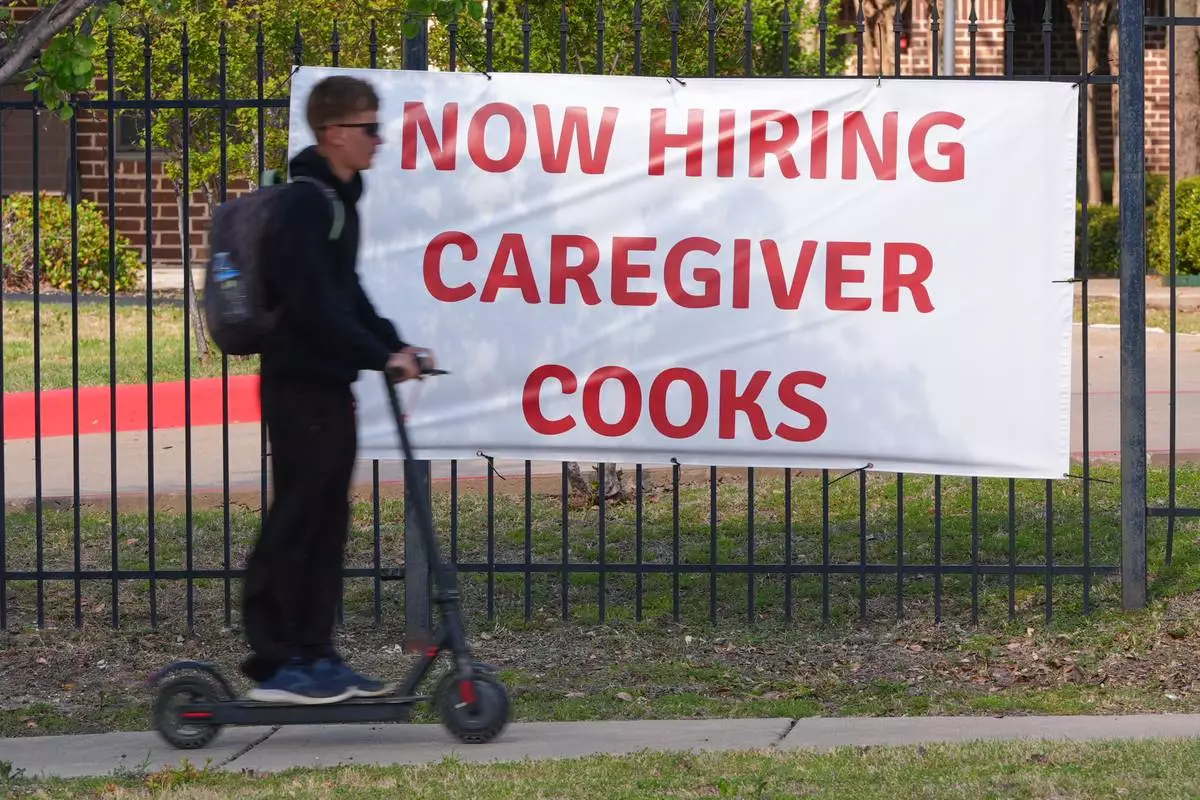
A now hiring sign sits by the sidewalk as a rider on a scooter passes in Garland, Texas, Monday, March 23, 2026. (AP Photo/LM Otero)
NEW YORK (AP) — Kamala Harris “wrote off rural America" during the 2024 presidential campaign and failed to attack Donald Trump with sufficient “negative firepower," according to a long-awaited post-election autopsy released on Thursday by the Democratic National Committee.
The committee's chair, Ken Martin, shared the 192-page report only after facing intense internal pressure from frustrated Democratic operatives concerned with his leadership. Martin had originally promised to release the autopsy, only to keep it under wraps for months because he was concerned it would be a distraction ahead of the midterms as Democrats mobilize to take back control of Congress.
On Tuesday, Martin apologized for his handling of the situation and conceded that the report was withheld because it “was not ready for primetime."
Although the autopsy criticizes Democrats' focus on “identity politics,” it sidesteps some of the most controversial elements of the 2024 campaign. The report does not address former President Joe Biden’s decision to seek reelection, the rushed selection of Harris to replace him on the ticket or the party's acrimonious divide over the war in Gaza.
“I am not proud of this product; it does not meet my standards, and it won’t meet your standards,” Martin wrote in an essay on Substack on Thursday. “I don’t endorse what’s in this report, or what’s left out of it. I could not in good faith put the DNC’s stamp of approval on it. But transparency is paramount.”
A spokesperson for Harris did not immediately respond to a request for comment.
The initial reaction from Democratic operatives was a mix of bafflement and anger over Martin's handling of the situation.
“Why not say this in 2024, or bring in more people to finish it, instead of turning this into the dumbest media cycle for 7-8 months?” Democratic strategist Steve Schale wrote on social media.
The postelection report, which was authored by Democratic consultant Paul Rivera, calls for “a renewed focus on the voters of Middle America and the South, who have come to believe they are not included in the Democratic vision of a stronger and more dynamic America for everyone.”
“Millions of Americans are suffering from poor access to healthcare, manufacturing and job losses, and a failing infrastructure, yet continue to be persuaded to vote against their best interests because they do not see themselves reflected in the America of the Democratic Party,” the report says.
The autopsy points to a reduction in support and training for Democratic state parties, voter registration shifts and “a persistent inability or unwillingness to listen to all voters.”
Thursday's release comes as Martin confronts a crisis of confidence among party officials who are increasingly concerned about the health of their political machine barely a year into his term. Some Democratic operatives have had informal discussions about recruiting a new chair, even though most believe that Martin’s job wasn't in serious jeopardy ahead of the midterm elections.
The report found that Harris and her allies failed to focus enough on Trump's negatives, especially his felony convictions. This was part of a broader criticism that Democrats' messaging is too focused on reason and winning arguments, “even in cycles when the electorate is defined by rage.”
“There was a decision in the 2024 Democratic leadership not to engage in negative advertising at the scale required,” the report states. “The Trump campaign and supportive Super PACs went full throttle against Vice President Harris, but there was not sufficient or similar negative firepower directed at Trump by Democrats.”
The report continues: “It was essential to prosecute a more effective case as to why Trump should have been disqualified from ever again taking office. The grounds were there, but the messaging did not make the case.”
Trump's attack on Harris' transgender policies were cited as a key contrast.
Specifically, the report suggested the Democratic nominee was “boxed” in by the Trump campaign's “very effective” ad that highlighted Harris' previous statement of support for taxpayer-funded gender-affirming surgeries for prison inmates.
Democratic pollsters believed that “if the Vice President would not change her position – and she did not – then there was nothing which would have worked as a response," the report said.
The report criticized Harris' outreach to key segments of America while condemning the party's focus on “identity politics.”
“Harris wrote off rural America, assuming urban/suburban margins would compensate. The math doesn’t work,” the report says. “You can’t lose rural areas by overwhelming margins and make it up elsewhere when rural voters are a significant share of the electorate. If Democrats are to reclaim leadership in the Heartland or the South, candidates must perform well in rural turf. Show up, listen, and then do it again.”
The report also references Democrats' underperformance with male voters of color.
“Male voters require direct engagement. The gender gap can be narrowed. Deploy male messengers, address economic concerns, and don’t assume identity politics will hold male voters of color,” it says.
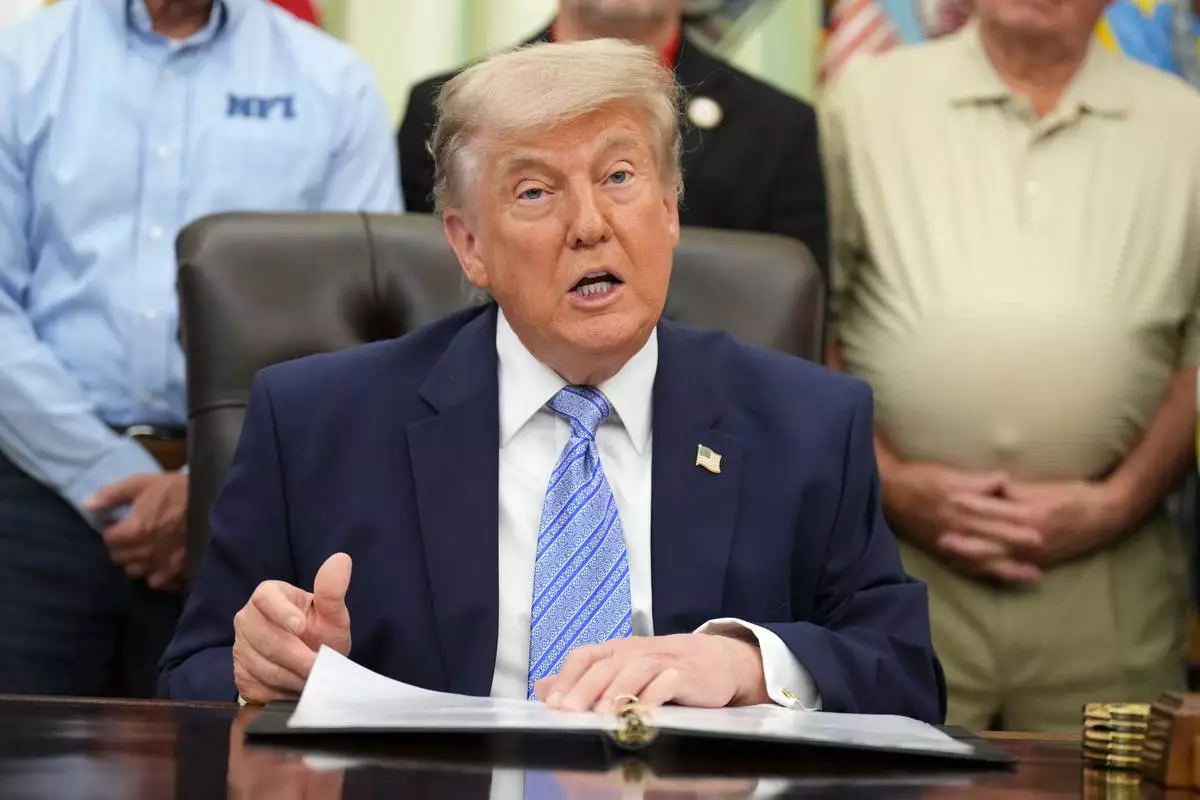
President Donald Trump speaks during an event about loosening a federal refrigerant rule, in the Oval Office at the White House, Thursday, May 21, 2026, in Washington. (AP Photo/Jacquelyn Martin)

Former Vice President Kamala Harris speaks during a fireside chat on Thursday, May 7, 2026, in Las Vegas. (AP Photo/Ty ONeil)
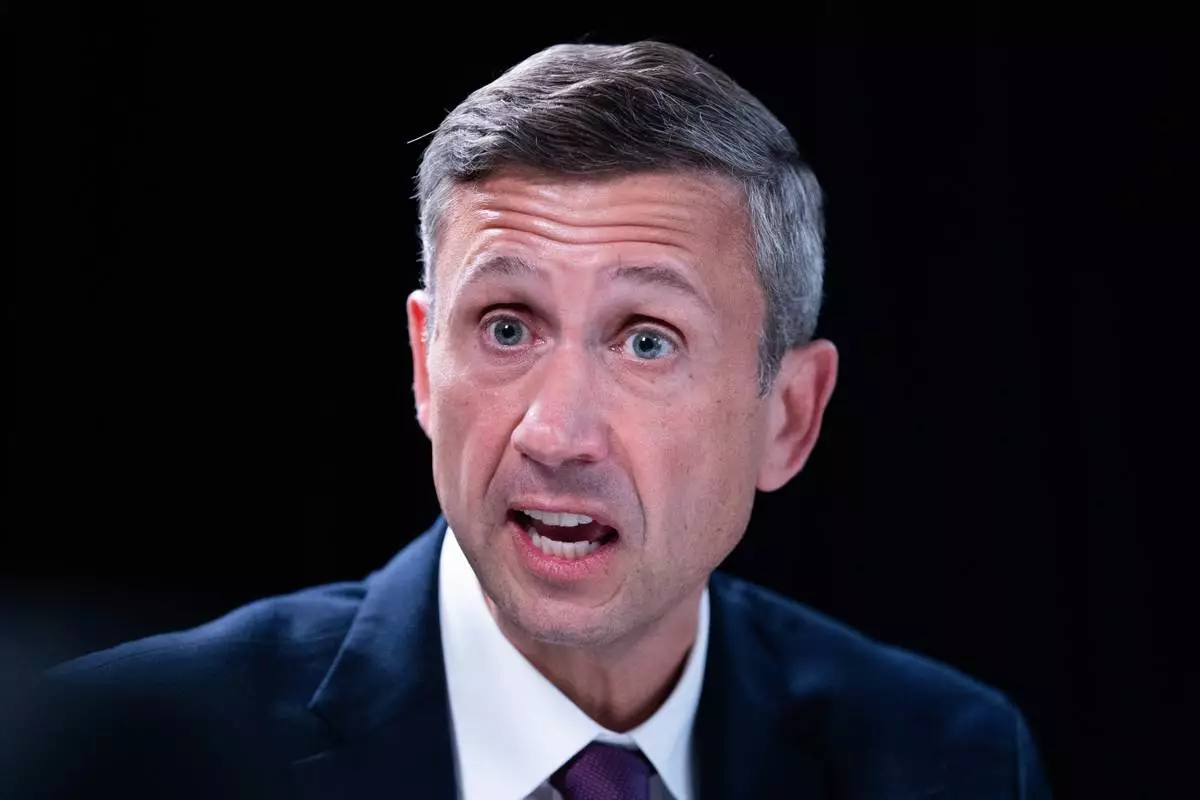
FILE - Democratic National Committee chair Ken Martin speaks during an interview with The Associated Press at DNC headquarters, Jan. 12, 2026, in Washington. (AP Photo/Allison Robbert, File)