Global economists and corporate executives at the China Development Forum (CDF) 2026 said that the world's second largest economy remains a predictable force at a time of geopolitical flux and global uncertainty.
Stability, a recurring theme from last year's forum, resonated more strongly this year during the two-day forum which concluded on Monday in Beijing, as the conflict in the Middle East continues to drive international oil and gold price volatility.
As gold prices extended another day of dramatic fluctuation on Monday following several days of decline, forum attendees, including leaders of international organizations, business executives and prominent scholars from around the world, gathered for a pair of symposiums on addressing uncertainty and exploring growth opportunities, as well as on the global low-carbon transition and sustainable development.
They held heated discussions about the energy prices surge rippling across the wider global economy as a result of the Middle East conflict, and the long-term impact of geopolitical tensions on gold, typically a go-to safe-haven in times of uncertainty.
Zhu Min, a member of the Senior Expert Advisory Committee of the China Center for International Economic Exchanges, shared his view on the declining investor confidence in the yellow metal, in an interview with China Central Television (CCTV).
"What is actually shifting now is institutional investors' demand for gold. As the U.S. Fed leaves interest rates unchanged, they've felt that the cost of holding gold is too high and started shying away from the market. However, from a medium- to long-term perspective, I believe there are several fundamental trends. First, the U.S. dollar continues to weaken, and the current U.S. government has weaponized the dollar through measures such as tariff wars and armed conflicts, causing everyone's trust in the currency to slip. But the primary factor is the structural shift in the global geopolitical economy, where the share of the United States in the overall geopolitical economic landscape is declining, while the share of China and other Global South countries is rising. This represents a fundamental shift," he said.
Zhu believes gold remains a key safe-haven asset for investors, but warned that severely disrupted supply chains could leave oil prices elevated. He emphasized that China's long-term strategy of reducing fossil fuel reliance and accelerating its green transition helps anchor growth expectations, while cautioning that the Middle East conflict still poses risks through energy price volatility and supply chain disruptions.
Forum participants agreed that China's stability offers a measure of certainty, even as global turbulence continues to shape markets.
"What business, what investment likes is a predictable world, to make long-term decisions, to decide where to put your money. And lack of predictability, I think, leads to slower growth," Ian Goldin, a professor at the University of Oxford, told CCTV.
"It is a signal to any country: invest in wind power, invest in solar power, invest in hydropower. It's your own energy. Countries are going to come to China and say, 'We want to scale up our renewable energy and we want you to help us to do this in a low-cost way.' So, in this sense, the war will be a spur to the energy transformation," said Jeffrey Sachs, a professor at the Columbia University.
Patrick Pouyanne, CEO of French energy and petroleum company TotalEnergies, told CCTV that his company continues to seek business partnerships with China, whose world-leading electricity generation capacity, fueled by a renewables boom, will drive its AI-powered industrial transformation.
"We are an oil, gas company. We invest more and more in electricity, 4 billion dollars per year, like China does. I think in all the scenarios we need more electricity. We also need more electricity because of data centers, the AI revolution," he said.
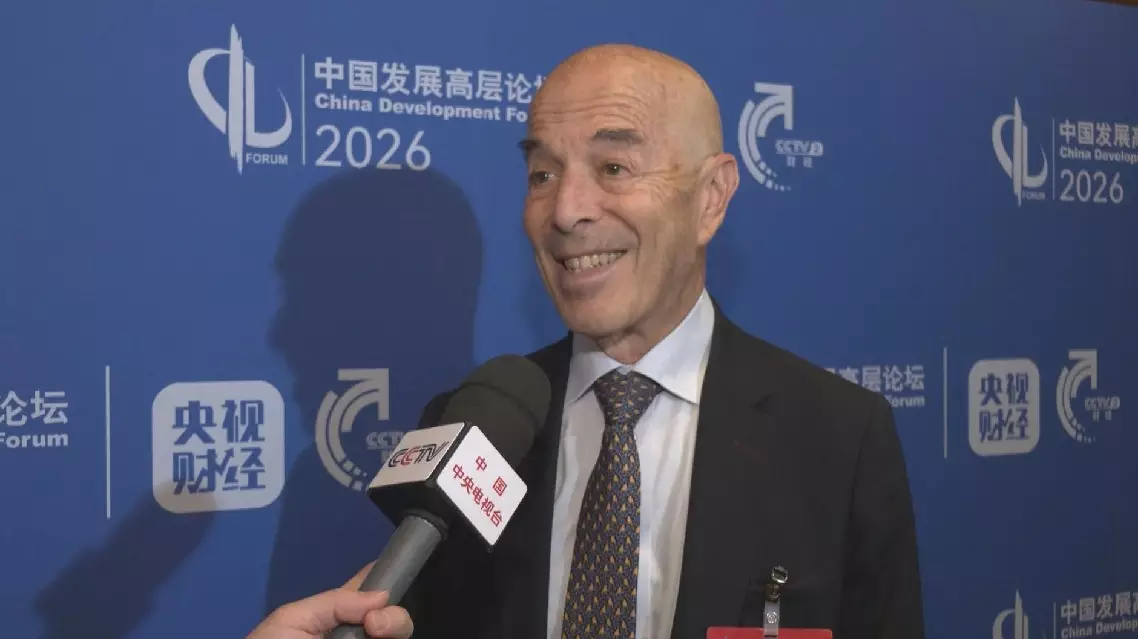
China's growth certainty, stable business environment win praise at development forum
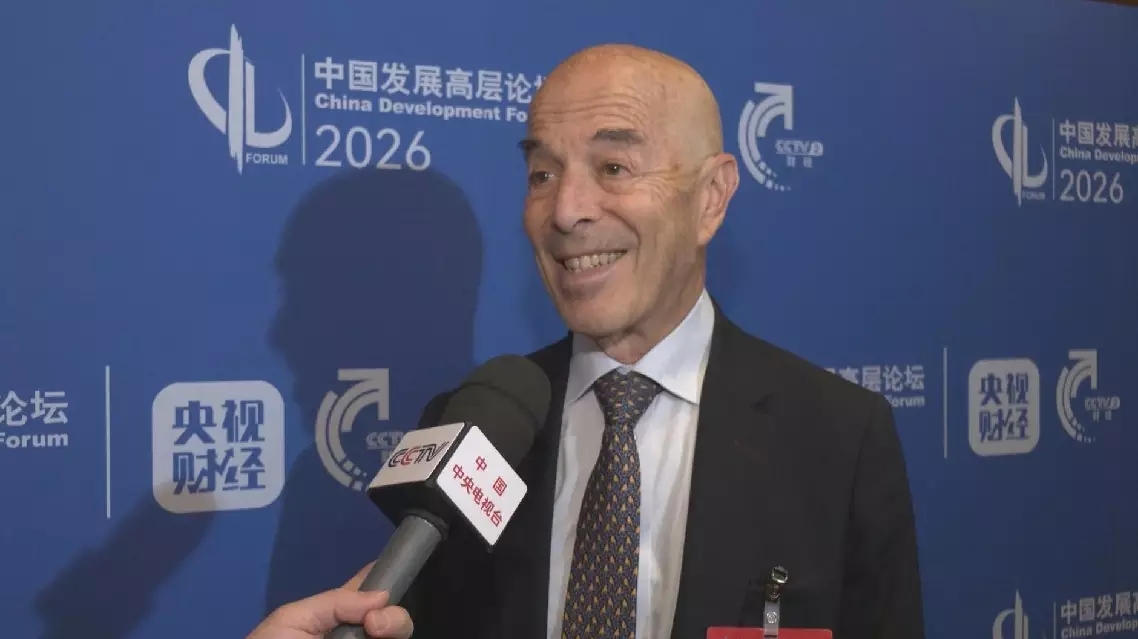
China's growth certainty, stable business environment win praise at development forum