Skip to Content Facebook Feature Image

Vertical Aerospace Advances Piloted Flight Testing, Manufacturing and Demand for Valo

News

Vertical Aerospace Advances Piloted Flight Testing, Manufacturing and Demand for Valo
News

News

Vertical Aerospace Advances Piloted Flight Testing, Manufacturing and Demand for Valo

2026-03-24 18:31 Last Updated At:18:50

LONDON & NEW YORK--(BUSINESS WIRE)--Mar 24, 2026--

Vertical Aerospace (“Vertical” or “the Company”) (NYSE: EVTL), a global aerospace and technology company pioneering electric aviation, today released its 2025 Annual Report, including FY25 financial results and an update on its flight test programme, manufacturing progress and commercial momentum.

This press release features multimedia. View the full release here: https://www.businesswire.com/news/home/20260324033701/en/

The Annual Report is available on the Company’s Investor Relations website and at www.sec.gov.

Vertical will host a webcast today at 08:30 ET (12:30 GMT), led by Chair Dómhnal Slattery, CEO Stuart Simpson and Chief Engineer David King.

Ahead of the call, Stuart Simpson, CEO of Vertical Aerospace, said:

“We’ve made strong progress across the business – achieving key piloted flight milestones, advancing transition testing and launching Valo to the market. The response from customers and partners has been very encouraging, with renewed order activity and growing confidence in our programme. We are now firmly focused on certification and scaling production.”

Valo Driving Market Demand

Advancing Flight Testing Toward Certification

Scaling Manufacturing to Support Certification and Early Production

Financials and Outlook

Webcast Details

To access the webcast, visit: https://investor.vertical-aerospace.com/events-and-presentations/events/

A replay will be available on the Company’s website.

About Vertical Aerospace

Vertical Aerospace is a global aerospace and technology company pioneering electric aviation. Vertical is creating a safer, cleaner, and quieter way to travel. Valo is a piloted, four-passenger, Electric Vertical Take-Off and Landing (eVTOL) aircraft, with zero operating emissions. Vertical is also developing a hybrid-electric variant, offering increased range and mission flexibility to meet the evolving needs of the advanced air mobility market.

Vertical combines partnerships with leading aerospace companies, including Honeywell, Syensqo and Aciturri, with its own proprietary battery and propeller technology to develop the world’s most advanced and safest eVTOL.

Vertical has c.1,500 pre-orders of Valo, with customers across four continents, including American Airlines, Avolon, Bristow, GOL and Japan Airlines. Certain customer obligations are expected to be fulfilled via third-party agreements. Headquartered in Bristol, UK, Vertical’s experienced leadership team comes from top-tier aerospace and automotive companies such as Rolls-Royce, Airbus, GM, and Leonardo. Together, they have previously certified and supported over 30 different civil and military aircraft and propulsion systems.

Forward Looking Statements

This press release contains forward-looking statements within the meaning of the U.S. Private Securities Litigation Reform Act of 1995 that relate to our current expectations and views of future events. We intend such forward-looking statements to be covered by the safe harbor provisions for forward-looking statements as contained in Section 27A of the Securities Act and Section 21E of the Exchange Act. Any express or implied statements contained in this press release that are not statements of historical fact may be deemed to be forward-looking statements, including, without limitation, statements regarding: statements regarding our future results of operations and financial position as well as our expected financial performance and operational performance, liquidity, growth and profitability strategies, the business strategy and plans and objectives of management for future operations, including the manufacturing facilities and battery production capabilities, certification and the commercialization of the Valo aircraft and the hybrid-electric Valo variant on any particular timeline or at all, and the completion of piloted flight test programme; selection of suppliers; our ability and plans to raise additional capital to fund our operations; our plans for capital expenditures which could be higher than anticipated; the design and manufacture of the Valo aircraft; the differential strategy compared to our peer group; the features and capabilities of the Valo aircraft; potential revenue opportunities; projections relating to the number of aircrafts and battery packs sold and in operation; expectations surrounding pre-orders and commitments; the assumptions underlying the Company’s Flightpath 2030 goals; as well as statements that include the words “expect,” “intend,” “plan,” “believe,” “project,” “forecast,” “estimate,” “may,” “should,” “anticipate,” “will,” “aim,” “potential,” “continue,” “are likely to” and similar statements of a future or forward-looking nature. Forward-looking statements are neither promises nor guarantees, but involve known and unknown risks and uncertainties that could cause actual results to differ materially from those projected. The targets, expectations and estimates included in this report were prepared by the Company’s management team based on information available at the time such information was developed and reflects numerous assumptions, including those related to general business, economic, market, and financial conditions, as well as other factors that are difficult to predict and many of which are beyond the Company’s control. The Company believes the assumptions underlying such targets, expectations and estimates were reasonable at the time such information was prepared. However, important factors that may affect actual results and cause the results reflected in such targets, expectations and estimates not to be achieved including, among other things, risks and uncertainties relating to the Company’s business, industry performance, the regulatory environment, and general business and economic conditions, as discussed under the caption “Risk Factors” in the Company's Annual Report on Form 20-F filed with the U.S. Securities and Exchange Commission (“SEC”) on March 24, 2026, as such factors may be updated from time to time in the Company’s other filings with the SEC. Any forward-looking statements contained in this press release speak only as of the date hereof and accordingly undue reliance should not be placed on such statements. We disclaim any obligation or undertaking to update or revise any forward-looking statements contained in this press release, whether as a result of new information, future events or otherwise, other than to the extent required by applicable law.
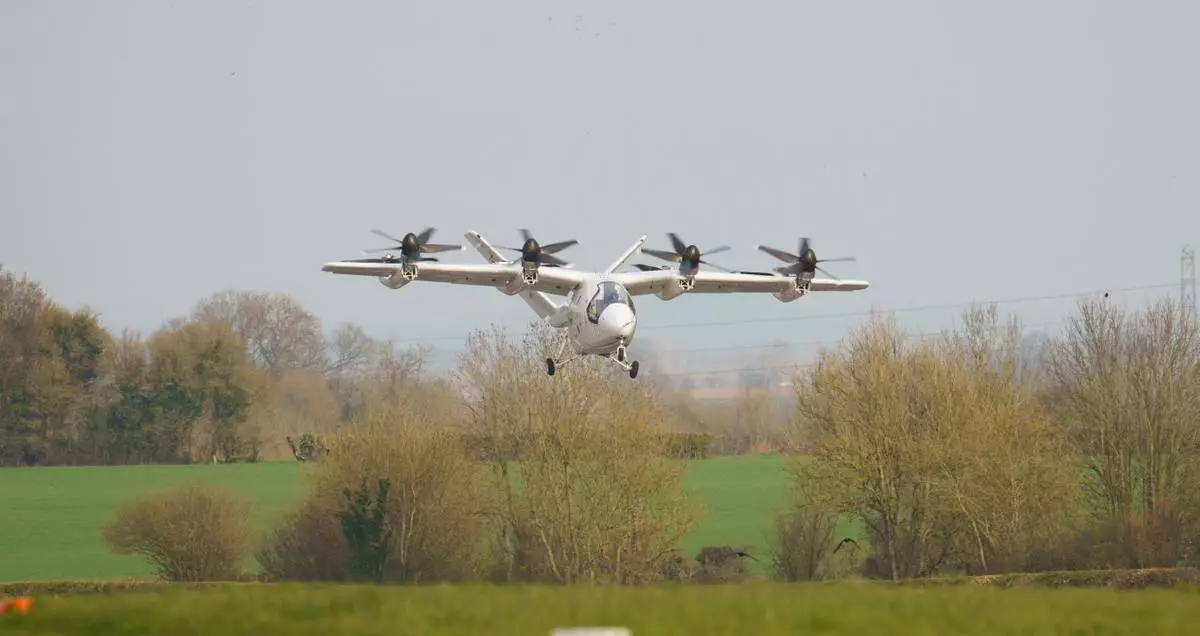
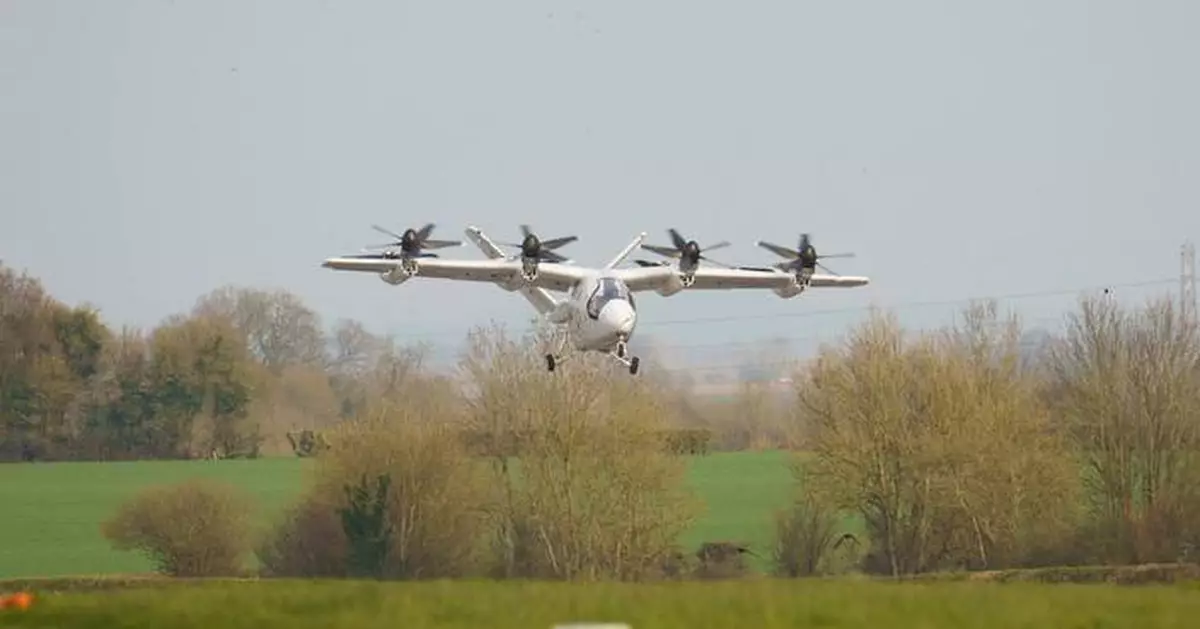
Test pilot Paul Stone in flight during transition testing of Vertical’s prototype at the Company’s UK Flight Test Centre, 23 March 2026.
Test pilot Paul Stone in flight during transition testing of Vertical’s prototype at the Company’s UK Flight Test Centre, 23 March 2026.
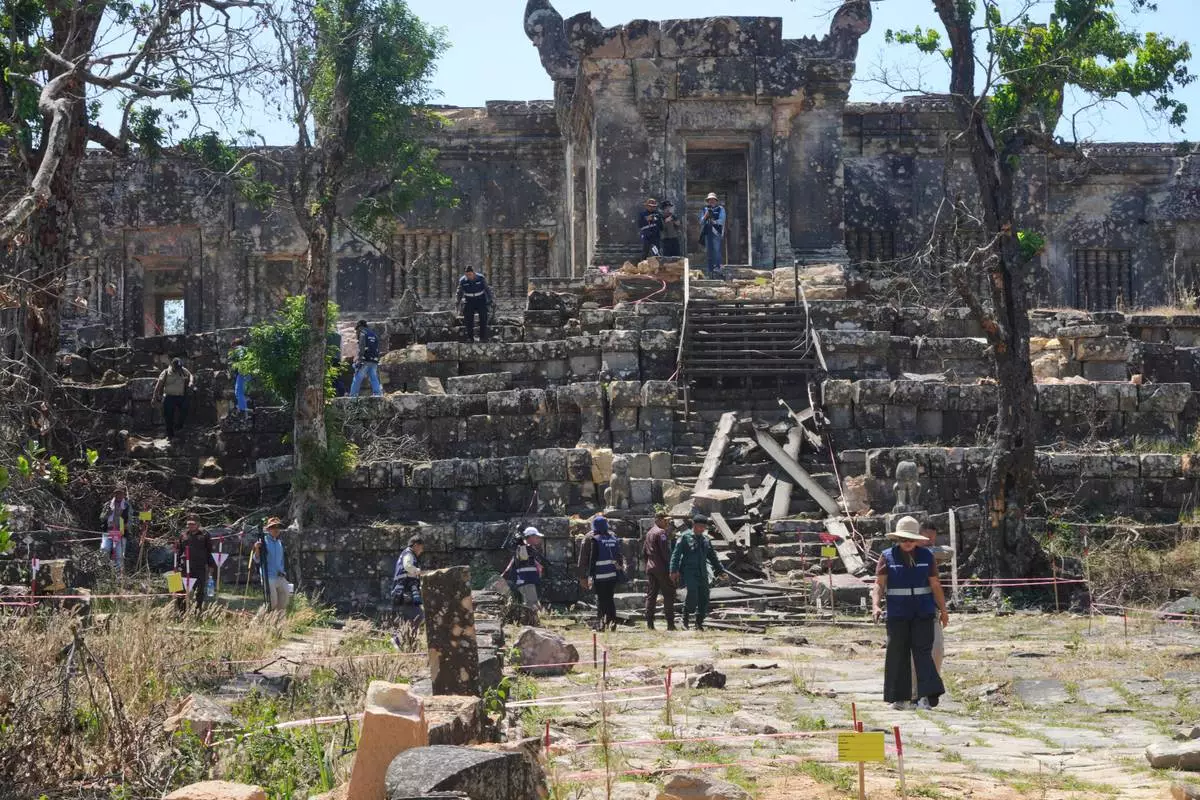
PREAH VIHEAR, Cambodia (AP) — It's been three months since a ceasefire ended bitter border fighting between Cambodia and Thailand, but signs of combat are cut deep in this 11th-century Hindu temple atop a 525-meter (1,722-foot) cliff in the Dangrek Mountains.

The neighboring Southeast Asian countries have been fighting over Preah Vihear temple on and off for decades, and that's putting the ancient holy site in danger.

Built by the same Khmer Empire that constructed Angkor Wat 160 kilometers (100 miles) southwest, the temple, which is dedicated to the Hindu god Shiva, was declared a UNESCO World Heritage site in 2008 and is held as an important cultural relic by Cambodians. The empire was Hindu, but gradually converted to Buddhism, the state religion of modern Cambodia.

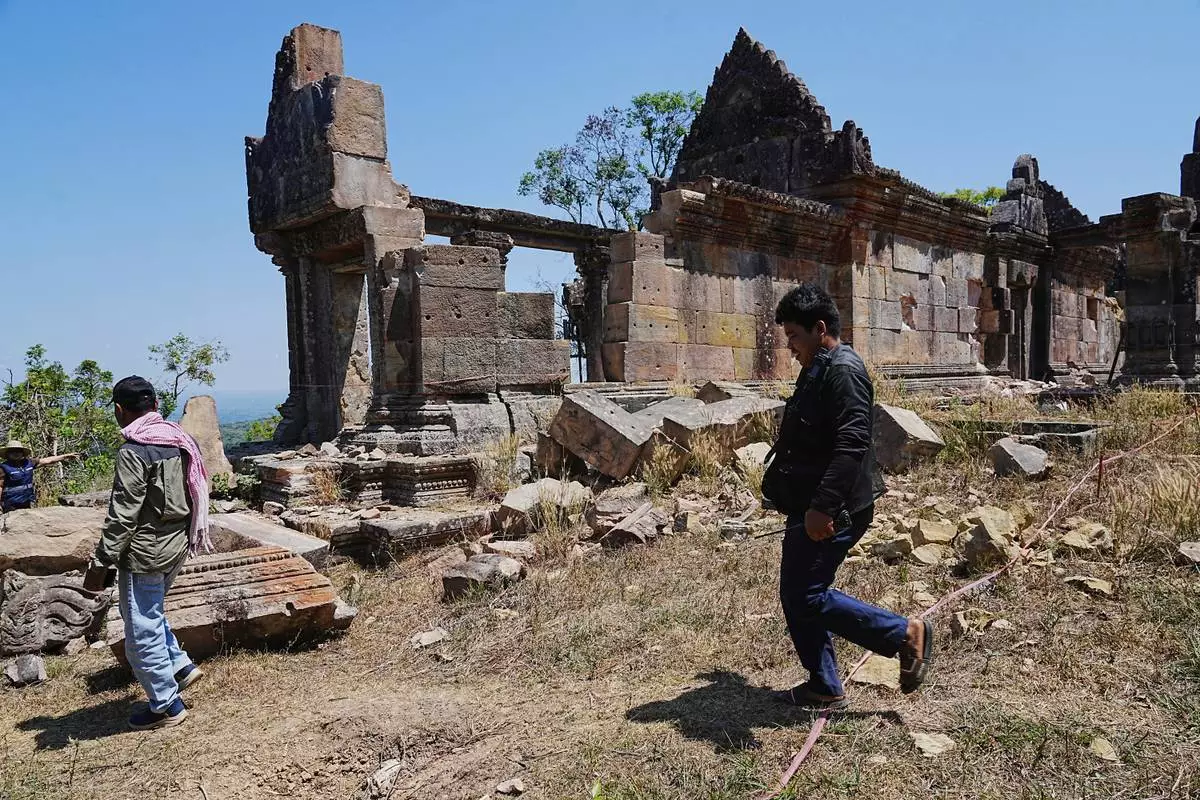
But after two rounds of major combat last year, much of the structure is damaged and Cambodian officials say that parts of the temple may be in danger of collapse.

Where tourists once admired the weather-beaten structure's elaborate carvings and a magnificent view over the Cambodian plains, there is now stone debris, along with artillery craters and the ashes of burned vegetation.

“The temple has turned quiet, and its beauty looks so sorrowful because of the tragedy,” Hem Sinath, archaeologist and deputy director-general of the National Authority for Preah Vihear, told Associated Press journalists visiting earlier this month.

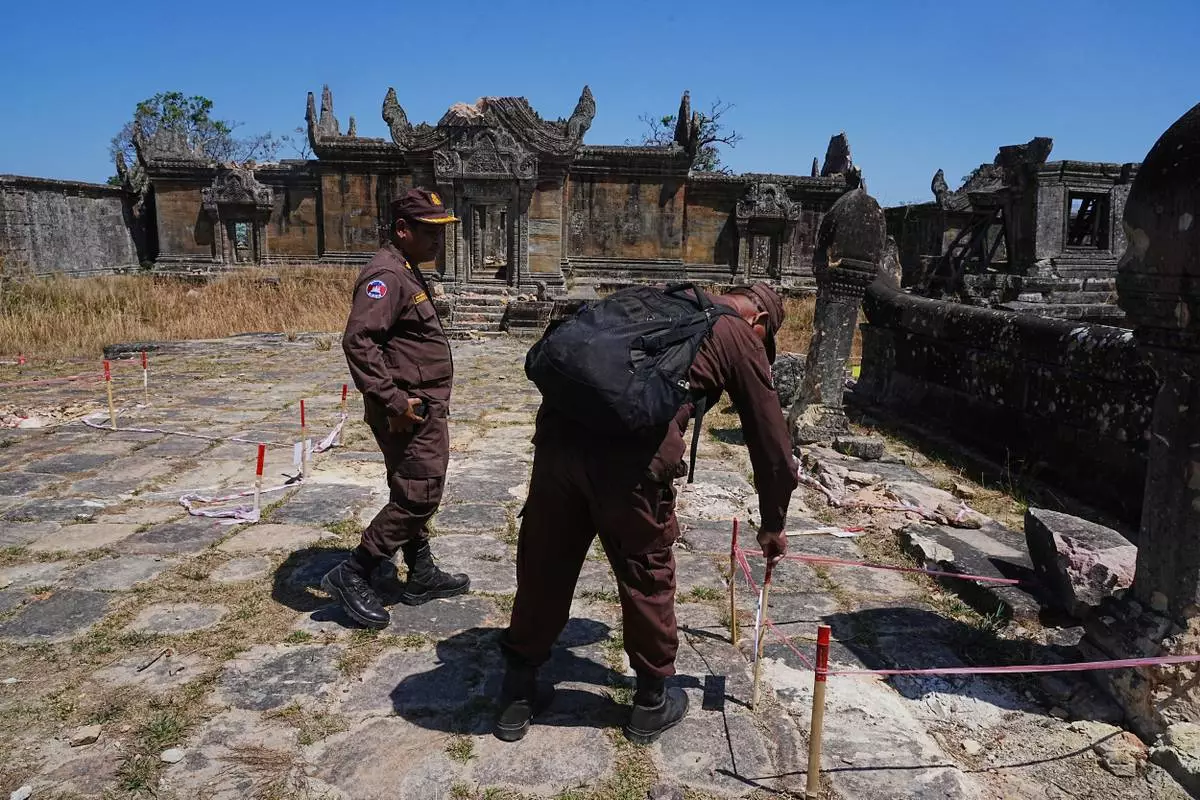
The site is closed to tourism due to unstable walls and concern about the presence of unexploded ordnance. Areas are roped off and dotted with signs warning of land mines, a hazard Cambodians know well after decades of Civil War that ended in the late 1990.

Conservation staff, groundskeepers and troops remain stationed in and around the temple, from which Thai soldiers can be seen just across the border.

All five of the temple’s notable gateway pavilions were damaged, three almost beyond recognition, according to a damage assessment issued in January by Cambodia’s Culture Ministry. An ancient northern staircase previously restored by a U.S.-funded conservation project sustained severe hits from repeated bombardment.

A statement issued last week by Cambodia’s Culture Ministry said the temple had suffered damage in 142 locations during the fighting in July, and at 420 more during heavier and more sustained combat in December.

“Experts have predicted that during the upcoming rainy season, some structures on the verge of collapsing could finally fall,” Hem Sinath said.

No independent outside evaluations of the damage are available.

Information Minister Neth Pheaktra accused the Thai military of relying on false information to justify incursions and of deliberately damaging the temple.

“Preah Vihear temple belongs to all humankind. It is not an enemy of Thailand,” he wrote.

International law forbids attacks on important historical sites like the temple, but Thailand has argued that Cambodia militarized the complex, voiding its wartime protection, by installing weapons systems, storing ammunition, and using the site as a base for surveillance equipment. This included a construction crane at the site, which the Thai army attacked after claiming it served as part of a military command and control system.

Thai Army spokesperson Maj. Gen. Winthai Suvaree has insisted that Thai forces directed their fire strictly at military targets.

Cambodia denies that its military ever used the temple, with its Culture Ministry writing in a statement that the temple is under civilian control and that any security forces present were there only to protect the cultural heritage site.

Each nation blames the other for starting the fighting that flared in July and December. Cambodia has reported that more than 640,000 people were displaced from border regions during the fighting, and almost 37,000 have yet to return to their homes.

The temple, known as Phra Viharn to Thais, has been at the center of a long-standing boundary dispute since the 1950s. In 1962, the International Court of Justice ruled that the temple and surrounding area of less than five square kilometers (two square miles) belong to Cambodia. The Court reaffirmed this ruling in 2013.

For years, it drew visitors from both sides of the border, with many foreign tourists arriving via Thailand before the border was closed.

Its designation by UNESCO as a Cambodian heritage site in 2008 rubbed salt into Thai wounds, and heightened nationalism stoked by domestic politics in Thailand contributed to sporadic armed conflict at the temple in 2008 and 2011.

Restoring the temple will be a major challenge. Hem Sinath fears that weakened structures could collapse during the rainy season, which normally begins in late May or early June and continues through October.

India, China and the United States have been involved in previous renovation efforts, but funding has been on hold since fighting broke out.

Hem Sinath said that new and urgent projects needed to keep the temple from deteriorating further are being hindered by concerns for safety and security while the ceasefire remains fragile.

“We have a plan; we want to do a repair — the sooner the better, but as you see, it depends on the situation along the border,” he said.

Associated Press writer Grant Peck in Bangkok contributed to this report.

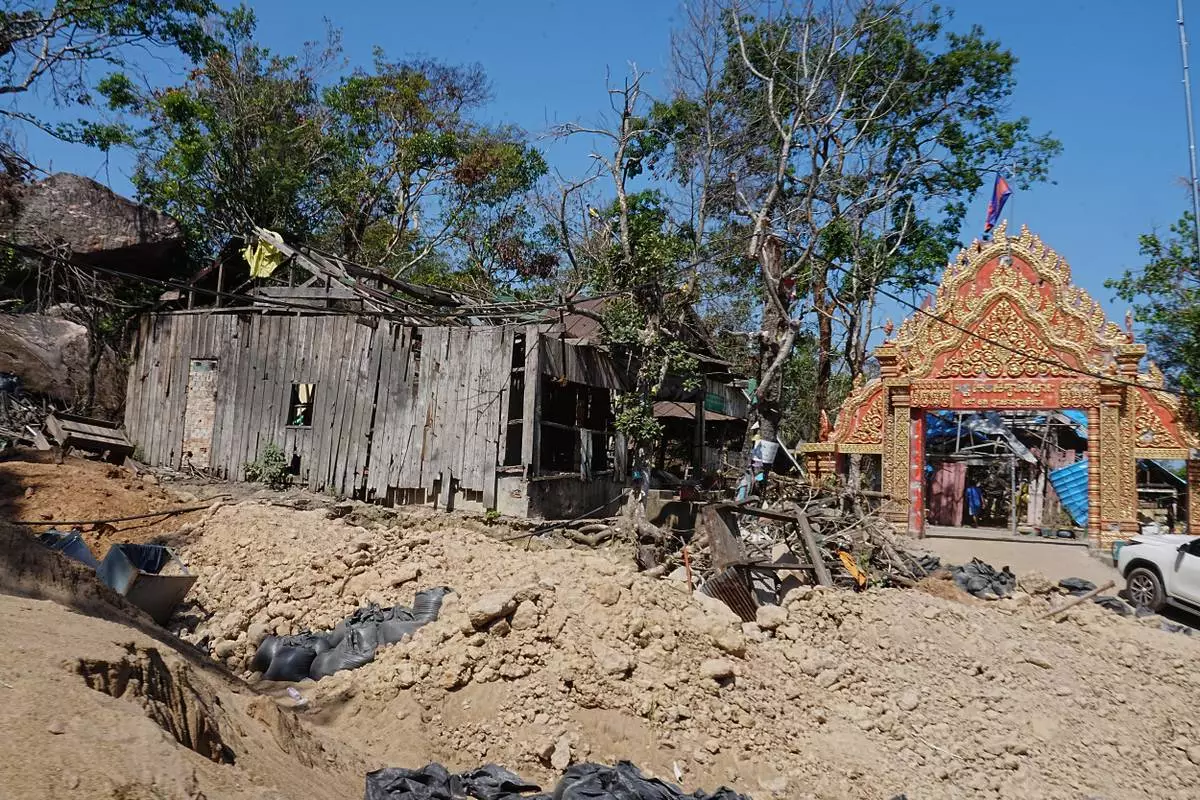
A Buddhist pagoda located beside Preah Vihear temple is seen damaged after border clashes with Thailand, at Preah Vihear province, Cambodia, Saturday, March 14, 2026. (AP Photo/Heng Sinith)

A Buddhist pagoda located beside Preah Vihear temple is seen damaged after border clashes with Thailand, at Preah Vihear province, Cambodia, Saturday, March 14, 2026. (AP Photo/Heng Sinith)

Cambodian Mine Action Center, CMAC, members stand near a temple damaged during border clashes with Thailand, at Preah Vihear province, Cambodia, Saturday, March 14, 2026. (AP Photo/Heng Sinith)

Cambodian Mine Action Center, CMAC, members stand near a temple damaged during border clashes with Thailand, at Preah Vihear province, Cambodia, Saturday, March 14, 2026. (AP Photo/Heng Sinith)

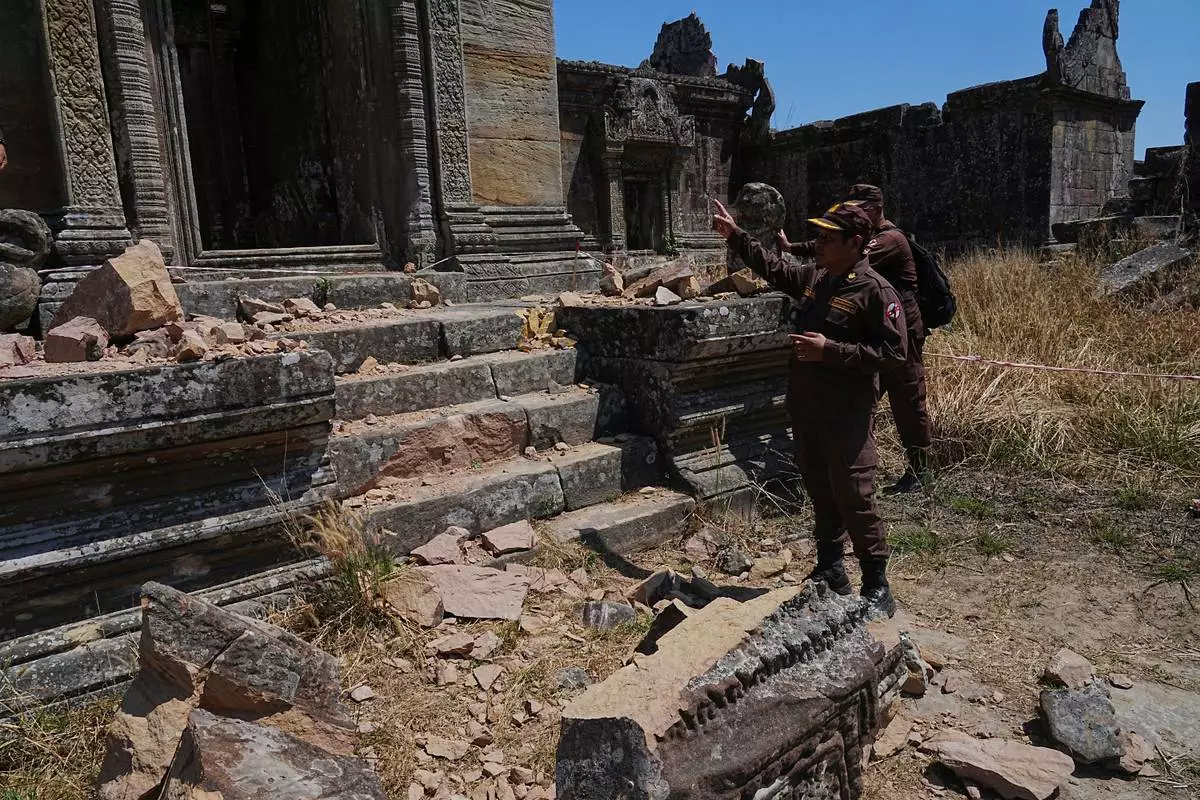
Journalists visit the Preah Vihear temple, damaged during border clashes with Thailand, at Preah Vihear province, Cambodia, Saturday, March 14, 2026. (AP Photo/Heng Sinith)

Journalists visit the Preah Vihear temple, damaged during border clashes with Thailand, at Preah Vihear province, Cambodia, Saturday, March 14, 2026. (AP Photo/Heng Sinith)

A deminer from the Cambodian Mine Action Center, CMAC, secures an area at Preah Vihear temple's pathway that was damaged during border clashes with Thailand, in Cambodia, Saturday, March 14, 2026. (AP Photo/Heng Sinith)

A deminer from the Cambodian Mine Action Center, CMAC, secures an area at Preah Vihear temple's pathway that was damaged during border clashes with Thailand, in Cambodia, Saturday, March 14, 2026. (AP Photo/Heng Sinith)

Cambodian police officers walk past a temple damaged during border clashes with Thailand, at Preah Vihear province, Cambodia, Saturday, March 14, 2026, (AP Photo/Heng Sinith)

Cambodian police officers walk past a temple damaged during border clashes with Thailand, at Preah Vihear province, Cambodia, Saturday, March 14, 2026, (AP Photo/Heng Sinith)

Recommended Articles