Cai Qi, a senior official of the Communist Party of China (CPC), met with a delegation led by Nyam-Osor Uchral, chairman of the Mongolian People's Party and chairman of Mongolia's State Great Hural, in Beijing on Tuesday.
Cai, a member of the Standing Committee of the Political Bureau of the CPC Central Committee and a member of the Secretariat of the CPC Central Committee, noted that the two heads of state had in-depth communication on the overall and strategic issues of China-Mongolia relations last September, pointing out the direction for the further development of bilateral relations.
Cai called on the two sides to jointly implement the consensus reached by the two heads of state, take the building of a China-Mongolia community with a shared future as a guide, enhance exchanges and mutual learning among ruling parties, deepen cooperation in areas such as jointly building the Belt and Road, promote people-to-people bonds, jointly safeguard international fairness and justice, and push the China-Mongolia comprehensive strategic partnership to a higher level.
Uchral said developing friendly relations with China is a top priority in Mongolia's foreign policy, adding that Mongolia adheres to the one-China principle and supports the major global initiatives proposed by China.
The Mongolian People's Party is willing to enhance exchanges and mutual learning with the CPC, and promote practical cooperation in various fields between the two countries, Uchral added.
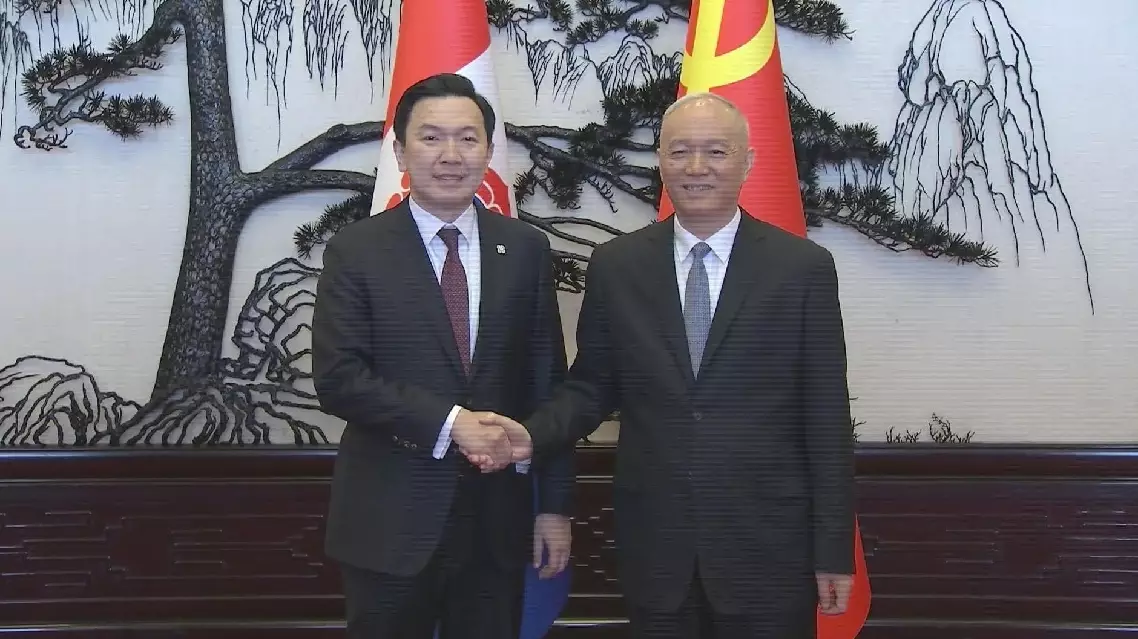
Senior CPC official meets Mongolian People's Party delegation
As global tensions disrupt critical energy routes, the impact is now being felt far beyond the conflict zone, inside millions of kitchens across India.
Mohammad Rafi and his team have been running a local cafe in Shaheen Bagh, New Delhi, for more than a decade, serving hundreds of customers each day.
But in recent weeks, they have struggled to secure cooking gas as the tensions are escalating around the Strait of Hormuz, a critical route that carries roughly a fifth of the world's oil, amid the ongoing conflict involving the United States, Israel, and Iran.
Rafi said that before the crisis, he relied on four gas cylinders to operate different stoves. But he was down to just one recently.
Across the neighborhood, many businesses are facing similar challenges, with some even considering a return to firewood to keep their kitchens running.
"We are worried about what to do. We cannot even use firewood because it causes pollution. Our businesses are being affected. The country is facing a crisis because of the ongoing war," said Rafi.
India imports more than 70 percent of its crude oil, with a significant share of it passing through the Strait of Hormuz. Any disruption along this route raises concerns over supply and prices.
States including Karnataka, Maharashtra, Kerala and West Bengal are already reporting disruptions, particularly in the hotel and restaurant sector.
To manage the situation, the government has prioritized household liquid petroleum gas (LPG) supply, pushed gas-based power plants to the lowest priority, asked refineries to boost LPG output, and introduced a gap between cylinder bookings to manage demand.
"There is no LPG available. People are buying gas cylinders on the black market at three to five times the normal price," said Mohammad Irshad, a New Delhi resident.
Some LPG suppliers denied widespread shortage, attributing the situation to panic buying.
"There is no gas shortage here or elsewhere. The only issue is a surge in bookings due to panic. Many people who already have cylinders at home are placing additional orders, causing problems with the servers of gas companies." said Sanjay Birdhudi, a stock keeper at Bharat Petroleum.
Experts describe the situation as a "transit shock", warning that a prolonged disruption could significantly impact India's LPG supplies.
While Russian oil supplies and strategic reserves may offer a short-term cushion, a prolonged disruption could still push inflation higher.
"India is right to be cautious, but it needs to be also more assertive in its position to counter any re-calibration of efforts within its own outreach in the Gulf. I mean India stands to lose a lot more if the Gulf countries are adversely affected by the war which is not their doing. It is clearly part of the Israel-U.S. effort on attacking Iran and we should do everything possible to be cautious and conservative," said Deepanshu Mohan, a professor of economics at O.P. Jindal Global University.
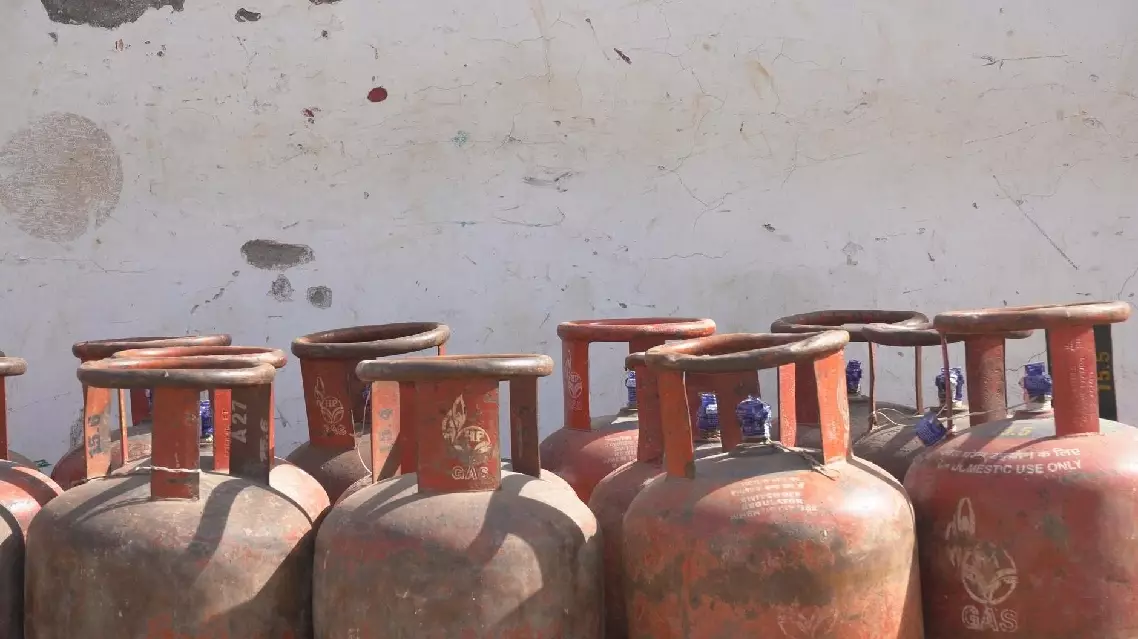
Indian businesses struggle with energy shortage as Middle East conflict disrupts sea route