China's average daily token usage has surpassed 140 trillion by March this year, marking a rapid growth in the country's AI development, an official said on Tuesday.
The number represents a surge of more than 1,000 times compared with 100 billion at the beginning of 2024, and an increase of more than 40 percent compared with 100 trillion at the end of 2025, Liu Liehong, head of the National Data Administration (NDA) said at a State Council Information Office press conference in Beijing.
He added that more than 100,000 high-quality data sets have been built nationwide by the end of 2025.
"The substantial increase in average daily token calls fully demonstrates that China's AI development has entered a stage of rapid growth. AI application scenarios are evolving from dialogue-capable systems to decision-making and execution by intelligent agents, indicating a significant boost in the competitiveness of China's AI industry. This also signals a large increase in supply of data sets and a continuous release of the data value as a factor of production, ushering in a phase of positive interactions in which data is empowering AI-driven innovation," he said.
Moving forward, the NDA will continue to advance data empowerment for AI innovation and development, according to Liu.
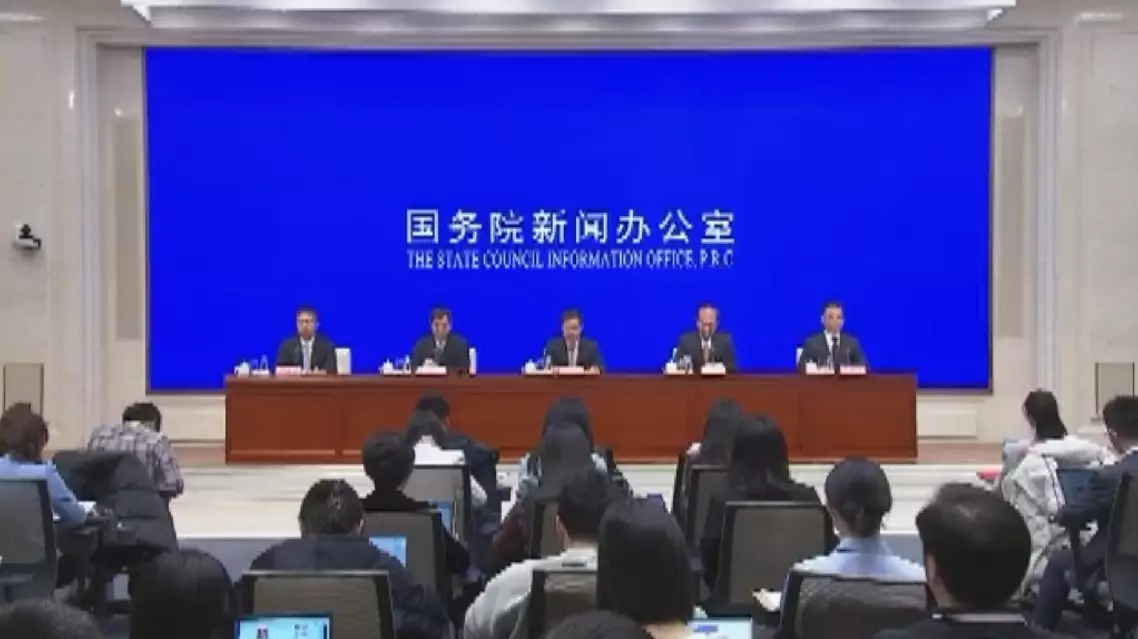
China's average daily token calls exceed 140 trln by March this year: official
As global tensions disrupt critical energy routes, the impact is now being felt far beyond the conflict zone, inside millions of kitchens across India.
Mohammad Rafi and his team have been running a local cafe in Shaheen Bagh, New Delhi, for more than a decade, serving hundreds of customers each day.
But in recent weeks, they have struggled to secure cooking gas as the tensions are escalating around the Strait of Hormuz, a critical route that carries roughly a fifth of the world's oil, amid the ongoing conflict involving the United States, Israel, and Iran.
Rafi said that before the crisis, he relied on four gas cylinders to operate different stoves. But he was down to just one recently.
Across the neighborhood, many businesses are facing similar challenges, with some even considering a return to firewood to keep their kitchens running.
"We are worried about what to do. We cannot even use firewood because it causes pollution. Our businesses are being affected. The country is facing a crisis because of the ongoing war," said Rafi.
India imports more than 70 percent of its crude oil, with a significant share of it passing through the Strait of Hormuz. Any disruption along this route raises concerns over supply and prices.
States including Karnataka, Maharashtra, Kerala and West Bengal are already reporting disruptions, particularly in the hotel and restaurant sector.
To manage the situation, the government has prioritized household liquid petroleum gas (LPG) supply, pushed gas-based power plants to the lowest priority, asked refineries to boost LPG output, and introduced a gap between cylinder bookings to manage demand.
"There is no LPG available. People are buying gas cylinders on the black market at three to five times the normal price," said Mohammad Irshad, a New Delhi resident.
Some LPG suppliers denied widespread shortage, attributing the situation to panic buying.
"There is no gas shortage here or elsewhere. The only issue is a surge in bookings due to panic. Many people who already have cylinders at home are placing additional orders, causing problems with the servers of gas companies." said Sanjay Birdhudi, a stock keeper at Bharat Petroleum.
Experts describe the situation as a "transit shock", warning that a prolonged disruption could significantly impact India's LPG supplies.
While Russian oil supplies and strategic reserves may offer a short-term cushion, a prolonged disruption could still push inflation higher.
"India is right to be cautious, but it needs to be also more assertive in its position to counter any re-calibration of efforts within its own outreach in the Gulf. I mean India stands to lose a lot more if the Gulf countries are adversely affected by the war which is not their doing. It is clearly part of the Israel-U.S. effort on attacking Iran and we should do everything possible to be cautious and conservative," said Deepanshu Mohan, a professor of economics at O.P. Jindal Global University.
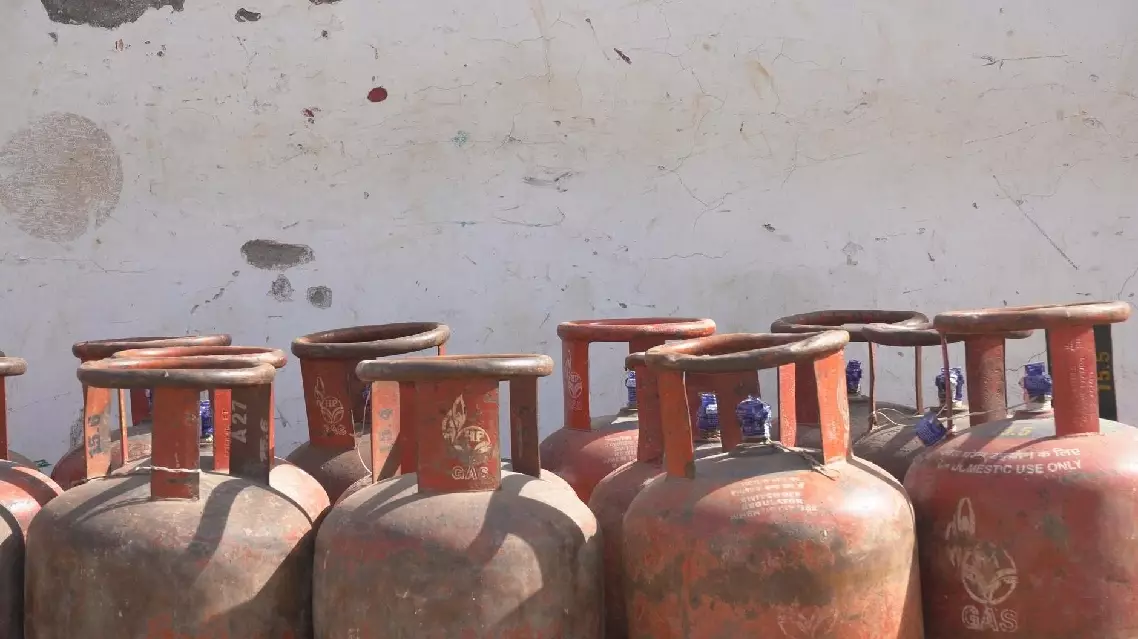
Indian businesses struggle with energy shortage as Middle East conflict disrupts sea route