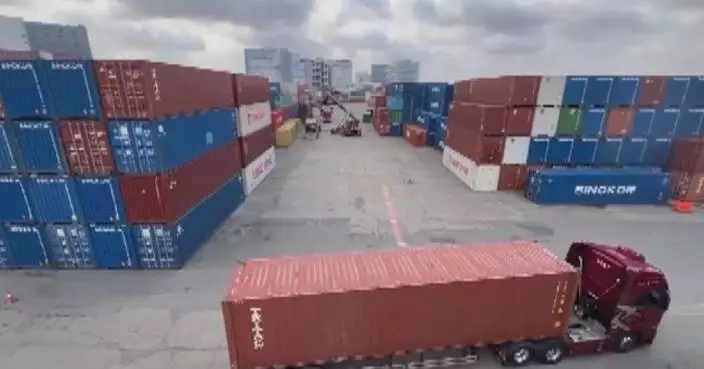
Chinese Vice President Han Zheng and Kenyan Deputy President Kithure Kindiki attended a send-off ceremony in Nairobi on Monday for the inaugural zero-tariff consignment of Kenyan goods destined for China.
The train will travel nearly 500 kilometers to the Kenyan port city of Mombasa, where the goods will be shipped to China.
The shipment is among the first to benefit from China's zero-tariff policy, which takes effect on May 1, coinciding with the goods' arrival. Announced in February, the policy grants duty-free access to exports from 53 African countries that maintain diplomatic relations with China.
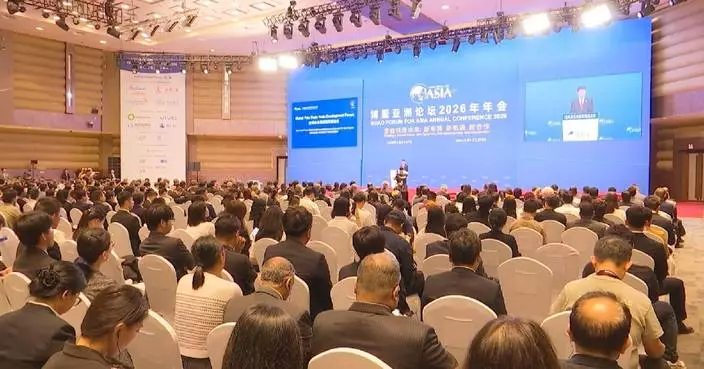
The ceremony coincided with the China-Kenya Business Forum, demonstrating how the new policy is being paired with broader efforts to strengthen bilateral trade and investment.
Also on Monday, the China-Kenya Business Forum was held on in Nairobi, bringing together more than 350 representatives from the government and business sectors of both countries to discuss ways to strengthen bilateral trade and investment.
The forum was jointly organized by the China Council for the Promotion of International Trade (CCPIT) and the Kenya Export Promotion and Branding Agency.
Deputy President Kindiki, CCPIT Chairman Ren Hongbin and Kenya's Cabinet Secretary for Investment, Trade and Industry Lee Kinyanjui delivered addresses, while representatives from Chinese and Kenyan businesses also shared their insights.
"The relationship has grown into one of Kenya's most important economic partnerships, spanning trade, infrastructure development, manufacturing cooperation, technology exchange, and people-to-people engagements," said Kindiki.
Sun Weiyong, vice president of the China International Exhibition Center Group Corporation (CIEC), encouraged Kenyan businesses to leverage duty-free access to expand into the Chinese market.
"We are looking forward to seeing more Kenyan enterprises engage more actively with the CIEC platform to develop the huge potential of further cooperation between Kenya and China," said Sun.
Kenyan exporters expressed optimism about future cooperation between the two countries.
"Now, let us be strategic through deeper collaboration, through the exchange of expertise, investment, and innovation between Kenya and China. We are building long-term partnerships grounded in shared prosperity," said Hasit Tiku Shah, managing director of Sunripe Ltd.
The shipment and forum highlight China’s broader push to deepen trade ties with African partners under the zero-tariff policy, while positioning Kenya as a key gateway for African exports to the Chinese market.
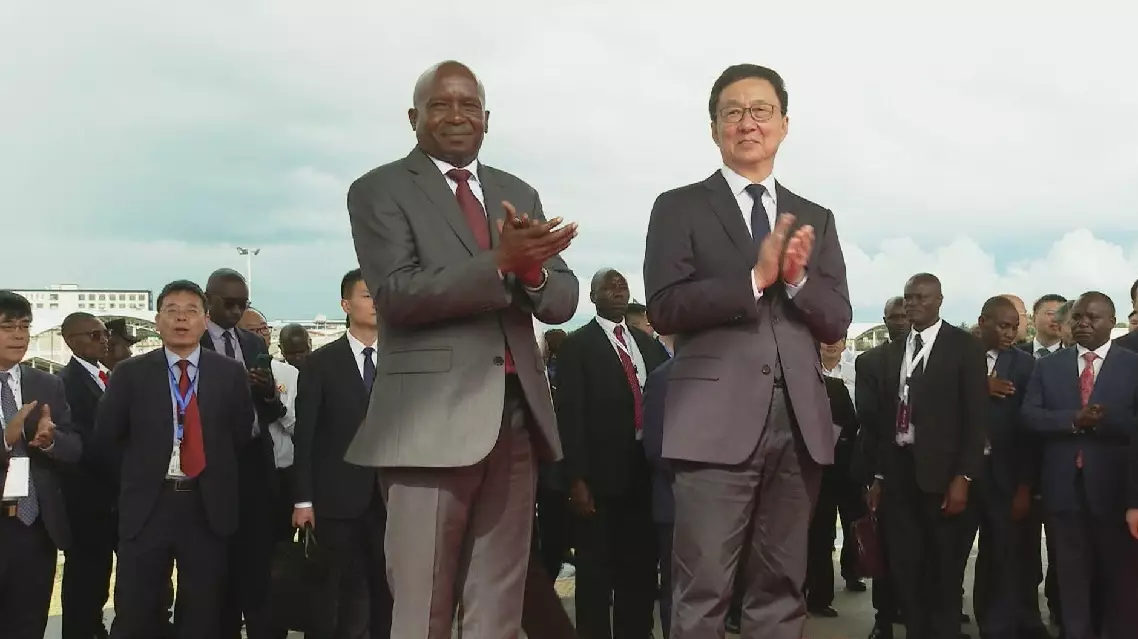
Chinese vice president, Kenyan deputy president see off inaugural zero‑tariff consignment to China
Iran has surprised its foes with the extent of its military power and resilience in the conflict with Israel and the U.S., Egyptian analysts in Cairo said.
With the conflict in its fourth week, Iran has shown that while it may lack the strong military muscle of the U.S. and Israel, it can strike effectively at Israeli cities and U.S. Gulf allies.
Iran's military capabilities are perhaps proving stronger than previously anticipated.
As soon as Israel and the U.S. attacked Iran on February 28, Tehran responded with barrages of missiles targeting Israel as well as U.S. military facilities in the six Gulf Cooperation Council countries and Jordan.
As the war began to stretch, Iran has expanded the list of its targets to include a total of 10 countries, and among them is a British base in Cyprus used by the United States.
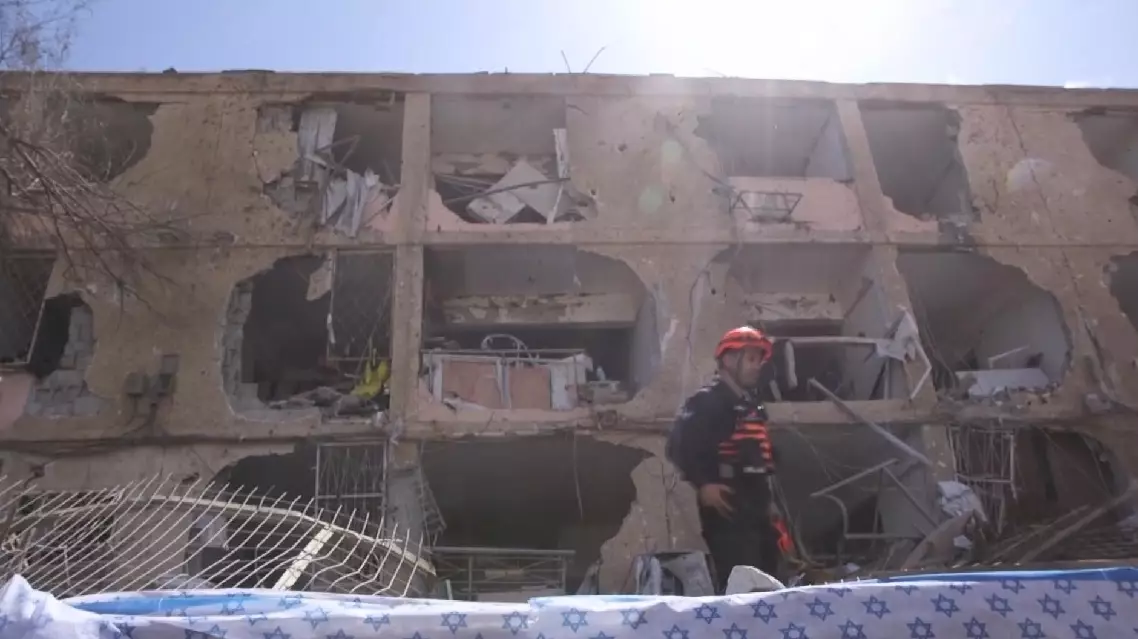
Last week, a reported Iranian attack on another British military base on Diego Garcia Island in Mauritius signaled Tehran's possible capability to strike targets up to 4,000 kilometers away from its shores, bringing most of Europe within its radius of reach.
Walid Atlam, a researcher at the National Center for Studies, said Iran managed to use its military power to seize the global economic artery, the Strait of Hormuz, to exert pressure on the U.S. and Israel.
"The Iranian tactical strike on southern Israel, including the one near the Dimona nuclear facility or on Arad is the most effective qualitative attack during this war. It is also the deepest hit yet inside Israel. Another success for Iran is the closure of the Strait of Hormuz -- though only a partial one. In doing so, Iran managed to pressure a pillar of the global economy by disrupting energy markets and global supply chains. These effects will be felt even after a ceasefire," he said.
Iran does not match the U.S. and Israel in military might. For Tehran, surviving the war is the ultimate goal. Until then, it aims to inflict maximum damage -- not only militarily but also politically.
Mohamed al Shahawy, former chief of staff of military chemical warfare of the Egyptian Armed Forces, said Iran has surprised its foes with its military capabilities.
"Iran's resilience in fighting into the fourth week is the biggest surprise, so is its ability to target U.S. military bases with new generations of missiles. The U.S.-Israeli objective in this war, including overthrowing the regime in Iran, destroying Iran's ballistic missiles program and its nuclear facilities, and seizing Iran's enriched uranium, has failed," he said.
Atlam said the ongoing conflict seems to be undermining U.S. dominance and straining the close relations with its European allies.
"I think this war has created a kind of doubt about the United States and its foreign policy. The most significant sign is perhaps a clear European desire to reduce its dependence on the U.S., both militarily and economically. This was evident when many European countries refused to get directly involved in this war or join a coalition to secure navigation in the Strait of Hormuz," he said.
Iran's strike reveals military power, resilience against US: experts