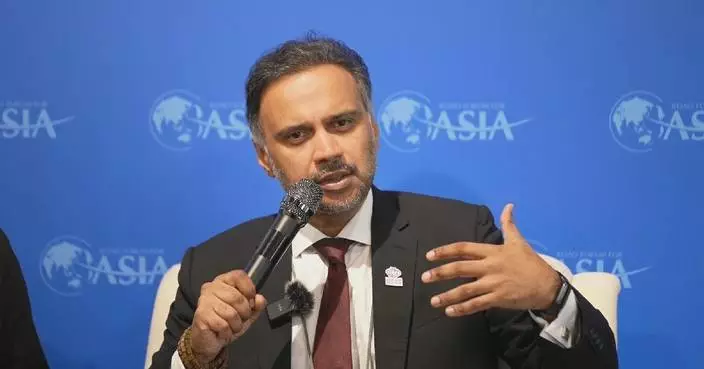
"Healthy competition" between the United States and China will contribute to greater global stability and help both economies to thrive, Sean Stein, president of the US-China Business Council (USCBC), said in Beijing on Monday.
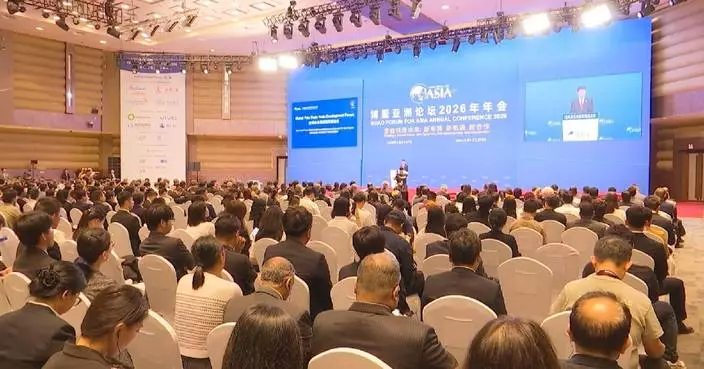
Stein was one of the many business figures who attended the two-day China Development Forum 2026 which concluded on Monday after bringing together global business leaders and scholars to explore shared opportunities emerging from China's pursuit of high-quality growth.
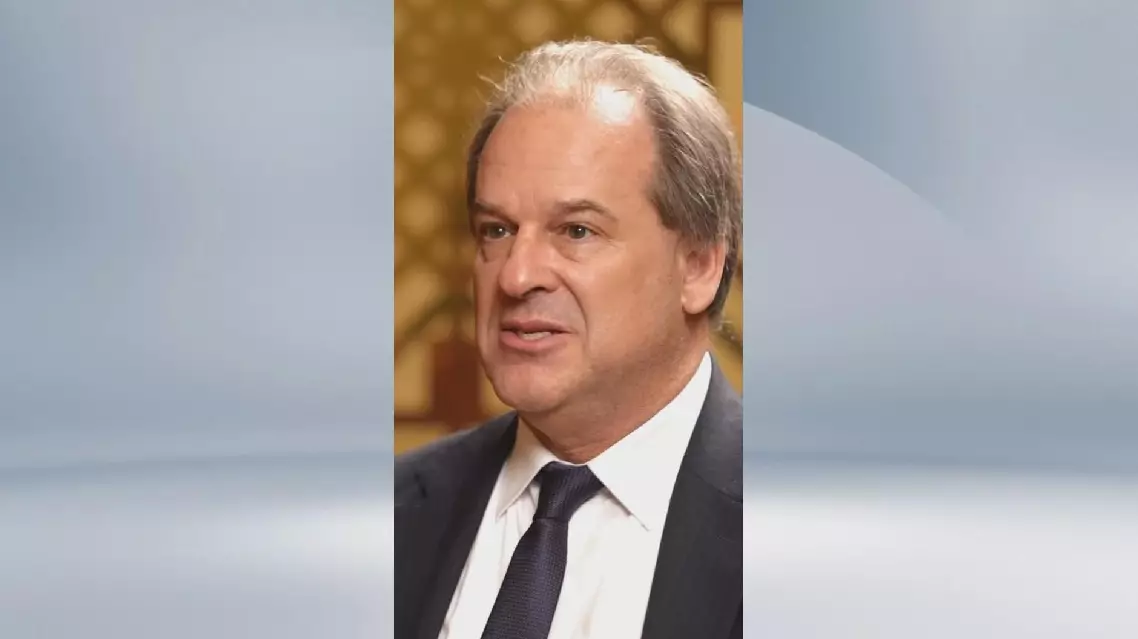
In an interview with the China Global Television Network (CGTN), Stein shared his insights on the business community's expectations for the future of China-U.S. relations, highlighting the mutual benefits that can arise when the two countries compete fairly.
"Healthy competition -- that's exactly what we want. Almost everything that the Chinese government is trying to accomplish, American businesses have that exact same goal. They want better efficiency. They want people to be optimistic. They want healthy competition. We just saw a survey come out that says 53 percent of Americans, a majority of Americans, support more cooperative relations with China. That may not sound like a big number, but last year it was just about 40 percent. So, a 10-percent increase in a year, [if we] take it to the majority. I think that will pay off over time," Stein said.
Discussing the role of the business community in influencing government policy, Stein emphasized that business leaders need to advocate for constructive dialogue to ensure that policies better reflect the realities of economic collaboration.
"Governments need to hear from business about how their policies affect the economy, it affects employment, and all the things that the two governments care about. And, we think, in that way, we can help encourage them to take steps to not only bring stability, but to create an environment where people can thrive and it's good for both economies, it's good for employment, and for everything the governments are trying to do. It doesn't matter if you are the most extreme China hawk or the most pro-engagement member of Congress, you need to come to China and you need to see what it's like on the ground. We often hear that the world's two largest economies are the United States and China. And, the two most dynamic economies are the U.S. and China, the two most innovative. But the thing is, that's probably not going to change during your lifetime or mine. And so, it's really important to figure out how to get this right because working together, things can go much better," he said.
The China Development Forum, themed "China in Its 15th Five-Year Plan Period: Advancing High-Quality Development and Creating New Opportunities Together," brought together global officials, industry leaders, and experts for 13 thematic sessions and a series of closed-door discussions, covering topics including new trends in consumption growth, green and low-carbon transition, the development of future industries, and the industrial application of artificial intelligence (AI).
"Healthy competition" between US, China key to ensuring economic stability: business council leader