BOGOTA, Colombia (AP) — Colombia’s attorney general on Tuesday said her office had obtained arrest warrants for seven members of a rebel group known as Segunda Marquetalia for the killing of Miguel Uribe, a conservative presidential hopeful who was shot in the head during a rally in Bogota in June 2025.
In a statement, Attorney General Luz Adriana Camargo said that Uribe’s killing last year was “the result of a structured criminal operation that involved an urban criminal gang that was hired” by Segunda Marquetalia to kill the senator.
The attorney general said that Uribe’s killing was planned by Kendry Téllez, a member of Segunda Marquetalia who had previously fought for the Revolutionary Armed Forces of Colombia, or FARC, the guerrilla group that signed a peace deal with Colombia’s government in 2016.
Luciano Marín, a former FARC Commander who abandoned the peace deal and founded the Segunda Marquetalia group in 2018, was also charged with helping to plan the killing, which was carried out by a teenager hired by a gang in Bogota.
Marín, who is more commonly known as Iván Márquez, was last seen in public in 2024, when Segunda Marquetalia and the administration of Colombian President Gustavo Petro launched peace talks.
The negotiations between Marín and the Colombian government were suspended at the end of 2024, following a schism within Segunda Marquetalia.
Prosecutors in Colombia had long hinted that the rebel group was involved in Uribe’s murder.
On Tuesday, officials announced a reward of $1.3 million for information leading to Marín's capture, as well as smaller rewards for information leading to the capture of the other six members of Segunda Marquetalia who were charged with murder.
Uribe was speaking in a park in Bogota, on June 7, 2025 when he was shot several times by a teenager, who fled the scene but was quickly captured by Uribe's bodyguards.
Uribe died two months later from his injuries.
Uribe’s killing marked a low point in Petro’s efforts to reduce crime in Colombia, where drug traffickers and rebel groups are fighting for control of territory abandoned by the FARC following the 2016 peace deal.
The attack on Uribe, a conservative who had promised to take a tougher stance against rebel groups, was the first assassination of a presidential candidate in Colombia in three decades.
Colombia will hold presidential elections in May. If none of the candidates gets more than 50% of the vote, a runoff will be held in June between the top two contenders.
Follow AP’s coverage of Latin America and the Caribbean at https://apnews.com/hub/latin-america

FILE - A photo of opposition Sen. and presidential hopeful Miguel Uribe is placed at his seat in Congress in Bogota, Colombia, Aug. 11, 2025, after his death more than two months after being shot during a political rally. (AP Photo/Fernando Vergara, File)
ARAFAT, Saudi Arabia (AP) — Muslim pilgrims from around the world congregated on Mount Arafat in Saudi Arabia on Tuesday, the second official day of the annual Islamic pilgrimage, considered the pinnacle of the Hajj.
Despite the sweltering heat, the pilgrims gathered on the rocky hill and surrounding plain for intense prayers and worship that often mark a spiritual peak for them. They fervently murmured prayers and poured their hearts out in supplications. Many raised their hands in worship. It is common for pilgrims on that day, some with tears streaming down their faces, to ask God for forgiveness, mercy, blessings and good health.
The Hajj, one of the Five Pillars of Islam, is required once in a lifetime for every Muslim who can afford it and is physically able to perform it.
For pilgrims, the Hajj, performed over several days, can be a deeply moving spiritual experience and a chance to seek God’s forgiveness and the erasure of past sins. As they brave the intense heat to perform religious rituals, many pilgrims have been using umbrellas for shade.
A Saudi official said on Friday that more than 1.5 million pilgrims have arrived in the country from abroad.
This year, Muslims have been pouring into Saudi Arabia for the Hajj against the backdrop of a tenuous ceasefire in the Iran war and related uncertainty in the region.
The U.S. military said Monday that it carried out “self-defense” strikes in southern Iran, including on missile launch sites and boats used to lay mines, even as President Donald Trump said on social media that negotiations with Tehran were “proceeding nicely." Iran on Tuesday denounced the most recent U.S. strikes as a sign of “bad faith and unreliability” as negotiations pressed on toward a possible deal to end the war.
For many, performing the Hajj can be a realization of a lifelong dream as they spend years hoping and praying to one day be able to undertake the pilgrimage or saving up money and waiting for a permit to embark on the trip.
“This happens once in a lifetime,” Mohammad Asal, an Egyptian pilgrim, said. “People here have prepared their prayers, hoping that God will respond to them, because we know that ... the most important ritual of the Hajj is being in Arafat.”
The Hajj brings together large numbers of Muslims of diverse races, ethnicities, languages and socioeconomic classes, creating a sense of unity for many. It’s a mass, communal experience, with Muslims performing rituals together. But it is also deeply personal, as every pilgrim brings their own yearnings and experiences.
“It was incredible,” Ahmed Sufyan, a pilgrim from the United States, said on Tuesday. “The unity and peace that we feel is something I’ve never experienced before,” he added via WhatsApp.
“Our wishes are many,” Mohammad Obaid, a Sudanese pilgrim, said, adding he was praying for Sudan and Muslims everywhere.
Fam reported from Winter Park, Florida.
Associated Press religion coverage receives support through the AP’s collaboration with The Conversation US, with funding from Lilly Endowment Inc. The AP is solely responsible for this content.
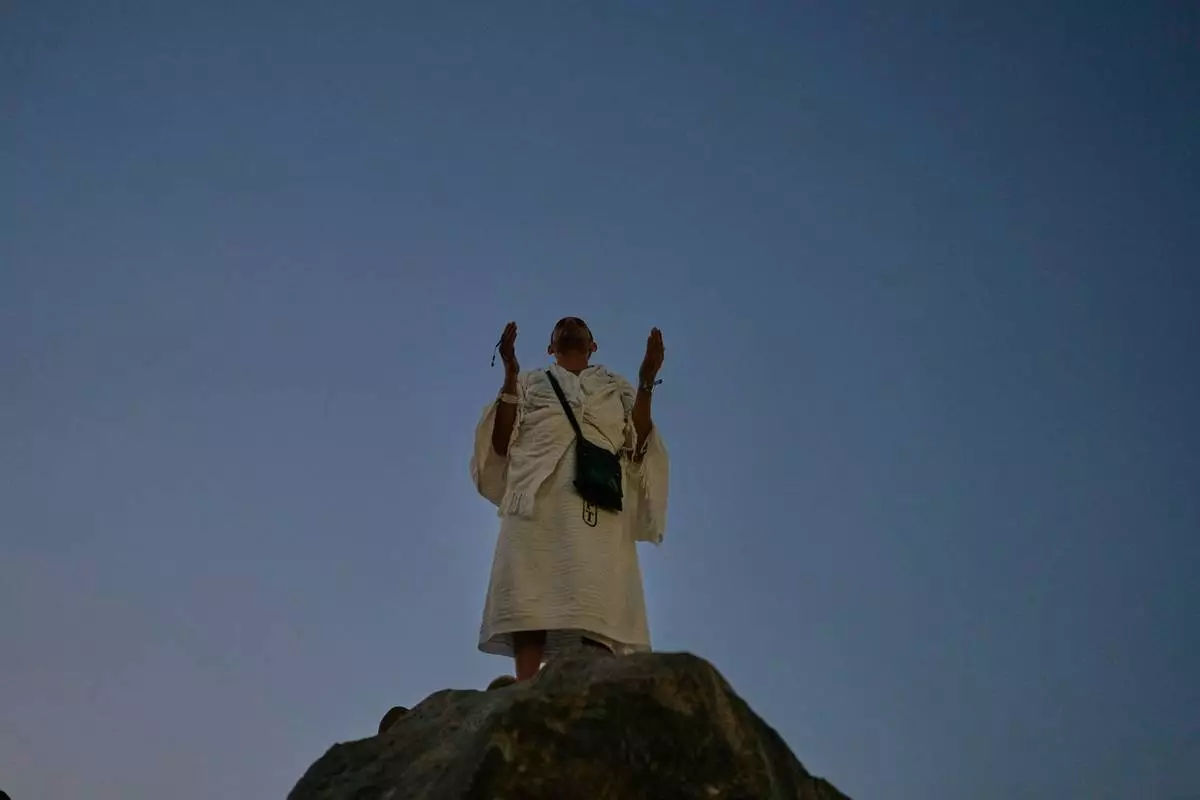
A Muslim pilgrim pray atop of the rocky hill known as the Mountain of Mercy, on the Plain of Arafat, during the annual Hajj pilgrimage near the holy city of Mecca, Saudi Arabia, Tuesday, May 26, 2026. (AP Photo/Altaf Qadri)
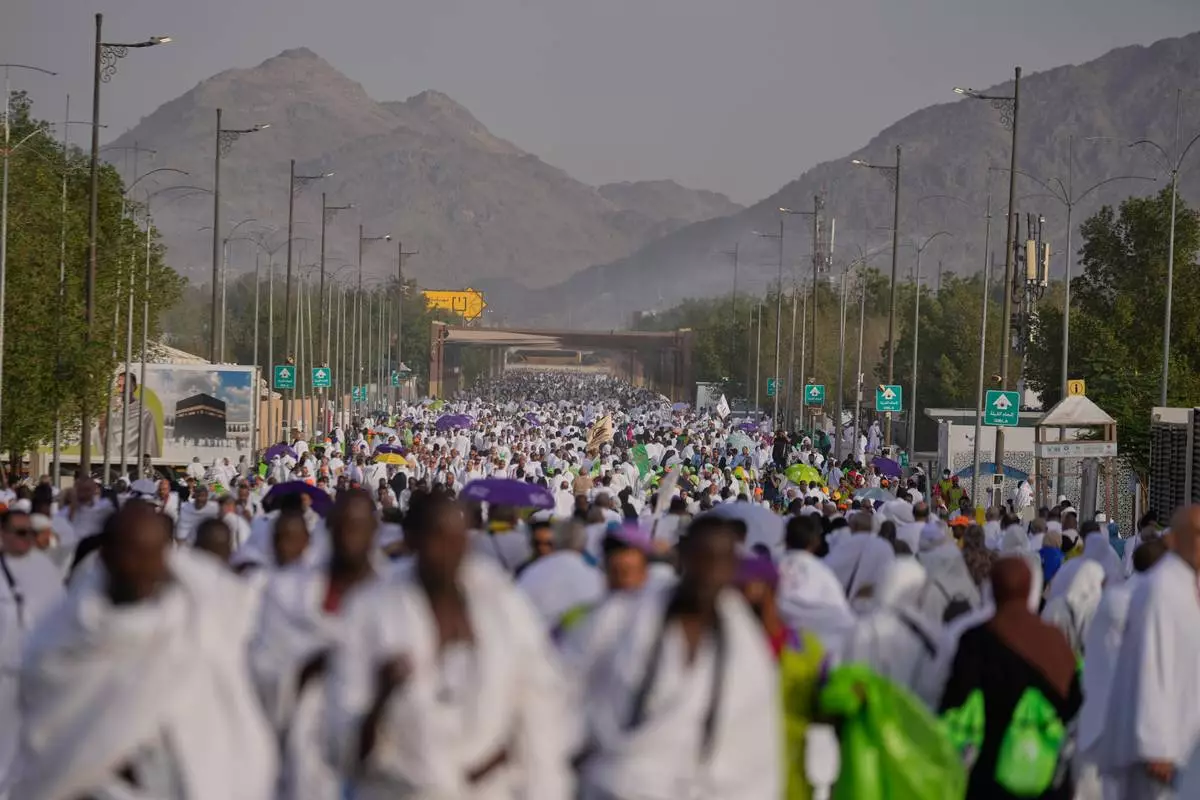
Muslim pilgrims walk towards the rocky hill known as the Mountain of Mercy, on the Plain of Arafat, during the annual Hajj pilgrimage near the holy city of Mecca, Saudi Arabia, Tuesday, May 26, 2026. (AP Photo/Altaf Qadri)
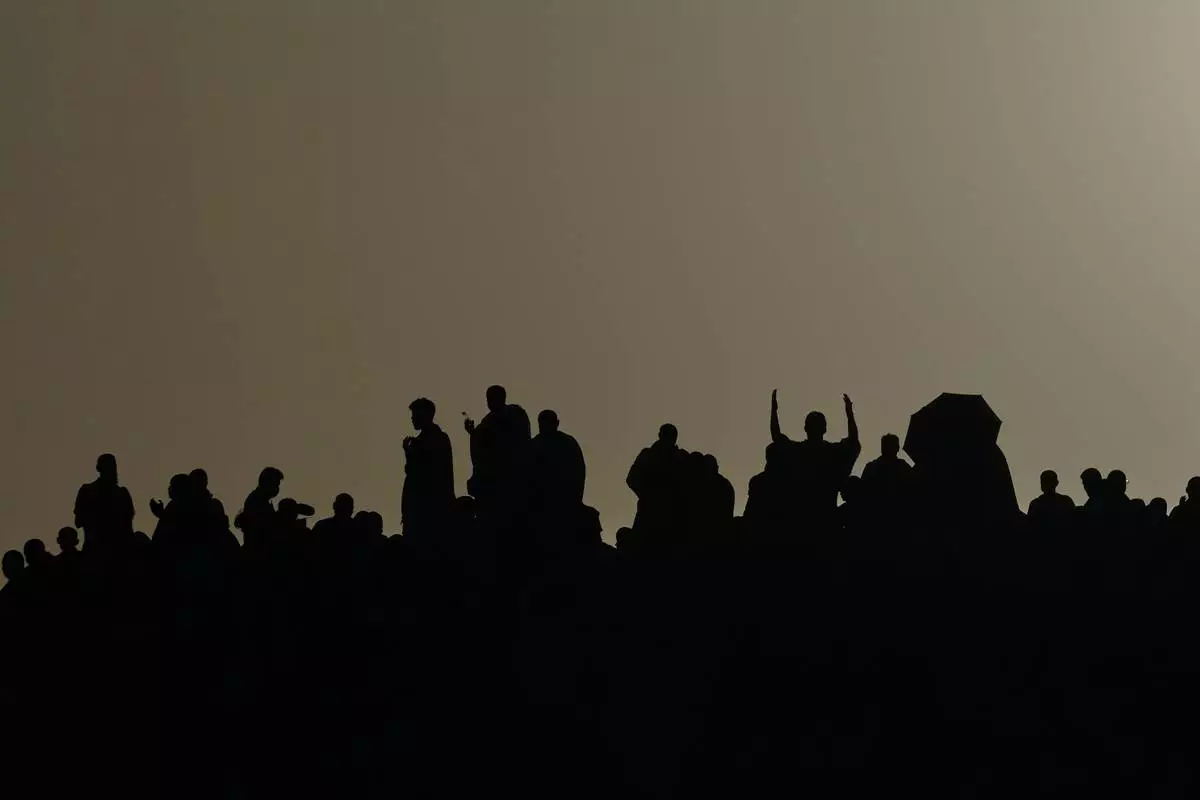
Muslim pilgrims are silhouetted as they pray at top of the rocky hill known as the Mountain of Mercy, on the Plain of Arafat, during the annual Hajj pilgrimage near the holy city of Mecca, Saudi Arabia, Tuesday, May 26, 2026. (AP Photo/Altaf Qadri)
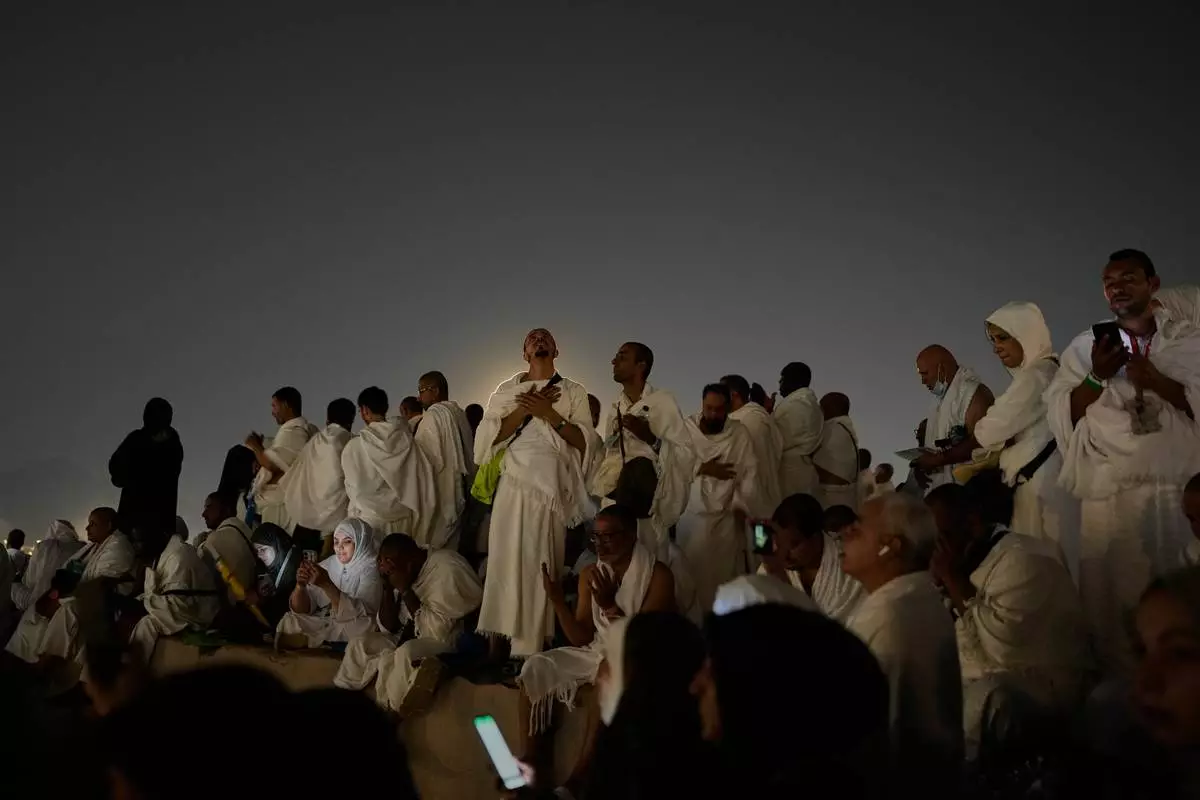
Muslim pilgrims pray at top of the rocky hill known as the Mountain of Mercy, on the Plain of Arafat, during the annual Hajj pilgrimage near the holy city of Mecca, Saudi Arabia, Tuesday, May 26, 2026. (AP Photo/Altaf Qadri)
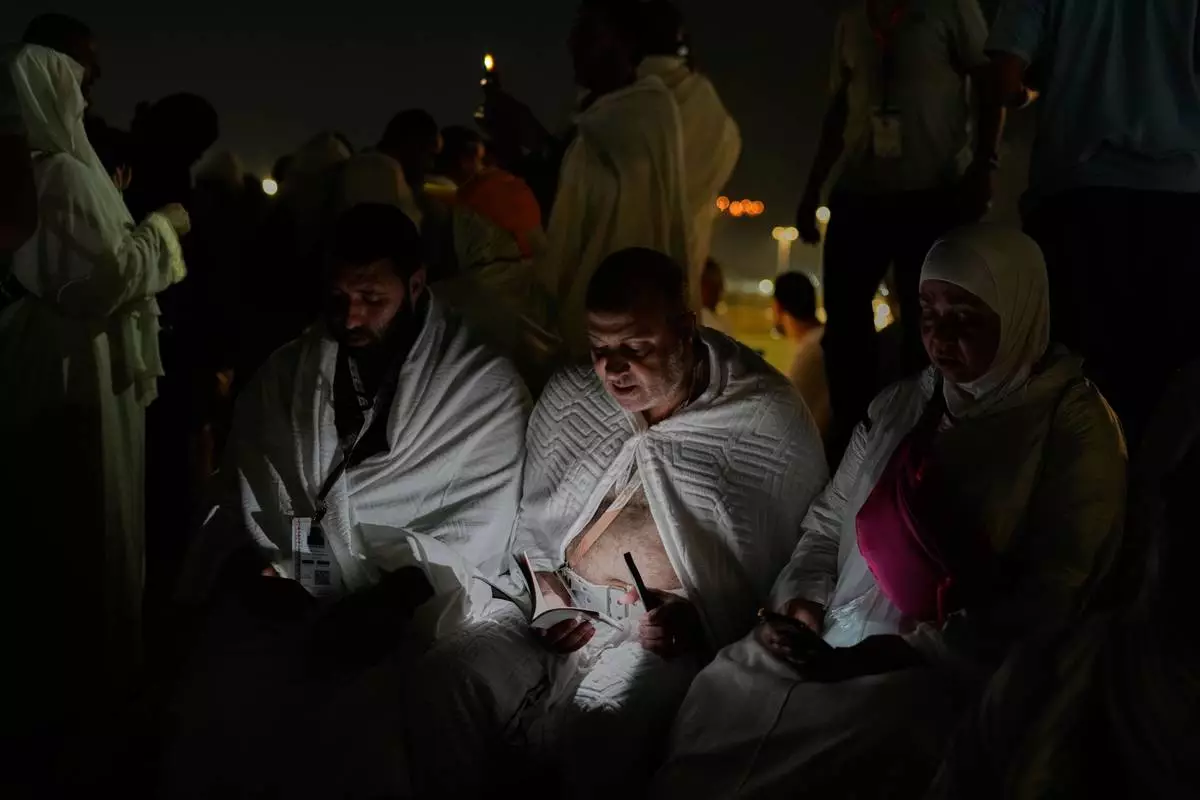
Muslim pilgrims read a copy of Islam's holy book Quran atop of the rocky hill known as the Mountain of Mercy, on the Plain of Arafat, during the annual Hajj pilgrimage near the holy city of Mecca, Saudi Arabia, Tuesday, May 26, 2026. (AP Photo/Altaf Qadri)