SAN FRANCISCO (AP) — A judge has fined San Francisco’s public defender $26,000 for ignoring a January order to stop rejecting cases — a pattern that critics say is straining the city's justice system.
Public Defender Mano Raju began declining to represent some defendants in new felony and misdemeanor cases last May, citing a crushing workload driven by increased prosecutions and insufficient staffing. He wants money for more attorneys or for the court to reject some of cases brought by District Attorney Brooke Jenkins.
“Every member of my team could cut their workload in half, and they would still have more than a full-time job,” Raju told The Associated Press.
San Francisco Superior Court Judge Harry Dorfman ordered Raju in January to stop declining cases, but Raju refused and Dorfman this month found him in contempt. On Tuesday, he fined him $1,000 for each of the initial 26 cases he rejected since that order and set another hearing in April to add more fines. Raju said he plans to appeal and keep declining some new cases.
Public defenders and staff from across California packed into the courtroom in support of Raju. He told the judge the heavy workload affects the quality of representation his office can provide, which violates the human rights of defendants and negatively impacts his staff.
“People and their families get hurt when we can't provide the representation we should and our staff suffers the residual trauma,” he said.
The move puts Raju, a progressive and the only elected public defender in California, at odds with Jenkins, who said his actions are disrupting the justice system and could lead to violent defendants being released due to lack of legal representation.
“Their objective is to disrupt the system, it’s to cause chaos, it is to bottleneck the courthouse,” Jenkins said.
Courts from Oregon to Massachusetts have been struggling with too few public defenders for years, with Oregon's Supreme Court issuing a February ruling that will result in the dismissal of more than 1,400 cases due to a lack of timely representation. But the public spat between Raju, the district attorney and a judge is unusually contentious and political.
It follows years of debate in San Francisco over public safety. Mayor Daniel Lurie was elected in 2024 on a promise to restore the city’s battered image after years of negative national attention, and he's pledged to clean up city streets. His election came after voters in 2022 recalled prosecutor Chesa Boudin over frustrations about what they saw as his permissive approach to street crime. Jenkins replaced him and has ramped up prosecutions — she filed 8,000 felony and misdemeanor cases last year, compared to about 5,600 filed in 2021.
Raju is using disruption as leverage during a tough budget fight and not presenting a genuine dispute over public safety policy, said Jason McDaniel, a San Francisco State University political science professor who is writing a book about San Francisco politics. Lurie is dealing with a $400 million budget deficit.
“If this really were a policy fight rather than a fight for resources, that would be something that I think voters would really get upset about because more progressive positions on law enforcement have received a lot of pushback from the majority of voters in San Francisco," McDaniel said.
San Francisco’s violent crime rates are among the lowest in recent years, but drug-related crimes, petty theft and other low-level offenses remain prevalent. Jenkins said prosecution rates have returned to pre-pandemic levels because unlike her predecessor, she is enforcing every law.
A surge in prosecutions of low-level crimes, coupled with the growing volume of digital and video evidence to review, are driving an unsustainable workload, Raju said. He accused Jenkins of “clogging up the courts” and said his attorneys are working extreme hours, skipping vacations and experiencing serious health impacts due to overwhelming workloads.
Raju pointed to a 2023 national study on public defender workload conducted by the RAND Corporation that found that excessive workloads violate ethics rules and cause harm to defendants. He said his attorneys average 60 felony cases and 135 misdemeanor cases at a time, well above the up to 40 felony and 80 misdemeanor cases recommended in a 2025 study by the Deason Criminal Justice Reform Center at Southern Methodist University.
Heavy workloads among public defenders often lead to defendants waiting longer than necessary to resolve their cases, he said. He said that so far no one has been left without legal representation in San Francisco because his office coordinates with city-contracted private attorneys. The Bar Association of San Francisco, which has stepped in to represent some defendants, told the judge its attorneys are now at capacity and cannot accept new clients.
Dorfman determined Raju's office has enough staff to handle the workload and noted some supervising public defenders could take more cases. He also said the Public Defender’s Office should stop assigning two attorneys to some felony cases, which Raju said is done sometimes for training purposes.
The studies suggesting limits to public defense caseload referenced by Raju are worthy of consideration, but “they are not California law,,” Dorfman wrote in his January ruling.
He said in court Tuesday that while he found Raju has acted in good faith before the court, “that does not mean that I’m going to retreat or stay a court order.”
“The court is not a bystander in this,” he said. “The law compels the court to appoint a public defender when necessary.”
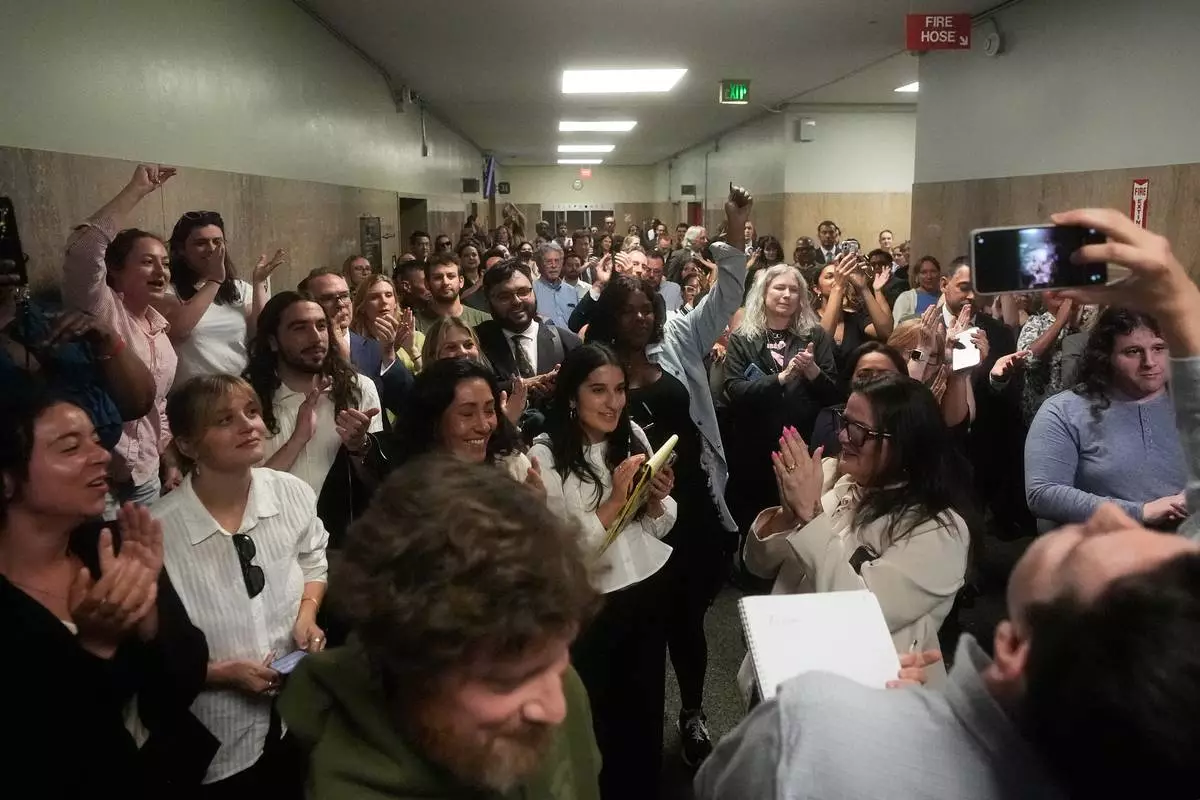
Supporters of San Francisco Public Defender Mano Raju cheer outside of a courtroom in San Francisco, Tuesday, March 24, 2026. (AP Photo/Jeff Chiu)
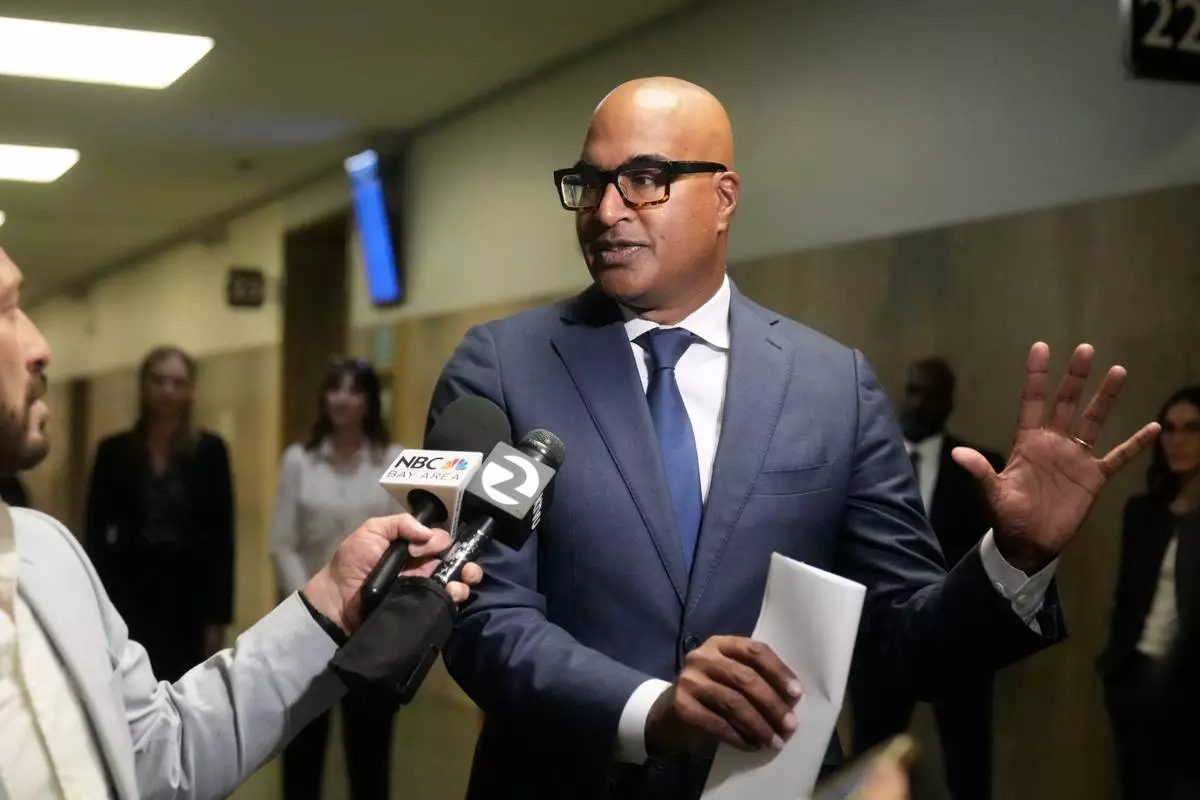
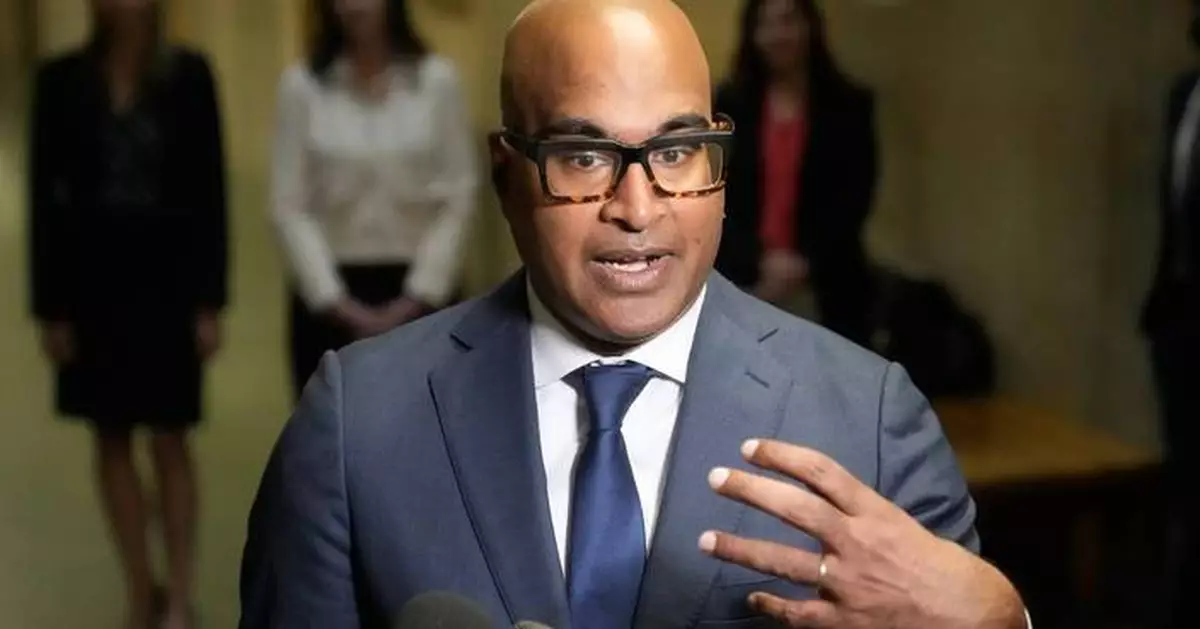
San Francisco Public Defender Mano Raju speaks outside of a courtroom in San Francisco, Tuesday, March 24, 2026. (AP Photo/Jeff Chiu)
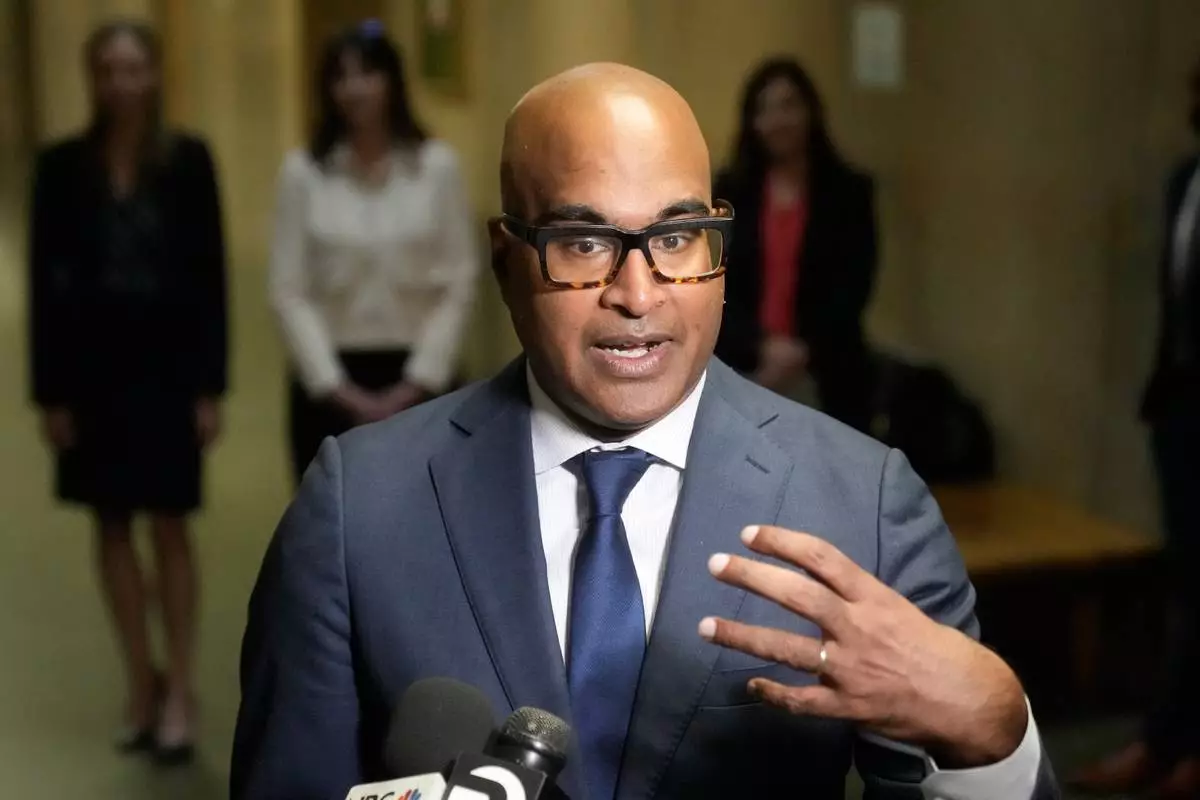
San Francisco Public Defender Mano Raju speaks outside of a courtroom in San Francisco, Tuesday, March 24, 2026. (AP Photo/Jeff Chiu)
DUBAI, United Arab Emirates (AP) — U.S. President Donald Trump’s surprising claim this week that talks with Iran were yielding great progress has only raised more confusion over a war whose goals were already unclear. The most basic question: What talks?
A 15-point plan from the Trump administration offering a potential pathway to an exit was offered late Tuesday to Iran through Pakistan, according to a person briefed on the contours of the plan but who was not authorized to speak publicly about it.
Iran has so far denied any negotiations were taking place, pledging to fight “until complete victory.” Pakistan, Egypt and Gulf Arab nations are trying behind the scenes to piece together talks, but their efforts still seem preliminary. Israel is vowing to keep up its attacks.
If anything, the war appears to only be escalating. Barrages were fired into Iran, Israel and across the Mideast on Tuesday. Meanwhile, thousands more U.S. Marines were on their way to the Gulf, and the Army was preparing to deploy at least 1,000 troops from the 82nd Airborne Division to the Middle East in the coming days.
Here is a look at what's known and not known about possible talks to wind down the war.
Since launching the war alongside Israel on Feb. 28, Trump has given shifting and often vague objectives, and those mixed messages were on display in recent days. He has talked of degrading or destroying Iran's missile capabilities, and its ability to threaten neighbors — goals that he has some flexibility in declaring accomplished. A much tougher goal is ensuring Iran can never build a nuclear weapon, and Trump has insisted that will be part of any deal.
A reopening of the Strait of Hormuz — a vital waterway for oil shipments that Iran made virtually impassable when the war began — is now also a priority, for Trump and the global economy.
As Trump talks of engaging with leaders in Iran, he has backed off promoting the Islamic Republic's collapse. Israeli Prime Minister Benjamin Netanyahu, however, continues to say the war aims to help Iranians overthrow the theocracy.
Trump claimed that U.S. envoy Steve Witkoff and Trump’s son-in-law Jared Kushner held talks Sunday with an Iranian leader. He did not say who that was.
Reports focused on Iranian Parliament Speaker Mohammad Bagher Qalibaf as a possible interlocutor. But Qalibaf quickly denied talks were taking place in a post on X.
The U.S. agreed “in principle” to join talks in Pakistan, according to three Pakistani officials, one Egyptian official and a Gulf diplomat, while mediators were still working to convince Iran. The officials all spoke on condition of anonymity because they were not authorized to provide the details to the media.
The Egyptian official said efforts are centered on “trust-building” between the U.S. and Iran, aiming to reach a pause in fighting and a “mechanism” to reopen the Strait of Hormuz.
A 15-point plan from the Trump administration has been delivered to Iran by intermediaries from Pakistan, who have offered to host renewed negotiations, according to a person briefed on the contours of the plan but who was not authorized to speak publicly about it.
Israeli officials, who have been advocating for Trump to continuing prosecution the war against Iran, were taken by surprise by the U.S. administration’s submission of a ceasefire plan, the person said.
But with the U.S. taking steps to send additional soldiers and Marines to the Mideast, the move is being framed as Trump maneuvering to give himself “max flexibility” on what he’ll do next, the person added.
The White House did not respond to requests for comment on the administration submitting the 15-point plan.
Iran’s leadership appears to have remained relatively cohesive, despite weeks of heavy bombardment and the killing of its supreme leader and many top-ranking military figures.
But who actually is in charge is not known. The new supreme leader, Ayatollah Mojtaba Khamenei, hasn’t been seen or directly heard from since he was named to replace his slain father, Ali Khamenei.
Within the Islamic Republic are other centers of power, including the military and the powerful paramilitary Revolutionary Guard, as well as political figures like Qalibaf, Foreign Minister Abbas Araghchi and President Masoud Pezeshkian.
It’s not certain anyone entering talks with the U.S. would have backing from the military or Guard. In the ongoing war, Iran’s military has conducted strikes based on orders of local commanders, rather than from any political leadership, Araghchi has said.
The spokesman of Iran’s top military command, Maj. Gen. Ali Abdollahi Aliabadi, vowed on Tuesday that the fighting “will continue until complete victory.” It was a message of defiance to Trump’s claim that Iran was petitioning for peace, but possibly also a warning to anyone within the Iranian leadership not to back down in talks.
Trump’s sudden declaration of progress in talks on Monday came just as the deadline was about to run out on an ultimatum he had made over the weekend threatening to “obliterate” Iran’s power plants unless the country releases its stranglehold on the Strait of Hormuz. Iran threatened to retaliate against power, water and oil infrastructure across the Gulf.
Trump on Monday pushed the deadline back five days and said there’s a “very good chance” a deal could be reached this week. That was a relief to global oil and stock markets.
Trump’s move could signal he’s wary of the war's possible long-term damage to the U.S. and global economy, though his administration has insisted that any pain from spiking oil prices will quickly be reversed once the war is over.
“Trump could be actively seeking an offramp,” the Soufan Center, a New York-based think tank, wrote in an analysis.
On the other hand, the Soufan Center noted, Trump could be buying time for thousands of Marines heading to the region to arrive.
The Marine deployment could be a tactic to pressure Iran on negotiations. But it has also raised speculation that the U.S. may try to seize Kharg Island in the Persian Gulf, which is vital to Iran’s oil network, or carry out an operation to remove enriched uranium from inside Iran. Either would mean a greater escalation and a longer war.
Trump has said he has no plans to send ground forces into Iran but has not ruled it out. Israel has suggested ground forces could participate in the war.
Nuclear negotiations were already taking place when the U.S. and Israel launched their surprise attack on Feb. 28, killing the elder Khamenei in the opening salvos of the bombing campaign.
That only deepened Iranian mistrust of Americans in negotiations, especially after Trump’s unilateral withdrawal in 2018 from a landmark nuclear agreement reached with the United States three years earlier. Iran and the U.S. held negotiations in early 2025, and when a two-month deadline set by Trump ran out, Israel hit Iran in a surprise attack that the U.S. joined in a 12-day war, striking Iranian nuclear facilities and military positions.
Trump said Monday that any deal to end the war will entail the U.S. removing Iran’s enriched uranium, which is critical to its disputed nuclear program. Iran refused that demand in the past, insisting it has the right to enrich uranium for peaceful purposes.
A less ambitious goal for talks could be to reach a ceasefire and the reopening of the Strait of Hormuz.
But Araghchi seemed to reject any partial deal in an interview with Al Jazeera last Wednesday. “We don’t believe in ceasefire. We believe in the end of war ... the end of war in all fronts,” Araghchi said, emphasizing the need for solutions to conflicts throughout the region.
Notably, Israel is not involved in the move for negotiations.
Israel has depicted itself as following Trump’s lead, and it seems unlikely to continue with its strikes on Iran if the U.S. declared an end to the war. Still, it has pursued its own war aims beyond the Americans’. Its bombing last week of Iran’s offshore South Pars natural gas field triggered intensified Iranian attacks on the Gulf Arab states, and Trump told Israel to halt such attacks.
In a statement late Monday, Netanyahu acknowledged Trump's diplomatic efforts but said Israel would continue to strike its enemies for the time being.
Also, an end to the war on Iran does not mean an end to Israel’s bombing campaign in Lebanon. There, Israel has seized a new opportunity to try to crush Hezbollah after the militants fired rockets in support of Iran.
——
Keath reported from Cairo, Ahmed from Islamabad, and Aamer Madhani and Konstantin Toropin in Washington contributed.
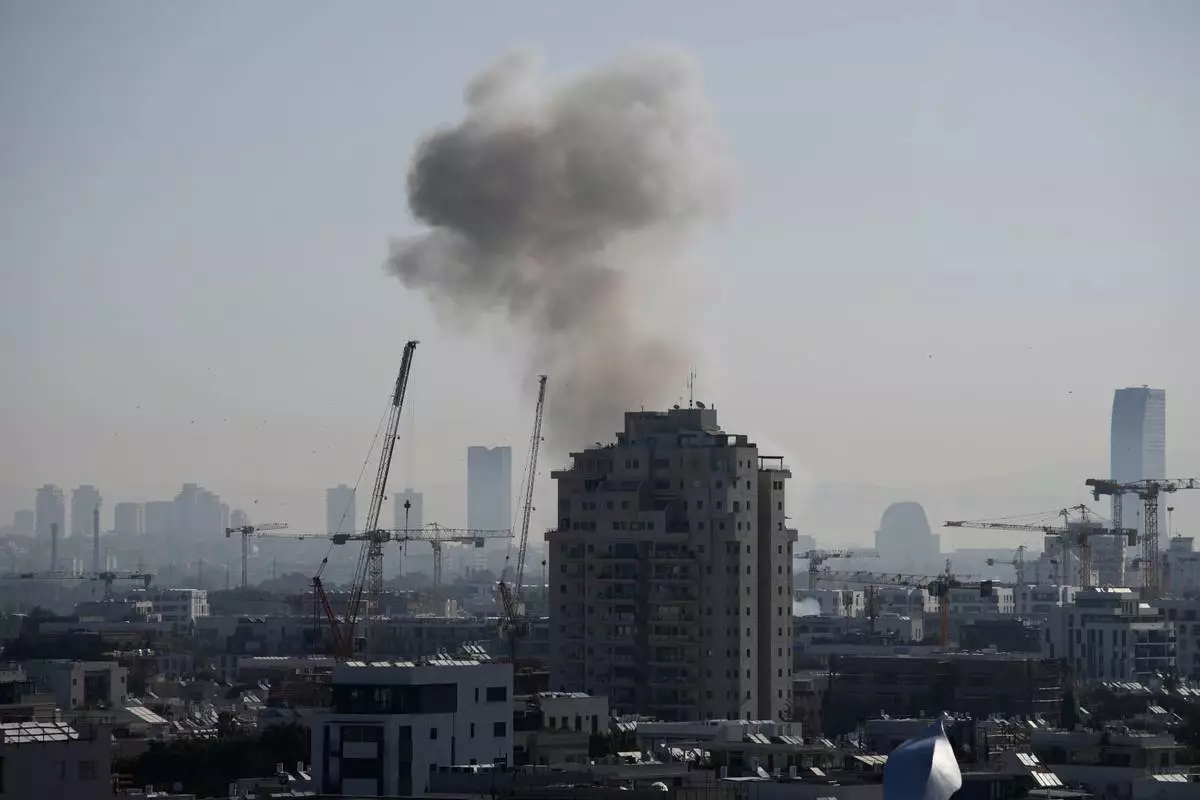
Smoke billows following an Iranian missile strike in Tel Aviv, Tuesday, March 24, 2026. (AP Photo/Ohad Zwigenberg)
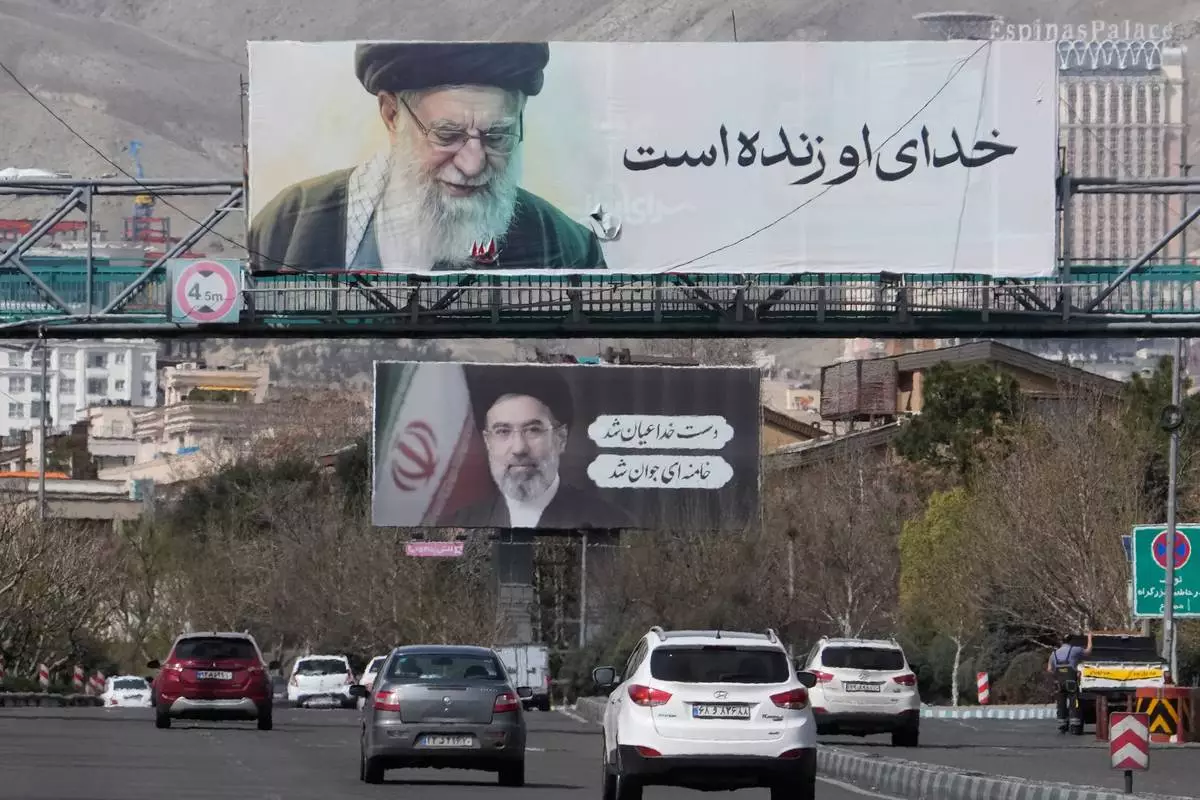
Vehicles drive under billboards showing portraits of the late Iranian Supreme Leader Ayatollah Ali Khamenei, foreground, and his son Ayatollah Mojtaba Khamenei, the successor to him, along a highway in Tehran, Iran, Tuesday, March 24, 2026. (AP Photo/Vahid Salemi)
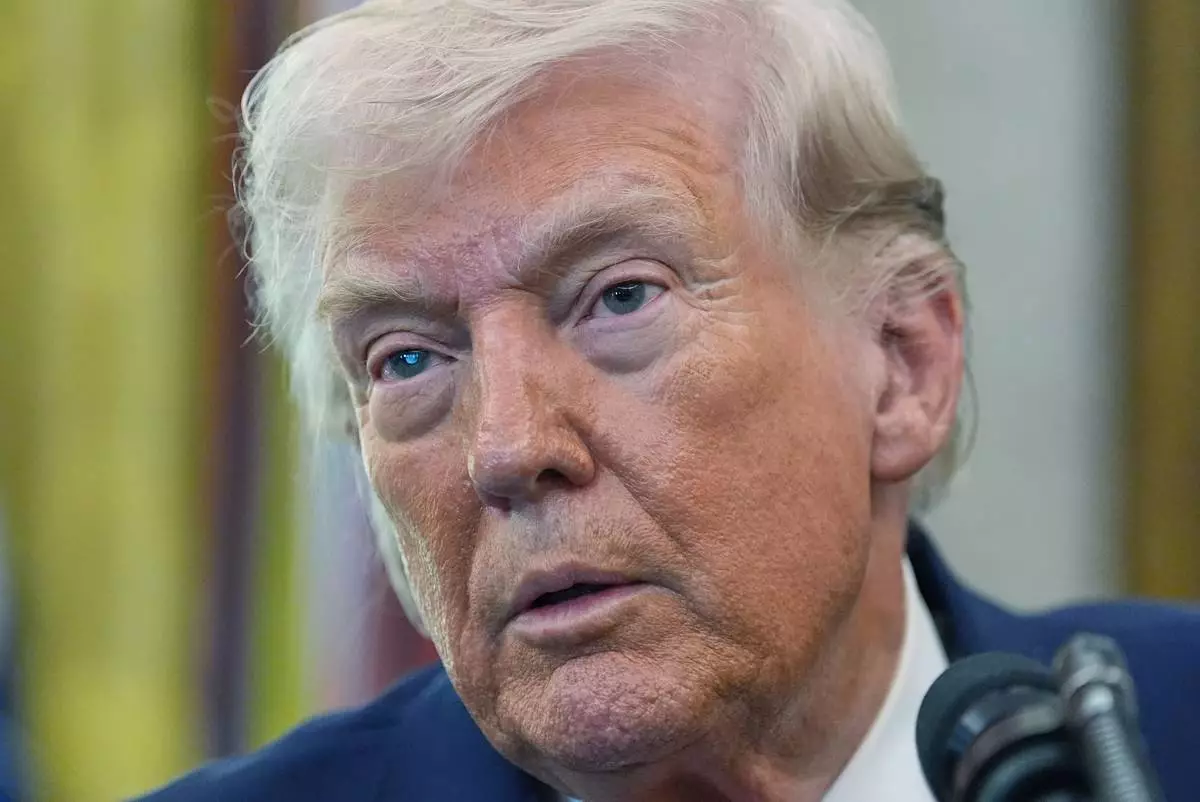
President Donald Trump listens to a reporter during the swearing in for Homeland Security Secretary Markwayne Mullin in the Oval Office of the White House, Tuesday, March 24, 2026, in Washington. (AP Photo/Alex Brandon)
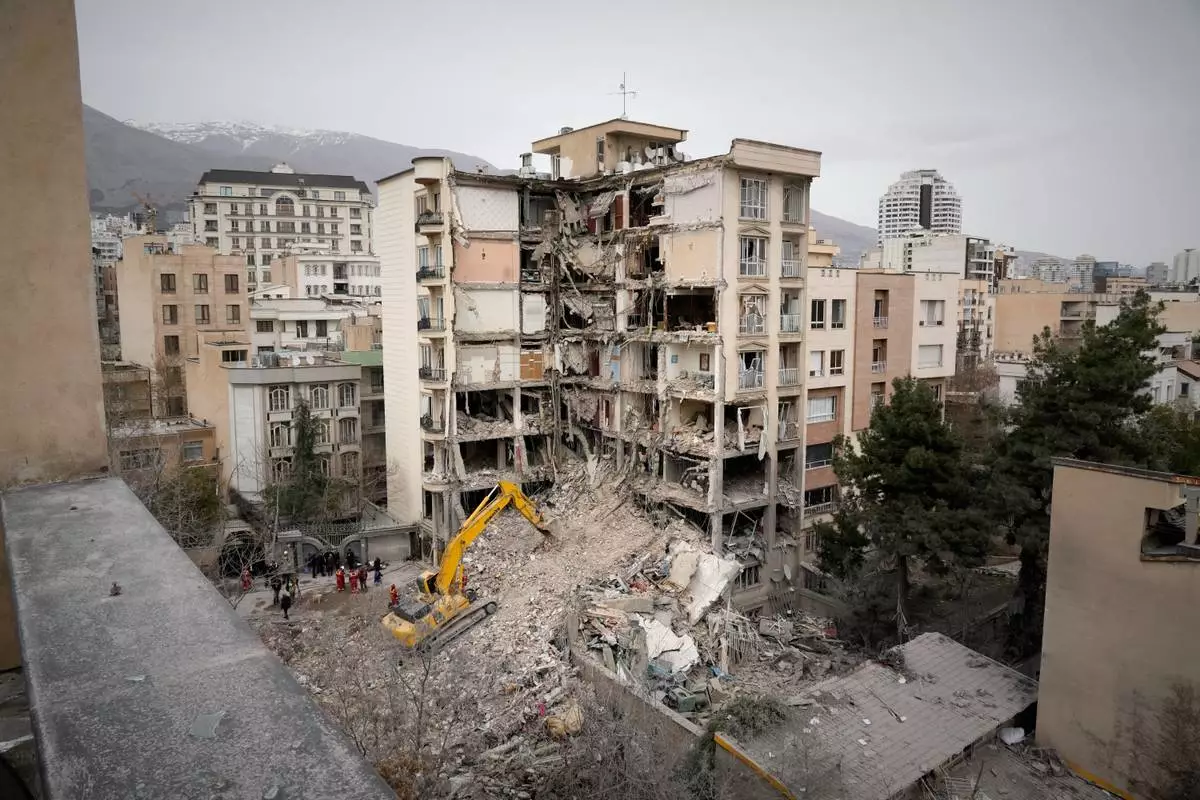
Iranian Red Crescent emergency workers use a bulldozer to clear rubble from a residential building that was hit in an earlier U.S.-Israeli strike in Tehran, Iran, Monday, March 23, 2026. (AP Photo/Vahid Salemi)