A Chinese mainland spokeswoman on Wednesday condemned Taiwan leader Lai Ching-te for his recent remarks that whitewash Japan's colonial rule over Taiwan, calling such statements "a betrayal of the Chinese nation."
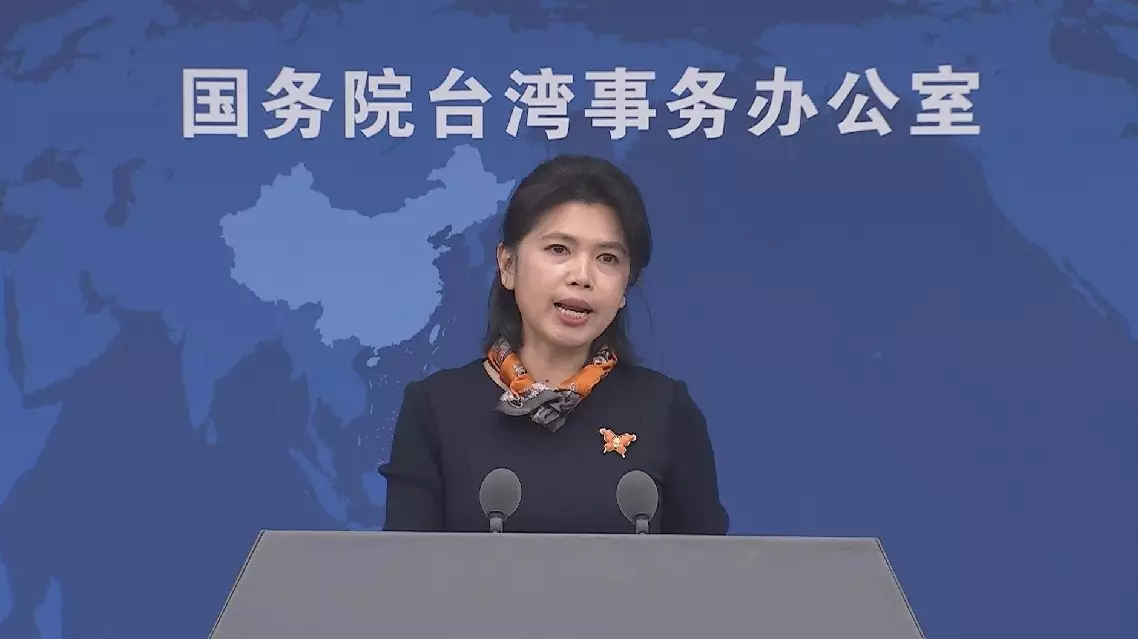
Zhu Fenglian, spokeswoman for the State Council Taiwan Affairs Office, made the comments in response to a media query at a press conference in Beijing.
Lai recently advocated the notorious notion of the so-called "Greater East Asia Co-Prosperity Sphere," a concept advanced by militarist Japan during World War II to whitewash and justify its aggression and colonial crimes across Asia.
These remarks have sparked an outcry on the island, with experts and scholars condemning him for distorting history for partisan and personal gain, and for glossing over Japan's massacre and other colonial atrocities committed by Japan in Taiwan.
"As is known to all, during the half-century of its invasion and colonial rule over Taiwan, Japan brutally suppressed the resistance of our compatriots in Taiwan against Japanese aggression. Through its so-called policy of 'agricultural Taiwan, industrial Japan,' it plundered Taiwan's resources with impunity, forcibly promoted the 'Kominka Movement' in an attempt to change the national and ethnic identity of the Taiwanese people, and committed innumerable crimes that defy description. It brought profound suffering to the compatriots in Taiwan and marked the darkest chapter in the island's history. One after another, our compatriots in Taiwan rose up in the fight against Japanese aggression and colonial rule, with hundreds of thousands of them sacrificing their lives and blood in the struggle," Zhu said.
"Lai Ching-te disregards history and facts while vigorously whitewashing and glorifying Japan's colonial rule. This constitutes a distortion of history, a desecration of the martyrs, and a betrayal of the nation. It once again exposes his ugly nature of selling Taiwan out to ingratiate himself with Japan and his provocative pursuit of separatism. No attempt to justify or overturn the verdict on Japan's colonial crimes will ever be tolerated, and no external interference in the Taiwan question and meddling in China's internal affairs will ever be allowed," she said.
"Compatriots on both sides of the Taiwan Strait should always remember that all Chinese nationals made great sacrifices to defeat vicious Japanese militarism and defend national sovereignty and national dignity with their blood and lives, resolutely oppose Taiwan separatism and external interference, and work together to promote national reunification and create a bright future for national rejuvenation," said the spokeswoman.
Mainland slams Taiwan's Lai Ching-te for whitewashing Japanese colonial rule