MEXICO CITY (AP) — Mexican President Claudia Sheinbaum on Wednesday said Mexico will continue to have Cuban doctors work in the country at a time when other nations across the Americas have ditched their agreements with Cuba's government in the face of mounting U.S. pressure.
“It's a bilateral agreement that helps Mexico a lot,” said Sheinbaum in her morning press briefing when asked if she would uphold the agreement or give in to pressures by the Trump administration.
The leader's support of the Cuban medical program comes as U.S. President Donald Trump has suffocated Cuba by effectively cutting the island off from oil imports and has sought to isolate the Caribbean nation in an effort to push for regime change. The U.S. has pushed to end such missions, with U.S. Secretary of State Marco Rubio calling it a “form of human trafficking.”
Asked for a response on Wednesday, the White House pointed to a statement from Secretary of State Marco Rubio in June when the administration announced restrictions for various Central American officials with ties to Cuba’s “forced labor scheme.” Rubio at the time said the restrictions “promote accountability for those who support and perpetuate these exploitative practices.”
A number of Latin American and Caribbean nations like Honduras and Jamaica have abruptly shut down the missions, and sent Cuban doctors home.
Cuba’s practice of deploying doctors — often highly skilled in providing care with scarce resources — is often a means of diplomacy, but has long been criticized by the U.S. government. Despite that, Cuban doctors have played an important role in rural areas of Latin America lacking basic medical infrastructure like the Amazon and parts of Central America.
Sheinbaum on Wednesday defended the program and said that “we can’t forget” all the help Cuban doctors have offered during the COVID-19 pandemic and in rural areas across the country. It's unclear exactly how many Cuban doctors currently work in Mexico.
"It’s hard to get Mexican doctors and specialists to go out to many rural areas where we need medical specialists, and the Cubans are willing to work there," she said.
Sheinbaum's defense of the program appears to go against Trump administration efforts at the same time that the Mexican leader has had to walk a fine line with Washington in an effort to offset threats by Trump to take military action against Mexican cartels.
Mexico has been a fierce defender of Cuba dating back to the country's revolution. For years, it has sent oil shipments to Cuba to help stave off a deeper energy crisis on the island. But Sheinbaum's government halted those shipments when Trump threatened to slap tariffs on any nation that sends oil to Cuba. Instead, Mexico's government has sent aid shipments and sought to help in other ways.
——
Associated Press journalist Seung Min Kim contributed to this report from Washington D.C.

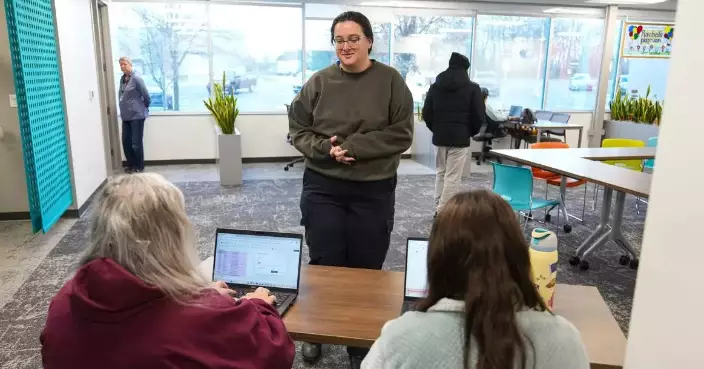
FILE - Mexican President Claudia Sheinbaum gives her the daily, morning news conference at the National Palace in Mexico City, Feb. 23, 2026. (AP Photo/Ginnette Riquelme, File)
LOS ANGELES (AP) — Meta and YouTube must pay millions in damages to a 20-year-old woman after a jury decided the social media giant and video streamer designed their platforms to hook young users without concern for their well being.
The California jury's decision Wednesday in a first-of-its-kind lawsuit could influence the outcome of thousands of similar lawsuits accusing social media companies of deliberately causing harm.
The plaintiff, known by her initials KGM, testified at trial that she became addicted to social media as a child and that this addiction exacerbated her mental health struggles. After more than 40 hours of deliberations, a majority of jurors agreed and awarded her $3 million in damages.
Jurors later recommended an additional $3 million in punitive damages after deciding the companies acted with malice, oppression or fraud in harming children with their platforms. The judge has final say over how much damages are awarded.
It’s the second verdict against Meta this week, after a jury in New Mexico determined the company harms children’s mental health and safety, in violation of state law.
Meta, the parent of Instagram and Facebook, and Google-owned YouTube issued statements disagreeing with the verdict and vowed to explore their legal options, which includes appeals.
Google spokesperson Jose Castañeda said the verdict misrepresents YouTube “which is a responsibly built streaming platform, not a social media site.” A Meta spokesperson said teen mental health is “profoundly complex and cannot be linked to a single app.”
The jury determined that Meta and YouTube knew the design or operation of their platforms was dangerous or was likely to be dangerous when used by a minor. They also agreed that the platforms failed to adequately warn of that danger, further contributing to the plaintiff's harm.
Only nine of the 12 jurors had to agree on each claim against each defendant. Two jurors consistently disagreed with the other 10 on whether the companies should be held liable.
The jurors also decided Meta held more responsibility for harm to the plaintiff, who has been identified by her initials KGM. The jury said Meta shouldered 70% of the responsibility while YouTube bore the remaining 30%. That division was reflected in the breakdown of the $3 million in punitive damages, with the jury deciding on $2.1 million from Meta and $900,000 from YouTube.
Meta and YouTube were the two remaining defendants in the case. TikTok and Snap settled before the trial began.
Jurors listened to about a month of lawyers’ arguments, testimony and evidence, and they heard from KGM, or Kaley as her lawyers called her during the trial, as well as Meta leaders Mark Zuckerberg and Adam Mosseri. YouTube’s CEO, Neal Mohan, was not called to testify.
Kaley said she began using YouTube at age 6 and Instagram at age 9. She told the jury she was on social media “all day long” as a child.
Lawyers representing Kaley, led by Mark Lanier, were tasked with proving that the respective defendants’ negligence was a substantial factor in causing Kaley’s harm. They pointed to specific design features they said are designed to “hook” young users, like the “infinite” nature of feeds that allowed for an endless supply of content, autoplay features, and notifications.
The jurors were told not to take into account the content of the posts and videos Kaley viewed because tech companies are shielded from legal responsibility for posted content, based on Section 230 of the 1996 Communications Decency Act.
Meta argued that Kaley's mental health struggles were not connected to her social media use and pointed to her turbulent home life. Meta also said “not one of her therapists identified social media as the cause” of her mental health issues. But the plaintiffs did not have to prove that social media caused Kaley’s struggles — only that it was a “substantial factor” in causing her harm.
YouTube focused more on the nature of the platform, arguing that it's a video platform akin to television rather than a social media platform. The company also mentioned her declining YouTube use as she aged. According to their data, she spent about one minute a day on average watching YouTube Shorts since its inception. YouTube Shorts, which launched in 2020, delivers short-form, vertical videos with the “infinite scroll” feature that plaintiffs argued was addictive.
Lawyers representing both platforms also pointed to their safety features and guardrails for users to monitor and customize their use.
The Los Angeles case was filed by a single plaintiff against Meta, YouTube, TikTok and Snap. After the latter two settled, she argued that Meta and YouTube were addictive by design, and that they especially target young users.
“The reason why this case is consequential is not the individual case, but the way that it’s a bellwether test case that might guide the resolution of other lawsuits,” said Sarah Kreps, a professor and director of Cornell University’s Tech Policy Institute.
“So there are thousands pending, and hundreds in California. So the concern if you’re a social media platform is, as this case goes, so might these others. And I think the reason why they would be concerned, and I’ve seen this analogy with the tobacco lawsuits, is that once you have this type of verdict in one case, it just opens the floodgates for so many more.”
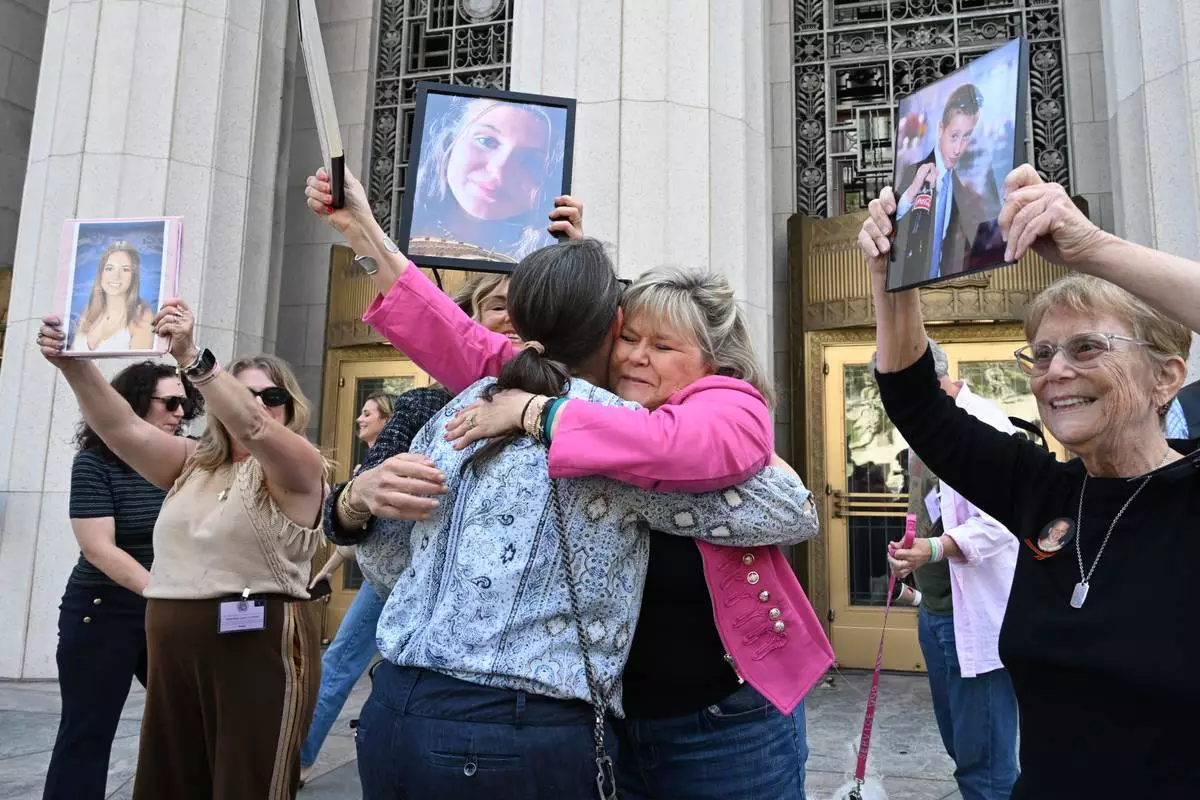
Lori Schott, center right, embraces Mary Rodee after the verdict in a landmark trial over whether social media platforms deliberately addict and harm children at Los Angeles Superior Court, Wednesday, March 25, 2026, in Los Angeles. (AP Photo/William Liang)
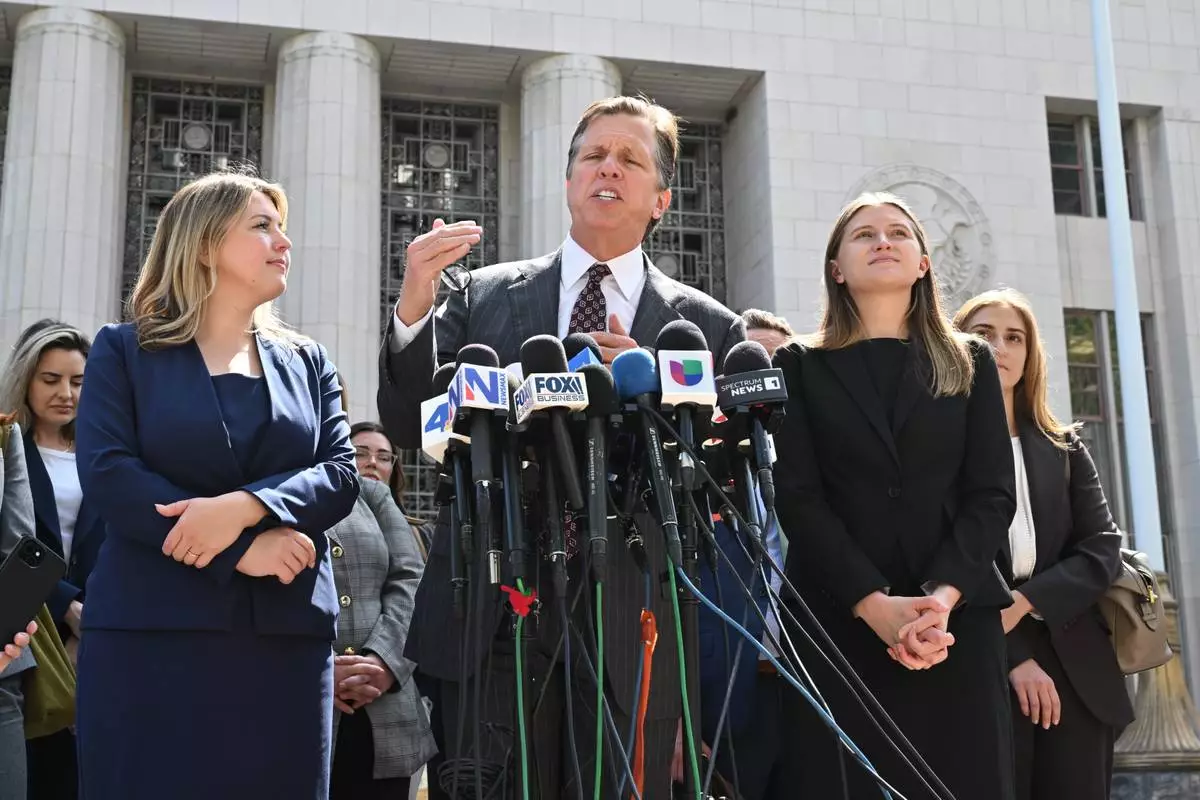
Attorney Mark Lanier speaks during a news conference after the verdict in a landmark trial over whether social media platforms deliberately addict and harm children at Los Angeles Superior Court, Wednesday, March 25, 2026, in Los Angeles. (AP Photo/William Liang)

Mary Rodee holds a photo of her son Riley after the verdict in a landmark trial over whether social media platforms deliberately addict and harm children at Los Angeles Superior Court, Wednesday, March 25, 2026, in Los Angeles. (AP Photo/William Liang)
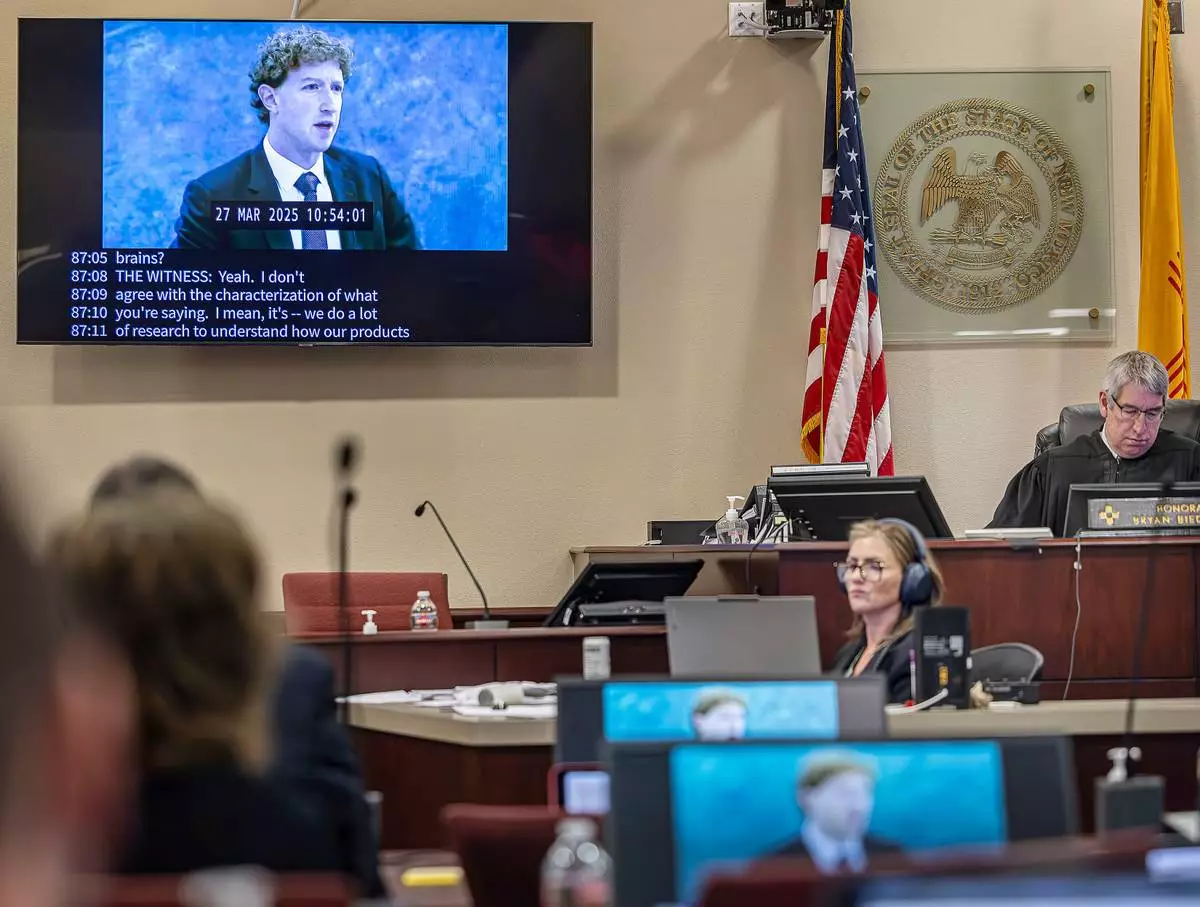
A recording of Meta Founder and CEO Mark Zuckerberg's deposition is played for the jurors on Wednesday, March 4, 2026, in Santa Fe, N.M. (Jim Weber/Santa Fe New Mexican via AP, Pool)

Civil litigator David Ackerman embraces New Mexico state attorney Linda Singer following a landmark verdict where the jury found Meta willfully violated New Mexico's consumer protection laws and are ordered to pay the state $375 million in damages, Tuesday, March 24, 2026 , in Santa Fe, N.M. (Nathan Burton/Santa Fe New Mexican via AP, Pool)

Laura Marquez-Garrett, attorney for SMVLC (Social Media Victims Law Center), embraces Julianna Arnold, right, parent, outside Los Angeles Superior Court on Thursday, March 12, 2026. (AP Photo/Damian Dovarganes)
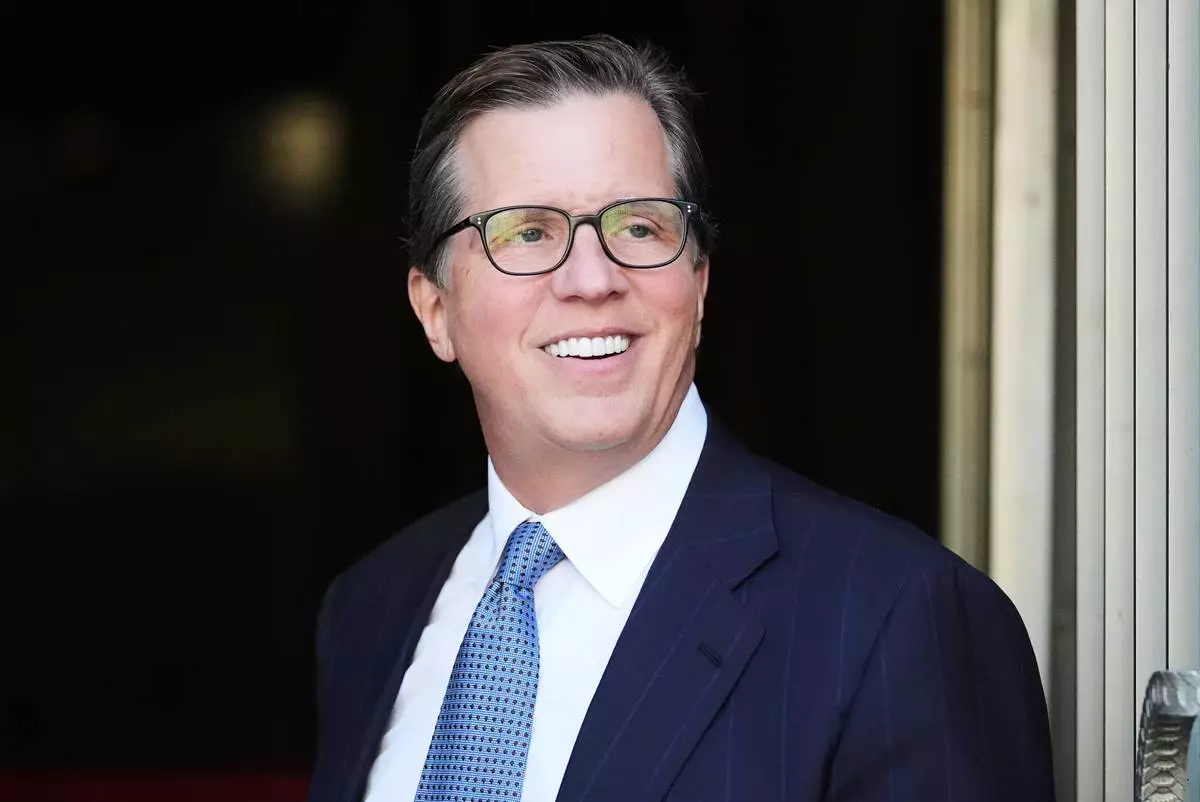
Plaintiffs attorney Mark Lanier arrives for closing arguments in a landmark trial over whether social media platforms deliberately addict and harm children on Thursday, March 12, 2026, in Los Angeles. (AP Photo/Damian Dovarganes)