SANTA ANA PUEBLO, N.M. (AP) — An empty lot between a fire station and a soccer field just outside Albuquerque soon will be the home of a federal medical center first promised to Native American patients more than 30 years ago.
Earlier this month, Santa Ana Pueblo Gov. Myron Armijo took officials from the U.S. Indian Health Service and the Department of Health and Human Services on a tour of the location where patients are to receive everything from dialysis and diabetes care to optometry services.
"This will definitely change the game for healthcare in our area,” Armijo said.
Set to break ground in 2027, the 235,000-square-foot (22,000-square-meter) center will be run by the IHS, the U.S. agency that provides healthcare to Native Americans. Tribal leaders hope it will relieve pressure on the aging and overextended Albuquerque Indian Health Center, a federal facility originally built 90 years ago where some patients report waiting months for an appointment.
The Albuquerque facility was among more than 60 clinics and hospitals the agency identified for replacement in 1993 due to their age, condition and inability to serve a growing population. It remains on the list along with six other projects scattered around Arizona and New Mexico. IHS officials say it will eventually be replaced by two new facilities in the Albuquerque area, including the center planned at Santa Ana Pueblo.
In February, HHS Secretary Robert F. Kennedy Jr. pledged $1 billion toward those long-delayed projects, including $22 million for the Santa Ana Pueblo center. The agency estimates $8 billion is needed to tackle all remaining projects on the 1993 list that, under federal law, must be complete before the IHS can address other major construction needs.
A.C. Locklear, CEO of the nonprofit National Indian Health Board, said the $1 billion is the single largest financial investment by any administration in addressing the aging facilities. Yet, he said, it also shows the federal government has neglected its legal duty to provide adequate healthcare to tribal nations.
“It’s a drop in the bucket in terms of what’s needed to modernize these facilities,” Locklear said.
The IHS serves 2.8 million Native American and Alaska Native patients at 21 hospitals and 78 smaller health centers nationwide. The average age of those facilities is around 40 years old and one-third are in “poor” physical condition, according to a 2023 U.S. Government Accountability Office report.
That isn't lost on Theresa Nelson, a 62-year-old Navajo Nation citizen who started relying on the Albuquerque Indian Health Center after retiring and losing her health insurance.
“It felt like going back in time,” she said, describing everything from the X-ray machines to exam rooms and waiting room furniture as outdated.
Nelson said the center relies on a complex system of outside referrals for treatments and tests that were easier to access in the private sector. She has been waiting for eight weeks for IHS to approve a referral for a 3D mammogram, a tool the Mayo Clinic says is offered at most U.S. healthcare facilities.
The Indian Health Service said appointment wait times at the Albuquerque center are less than 14 days for patients who are established with a primary care provider. But Nelson and other patients report going years without being assigned a doctor and waiting months to be seen for preventative care.
Farther west, the Gallup Indian Medical Center operates out of a mashup of modular buildings and piecemeal renovations. The hospital, which opened over six decades ago and is on the 1993 list, serves a population that includes the Navajo Nation. Tribal lawmaker Vince James said constant construction and a disjointed layout make it difficult for elderly and disabled patients to navigate the hospital and for providers to do their jobs.
“These are Band-Aid fixes,” James said. “Eventually the GIMC campus will become unsafe.”
Senior HHS adviser Mark Cruz urged Congress to make a special appropriation to complete the remaining projects that are in various stages of planning and design.
Without that funding, he said, it could take another 40 years to get through the priority list.
“It’s really unacceptable that we’re still working off of that 33-year-old construction list,” Cruz said during the Santa Ana Pueblo tour.
Federal law requires the Indian Health Service to complete that list before replacing clinics and hospitals that have fallen into disrepair since 1993. That includes two nearly 90-year-old hospitals in Montana and Minnesota. The agency also can't build new facilities to meet patient demand, which has grown and shifted geographically in recent decades.
“I can’t get to additional projects that have merit across Indian Country or Alaska because I have a statutory obligation to get through the 1993 list first,” Cruz said.
In 2023 the IHS crossed a project in Rapid City, South Dakota off its priority list. The replacement of the aging and troubled Sioux San Hospital has been “transformational,” said Jerilyn Church, CEO of the Great Plains Tribal Leader’s Health Board.
The renamed Oyate Health Center is three times larger than the former hospital and equipped with far more modern medical equipment. But demand for care at the new center is already outstripping available space.
“That’s what happens when you work from a backlog,” Church said. “In the time between identifying the need and the money finally becoming available, the population grows.”
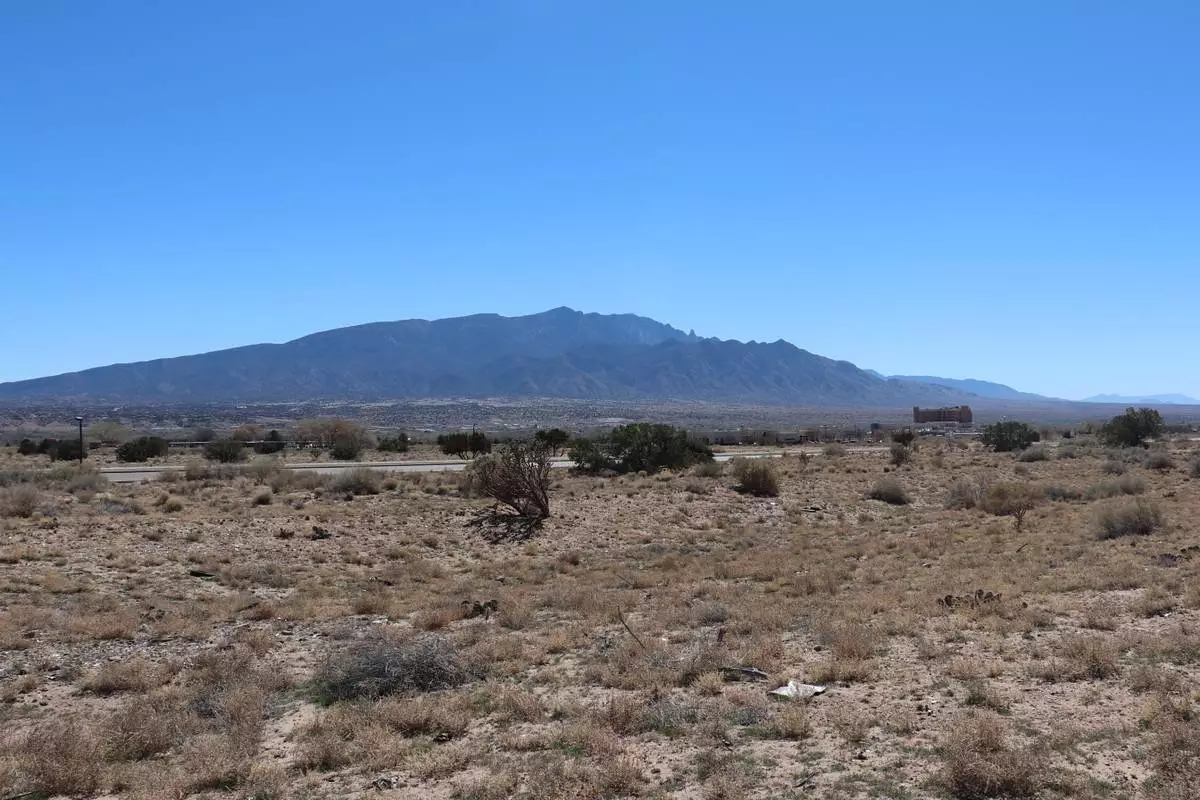
An empty lot between a fire station and a soccer field in the Pueblo of Santa Ana, N.M., near Albuquerque, is seen Friday, March 13, 2026. (AP Photo/Savannah Peters)
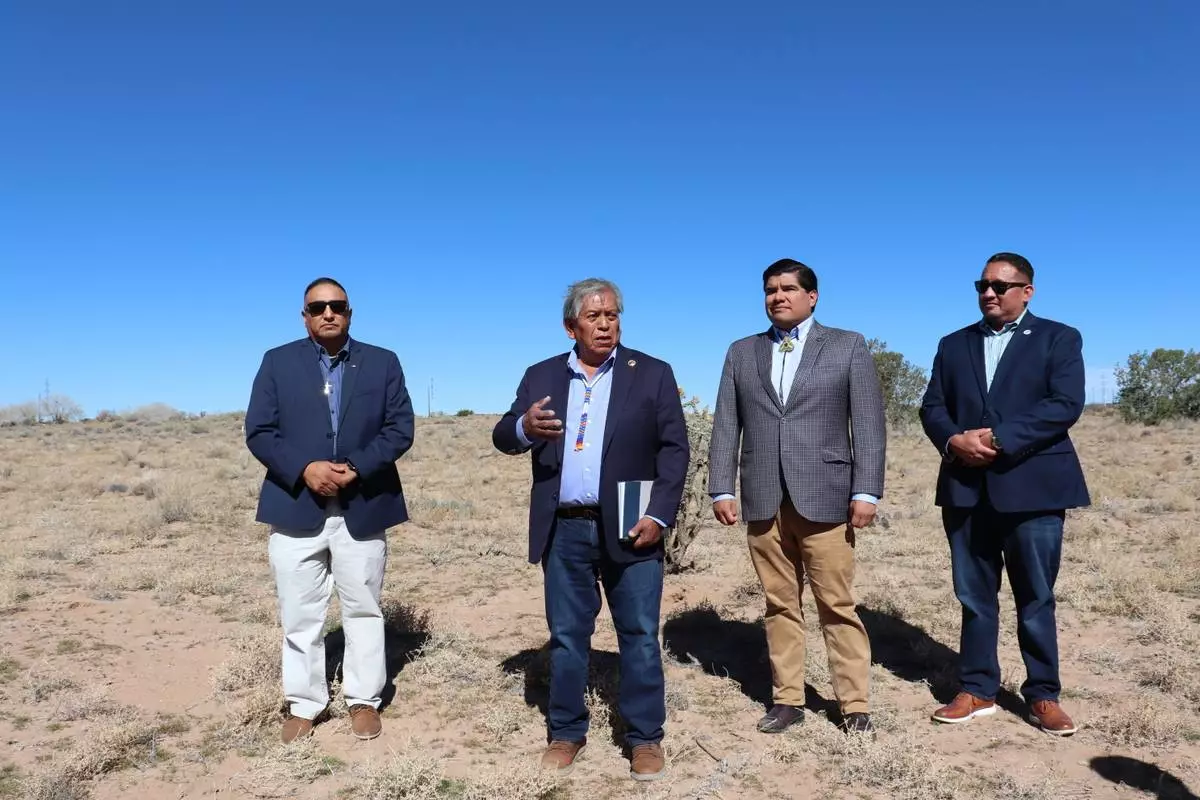
Pueblo of Santa Ana Gov. Myron Armijo leads a tour for U.S. Indian Health Service and the Department of Health and Human Services officials of the location where a new IHS health center is set to break ground in the future on Friday, March 13, 2026, at the Pueblo of Santa Ana, N.M. (AP Photo/Savannah Peters)
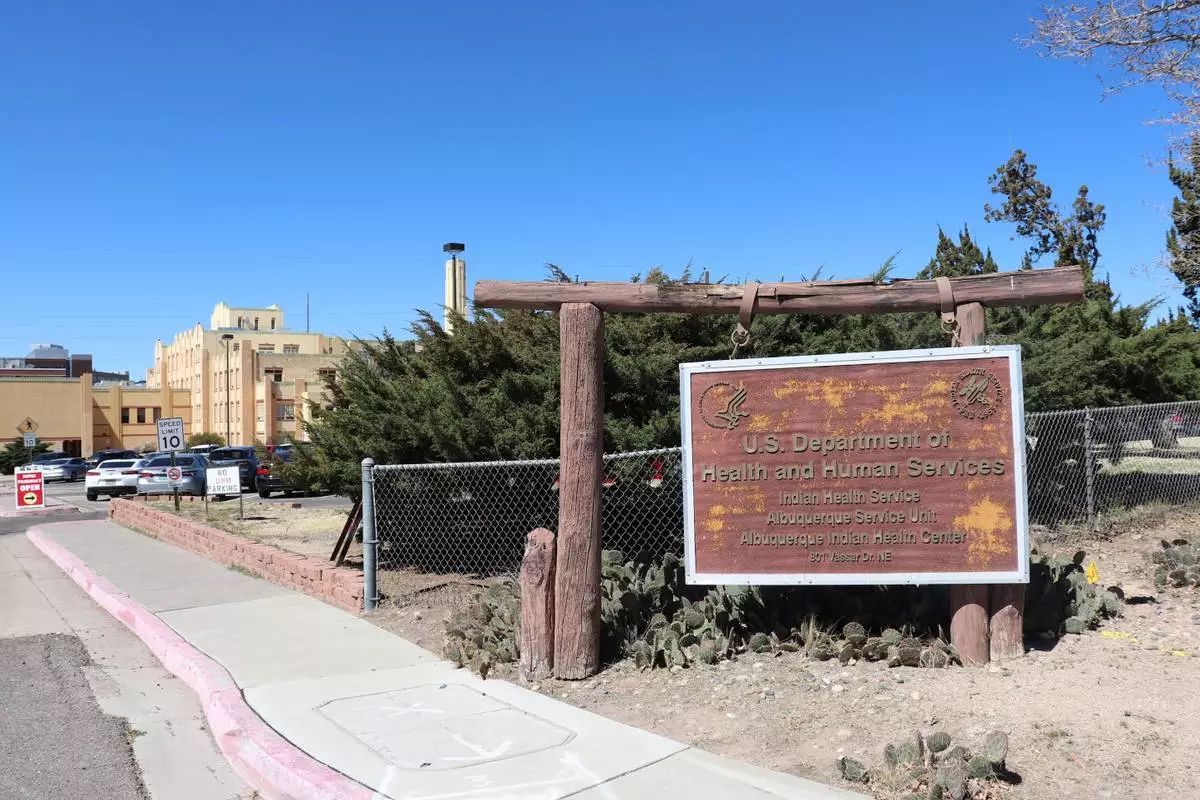
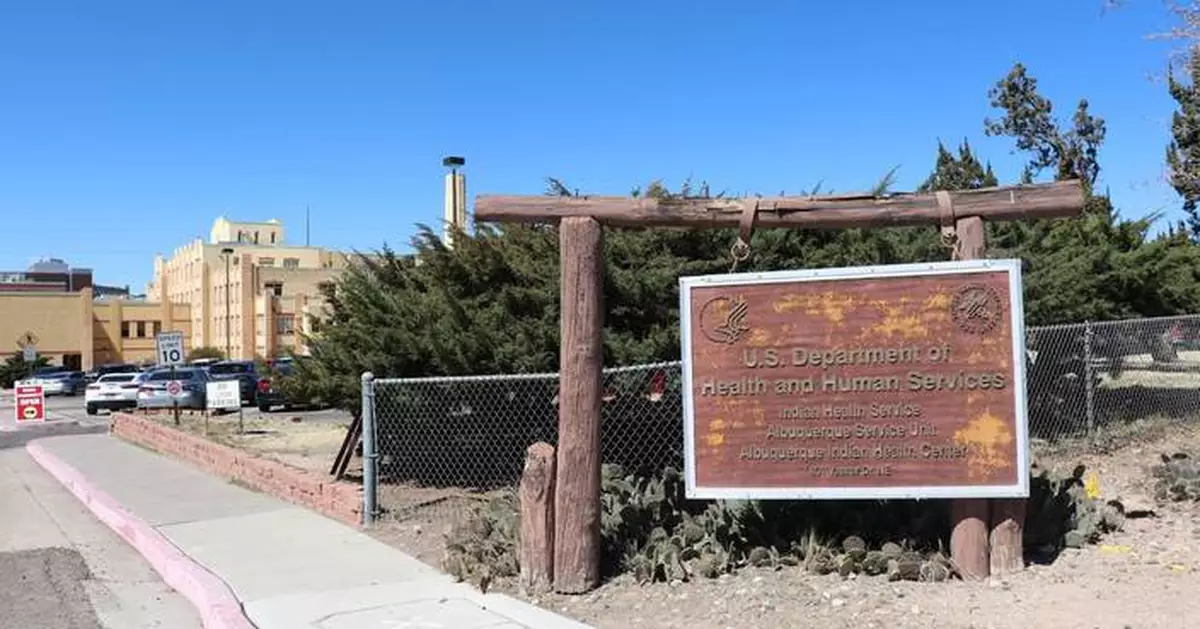
The Albuquerque Indian Health Center is seen Friday, March 13, 2026, in Albuquerque, N.M. (AP Photo/Savannah Peters)
U.S. President Donald Trump said Wednesday that a deal to end the Iran war is near, after Tehran dismissed his 15-point ceasefire plan and issued its own sweeping demands to stop fighting as it launched more attacks on Israel and Gulf Arab countries.
Two officials from Pakistan described the 15-point U.S. proposal broadly, saying it included sanctions relief, a rollback of Iran’s nuclear program, limits on missiles and reopening the Strait of Hormuz, through which a fifth of the world’s oil is normally shipped.
Iran issued its own plan via state TV, which includes a halt to killings of its officials, means to make sure no other war is waged against it, reparations for the war, the end of hostilities, and Iran’s sovereignty over the Strait of Hormuz.
“No negotiations have happened with the enemy until now, and we do not plan on any negotiations,” Iran’s foreign minister later told state TV.
Trump insisted at a Republican fundraiser Wednesday night that talks were underway with Iran's leaders.
“They are negotiating, by the way, and they want to make a deal so badly, but they’re afraid to say it because they figure they’ll be killed by their own people,” Trump said.
The death toll from the war has risen to more than 1,500 people in Iran, nearly 1,100 people in Lebanon, 20 in Israel and 13 U.S. military members, as well as a number of civilians on land and sea in the Gulf region. Millions of people in Lebanon and Iran have been displaced.
Here is the latest:
PUBLISHABLE:
Iran’s parliament is working on a bill to formalize the fees it is reportedly charging on some ship transiting through the Strait of Hormuz, local media reported.
The Fars and Tasnim news agencies, both close to Iran’s Revolutionary Guard, quoted lawmaker Mohammadreza Rezaei Kouchi as saying that “that “parliament is pursuing a plan to formally codify Iran’s sovereignty, control and oversight over the Strait of Hormuz, while also creating a source of revenue through the collection of fees.”
“This is entirely natural, just as goods pay transit fees when passing through other corridors, the Strait of Hormuz is also a corridor,” he reportedly said. “We provide its security, and it is natural that ships and oil tankers should pay such fees.”
The Strait of Hormuz, the narrow mouth of the Persian Gulf, is considered an international waterway open to all shipping. Imposing fees would end that and likely be strongly opposed by the Gulf Arab states, the United States and others.
The comment by Sultan al-Jaber, who leads the massive state-run Abu Dhabi National Oil Co., signaled the hardening rhetoric of the United Arab Emirates as the war nears its one-month mark.
“Weaponizing the Strait of Hormuz is not an act of aggression against one nation,” al-Jaber said in a speech for an event hosted by the Middle East Institute in Washington.
“It is economic terrorism against every consumer, every family that depends on affordable energy and food. When Iran holds Hormuz hostage, every nation pays the ransom, at the gas pump, at the grocery store and at the pharmacy. No country can be allowed to destabilize the global economy in this way. Not now. Not ever.”
Sirens sounded about an hour after sunrise across a large swath of central Israel, including areas around Tel Aviv and Jerusalem, and in the occupied West Bank.
Israel’s military said early Thursday morning that Iran had launched missiles toward the country.
The first such alert of the day came after an unusually long lull of more than 14 hours.
Hezbollah rocket fire, however, remained constant overnight in northern Israel, and once reached the Tel Aviv area overnight.
Iran is running a “de facto ‘toll booth’ regime” in Strait of Hormuz, controlling which ships come through and getting payment for their safe passage, a leading shipping intelligence firm said Thursday.
Lloyd’s List Intelligence published an analysis highlighting Iran’s practices through the strait.
It described vessels having to provide manifests, crew details and their destination to Iran’s paramilitary Revolutionary Guard.
The information goes to the Guard’s “Hormozgan Provincial Command for sanctions screening, cargo alignment checks that currently prioritizes oil over all other commodities, and for what is described as ‘geopolitical vetting,’” Lloyd’s List said.
“While not all ships are paying a direct toll at least two vessels have and the payment is settled in yuan,” Lloyd’s List said, referring to China’s national currency.
Such payments likely would run afoul of American and European sanctions on the Guard, a key power center within Iran that controls its ballistic missile arsenal and was key in suppressing nationwide protests in January.
Iran has not directly explained the process for ships to go through the strait, though a Foreign Ministry spokesperson appeared to acknowledge Tehran was receiving payments for some ships in an interview.
Fuel prices in Thailand surged Thursday after the government lifted a cap on diesel prices and reduced fuel subsidies.
The majority of fuel types rose by 6 baht ($0.18) per liter.
Diesel prices jumped by about 18%.
The increase is expected to hit the industrial and transportation sectors particularly hard and has raised concerns about a ripple effect on the cost of goods.
Videos and photos shared on social media showed long lines forming at gas stations after the price hike was announced late Wednesday night.
Thai Prime Minister Anutin Charnvirakul said earlier this week the government would allow fuel prices to adjust in line with global market rates, aiming to manage demand following a surge in panic buying.
Australia has temporarily restricted some Iranians from traveling to the country for fear that they would be unwilling or unable to return to their homeland because of the war.
The restrictions apply from Thursday for six months to Iranian Visitor (Subclass 600) visa holders.
These visas have been issued to more than 7,000 Iranians who intend to visit Australia for tourism, business or to see family.
“When you get a sudden conflict like has happened with Iran, who have a large number of people who’ve been issued visas who, if they applied now, would in fact not be eligible,” Immigration Minister Tony Burke told Parliament on Thursday.
Authorities will use the six months to reassess visa applicants. An unknown number will be exempt.
Activists in Iran reported heavy strikes early Thursday morning around Isfahan, a city some 330 kilometers (205 miles) south of Iran’s capital, Tehran.
The pro-reform newspaper Ham Mihan reported online about strikes in the area.
Isfahan is home to a major Iranian air base and other military sites, as well as one of the nuclear sites bombed by the United States during the 12-day war between Israel and Iran in June.
The semiofficial Fars news agency, close to the paramilitary Revolutionary Guard, described the attacks as targeting “two residential areas,” without elaborating.
Earlier, Israel’s military said it had completed “a wide-scale wave of strikes” across Iran, including in Isfahan.
A missile alert sounded on mobile phones in Dubai, United Arab Emirates, on Thursday morning.
Saudi Arabia’s Defense Ministry said it intercepted multiple drones over its oil-rich Eastern Province on Thursday morning.
Kuwait reported it was working to intercept incoming Iranian fire early Thursday morning.
Bahrain sounded its missile alert sirens early Thursday morning.
The United Arab Emirates air defenses early Thursday also worked to intercept incoming fire.
U.S. forces have hit more than 10,000 targets so far in the Iran war, the head of the American military’s Central Command said.
U.S. Navy Adm. Brad Cooper made the comments in a video released early Thursday by Central Command.
“If you combine what we’ve accomplished with the success of our Israeli ally, together, we have struck thousands more,” Cooper said. “Our precision strikes have overwhelmed Iranian air defenses and our combat flights are having tangible effects.”
Cooper added that the U.S. has destroyed 92% of “the Iranian navy’s largest vessels.”
“They’ve now lost the ability to meaningly project naval power and influence around the region and around the world,” Cooper said.
Iran maintains its chokehold on the Strait of Hormuz, the narrow mouth of the Persian Gulf, through drone and missile attacks on shipping, however.
Cooper also said the U.S. has struck over two-thirds of Iran’s munitions plants.
“Today, we have damaged or destroyed over two-thirds of Iran’s missile, drone and naval production facilities and shipyards — and we’re not done yet,” he said. “We are on a path to completely eliminate Iran’s wider military manufacturing apparatus.”
Satellite photos analyzed by The Associated Press, though delayed by two weeks by Planet Labs PBC, have shown Israeli and U.S. strikes targeting shipyards and missile facilities.
Iran has not acknowledged any of its materiel losses through the war.
German Defense Minister Boris Pistorius described the Iran war as an economic “catastrophe” and said Germany did not want to get “sucked into” the conflict.
Pistorius said on Thursday Germany was ready to help secure any peace once that was achieved and appealed for a ceasefire as soon as possible.
“To make it crystal clear, this war is a catastrophe for the world’s economies,” Pistorius told reporters at the Australian Parliament House.
“From the beginning on, we have not been consulted before. Nobody asked us before. It’s not our war and therefore we don’t want to get sucked into that war,” Pistorius added.
Pistorius addressed the media in the national capital Canberra following a meeting with his Australian counterpart Richard Marles.
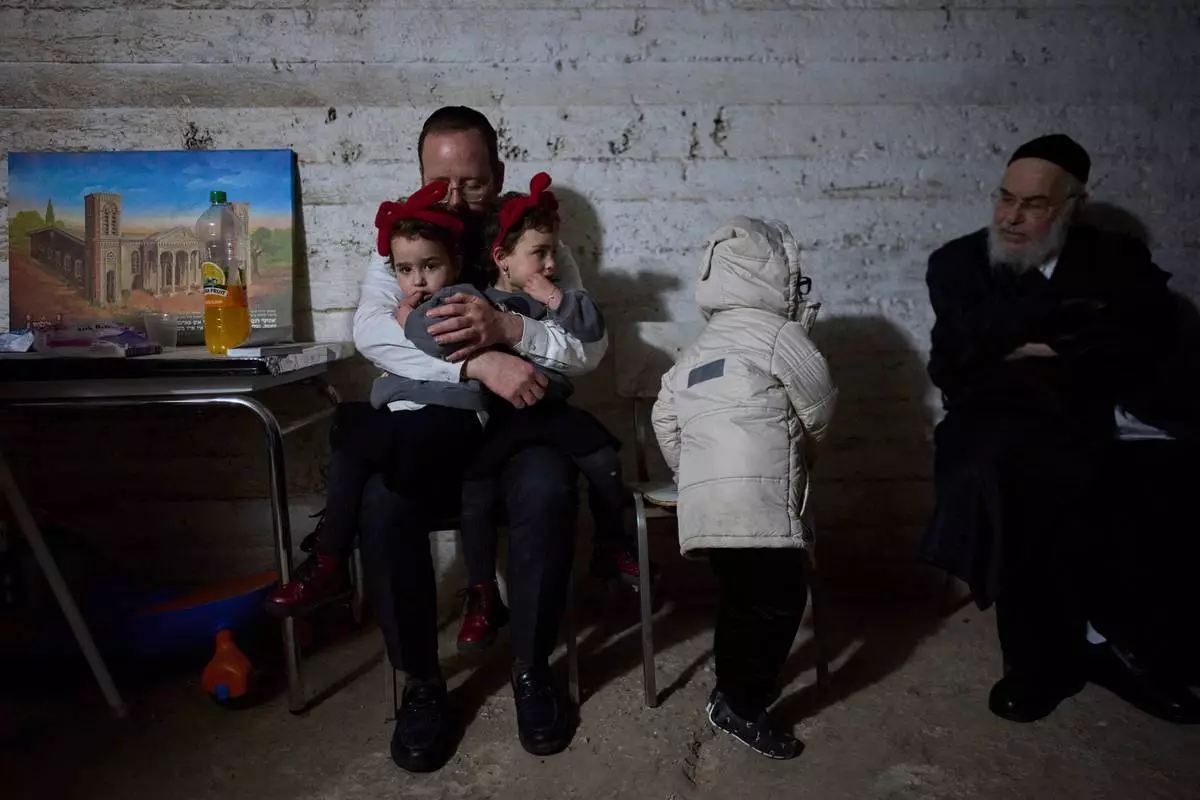
People take cover in a bomb shelter as air raid sirens warn of incoming Iranian missile strikes in Bnei Brak, Israel, Wednesday, March 25, 2026. (AP Photo/Ohad Zwigenberg)
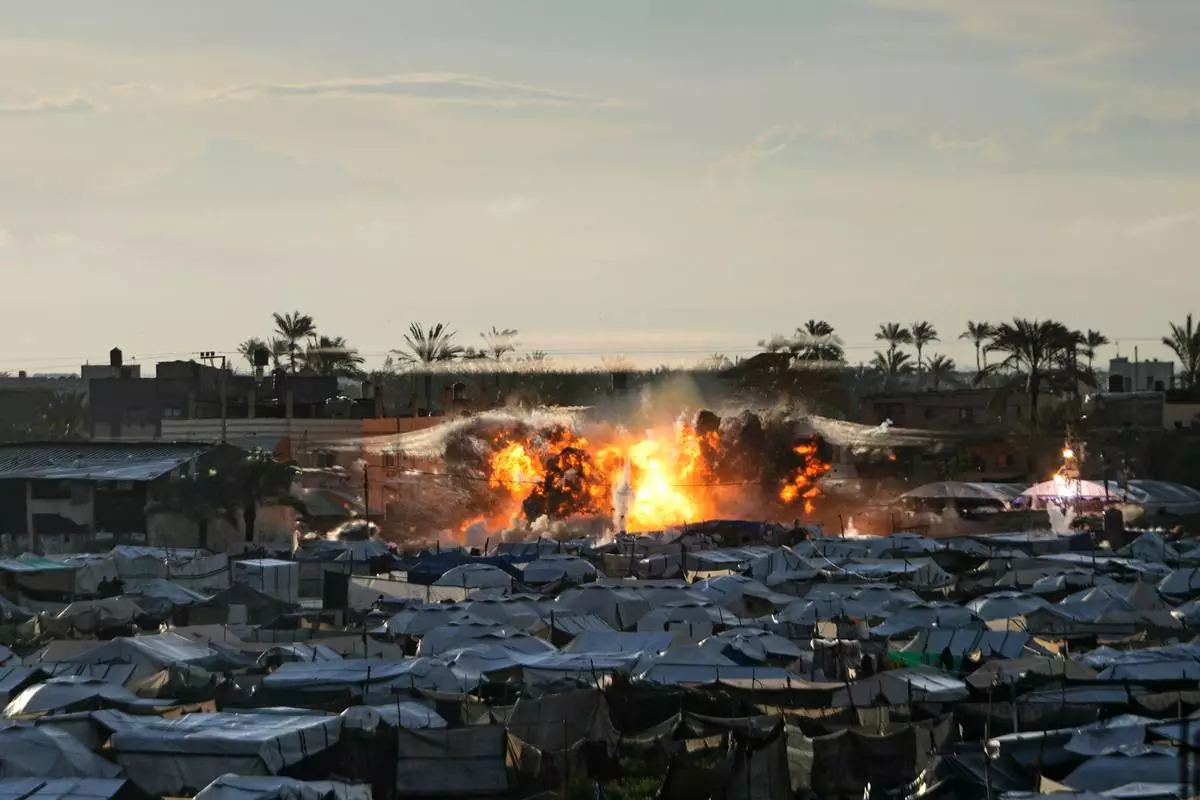
Smoke and flames rise following an Israeli military strike on a target in Deir al-Balah, central Gaza Strip, Wednesday, March, 25, 2026.(AP Photo/Abdel Kareem Hana)
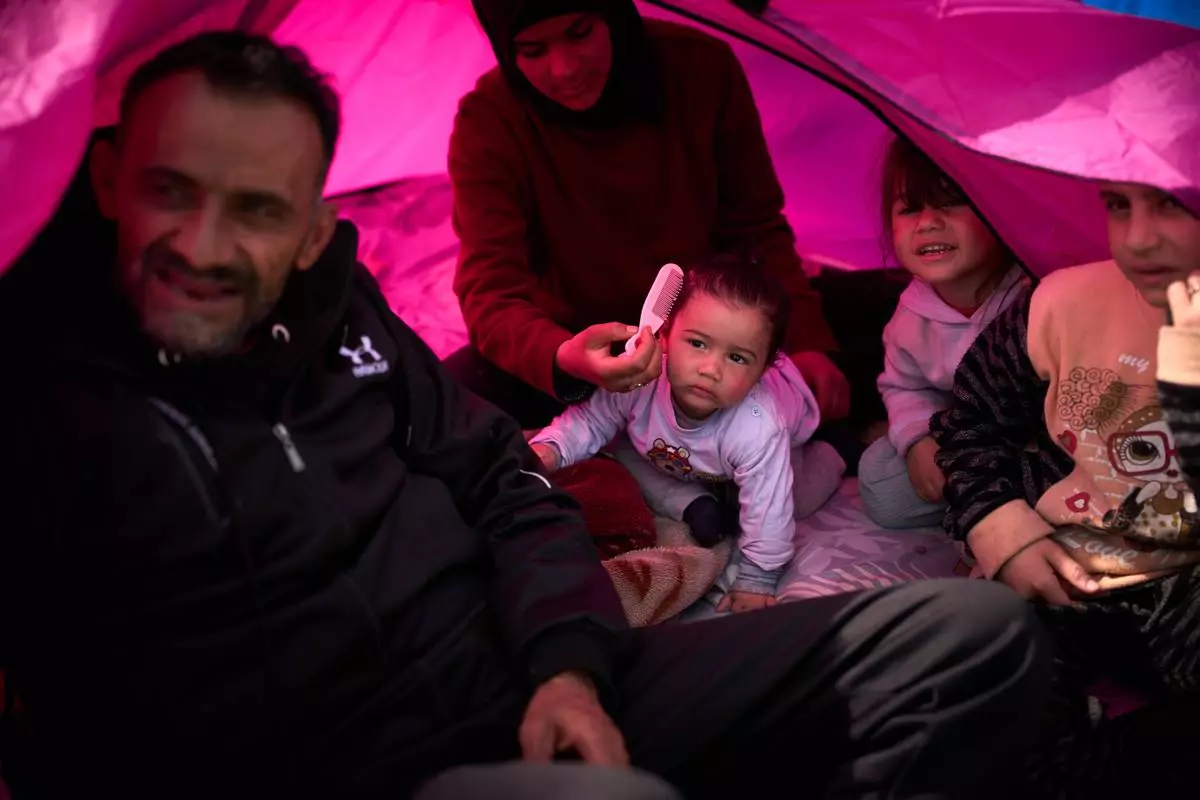
Members of the displaced Abd el-Hajj family, and two of their cousins, right, who fled Israeli strikes in southern Lebanon, sit inside a tent used as a shelter in Beirut, Lebanon, Wednesday, March 25, 2026. (AP Photo/Emilio Morenatti)
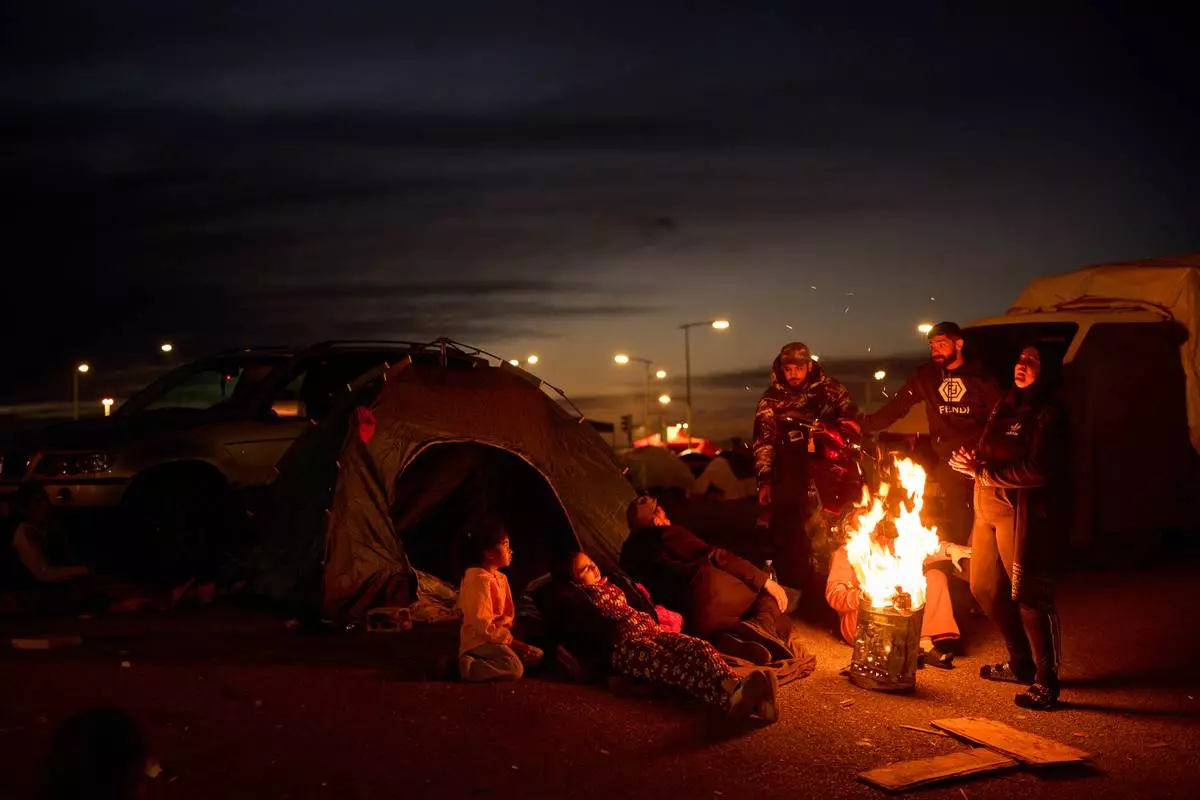
Members of a family, who fled Israeli strikes in southern Lebanon, sit around a bonfire outside a tent used as a shelter in Beirut, Lebanon, Wednesday, March 25, 2026. (AP Photo/Emilio Morenatti)
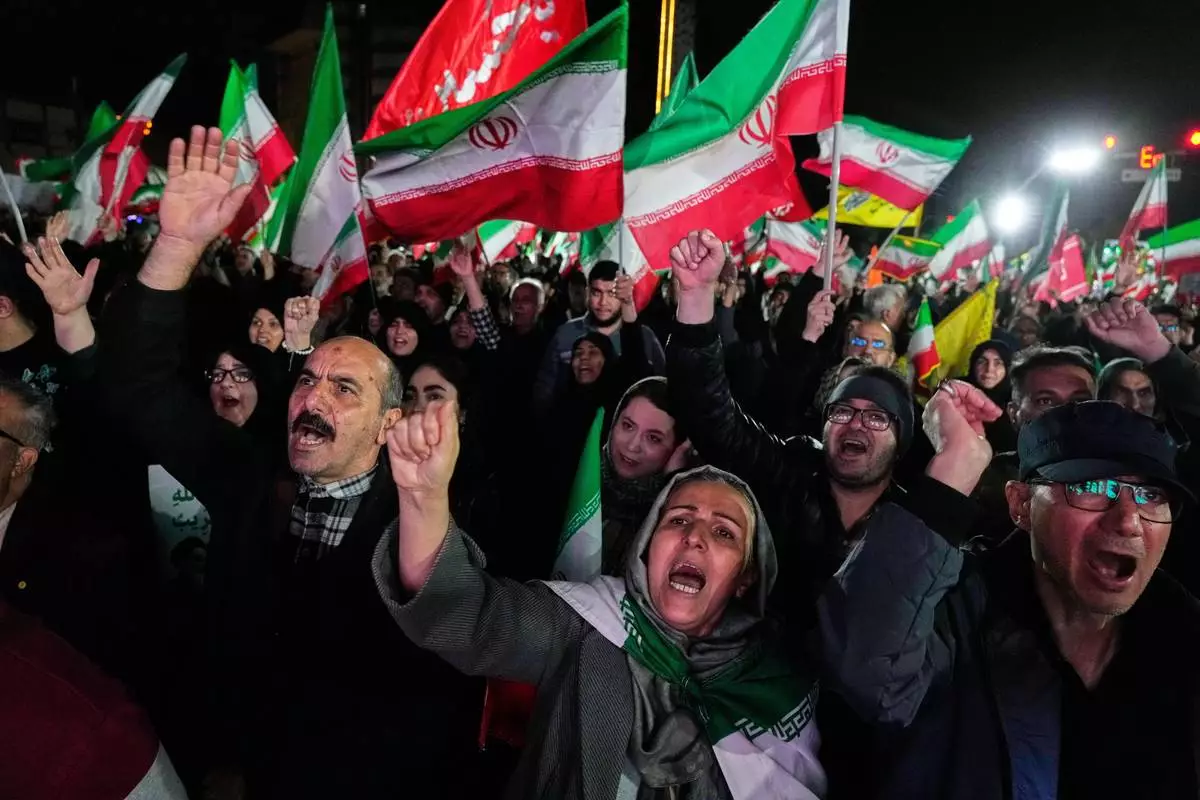
Pro-government supporters chant slogans and wave Iranian flags during a rally, in a square in western Tehran, Iran, Wednesday, March 25, 2026. (AP Photo/Vahid Salemi)