KATHMANDU, Nepal (AP) — Nepal's newly elected members of parliament were sworn in Thursday with nearly two-thirds of them from a political party that is less than four years old.
The 275 members of the House of Representatives, the powerful lower chamber of parliament, will be in their positions for the next five years.
Click to Gallery
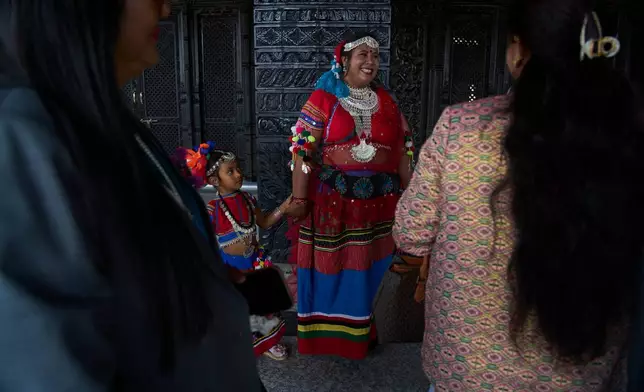
A newly elected member of the House of Representatives in traditional attire arrives with her daughter for a swearing-in ceremony at the Federal Parliament in Kathmandu, Nepal, Thursday, March 26, 2026. (AP Photo/Niranjan Shrestha)
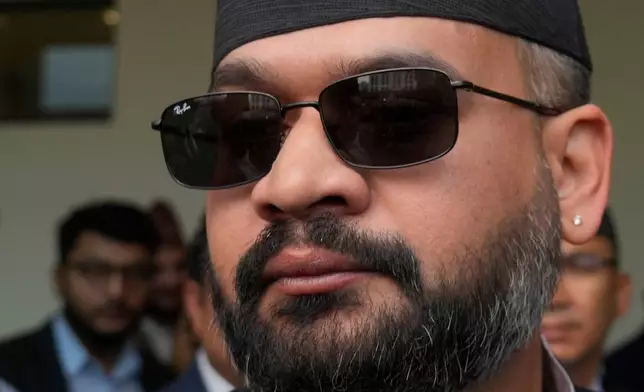
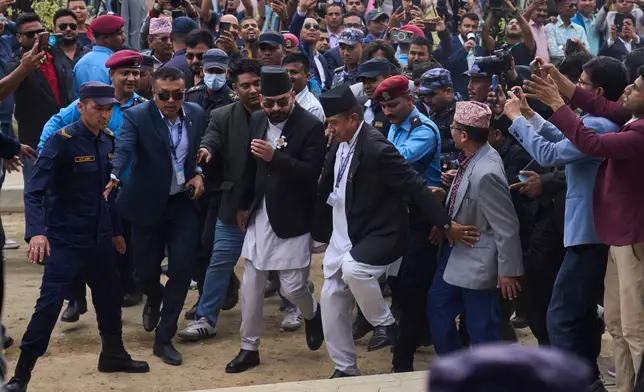
Balendra Shah arrives for a swearing-in ceremony of newly elected members of the House of Representatives at the Federal Parliament in Kathmandu, Nepal, Thursday, March 26, 2026. (AP Photo/Niranjan Shrestha)
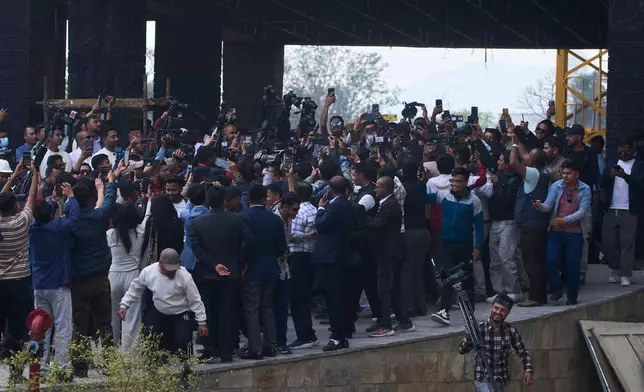
Journalists crowd around Balendra Shah as he arrives for a swearing-in ceremony of newly elected members of the House of Representatives at the Federal Parliament in Kathmandu, Nepal, Thursday, March 26, 2026. (AP Photo/Niranjan Shrestha)
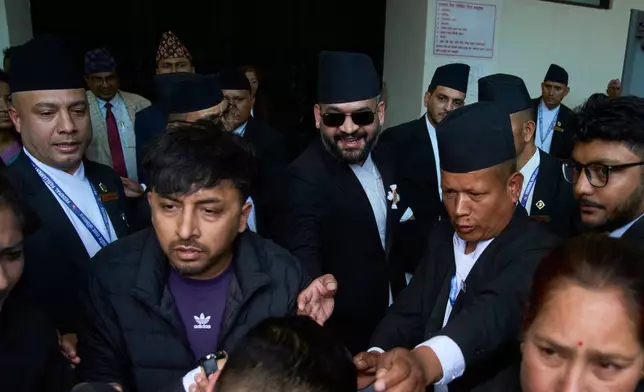
Balendra Shah, front center with sun glasses, arrives for a swearing-in ceremony of newly elected members of the House of Representatives at the Federal Parliament in Kathmandu, Nepal, Thursday, March 26, 2026. (AP Photo/Niranjan Shrestha)
Balendra Shah, center with sun glasses, arrives for a swearing-in ceremony of newly elected members of the House of Representatives at the Federal Parliament in Kathmandu, Nepal, Thursday, March 26, 2026. (AP Photo/Niranjan Shrestha)
The election — the country’s first since last year’s youth-led revolt — was won by the Rastriya Swatantra Party, or RSP, led by rapper-turned-politician Balendra Shah.
Shah is expected to be chosen as the leader by the elected members from his party later on Thursday and formally inform President Ram Chandra Poudel. The president will then appoint Shah as the prime minister of Nepal.
Shah is scheduled to take the oath of office on Friday.
The RSP won 125 directly elected seats plus a further 57 through proportional representation, giving it a total 182 seats in the 275-member House of Representative. The Nepali Congress party came second, with 38 seats.
In Nepal, voters directly elect 165 members to the House of Representatives. The remaining 110 seats are allocated through a proportional representation system, under which political parties are assigned seats based on their share of the vote.
Shah, who is the RSP’s prime ministerial candidate, won the 2022 Kathmandu mayoral race. He emerged as a leading figure in the 2025 uprising that ousted former Prime Minister Khadga Prasad Oli.
The RSP, which was founded in 2022, gained huge support in the parliamentary election, posing a strong challenge to two long-dominant parties — the Nepali Congress and the Communist Party of Nepal (Unified Marxist–Leninist)
Last year’s protests against corruption and poor governance were triggered by a social media ban before snowballing into a popular revolt against the government. Dozens of people were killed and hundreds more injured when protesters attacked government buildings and police opened fire on them.

A newly elected member of the House of Representatives in traditional attire arrives with her daughter for a swearing-in ceremony at the Federal Parliament in Kathmandu, Nepal, Thursday, March 26, 2026. (AP Photo/Niranjan Shrestha)
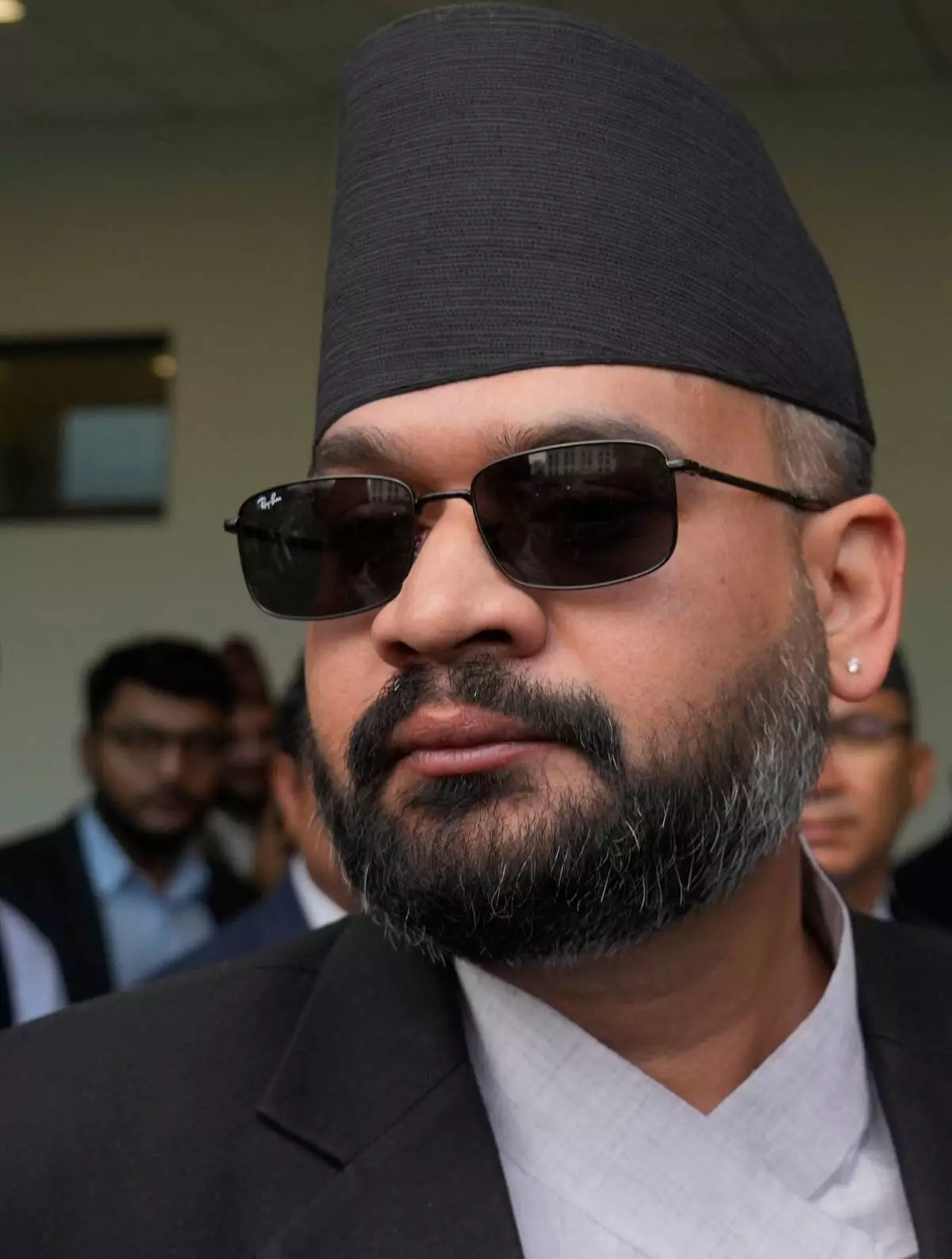
Balendra Shah arrives for a swearing-in ceremony of newly elected members of the House of Representatives at the Federal Parliament in Kathmandu, Nepal, Thursday, March 26, 2026. (AP Photo/Niranjan Shrestha)
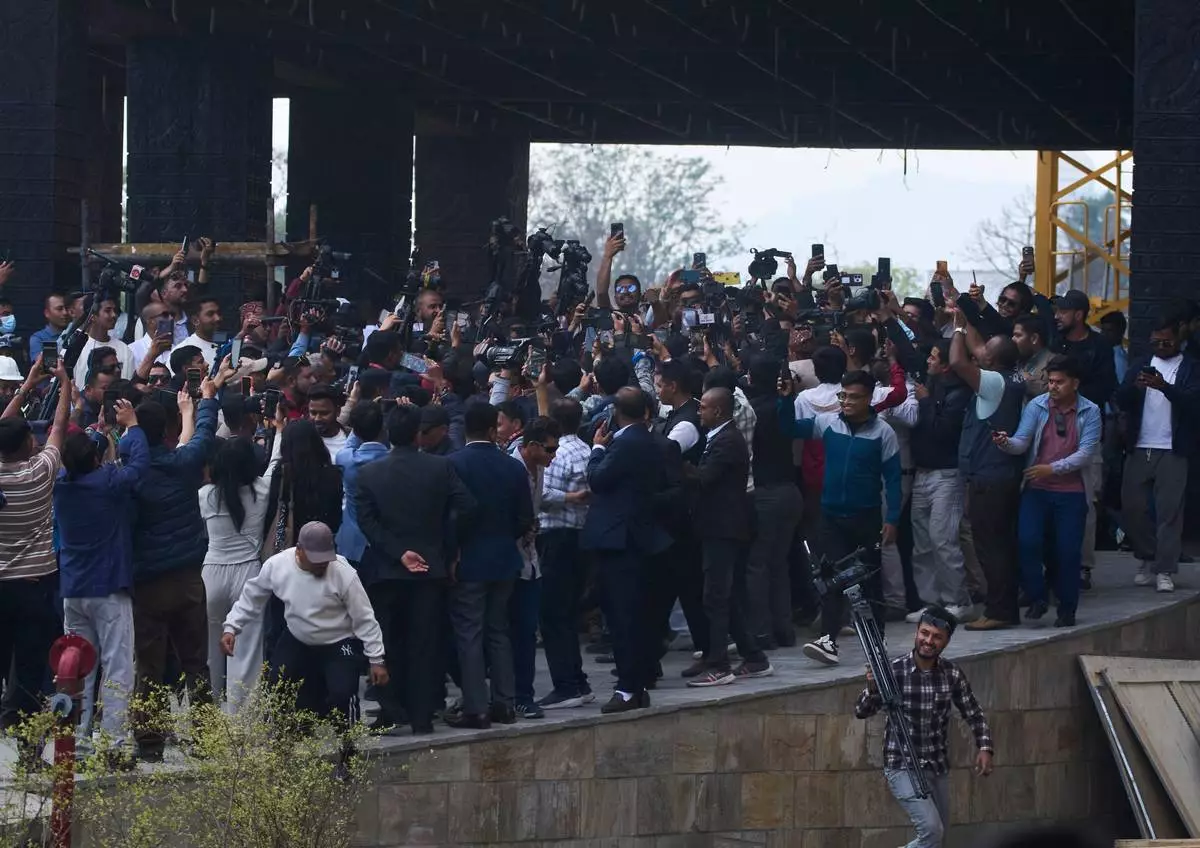
Journalists crowd around Balendra Shah as he arrives for a swearing-in ceremony of newly elected members of the House of Representatives at the Federal Parliament in Kathmandu, Nepal, Thursday, March 26, 2026. (AP Photo/Niranjan Shrestha)
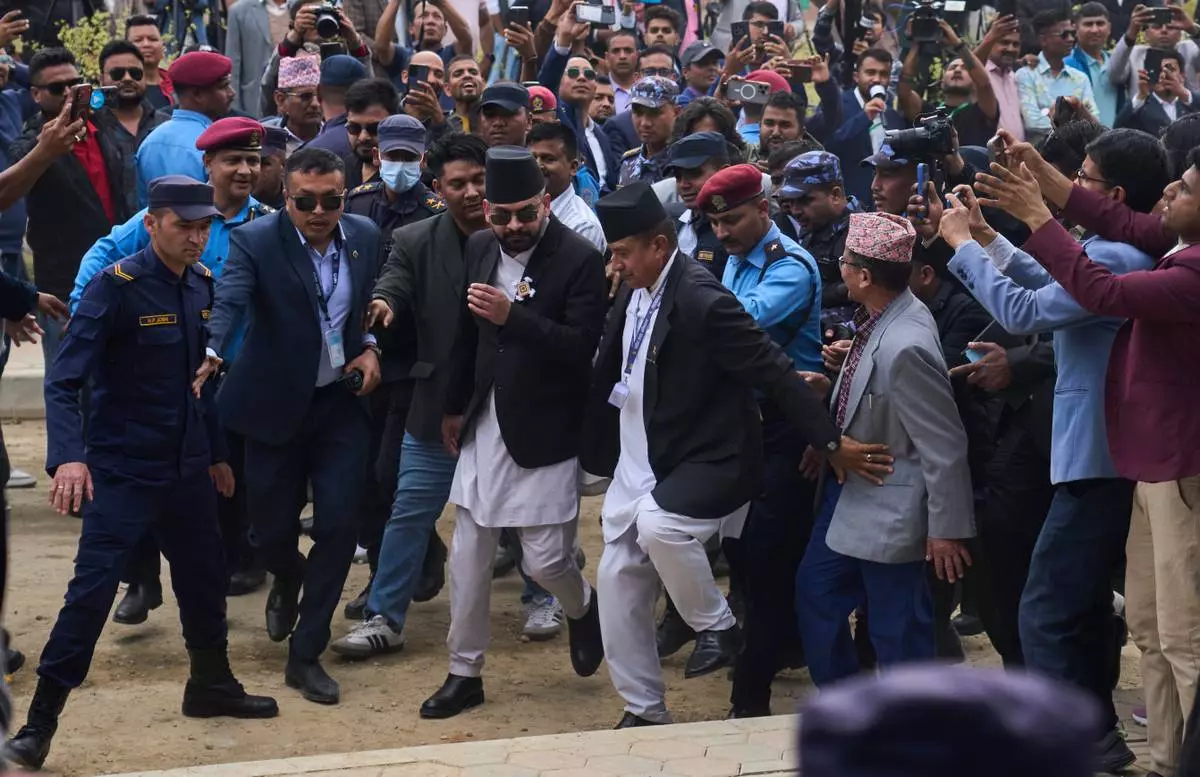
Balendra Shah, front center with sun glasses, arrives for a swearing-in ceremony of newly elected members of the House of Representatives at the Federal Parliament in Kathmandu, Nepal, Thursday, March 26, 2026. (AP Photo/Niranjan Shrestha)

Balendra Shah, center with sun glasses, arrives for a swearing-in ceremony of newly elected members of the House of Representatives at the Federal Parliament in Kathmandu, Nepal, Thursday, March 26, 2026. (AP Photo/Niranjan Shrestha)
DUBAI, United Arab Emirates (AP) — Iran and the United States hardened their positions as a diplomatic push for a ceasefire in the Middle East war appeared to falter on Thursday. Tehran moved to formalize its control over the crucial Strait of Hormuz while Washington prepared for the arrival of U.S. troops in the region that could be used on the ground in the Islamic Republic.
Sirens over Israel warned of barrages of incoming Iranian missiles and in the United Arab Emirates, two people were reported killed and three were wounded by falling shrapnel from a missile interception over Abu Dhabi on Thursday.
The secretary-general of a bloc of Gulf Arab countries said that Iran is charging fees for ships to safely transit the Strait of Hormuz. Industry experts say some ships are paying in Chinese yuan to pass through the Strait of Hormuz, where 20% of all traded oil and natural gas is transported in peacetime.
Israel said Thursday it killed Commodore Alireza Tangsiri, the head of Iranian Revolutionary Guard’s navy — the key official overseeing the closure of the strait. Israeli Defense Minister Israel Katz said he had been killed along with other senior naval commanders in a strike overnight. Iran did not immediately acknowledge Tangsiri’s killing.
Meanwhile, a strike group anchored by the amphibious assault ship USS Tripoli drew closer to the Mideast with some 2,500 Marines. Also, at least 1,000 paratroopers from the 82nd Airborne have been ordered to the region.
The troop movements don’t guarantee U.S. President Donald Trump will use force to try and compel Iran to open the strait and halt its attacks on Gulf Arab states.
Trump previously deployed a large force in the Caribbean before the American military captured former Venezuelan leader Nicolás Maduro in January. In the current situation, the U.S. is seen as focused on possibly seizing Iran’s oil terminal at Kharg Island or other sites near the strait.
U.S. Navy Adm. Brad Cooper, who commands the American military in the region, said his forces have hit more than 10,000 targets since Israel and the U.S. started the war Feb. 28, destroying 92% of Iran's largest ships and more than two-thirds of the country's missile, drone and naval production facilities.
“We’re not done yet,” said Cooper, who heads the U.S. Central Command, in a video message. “We are on a path to completely eliminate Iran’s wider military apparatus.”
With its stranglehold on traffic through the Strait of Hormuz, which leads from the Persian Gulf toward the open ocean, Iran has been blocking ships it perceives as linked to the U.S. and Israeli war effort, but letting through a trickle of others.
Jasem Mohamed al-Budaiwi, of the Gulf Cooperation Council, accused Iran of charging for safe passage through the strait — the first top official to do so. Al-Budaiwi oversees the GCC, a bloc of six Gulf Arab nations including Bahrain, Kuwait, Oman, Qatar, Saudi Arabia and the United Arab Emirates.
The Fars and Tasnim news agencies, both close to Iran’s paramilitary Revolutionary Guard, quoted lawmaker Mohammadreza Rezaei Kouchi as saying that parliament was working to formalize the process of charging fees to let ships pass.
“We provide its security, and it is natural that ships and oil tankers should pay such fees,” he was quoted as saying.
Lloyd’s List Intelligence called it a “de facto ‘toll booth’ regime.”
The shipping intelligence firm said vessels have to provide manifests, crew details and their destination to Iran’s Guard for sanctions screening, cargo alignment checks that currently prioritizes oil over all other commodities, and for what is described as ‘geopolitical vetting.’”
“While not all ships are paying a direct toll, at least two vessels have and the payment is settled in yuan,” Lloyd’s List said, referring to China’s currency.
Iran's grip on the strait and relentless attacks on Gulf regional energy infrastructure has sent oil prices skyrocketing and concerns of a global energy crisis surging. Brent crude, the international standard, traded at US$104 early Thursday, up more than 40% from the day the war started.
“To make it crystal clear, this war is a catastrophe for world's economies,” German Defense Minister Boris Pistorius told reporters during a visit to Australia.
Using Pakistan as an intermediary, Washington has delivered to Iran a 15-point ceasefire proposal, which includes the reopening of the Strait of Hormuz.
Trump, speaking at a fundraiser Wednesday night in Washington, insisted that Iran still wants to cut a deal.
“They are negotiating, by the way, and they want to make a deal so badly, but they’re afraid to say it because they figure they’ll be killed by their own people,” Trump said.
Iran’s Foreign Minister Abbas Araghchi said in an interview on state TV, however, that his government has not engaged in talks to end the war, “and we do not plan on any negotiations.”
Araghchi said the U.S. had tried to send messages to Iran through other nations, “but that is not a conversation nor a negotiation.”
Press TV, the English-language broadcaster on Iranian state television, said Iran has its own five-point proposal, which includes “sovereignty over the Strait of Hormuz.”
But Ishaq Dar, Pakistan’s top diplomat, said Thursday that indirect talks between the United States and Iran were ongoing. The comment marked the first time Islamabad has publicly acknowledged being the channel for negotiations.
“US-Iran indirect talks are taking place through messages being relayed by Pakistan,” Dar wrote on X.
Israel said it carried out a wave of attacks early on Thursday targeting Iranian infrastructure, and air defenses were heard in Tehran, while heavy strikes were also reported around Isfahan, a city some 330 kilometers (205 miles) south of the Iranian capital.
Ifahan is home to a major Iranian air base and other military sites, as well as one of the nuclear sites bombed by the U.S. during the 12-day war between Israel and Iran in June.
Sirens sounded very early on Thursday morning in parts of Tel Aviv and cities in central Israel and later explosions were heard in Jerusalem. Rescue workers said two people were injured in a blast in Kfar Qasim.
Saudi Arabia's Defense Ministry said it intercepted multiple drones over its oil-rich Eastern Province, and Bahrain reported extinguishing a blaze in a neighborhood that is home to the Bahrain International Airport.
Since the war began, more than 1,500 people have been killed in Iran, its Health Ministry says. Seventeen people have been killed in Israel while three Israeli soldiers have also been killed in Lebanon, including one whose death was announced Thursday. At least 13 American troops have been killed. Four people have been killed in the occupied West Bank and 20 in Gulf Arab states.
Nearly 1,100 people have died in Lebanon, authorities said. In Iraq, where Iran-backed militias have entered the conflict, 80 members of the security forces have been killed.
This story has been updated to correct that 17 people have been killed in Israel, not 20.
Rising reported from Bangkok. Associated Press writers Julia Frankel in Jerusalem, Rod McGuirk in Melbourne, Australia, and Giovanna Dell'Orto in Miami, Florida, contributed to this report.
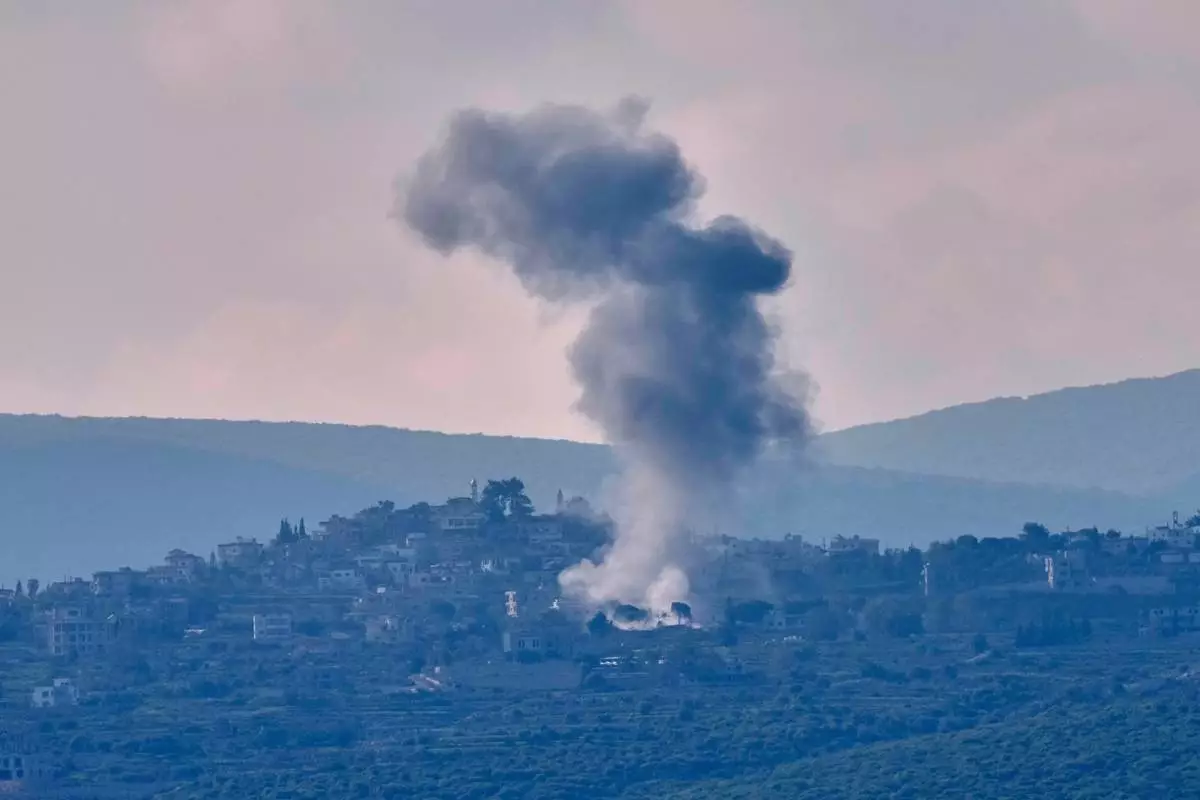
Smoke rises from an Israeli airstrike that hit Zibbikin village as seen from Tyre city, Lebanon, Thursday, March 26, 2026. (AP Photo/Hussein Malla)
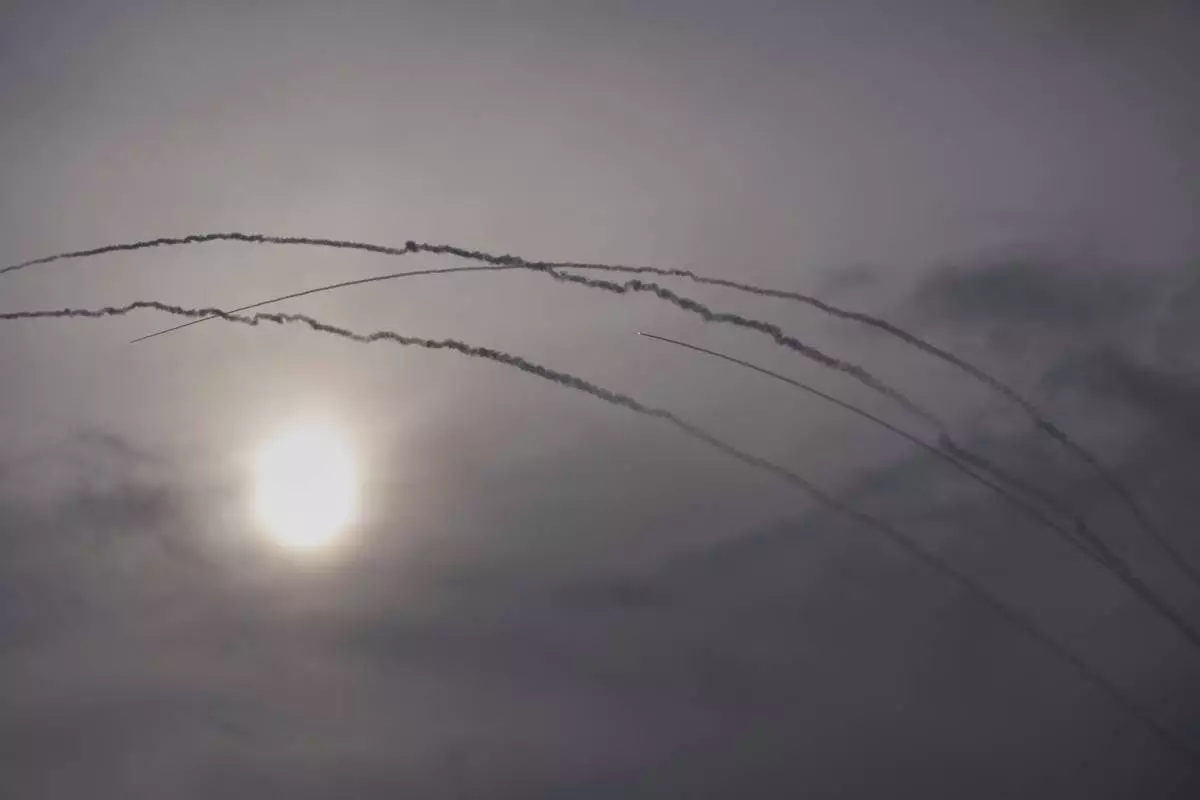
Israeli Iron Dome air defense system fires to intercept missiles from Iran over Tel Aviv, Israel, Thursday, March 26, 2026. (AP Photo/Ohad Zwigenberg) ADDITION: Adding that the missiles came from Iran.
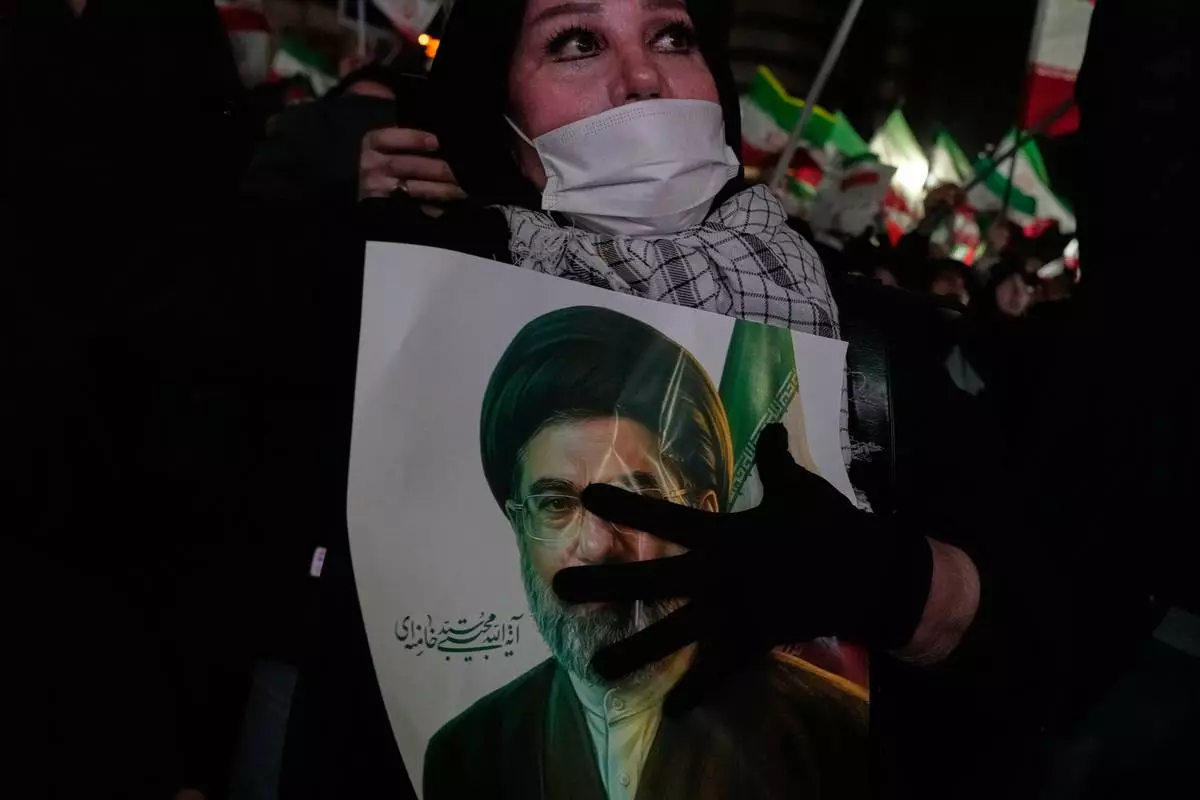
A woman holds a picture of the Iranian Supreme Leader Ayatollah Mojtaba Khamenei during a pro-government gathering in a square in western Tehran, Iran, Wednesday, March 25, 2026. (AP Photo/Vahid Salemi)
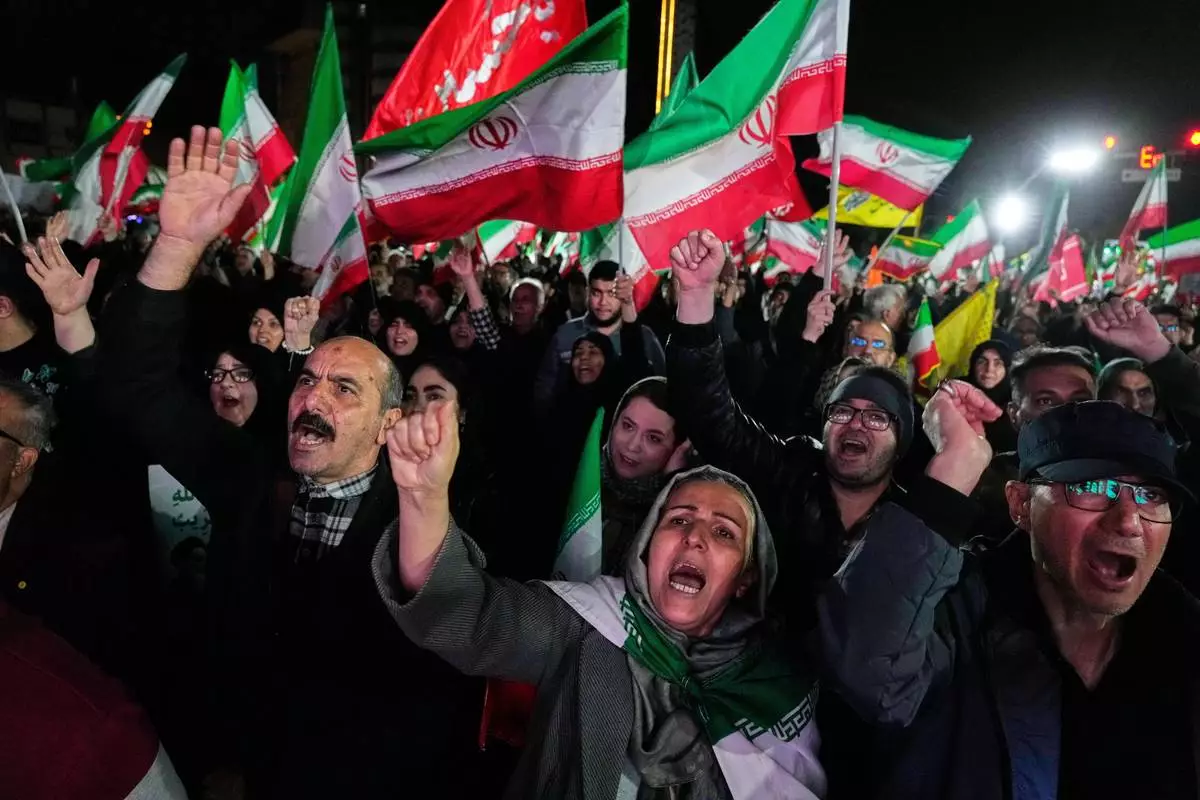
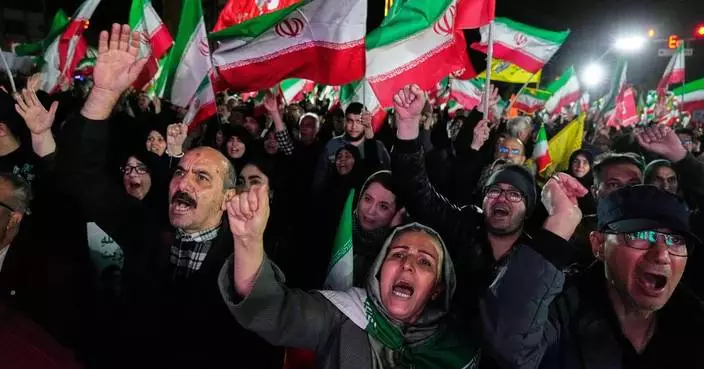
Pro-government supporters chant slogans and wave Iranian flags during a rally, in a square in western Tehran, Iran, Wednesday, March 25, 2026. (AP Photo/Vahid Salemi)
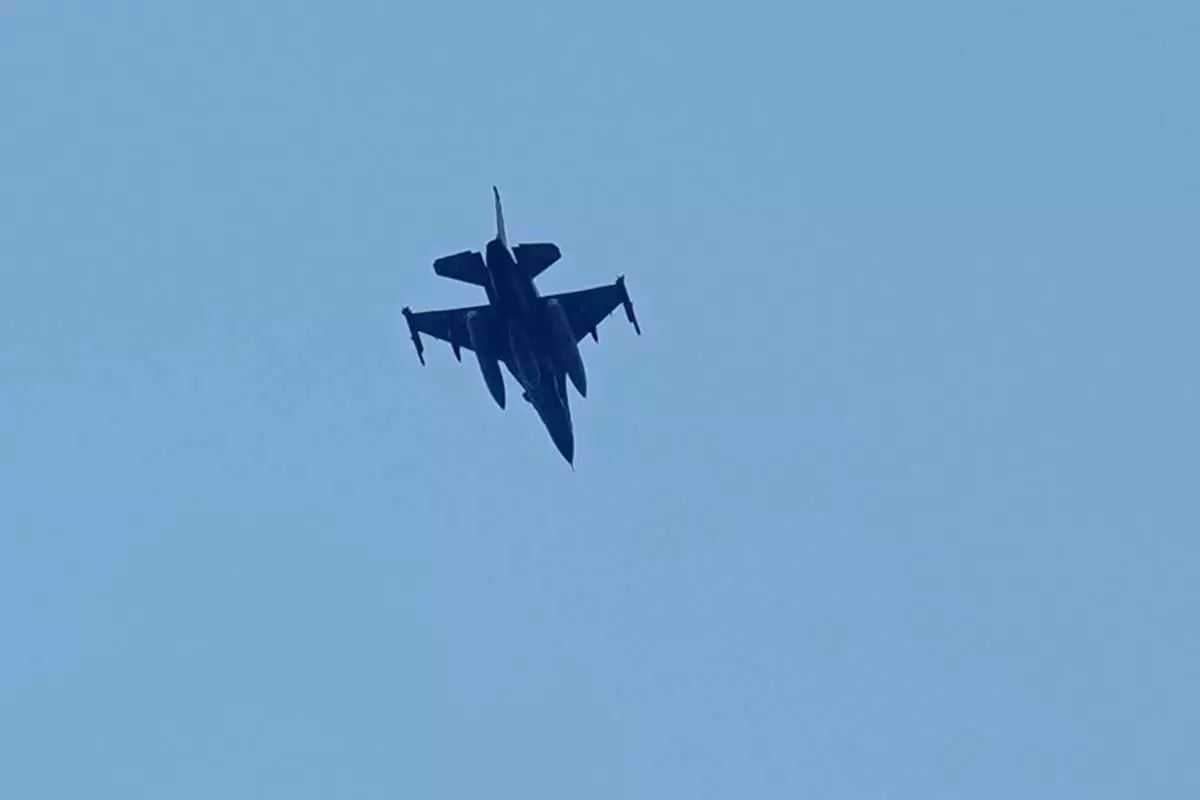
An Israeli warplane flies over the city of Tyre, south Lebanon, Wednesday, March 25, 2026. (AP Photo/Hussein Malla)
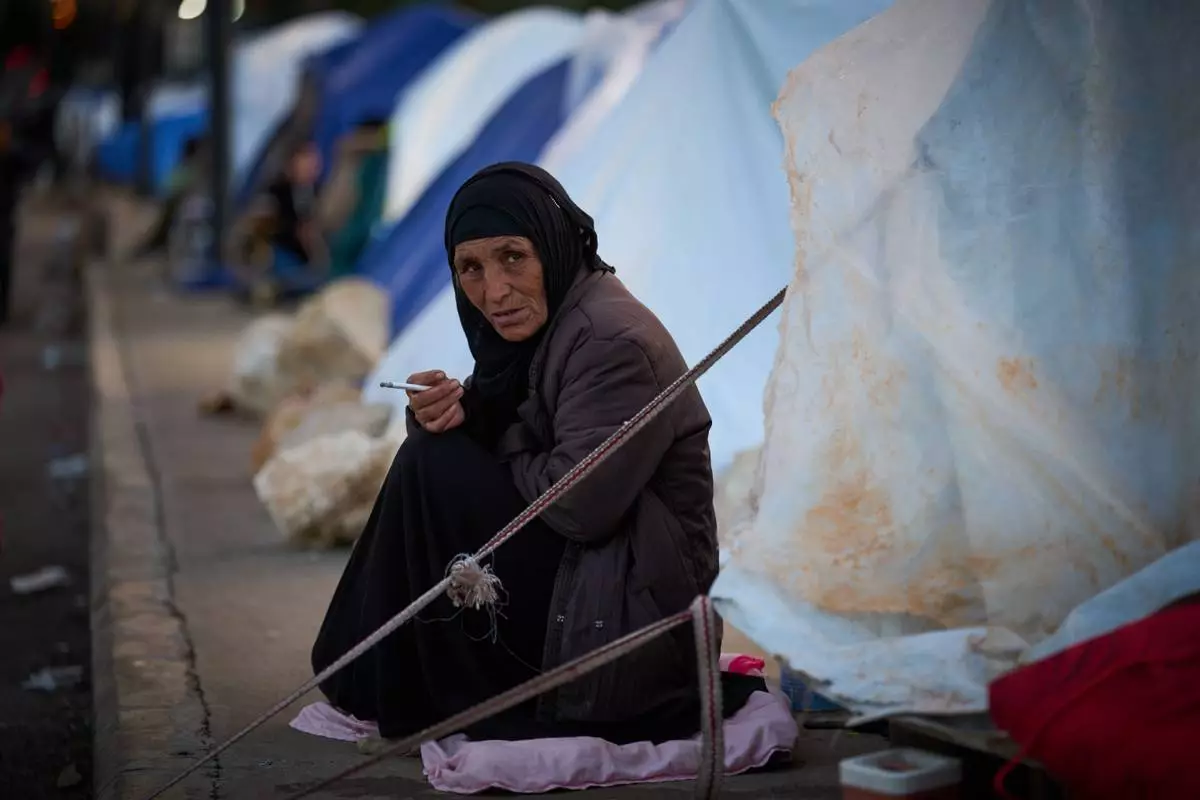
A woman who fled Israeli strikes in southern Lebanon sits outside a tent used as a shelter in Beirut, Lebanon, Wednesday, March 25, 2026. (AP Photo/Emilio Morenatti)
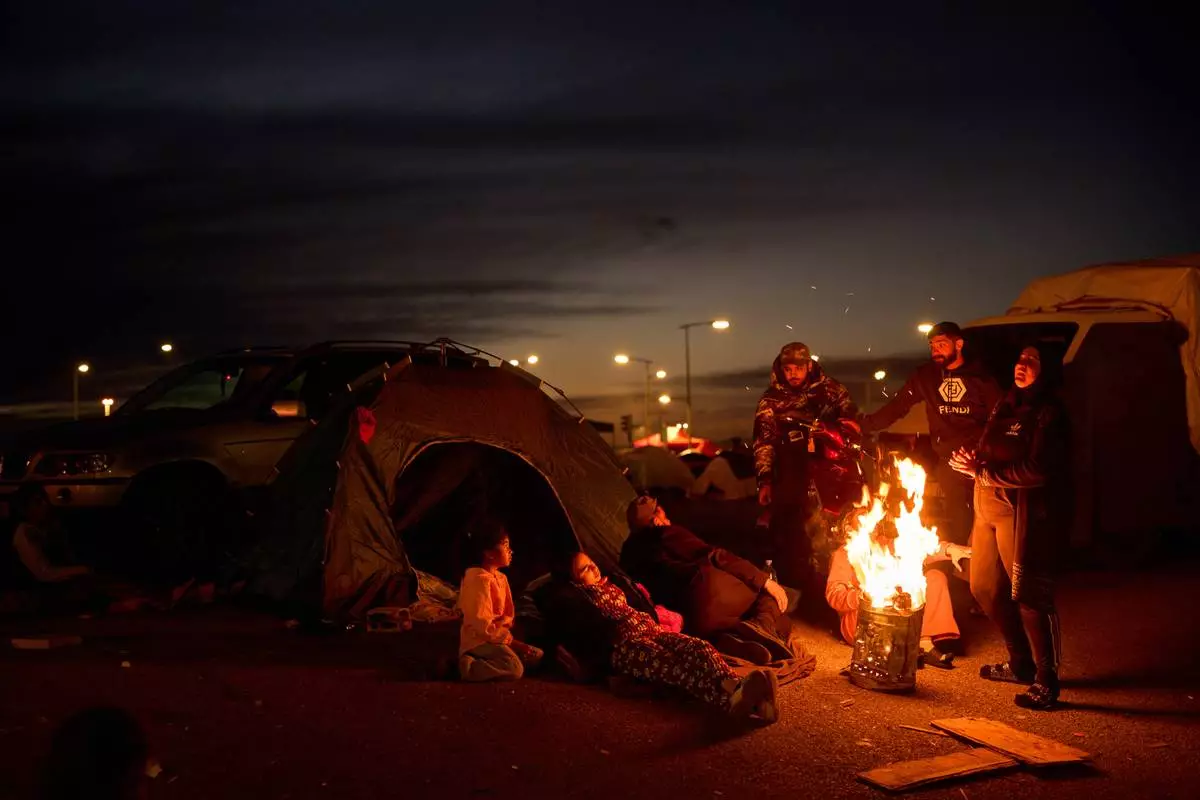
Members of a family, who fled Israeli strikes in southern Lebanon, sit around a bonfire outside a tent used as a shelter in Beirut, Lebanon, Wednesday, March 25, 2026. (AP Photo/Emilio Morenatti)
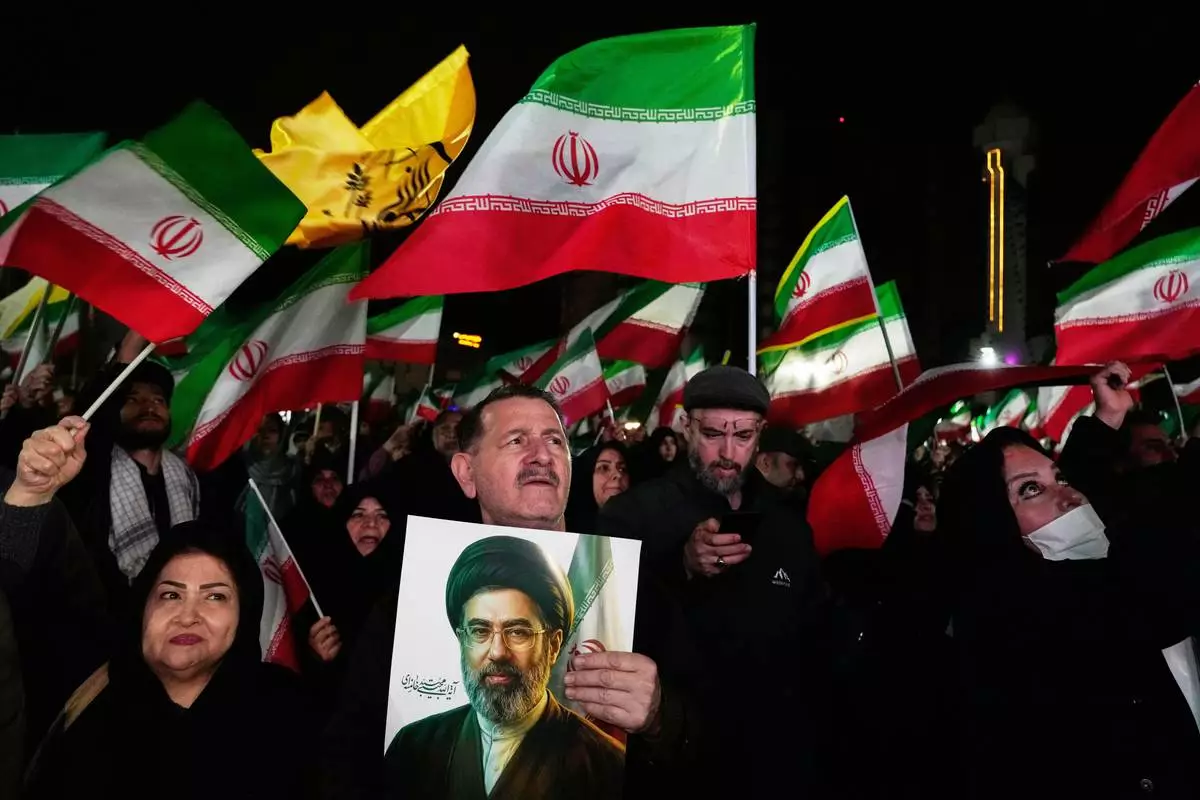
Pro-government supporters wave national flags as one of them holds a picture of the Supreme Leader Ayatollah Mojtaba Khamenei during a rally in a square in western Tehran, Iran, Wednesday, March 25, 2026. (AP Photo/Vahid Salemi)