Skip to Content Facebook Feature Image

AI-powered Benefits Platform Origin Raises $30 Million Series A+, Bringing Total Funding to Over $50 Million to Tackle the Growing Inefficiency of Global Benefits Spend

Business

AI-powered Benefits Platform Origin Raises $30 Million Series A+, Bringing Total Funding to Over $50 Million to Tackle the Growing Inefficiency of Global Benefits Spend
Business

Business

AI-powered Benefits Platform Origin Raises $30 Million Series A+, Bringing Total Funding to Over $50 Million to Tackle the Growing Inefficiency of Global Benefits Spend

2026-03-26 22:49 Last Updated At:03-27 15:42

LONDON--(BUSINESS WIRE)--Mar 26, 2026--

Origin, the AI native platform reshaping how global organisations manage employee benefits, today announced a $30 million Series A+ funding round. This brings the company’s total funding to over $50 million within twelve months. Origin helps organisations to manage one of the largest, least visible areas of workforce spend - global benefits. Its platform identifies inefficiencies, streamlines benefits operations and improves employee experience at scale.

This press release features multimedia. View the full release here: https://www.businesswire.com/news/home/20260326028470/en/

The Series A+ is led by Notion Capital, which also participated in Origin’s Series A round. Felix Capital, which led the Series A round, Acadian Ventures, and all existing investors are participating in the Series A+, reflecting their continued belief not only in the size of the opportunity, but in the team’s ability to execute quickly and deliver value to enterprise customers. The Series A+ round was raised at a higher valuation than the Series A. Alongside this, Origin has secured growth capital from HSBC Innovation Banking UK.

Origin was founded by the leadership team behind Darwin, the global benefits technology company acquired by Mercer in 2016. The Origin team founded the company with a clear mission: to enable organisations to optimise their second largest people cost.

Benefits have been left behind until now

For decades, global benefits have remained fragmented across countries, vendors, brokers, insurers, consultants, retirement providers, and point solutions. Information sits across PDFs, policies, renewals, vendor platforms and local documents in multiple languages. Origin's Benefits Intelligence report found that 20% of global benefits professionals at multinational organisations say it takes more than a month to answer, “What are our coverage limits and exclusions?”, and 20% say it takes more than a month to determine “Why has my benefit spend changed so much over the past 5 years?” The result is a system where organisations struggle to answer basic questions. What are we offering? What are we paying? What value are we getting? Where are we exposed? Where are we wasting money?

Origin addresses this with what it calls the first Enterprise Benefits Intelligence platform, a trusted system of record, insight, and action for global benefits, powered by AI.

Chris Bruce, Co-founder and CEO of Origin, said, “The biggest barrier in global benefits has always been the lack of a single source of truth. It is a problem we have been trying to solve for fifteen years, and it simply was not possible without AI. That is the unlock that makes it possible to digitise one of the most inefficient areas of enterprise spend. Benefits data is complex, scattered, inconsistent, and constantly changing, exactly the kind of problem AI can solve. Origin creates the first trusted source of truth for benefits information, giving organisations visibility into their total global spend for the first time, so they can optimise it, run benefits operations far more efficiently, and deliver a better experience to employees everywhere.”

Designed with the world’s most complex organisations

Origin’s platform has been co-created in partnership with a number of the world’s largest and most complex employers, including Pfizer, Comcast, and BP; organisations that manage benefits across dozens of countries, thousands of vendors and rapidly evolving compliance requirements.

As economic uncertainty continues and healthcare and risk costs rise across many markets, CFOs, CHROs and benefits teams face growing pressure to control spend while protecting employee experience. Where Origin is the platform, Cuido™ is Origin’s AI engine - the first-ever Artificial Benefits Intelligence™ purpose-built for global benefits.

Cuido ingests and structures fragmented data from policies, contracts, renewals, broker reports, vendor platforms, local documents and more, transforming unstructured information into a single, queryable system of record. Trained specifically on global benefits data and regulatory frameworks, it interprets complex policy language, maps coverage and cost structures across countries, and flags duplicated coverage, pricing inconsistencies, governance gaps and unmanaged renewals.

Unlike generic AI tools, Cuido is designed for the operational realities of multinational benefits. It does not simply summarise documents; it connects inventory, spend, risk and performance data to surface actionable insights. Origin sits at the centre of the global benefits operating cycle, managing renewals, vendor relationships, and governance workflows that run continuously across every market a client operates in. This enables leaders to identify inefficient or overlapping spend, rationalise vendors, simplify plan design and embed governance and automation into day-to-day operations.

The impact is measurable. An Origin client consolidated 13 local insurance policies into a single regional plan, achieving a 20% cost saving. By combining domain expertise with purpose-built AI, Origin gives executive teams clear answers to fundamental questions: what are we offering, what are we paying, and where are we exposed.

Investor conviction, deep domain expertise and proven execution

Andy Leaver, Operating Partner of Notion Capital, said, “We back teams with deep domain expertise and the ability to execute. Over the last 12 months, we have seen Origin move with exceptional speed, rapidly acquiring and delivering for complex global clients, while demonstrating a clear, differentiated product vision. We are doubling down because we believe Origin is building the defining platform in this category.”

“Benefits are one of the last major enterprise functions still left behind by the digitisation wave of the last 25 years. AI now makes it possible to build a true system of record and intelligence for benefits, and Origin is leading that shift.”

Antoine Nussenbaum, Co-Founder and Partner at Felix Capital, said, “From our first conversations with the Origin team, we were struck by the scale of the opportunity in global benefits. This is a market that is operationally complex, highly fragmented, and long overdue for transformation. We believe Origin is rebuilding the foundational infrastructure for the global benefits ecosystem, and delivering the benefits intelligence that organisations have been missing”,

“We are proud to continue to partner and support Origin in this next phase of growth, and we have strong conviction in their ability to define this category globally.”

Use of funds, employee experience, integrations, and partner platform

The Series A+ funding will be used to accelerate two major areas of the roadmap:

Jamie Fitt, SVP Growth and Partnerships at Origin, said:

“This investment allows us to expand the functionality that helps our partners deliver superior value to clients through new efficiencies, AI-enabled tools and a future-proofed operating layer for benefits. Origin is strengthening the entire ecosystem so partners can move faster, be more strategic and deliver measurably better outcomes to their clients.”

Sydney MacGregor, Interim Head of Enterprise Software, HSBC Innovation Banking UK, said: “We are excited to support Origin on the next stage of its growth journey as it accelerates the delivery of its platform roadmap. This financing marks an important milestone in Origin’s mission to bring clarity, efficiency, and intelligence to a complex area of enterprise spend. We’re delighted to partner with venture-backed innovators like Origin, helping them as they build and achieve their ambitions.”

The future of benefits will be intelligence-led

Origin believes benefits will increasingly be run like other critical enterprise domains, governed, measurable, insight driven and automated.

About Origin

Origin is an AI native platform helping global organisations to cut benefits costs, create operational efficiency and deliver a superior employee experience. Origin is building the first Enterprise Benefits Intelligence platform, a trusted source of truth and insight that enables HR and finance leaders to understand, govern and optimise benefits across countries, vendors, and plan types.
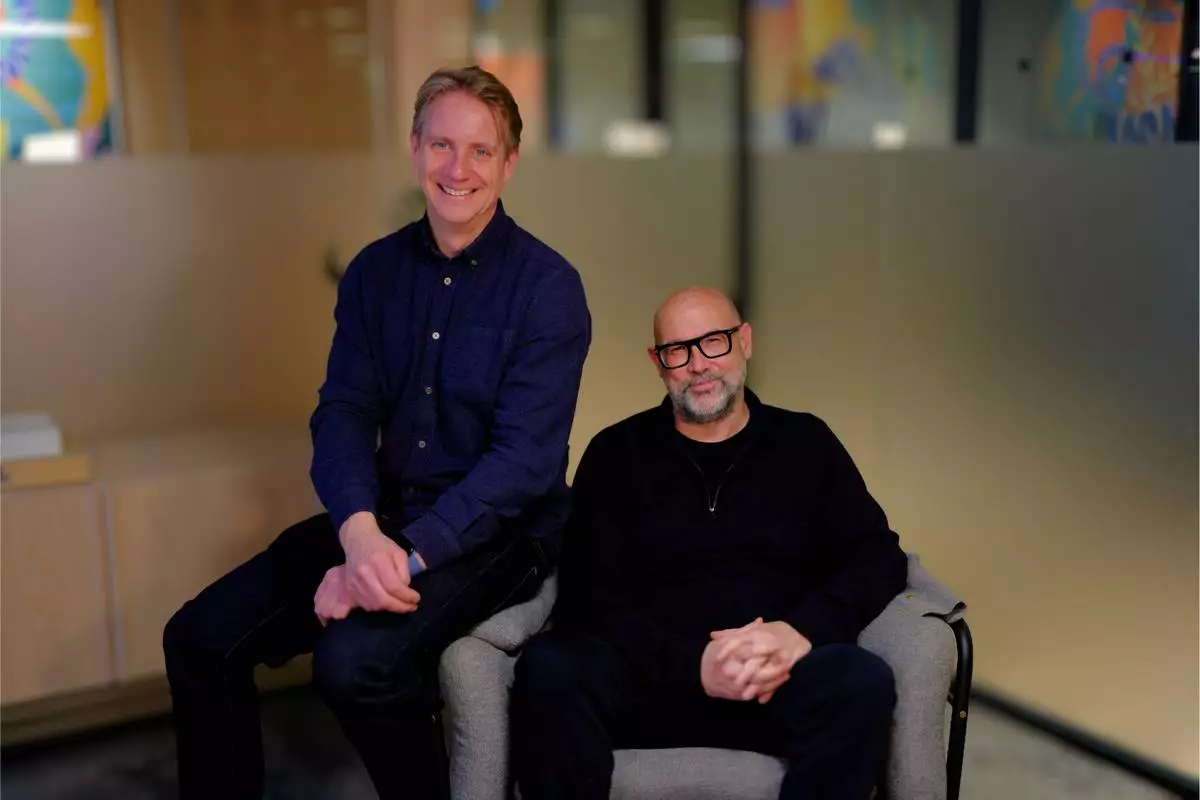
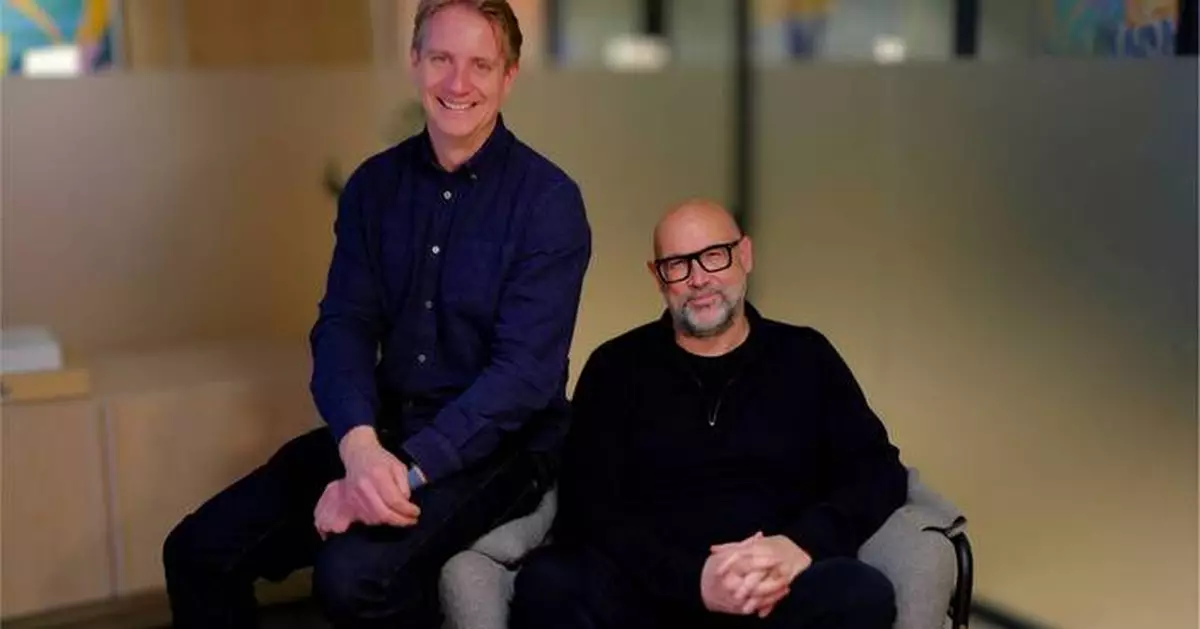
Origin Co-founders, Chris Bruce and Pete Craghill


Origin Co-founders, Chris Bruce and Pete Craghill
STOCKHOLM (AP) — The Nobel Prize in medicine was awarded Monday to three scientists working on the mechanisms the brain uses to switch on, or off, the activity of individual nerve cells.

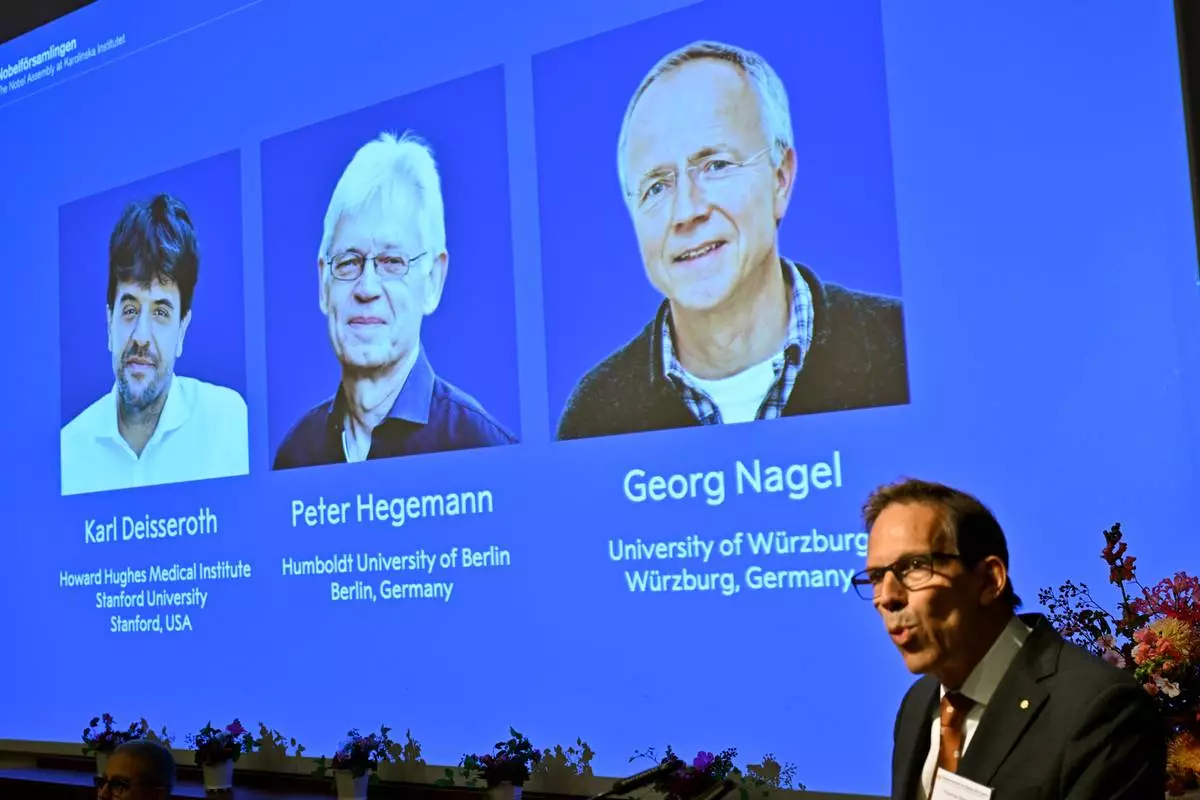
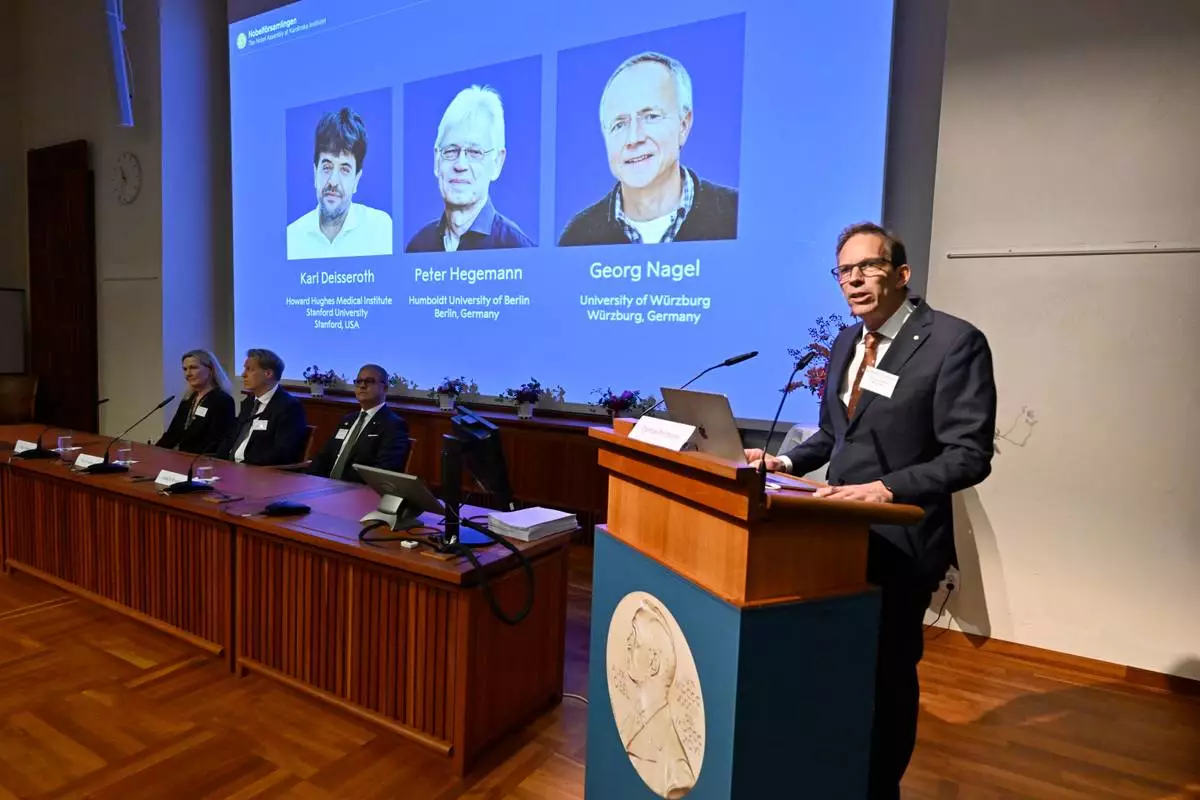
Karl Deisseroth, 54, Peter Hegemann, 71, and Georg Nagel, 73, have carried out research into light-gated ion channels and optogenetics.

The Nobel Assembly lauded their work and said the method is now being used in laboratories around the world to reveal the brain’s mysteries.

The assembly said Deisseroth is based at Stanford University in California, while Hegemann is at Humboldt University in Berlin and Nagel at the University of Würzburg, also in Germany.

Optogenetics opened what the Nobel assembly called a new era in neuroscience, the discovery of a light-controlled switch to turn on and off nerve cells and circuits in the brain to better learn how it works — to start unraveling the pathways that lead to behavior and disease.

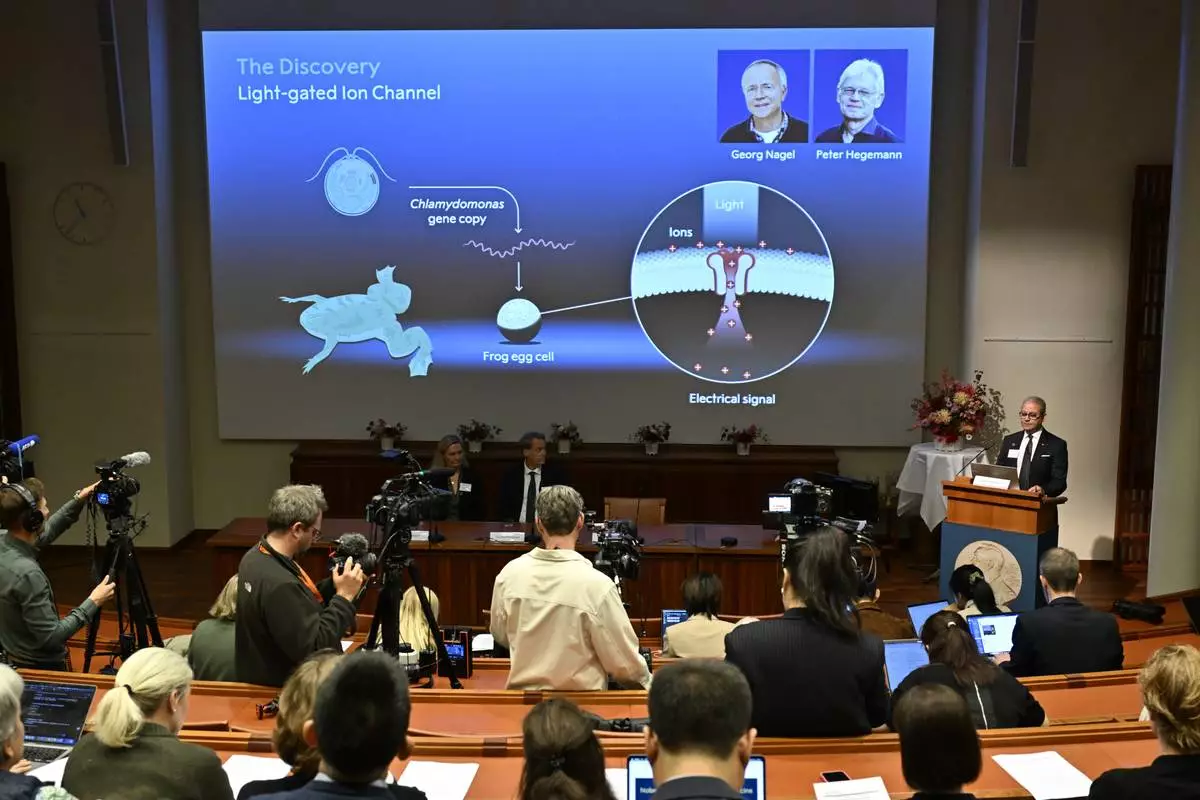
It started when Hegemann explored how a single-celled type of green algae can swim toward light. He and Nagel discovered a particular protein that, when illuminated by blue light, opens a channel to create an electrical impulse. Putting that protein into other cells makes them light-sensitive.

Deisseroth then worked with the gene that controls that protein to create a light-controlled switch for nerve cells in the brains of living mice.

“It’s a very precise set of tools for doing experiments about how the brain works that are pretty hard to do any other way,” said the University of Pittsburgh’s Jeremy Berg. He was at the National Institutes of Health in the early 2000s when it awarded Deisseroff major funding for “this vision of optogenetics that was pretty much spot-on the way it played out.”

Deisseroth, a self-described night owl, said he was up late in his Northern California home working on papers and emailing his students. He had just gone to lie down when he got the call from the Nobel assembly.

“No real sleep was achieved,” he told The Associated Press in a phone call an hour after the announcement.

He said the next task on his to-do list was to pack school lunches for his children, who were still sound asleep.

“That’s my one obligation I have in the next few hours, to make sure I make their sandwiches,” he said.

Thomas Perlmann, the secretary of the medicine committee, said he was able to reach all three winners Monday. The AP's efforts to reach Hegemann and Nagel were not immediately successful.

The prize was announced at the Karolinska Institute in Stockholm, kicking off Nobels week. The prize money this year is 12 million Swedish kronor (about $1.2 million).

Last year, the prize went to three scientists researching the immune system.

Monday's medicine prize is followed by the physics prize on Tuesday, chemistry on Wednesday and literature on Thursday.

After Friday’s peace prize is awarded, the Nobel Memorial Prize in Economic Sciences will be announced on Oct. 12.

The prize money this year is 12 million Swedish kronor (about $1.2 million), whether for an individual, small group of laureates or organization.

Neergaard reported from Washington and Ramakrishnan reported from New York. Stefanie Dazio in Berlin contributed to this report.

AP Nobel Prizes: https://apnews.com/hub/nobel-prizes

Karl Deisseroth, one of the three recipients of the 2026 Nobel Prize in medicine, speaks at home on Monday, Oct. 5, 2026, in Stanford, Calif. (AP Photo/Noah Berger)

Karl Deisseroth, one of the three recipients of the 2026 Nobel Prize in medicine, speaks at home on Monday, Oct. 5, 2026, in Stanford, Calif. (AP Photo/Noah Berger)

Karl Deisseroth, one of the three recipients of the 2026 Nobel Prize in medicine, smiles at home on Monday, Oct. 5, 2026, in Stanford, Calif. (AP Photo/Noah Berger)

Karl Deisseroth, one of the three recipients of the 2026 Nobel Prize in medicine, smiles at home on Monday, Oct. 5, 2026, in Stanford, Calif. (AP Photo/Noah Berger)

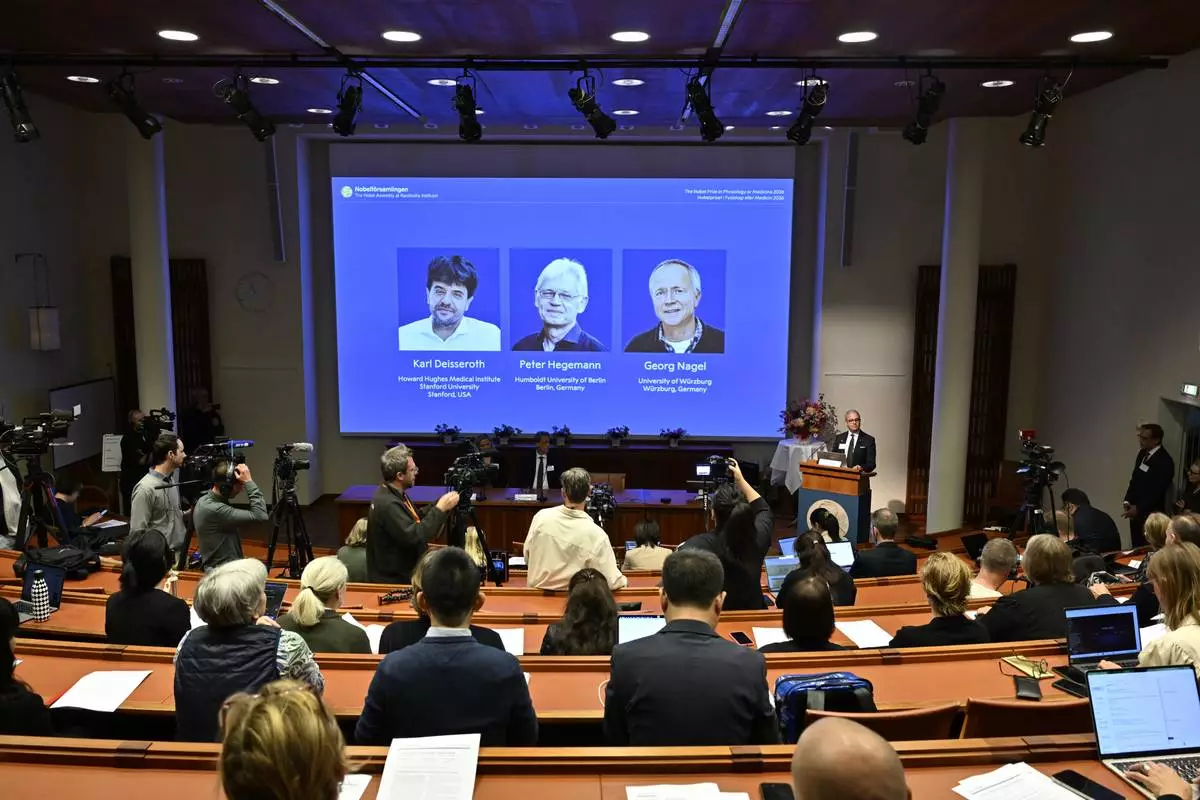
Portraits of Karl Deisseroth, Peter Hegemann and Georg Nagel are shown on the screen as they are awarded the 2026 Nobel Prize in Physiology or Medicine, as announced during a press conference at the Nobel Forum at Karolinska Institutet in Stockholm, Sweden, Oct. 5, 2026. (Pontus Lundahl/TT News Agency via AP)

Portraits of Karl Deisseroth, Peter Hegemann and Georg Nagel are shown on the screen as they are awarded the 2026 Nobel Prize in Physiology or Medicine, as announced during a press conference at the Nobel Forum at Karolinska Institutet in Stockholm, Sweden, Oct. 5, 2026. (Pontus Lundahl/TT News Agency via AP)

Portraits of Peter Hegemann, top right, and Georg Nagel are shown on the screen as they and Karl Deisseroth are awarded the 2026 Nobel Prize in Physiology or Medicine, as announced during a press conference at the Nobel Forum at Karolinska Institutet in Stockholm, Sweden, Oct. 5, 2026. (Pontus Lundahl/TT News Agency via AP)

Portraits of Peter Hegemann, top right, and Georg Nagel are shown on the screen as they and Karl Deisseroth are awarded the 2026 Nobel Prize in Physiology or Medicine, as announced during a press conference at the Nobel Forum at Karolinska Institutet in Stockholm, Sweden, Oct. 5, 2026. (Pontus Lundahl/TT News Agency via AP)

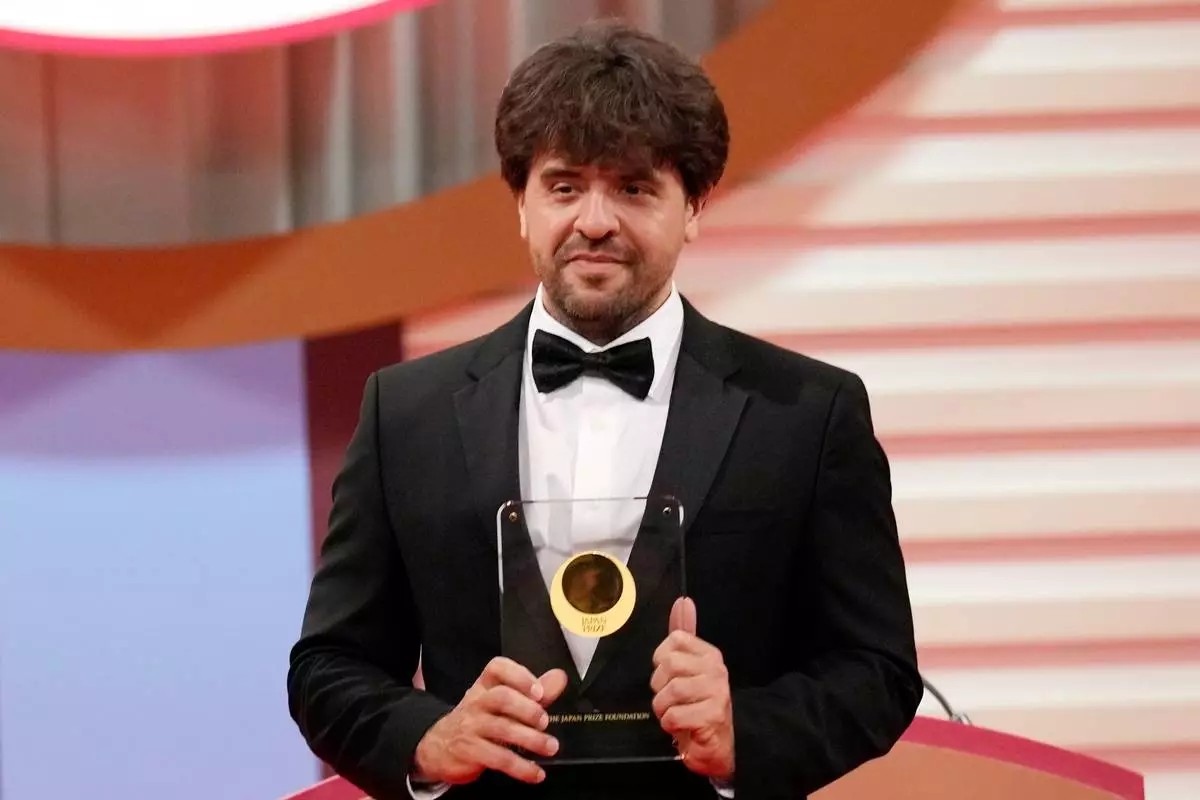
FILE - U.S. scientist Karl Deisseroth, professor of Departments of Bioengineering and Psychiatry at Stanford University, shows his trophy for "Life Sciences" field during the Japan Prize presentation ceremony Thursday, April 13, 2023, in Tokyo. (AP Photo/Eugene Hoshiko, File)

FILE - U.S. scientist Karl Deisseroth, professor of Departments of Bioengineering and Psychiatry at Stanford University, shows his trophy for "Life Sciences" field during the Japan Prize presentation ceremony Thursday, April 13, 2023, in Tokyo. (AP Photo/Eugene Hoshiko, File)

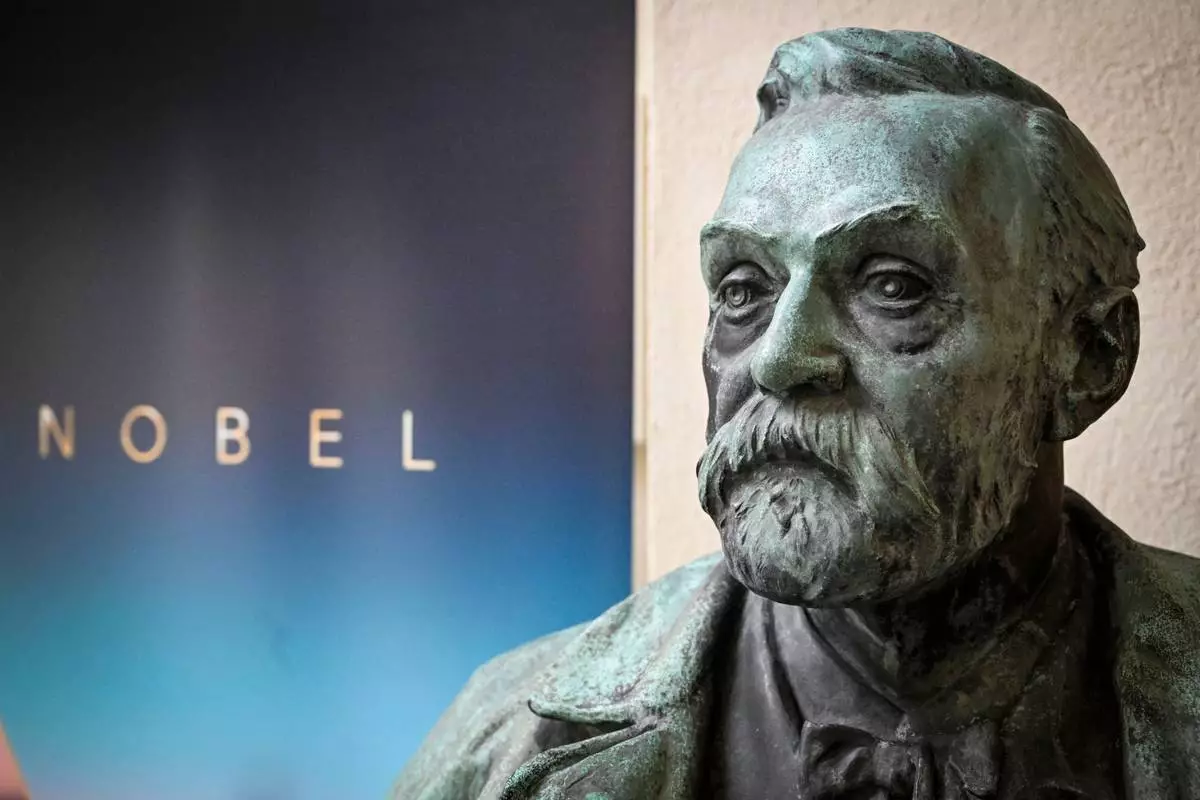
FILE - A bust of Alfred Nobel on display following a press conference to announce the Nobel Committee for Physiology or Medicine at the Karolinska Institute in Stockholm, Sweden, on Oct. 3, 2022. (Henrik Montgomery/TT News Agency via AP, File)

FILE - A bust of Alfred Nobel on display following a press conference to announce the Nobel Committee for Physiology or Medicine at the Karolinska Institute in Stockholm, Sweden, on Oct. 3, 2022. (Henrik Montgomery/TT News Agency via AP, File)

Karl Deisseroth, Peter Hegemann and Georg Nagel are shown on the screen as they are awarded the 2026 Nobel Prize in Physiology or Medicine, as announced during a press conference at the Nobel Forum at Karolinska Institutet in Stockholm, Sweden, Oct. 5, 2026. (Pontus Lundahl/TT News Agency via AP)

Karl Deisseroth, Peter Hegemann and Georg Nagel are shown on the screen as they are awarded the 2026 Nobel Prize in Physiology or Medicine, as announced during a press conference at the Nobel Forum at Karolinska Institutet in Stockholm, Sweden, Oct. 5, 2026. (Pontus Lundahl/TT News Agency via AP)

Portraits of Karl Deisseroth, Peter Hegemann and Georg Nagel are shown on a screen as they are awarded the 2026 Nobel Prize in Physiology or Medicine, as announced during a press conference at the Nobel Forum at Karolinska Institutet in Stockholm, Sweden, Oct. 5, 2026. (Pontus Lundahl/TT News Agency via AP)

Portraits of Karl Deisseroth, Peter Hegemann and Georg Nagel are shown on a screen as they are awarded the 2026 Nobel Prize in Physiology or Medicine, as announced during a press conference at the Nobel Forum at Karolinska Institutet in Stockholm, Sweden, Oct. 5, 2026. (Pontus Lundahl/TT News Agency via AP)

FILE - U.S. scientist Karl Deisseroth, professor of Departments of Bioengineering and Psychiatry at Stanford University, shows his trophy for "Life Sciences" field during the Japan Prize presentation ceremony Thursday, April 13, 2023, in Tokyo. (AP Photo/Eugene Hoshiko, File)

FILE - U.S. scientist Karl Deisseroth, professor of Departments of Bioengineering and Psychiatry at Stanford University, shows his trophy for "Life Sciences" field during the Japan Prize presentation ceremony Thursday, April 13, 2023, in Tokyo. (AP Photo/Eugene Hoshiko, File)

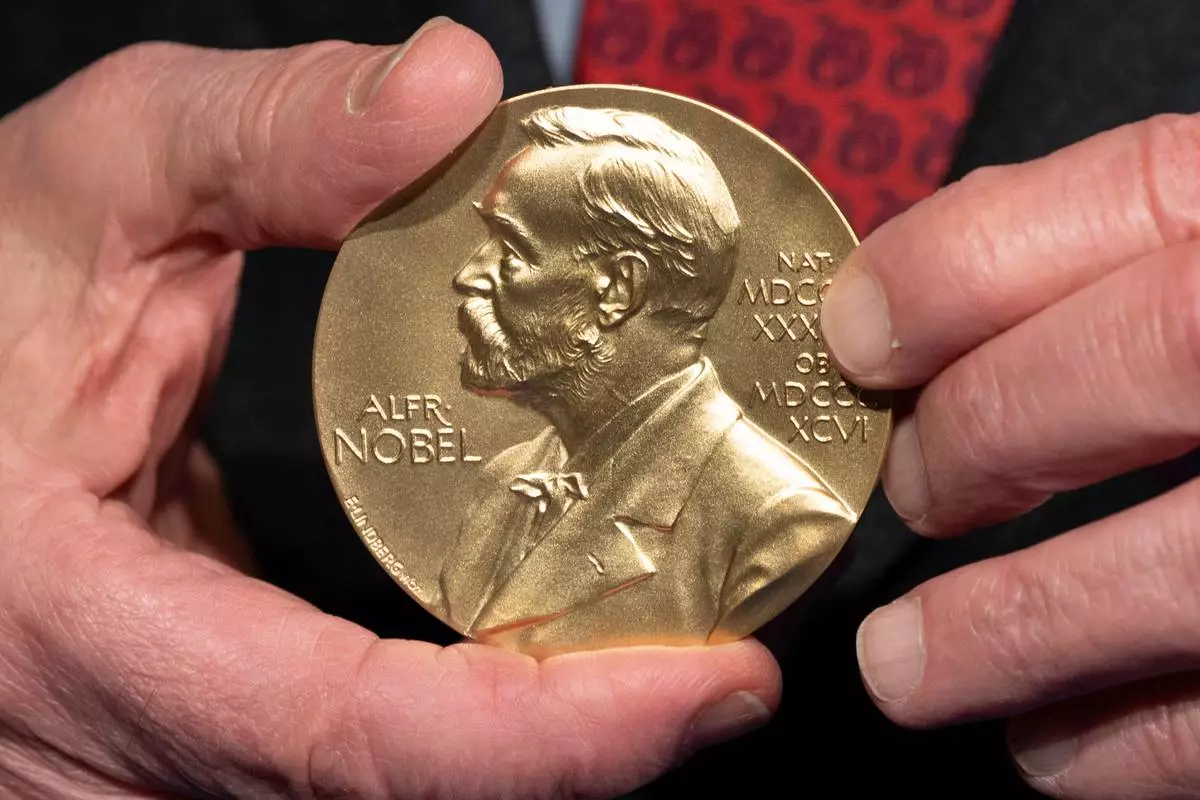
FILE - A close-up view of a Nobel Prize medal at the National Institutes of Health (NIH) in Bethesda, Md., Dec. 8, 2020. (AP Photo/Jacquelyn Martin, File)

FILE - A close-up view of a Nobel Prize medal at the National Institutes of Health (NIH) in Bethesda, Md., Dec. 8, 2020. (AP Photo/Jacquelyn Martin, File)

Recommended Articles