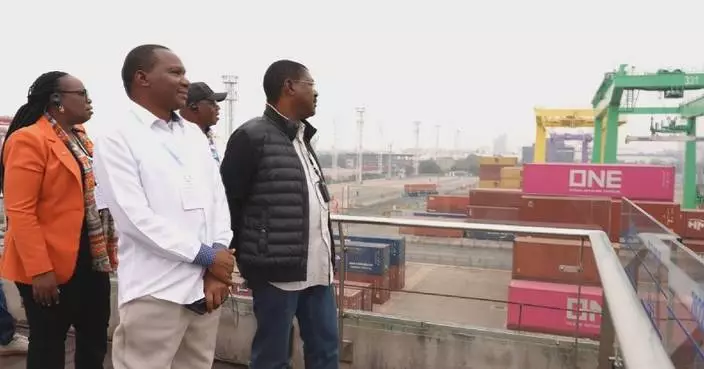
The ripple effects of the U.S.-Israel-Iran conflict are hitting South African fruit exporters, leaving containers of fruits bound for the Gulf region stuck in transit.
The crisis is threatening a 1.3-billion-U.S.-dollar export market to the Middle East. Currently, an estimated 167 containers of South African stone fruit are reported to be stranded at sea, risking spoilage. The fresh produce was intended for Gulf markets.
Exporters are attempting to divert shipments to alternative destinations, but their efforts are hindered by varying regulatory standards, limited capacity in alternate markets and additional logistics costs.
Ernst van Biljon, head lecturer in Supply Chain Management at the IMM Graduate School in Johannesburg, noted that the perishable nature of the fruits makes them especially vulnerable to delays during extended shipping times.
"We always talk about maintaining the cold chain, literally from the farmer through to the cold chain containers. Those containers on both container trucks and on ships need to maintain a certain level of temperature, humidity, otherwise you will have spoilage because it takes quite some time for that fruit to reach its destination. Certainly, for the fruit exporters, it is not a good situation at the moment. The Middle East itself has become a very large growing market for us, also largely in recent years due to the tariff issues with the U.S., so we have about 90 percent of our fruit shipments bound for the Middle East that have been disrupted," he said.

South Africa's fruit export hit by US-Israeli war on Iran
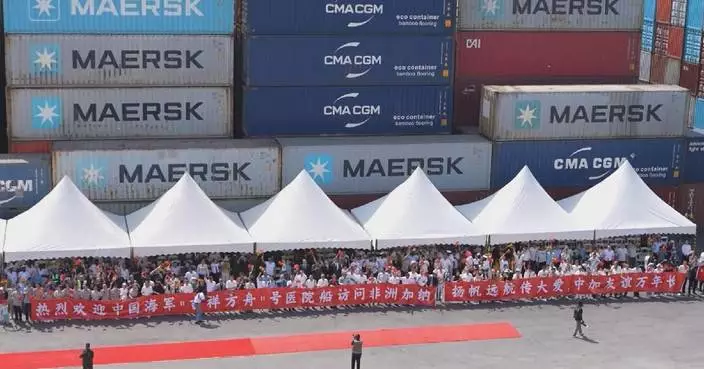
Kenya's National Assembly Speaker Moses Wetang'ula has highlighted the transformative impact of infrastructure cooperation with China, noting how projects like the Mombasa-Nairobi Standard Gauge Railway and the Port of Lamu are reshaping trade and creating new opportunities for local talent.
Built by the China Road and Bridge Corporation, the roughly 480-kilometer railway links the coastal city of Mombasa with the capital Nairobi, cutting passenger travel to under five hours and speeding the flow of cargo to and from the country's main seaport. The Port of Lamu, on Kenya's northern coast, is the centerpiece of a planned transport corridor connecting Kenya with South Sudan and Ethiopia.
Wetang'ula made the remarks in an interview with China Media Group (CMG) in north China's Tianjin Municipality, where he attended the 2026 Legislators Forum for Friendly Exchanges.
He stressed that a port alone cannot drive an economy without proper supporting infrastructure. The Port of Mombasa, he said, serves a vast and resource-rich hinterland, yet cannot function effectively without an efficient rail system, a well-developed road network and adequate airport links.
For decades, he noted, the port had relied on an aging railway built in 1896 by the colonial authorities before Kenya's independence. It was against this backdrop that Kenya sought a partnership with China.
"With the changing times, the growth of international trade, the expansion of our exports, the growing volume of our imports and our neighbors imports, it came to our attention that, one, we need to expand in the port of Mombasa, which we have done consistently. But when we found that the room for expansion was running out, we teamed up with China as a partner to develop a new port, port of Lamu, better located, with a natural deep harbor. That means no dredging. And it is now operational. Second, it dawned upon us that for us to have quick movement of stocks, goods and everything, you need a modern efficient rail line. We then engage with China to develop a standard gauge railway. From Mombasa to Nairobi and beyond to Uganda. This will then serve the new port of Lamu, the old port of Mombasa and any other requirements for export facilities that we may create along our coastline," he said.
The speaker also highlighted the human dimension of the cooperation, recalling that Chinese experts had worked alongside their Kenyan counterparts on the railway until local staff were ready to take over.
"Chinese experts who are on the rail line working hand in hand with Kenyans. To pilot the trains from Mombasa to Nairobi, whether there are goods trains or passenger [trains]. The last time I used the standard gauge railway from Nairobi to Mombasa, that's in December 2024, there were no more Chinese experts. The transition was over. And now we have Kenyan train pilots with Kenyan coxswains. We have Kenyan attendants on the train. And how did it happen? A part of the engagement we had with China was to train our young people, so we recruited the young Kenyans who came to China on a class program to train as train drivers or train captains, as train attendants and in various sections where there is goods or passengers. And they are really good. They're really good, because I have tested their services and their services are good," he said.
Over the years, Chinese-built projects -- from the Mombasa-Nairobi railway to the Port of Lamu and the Nairobi Expressway -- have helped Kenya and its neighbors build more convenient trade corridors. Cooperation between the two countries has since expanded from infrastructure into manufacturing, technology and talent development, delivering tangible benefits to both peoples.
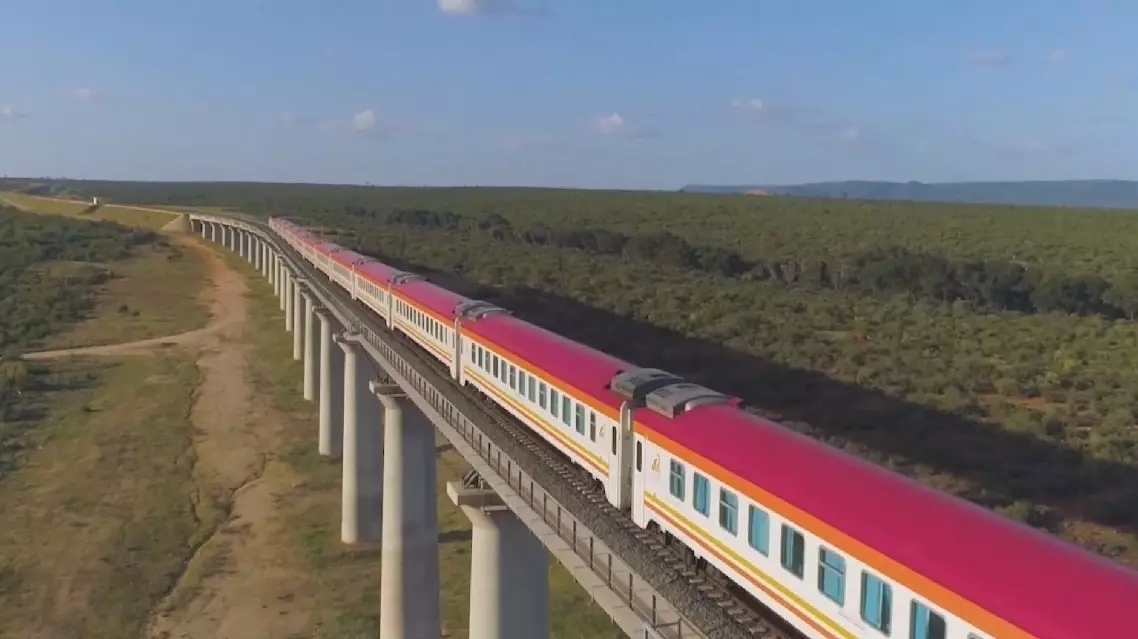
Kenya's National Assembly Speaker highlights transformative infrastructure cooperation with China