As spring warmth sweeps across China, two remarkable wetlands are witnessing nature's generosity, with thousands of migratory birds flocking to the skies in synchronized flight, and filling the air with their calls.
At the Hongjiannao Lake, China's largest desert freshwater lake located on the boundaries between the Inner Mongolia Autonomous Region and Shaanxi Province, the first wave of northward migratory birds has arrived at the oasis nestled on the southern edge of the Mu Us Desert.
Swan geese, graylag geese, common coots, red-breasted mergansers, mallard ducks, and grey herons are among the species gradually making their appearance.
Flocks of migratory birds are seen gliding gracefully across the shimmering water surface, with their calls echoing through the crisp air, transforming the once-silent wetland into a bustling avian sanctuary.
Meanwhile, a breathtaking phenomenon known as "bird waves" recently unfolded at the Wolong Lake in Kangping County of Shenyang City in northeast China's Liaoning Province.
Tens of thousands of migratory birds are clustering in the sky above the lake, swirling and diving in seamless formations that ripple like waves across the horizon.
The spectacular display attracts birdwatchers from across the region, who gather with cameras in hand to capture the ephemeral beauty of spring migration.
The Wolong Lake sits along the East Asian-Australasian Flyway, one of the world's major migratory bird routes. From mid-March to late April, the lake experiences the peak of spring migration, as birds journey from their wintering grounds to breeding habitats further north.
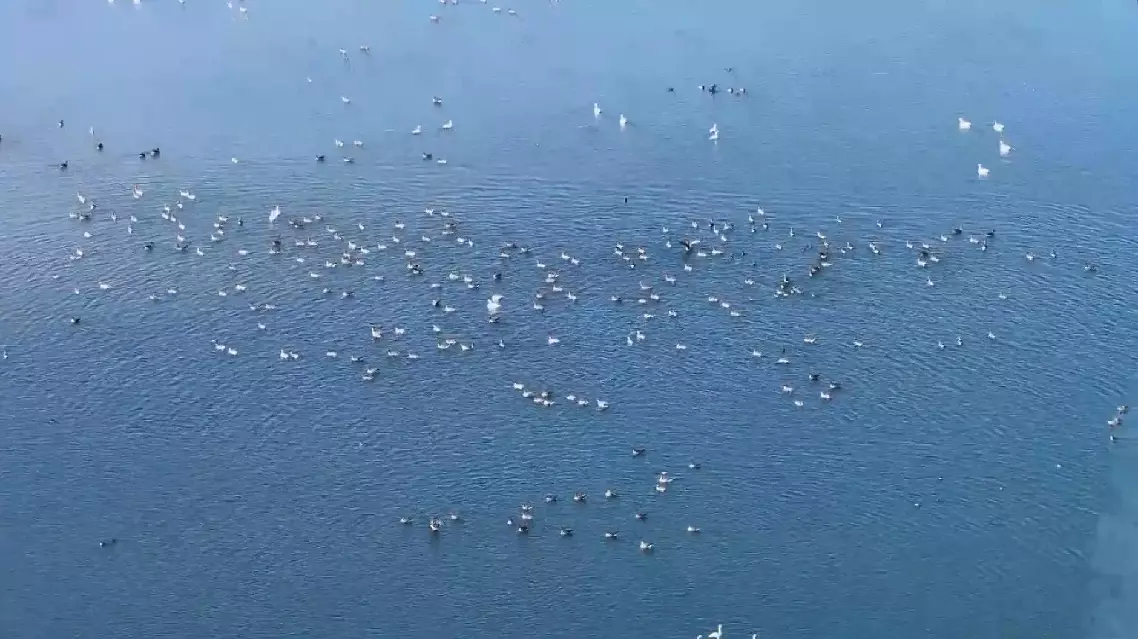
Spring migration brings avian spectacle to China's lakes
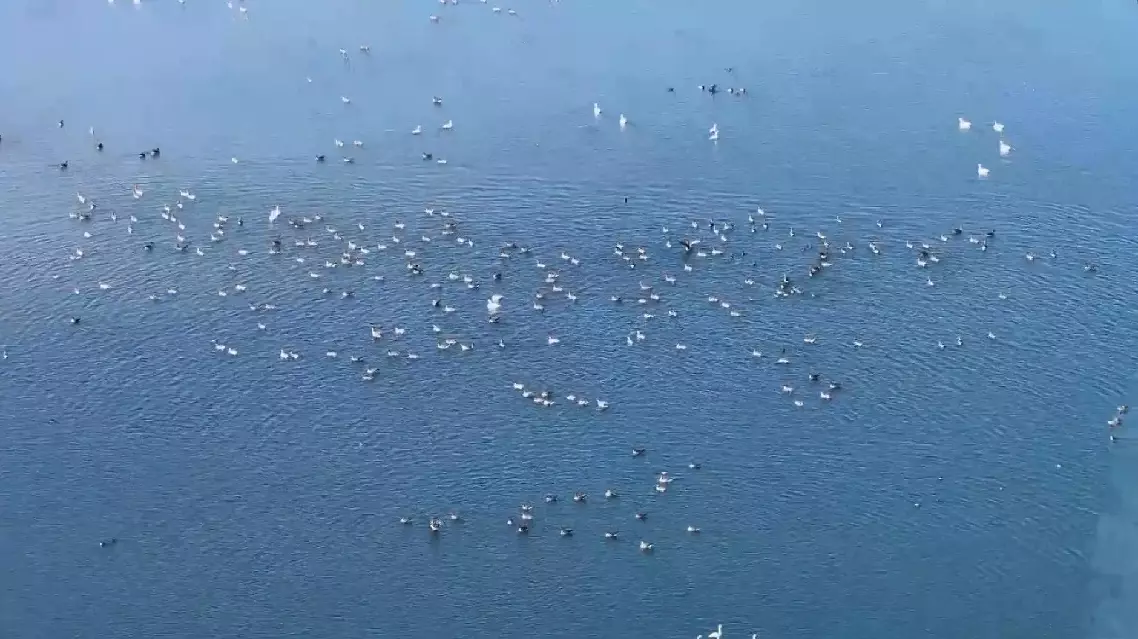
Spring migration brings avian spectacle to China's lakes
China's Minister of Commerce Wang Wentao outlined the key priorities of the 32nd Asia-Pacific Economic Cooperation (APEC) Ministers Responsible for Trade Meeting, which opened on Friday in Suzhou, East China's Jiangsu province.
In an interview with CGTN ahead of the two-day meeting, Wang said free trade, digital cooperation and green economy are high on the agenda of the meeting.
"The key areas include advancing regional economic integration and the Free Trade Area of the Asia-Pacific, supporting the World Trade Organization (WTO) in strengthening digital cooperation and developing green economy. At present, the international situation is marked by intertwined turbulence and chaos, with intensified geopolitical instability. The rise of unilateralism and protectionism poses serious challenges to the international economic and trade order, disrupting global and Asia-Pacific development. Against this backdrop, all parties have higher expectations for this trade ministers' meeting, hoping that it can build consensus and deliver outcomes," Wang said.
This year marks China's third time hosting the APEC meetings and the 35th anniversary of its membership.
By 2025, China had become the largest trading partner of 13 APEC economies. Trade between China and APEC economies reached 3.7 trillion U.S. dollars, accounting for 57.8 percent of China's total foreign trade.
China has signed 24 free trade agreements or economic and trade arrangements with 31 countries and regions, including 15 APEC economies. In recent years, China has also completed upgrades of free trade agreements with APEC economies such as Singapore and Peru.
The minister said that China has always been a firm supporter and an important contributor to APEC.
"We have actively shared our vast market and development opportunities with all parties. China's door to the world will only open wider and wider. Facing the common challenges, China will continue to fulfill its responsibilities as a major country, further deepen reform, expand high-standard opening-up, and continue to provide new opportunities for the Asia-Pacific region and the world with its new achievements in Chinese modernization," the minister said.

China's Commerce Minister outlines priorities for 32nd APEC trade ministers' meeting