BEIRUT (AP) — A United Nations inquiry said Friday that there is “no indication” Syria has investigated violations its forces committed during sectarian clashes last summer in which at least 1,700 people died, the vast majority from the Druze religious minority.
In a scathing report, the U.N. Independent International Commission of Inquiry on the Syrian Arab Republic urged Syria’s government to investigate the leadership of its security forces that allowed or organized sectarian attacks against the Druze community.
The report estimates about 200,000 people were displaced in the violence in Sweida, the heartland of Syria's Druze community. Among the dead were almost 200 women and children.
In mid-July, armed groups affiliated with Druze spiritual leader Sheikh Hikmat al-Hijri clashed with local Bedouin clans, spurring intervention by government forces who effectively sided with the Bedouins. Targeted sectarian attacks, first against the religious minority group, and later the Bedouin community, and a series of abductions further soured ties.
Syrian President Ahmad al-Sharaa has vowed to investigate the events and hold perpetrators on all sides to account, including government forces.
U.N. investigators spent weeks in Syria, interviewing more than 400 survivors, officials, and alleged perpetrators. They visited affected areas, including those under government control and those under de facto rule of an Israeli-backed umbrella group of local armed Druze factions.
Damascus needs to address whether “certain practices are tolerated” within elements of its security agencies, the report said, referring to the violence. It called for identifying members of the leadership who allowed it to happen and removing them.
Armed tribal fighters from other parts of the country mobilized into Sweida to support government forces and elements of the authorities appeared “unwilling or unable” to confront them, the report said.
The dayslong summer clashes in Sweida marked a setback for al-Sharaa, who has been striving to assert his government’s full authority across the war-torn country and appeal to Syria’s minorities.
Though some prisoner swaps have taken place, there has been no viable reconciliation. Human rights group criticize Damascus for the lack of viable accountability measures for attacks on civilians.
The report described “widespread looting and systematic burning” during the government-led advance, as well as killings and abductions of civilians. Tribal fighters targeted almost every home in 35 villages in the province that were mixed or Druze-majority.
“Particularly, the Druze population has been subjected to severe sectarian violence, leading to massive displacement that is expected to persist for an extended period,” the report said.
Some of the bodies were found months after the ceasefire, some on streets or in fields, and in other instances burned or mutilated, the report said.
“Nearly all Druze religious sites in those villages ... were looted, burned, and vandalized,” according to the report. It added that three houses of worship were burned, and another one looted and vandalized.
Retaliatory attacks against Bedouin civilians largely in Sweida province's western countryside took place. The report said while most documented cases took place amid the hostilities, there were many cases where the attacks “appeared to be deliberately directed at civilian areas.”
The report mentions Bedouin civilians, including children and elderly people, being shot and killed while fleeing on foot, and a case where two men's bodies were left hanging at the gate of a village for days. Four mosques were also targeted.
The scale of the violence overwhelmed hospitals both in Sweida and neighboring Daraa province, as hundreds of bodies were brought in during the spiraling violence, with no room in the morgue. Many of the bodies were severely burned while others were left outside and “likely scavenged by wild animals before being found.”
“Hospital staff and first responders were forced to allow the burial of bodies before they could be identified; while safeguarding records and images of where the body was found and when, and of remaining clothing or jewelry, body marks or tattoos where available, to aid subsequent identification,” the report said.
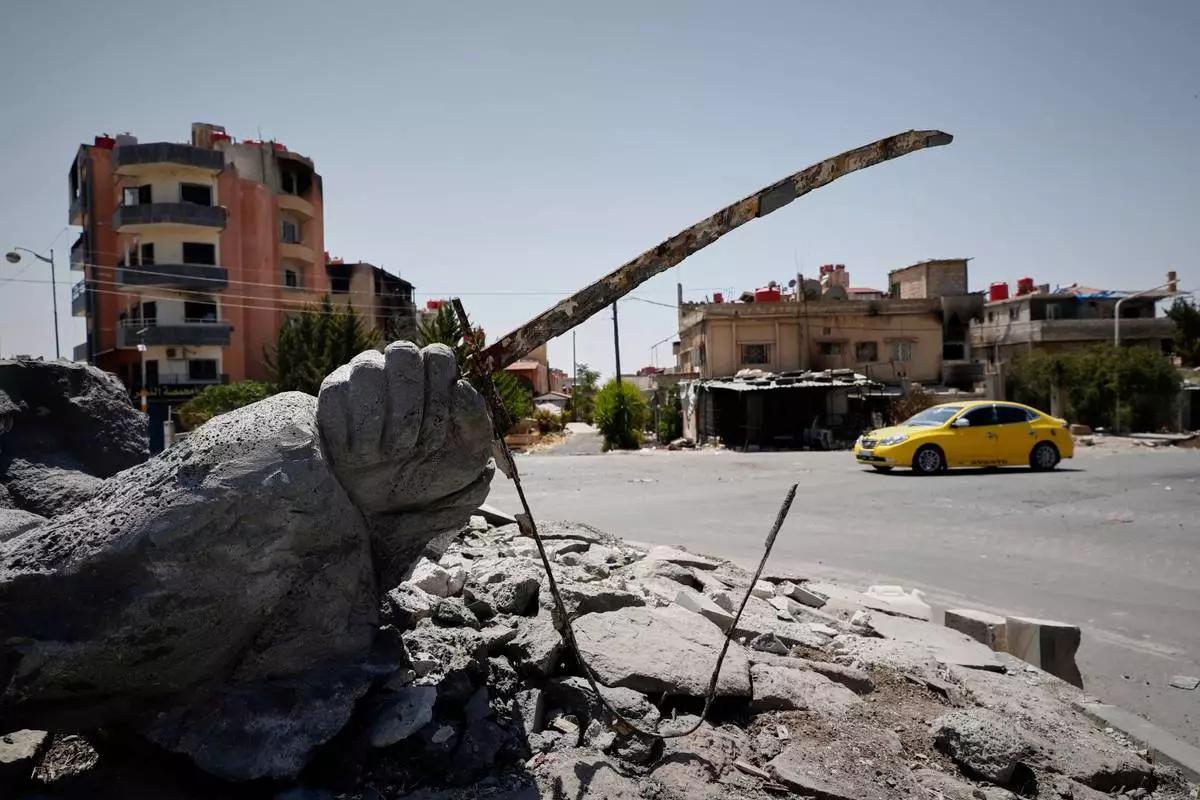
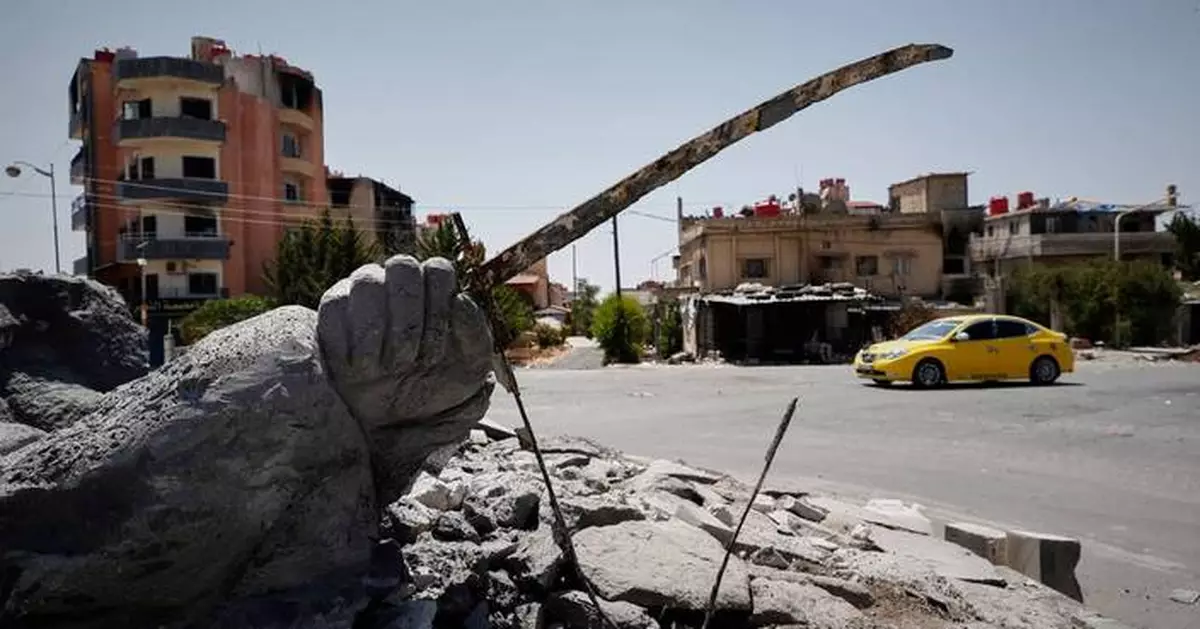
FILE - A car drives by a destroyed statue in the Druze-majority town of Sweida, Syria, Friday, July 25, 2025. (AP Photo/Omar Sanadiki, File)
KILPISJÄRVI, Finland (AP) — As bubbles rippled across the frigid Finnish lake, diver Daan Jacobs emerged from a hole carved out of the thick, crackling ice.
The journey had taken him 8 meters (26 feet) beneath the surface, where sunlight filtered through the Arctic ice and fish swam around a rock formation. It's a remote place few will ever see, especially in winter, when snow blankets the ice and temperatures on land approach minus 40 degrees in both Celsius and Fahrenheit.
But Jacobs, a biodiversity adviser in the Netherlands, is one of a growing number of fortunate underwater explorers.
He was part of the Polar Scientific Diving class in the far north of Finland earlier this month, a program designed by the Finnish Scientific Diving Academy to train the next generation of scientists and researchers to dive beneath the Arctic and Antarctic ice to study the flora and fauna below.
“The view is beautiful,” Jacobs said, gulping for air following his 45-minute dive.
The Arctic is warming four times faster than the rest of the planet. From impacting worldwide weather patterns to making the polar bear population smaller, weaker and hungrier, because they rely on the sea ice to hunt from, higher temperatures at the North Pole spell disaster for the entire globe.
In Antarctica, meanwhile, global warming is leading to melting of ice sheets, prompting sea level rise and disrupting ocean ecosystems.
So scientists need to study what's underneath the remaining Arctic — and Antarctic — ice, and determine how climate change is affecting the plants and animals that have traditionally survived along the seafloor with little to no sunlight. But carrying out such research requires specialized scuba diving skills plus the proper scientific background — qualifications that experts say only a few hundred people in the world currently have.
The Finnish Scientific Diving Academy’s class aims to not only train more divers, but also to convince the world that the polar ice crisis requires additional research.
“Because it is melting so fast, we need to have more people deployed there — more science to be done — to understand better what happens,” said Erik Wurz, a marine biologist and one of the class's scientific diving instructors. “We have to do more and we need to be fast to save this unique ecosystem in the Arctic, but also the Antarctic.”
And in a world that’s increasingly outsourcing work to artificial intelligence and robots, British Antarctic Survey marine biologist Simon Morley said that human hands are still necessary for this. Dragging nets across the seafloor would destroy the habitat, and a remotely operated submersible or robot can usually only pick up one specimen at a time.
“A diver can go down and pick up 12 urchins, put them in a bag and not affect the rest of the system,” said Morley, who isn't part of the course.
During each 10-day session, the academy's instructors drill a dozen experienced divers on a frozen lake at the University of Helsinki's Kilpisjärvi Biological Station. The program began in 2024 and the demand has allowed them to add a second session per year.
The participants range from marine and freshwater biologists and other scientists to highly skilled recreational divers and documentary filmmakers.
Ruari Buijs, a marine biology and oceanography student at the University of Plymouth in England, ultimately wants to work in Antarctica and research marine megafauna. He enrolled in this month's polar diving class in an effort to be more employable upon graduation.
“I thought this would be a very good stepping stone toward that goal,” he said.
Meanwhile, Caroline Chen, a scientific diver and research assistant in Germany, said it’s her dream to dive in the polar regions. She believes that her experience in this course will help her design future experiments in such challenging conditions.
The students must learn more than just diving under ice that's nearly a meter (around three feet) thick and into water temperatures that hover just above freezing. For starters, there's the frigid air temperatures and whipping winds over Lake Kilpisjärvi.
That challenges the topside support team, which must operate equipment to keep the diver safe while fending off their own risk of frostbite. They also have to learn how to become safety divers in case of an emergency, like if the primary diver can't find the hole in the ice to surface after 45 minutes below.
But once they're underwater, the divers say it's an incredible experience. During this month's session, the group dived beneath ice roughly 80 centimeters (around 2½ feet) thick. Chen spotted some fish along the sea floor and then took a moment to look to the surface as sunlight streamed through the ice, seemingly mimicking another Arctic phenomenon.
“It looks insane from the bottom up,” Chen said. “It changes all the time, like the Northern Lights.”
Buijs said that the cold doesn't affect the covered parts of a diver's body. But the area around their mouth remains exposed underwater.
“I think the worst thing is like your lips feel very numb afterward and they like stick out a lot,” he said, laughing. “You kind of get Botox lips a little bit.”
Stefanie Dazio reported from Berlin.
The Associated Press’ climate and environmental coverage receives financial support from multiple private foundations. The AP is solely responsible for all content. Find the AP's standards for working with philanthropies, a list of supporters and funded coverage areas at AP.org.
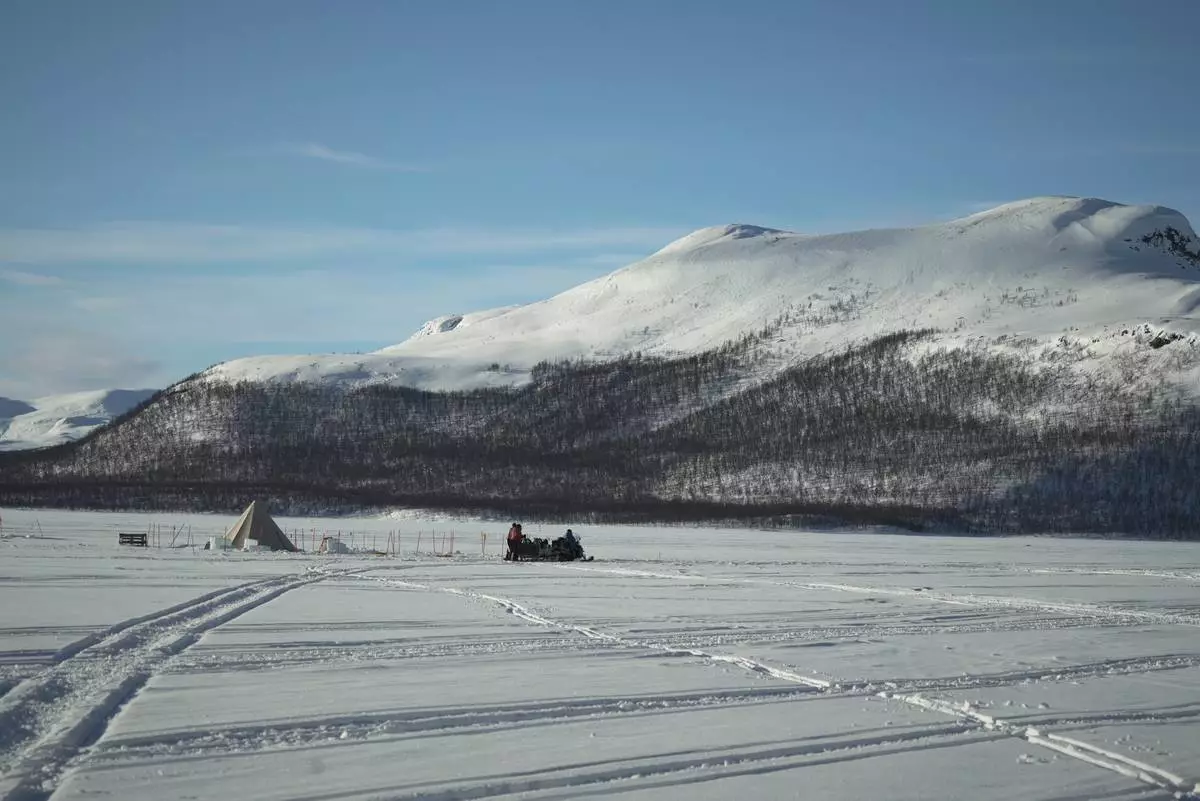
A snowmobile parked at Lake Kilpisjärvi during a Polar Scientific Diving class in Kilpisjärvi, Finland, March 15, 2026. (AP Photo/Kostya Manenkov)
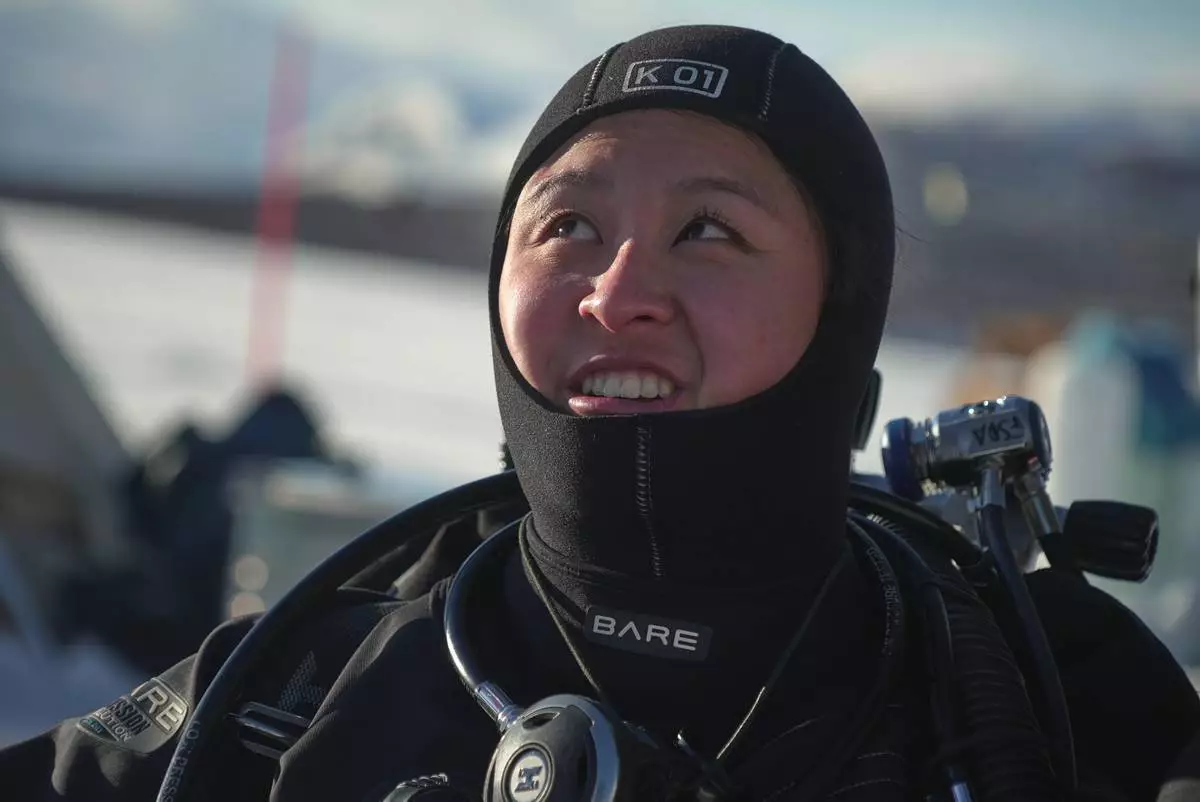
Caroline Chen, a scientific diver and research assistant, smiles before diving during a Polar Scientific Diving class in Kilpisjärvi, Finland, Finland, March 15, 2026. (AP Photo/Kostya Manenkov)
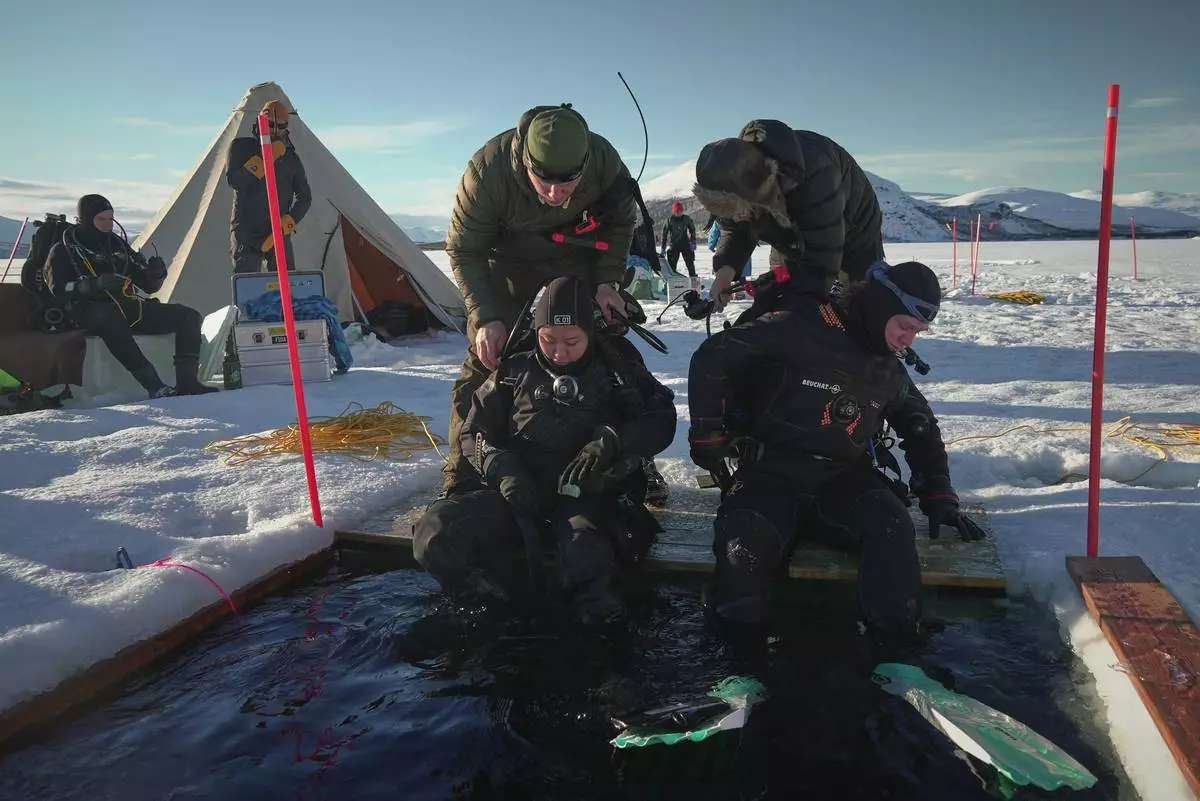
Ruari Buijs, a marine biology and oceanography student, right, and Caroline Chen, a scientific diver and research assistant, prepare to dive during a Polar Scientific Diving class in Kilpisjärvi, March 15, 2026. (AP Photo/Kostya Manenkov)