The Toronto Tempo will have the sixth pick in the WNBA draft on April 13, choosing that option over having the top choice in the expansion draft on April 3.
The Portland Fire will have the first choice in the expansion draft and seventh pick in the WNBA draft.
The Tempo won the right to choose which option it wanted when a silver dollar was flipped on a Zoom call and came up Toronto's way.
WNBA teams have until Sunday to inform the league of the five players they'll be protecting ahead of the expansion draft. That draft will have two rounds, with up to six picks for each team in each round. The teams will alternate picks, with the team that picks second in the first round going first in the next round.
The new teams will pick among players left unprotected by their current WNBA teams. A current franchise can only lose two players in total through the expansion draft. If a player is taken in the first round, a second player from that same franchise can't be taken until the second round.
Teams can protect players they had rights to on the final day of the 2025 regular season.
Any player who has five or more years of service after the 2025 season must be put on the roster list as an unrestricted free agent or included on the unprotected list. Only two veteran players — Lexie Brown and Kalani Brown — had contracts that didn’t expire last season.
Toronto and Portland each may only select one player who’s a potential unrestricted free agent. The Tempo and Fire would then be allowed to negotiate a supermax contract with those players, which could be worth up to $1.4 million annually under the new CBA.
It’s the second consecutive year that the league has held an expansion draft. Golden State entered the league last year and became the first expansion team to make the playoffs.
The two teams will alternate who picks sixth and seventh in the second and third rounds of the WNBA draft. So Portland will go sixth in the second round and seventh in the third round. Toronto gets the seventh pick in the second round and sixth pick in the third round.
AP WNBA: https://apnews.com/hub/wnba-basketball
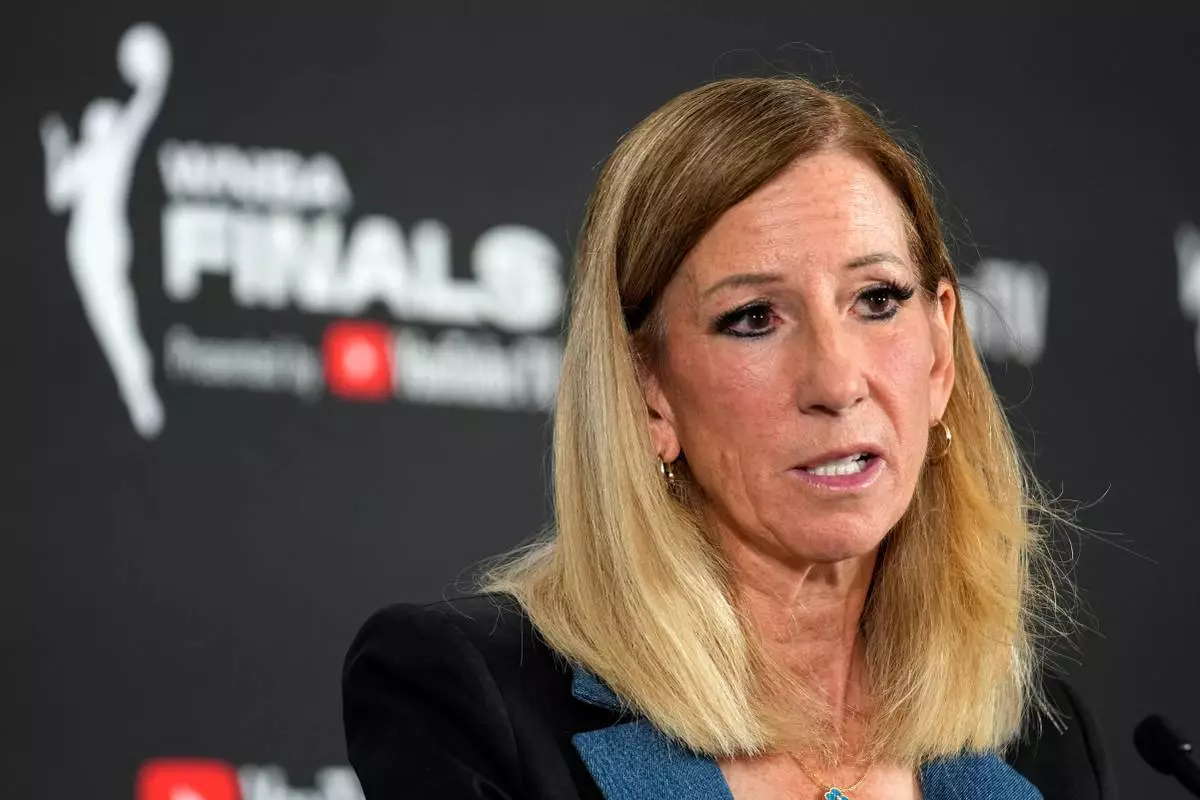
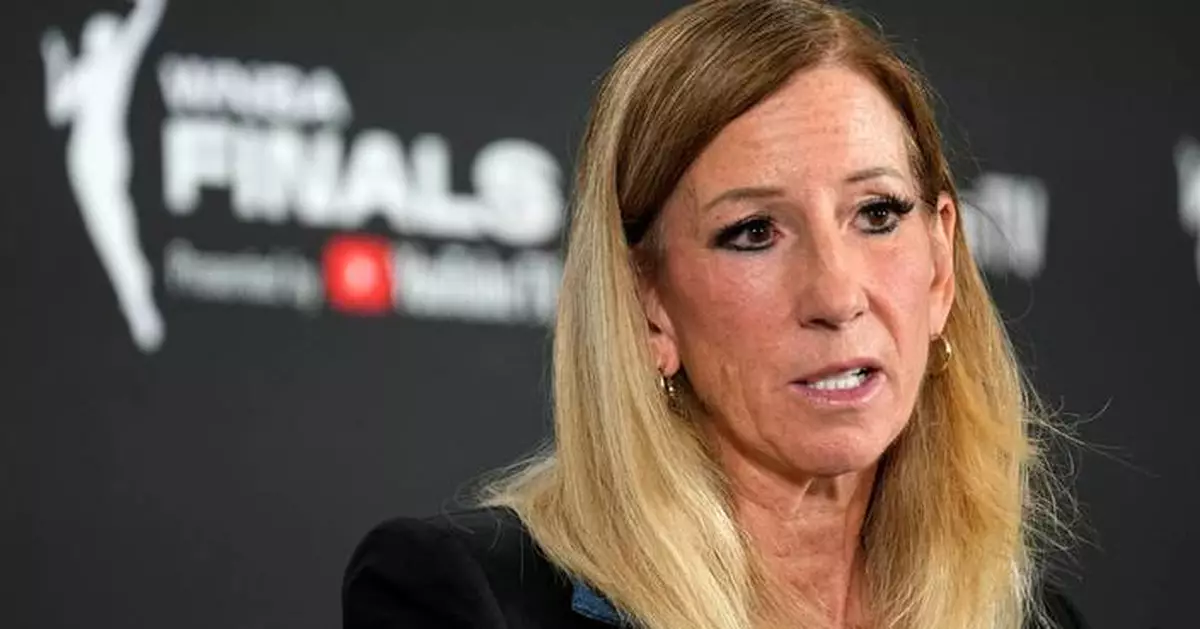
FILE -WNBA commissioner Cathy Engelbert speaks prior to Game 1 of a WNBA basketball final playoff series between the Las Vegas Aces and the Phoenix Mercury, Oct. 3, 2025, in Las Vegas. (AP Photo/John Locher), File)
DENVER (AP) — Thousands of striking workers at one of the nation's largest meatpacking plants will extend their walkout to a third week as they push for higher wages and better health care.
Industry experts said it’s too early to know if the strike that began March 16 at the Swift Beef Co. plant in Greeley, Colorado, will impact retail beef prices that already had soared to record levels.
“The workers know the value of their labor,” union President Kim Cordova said Friday. “This could be a long, drawn out fight.”
Owner JBS USA said Friday that it's operating the plant at limited capacity and has shifted beef production elsewhere to meet customers needs.
With negotiations stalled, the company remains in a strong position relative to the striking workers, said Jennifer Martin at Colorado State University’s animal sciences department.
That's because the industry is suddenly less burdened by excess slaughter capacity that had been keeping profit margins low. Now amid the Greeley strike and other slaughter plant capacity reductions — including the closure of a major Tyson Foods’ plant in Nebraska — companies are seeing profits increase, Martin said.
“It’s not necessarily in favor of the employees,” she added. “The lack of harvest capacity at one facility right now might actually be a benefit to the larger industry in the sense of improving (profit) margins.”
It’s the first strike at a U.S. slaughterhouse since workers walked out at a Hormel plant in Minnesota in 1985. That strike lasted more than a year and included violent confrontations between police and protesters.
The Greeley strike began with support from 99% of the plant’s 3,800 workers who belong to the United Food and Commercial Workers Local 7 union. Thousands have showed up at the picket line over the past two weeks.
Union officials say the company’s offer of 2% wage hikes is less than inflation.
JBS said its contract offer is consistent with a deal reached with UFCW union workers at other plants. But Cordova said Colorado has a higher cost of living than those other locations and health care costs ate up much of the wage increase.
JBS is the world’s largest meatpacking company with a market capitalization of $17 billion. It's the top employer in Greeley, a city 50 miles (80 kilometers) northeast of Denver with a population of about 114,000 people.
“We are maintaining supply, supporting the long-term stability of the beef chain, and minimizing disruption for producers, customers, and consumers,” JBS spokesperson Nikki Richardson said in an email. “Our priority is to keep product moving while we work toward a resolution in Greeley.”
In 2020, the Greeley plant was the scene of Colorado’s deadliest workplace coronavirus outbreak, with 291 infections and six deaths among plant workers. During the outbreak, President Donald Trump issued an executive order to keep meatpacking plants across the U.S. open over concerns about the pandemic's impact on the nation’s food supply.
Federal regulators later fined JBS $15,615 for failing to protect its employees.
In the wake of the pandemic, beef companies invested billions of dollars to increase slaughter capacity and ensure enough meat would be available for consumers, Martin said.
But recent years have seen U.S. cattle numbers drop to a 75-year low, driven in part by drought and low prices offered to ranchers. That's meant the additional slaughter capacity is not as needed, Martin said.
JBS was approved for trading on the New York Stock Exchange last May, despite environmental opposition and a federal probe that led to its guilty plea for bribing Brazilian officials for the financing it used for its U.S. expansion.
Brown reported from Billings, Montana.
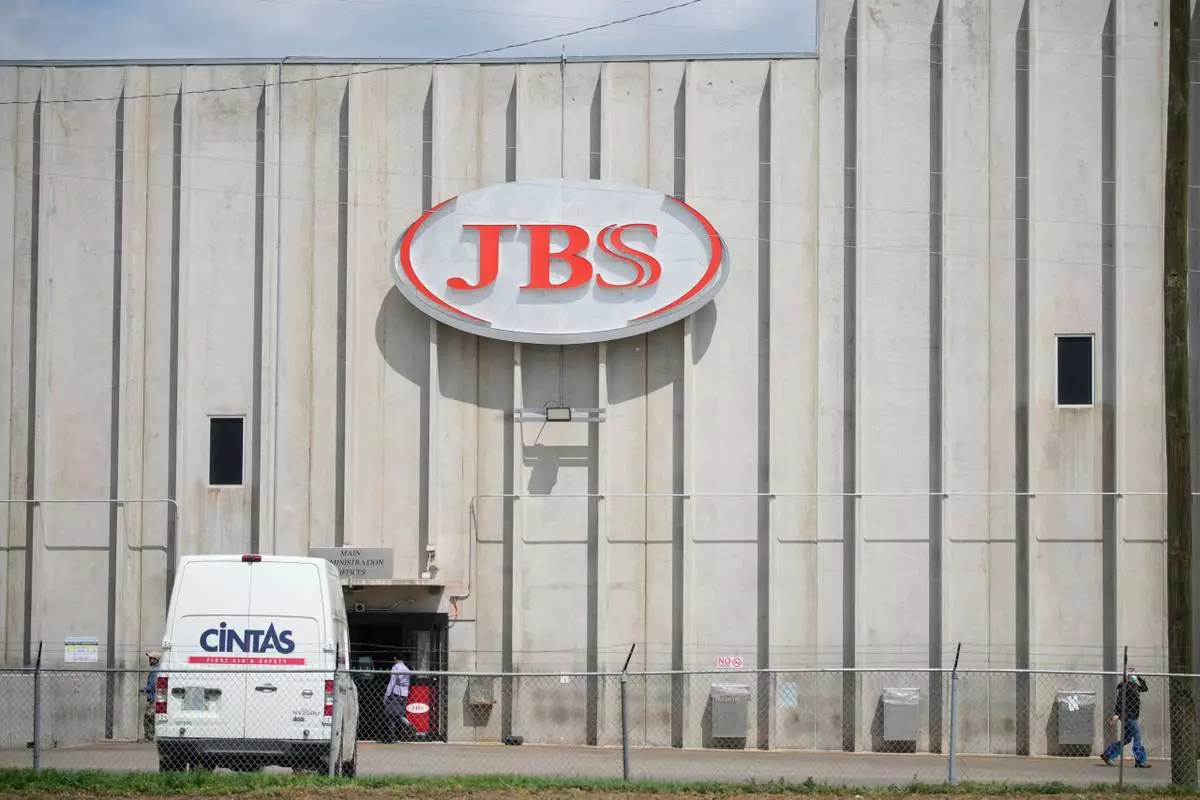
FILE - Employees walk in front of the entrance to the JBS meat processing plant, July 23, 2021, in Greeley, Colo. (AP Photo/David Zalubowski, File)
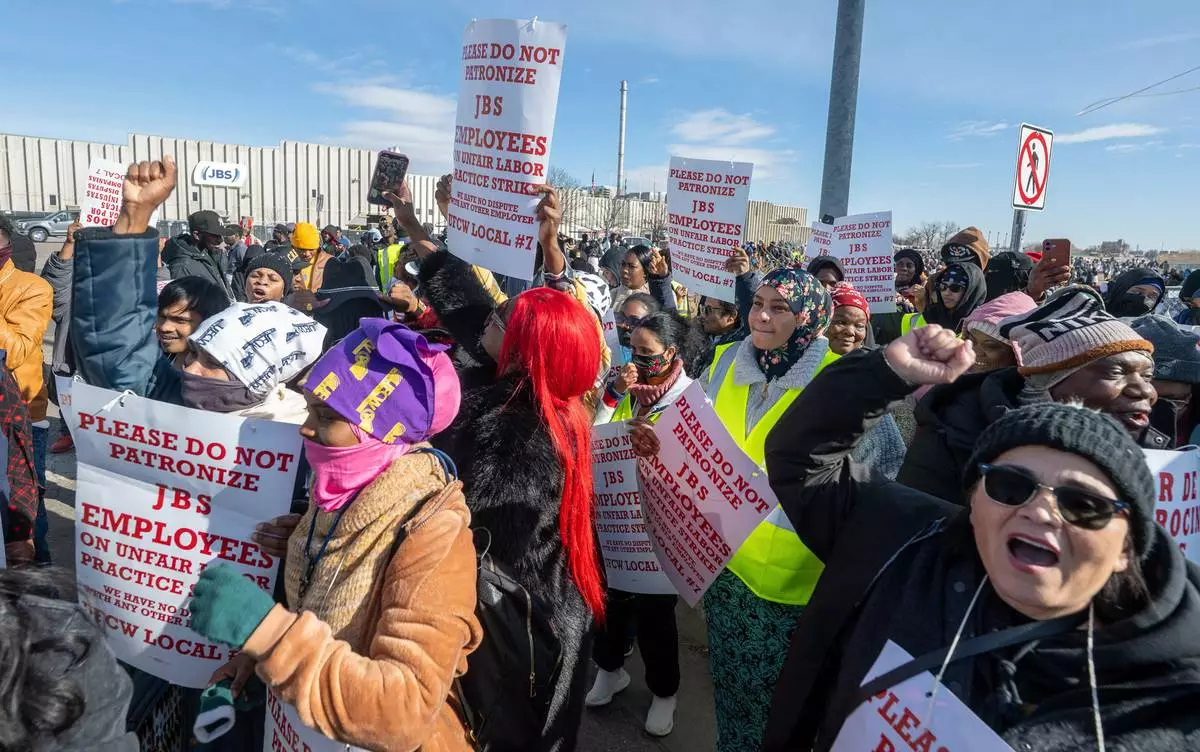
Workers from the JBS Beef Plant protest across the road from the plant on March 16, 2026 in Greeley, Colo. Nearly 3800 workers with the United Food & Commercial Workers (UCFW) are on strike protesting unfair work conditions. (Jerilee Bennett/The Gazette via AP)