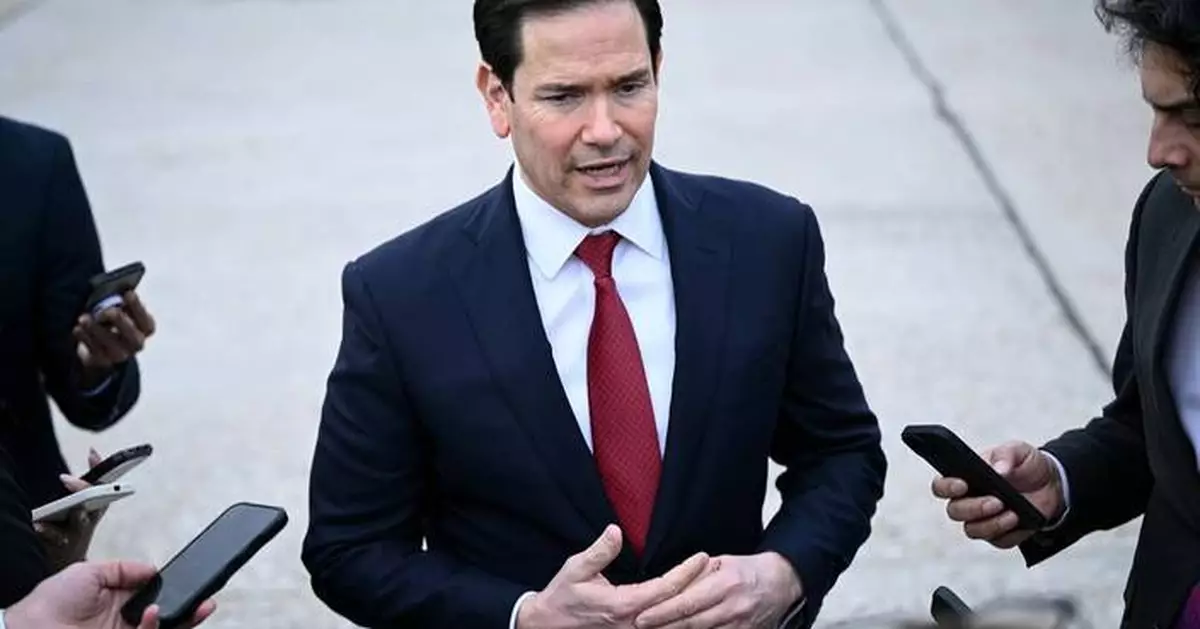
PARIS (AP) — U.S. Secretary of State Marco Rubio on Friday rejected Ukrainian President Volodymyr Zelenskyy's assertion that the Trump administration is demanding Kyiv hand over its eastern Donbas region to Russia to receive American security guarantees in any ceasefire plan.
Speaking to reporters following a Group of Seven meeting in France, Rubio disputed Zelenskyy's recent comments and said the U.S. has made no such stipulation in its talks with Ukraine.
“That’s a lie,” Rubio said. “And I saw him say that. And it’s unfortunate he would say that because he knows that’s not true and that’s not what he was told.”
In an interview published this week, Zelenskyy told Reuters the U.S. was making its offer of security guarantees for Ukraine contingent on the ceding of the Donbas region, the industrial heartland long coveted by Russian President Vladimir Putin. Moscow's forces occupy the bulk of the region, but have not seized a strip of land that is among the most heavily fortified parts of the front line.
Zelenskyy said that with the U.S. focused on its war against Iran, President Donald Trump is looking to bring an end to the conflict in Ukraine.
“The Americans are prepared to finalize these guarantees at a high level once Ukraine is ready to withdraw from Donbas,” Zelenskyy told Reuters.
Rubio denied Zelenskyy's assertions and said the U.S. had only passed along Russia's demands. He said security guarantees could only come after the fighting has ended and that the U.S. will keep pushing for a peace deal.
“We’ve told the Ukrainian side what the Russians are insisting on,” he said. “We’re not advocating for it. We’ve explained it to them. It’s their choice to make. It’s not for us to make for them. We’ve never told them they have to take it or leave it. The role we have played is to try to figure out what both sides want, and see if we can bridge the middle ground.”
The Ukrainian presidential office declined to comment on the discrepancy.
Putin wants Kyiv to cede control of the entire Donbas region, which analysts believe would give Moscow a permanent launchpad from which to threaten other parts of Ukraine.
Rubio noted that U.S. talks with the Ukrainians were held last week in Florida but no other meetings are scheduled as of now. He also said that while no U.S. weapons have been pulled from sales bound for Ukraine to go to the Middle East instead, it could happen if deemed necessary.
“If we need something for America and it’s American, we’re going to keep it for America first,” Rubio said. “But as of now, that has not happened.”
The Associated Press has reported that American Patriot air-defense missiles have been moved from Europe toward the Middle East as Washington redirects resources to its war on Iran. Zelenskyy has warned that Kyiv will “definitely” face shortages of Patriot systems because of the war against Iran.
Klepper reported from Washington.
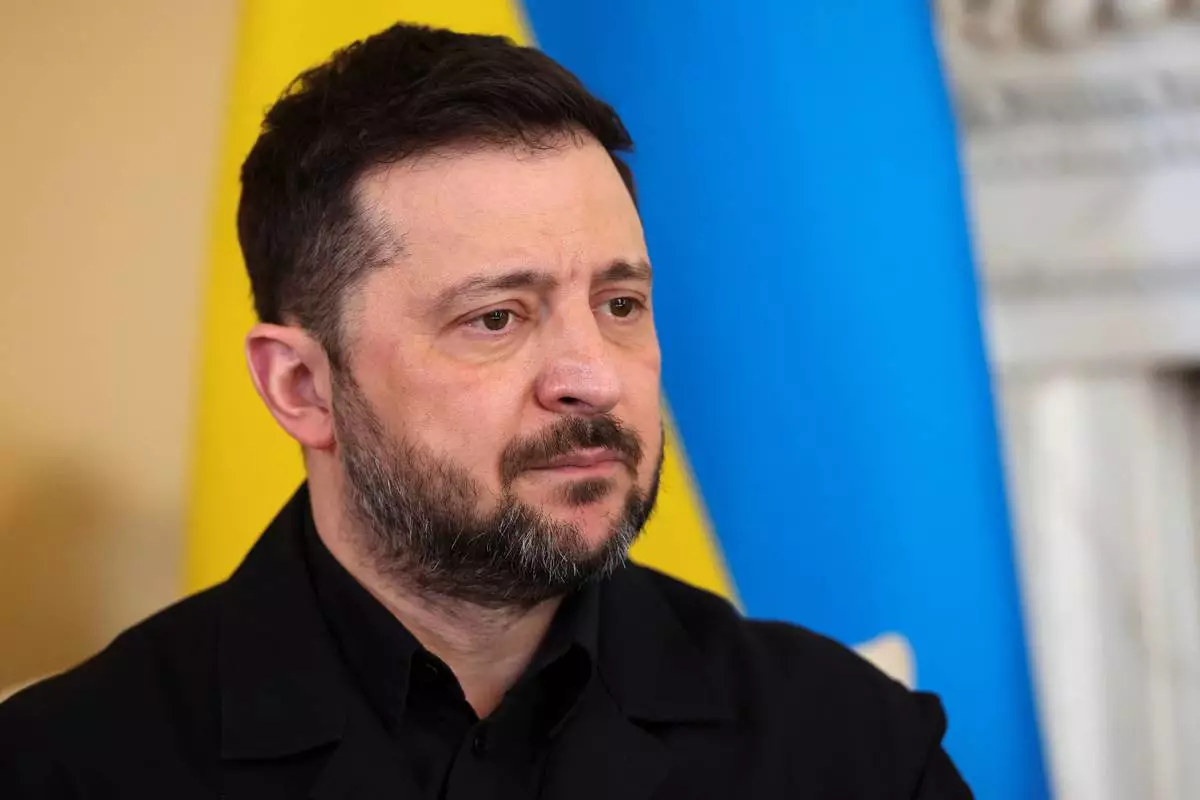
Ukrainian President Volodymyr Zelenskyy reacts during a meeting with British Prime Minister Keir Starmer at 10 Downing Street in London, Tuesday, March 17, 2026.(Suzanne Plunkett, Pool Photo via AP)
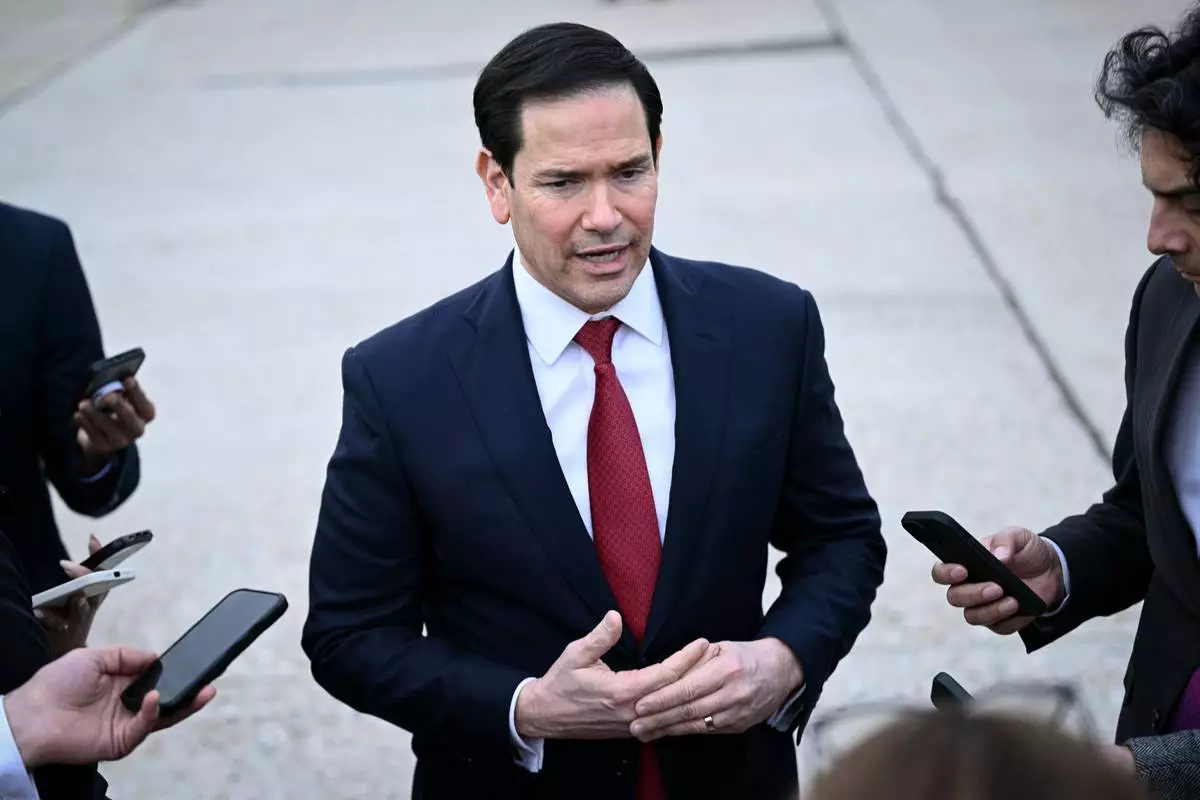
US Secretary of State Marco Rubio speaks to the press following a G7 Foreign Ministers' meeting with Partner Countries at the Bourget airport in Le Bourget, outside Paris, Friday, March 27, 2026. (Brendan Smialowski/Pool Photo via AP)
BEIRUT (AP) — A United Nations inquiry Friday urged the Syrian government to investigate senior security officials involved in violations committed during sectarian clashes last summer in which at least 1,700 people died, the vast majority from the Druze religious minority.
It also said that there has been “no indication” that an umbrella group of Druze factions has investigated its own violations in the fighting, including targeted revenge attacks against the Bedouin community.
In a scathing report, the U.N. Independent International Commission of Inquiry on the Syrian Arab Republic urged Syria’s government to investigate the leadership of its security forces that allowed or organized sectarian attacks against the Druze community, and called on the de facto Druze authorities to do the same for their forces.
The report estimates about 200,000 people were displaced in the violence in Sweida, the heartland of Syria's Druze community. Among the dead were almost 200 women and children.
In mid-July, armed groups affiliated with Druze spiritual leader Sheikh Hikmat al-Hijri clashed with local Bedouin clans, spurring intervention by government forces who effectively sided with the Bedouins. Targeted sectarian attacks, first against the religious minority group, and later the Bedouin community, and a series of abductions further soured ties.
Syrian President Ahmad al-Sharaa has vowed to investigate the events and hold perpetrators on all sides to account, including government forces.
The inquiry said "accountability must go beyond arresting only those whose abuses were self-documented or easily identifiable from videos,” both in the security forces as well as among the groups of tribal and other fighters accompanying them.
“It must extend to all individuals implicated by evidence, reaching every appropriate level within the chain of command,” the report said.
U.N. investigators spent weeks in Syria, interviewing more than 400 survivors, officials and alleged perpetrators. They visited affected areas, including those under government control and those under de facto rule of an Israeli-backed umbrella group of local armed Druze factions.
Damascus needs to address whether “certain practices are tolerated” within elements of its security agencies, the report said, referring to the violence. It called for identifying members of the leadership who allowed it to happen and removing them.
Armed tribal fighters from other parts of the country mobilized into Sweida to support government forces and elements of the authorities appeared “unwilling or unable” to confront them, the report said.
The dayslong summer clashes in Sweida marked a setback for al-Sharaa, who has been striving to assert his government’s full authority across the war-torn country and appeal to Syria’s minorities.
Though some prisoner swaps have taken place, there has been no viable reconciliation. Human rights group criticize Damascus for the lack of viable accountability measures for attacks on civilians.
The report described “widespread looting and systematic burning” during the government-led advance, as well as killings and abductions of civilians. Tribal fighters targeted almost every home in 35 villages in the province that were mixed or Druze-majority.
“Particularly, the Druze population has been subjected to severe sectarian violence, leading to massive displacement that is expected to persist for an extended period,” the report said.
Some of the bodies were found months after the ceasefire, some on streets or in fields, and in other instances burned or mutilated, the report said.
“Nearly all Druze religious sites in those villages ... were looted, burned, and vandalized,” according to the report. It added that three houses of worship were burned, and another one looted and vandalized.
Retaliatory attacks against Bedouin civilians largely in Sweida province's western countryside took place. The report said while most documented cases took place amid the hostilities, there were many cases where the attacks “appeared to be deliberately directed at civilian areas.”
The report mentions Bedouin civilians, including children and elderly people, being shot and killed while fleeing on foot, and a case where two men's bodies were left hanging at the gate of a village for days. Four mosques were also targeted.
The scale of the violence overwhelmed hospitals both in Sweida and neighboring Daraa province, as hundreds of bodies were brought in during the spiraling violence, with no room in the morgue. Many of the bodies were severely burned while others were left outside and “likely scavenged by wild animals before being found.”
“Hospital staff and first responders were forced to allow the burial of bodies before they could be identified; while safeguarding records and images of where the body was found and when, and of remaining clothing or jewelry, body marks or tattoos where available, to aid subsequent identification,” the report said.
An earlier version of the story erroneously stated that the U.N. inquiry said there was “no indication” that the government was investigating its violations. This was corrected to be in reference to an umbrella group of Druze factions.
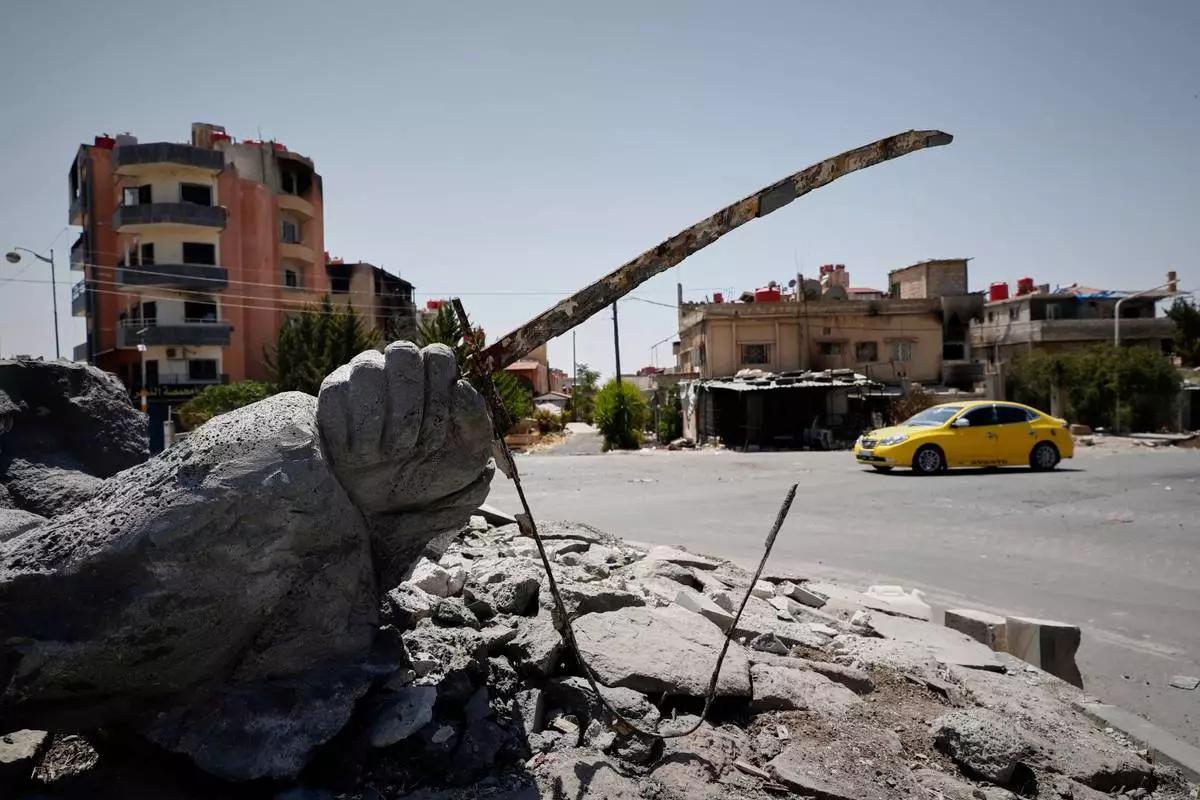
FILE - A car drives by a destroyed statue in the Druze-majority town of Sweida, Syria, Friday, July 25, 2025. (AP Photo/Omar Sanadiki, File)