Hong Kong's "One-for-One Replacement" Scheme will officially end on March 31st, entering its final countdown. Major car dealers are actively launching new stock and promotions to seize market share. In an interview with Bastille Post, Mr. Eric Wong, Chairman and CEO of Richburg Corporation, stated that their recent special sale at Laguna Plaza has received over 100 orders in the past two days, double the usual number, reflecting a surge in market demand before the scheme's end.

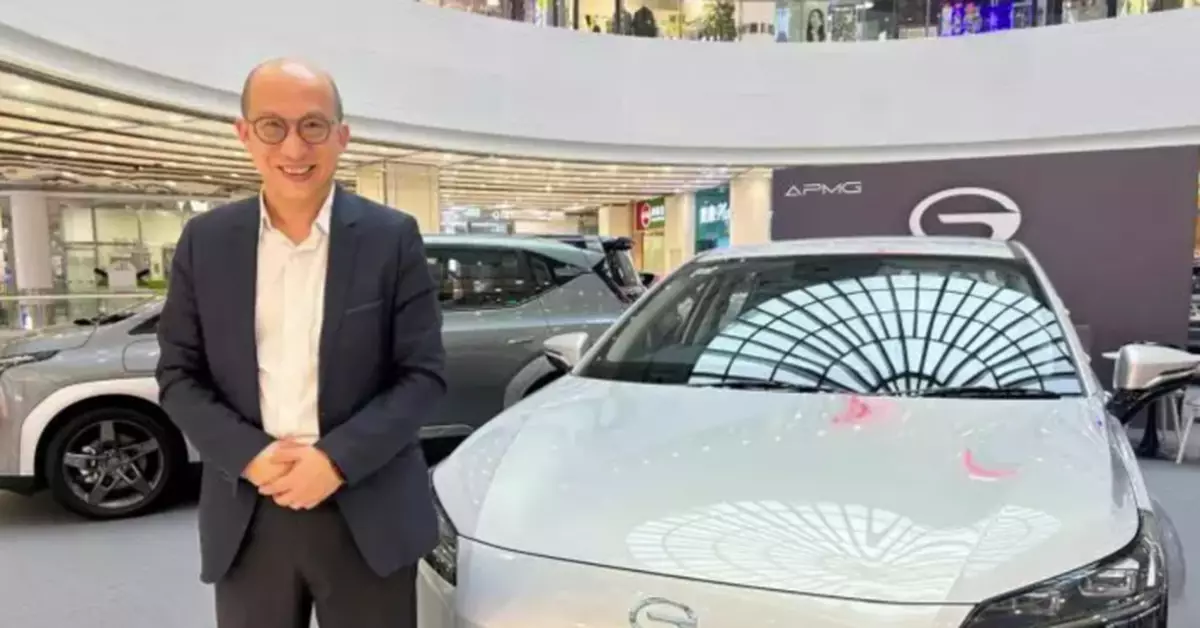
Mr. Eric Wong, Chairman and CEO of Richburg Corporation, Photo by Bastille Post
Dispatched 300 EVs to Meet Rising Demand
Click to Gallery

Mr. Eric Wong, Chairman and CEO of Richburg Corporation, Photo by Bastille Post
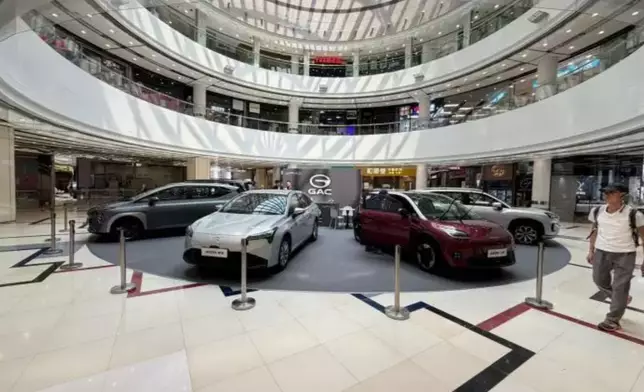
Richburg's special sale at Laguna Plaza, Photo source: Richburg
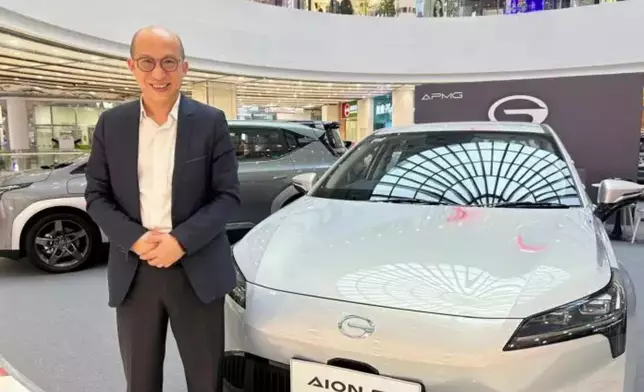
Mr. Wong admitted he was initially pessimistic about the post-scheme market, but his view has since turned optimistic Photo by Bastille Post
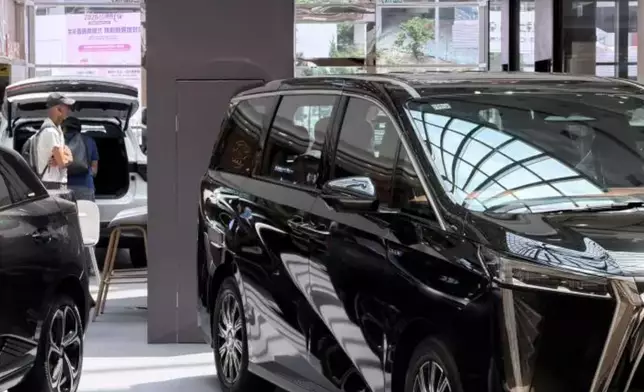
Going forward, Richburg will focus on three pillars: high cost-performance, competitive pricing, and ready availability, to solidify its foothold in Hong Kong's electric vehicle market. Photo source: Richburg
Mr. Wong said that the participating vehicle models in the special sale range in price from HKD$127,000 to over HKD$270,000. "In the past day or two, we've received over 100 orders—around 30 per day—double our usual volume." he said.
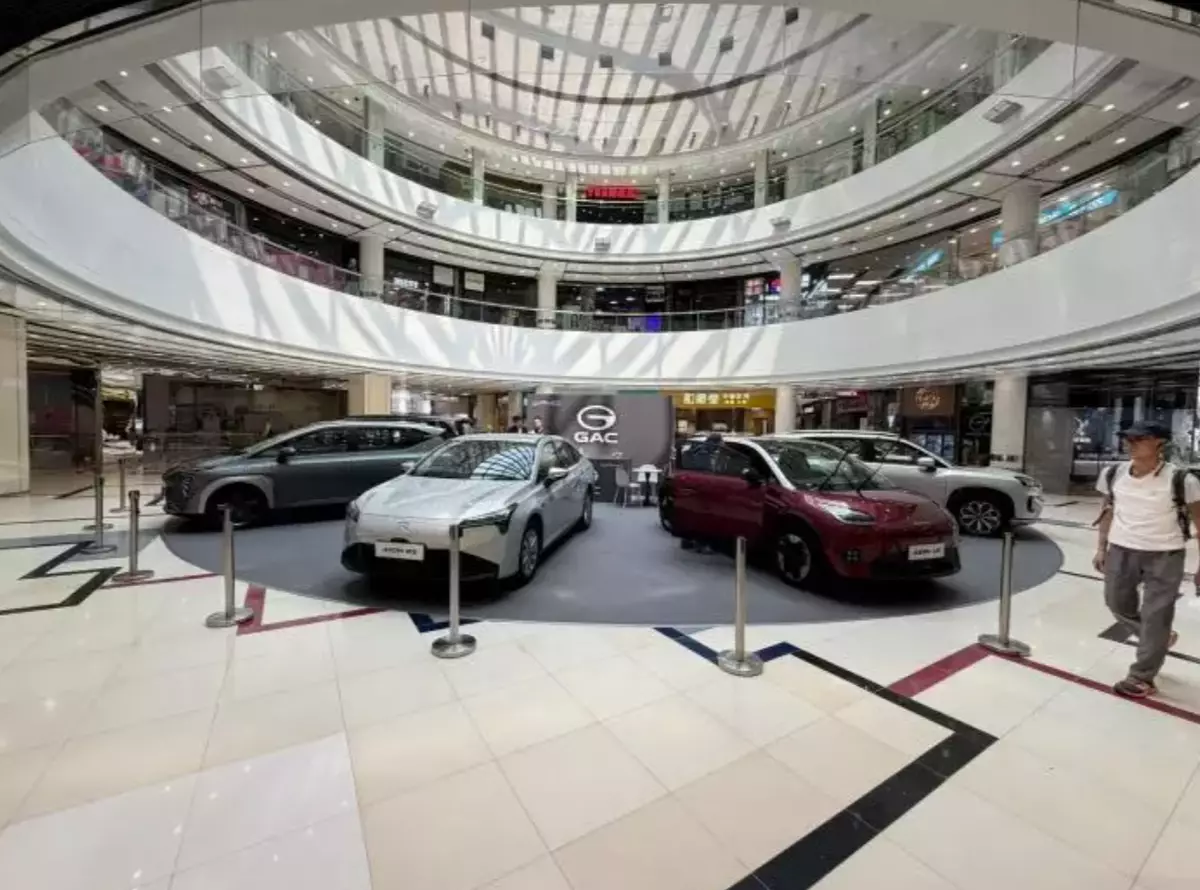
Richburg's special sale at Laguna Plaza, Photo source: Richburg
March is traditionally a slow month for car sales, he explained, but the impending expiry of the "One-for-One Replacement" Scheme, combined with Hong Kong consumers' last-minute buying habits, has sparked a surge in demand ahead of the scheme deadline. "The people in Hong Kong lead busy lives and tend to close deals quickly. Therefore, we prepared 300 vehicles for these last-minute buyers, to make sure they can complete their vehicle registration procedures before March 31."
Oil Price Surge Drives EV Demand, Optimistic Outlook Ahead
Mr. Wong is optimistic about the market outlook. Regarding the increased acceptance of electric vehicles, he believes it's driven by multiple factors: "Fuel prices have risen to over HKD$30 per litre, and could even approach HKD$40," he said, "Add in geopolitical tensions and the fact that tax incentives expire in just five days—people are seizing the moment to buy electric vehicles."
As the Hong Kong agent for GAC AION and SAIC MG, Mr. Wong pointed out that both brands have showcased clear advantages in the final stages of the "One-for-One Replacement" Scheme. "Both brands have received strong state support and have fully supported Hong Kong's transition to the new energy vehicles market. Thus, in the final stages of the scheme, their supply has been very active, and we have done our best to meet market demand."
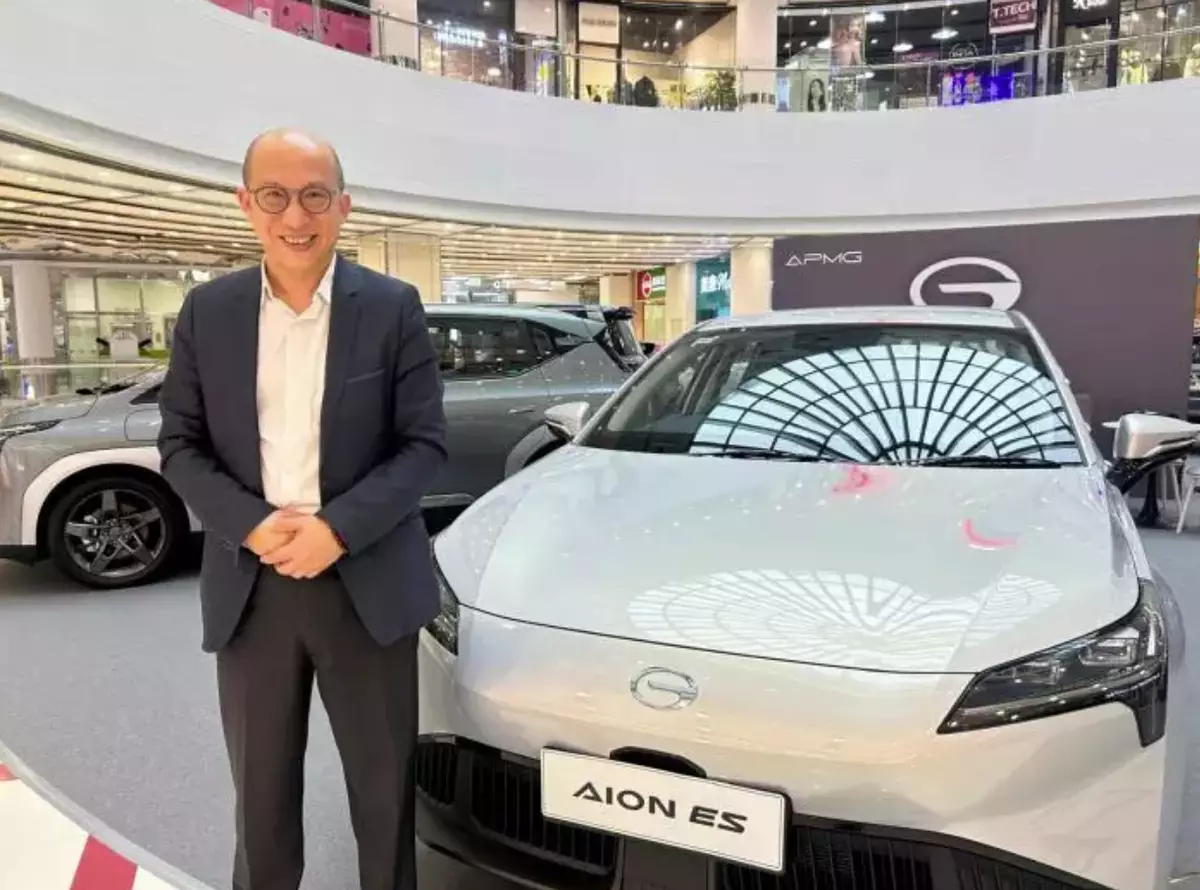
Mr. Wong admitted he was initially pessimistic about the post-scheme market, but his view has since turned optimistic Photo by Bastille Post
Mr. Wong admitted he was initially pessimistic about the post-scheme market, but his view has since turned optimistic. Even with the expiry of tax incentives, he believes persistently high fuel prices will steer buyers toward affordable electric vehicles with lower tax burdens. "Hong Kong's gasoline prices are already among the highest in the world," he said. "The high fuel costs will drive more consumers to switch to electric vehicles."
High Cost-Performance and Hybrid Vehicles in Focus
When asked about the follow-up measures after the "One-for-One Replacement" Scheme ends, Mr. Wong stated that they will focus on both product and pricing: "We will continue to introduce vehicles with higher cost-performance ratios and reasonable prices, enabling customers to have a lower barrier to use electric vehicles even without tax incentives." Furthermore, Richburg plans to expand the introduction of hybrid vehicles. "Some customers may not have sufficient charging facilities," he noted, "Hybrids offer the flexibility of both refueling and charging, better meeting the actual needs of Hong Kong users."
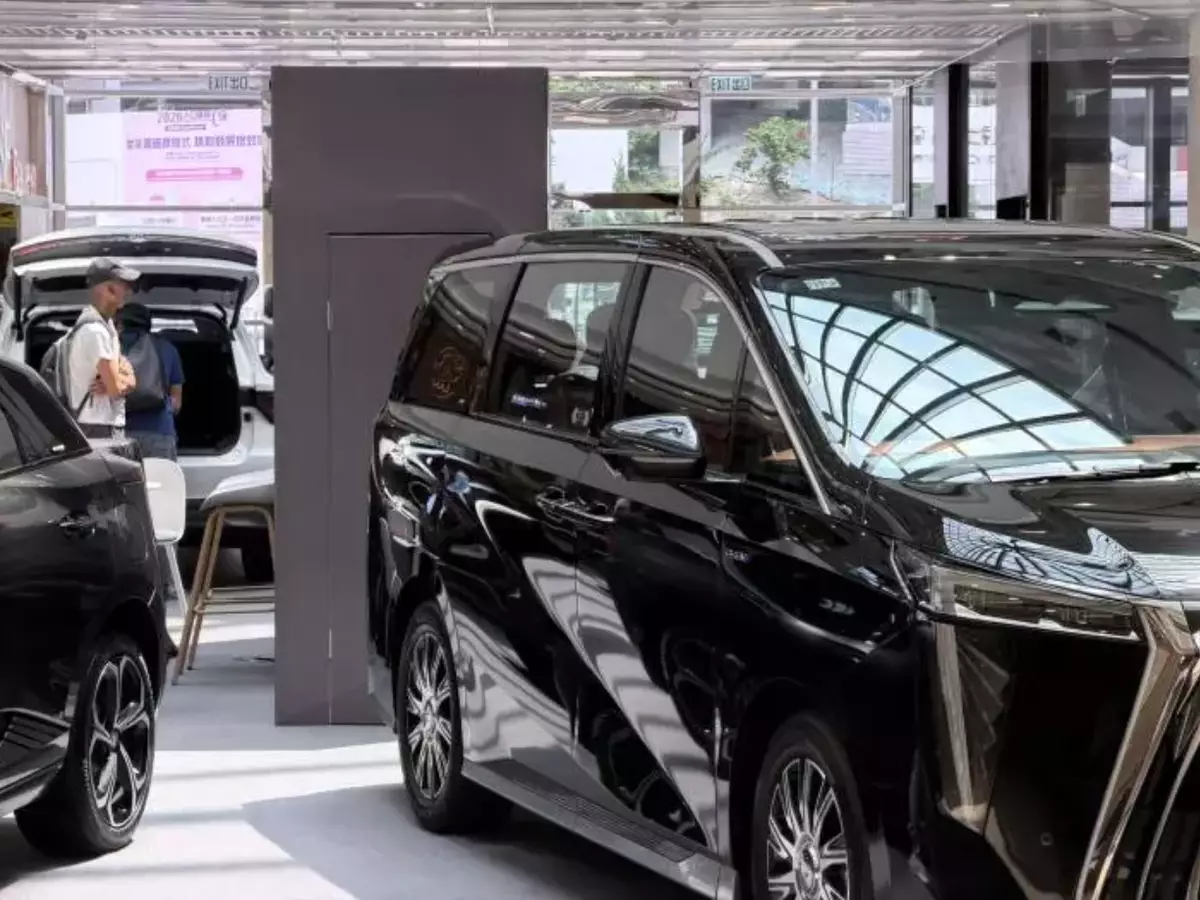
Going forward, Richburg will focus on three pillars: high cost-performance, competitive pricing, and ready availability, to solidify its foothold in Hong Kong's electric vehicle market. Photo source: Richburg
Mr. Wong believes that Hong Kong's charging facilities are expanding rapidly under government promotion. Considering the city's population density, the progress so far has been ideal, with a significant increase in the popularity of electric vehicles. During the sales process, Richburg will proactively share charging facilities location and pricing information with customers and work with partner merchants to offer more competitive charging prices, helping customers solve practical usage problems.
He emphasized that the electric vehicle market is changing rapidly, and the ability to shorten delivery time and provide immediate availability will be key to capturing market share. Going forward, Richburg will focus on three pillars: high cost-performance, competitive pricing, and ready availability, to solidify its foothold in Hong Kong's electric vehicle market.

SAN FRANCISCO (AP) — Internet trailblazer Yahoo is exploring technology's next frontier with Scout, an answer engine powered by artificial intelligence. Scout seems insightful, based on its response to a question posed by The Associated Press about why one of Silicon Valley's brightest stars faded away a decade ago.
“Yahoo’s journey illustrates how a company with an early advantage can disappear without continuous innovation," Scout explained, while also providing hyperlinks to other websites supporting its thesis.
Scout may have to come up with a different interpretation if Yahoo CEO Jim Lanzone can leverage AI to expand upon a worldwide audience of 700 million users who have stuck with the company's finance, sports, news, fantasy and email services, despite a history of folly that nearly destroyed a brand once synonymous with the internet.
Yahoo has “always been the white whale of turnarounds for me,' said Lanzone, who has a track record for salvaging internet wrecks. “I always thought I could do something with this thing."
Lanzone, 55, finally got his chance after the private equity firm Apollo Global Management paid $5 billion to take over Yahoo in September 2021 — a fraction of its peak $125 billion market value reached during the dot-com boom's giddy days in early 2000. Apollo's acquisition came after Verizon Communications bought Yahoo's online operations in 2017 and then bungled an attempt to blend those services into AOL, another internet pioneer.
Verizon never would have gotten the chance to buy Yahoo's online operations if not for the company's perpetual blundering under seven different CEOs in 16 years.
Although Yahoo's checkered past didn't destroy the company, it left a stigma that makes it unlikely that it will ever come close to what it once was, said Jeremy Ring, who was among Yahoo's first employees when he began selling ads for the service from his New York apartment in 1996.
“Even though Yahoo isn't what it once was, it hasn't turned into a Blockbuster or Radio Shack story either,” said Ring, who delved into the company’s ups and downs in a 2018 book, “We Were Yahoo!” “What is going to enable them to compete against all the bigger companies using AI? I am not convinced all the best engineers in the world are suddenly going to come work at Yahoo."
Lanzone's renovation efforts initially focused on shedding Yahoo's dysfunctional parts. The teardown included jettisoning some of Yahoo's advertising technology, selling publishers such as TechCrunch and Rivals and closing down AOL's internet dial-up service in a move that cut off its final 500 users. As it stands now, Yahoo is “very profitable” and bringing in billions of dollars in revenue, Lanzone said, while declining to be more specific.
Once he got the cleanup work down, Lanzone began overhauling what remained — a process that has resulted in an upgrade of Yahoo's popular fantasy sports division and a major overhaul of its email service that still ranks as the second largest on the web behind Google's Gmail.
With the recent introduction of Scout to its 250 million users in the U.S., Yahoo is leaning into the AI movement with the hope that the s technology will simplify online search and produce more personal results tailored to each user's interests. Lanzone is also hoping Scout turns into a flywheel, continually spinning traffic through its other services.
Yahoo will be competing against a familiar foil in Google, which remains the same formidable force that spelled the company's demise 20 years ago and has been progressively layering more AI into its search engine with its Gemini technology. As if that isn't daunting enough, Yahoo also will be vying against other popular AI chatbots such as OpenAI's ChatGPT and Anthropic's Claude in addition to answer engines such as Perplexity.
In a tacit admission that it's behind the curve, Yahoo is running Scout on AI technology licensed from Anthropic.
Unlike other AI chatbots and answer engines, Scout doesn't simulate human conversations so users can “have a fake personal relationship with it,” Lanzone said. “The product is very unique, even though we didn’t invent AI in the first place."
Yahoo's pursuit of more online search traffic has been largely an exercise in futility since the late 1990s, a descent that started just a few years after Stanford University graduate students Jerry Yang and David Filo founded the company as the internet's first comprehensive directory of websites.
But as the internet began to play a bigger role in entertainment and commerce, Yahoo shifted its focus from sending traffic elsewhere to building an all-purpose website that people wouldn't want to leave. That strategic pivot opened the door for two other Stanford University graduate students, Larry Page and Sergey Brin, to create a search engine called Google.
After turning down a chance to buy Google for just $1 million in 1998, Yahoo poured even more resources into creating a one-stop destination while paying so little attention to search that it turned to another company to provide that technology in 2000. Yahoo not only hired Google as its search engine but also promoted its brand on its website. By 2002, Yahoo was offering to buy Google for $3 billion, but Page and Brin wanted $5 billion. The negotiating impasse launched Google on a trajectory toward an internet empire now valued at $3.7 trillion under corporate parent Alphabet Inc.
Yahoo went through a revolving door of seven CEOs, including former Google executive Marissa Mayer, on a quixotic quest to catch up in search before finally ending its 21-year existence as a publicly traded company with its ill-fated sale to Verizon for $4.5 billion. Along the way, Yahoo rejected a $44.6 billion takeover bid from Microsoft in 2008 before finally agreeing to license the software maker's Bing search engine.
If Yahoo's bet on Scout pays off, Lanzone concedes it could lead to the company returning to the stock market more than 30 years after completing a 1996 initial public offering that intensified the dot-com fever gripping investors back then. Lanzone believes another Yahoo IPO could still get people excited.
“We still have one of the biggest audiences on the internet, and that audience has been pretty loyal through a lot of ups and downs,” he said. “If we just ‘super-serve’ them, good things will happen.”
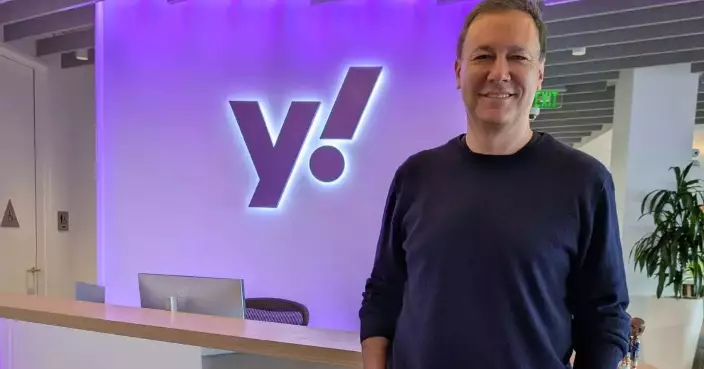
Yahoo CEO Jim Lanzone poses for a photo on Feb. 24, 2026 in Yahoo’s San Francisco office. (AP Photo/Michael Liedtke)