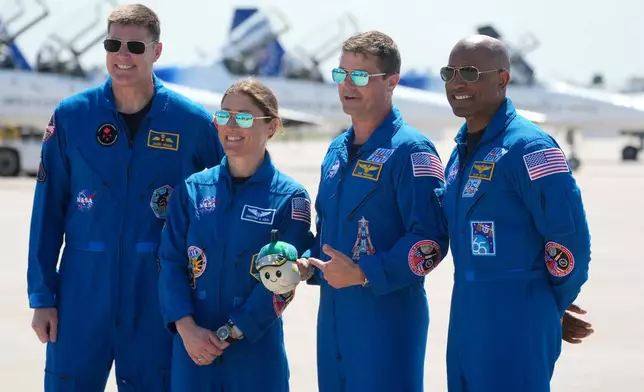
CAPE CANAVERAL, Fla. (AP) — The four astronauts making NASA’s next lunar leap bear little resemblance to the Apollo era.
The Americans who blazed the trail to the moon more than half a century ago were white men chosen for their military test pilot experience. This first Artemis crew includes a woman, a person of color and a Canadian, products of a more diversified astronaut corps.
Click to Gallery
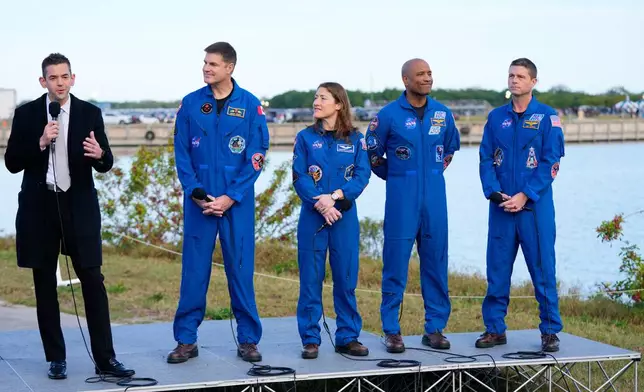
FILE - NASA administrator Jared Isaacman, left, answers questions during a news conference, next to the crew of the new moon rocket, Artemis II, from left, Canadian Space Agency astronaut Jeremy Hansen, mission specialist Christina Koch, pilot Victor Glover and commander Reid Wiseman at the Kennedy Space Center, Jan. 17, 2026, in Cape Canaveral, Fla. (AP Photo/John Raoux, FIle)
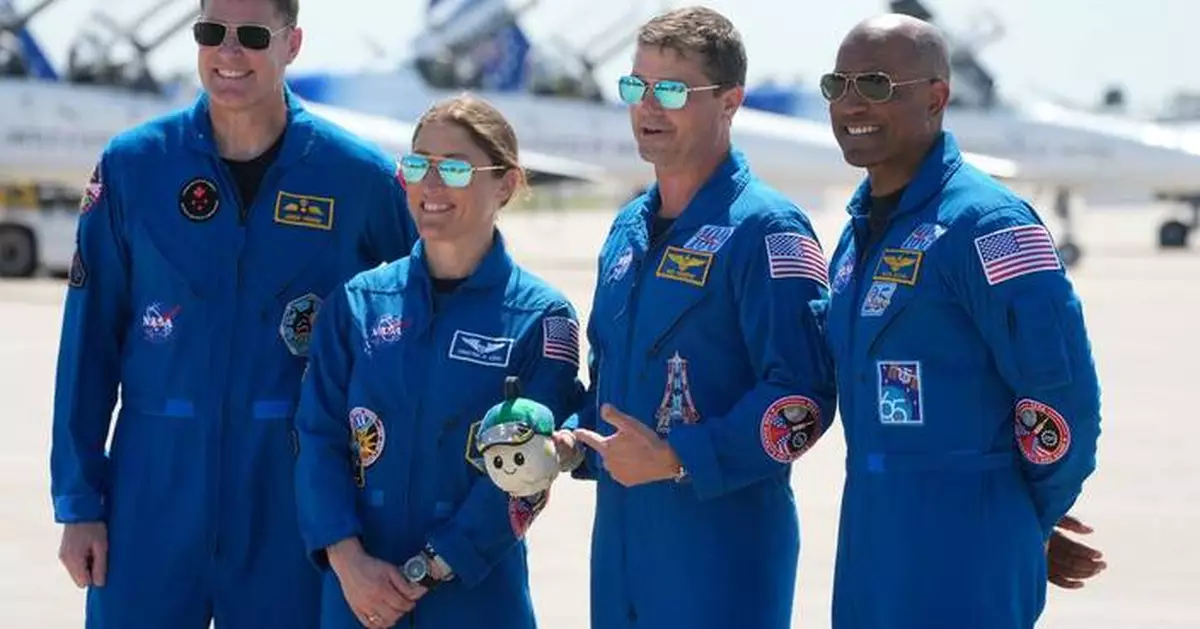
Artemis 2 crew members, from left, Mission Spc. Jeremy Hansen, of Canada, Mission Spc. Christina Koch, Commander Reid Wiseman, and Pilot Victor Glover pose for a photo after the crew's arrival at the Kennedy Space Center Friday, March 27, 2026, in Cape Canaveral, Fla. (AP Photo/Chris O'Meara)
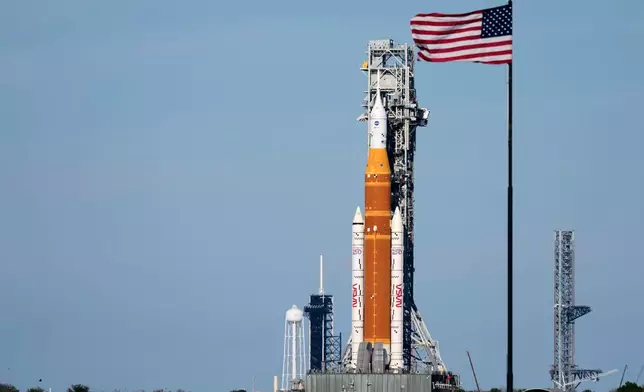
FILE - NASA's Artemis II SLS (Space Launch System) moon rocket with the Orion spacecraft slowly rolls back towards the Vehicle Assembly Building at the Kennedy Space Center, Feb. 25, 2026, in Cape Canaveral, Fla. (AP Photo/John Raoux, File
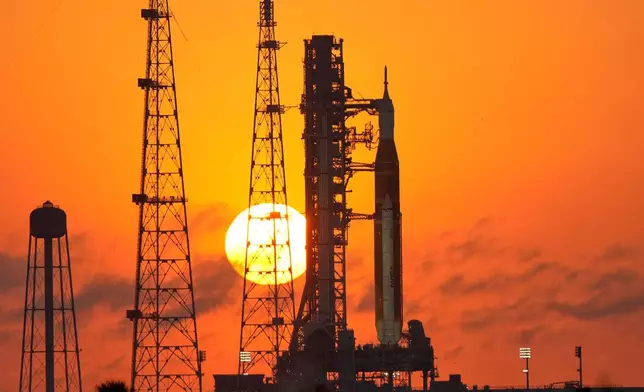
NASA's Space Launch System rocket with the Orion spacecraft set for the Artemis 2 mission is seen on Launch Complex 39B at sunrise at the Kennedy Space Center, Tuesday, March 24, 2026, in Cape Canaveral, Fla. (AP Photo/John Raoux)
FILE - NASA administrator Jared Isaacman, left, answers questions during a news conference, next to the crew of the new moon rocket, Artemis II, from left, Canadian Space Agency astronaut Jeremy Hansen, mission specialist Christina Koch, pilot Victor Glover and commander Reid Wiseman at the Kennedy Space Center, Jan. 17, 2026, in Cape Canaveral, Fla. (AP Photo/John Raoux, FIle)
Artemis 2 crew members, from left, Mission Spc. Jeremy Hansen, of Canada, Mission Spc. Christina Koch, Commander Reid Wiseman, and Pilot Victor Glover pose for a photo after the crew's arrival at the Kennedy Space Center Friday, March 27, 2026, in Cape Canaveral, Fla. (AP Photo/Chris O'Meara)
None of them were alive during NASA’s storied Apollo program that sent 24 astronauts to the moon including 12 moonwalkers. They won’t land on the moon this time or even orbit it, but the out-and-back journey will take them thousands of miles deeper into space than even the Apollo astronauts ventured, promising unprecedented views of the lunar far side.
Here’s a look at the Artemis astronauts whose mission aims to pave the path for future moon landings:
Leading the nearly 10-day mission is a widower who considers solo parenting — not rocketing to the moon — his biggest and most rewarding challenge.
Wiseman, 50, a retired Navy captain from Baltimore, was serving as NASA’s chief astronaut when asked three years ago to lead humanity’s first lunar trip since 1972. His wife Carroll’s death from cancer in 2020 gave him pause.
He’d spent more than five months at the International Space Station in 2014, and his two teenage daughters, especially the older one, had “zero interest” in him launching again.
“We talked about it and I said, ‘Look, of all the people on planet Earth right now, there are four people that are in a position to go fly around the moon,” he said. “I cannot say no to that opportunity.”
The next day, homemade moon cupcakes awaited him, along with his daughters' support. The toughest part isn’t leaving them — “it's the stress that I’m putting on them,” he said.
Open with his daughters about everything, he recently told them where he keeps his will.
As one of NASA’s few Black astronauts, Glover sees his presence on the mission as “a force for good.”
The 49-year-old Navy captain and former combat pilot from Pomona, California, makes it a habit to listen to Gil Scott-Heron’s “Whitey on the Moon” and Marvin Gaye’s “Make Me Wanna Holler” from the white-dominated Apollo era.
“I listen to those for perspective,” he said. “It captures what we did well, what we did poorly.”
The ability for him now to offer hope to others is “an amazing blessing and a privilege.” Despite having one spaceflight behind him — an early SpaceX crew run to the International Space Station — he finds himself in new personal territory. His four daughters are in their late teens and early 20s, “and I spend as an much time and thought preparing them as NASA does preparing me.”
He’s hyper-focused on running “our best race so that we can hand the baton off to the next leg” — a 2027 practice docking mission in orbit around Earth between an Orion crew capsule and one or two lunar landers. The all-important moon landing would follow in 2028 with yet another set of astronauts.
The last time Koch blasted into space, she was gone almost a year, so she’s not sweating a quick trip to the moon and back.
The 47-year-old electrical engineer from Jacksonville, North Carolina, holds the record for the longest single spaceflight by a woman — 328 days. She took part in the first all-female spacewalk during her lengthy stay at the space station in 2019.
More than any one individual, “it’s about celebrating the fact that we’ve arrived to this place in history” where women can fly to the moon, she said.
Before she got called up by NASA, Koch spent a year at a South Pole research station. Between that and her space stint, she feels she's “inoculated” most of her family and friends.
“So far, I haven't gotten too many nerves from folks. Maybe my dog, but I've reassured her that it's only 10 days. It's not going to be as long as last time.”
Her and her husband's rescue pooch is named Sadie Lou.
The Canadian fighter pilot and physicist is making his space debut, stressful enough, but also serving as his country's first emissary to the moon.
“Maybe I'm naive, but I don't feel a lot of personal pressure.”
Hansen, 50, grew up on a farm near London, Ontario, before moving to Ingersoll and pursuing a flying career. The Canadian Space Agency selected him as an astronaut in 2009, and he was named to the Artemis crew in 2023.
He realizes only now how much effort it took to send men to the moon during Apollo.
“When I walk out and I look at the moon now, it looks and feels a little bit farther than it used to be,” he said. “I just understand in the details how much harder it is than I thought it was watching videos of it.”
Dangers still loom — something he’s shared with his college-aged son and twin daughters. “The most likely outcome is that we will come back safe. There’s a chance we won’t, and you will be able to move through life even if that happens,” he assured them.
The Associated Press Health and Science Department receives support from the Howard Hughes Medical Institute’s Department of Science Education and the Robert Wood Johnson Foundation. The AP is solely responsible for all content.
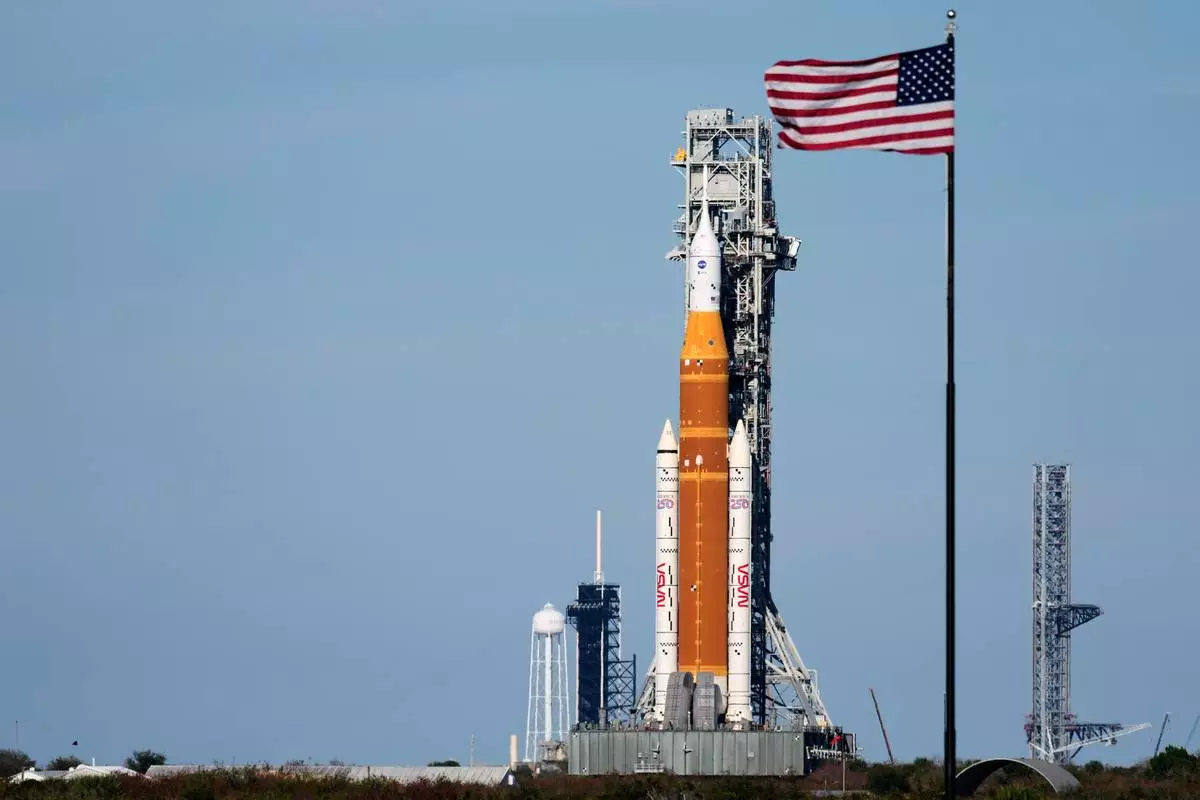
FILE - NASA's Artemis II SLS (Space Launch System) moon rocket with the Orion spacecraft slowly rolls back towards the Vehicle Assembly Building at the Kennedy Space Center, Feb. 25, 2026, in Cape Canaveral, Fla. (AP Photo/John Raoux, File
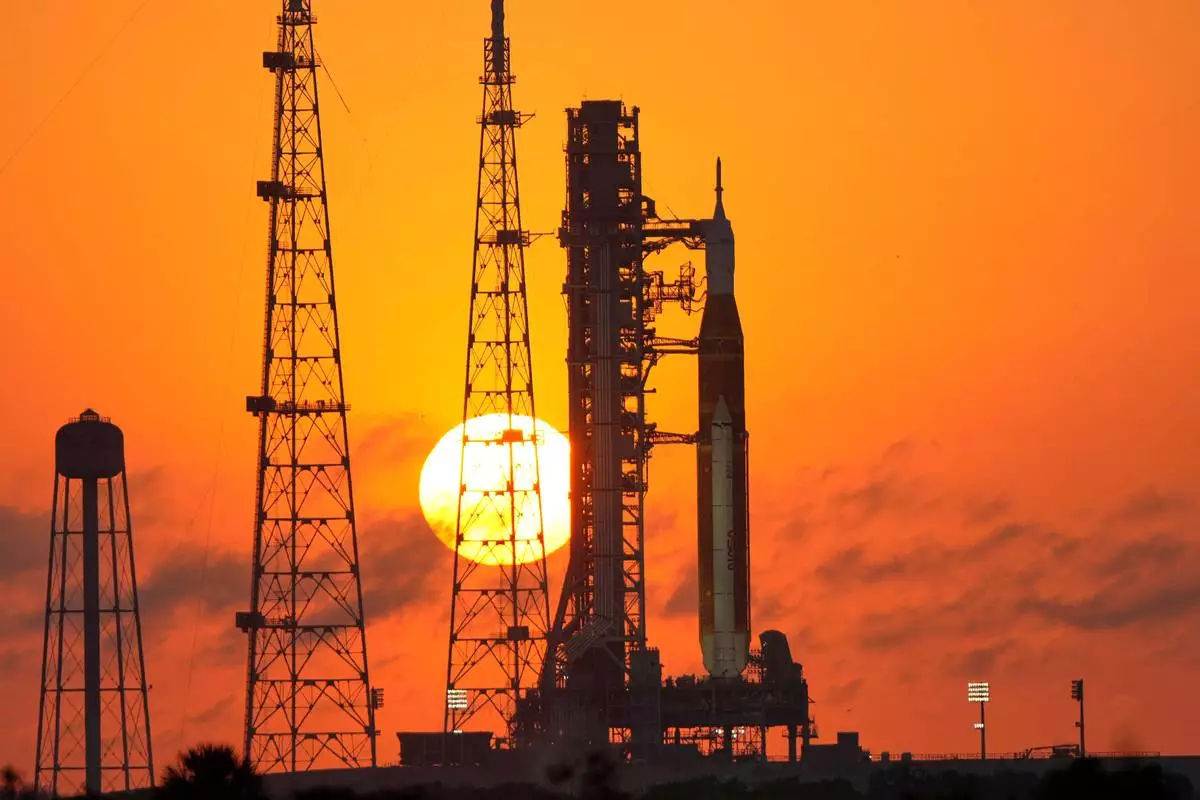
NASA's Space Launch System rocket with the Orion spacecraft set for the Artemis 2 mission is seen on Launch Complex 39B at sunrise at the Kennedy Space Center, Tuesday, March 24, 2026, in Cape Canaveral, Fla. (AP Photo/John Raoux)

FILE - NASA administrator Jared Isaacman, left, answers questions during a news conference, next to the crew of the new moon rocket, Artemis II, from left, Canadian Space Agency astronaut Jeremy Hansen, mission specialist Christina Koch, pilot Victor Glover and commander Reid Wiseman at the Kennedy Space Center, Jan. 17, 2026, in Cape Canaveral, Fla. (AP Photo/John Raoux, FIle)

Artemis 2 crew members, from left, Mission Spc. Jeremy Hansen, of Canada, Mission Spc. Christina Koch, Commander Reid Wiseman, and Pilot Victor Glover pose for a photo after the crew's arrival at the Kennedy Space Center Friday, March 27, 2026, in Cape Canaveral, Fla. (AP Photo/Chris O'Meara)
WASHINGTON (AP) — President Donald Trump says the United States is winning the war with Iran even as thousands of additional American troops deploy to the Middle East.
He has pilloried other countries for not helping the U.S., only to say later he does not need their assistance. He has twice delayed deadlines for Iran to reopen the Strait of Hormuz. He has both threatened to “obliterate” Iran's energy plants if the vital waterway remains largely shuttered and said the U.S. was “not affected" by the closure.
At one point this month, Trump said one of his predecessors — who, he strongly suggested, was a Democrat — privately told him he wished he had taken similar action against Iran. Representatives for every living former president quickly denied that such a conversation happened.
As the war entered its second month on Saturday, Trump's penchant for embellishments, exaggerations and falsehoods is being tested in an environment where the stakes are much higher than an isolated political fight.
A president who has long embraced bluster and salesmanship to shape narratives and focus attention is confronting the unpredictability of war.
Leon Panetta, who served Democratic presidents as defense secretary, CIA director and White House chief of staff, said he has “seen enough wars where truth becomes the first casualty.”
“It’s not the first administration that has not told the truth about war,” he said. “But the president has made it kind of a very standard approach to almost any question to in one way or another kind of lie about what’s really happening and basically describe everything as fine and that we’re winning the war.”
Michael Rubin, a historian at the American Enterprise Institute who worked as a staff adviser on Iran and Iraq at the Pentagon from 2002 to 2004, said Trump is “the first president of any party in recent history that hasn’t self-constrained to live within rhetorical boundaries.”
“So of course it creates a great deal of confusion,” he said.
To his critics, Trump's style is a sign that doesn't have a coherent long-term strategy. But for Trump, the zigs and zags seem like the point, a method that keeps his opponents — and pretty much everyone else — always on their heels.
The approach was clear this week in the hours before he announced the second delay of the deadline for Iran to reopen the strait. Asked what he would do about the deadline, Trump said he did not know and that he had a day before he had to decide.
“In Trump time, a day, you know what it is, that’s an eternity,” the Republican president said to laughter from members of his Cabinet.
But investors are unimpressed, with U.S. stocks closing out their worst week since the war began. To some on Capitol Hill, the freewheeling is more frustrating than amusing.
Rep. Gregory Meeks of New York, the top Democrat on the House Foreign Affairs Committee, lamented that Trump is “going back and forth and constantly contradicting himself.”
“The administration is winging it,” he said. “So how can you trust what the president says?”
Republicans were not willing to go that far, but their concern was apparent heading into a two-week break from Washington. Sen. John Kennedy of Louisiana said his constituents “support what the president has done.”
“But most of my people are also equally or even more so concerned about cost of living,” he said.
Republican Rep. Chip Roy of Texas, who sits on the House Budget Committee and is a member of the conservative House Freedom Caucus, said his constituents were on board with “blowing some crap up.” Nonetheless, he expressed reservations about the prospect of ground troops and said the administration has not provided enough details in briefings for lawmakers. Such sessions, he said, only reveal information you “read in the papers.”
“Taking out bad guys, taking out conventional (weapons), taking out or at least working to take out nuclear capability, pressing to keep the straits open, all those are good things and I’ve been supportive and will continue to be supportive,” Roy said. “But we’ve got to have a serious conversation about how long this is going to go, boots on the ground, all those things, press for further briefings and understanding of where it’s all headed.”
While Trump has maintained deep support among Republicans, a poll this week from The Associated Press-NORC Center for Public Affairs Research indicates that the president risks frustrating his voters if the U.S. gets involved in the kind of prolonged war in the Middle East that he promised to avoid.
Although 63% of Republicans back airstrikes against Iranian military targets, the survey found, only 20% back deploying American ground troops.
That reflects the political challenges ahead for Trump, who did not prepare the country for such an extensive overseas conflict. If the war drags on or escalates, pressure on Republicans could build before the November elections, when their majorities in Congress are at risk. Some in the party have said sending in ground troops would be a red line that Trump should not cross.
The administration also will likely need congressional support for an additional $200 billion to support the war. That amount of money, which Trump has said would be “nice to have,” even as he said the war was “winding down,” would be a tough vote at any time. But it poses particular risks for budget-conscious Republicans in an election year.
White House spokesperson Anna Kelly said in a statement that Trump is “right to highlight the vast success of Operation Epic Fury.”
“Iran desperately wants to make a deal because of how badly they are being decimated, but the President reserves all options, military or not, at all times,” she said.
Rubin, the former Iran and Iraq adviser at the Pentagon, said there could be some “logic” to the president's ever-evolving rhetorical approach to the war. He said Trump's initial comments about ongoing negotiations, which Iran denied, could “spread suspicion and fear within the regime circles.”
“Perhaps Donald Trump or those advising him simply want the Iranians to grow so paranoid they refuse to cooperate with each other or perhaps they even turn on each other,” he said. “But then again, there's always a danger with Donald Trump of assuming that his rhetoric is anything more than shooting from the hip.”
Rep. Adam Smith of Washington state, the top Democrat on the House Armed Services Committee, said Trump is not going to be able to fully achieve his objectives, including the complete elimination of Iran's nuclear program, “in the current trajectory.”
And if that is the case, Smith said, the president has the option to rely on his rhetorical skills to simply say the U.S. won — and end the war.
“As I've jokingly said, nobody I have ever met or heard of in human history is better at exaggerating his own accomplishments than Donald Trump,” Smith said. “So go knock yourself out and claim this was some great success.”
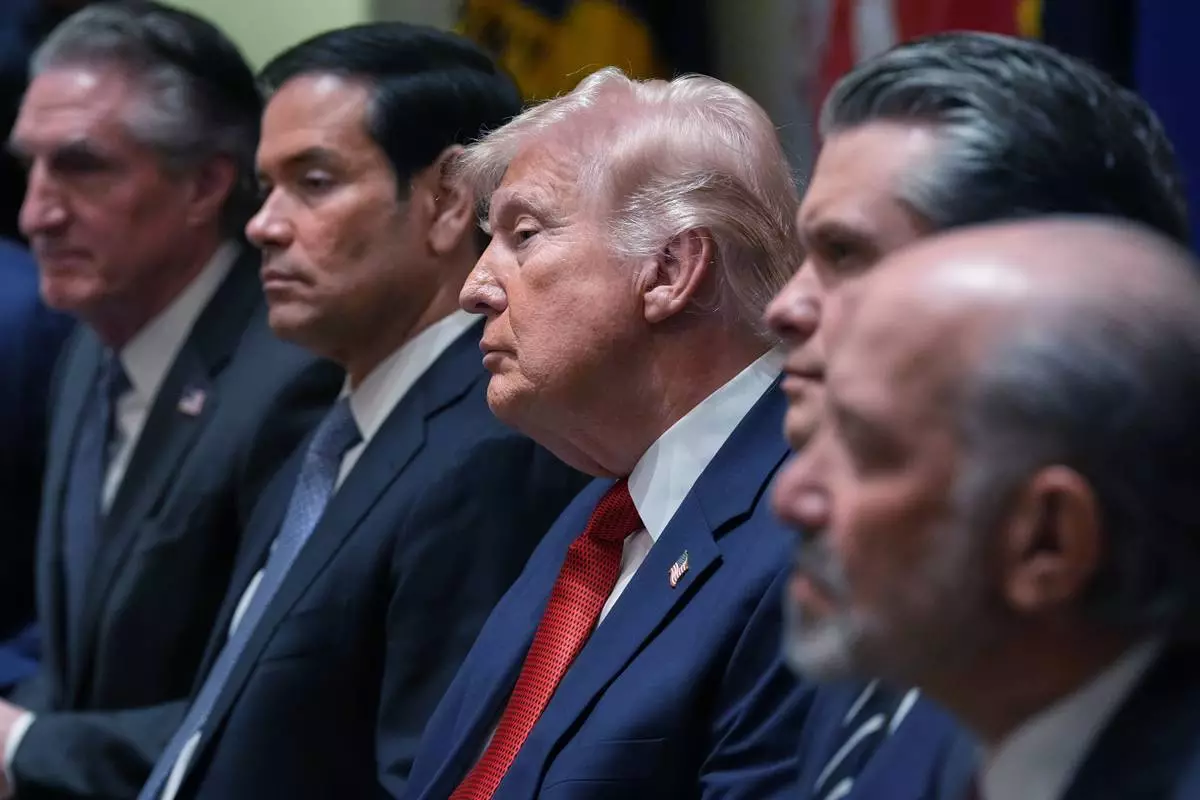
From left, Interior Secretary Doug Burgum, Secretary of State Marco Rubio, President Donald Trump, Defense Secretary Pete Hegseth, and Commerce Secretary Howard Lutnick listen during a Cabinet meeting at the White House, Thursday, March 26, 2026, in Washington. (AP Photo/Alex Brandon)
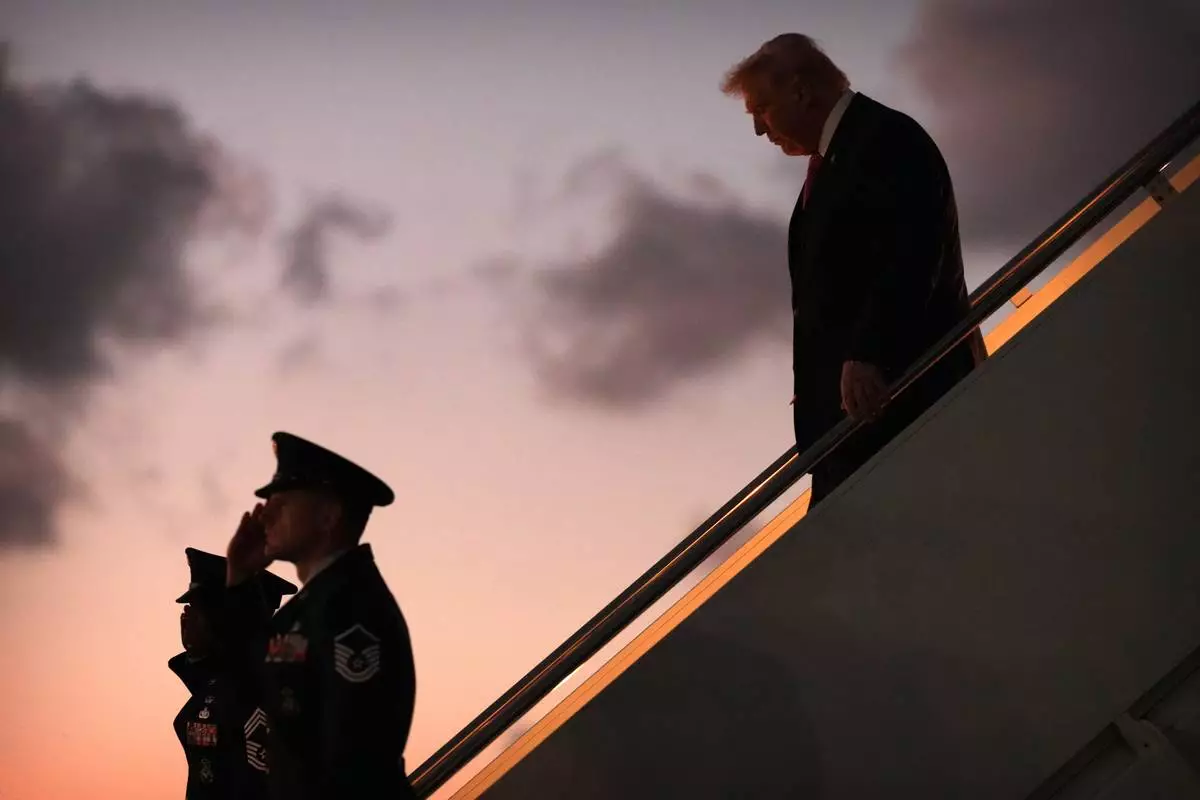
President Donald Trump steps off Air Force One, Friday, March 27, 2026, at Palm Beach International Airport in West Palm Beach, Fla. (AP Photo/Mark Schiefelbein)

President Donald Trump speaks at the Future Investment Initiative Institute's summit Friday, March 27, 2026, in Miami Beach, Fla. (AP Photo/Mark Schiefelbein)