China's Shenzhou-21 astronauts have steadily advanced a series of in-orbit scientific experiments, emergency drills, facility maintenance, and health protection tasks in the week following their successful second spacewalk on March 16, the China Manned Space Agency (CMSA) announced.
The crew members, made up of mission commander Zhang Lu and astronauts Wu Fei and Zhang Hongzhang, are approaching the landmark 150 days in orbit, with all three in good physical condition and all scheduled missions proceeding smoothly.
Click to Gallery
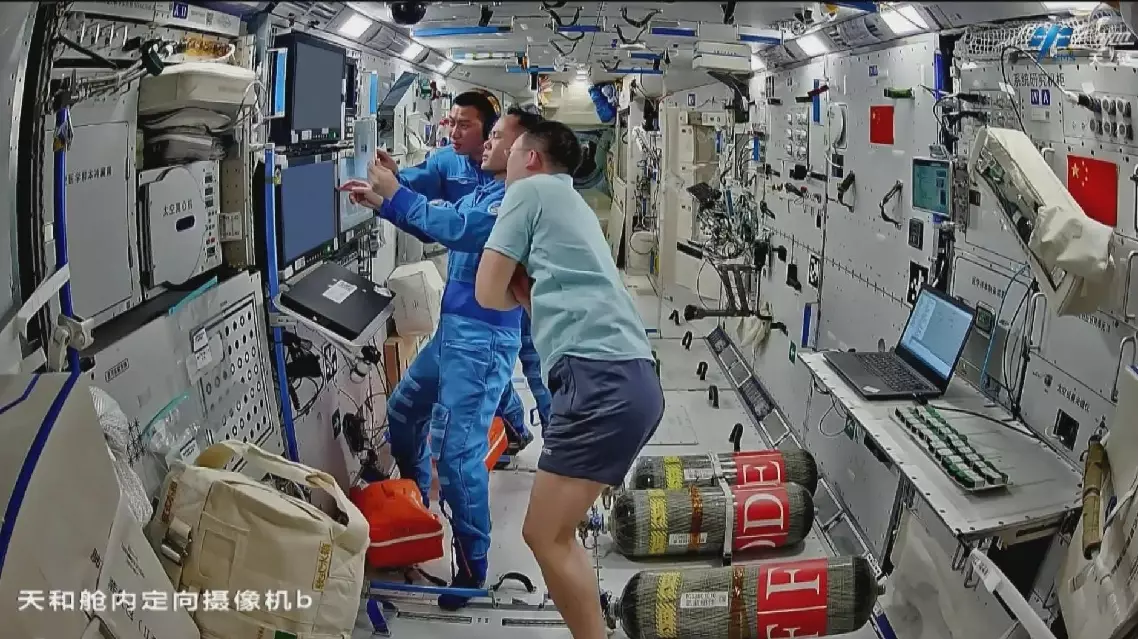
China's Shenzhou-21 crew advances space experiments, health monitoring, equipment maintenance tasks
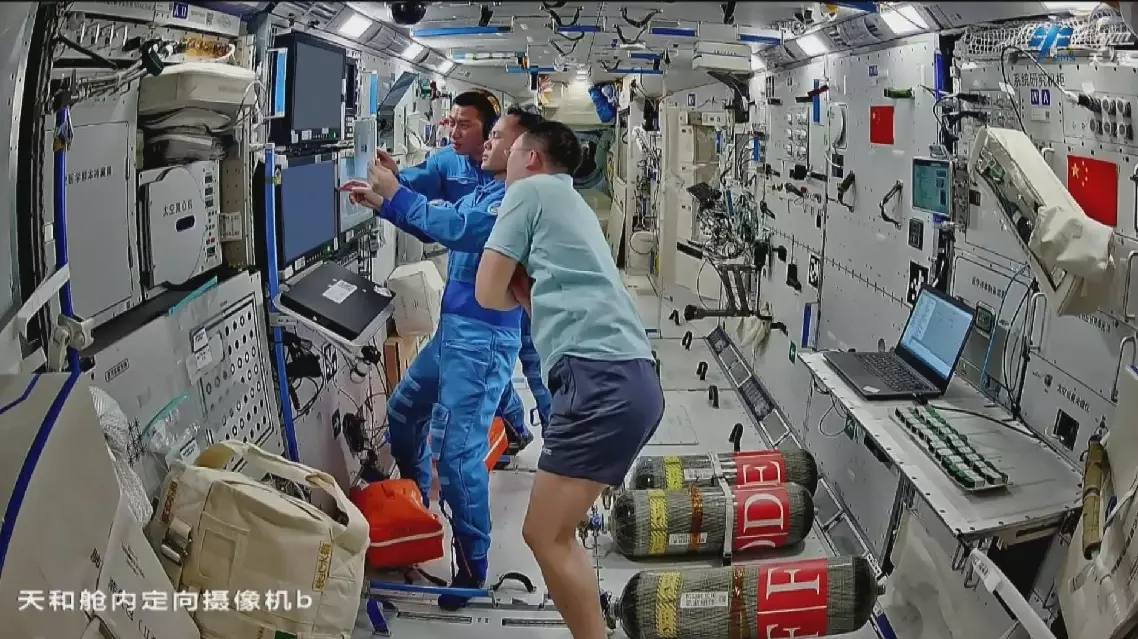
China's Shenzhou-21 crew advances space experiments, health monitoring, equipment maintenance tasks
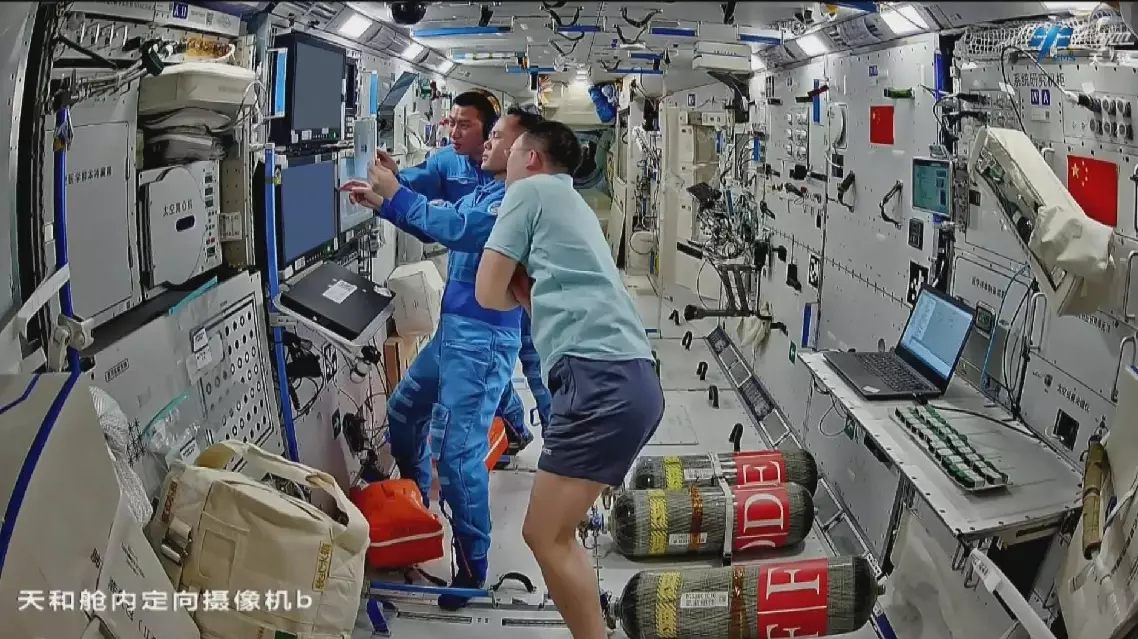
China's Shenzhou-21 crew advances space experiments, health monitoring, equipment maintenance tasks
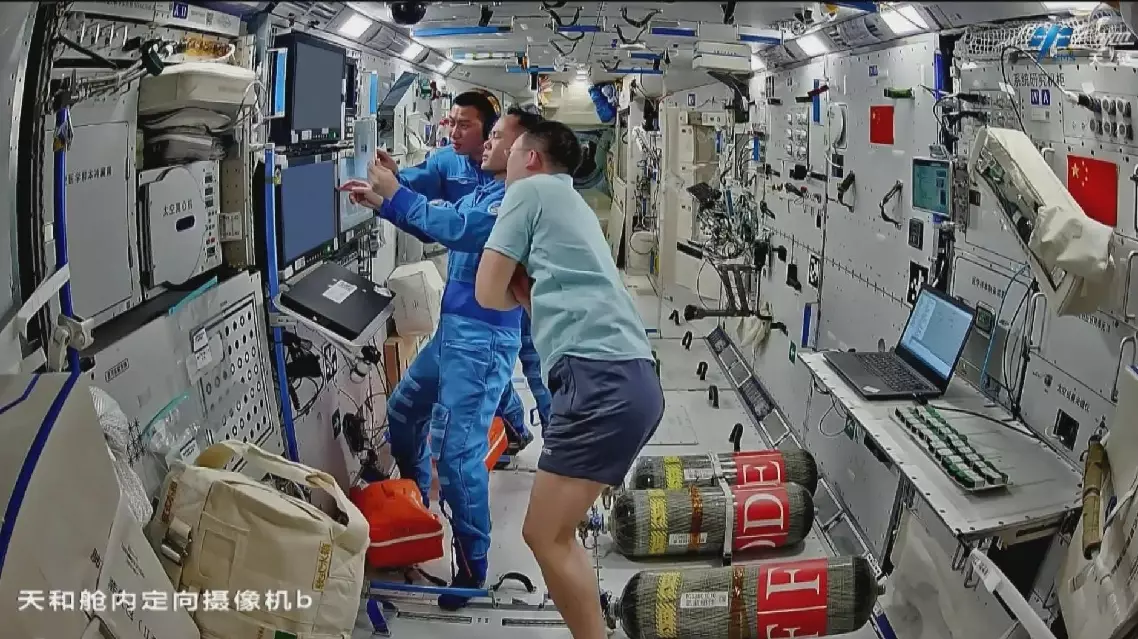
China's Shenzhou-21 crew advances space experiments, health monitoring, equipment maintenance tasks
In the field of space medicine, the crew members have completed saliva sample collection for a key pharmacokinetics research project. The data acquired and accumulated through the work will be used to investigate the effects of long-duration spaceflight on the human body.
For microgravity physical science experiments, the astronauts have completed a series of facility maintenance and operation tasks as planned. These included replacing the sampling cover on the experimental plug-in inside the combustion science experiment rack, cleaning samples in the cavity of the container-free experiment cabinet and performing electrode maintenance on the cabinet's axis mechanism.
In addition to scientific experiments, the crew members have conducted a full-system pressure emergency drill as scheduled. The exercise simulated the full emergency response process for an internal depressurization scenario aboard the space station, aiming to consolidate and further improve the crew's emergency response capabilities and ground-space coordination skills.
For the daily upkeep of the space station, they have carried out simultaneous environmental monitoring and equipment inspection and maintenance work. They used specialized instruments to complete air cleanliness tests and acoustic environment monitoring inside the cabin, and conducted routine checks and maintenance on the water dispenser and regenerative environmental control and life support system. The astronauts also regularly sorted onboard supplies and disposed of waste to maintain a clean and orderly living and working environment.
To safeguard their in-orbit health, the crew members have carried out several medical examinations, including abdominal, cardiac and muscular ultrasound scans, bone density measurements, maximum isometric muscle strength tests, and hearing assessments. They also remained committed to daily physical exercises, utilizing equipment such as the "space treadmill" to counteract the physiological effects of microgravity. As the crew members are approaching the 150-day on-orbit milestone, they are set to carry out a series of follow-up scientific experiments and operational tasks aboard the Tiangong space station.
China's Shenzhou-21 crew advances space experiments, health monitoring, equipment maintenance tasks
China's Shenzhou-21 crew advances space experiments, health monitoring, equipment maintenance tasks
China's Shenzhou-21 crew advances space experiments, health monitoring, equipment maintenance tasks
China's Shenzhou-21 crew advances space experiments, health monitoring, equipment maintenance tasks