CAPE TOWN (AP) — Two-time Olympic champion runner Caster Semenya on Sunday expressed her disappointment with IOC President Kirsty Coventry over the decision to ban transgender women athletes from competing in women's events at the Olympics.
Semenya, who is South African, said she expected more from a woman leader like Coventry, who is from Zimbabwe and a fellow African.
“Personally, for her as a leader, she’s an African, I’m sure she understands how, you know, we as Africans, we are coming from, as a global South, you know, you cannot control genetics,” Semenya said at a press conference after a women’s race promoted to celebrate female strength, unity and community support in Cape Town. “For me personally, for her being a woman coming from Africa, knowing how, you know, African women or women in the global South are affected by that.”
Semenya spoke three days after the International Olympic Committee excluded transgender women athletes from competing in women's events at the Olympics or any IOC event. The decision published in a 10-page policy document Thursday also restricts female athletes such as Semenya with medical conditions known as differences in sex development, or DSD.
"Obviously if you say the science, because we talk about science here, if the science is clear, show us who decided and don’t dress that as a lie because it’s a lie and we know because we’ve seen it so if we were to answer or confront Kirsty that’s how we gonna respond and we’ll respond strong as we are because it affects women,” Semenya said.
Semenya, who was assigned female at birth in South Africa and has testosterone levels higher than the typical female range, is a two-time Olympic gold medalist in the 800 meters who has been banned from running in her favorite race at major international meets like the Olympics and world championships since 2019 because she refused to follow the rules and take medication to artificially reduce her hormone levels.
“For me personally, I’ll say the voice is not heard because you taking it as a tick box, you ticking a box so you can go clarify or say yes we’ve consulted," she said. "For me, it’s you ticking the box."
Semenya and other track athletes, such as Dutee Chand of India, challenged previous versions of their sport’s eligibility rules in court.
Before the 2024 Paris Olympics, three top-tier sports — track and field, swimming and cycling — excluded transgender women who had been through male puberty. Semenya won a European Court of Human Rights judgment in her years-long legal challenge to track and field’s rules that did not overturn them.
Last year, though, she claimed to have ended her seven-year legal challenge against sex eligibility rules despite that legal victory.
The eligibility policy that will apply from the Los Angeles Olympics in July 2028 “protects fairness, safety and integrity in the female category,” the IOC said Thursday.
It is unclear how many, if any, transgender women are competing at an Olympic level. No woman who transitioned from being born male competed at the 2024 Paris Summer Games, though weightlifter Laurel Hubbard did at the Tokyo Olympics in 2021 without winning a medal.
The IOC said last week's decision was not retroactive and did not apply to any grassroots or recreational sports programs. The IOC's Olympic Charter states that access to play sport is a human right.
AP Winter Olympics at https://apnews.com/hub/milan-cortina-2026-winter-olympics

FILE - South Africa athlete Caster Semenya, center, answers reporters with lawyers Gregory Nott, left, and Shona Jolly KC after Semenya won a partial victory at the European Court of Human Rights on in her seven-year legal fight against track and field's sex eligibility rules, Thursday, July 10, 2025 in Strasbourg, eastern France. (AP Photo/Antonin Utz, File)
PUERTO VALLARTA, Mexico (AP) — Hurricane Simon pounded Mexico’s Pacific coast as a Category 3 storm on Sunday, its eye remaining just offshore as its most powerful winds and rain slammed people living between the Sierra Madre and the ocean.
The hurricane's center swirled parallel to the coast, closing in on the Puerto Vallarta area, where its most damaging winds and rain were expected to hit around midnight and continue through Monday morning. Its maximum sustained winds weakened Sunday to 125 mph (205 kph), according to the U.S. National Hurricane Center in Miami, but it was still expected to remain a dangerous hurricane.
That’s not good news for people in and around Puerto Vallarta, a popular tourist destination in the state of Jalisco. Just inland and uphill from the resort areas, many Mexicans live in communities where housing might not stand up to the storm.
By Sunday afternoon, Simon's eye was moving northwest about 50 miles (80 kilometers) south of Cabo Corrientes at about 5 mph (7 kph). A senior hurricane center specialist, Phillipe Pappin, said this westernmost tip of mainland Mexico is the area most likely to get a direct hit from the system. Cabo Corrientes is at the southern tip of Bahia de Banderas, the wide bay where Puerto Vallarta looks out to the Pacific.
Hurricane-force winds extend outward up to 25 miles (35 kilometers), and tropical-storm-force winds reach up to 60 miles (95 kilometers) from Simon’s center, meaning the entire area between Mexico's western coast and the Sierra Madre mountains could be affected.
“We’re expecting catastrophic wind and life-threatening storm surge impacts along that west-central coast of Mexico where the hurricane warning is currently in effect,” Pappin said. “They’re also getting very heavy rainfall associated with the storm that’s likely going to produce life-threatening flooding and mudslides in areas of higher terrain along the Mexican coastline, and there will be significant swells.”
The hurricane center on Sunday said Simon was expected to dump an additional 2 to 4 inches (5 to 10 centimeters) of rain, with some areas getting up to 8 inches (20 centimeters), in the states of Colima, Jalisco, Nayarit and Sinaloa through early Thursday.
“Isolated maximum storm totals of 30 inches (76 centimeters) are possible over portions of the states of Michoacan, Colima, and Jalisco," the center said in its latest advisory. "This rainfall will produce life-threatening flooding and mudslides or worsen any on-going flooding, especially in areas of steep terrain.”
As the storm approached Puerto Vallarta, National Guard vehicles patrolled the streets while police used a megaphone to call out the few people who were jogging, walking their dogs or biking by the waterfront. Officers reminded people that the area was closed and urged them to take shelter. Not everyone followed the orders.
Jalisco state suspended classes on Friday and Monday in 22 coastal municipalities and began evacuating people from at-risk areas while asking the tourism sector to make sure workers and visitors are fully accommodated in shelters or safe zones.
Mexican President Claudia Sheinbaum took to the social platform X on Sunday to urge people in Jalisco, Colima, Nayarit and Michoacan to stay sheltered until the government issues a notification that the danger has passed. She also asked people to follow recommendations from civil protection officials and to avoid traveling on public roads.
“Precautionary evacuation efforts to safe zones are ongoing; the priority is our safety,” she wrote.
Hotel worker Víctor Martínez went shopping for nonperishable food Sunday afternoon. He said he could not go to work because public transportation service was suspended and most of the hotel had been evacuated.
Martínez found people’s concerns about the hurricane comforting.
“It happened to us before. It hit us years ago,” Martínez said, referring to a Category 5 hurricane that hit the area in 2002. “People didn’t expect it. We were very skeptical that it would ever hit us. Now, though, we’re different. Precautions are being taken. It happened to us once, and we won’t let it happen again.”
Despite the risks posed by Simon, tourists were still arriving in Puerto Vallarta.
Visitors Ricardo Ramírez and Brenda Villarreal, who have never lived through a hurricane, went looking for food by the city’s boardwalk and came across police urging people to take shelter. Ramírez said they were completely unprepared for the situation.
“The boardwalk is closed. Be responsible. Understand!” police told passersby using a megaphone.
Ramírez said he and Villarreal had planned their four-day vacation since last year and traveled from Guadalajara, Jalisco’s capital.
“We don’t know the extent of the danger yet,” Villarreal said. “We’re just starting to see what’s going on.”
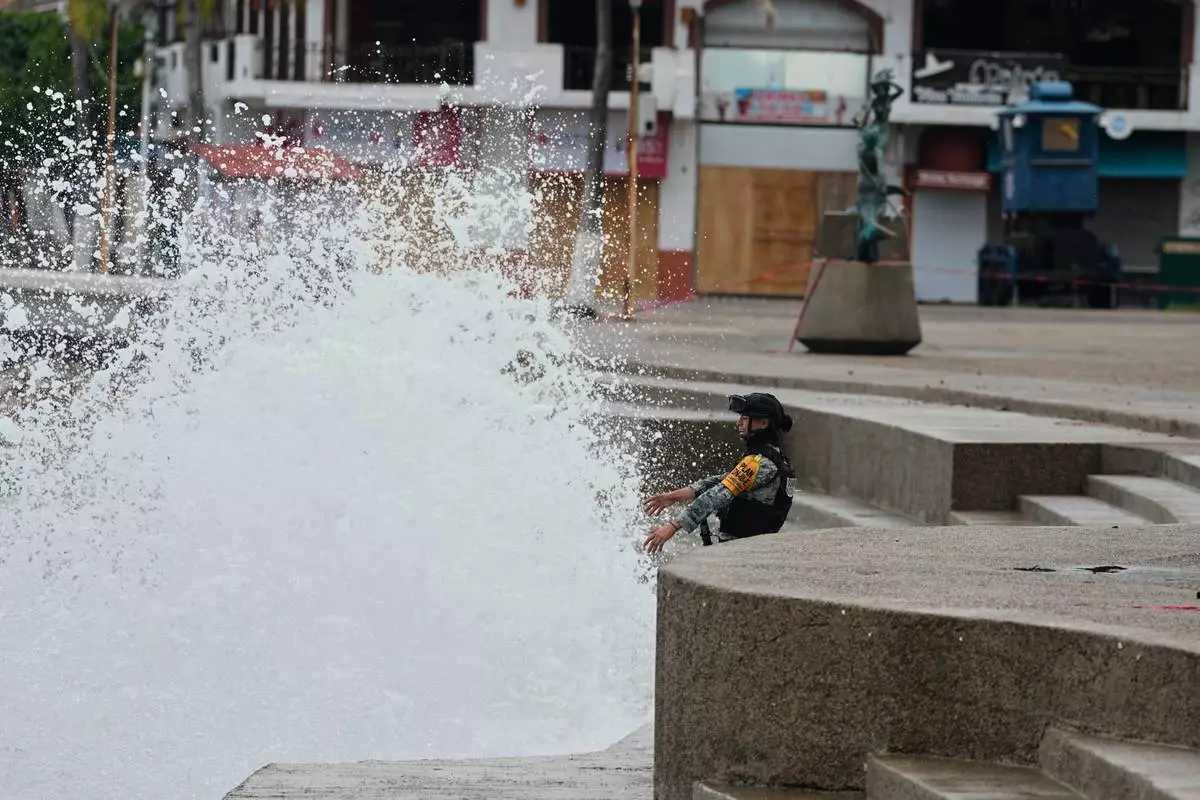
A National Guard on patrol faces the spray at the seawall as Hurricane Simon approaches Puerto Vallarta, Mexico, Sunday, Oct. 11, 2026. (AP Photo/Fernando Llano)
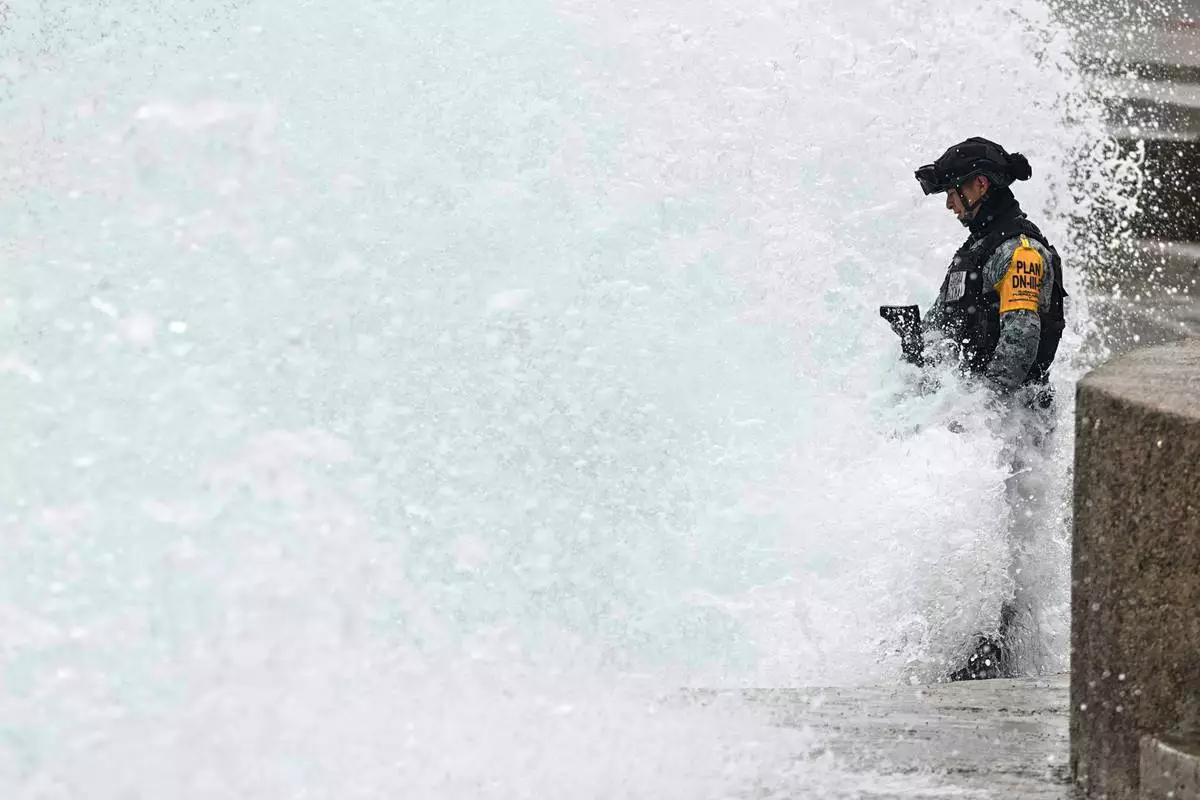
A National Guard stands in the spray as a wave hits the seawall brought by the approaching Hurricane Simon in Puerto Vallarta, Mexico, Sunday, Oct. 11, 2026. (AP Photo/Fernando Llano)
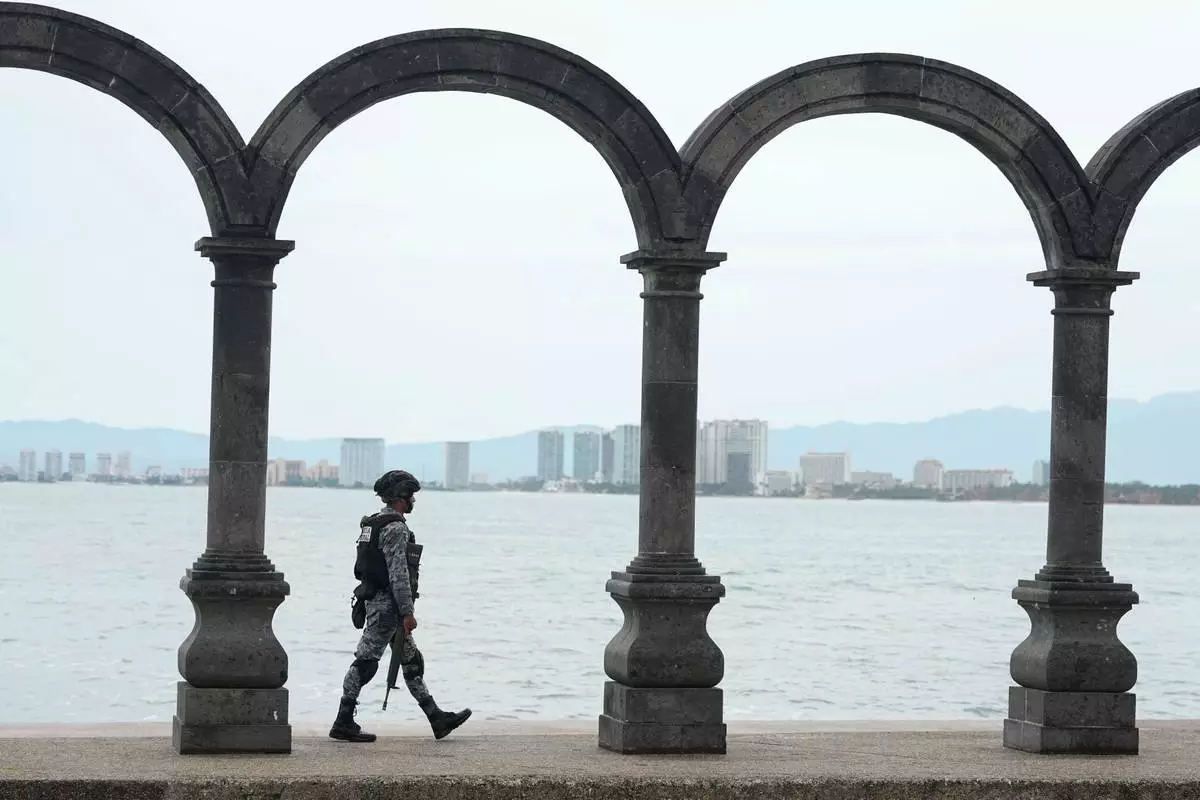
A National Guard patrols along the seawall as Hurricane Simon approaches Puerto Vallarta, Mexico, Sunday, Oct. 11, 2026. (AP Photo/Fernando Llano)
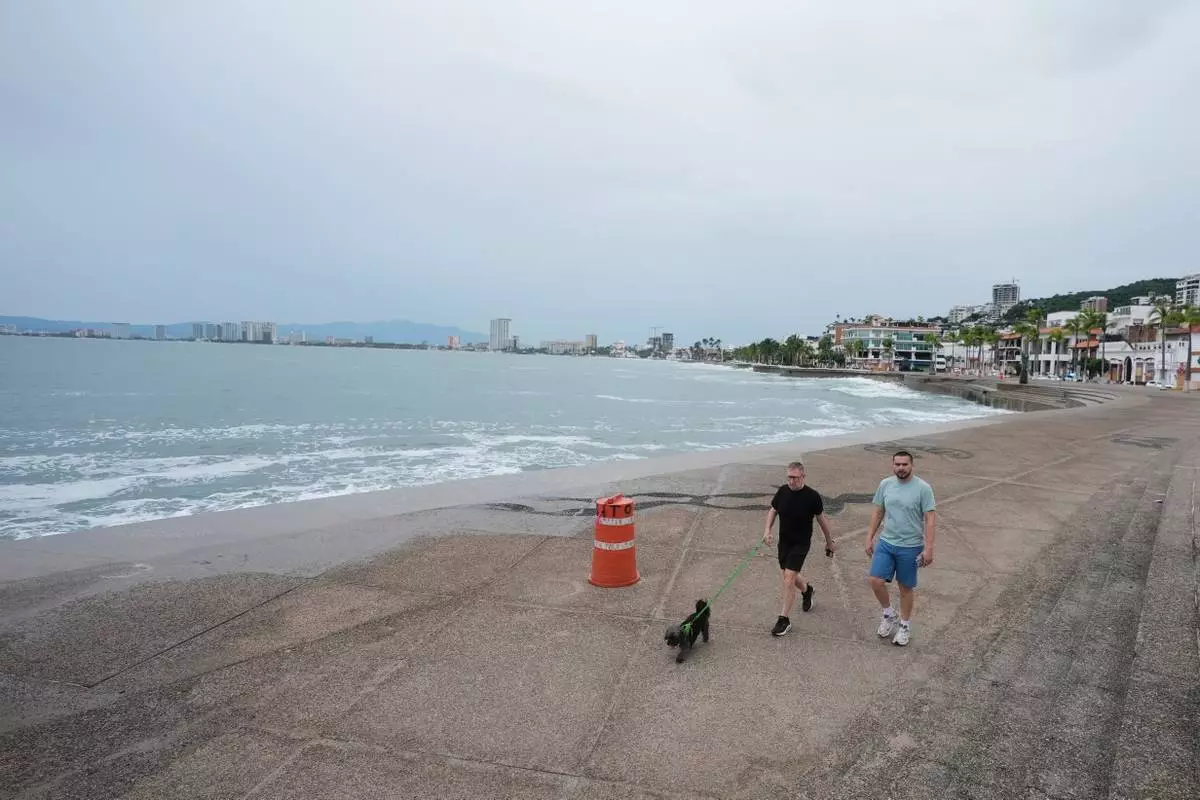
Tourists walk along the coast as Hurricane Simon approaches Puerto Vallarta, Mexico, Sunday, Oct. 11, 2026. (AP Photo/Fernando Llano)
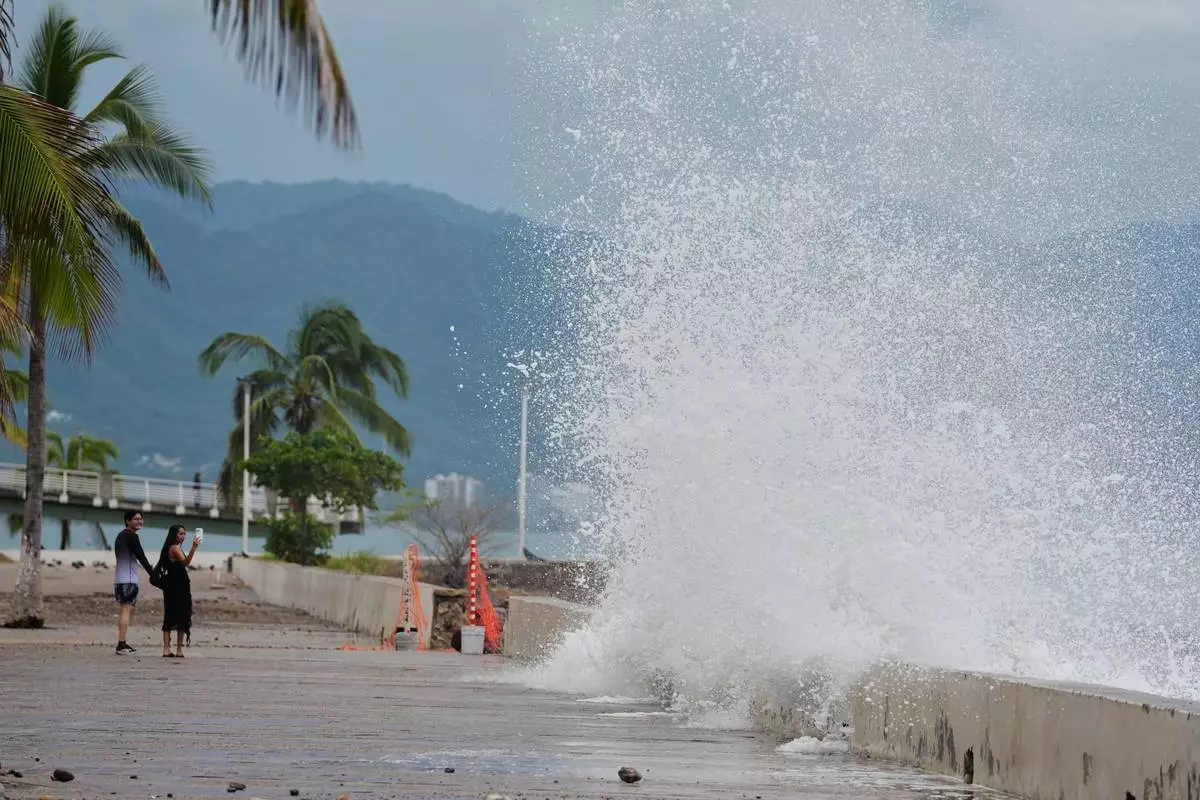
Tourists take photos of a water splashing against the wall as Hurricane Simon approaches Puerto Vallarta, Mexico, Sunday, Oct. 11, 2026. (AP Photo/Fernando Llano)
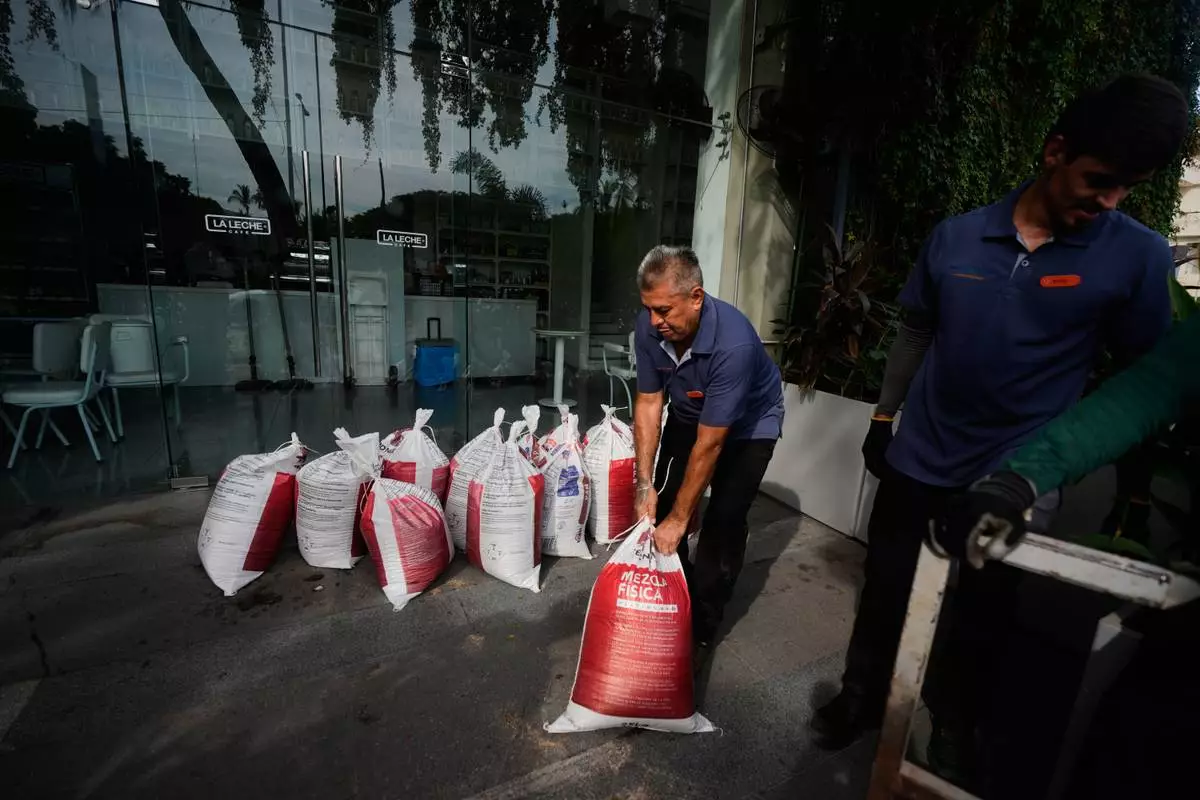
Workers place sandbags outside a restaurant as Hurricane Simon approaches Puerto Vallarta, Mexico, Saturday, Oct. 10, 2026. (AP Photo/Fernando Llano)
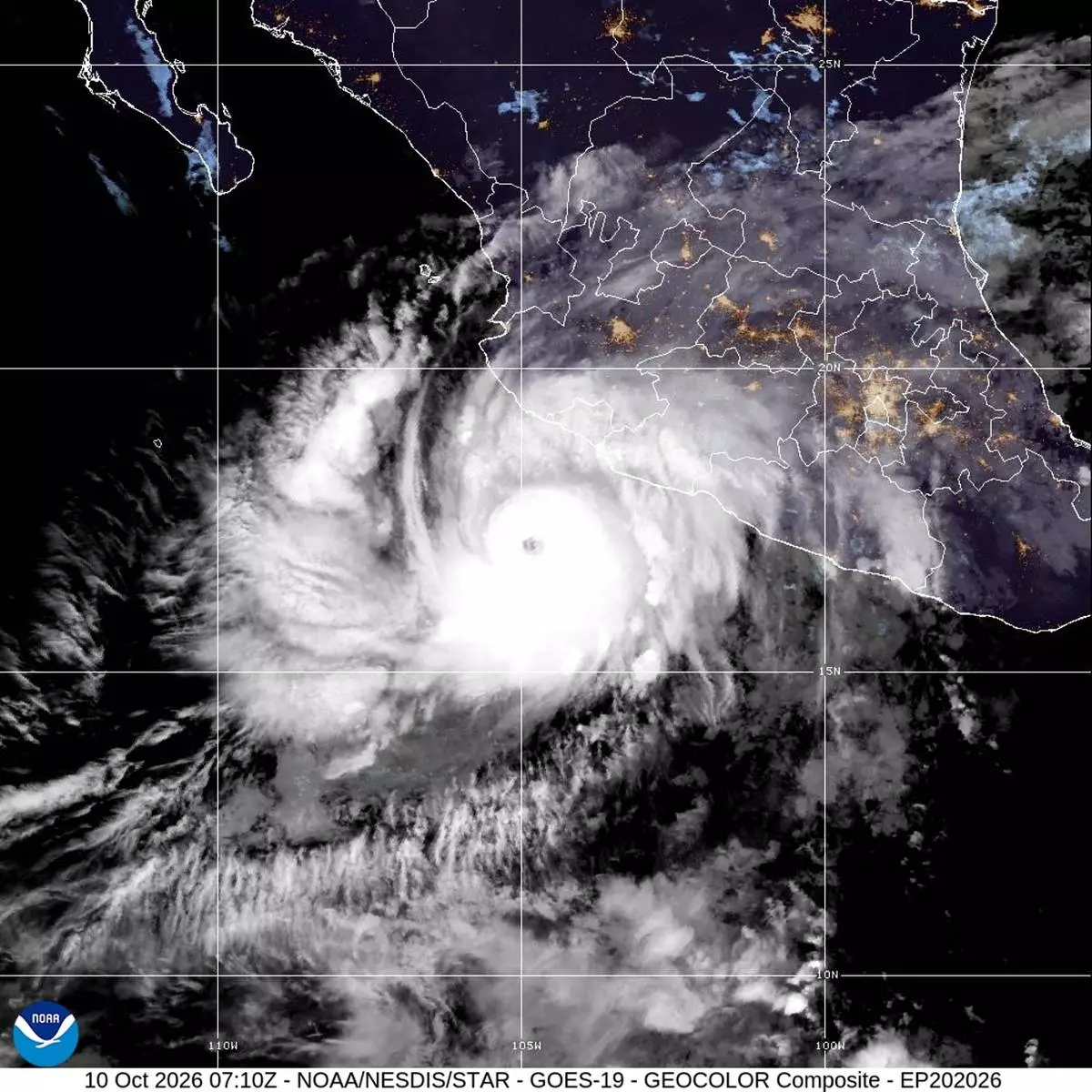
This satellite image provided by the National Oceanic and Atmospheric Administration, or NOAA shows Hurricane Simon in the Pacific on Saturday, Oct. 10, 2026. (National Oceanic and Atmospheric Administration via AP)
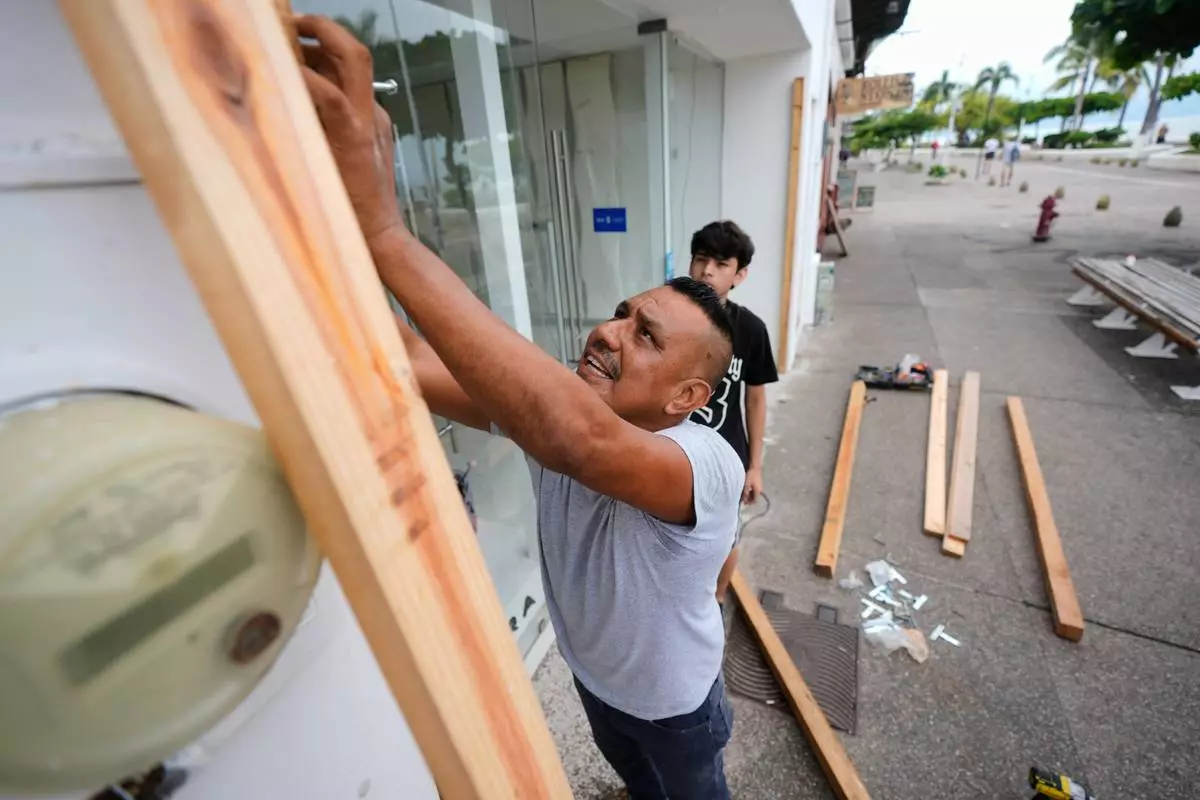
A man boards up a shop as Hurricane Simon approaches Puerto Vallarta, Mexico, Saturday, Oct. 10, 2026. (AP Photo/Fernando Llano)
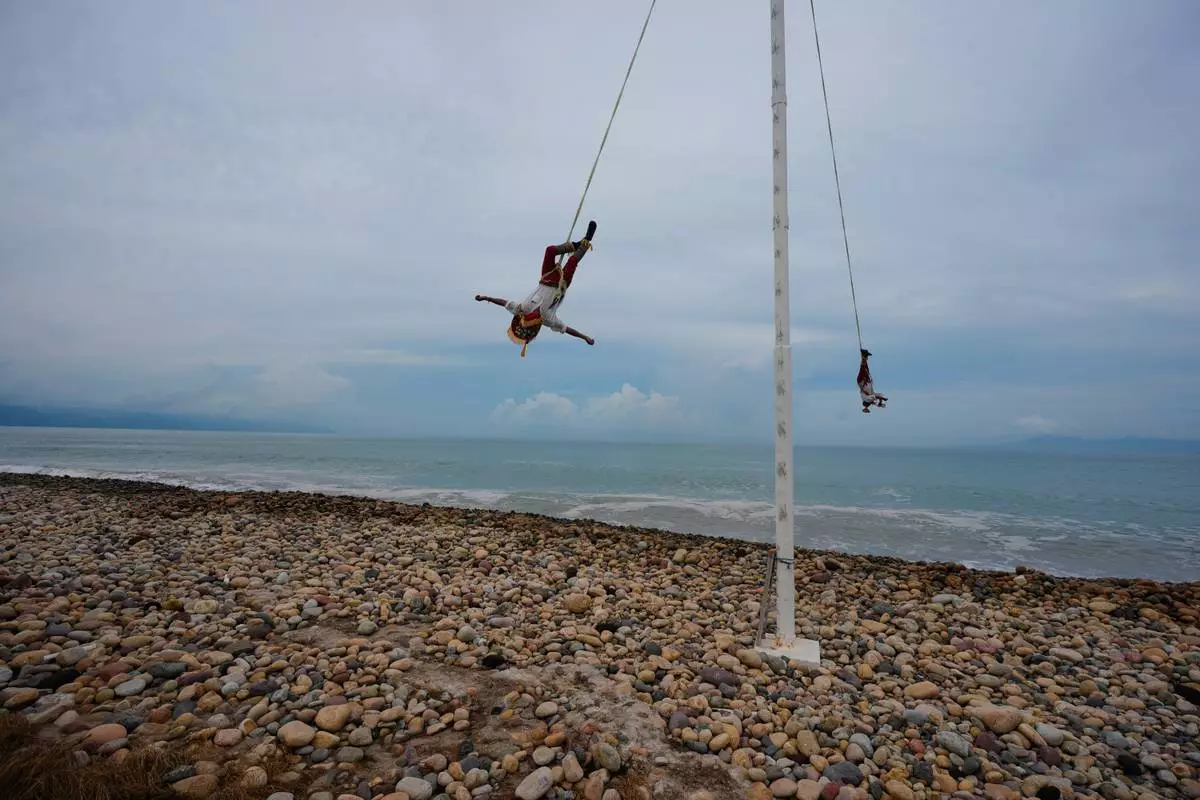
The Flying Men of Papantla perform the "Danza de los Voladores" on the beach as Hurricane Simon approaches Puerto Vallarta, Mexico, Saturday, Oct. 10, 2026. (AP Photo/Fernando Llano)
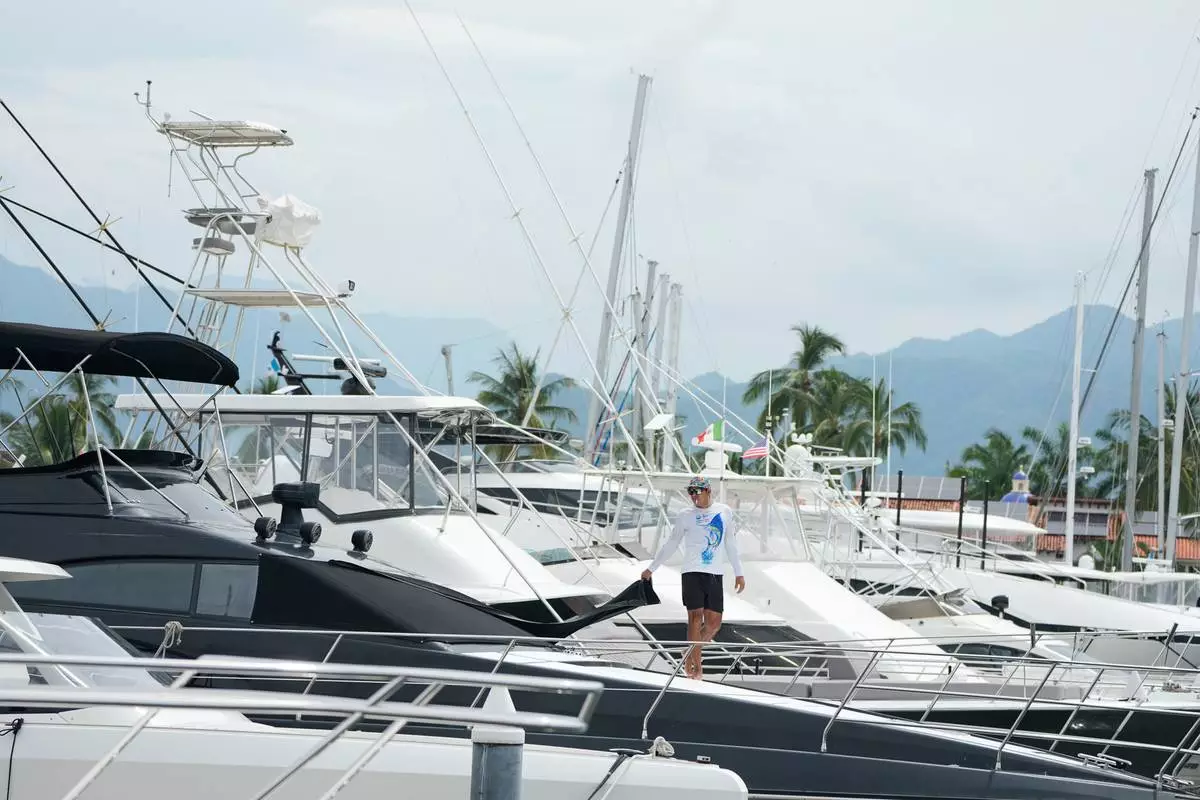
A man places a window covering on his boat as Hurricane Simon approaches Puerto Vallarta, Mexico, Saturday, Oct. 10, 2026. (AP Photo/Fernando Llano)