BUDAPEST, Hungary (AP) — A group of friends in their mid-20s campaigned door to door last week in a small Hungarian city, supporting a political movement that soon could end Prime Minister Viktor Orbán 's 16-year grip on power.
The young men from Hungary's Lake Balaton region were volunteering for the center-right Tisza party and its leader, Péter Magyar, and campaigning to move past what they described as Orbán's broken system.
“We've lived our whole lives in this system, and we want to see what it could be like outside of it,” said Florián Végh, a 25-year-old student. “I can say on behalf of my fellow university students and my friends that this system is absolutely dysfunctional.”
A generational gap is widening, with Hungary’s youth pushing overwhelmingly for an end to Orbán's autocratic rule while the oldest citizens remain loyal to the prime minister — a split that could be a decisive factor in the April 12 elections.
Orbán, 62, trails in the polls behind Magyar, a 45-year-old lawyer who broke with Orbán's nationalist-populist Fidesz party over a political scandal in 2024. He has led Tisza on a rapid political rise, inspiring a voting cohort that had largely avoided politics for at least two decades.
Fidesz's declining popularity during economic stagnation and political and corruption scandals has widened the demographic divide. A recent survey by pollster 21 Research Center found that 65% of voters under 30 support Tisza, while 14% are backing Orbán.
One Tisza volunteer, 24-year-old student Levente Koltai, pointed out that Fidesz is an acronym in Hungarian for “Alliance of Young Democrats.” But he believes the party no longer lives up to its name.
“Fidesz has lost the title of young, democratic and alliance,” he told The Associated Press. “It’s gone from young to old, from democratic to tending toward dictatorial, and from an alliance to a circle of cronies.”
Andrea Szabó, a senior researcher with Eötvös Loránd University's Institute for Political Science in Budapest, said a changing of the guard was emerging in Hungary, where “a new, active political generation is beginning to unfold before our eyes.”
While Orbán’s political generation was defined by its fight against Hungary’s Soviet-era socialist system in the 1980s and 1990s, "now, we have reached the point where after 25 years, there is a new political generation that is against the Orbán regime,” Szabó said.
Orbán’s government defines itself as both Christian-national and “ illiberal,” and has drifted away from partners in the European Union in favor of closer relations with Russia and China.
Long accused by critics of taking over Hungary's institutions, clamping down on press freedom and overseeing entrenched political corruption — charges he denies — Orbán has become an icon in the global far-right movement.
Admirers approve of his opposition to immigration and curtailing of LGBTQ+ rights, and applaud benefits to young families such as abolishing income tax for mothers with multiple children and providing state-backed loans to first-time homebuyers.
Such policies, as well as a pension supplement for retirees, appeal to many older voters. Fidesz leads Tisza 50% to 19% among retirement-age Hungarians, according to the 21 Research Center Poll.
Zsuzsanna Prépos, a retiree, said at one of Orbán’s recent campaign rallies that she was “very happy” with the government's pension policies, and that she's supporting Fidesz because it “helps young people.”
“When I was young ... I didn’t get anything. Now young people have a lot of help,” she said.
Yet such measures have not translated into youth support for Orbán. In several recent speeches, he has both scolded young people for their anti-government attitudes and pleaded with them to reconsider.
“Young people, wake up!” he said at a rally last week. “These are not times for taking risks, experimenting or trying new things. ... Believe me, today only Fidesz and my humble self can provide this country with security.”
Szabó, the researcher, said while many young people view Orbán's family support policies positively, their “very strong sense of justice” is incompatible with "the authoritarian exercise of power, the corruption, the fact that they feel vulnerable and that there is insecurity in the country.”
“Their lives essentially took place entirely within the Orbán regime, so they know nothing other than this kind of functioning of power," she said.
Recent events in Hungary have turned large numbers of youth against the ruling party.
Hungary was rocked by scandal in February 2024 when it was revealed that the president, a close Orbán ally, had granted a pardon to an accomplice in a child sexual abuse case. The revelation shocked the country, and the president and justice minister resigned.
Days later, some of the country’s best-known influencers led a protest demanding a political transformation. Drawing tens of thousands, it marked a turning point which “opened the door to politicization for a lot of young people," Szabó said.
In the wake of the pardon scandal, Magyar broke with Fidesz and launched Tisza. Three months later, the party won 30% of the vote in European Parliament elections.
Magyar has built his campaign on promises to end Orbán's drift toward Russia and restore Hungary's Western orientation, and to revive the stagnating economy by recovering billions in EU funds that are blocked over rule-of-law and corruption concerns.
That economic message has resonated with youth. Végh, the Tisza volunteer, said it's easier than ever for his internet-savvy generation to access different forms of information, and to travel to nearby countries where governments are putting public money to good use.
“In Austria, you see a much calmer, more peaceful, more educated society with better roads and better health care," he said. "You cross the border and see that you have drifted into a developed European country.”
Although Tisza leads in the polls, its victory is far from assured. Orbán has a lead among older voters and in much of the countryside.
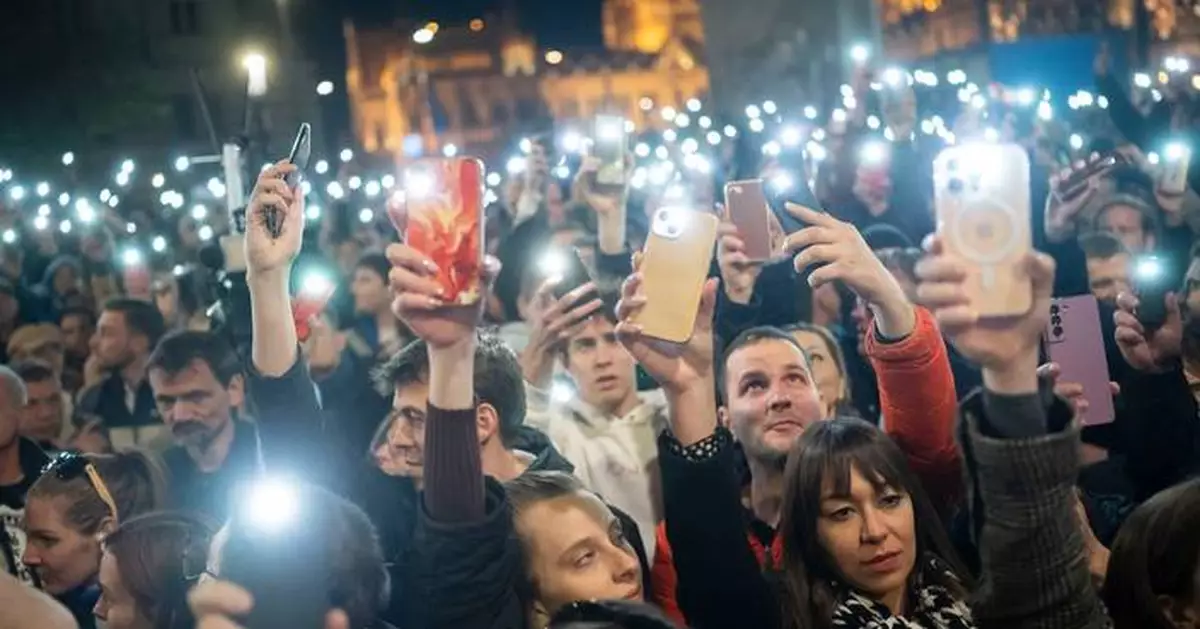
At a recent rally in Budapest that drew upward of 100,000 people, Tisza supporter Dorina Csobán said the election battle had become "pretty divisive in my family for the older people, because we younger people are saying clearly that there must be change.”
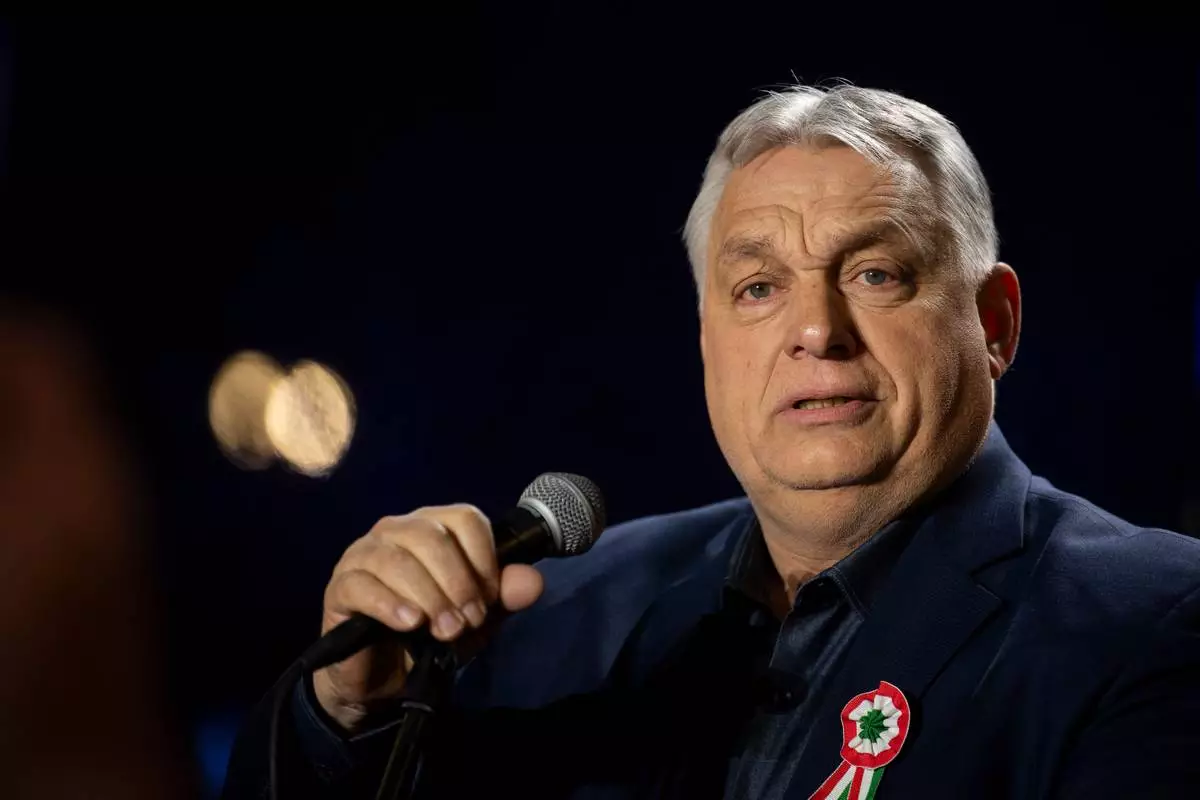
Prime minister of Hungary, Viktor Orbán speaks during a countryside campaign tour in Kaposvár, Hungary, Monday, March 16, 2026 ahead of April 12 parliamentary election. (AP Photo/Denes Erdos)
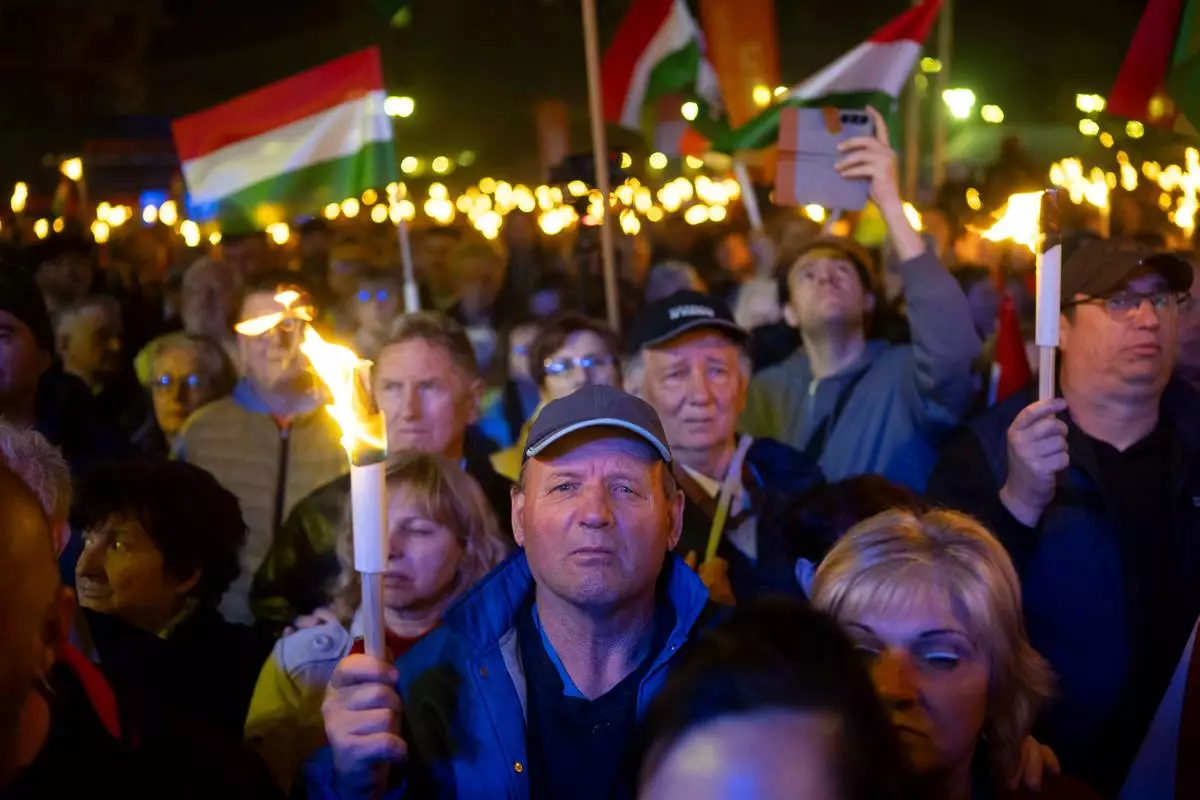
Supporters of prime minister Viktor Orbán listen during a countryside campaign tour in Kaposvár, Hungary, Monday, March 16, 2026 ahead of April 12 parliamentary election. (AP Photo/Denes Erdos)
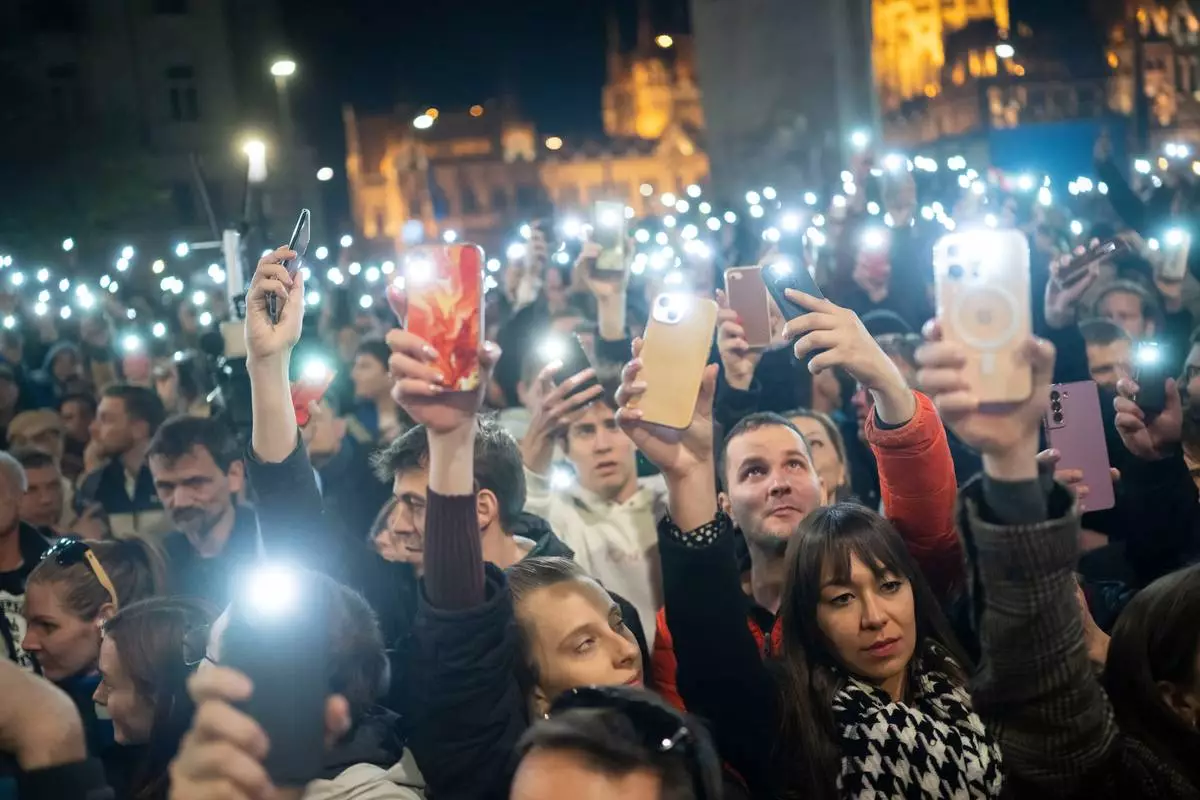
FILE -People listen to the speech of former Hungarian government insider Peter Magyar next to Kossuth Square on Tuesdy, in Budapest, Hungary, March 26, 2024. (AP Photo/Denes Erdos, File)
BARCELONA, Spain (AP) — Pope Leo XIV celebrated the Sagrada Familia Basilica as a masterpiece of “stones, colors and light,” as he marked the centenary of the death of its architect, Antoni Gaudí, with a Mass on Wednesday to inaugurate its final soaring sandcastle spire.
Leo called Gaudí’s unfinished temple, one of the world’s most visited monuments, a “sign of unity and harmony for all of Spain,” an ongoing building project like the lifelong journey all Christians make to find God.
“We are all the living stones of this edifice,” Leo said from the altar of the basilica, with Spanish King Felipe VI and Queen Letizia sitting to his side and a hundreds-strong choir filling the basilica with song.
The service marked the highlight of Leo’s weeklong visit to Spain, the first by a pope in 15 years to the once staunchly Catholic European country that, like many others, has experienced secularizing trends.
The trip, though, has underscored how the country of 50 million people, which experienced a religious crisis after its 20th century dictatorship ended, still has plenty of faithful Catholics who have turned out in droves to welcome the American pope.
An estimated 120,000 people lined the streets around Sagrada Familia for the event, with streets closed to traffic and a heavy police presence, given the attendance of the royal couple and Prime Minister Pedro Sánchez. The crowds remained after Mass to watch as Leo inaugurated the basilica's final Tower of Jesus Christ that has made it the world's tallest church.
Speaking in Catalan and Spanish, Leo blessed the tower and its illuminated ceramic cross from outside the basilica, surrounded by bishops craning their mitre-capped heads to look up. An angelic boy's choir sang as a spectacular light show lit up the basilica's stained glass windows from the inside and fireworks shot off its facade.
Earlier Wednesday, Leo celebrated a more ancient sacred monument, traveling to Montserrat, a mountain complex outside the city that is dear to many Catalans. The complex, which includes an 11th-century Benedictine abbey and a 16th-century basilica, is revered for its Black Madonna statue and is home to a boy's choir that has existed since the 13th century and is Europe's oldest.
Thousands of faithful arrived early at the monastery, with groups of nuns and schoolchildren singing and waving signs and photographs of the pope outside the basilica. Bells rang out over the spire-like rock formations that top Montserrat and the valley below as Leo arrived in a golf cart.
In recent years, the Montserrat abbey has faced numerous accusations from survivors of clergy sexual abuse and was included in the Spanish ombudsman’s 800-page report on the crisis in 2023. The report found 15 victims and three alleged perpetrators linked to the abbey.
“It’s very painful because there are members of the church who committed errors,” said the Rev. Cesario Escarda, a Toledo priest, as he waited for Leo at the abbey. “What the pope wants to do is shine a light on the truth and ask forgiveness and bring in the victims and listen to them and accompany them.”
The highlight of Leo’s visit, though, was his Mass at Sagrada Familia to commemorate the 100th anniversary of the death of its famed Catalan designer, Gaudí, who died at age 73, three days after he was hit by a tram.
A century after construction began during the pontificate of Leo’s namesake, Pope Leo XIII, the basilica has become one of the world’s most visited but unfinished monuments, annually drawing upward of 5 million visitors a year.
Commemorating Gaudí's death, Leo said he wanted to give thanks to all the supporters, artists and workers who “cooperated in the construction of an architectural masterpiece, which is also an eloquent catechesis made of stones, colors and light.”
Gaudí, who is on the path to possible sainthood, spent four decades designing and building the temple as the summary of the Christian faith carved in stone. The most important stories of Jesus’ life, the Nativity and Passion, are etched into the basilica’s east and west facades. A third facade facing south, the Glory, will serve as the basilica’s main entrance when finished.
The temple is an architectural and geometrical masterpiece inside and out, an art nouveau celebration in form and symbol of Christianity and God’s creation through stone and light.
“Much more than a monument, the Basilica of the Sagrada Familia remains a work in progress today, reminding us that the Christian life is always a journey, because it is a project that God is carrying out,” Leo said in his homily.
A total of 18 sandcastle spires rise up from the top and pierce Barcelona’s skyline: 12 to symbolize Christ’s 12 apostles, four for each of the four Evangelists who recorded Christ’s life in the Gospels, one topped with a star over the apse honoring the Virgin Mary and, tallest among them, the Tower of Jesus Christ.
When the final Christ tower was finished last year at a height of 172½ meters (564 feet), it made Sagrada Familia the world’s tallest church.
“The entire structure of the Sagrada Familia is striking,” said Laura Rincón, who was on hand outside along with two friends for the Mass, after she finished work in a nearby shop. She said that she was sure the pope would be impressed by the church she marvels at every time she passes by.
“If you look at it just for its architecture, it is amazing,” she said. “Inside, its columns make you feel like you are inside a forest.”
The cross-shaped interior, with the altar at the apse, is an homage to light and nature. Treelike columns soar to the sky, colored by constantly changing light filtered through stained glass windows like the sun poking through leaves in a forest.
“Nature is my teacher,” Gaudí once said. “Everything comes from the great book of nature, always open that we must read.”
The colors of the window glass have meaning: The blues and greens of the eastern portal windows, where the facade depicts Christ’s birth, look more joyful and are most brilliant when the sun rises and light passes through. The coarser shades of red and orange, illuminated by the setting sun on the western portals, color the side of the basilica that depicts Christ’s Passion. Behind the altar and above the cross are yellows and gold that glimmer in the noonday sun.
Historian Mònica Santín, who leads tours of the basilica, said that in designing Sagrada Familia, Gaudí was guided by two books: the Gospels and nature.
“The way he lets in the natural light is also an invitation to the Christian mystery,” she said, citing the three facades depicting Christ’s birth, death and glory.
“And when you enter inside, it is all light,” Santín said. “What is that the symbol of? We can’t see God, but we perceive his light all around us. I think that is how you can read this message, and it is fascinating.”
Associated Press religion coverage receives support through the AP’s collaboration with The Conversation US, with funding from Lilly Endowment Inc. The AP is solely responsible for this content.
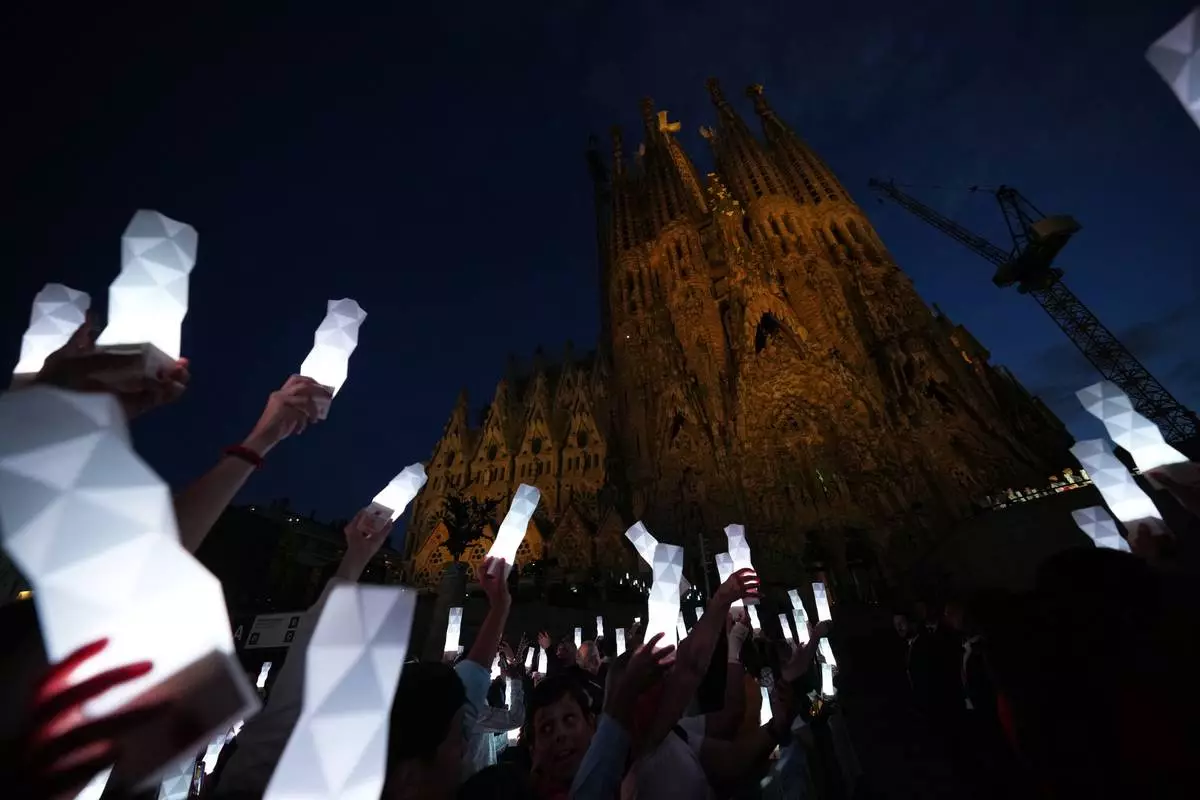
Faithful attend the the inauguration ceremony of the Tower of Jesus Christ at the Basilica of the Sagrada Familia in Barcelona, Spain, Wednesday, June 10, 2026 (AP Photo/Alessandra Tarantino)
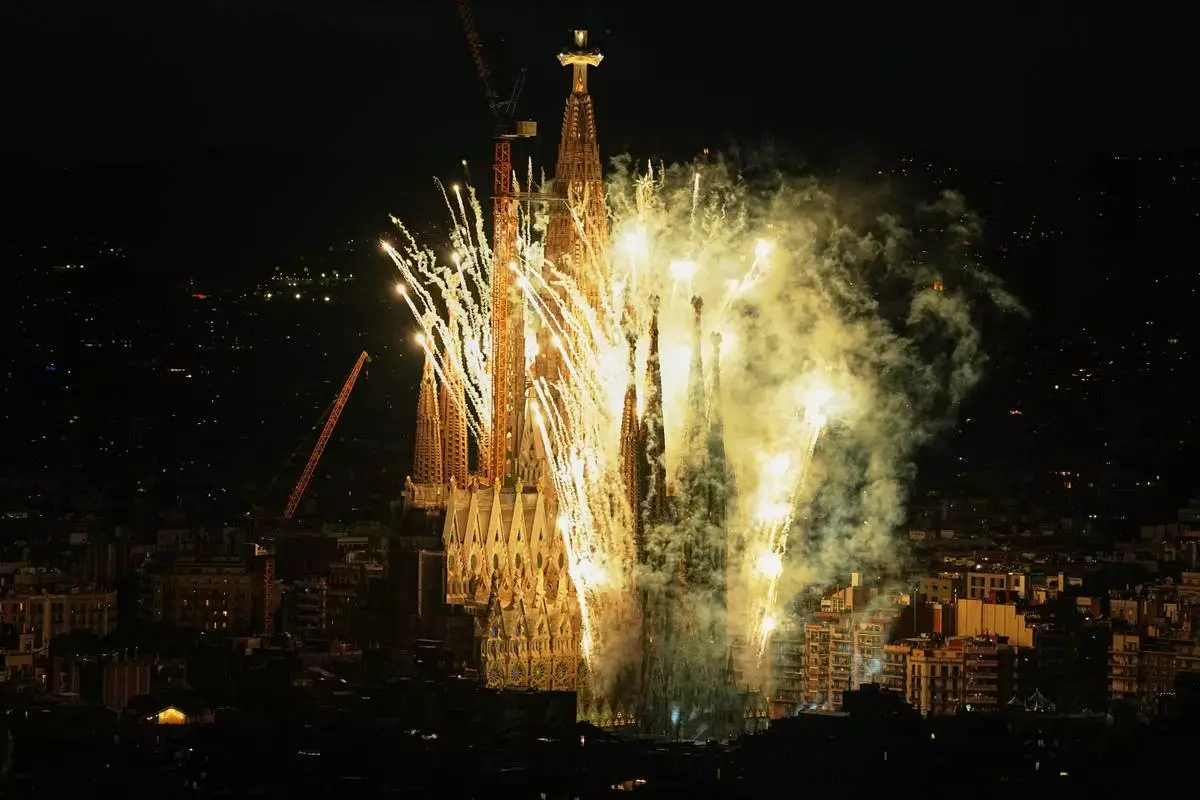
Fireworks engulf Antoni Gaudí's Basilica of the Sagrada Família, seen from Torre Glòries, after Pope Leo XIV blessed the newly completed central Tower of Jesus Christ in Barcelona, Spain, Wednesday, June 10, 2026. The tower's completion made the Sagrada Família, at 172.5 meters (566 feet), the tallest church in the world. (AP Photo/Fatima Shbair)
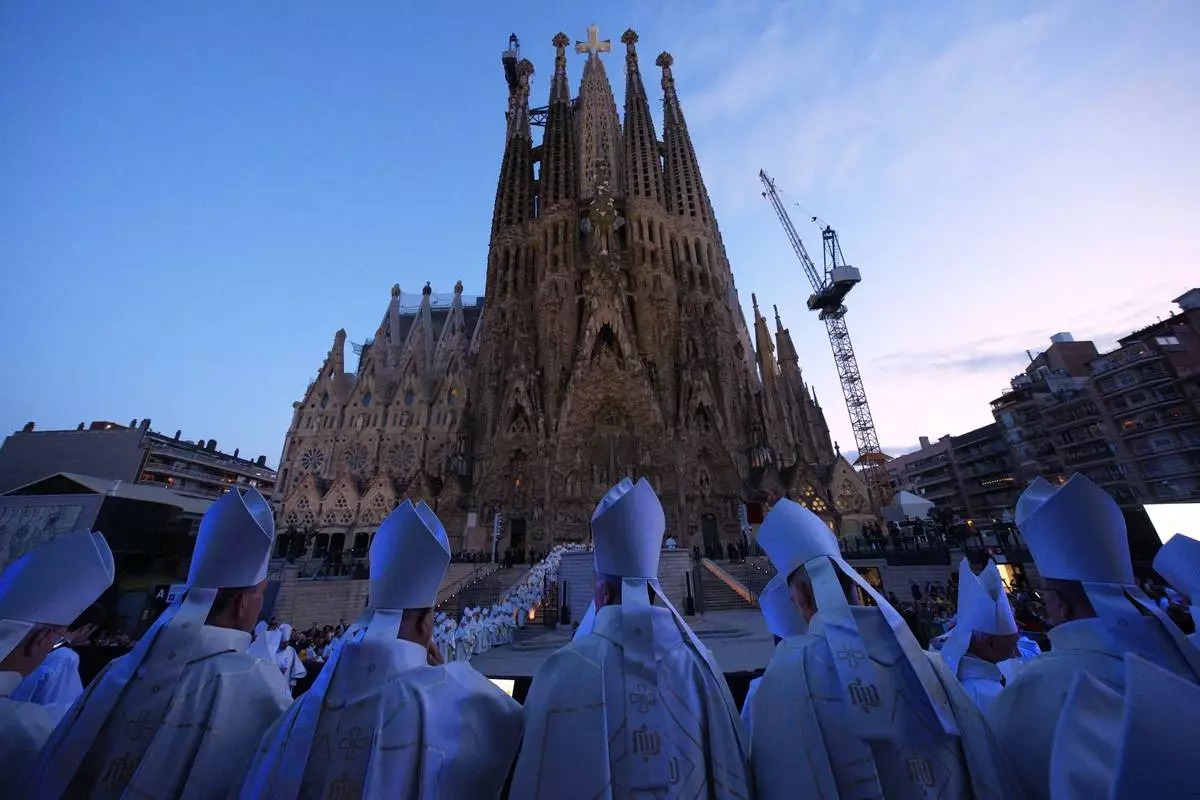
Priests attend the inauguration of the Tower of Jesus Christ at the Basilica of the Sagrada FamÌlia in Barcelona, Spain, Wednesday, June 10, 2026. (AP Photo/Emilio Morenatti)
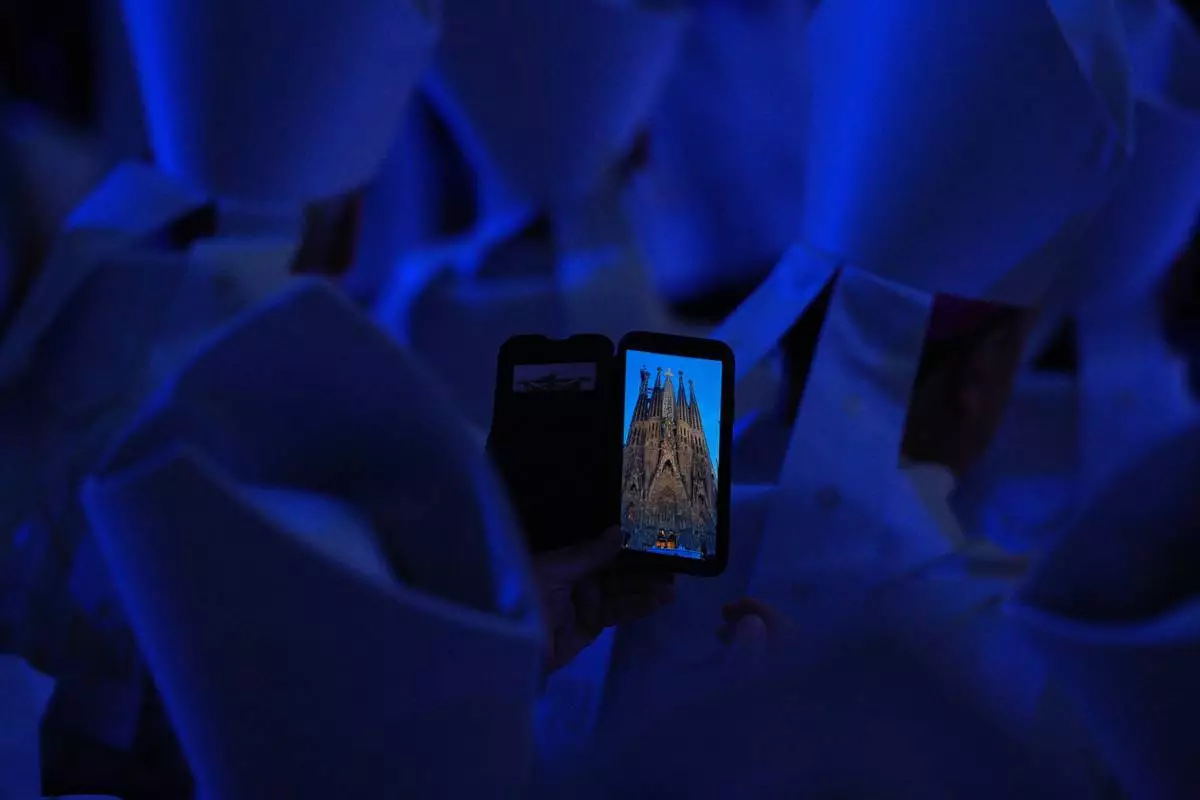
Priests attend the inauguration of the Tower of Jesus Christ at the Basilica of the Sagrada FamÌlia in Barcelona, Spain, Wednesday, June 10, 2026. (AP Photo/Emilio Morenatti)
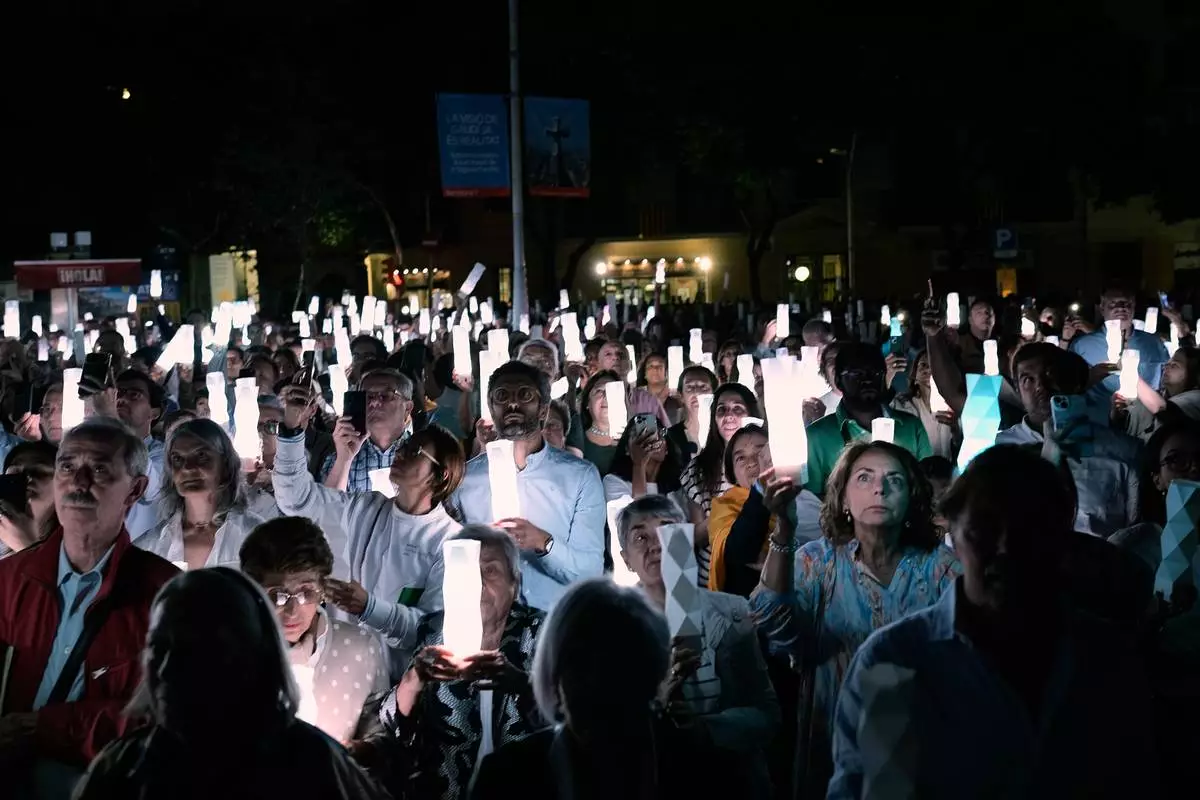
People attend the inauguration of the Tower of Jesus Christ by Pope Leo XIV at the Basilica of the Sagrada Familia in Barcelona, Spain, Wednesday, June 10, 2026. (AP Photo/Bernat Armangue)
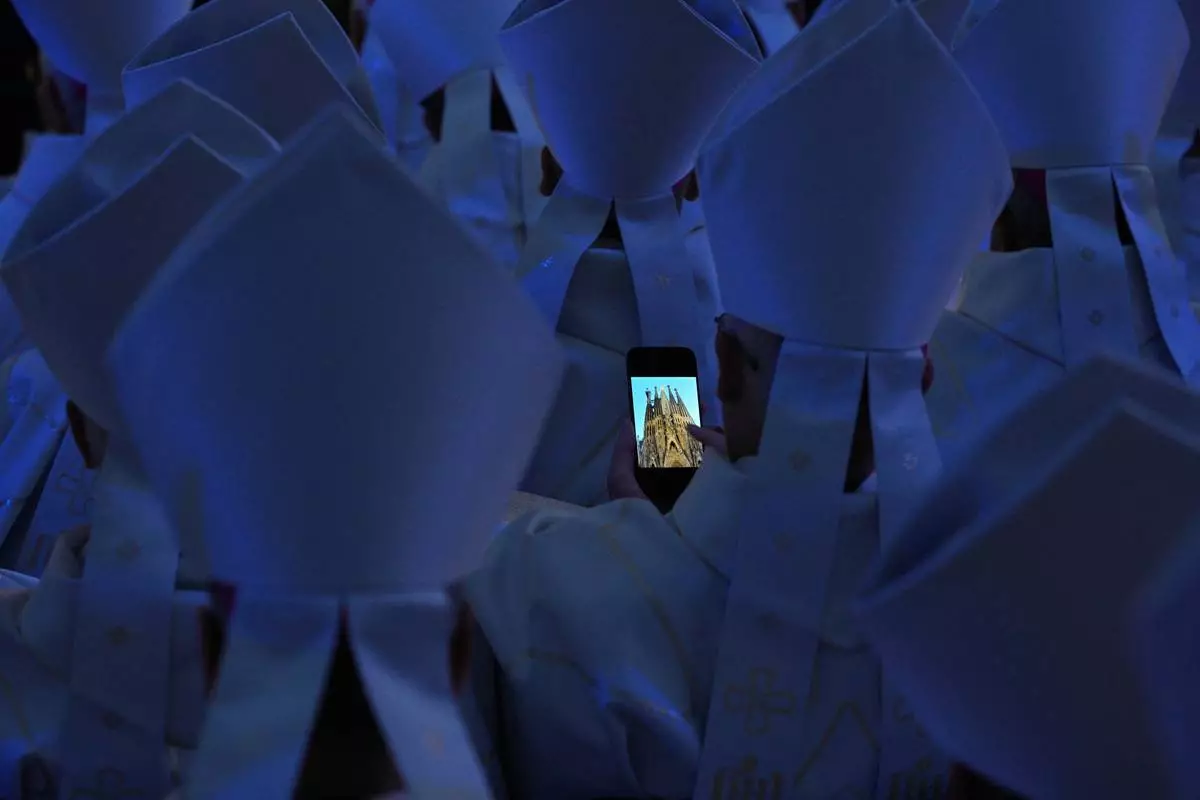
Priests attend the inauguration of the Tower of Jesus Christ at the Basilica of the Sagrada FamÌlia in Barcelona, Spain, Wednesday, June 10, 2026. (AP Photo/Emilio Morenatti)
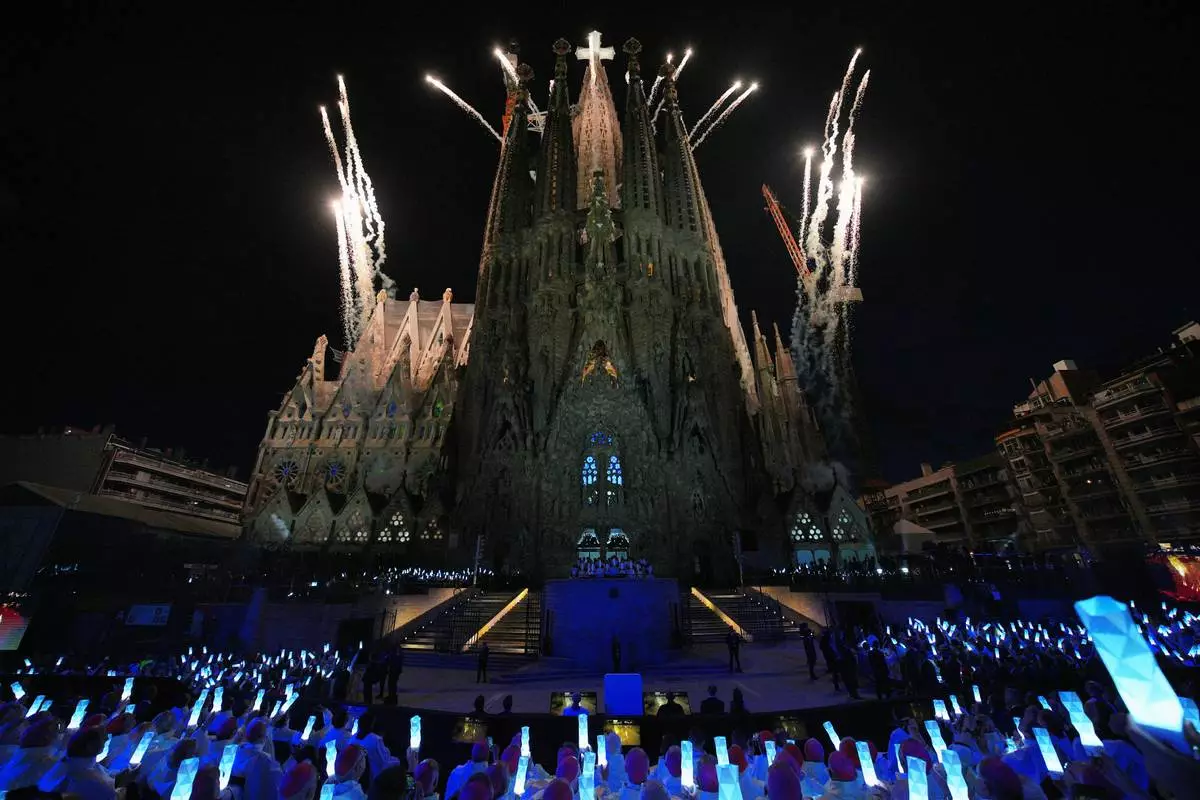
Pope Leo XIV attends the inauguration of the Tower of Jesus Christ at the Basilica of the Sagrada FamÃlia in Barcelona, Spain, Wednesday, June 10, 2026. (AP Photo/Emilio Morenatti)
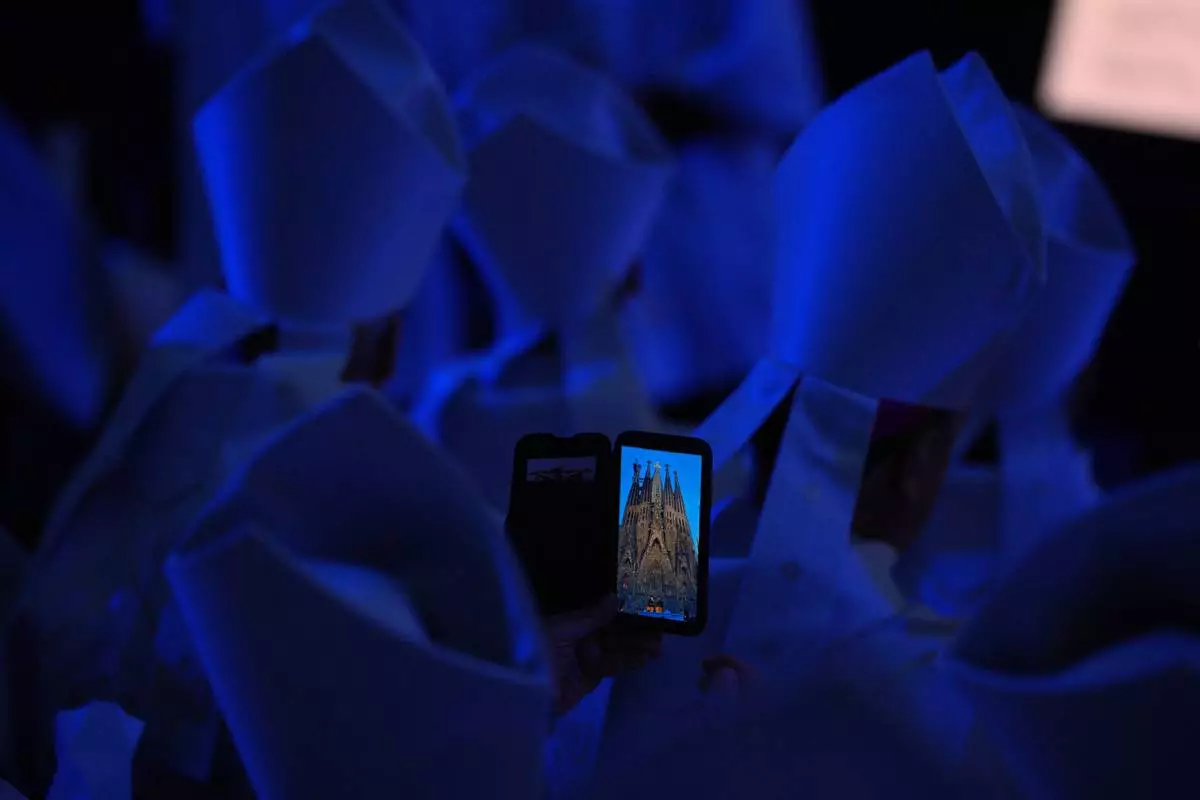
Priests attend the inauguration of the Tower of Jesus Christ at the Basilica of the Sagrada FamÌlia in Barcelona, Spain, Wednesday, June 10, 2026. (AP Photo/Emilio Morenatti)
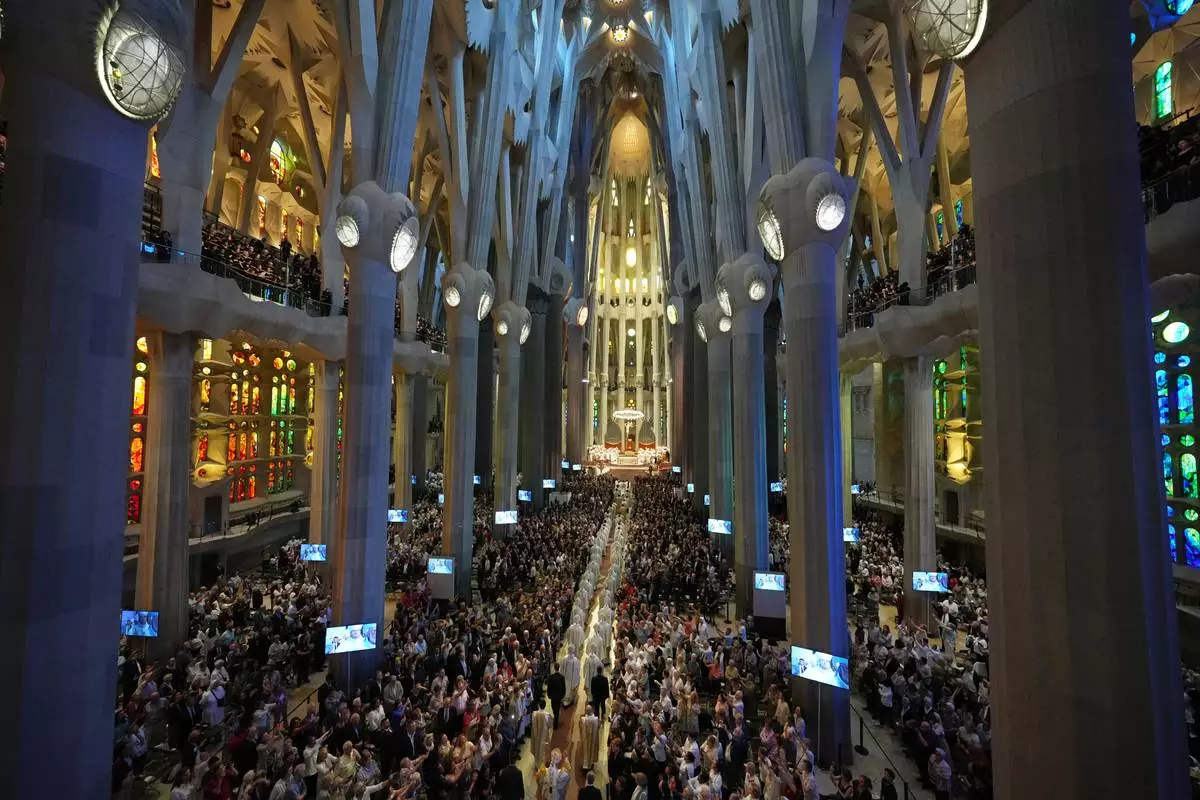
Pope Leo XIV, bottom, walks in procession to celebrate a mass in the Basilica of the Sagrada Familia in Barcelona, Spain, Wednesday, June 10, 2026 (AP Photo/Alessandra Tarantino)
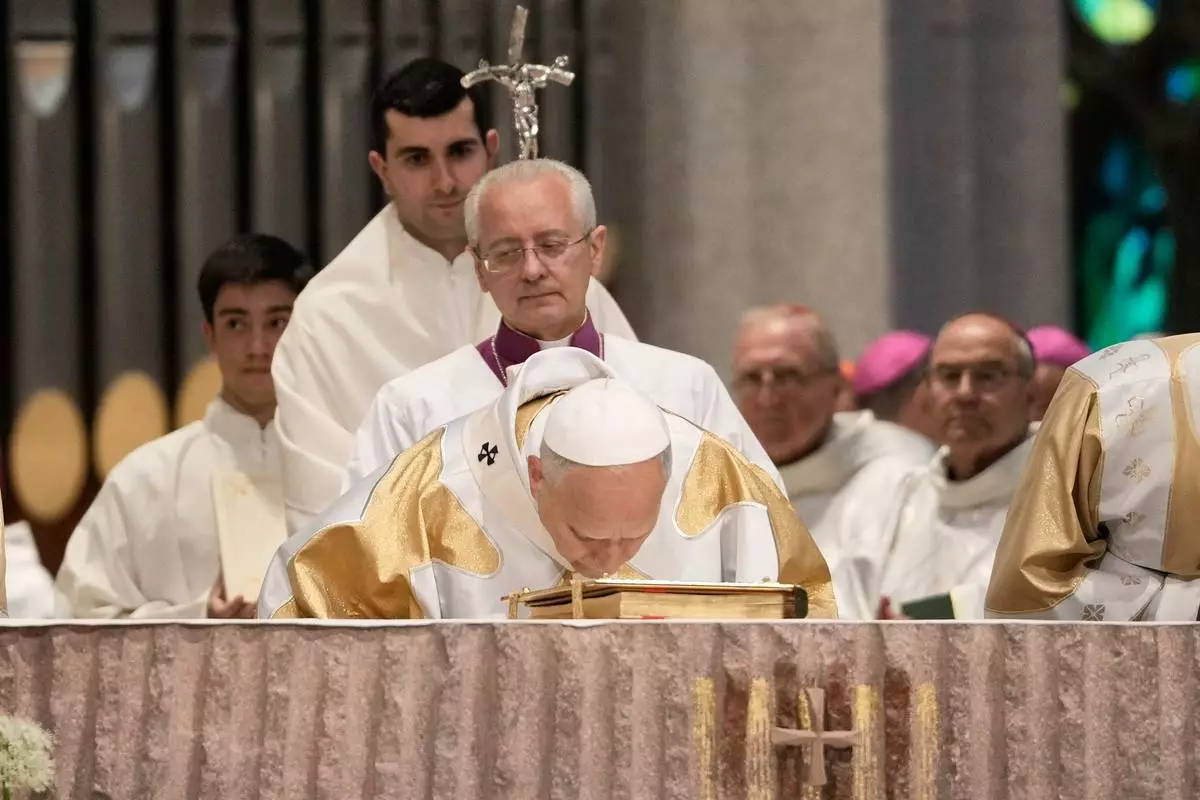
Pope Leo XIV celebrates Mass at the Basilica of the Sagrada Familia in Barcelona, Spain, Wednesday, June 10, 2026. (AP Photo/Bernat Armangue)
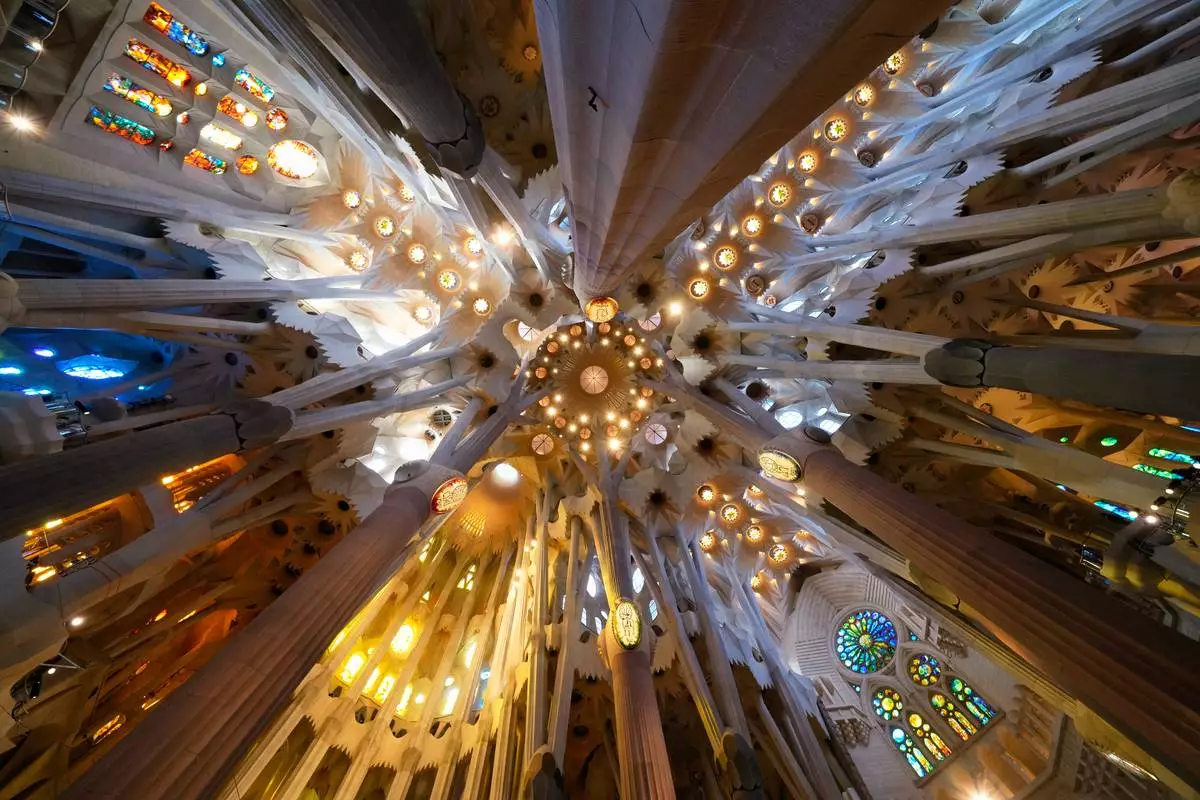
A view of the ceiling at the Basilica of the Sagrada Familia before Pope Leo XIV's arrival to celebrate Mass in Barcelona, Spain, Wednesday, June 10, 2026. (AP Photo/Bernat Armangue)
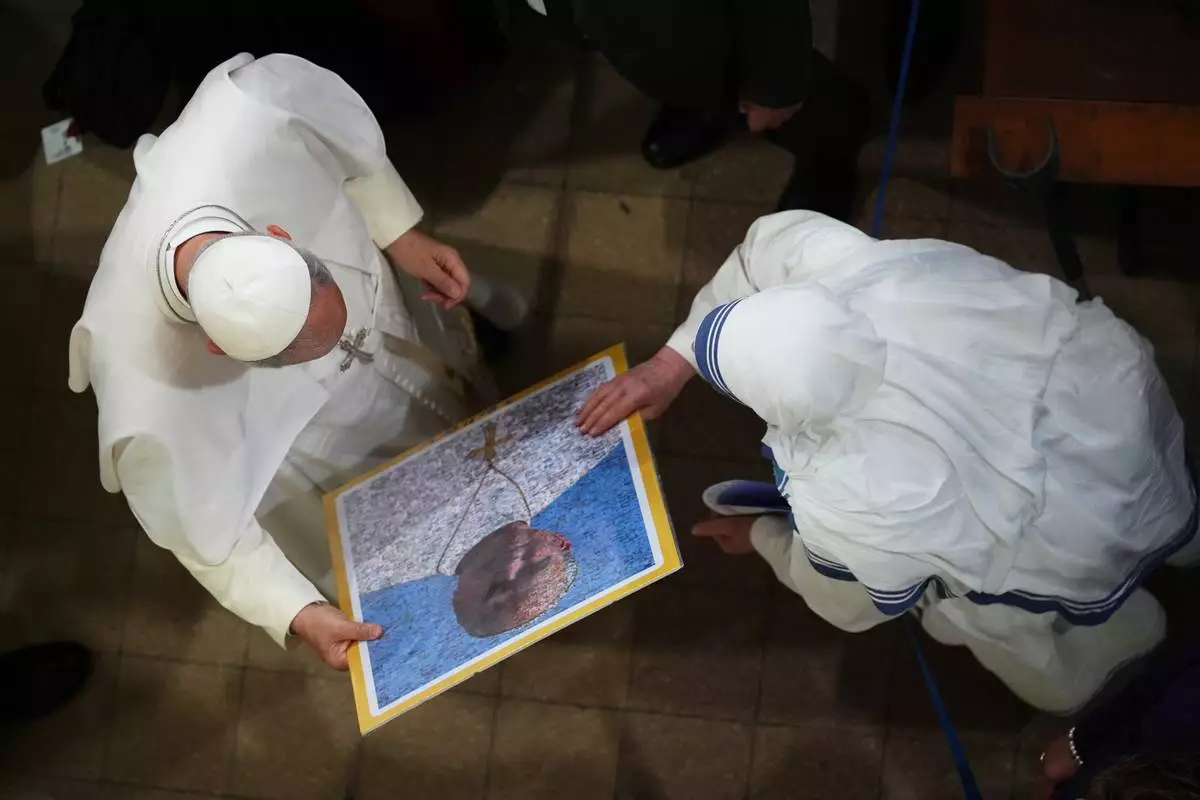
Pope Leo XIV leaves at the end of a meeting with faithful and members of the diocesan charity and welfare organizations in the Church of Sant Agusti in Barcelona, Spain, Wednesday, June 10, 2026 (AP Photo/Alessandra Tarantino)
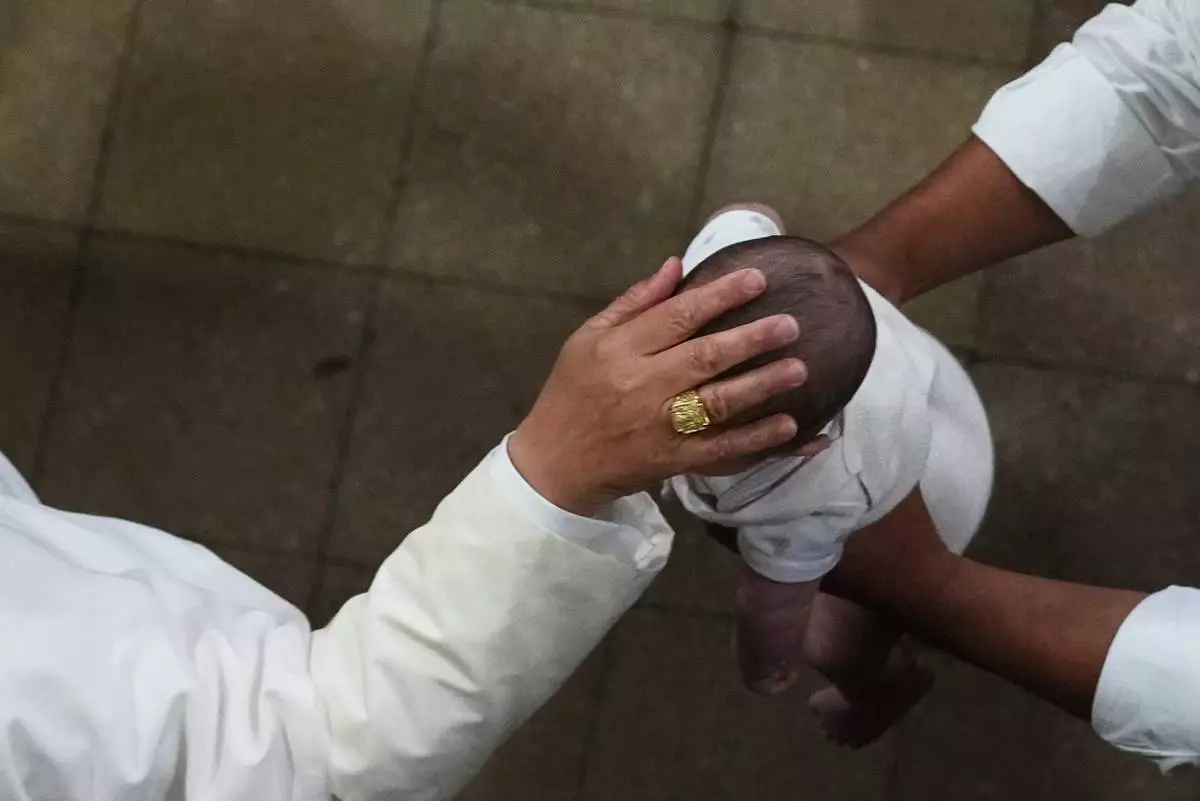
Pope Leo XIV blesses a child as he meets with faithful and members of the diocesan charity and welfare organizations in the Church of Sant Agusti in Barcelona, Spain, Wednesday, June 10, 2026 (AP Photo/Alessandra Tarantino)
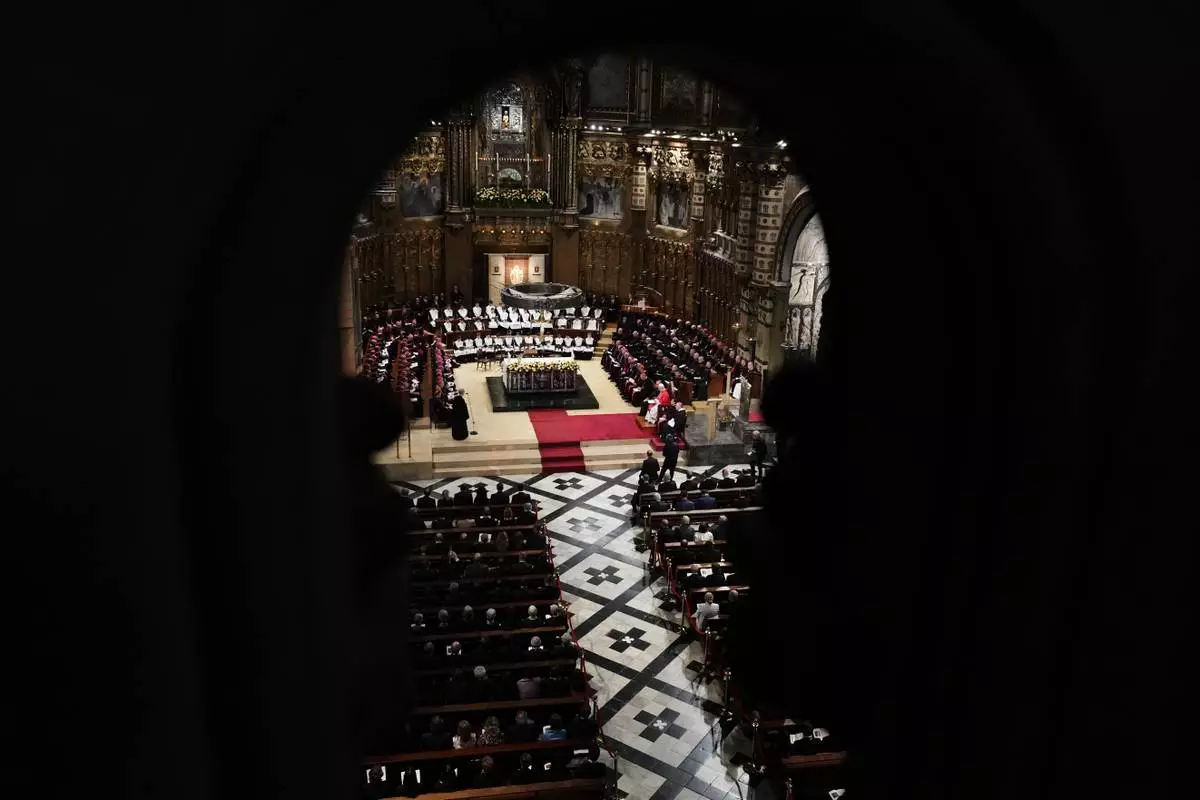
Pope Leo XIV leads a rosary prayer at the Abbey of Our Lady of Montserrat, in Montserrat, Spain, Wednesday, June 10, 2026. (AP Photo/Alessandra Tarantino)
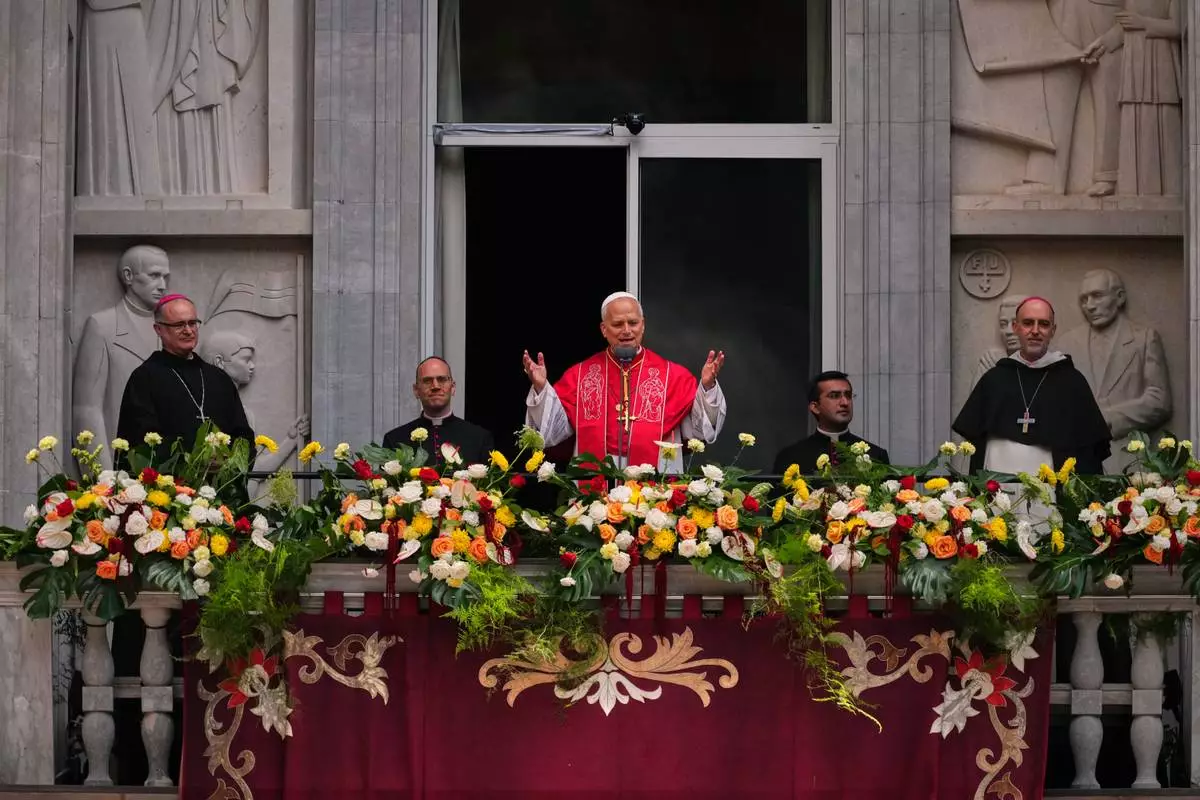
Pope Leo XIV greets the faithful from the balcony after leading a rosary at the Abbey of Our Lady of Montserrat, in Montserrat, Spain, Wednesday, June 10, 2026. (AP Photo/Joan Mateu Parra)
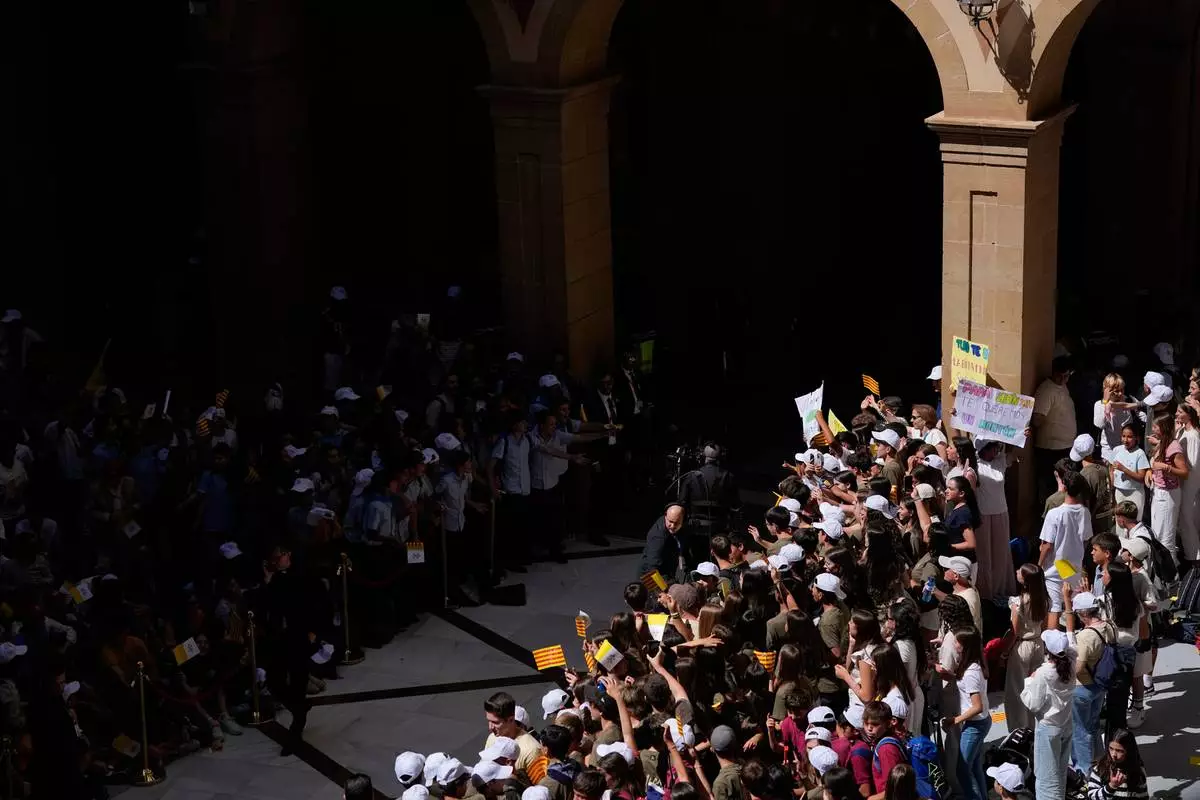
People wait for the arrival of Pope Leo XIV to lead a rosary at the Abbey of Our Lady of Montserrat, in Montserrat, Spain, Wednesday, June 10, 2026. (AP Photo/Alessandra Tarantino)
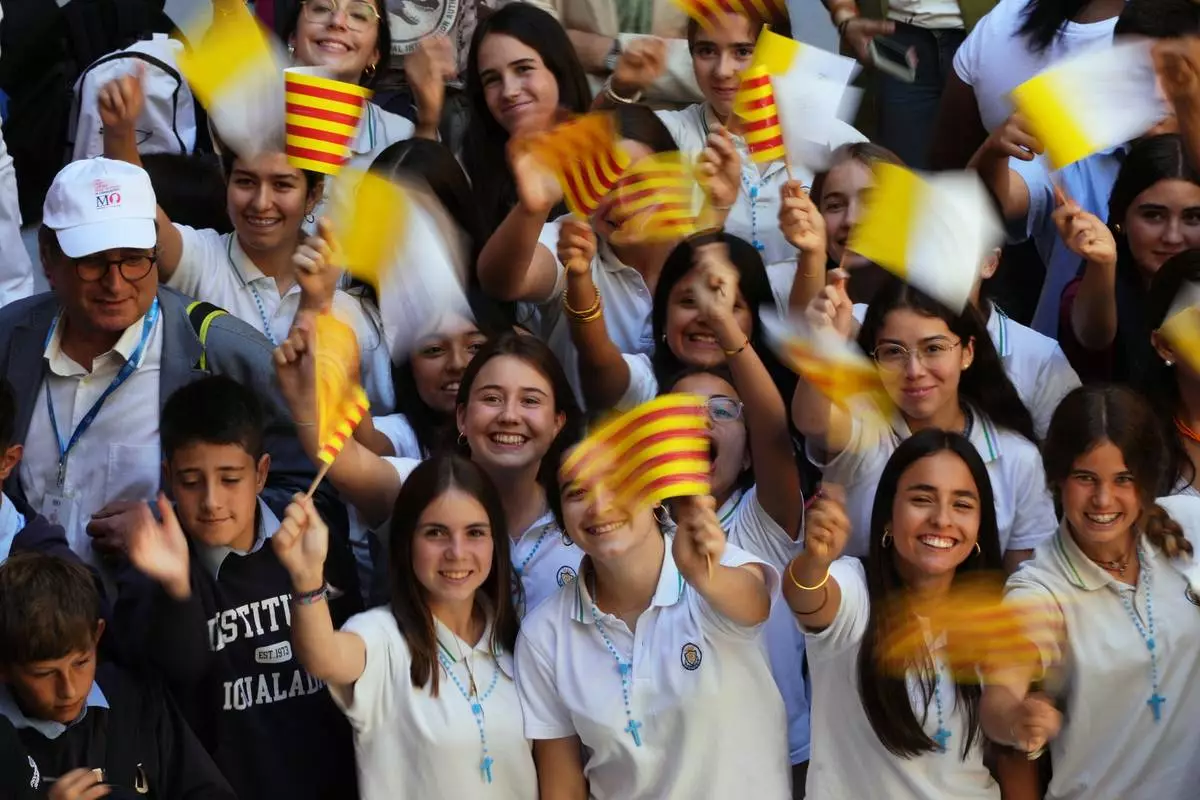
People wait for the arrival of Pope Leo XIV to lead a rosary at the Abbey of Our Lady of Montserrat, in Montserrat, Spain, Wednesday, June 10, 2026. (AP Photo/Alessandra Tarantino)
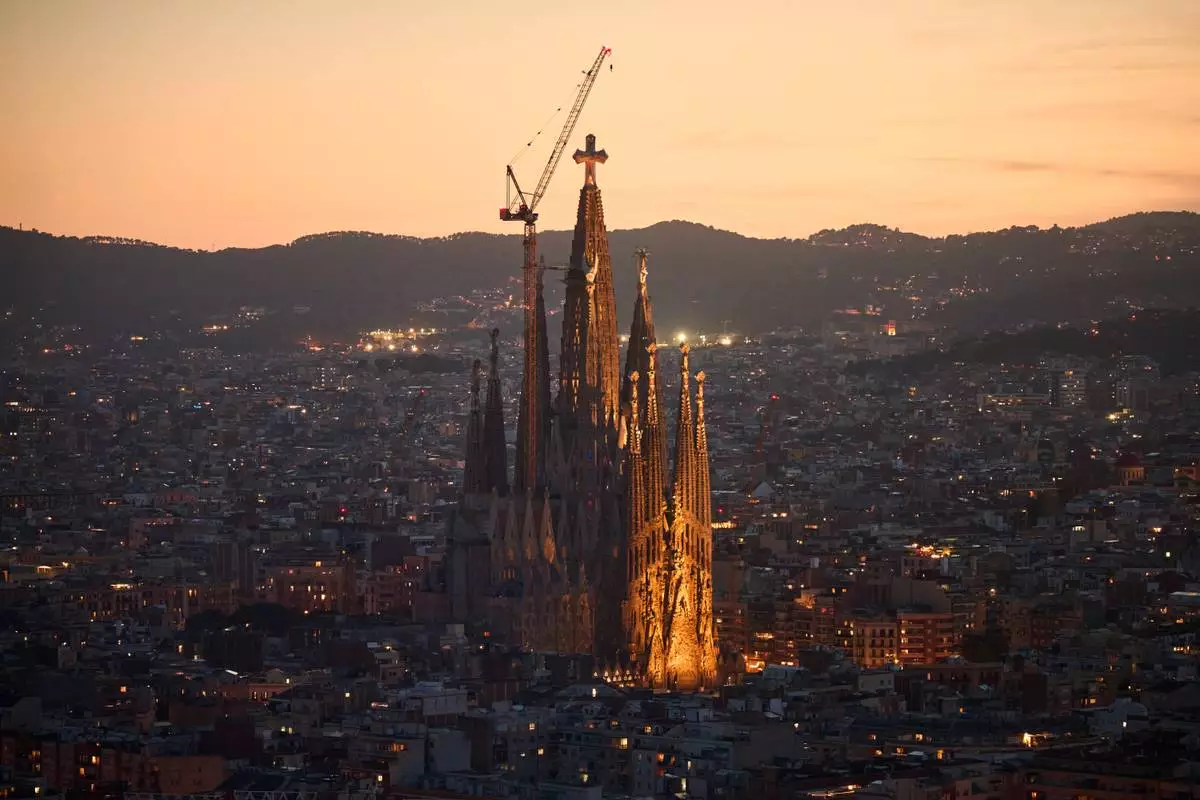
Antoni Gaudí's Basilica of the Sagrada Família stands at dusk as seen from the Mirador Torre Glòries in Barcelona, Spain, Tuesday, June 9, 2026. (AP Photo/Emilio Morenatti)
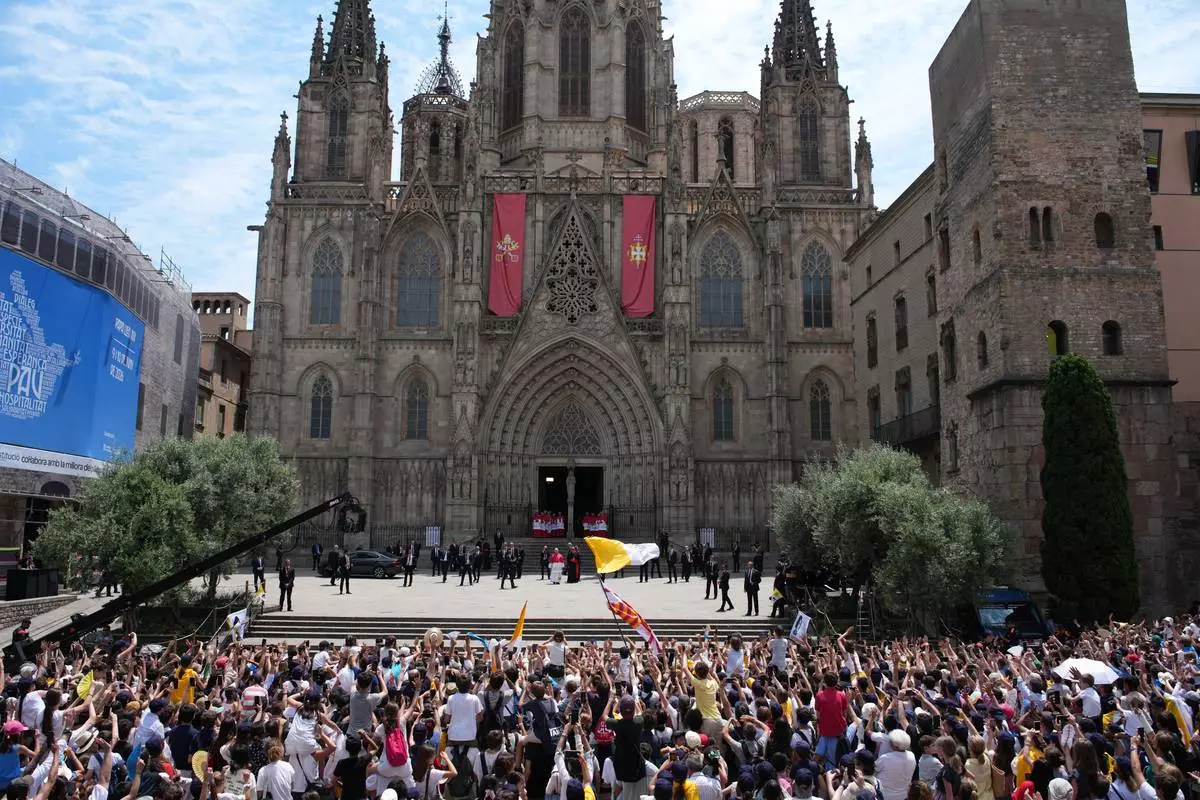
Pope Leo XIV looks at the cheering crowd upon arriving to attend a midday prayer at the Cathedral of the Holy Cross and Saint Eulalia in Barcelona, Spain, Tuesday, June 9, 2026. (AP Photo/Emilio Morenatti)
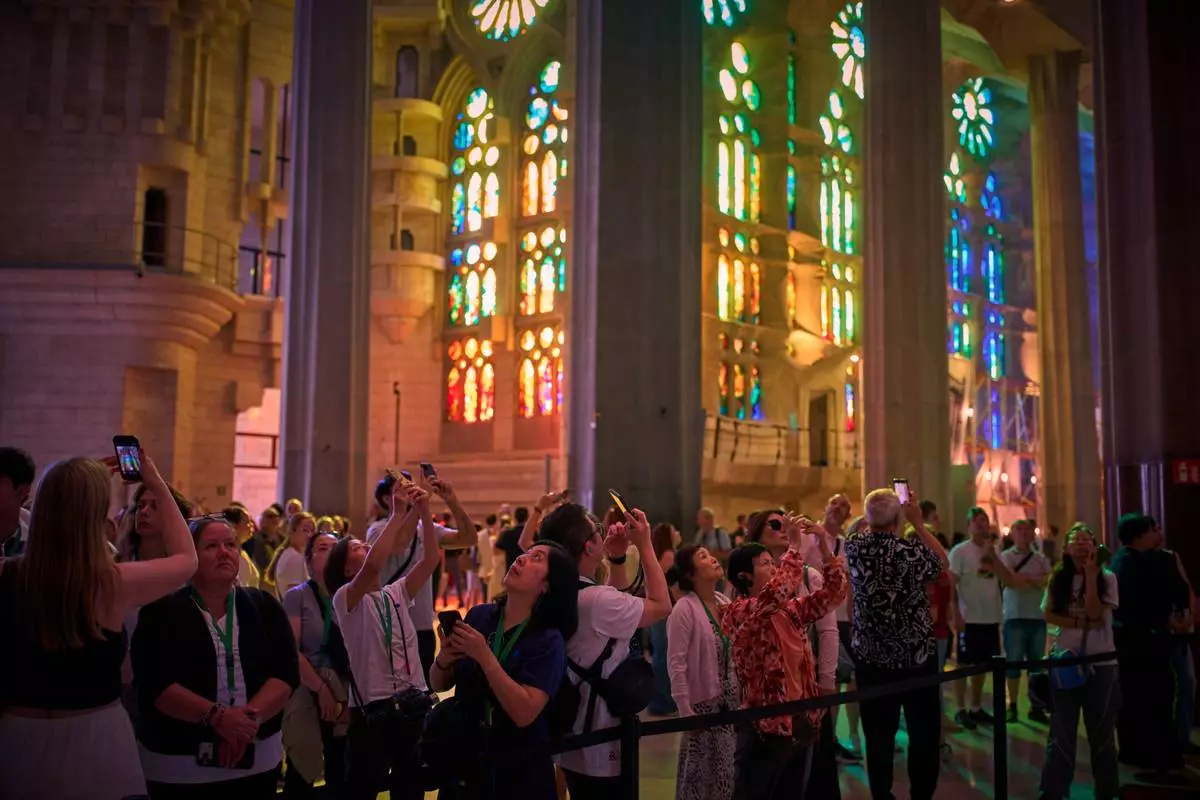
Visitors take photos inside the Basilica of the Sagrada Familia in Barcelona, Spain, Tuesday, May 26, 2026, ahead of Pope Leo XIV's visit to the city in June. (AP Photo/Emilio Morenatti)
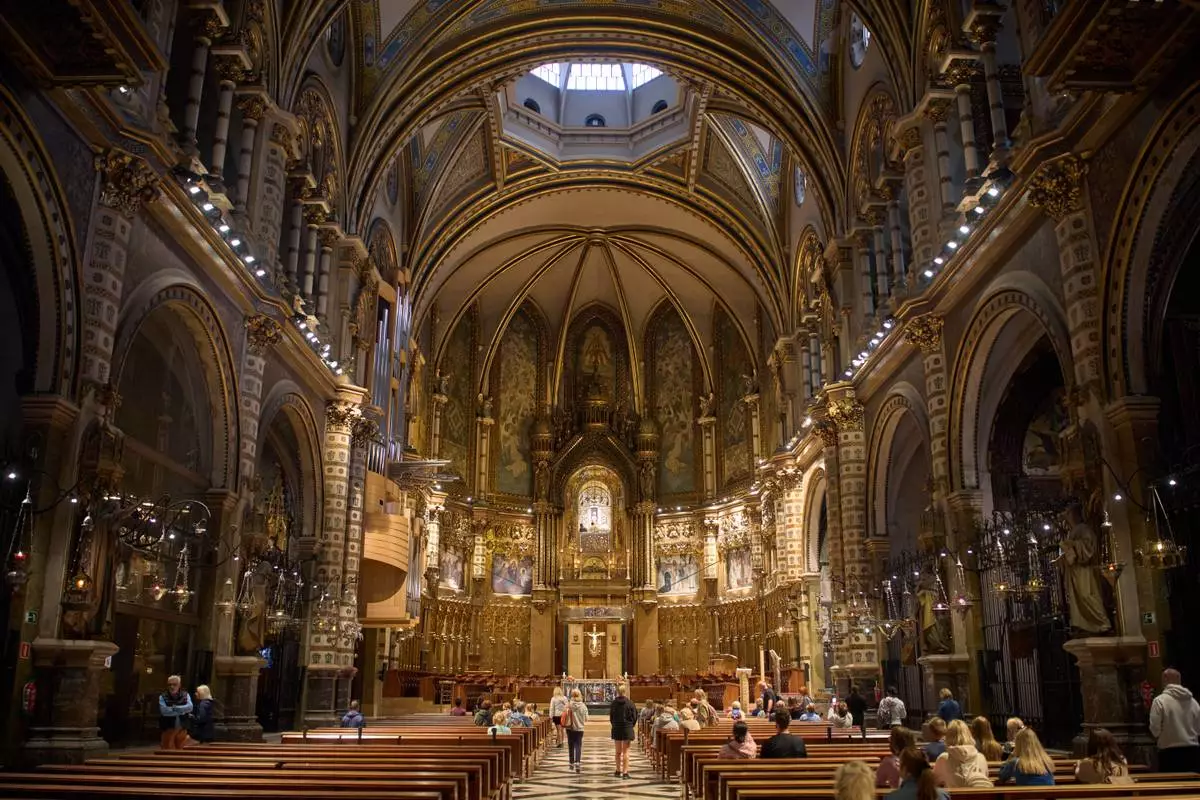
A view of the Basilica of Montserrat at the Monastery of Montserrat near Barcelona, Spain, Friday, June 5, 2026. (AP Photo/Emilio Morenatti)
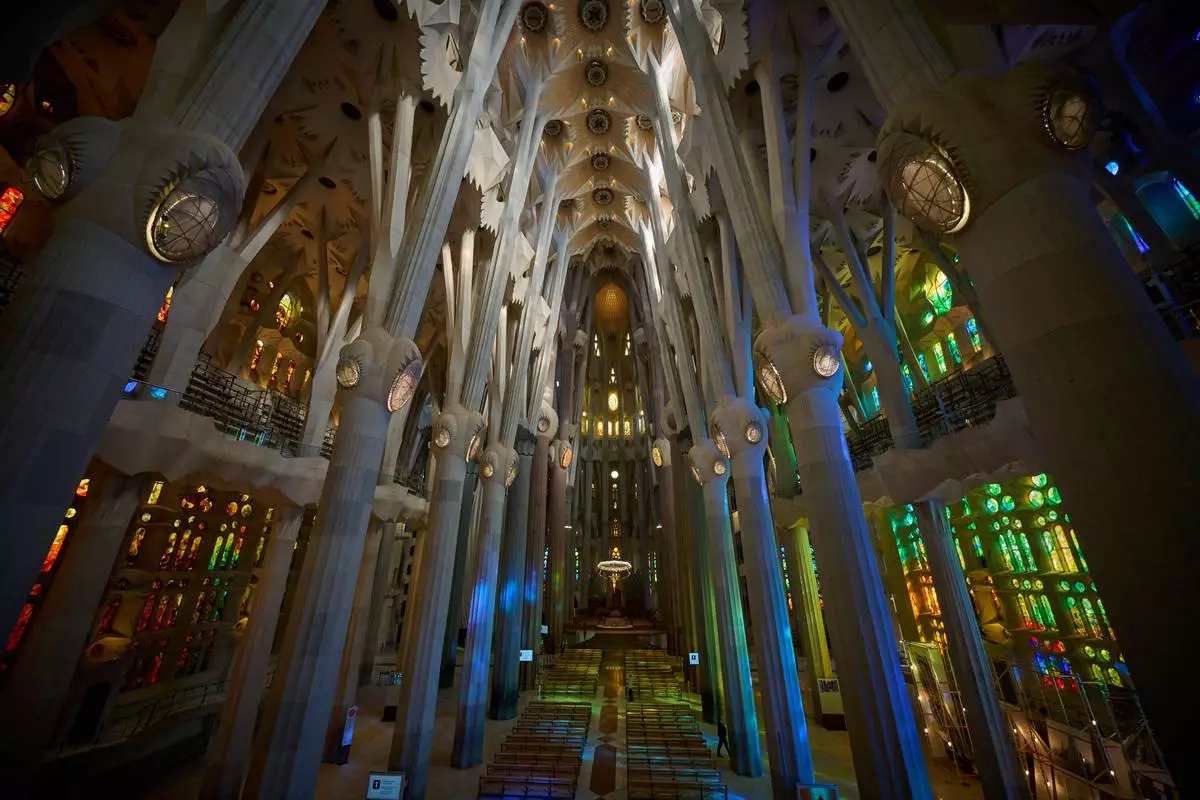
A view of the Basilica of the Sagrada Familia in Barcelona, Spain, Wednesday, May 20, 2026, ahead of Pope Leo XIV's visit to the city in June. (AP Photo/Emilio Morenatti)
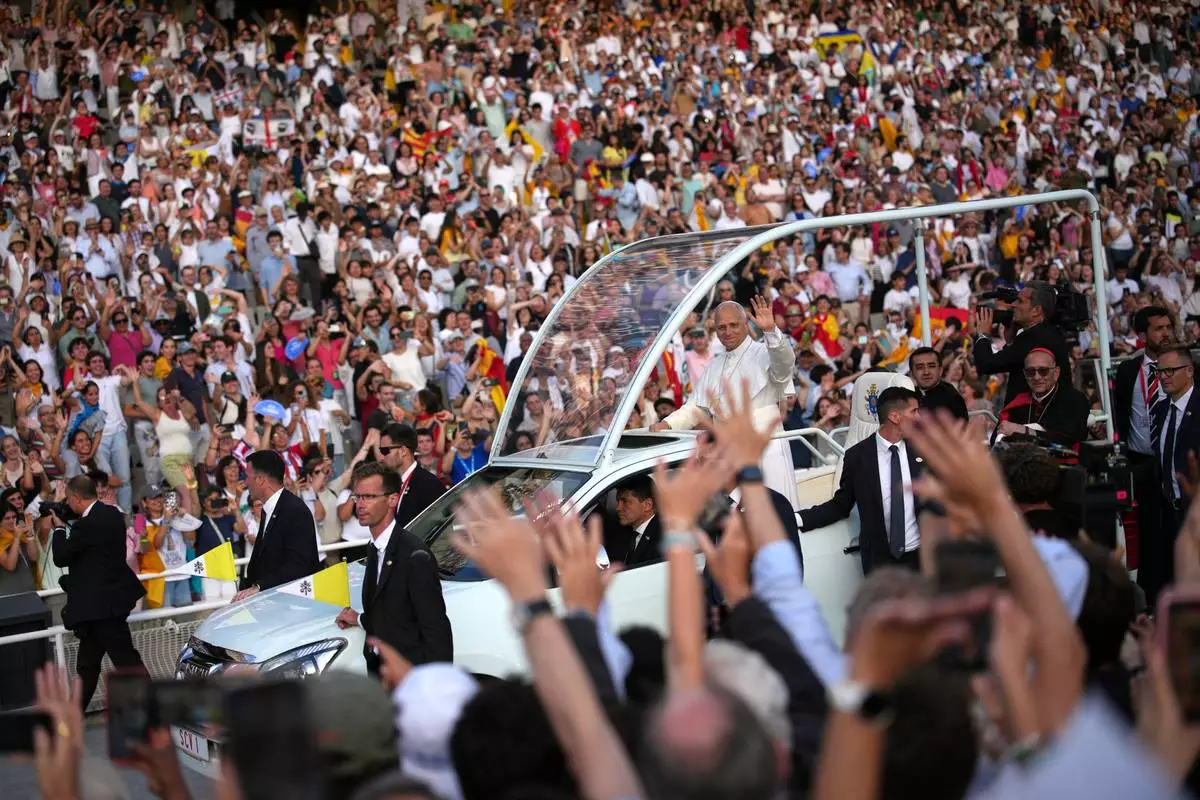
Pope Leo XIV arrives to attend a prayer vigil at Lluis Companys Olympic Stadium in Barcelona, Spain, Tuesday, June 9, 2026. (AP Photo/Emilio Morenatti)
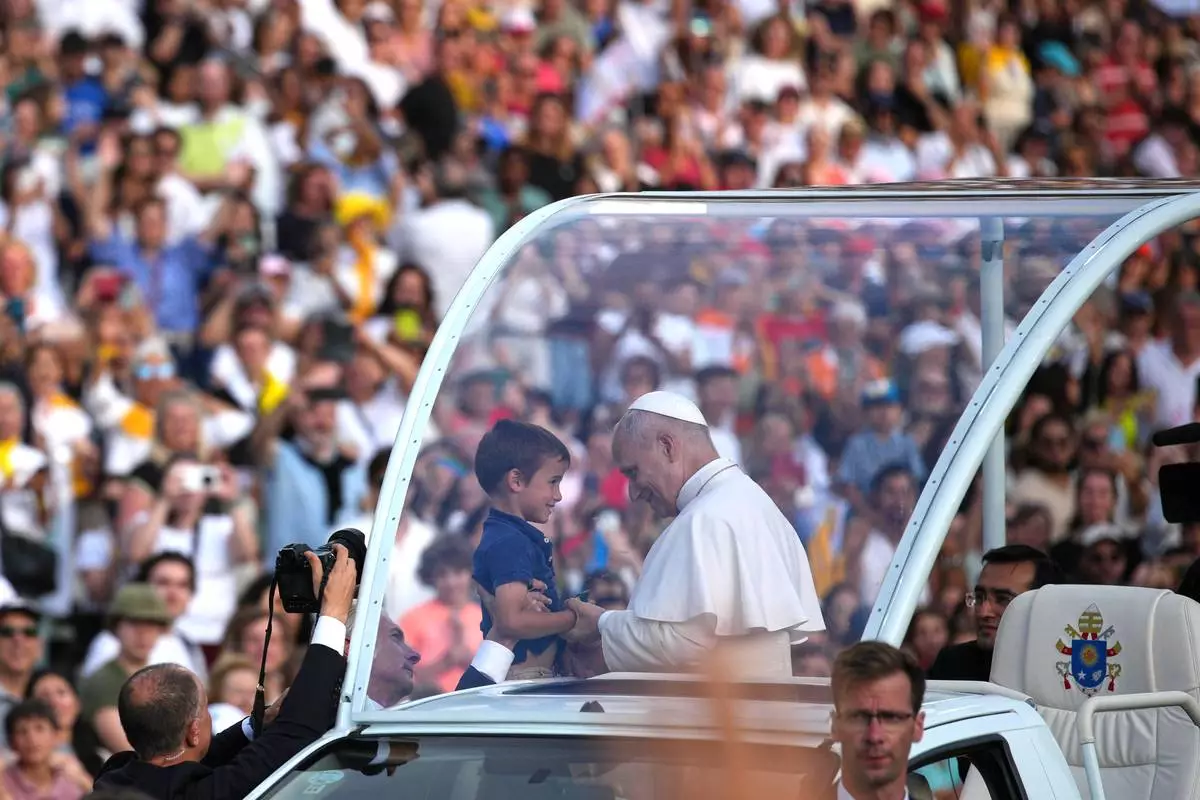
Pope Leo XIV blesses a child before a prayer vigil at Lluis Companys Olympic Stadium in Barcelona, Spain, Tuesday, June 9, 2026. (AP Photo/Emilio Morenatti)