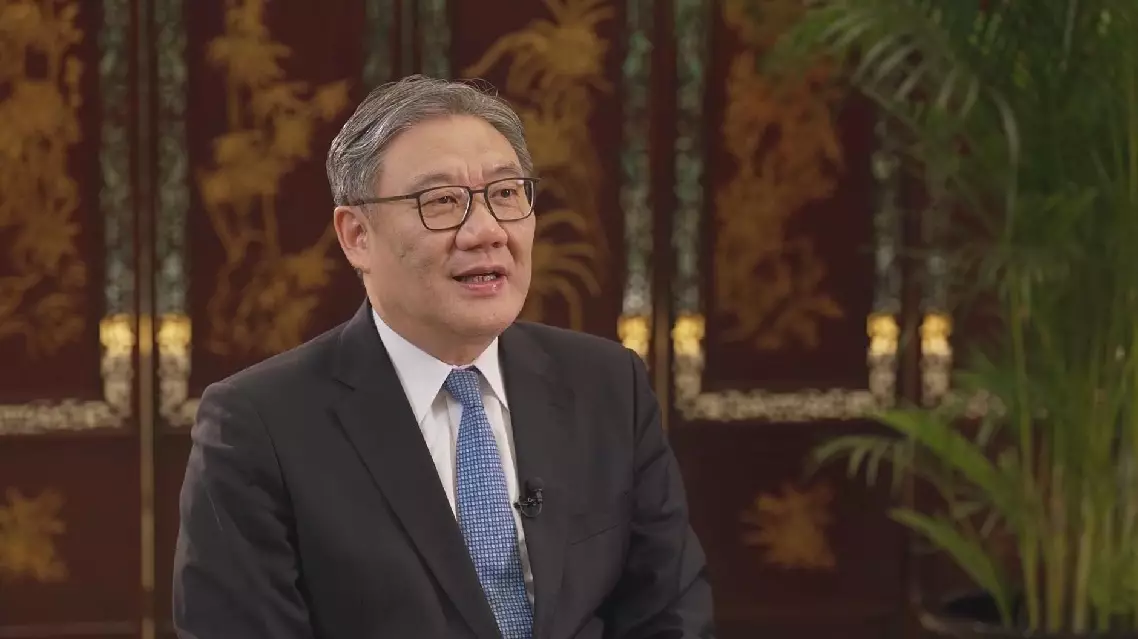
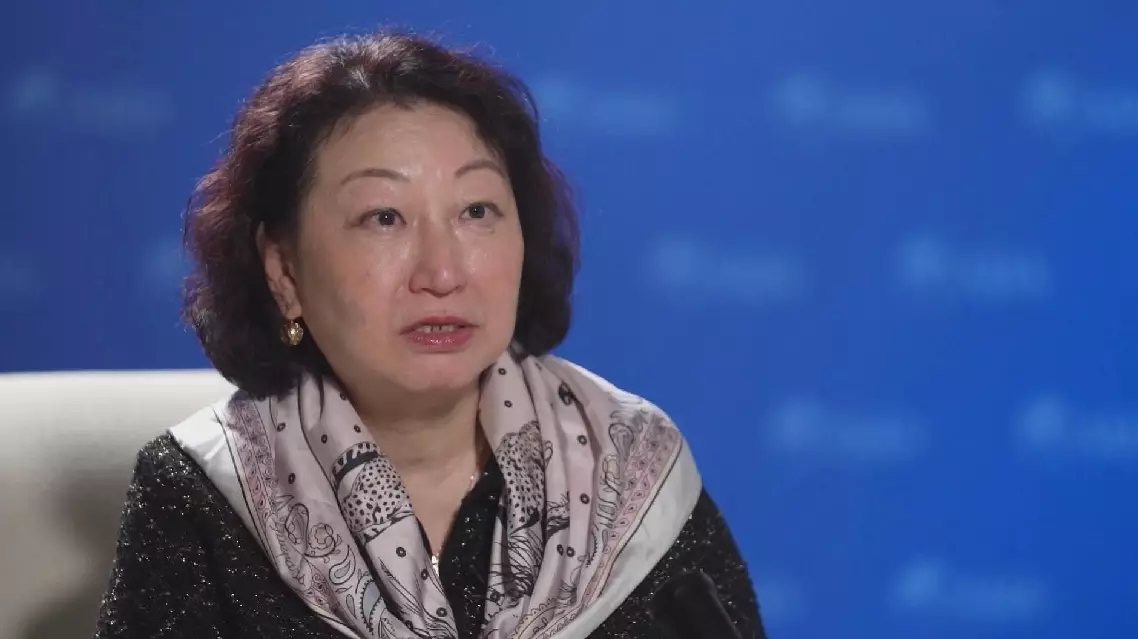
Teresa Cheng, Secretary-General of the newly established International Organization for Mediation (IOMed), says the body already enjoys strong credibility thanks to the breadth of its membership, positioning it as the world’s first intergovernmental legal institution dedicated to resolving disputes through mediation.
A signing ceremony on May 30, 2025, brought 33 countries on board as founding members, and the number of signatories has since grown to 40 across six continents. The organization, headquartered in Hong Kong, was formally inaugurated on October 20, 2025.
Cheng emphasized that such broad participation provides a strong foundation of trust and legitimacy for IOMed’s mission.
"IOMed already has a strong foundation in terms of credibility. That foundation lies in the signatory states. Their willingness to join the IOMed reflects their confidence in this organization. With the endorsement of so many countries, I believe our credibility is already higher than that of many other organizations," she said.
She noted that the IOMed provides a distinct alternative to litigation and arbitration, offering a faster, less adversarial path to resolving international disputes.
"Litigation and arbitration are adversarial by nature, where parties aim to defeat each other by presenting evidence. They are about winning or losing, determining who is right and who is wrong. However, mediation is different. It seeks win-win solutions. It focuses on preserving relationships rather than assigning blame, and it is quicker and less time-consuming than adversarial proceedings of arbitration," said Cheng.
The secretary-general stressed that IOMed’s value lies in efficient dispute resolution at a time when globalization is faltering and protectionism is on the rise.
"Article 33 of the UN Charter states clearly that when disputes arise, parties should seek peaceful means of resolution, including mediation. Yet for more than 80 years, no institution has been dedicated to promoting and facilitating mediation until the IOMed was established," she said.
"Mediation is also a legal process. If the parties reach a settlement, the agreement they sign is essentially a contract and is legally binding. We do not exclude arbitration. What we advocate is attempting mediation before resorting to adversarial procedures. If mediation fails, parties can still pursue arbitration or litigation," said Cheng.
Cheng also highlighted that the IOMed is open to all, even non-member states can access its services if both parties to a dispute agree.
"We welcome all countries. Even if a dispute does not involve a member state, we can handle it if both parties agree. We see ourselves as an international public good, and we hope that all nations and enterprises in need will find value in our services," she said.
Looking ahead, she expects the organization to fully leverage its role as an international public good to promote dispute resolution.
"Many disputes arise from misunderstandings, between individuals, between nations, or between businesses and governments. Often, a lack of communication lies at the root. With a channel for dialogue, it will help people understand the core issues and the real interests at stake. My hope is that all sides will make full use of the IOMed mechanism, allowing it to serve as an international public good that provides robust mediation for global disputes and opens new avenue for cooperation," said Cheng.
International mediation body gains global backing amid geopolitical headwinds: secretary-general