MARIETTA, Ga. (AP) — Antonee Robinson worried whether the U.S. would see a return of Jedi.
Self-nicknamed the “Star Wars” character by himself as a kid, Robinson had not played for the national team from November 2024 until Saturday's 5-2 loss to Belgium because of lingering pain following right knee surgery last May 27.
“It just seemed like there was kind of no light at the end of the tunnel,” he said on the eve of his return.
A 28-year-old left back, Robinson is a key player for Fulham in the Premier League and when healthy a first-choice starter for the U.S. Robinson assisted on Weston McKennie's opening goal against Belgium with the first corner kick Robinson ever took for the Americans.
“He needs to build,” U.S. coach Mauricio Pochettino said. “I want to see him in his best. And that is the challenge from here to the World Cup to arrive with all the players in their best performance, to perform in the way we believe they can perform.”
Robinson was raised in Liverpool. His father, Marlon, was born in England, grew up in White Plains, New York, and was on Duke’s soccer team from 1981-84. Antonee was a member of Everton's youth academy, made his professional debut in 2017 in the League Cup in August 2017 while on loan to Bolton and his Premier League debut in 2020 with Fulham.
His first appearance for the U.S. was in 2018. A chess player and a pianist, he strikes his own chord in the U.S. locker room.
“He’s into a lot of different things, that’s for sure,” American captain Tim Ream said. “His brain works very differently to a lot of ours.”
Robinson didn't dress for Fulham's opener on Aug. 18 and was a second-half sub in the Cottagers' second and third games. He had a 23-day layoff, went the distance in a League Cup match on Sept. 23 and had a Premier League substitute appearance five days later. He then sat out until Dec. 13, losing his starting spot to Ryan Sessegnon.
Sessegnon's hamstring injury allowed Robinson back into the starting lineup.
“I’ve been able to get myself in pretty good shape back at the club,” Robinson said. “I’ve been available for everything. I haven’t missed any training sessions and I’ve been sort of progressing with how I feel in myself and then translating that to playing games and getting back up to, you know, being sharp and being ready."
As his rehab kept extending in the fall, Robinson was aware that the World Cup was nearing and he might run out of time.
“No sort of certainty on my end that I was going to be fit and available,” he recalled, explaining how he widened his search for advice.
“Seeking outside help for my rehab and different opinions and stuff on how I could change up what I was doing to get my physical condition a lot better," he said. “A series of injections and things like that to try and let it heal.”
His preparation has expanded, too.
“I’m the first person at the training ground because I know I need to do a lot in the gym before I train,” he said. "In the evening when I put the kids to bed I’m doing more stuff to try and get myself in good shape so, yeah, it’s been a long road but I’m feeling really good."
AP soccer: https://apnews.com/hub/soccer

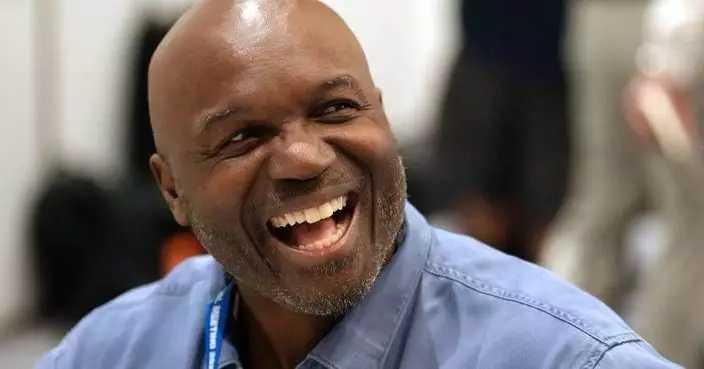
Unites States' Antonee Robinson listens during a news conference before the men's national soccer team training, Friday, March 27, 2026, in Marietta, Ga. (AP Photo/Ronald Blum
MADRID (AP) — Spain closed its airspace to U.S. planes involved in the Iran war, officials said Monday, in another step by Europe’s loudest critic of U.S. and Israeli military actions in the monthlong conflict.
The country earlier said that the U.S. couldn't use jointly operated military bases in the war, which Prime Minister Pedro Sánchez has described as illegal, reckless and unjust. Defense Minister Margarita Robles said that the same logic applied to the use of Spanish airspace.
“This was made perfectly clear to the American military and forces from the very beginning. Therefore, neither the bases are authorized, nor, of course, is the use of Spanish airspace authorized for any actions related to the war in Iran,” Robles told reporters, describing the conflict as “profoundly illegal and profoundly unjust.”
Sánchez has called on the U.S., Israel and Iran to end the war.
“You cannot respond to one illegality with another, because that’s how humanity’s great disasters begin," he said earlier this month.
U.S. Secretary of State Marco Rubio said that Spain's leaders are “bragging" about cutting off its airspace, even as Washington has pledged to defend the NATO member. He said that the trans-Atlantic military alliance is useful for the U.S., because it “allows us to station troops and aircraft and weapons in parts of the world that we wouldn’t normally have bases, and that includes in much of Europe.”
“But if NATO is just about us defending Europe if they’re attacked, but then denying us basing rights when we need them, that’s not a very good arrangement,” Rubio told Al Jazeera on Monday. “That’s a hard one to stay engaged in and say this is good for the United States. So all of that is going to have to be reexamined.”
After Sánchez's government denied the U.S. use of the Rota and Morón military bases in southern Spain, U.S. President Donald Trump threatened to cut trade with Madrid.
Washington made trade threats last year, too, when Sánchez said that his government wouldn't increase its defense spending in accordance with a deal agreed to by other NATO members following Trump's pressure.
At the time, Sánchez's government said that Spain could meet its military commitments by spending 2.1% of gross domestic product on defense, instead of the 5% the rest of the 32-nation military alliance agreed upon.
Sánchez also has been among the most vocal critics of Israel's actions during the war in Gaza, which has invited criticism from Israel's government on several occasions.
Spain's new decision against a NATO ally is rare, though not unprecedented. NATO didn't comment, referring questions to national authorities.
"NATO allies operate with a presumption of cooperation, but of course they retain sovereignty,'' said Daniel Baer, director of the Europe Program at the Carnegie Endowment for International Peace and a former U.S. ambassador to the Organization for Security and Cooperation in Europe.
In an incident that strained trans-Atlantic ties, France and Italy blocked the U.S. military from using their airspace for an operation targeting Libyan leader Moammar Gadhafi in 1986.
In 2003, NATO member Turkey refused to allow American troops to use its territory to invade Iraq, though it did allow overflights. France and Germany firmly opposed that war, but allowed U.S. and British fighter jets to fly over their airspace.
France’s then foreign minister, Dominique de Villepin, despite a famed U.N. speech against the Bush administration’s plans to invade, told the French parliament at the time that “there are practices between allies that exist that we must respect, including overflight rights.”
Spain's decision reflects broader concerns among traditional U.S. partners since Trump returned to office.
“The relationship with the U.S. was already strained,” Baer said. “Allies can generally be counted on, but they can’t be taken for granted.”
Still, he's doubtful that other European countries would follow Spain's example.
"Most Europeans are focused on keeping some measure of U.S. cooperation in supporting Ukraine, so I think it’s less likely that others join, even as they voice concerns about a lack of clarity around U.S. strategic objectives in Iran,'' he said.
Angela Charlton contributed to this report from Paris.
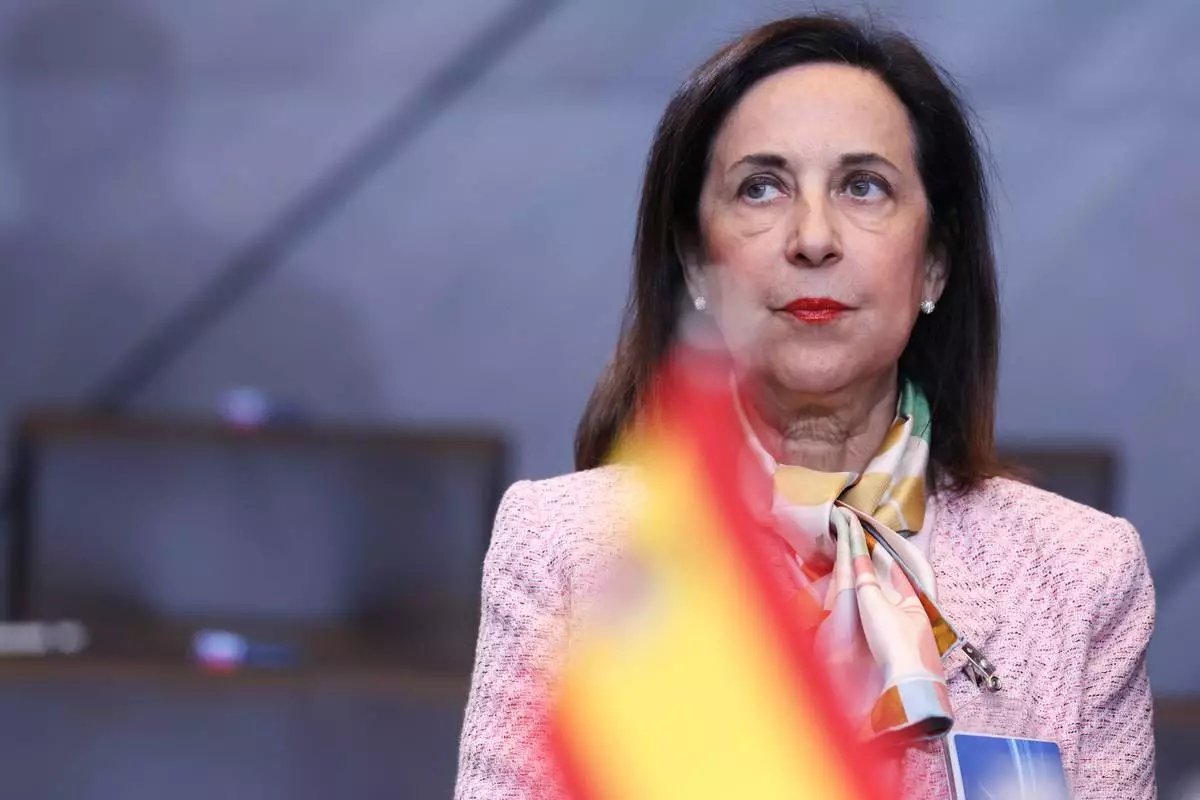
FILE - Spain's Defense Minister Margarita Robles waits for the start of a meeting of the North Atlantic Council in defense ministers format at NATO headquarters in Brussels, Wednesday, Oct. 15, 2025 (AP Photo/Omar Havana, file)