Chongqing Municipality in southwest China is pioneering a new approach to urban renewal by shifting focus from spot-by-spot renovations to comprehensive and district-wide upgrades, a move aligned with the national strategy for high-quality development.
At the center of these efforts are the renovations to the city's iconic Qiansimen Bridge, a suspended crossing over the Jialing river that connects the districts of Yuzhong and Jiangbei, which both lie in the heart of the city known for its uniquely layered and multi-level urban layout.
The project, recognized in China's 15th Five-Year Plan (2026-2030), extends beyond the bridge itself to include renovating pedestrian walkways in adjacent neighborhoods and enhancing the overall landscape.
This interconnected upgrade aims to transform the whole area around the bridge. Once completed, the city says it will seamlessly connect nearby residential communities, tourist attractions, and multiple roads, fostering better integration in the whole urban environment.
Residents in the neighborhood have welcomed the changes as the project's towering progress has become visible from the street side.
"It will definitely be much more convenient once it's built, benefiting both residents and tourists. It will be even better once the elevators are installed," said local resident Lin Haiying.
During the 15th Five-Year Plan period, the project aims to link 19.1 kilometers of riverside walkways, upgrade 200,000 square meters of old residential compounds, and revitalize approximately 500,000 square meters of idle land and buildings.
Tang Bojun, director of the Key Project Construction Affairs Center in Yuzhong District, highlighted the shift in strategy of the project.
"In the past, a project would just focus on itself. Now, we consider it within the context of the entire district, re-optimizing and analyzing the surrounding transportation system," he said.
This strategy is part of a broader initiative to shift away from scattered renewal projects and toward what urban land use specialists are calling "contiguous planning."
"We create a holistic profile of the district, including its demographic and industrial structures, future development direction, and needs. We apply systematic approach to urban renewal, packaging projects, bundling funds, and scheduling progress," said Tang Xiaoping, director of Chongqing Housing and Urban Rural Construction Commission.
This shift is not unique to Chongqing. Cities across China are rolling out similar area-focused renewal strategies.
South China's Guangdong Province plans to initiate 300 key urban renewal districts over the next five years. Hangzhou City, east China's Zhejiang Province, has designated 95 municipal renewal districts for the 15th Five-Year Plan. Wuhan City, capital of central China's Hubei Province, has launched comprehensive renewals based on 182 districts.
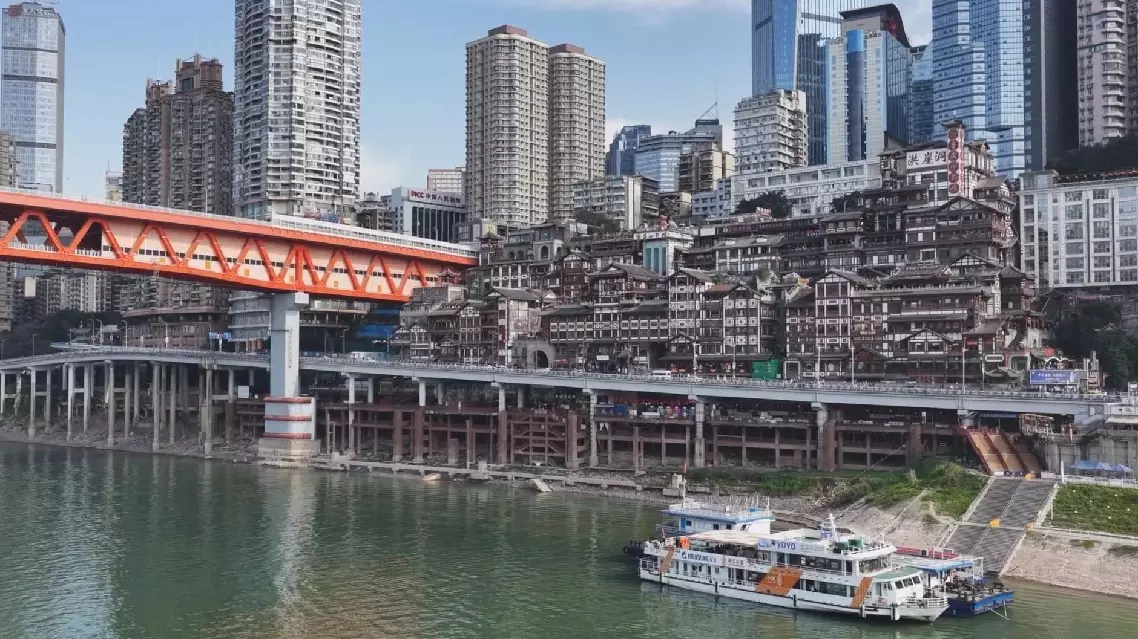
Chongqing shifts from isolated upgrades to integrated urban renewal