Skip to Content Facebook Feature Image

Ukraine turns elsewhere for support as US attention shifts towards Middle East: former Russian official

China

China

China

Ukraine turns elsewhere for support as US attention shifts towards Middle East: former Russian official

2026-03-31 16:11 Last Updated At:19:27

The ongoing conflict in the Middle East and the spillover effects from the crisis are diverting Western attention away from Ukraine and forcing the country to seek resources from elsewhere, according to a former Russian ambassador.

Ukrainian President Volodymyr Zelensky this week embarked on a tour to several Middle Eastern nations, which saw defense cooperation agreements being signed. Analysts suggest the trip was aimed at mitigating the impact of regional tensions on Ukraine's energy and weapons supplies amid its own ongoing conflict with Russia.

Since the U.S.-Israel-Iran conflict erupted late last month, some military analysts say Ukraine's operations along its frontlines with Russia have shown signs of slowing, with some attributing this to fuel and ammunition shortages linked to disruptions in global supply chains caused by the situation in the Middle East.

Ukraine relies heavily on diesel imports from Europe, and the disruption along the Strait of Hormuz -- a vital shipping passageway that carries about one-quarter of global seaborne oil trade -- has triggered an energy crisis across the continent.

According to U.S. media reports, rising diesel prices are hampering the pace of Ukraine's military maneuvers -- a reality that Zelensky has also confirmed, with the president saying the country needs some 700,000 tons of diesel and gasoline each month to sustain its combat operations.

In an effort to shore up supplies, Zelensky embarked a visit to the Gulf nations which saw him reach a series of agreements with Saudi Arabia, the United Arab Emirates, and Qatar, before he also visited Jordan on Sunday.

He said that Ukraine is willing to share its expertise in air defense system development and defense technology in exchange for security guarantees and energy supplies, including diesel.

Meanwhile, the shifting dynamics in the Middle East have prompted the United States to redirect more military equipment towards the Persian Gulf region amid the deepening conflict with Iran. This has reduced the supply of missiles for the U.S.-made Patriot air defense systems used by Ukraine. In response, Ukrainian forces have been forced to rely more heavily on drone warfare.

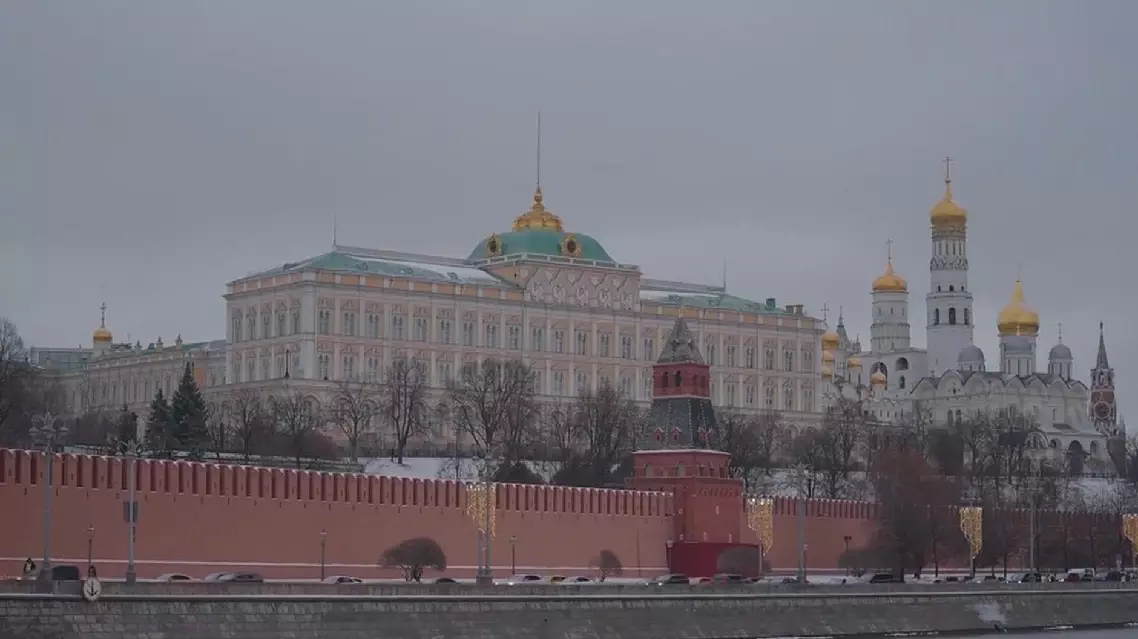
Alexander Maryasov, a former Russian Ambassador to Iran, said that while the United States and its allies are distracted by the escalating situation in the Middle East, Ukraine has now been left to find alternative solutions.

"The U.S-Israeli military strikes against Iran would inevitably divert the attention of all parties-especially the United States and its allies-away from their support and assistance to Ukraine, particularly military aid. Ukrainian President Volodymyr Zelensky understands that U.S. President Donald Trump's focus has now shifted to other targets. He realizes that this means Ukraine will need greater financial resources, military strength, and various other forms of support to cope with the ongoing conflict," said Maryasov.
Ukraine turns elsewhere for support as US attention shifts towards Middle East: former Russian official
Ukraine turns elsewhere for support as US attention shifts towards Middle East: former Russian official

Ukraine turns elsewhere for support as US attention shifts towards Middle East: former Russian official

Ukraine turns elsewhere for support as US attention shifts towards Middle East: former Russian official
China has been playing a key role in bringing a sense of stability to the world and continuing to promote globalization against a turbulent international backdrop, according to a British scholar as he gave his assessment of China's 15th Five-Year Plan (2026-2030) which lays out the country's development vision for the years ahead.

Renowned British scholar Martin Jacques, a former senior research fellow in the Department of Politics and International Studies at the University of Cambridge, shared his take on the recently approved outline of China's 15th Five-Year Plan, a key blueprint which maps out China's policy priorities through to the end of the decade.

The plan notes that China advocates practicing true multilateralism, upholding the international system with the United Nations at its core, the international order based on international law, and the basic norms of international relations based on the purposes and principles of the UN Charter.

It says China will also seek to expand its global partnership network and guide the international order toward a more fair and just direction.

Despite current geopolitical tensions, Jacques says China is responding to a turbulent world full of uncertainties in a calm and rational manner.

"We are living in dangerous times, unpredictable times, and I think China has found a way in this new, difficult era, in the big power relationship [with the United States], to handle it in a calm way, not rise to the bait, and seek to, as far as possible, keep the relationship on a relatively even keel," he said.

China has also pledged to commit to openness and cooperation against the rise of unilateralism and protectionism, and has vowed to share opportunities and pursue common development with all countries.

Noting the wave of anti-free trade sentiment and protectionist policies which have emerged in the United States, particularly under the administrations of U.S. President Donald Trump, Jacques says that globalization will remain the prevailing trend and believes China has been able to find successful approaches to advance international cooperation amid the current challenges.

"I think globalization is the long-term historic trend. But that doesn't mean globalization is always in good health, it doesn't mean that it doesn't have setbacks. [We are] now in a period where globalization first of all, has been slowed and in key respects reversed, but at the same time we've seen it taking new forms. The Belt and Road Initiative is a very important form of globalization, and it's been very successful," he said.

China striving for stability against unpredictable int'l backdrop: British scholar

China striving for stability against unpredictable int'l backdrop: British scholar

Recommended Articles