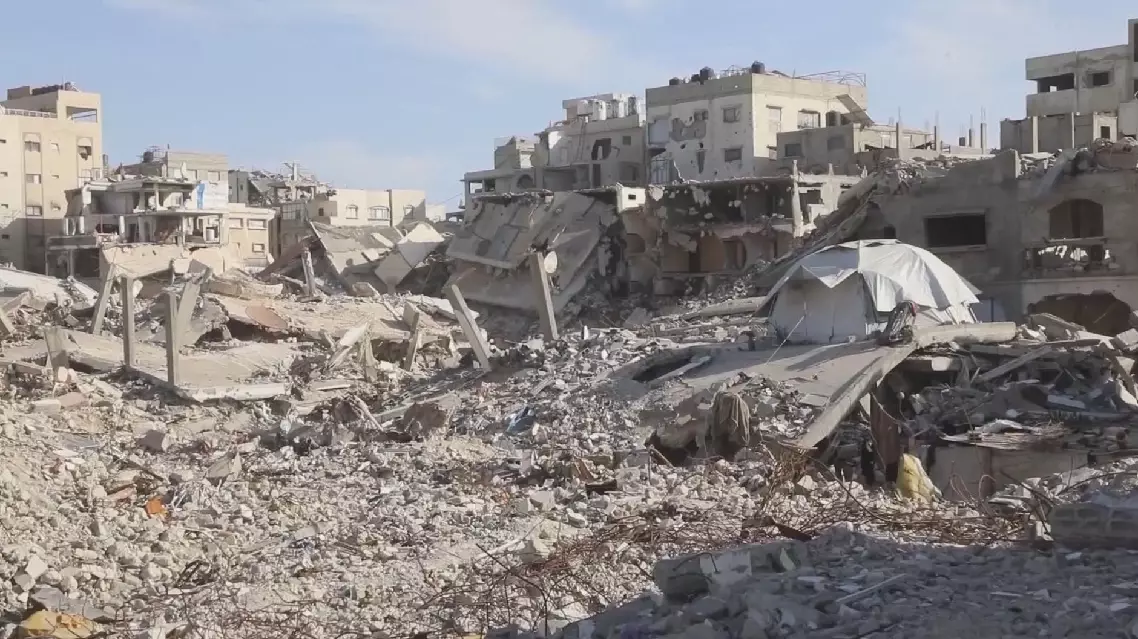
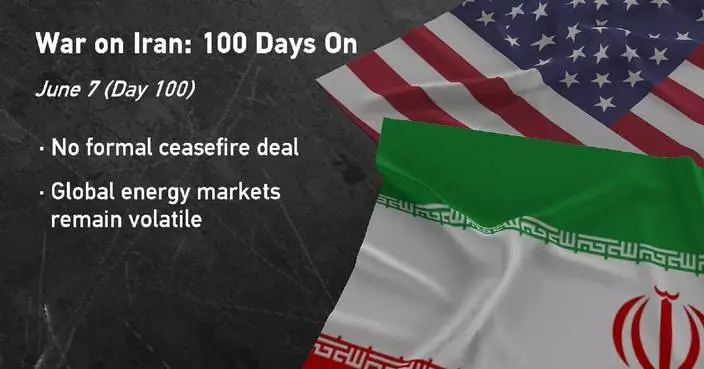
The spillover effects of the ongoing Middle East conflicts have sent nitrogen fertilizer prices soaring, casting a shadow over Brazil's winter wheat growing.
In Rio Grande do Sul, an important agricultural production base in south Brazil, the soybean harvest is already underway. Under normal crop rotation schedules, farmers would next plant wheat. But surging prices of nitrogen fertilizer, which is essential for wheat cultivation, have left many growers hesitant.
Paulo Vargas, a local farmer, has planted more than 400 hectares of soybeans so far this year, and had originally planned to plant wheat on 200 hectares of that land in June. Now he is considering giving up wheat growing.
"Since the escalation of the conflict in the Middle East, nitrogen fertilizer prices have surged by 40 percent, a very sharp increase. In agricultural production, fertilizers are the biggest input cost, followed by diesel. We cannot pass these rising costs on to buyers, who pay very little even for the highest quality wheat. As a result, growing wheat is no longer worth it as there is no financial viability," said Vargas.
The uncertainty has also hit local agricultural input suppliers. Claudio, a fertilizer dealer with more than 30 years of trade experience, has rarely seen such a deadlock -- unable to secure supply while also struggling to sell.
Claudio noted that 30 percent of global nitrogen fertilizer exports must pass through the Strait of Hormuz, and the ongoing Middle East conflict has put Brazil, which relies on imports for over 80 percent of its fertilizer needs, in a highly vulnerable position.
"By this time last year, we were already selling fertilizers and calculating input costs for the upcoming growing season. However, everything has come to a halt due to instability in fertilizer prices and supply. It's not just fertilizers that are unsalable. Other production inputs are also affected. We're deeply anxious, and it's entirely because of the war," Claudio said.
To cope with the price surge, some Brazilian farmers have looked to ammonium nitrate as an alternative. But new challenges have quickly emerged. Russia, the world's largest exporter of ammonium nitrate, has recently suspended exports.
Agricultural experts in Brazil warn that if the Middle East conflicts drag on, the impact on the country's agricultural production could become even more severe.

Middle East conflicts drive up fertilizer prices, threatening wheat growing in Brazil

Middle East conflicts drive up fertilizer prices, threatening wheat growing in Brazil