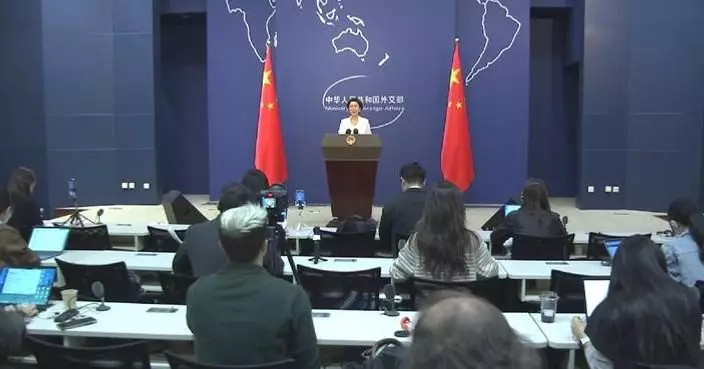
The international community needs to stay on heightened alert against the rightward turn of Japan's Self-Defense Forces (SDF) and the trend of remilitarization in Japan, a Chinese Foreign Ministry spokeswoman said on Tuesday.
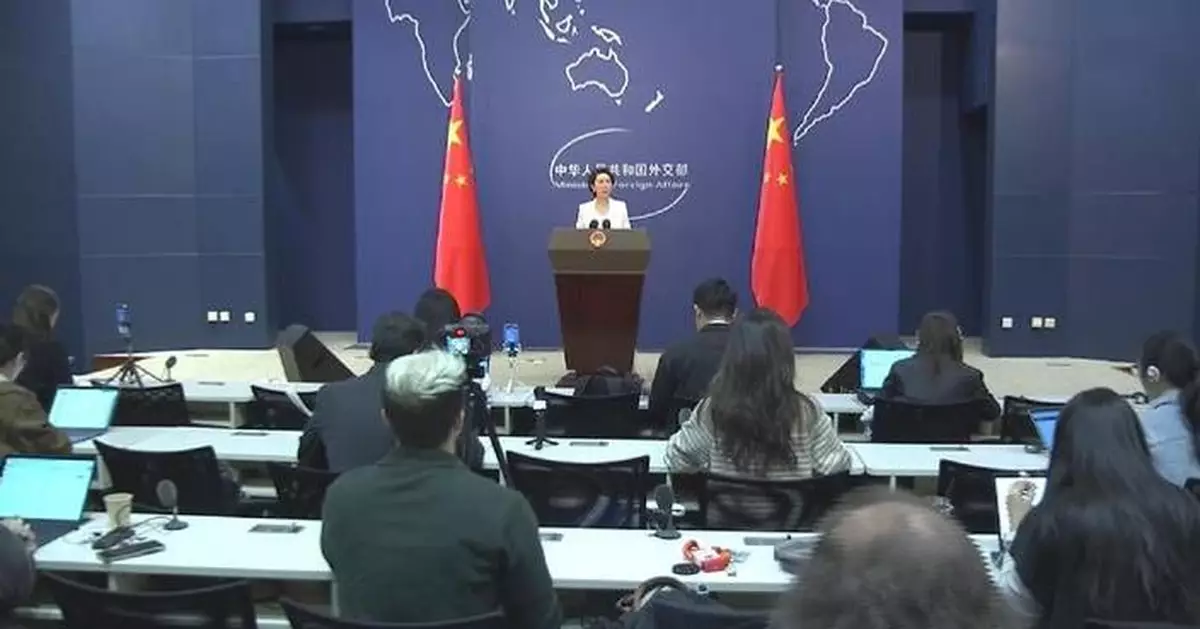
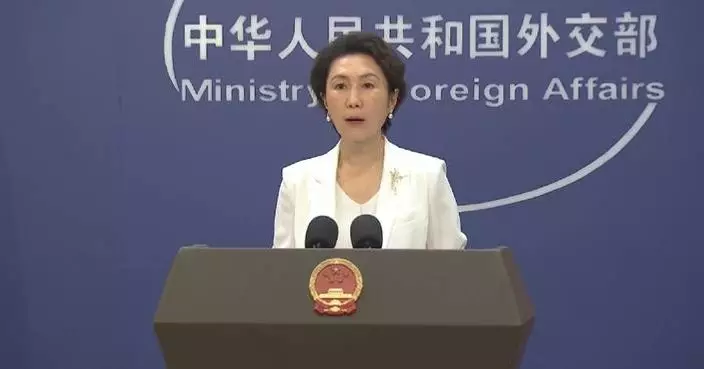
Mao Ning, the spokeswoman, made the statement at a press conference in Beijing in response to a media inquiry. According to media reports, the SDF officer who had recently broken into the Chinese embassy in Tokyo carrying a knife has been sent to prosecutors by Japanese police.
"This incident exposes how deep-seated and harmful the influence of the Japanese right-wingers' ideology and distorted historical views are. According to reports, the National Defense Academy of Japan has a so-called 'custom' of making group visits to the Yasukuni Shrine every year. In 2024, a former senior official of Japan Maritime Self-Defense Force even assumed the post of the Yasukuni Shrine's chief priest, marking the first time a retired SDF officer has taken up the top post at the shrine. The SDF has long invited extreme anti-China right-wingers to participate in teaching activities, and their training materials are filled with content that distorts and glorifies the history of Japan's aggression in World War II," Mao said.
"The parents of the SDF officer who illegally broke into the Chinese embassy stated that he did not exhibit any extreme behavior during his upbringing and education in his hometown, and that they had no idea why he did this. This individual received nine months of reserve officer training in the SDF. What ideologies and education did the SDF instill in him during this period? This warrants attention, investigation and reflection," she continued.
"The rightward turn of the SDF and trend of remilitarization in Japan both deserve heightened vigilance from the international community. China once again urges Japan to thoroughly investigate this incident and take fundamental measures to prevent any recurrence of such events," the spokeswoman noted.
On March 24, Kodai Murata, a 23-year-old second lieutenant in the Japan Ground Self-Defense Force, scaled a wall and broke into the Chinese embassy in Tokyo while carrying a knife, threatening to kill Chinese diplomatic personnel.
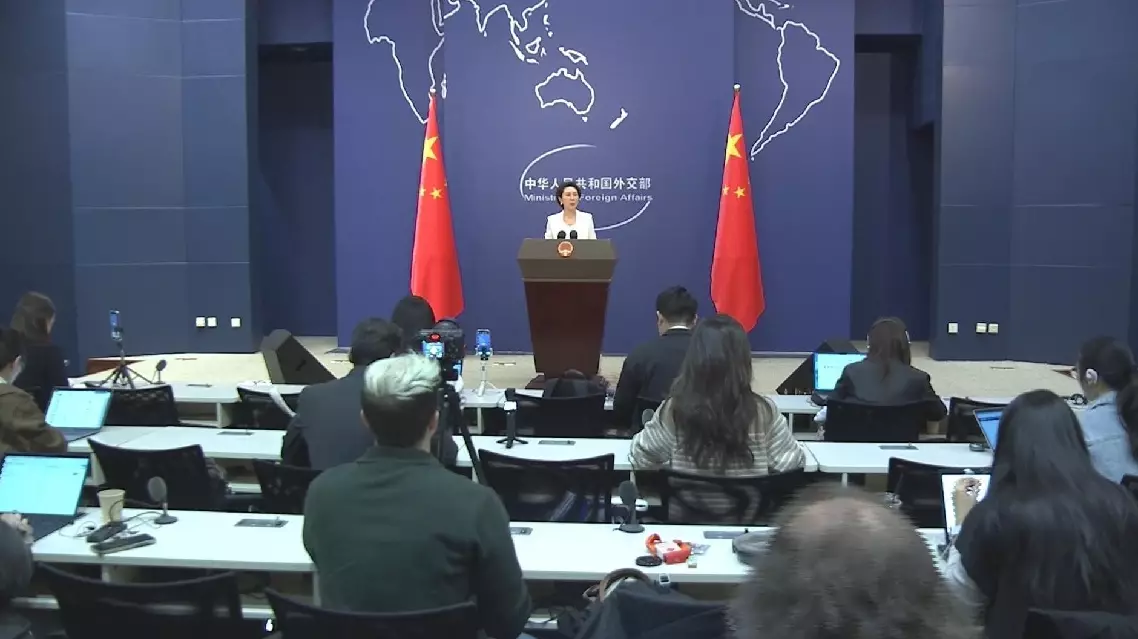
Rightward turn of Japan's Self -Defense Forces, remilitarization trend deserve heightened alert: spokeswoman
China has been playing a key role in bringing a sense of stability to the world and continuing to promote globalization against a turbulent international backdrop, according to a British scholar as he gave his assessment of China's 15th Five-Year Plan (2026-2030) which lays out the country's development vision for the years ahead.
Renowned British scholar Martin Jacques, a former senior research fellow in the Department of Politics and International Studies at the University of Cambridge, shared his take on the recently approved outline of China's 15th Five-Year Plan, a key blueprint which maps out China's policy priorities through to the end of the decade.
The plan notes that China advocates practicing true multilateralism, upholding the international system with the United Nations at its core, the international order based on international law, and the basic norms of international relations based on the purposes and principles of the UN Charter.
It says China will also seek to expand its global partnership network and guide the international order toward a more fair and just direction.
Despite current geopolitical tensions, Jacques says China is responding to a turbulent world full of uncertainties in a calm and rational manner.
"We are living in dangerous times, unpredictable times, and I think China has found a way in this new, difficult era, in the big power relationship [with the United States], to handle it in a calm way, not rise to the bait, and seek to, as far as possible, keep the relationship on a relatively even keel," he said.
China has also pledged to commit to openness and cooperation against the rise of unilateralism and protectionism, and has vowed to share opportunities and pursue common development with all countries.
Noting the wave of anti-free trade sentiment and protectionist policies which have emerged in the United States, particularly under the administrations of U.S. President Donald Trump, Jacques says that globalization will remain the prevailing trend and believes China has been able to find successful approaches to advance international cooperation amid the current challenges.
"I think globalization is the long-term historic trend. But that doesn't mean globalization is always in good health, it doesn't mean that it doesn't have setbacks. [We are] now in a period where globalization first of all, has been slowed and in key respects reversed, but at the same time we've seen it taking new forms. The Belt and Road Initiative is a very important form of globalization, and it's been very successful," he said.

China striving for stability against unpredictable int'l backdrop: British scholar