The escalating conflict in the Middle East is severely disrupting shipping and trade routes, further squeezing the already fragile humanitarian supply lines to Sudan and threatening millions of people in need of aid.
Since the armed conflict between Sudan's government and paramilitary Rapid Support Forces erupted in April 2023, nearly three years of fighting have led to a severe humanitarian crisis. Out of a population of approximately 50 million, more than 30 million are in need of humanitarian assistance, with the country heavily relying on international aid for essential food and medical supplies.
Saudi Arabia, Qatar and other Gulf nations serve as both major sources of aid and critical transit hubs. But since the United States and Israel started military strikes on Iran, shipping through the Strait of Hormuz has faced serious disruptions. Consequently, large quantities of aid destined for Sudan have been delayed, leaving many supplies stranded in Gulf ports and unable to enter the country.
Compounding the crisis, the World Food Program has warned that surging energy prices driven by heightened Middle East tensions have pushed up the transport costs of humanitarian supplies by approximately 18 percent.
Sharfi, a staff member at a Sudan humanitarian aid agency, described the severe impact on import pipelines and procurement timelines.
"This will result in severe disruption of import pipelines due to regional instability and port congestion, extended procurement lead times from 4 to 6 months for many medical items, nutritional items, emergency shelter items, non-food items, insecurity along transport corridors, limiting movement from state to state, fuel price volatility, increasing transport costs, reducing the delivery frequency," he said.
Under this mounting pressure, Sudan's fragile healthcare system has been pushed to the verge of collapse. Sudan's Federal Ministry of Health has noted that the conflict has caused medical import costs to skyrocket by 120 percent. Officials warn that if the situation persists, inventories for certain medicines could be depleted within two to four weeks, with food and other basic necessities facing similar dilemmas.
"[There is] increased pressure already on the limited current inventory in Sudan and the warehouses we have. The risk of service interruption, we are facing that now," said Sharfi.
The situation faces further uncertainty as Yemen's Houthi forces have announced their intervention in the conflict. This development has heightened tensions in the Red Sea and the Bab el-Mandeb Strait, posing a threat to the regional logistics network and likely exacerbating the deterioration of the humanitarian situation in Sudan.
On Feb. 28, Israel and the United States launched joint attacks on Tehran and several other Iranian cities, killing Iran's then Supreme Leader Ali Khamenei, along with senior military commanders and civilians. Iran responded by launching waves of missile and drone strikes targeting Israel and U.S. bases and assets in the Middle East.
Iran's Islamic Revolution Guard Corps announced on Friday that passage is prohibited for any vessel through any corridor in the Strait of Hormuz to and from the ports of countries allied with and supporting the United States and Israel.
Amid the escalating tensions, Yemen's Houthi group formally joined the conflict on Saturday, further complicating the evolving situation in the Middle East.
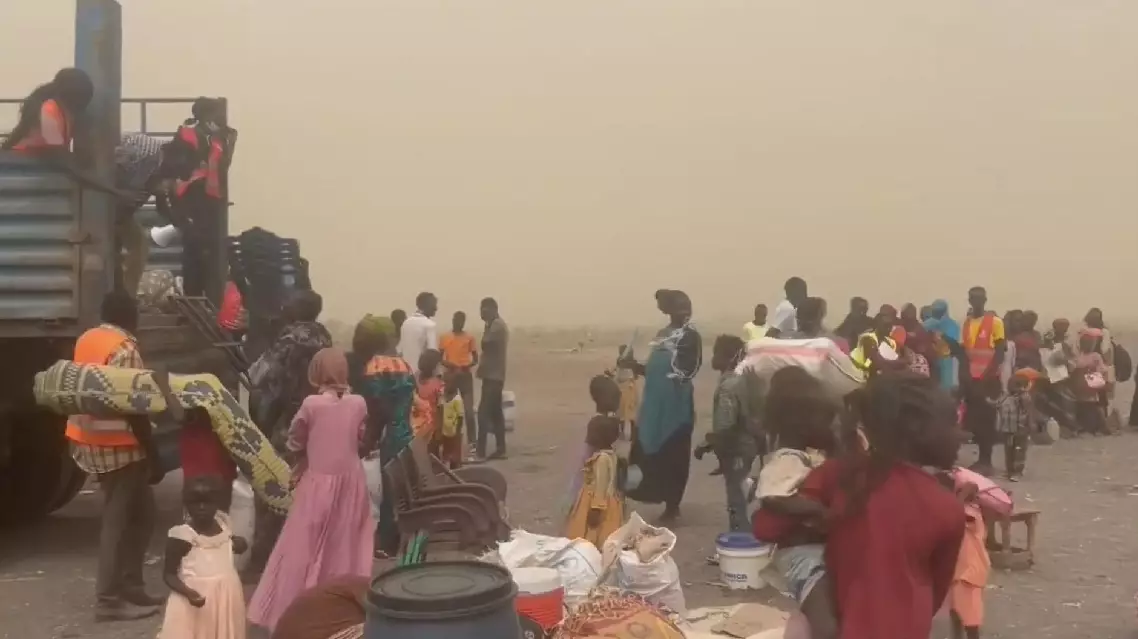
Middle East conflict strains Sudan's humanitarian supplies