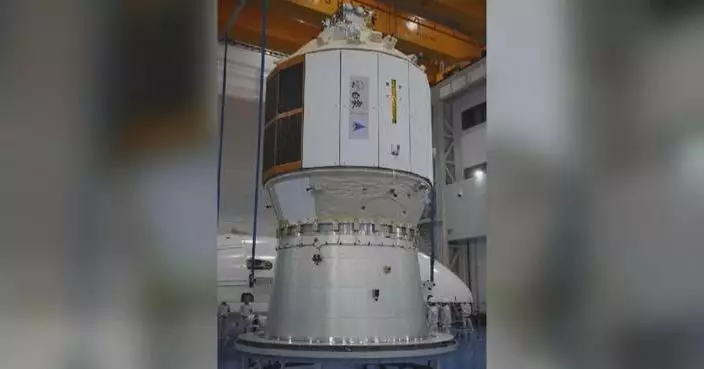
China's Lijian-2 Y1 carrier rocket, which was launched at 19:00 (Beijing Time) on Monday in northwest China, will be recovered in an innovative way, said Lian Jie, deputy chief designer of the carrier rocket.
The Lijian-2 Y1 carrier rocket was launched with three satellites aboard.
The rocket blasted off at 19:00 (Beijing Time) from a commercial aerospace innovation pilot zone in northwest China and successfully sent the satellites into the planned orbit.
Lian told China Central Television (CCTV) that the researchers are currently working on developing an innovative way to recover the carrier rocket.
"In the future, the Lijian-2 Y1 carrier rocket will realize our 'cluster one-piece recovery.' By that I mean that traditionally, we recover the core stage of the rocket, but now, we fasten the boosters together with the rocket's core stage as one piece," said Lian.
Saving the booster separations, this approach also helps reduce risks that may occur during the rocket's ascent phase.
"Saving the step of booster separation, our Lijian-2 Y1 carrier rocket is highly reliable in its powered flight phase, because we reduce the number of times of separations," said Lian.
Lian said the successful launch of the Lijian-2 Y1 carrier rocket marks a milestone in China's commercial rocket development.
"The successful launch of the Lijian-2 Y1 carrier rocket marks that China's commercial rockets have entered the ranks of medium-to-heavy rockets. The Lijian-2 Y1 carrier rocket features a payload capacity of 8 tons on a 500-kilometer sun-synchronous orbit (SSO). This means it could play an active role in constructing China's low-Earth-orbit internet constellations. It will also take part in the competition for our country's space-to-ground cargo transportation system and will contribute significantly to national aerospace development," said Lian.
"Furthermore, our Lijian-2 Y1 carrier rocket can be optionally equipped with the Kinastra-1 upper stage that we are developing, offering better services to China's deep-space exploration missions in the future. This carrier rocket embodies our design philosophy of adopting modular design for rockets, and we hope to advance further on this way. We have set our goals, as mentioned earlier, namely, to develop one type of core rocket and to produce three variants so that we can provide China with near-Earth-orbit lift capability ranging from 2 to 20 tons and we will work harder to reach the goals," said Lian.
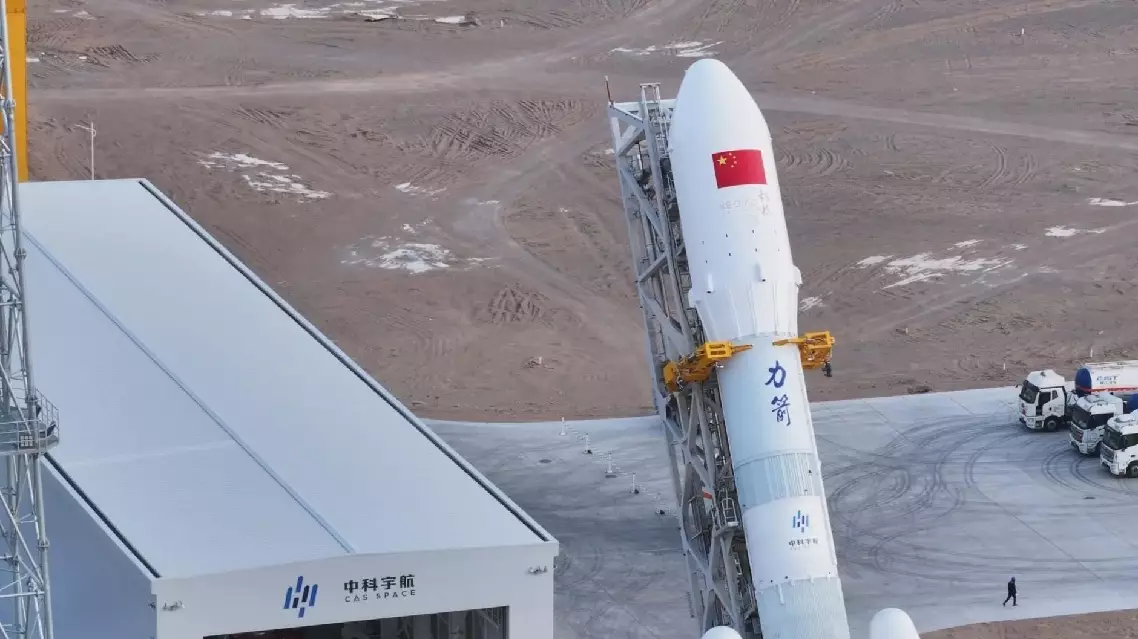
Lijian-2 Y1 carrier rocket's recovery to be innovative: designer