PARK CITY, Utah (AP) — An Olympic-sized halfpipe is returning to Park City, Utah, the resort town that helped put snowboarding on the map.
The Snow League — a halfpipe league created by three-time Olympic champion Shaun White — named Park City as one of the contest sites for its 2026-27 season on Tuesday.
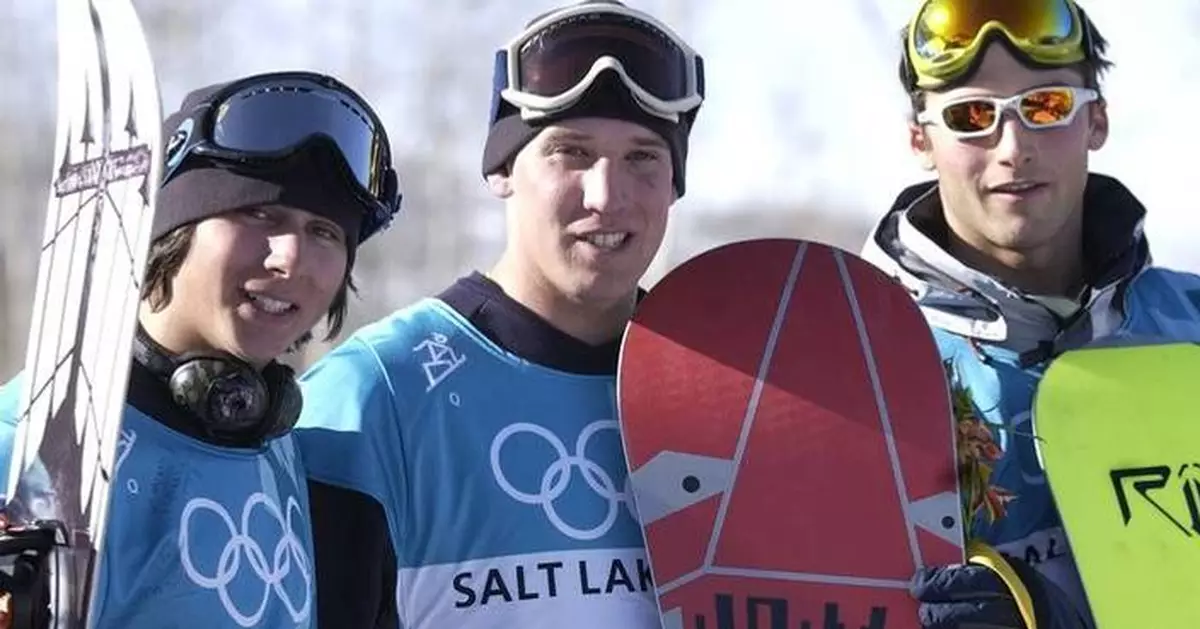
It will bring big-time snowboarding back to the venue that hosted the 2002 Olympics, when American men Ross Powers, Danny Kass and JJ Thomas swept the medals and U.S. rider Kelly Clark won gold in the women's contest. Park City will again host Olympic snowboarding in 2034.
"Park City Mountain has always been one of the most important places in snowboarding and freeskiing, so bringing The Snow League here for Season Two feels incredibly special,” White said.
The U.S. once dominated the men's halfpipe, but has been shut out of the Olympic podium since White won his third gold medal in 2018. The drought has coincided with a surge of top Japanese riders, combined with fewer halfpipes to train on across the United States.
Park City hasn't had a 22-foot halfpipe since 2019, when it hosted world championships.
The event is scheduled for Jan. 22-24, the weekend traditionally associated with the Sundance Film Festival that is moving to Colorado starting next year.
AP Winter Olympics: https://apnews.com/hub/milan-cortina-2026-winter-olympics
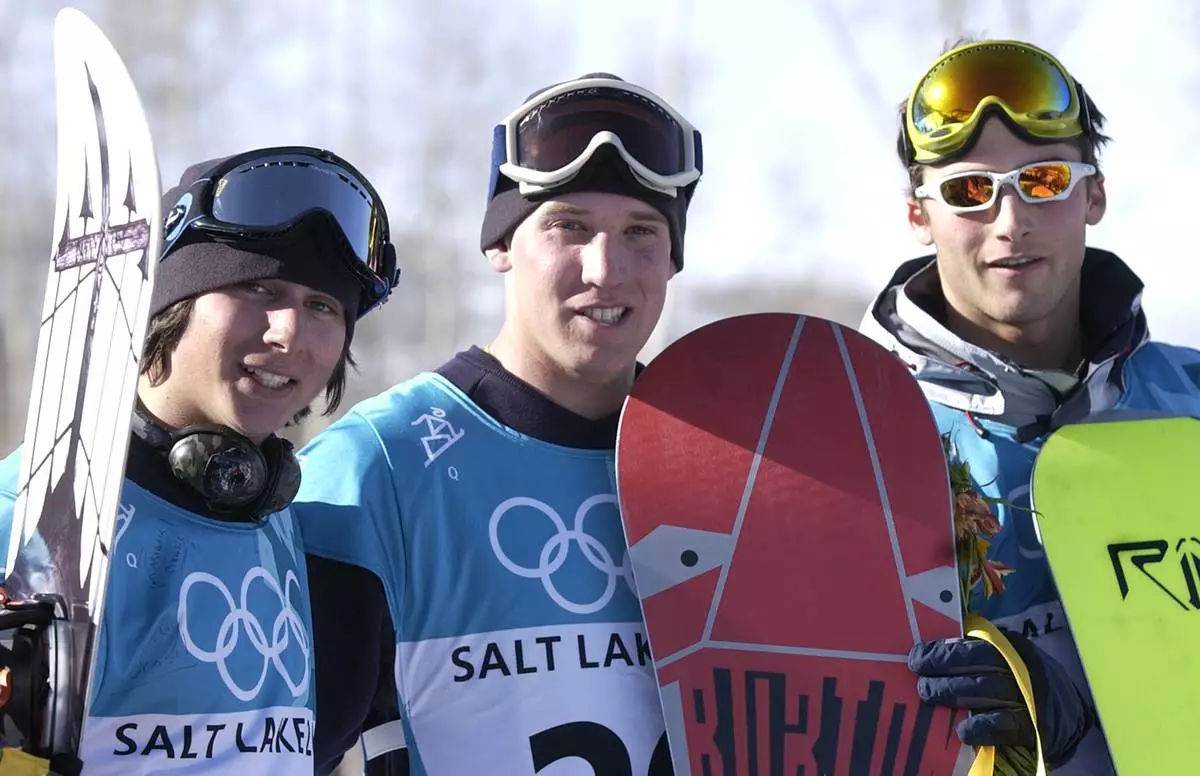
FILE - Silver medalist Danny Kass, left, gold medalist Ross Powers and bronze medalist J.J. Thomas stand together at the finish in the men's Olympic halfpipe competition in Park City, Utah on Monday, Feb. 12, 2002. All are members of the U.S. team, which swept the competition in medals. (AP Photo/Laura Rauch, File)
WASHINGTON (AP) — U.S. consumer confidence inched higher in March despite soaring energy prices brought on by the war in Iran.
The Conference Board said Tuesday that its consumer confidence index rose modestly to 91.8 in March from 91 in February.
The board said that while rising costs due to tariffs and spiking oil prices induced by the conflict in the Middle East did not affect the topline confidence reading, there was increasing pessimism in other measures of the survey, including expectations of higher inflation.
Respondents’ comments about oil, gas and the war spiked and consumers’ 12-month inflation expectations surged to levels last seen in August 2025 when anxiety over tariffs peaked.
U.S. gas prices jumped past an average of $4 a gallon for the first time since 2022 on Tuesday as the war caused fuel prices to soar worldwide.
According to motor club AAA, the national average for a gallon of regular gasoline is now $4.02 — up more than a dollar before the war began. The last time U.S. drivers were collectively paying this much at the pump was nearly four years ago, following Russia’s invasion of Ukraine.
A measure of Americans’ short-term expectations for their income, business conditions and the job market fell 1.7 points to 70.9, remaining well below 80, a marker that can signal a recession ahead. It’s the 14th consecutive month that reading has come in under 80.
The index for consumers’ assessments of their current economic situation rose by 4.6 points to 123.3.
Government data from earlier in March showed that an inflation gauge closely monitored by the Federal Reserve moved 2.8% higher in January in the latest sign that prices were persistently elevated even before the Iran war caused spikes in oil and gas costs.
Excluding the volatile food and energy categories — which the Fed pays closer attention to — core prices rose 3.1%, up from 3% in the prior month and the highest in nearly two years.
Consumer prices and prices at the wholesale level also remain elevated.
Those higher prices and the prospect of even higher inflation due to the Iran war makes it unlikely that the Federal Reserve will cut interest rates any time soon.
The Fed cut its benchmark interest rate three times to close 2025 in an attempt to support a flagging labor market. However, because lower rates can exacerbate inflation, which remains above the Fed’s 2% target, the Fed has left its overnight lending rate alone at its past two meetings.
While consumers' views of current employment conditions improved slightly, perceptions of the labor market six months from now edged downward.
The Labor Department reported earlier in March that U.S. employers unexpectedly cut 92,000 jobs in February, a sign that the labor market remains under strain. Economists had expected 60,000 new jobs in February. The unemployment rate rose to 4.4%.
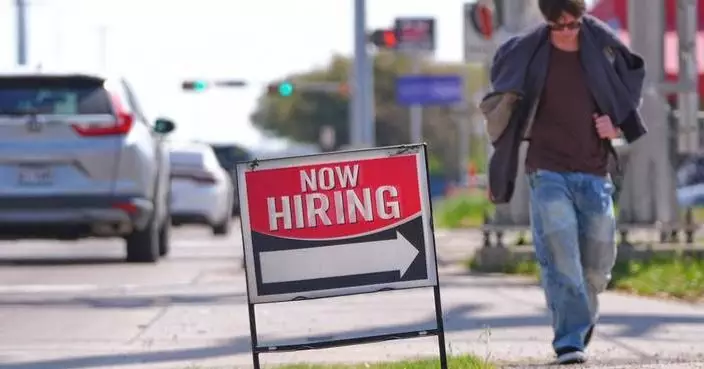
Another report Tuesday showed that U.S. job openings fell slightly in February to 6.9 million from 7.2 million in January.
The surprisingly weak employment picture in February adds to the economic uncertainty sparked by the war with Iran, which has caused oil prices to surge and saddled business and consumers with unforeseen costs.
The country’s labor market has been stuck in a “low hire, low fire” state, economists say, as businesses stand pat due to uncertainty over President Donald Trump’s tariffs and the lingering effects of elevated interest rates.
U.S. economic growth slowed to 1.4% in the final three months of last year, following two surprisingly strong quarters. Growth in the fourth quarter was dragged down by the six-week shutdown of the federal government and a pullback in consumer spending.
According to the Tuesday’s survey results, consumers’ plans to buy cars continued to rise in March, with used cars remaining the clear preference.
Homebuying expectations fell in March as the spring buying season kicks off in the midst of a yearslong housing market slump.
Expectations that stock prices will be higher a year from now plunged, the board said.
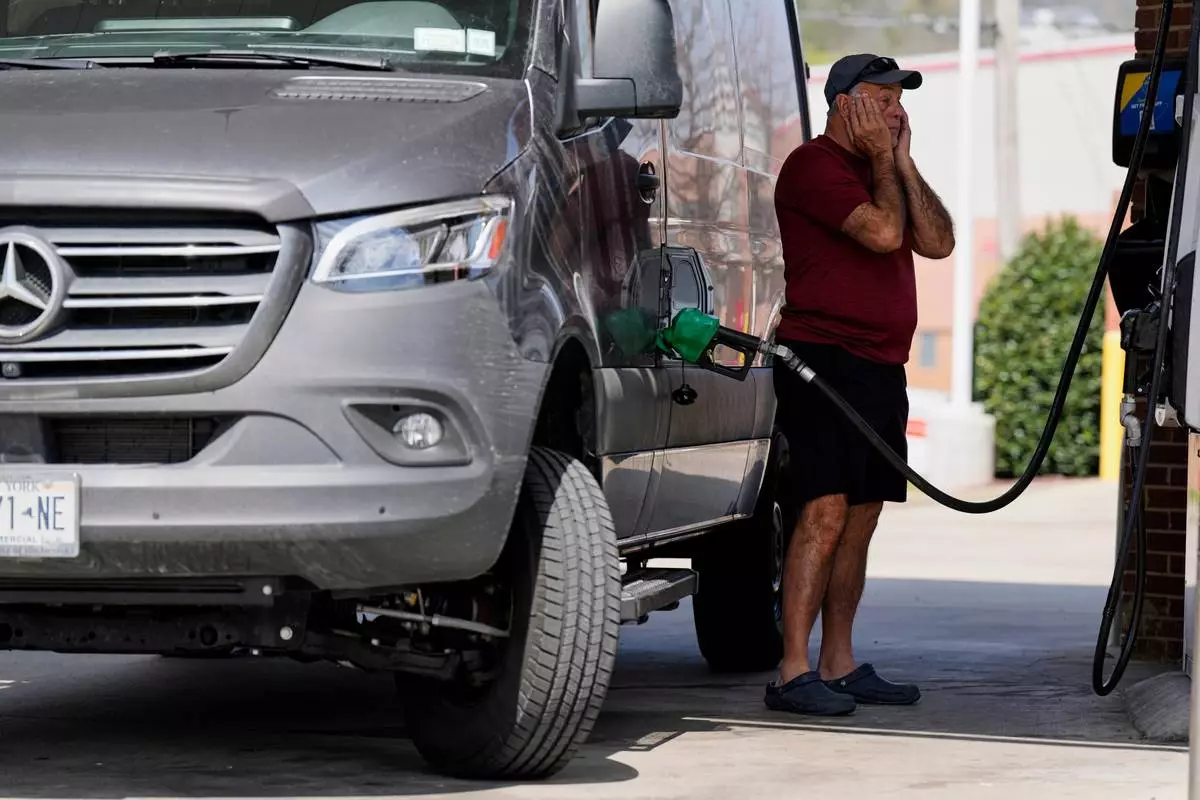
Ray Ruda fills his van with fuel at a gas station Wednesday, March 25, 2026, in Brentwood, Tenn. (AP Photo/George Walker IV)