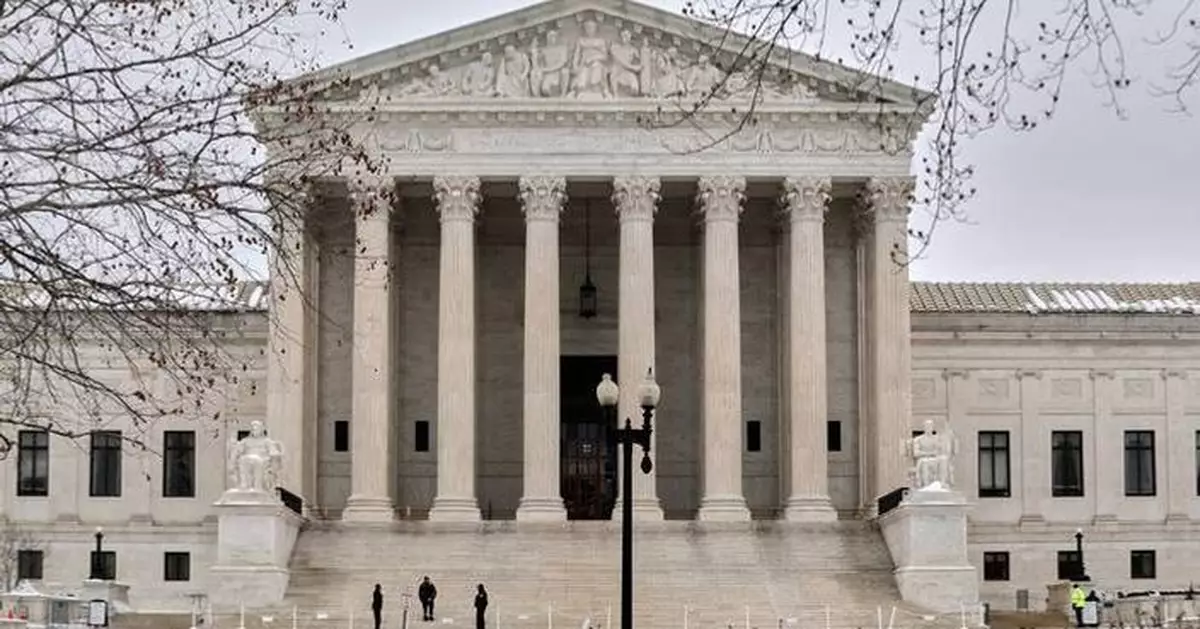
The Supreme Court is once again hearing arguments on whether President Donald Trump can deny citizenship to children born to parents who are in the United States illegally or temporarily.
The Wednesday case stems from an executive order Trump signed on the first day of his second term ending what’s known as birthright citizenship, which guarantees citizenship to nearly everyone born on U.S. soil.
While the concept has been part of U.S. law for well over a century, it is relatively rare around the world.
Birthright citizenship is based on the legal principle of jus soli, or “right of soil.”
In the U.S., the right was enshrined in the Constitution after the Civil War, in part to ensure that former slaves would be citizens.
“All persons born or naturalized in the United States and subject to the jurisdiction thereof, are citizens of the United States,” the 14th Amendment states.
In the late 1800s, birthright citizenship was legally expanded to the children of immigrants.
Wong Kim Ark, who was born in the U.S. to Chinese parents, sued after traveling overseas and being denied reentry into the U.S. The Supreme Court eventually ruled that the amendment gives citizenship to everyone born in the U.S., no matter their parents’ legal status.
Today there are only a handful of birthright exceptions, such as for children born in the U.S. to foreign diplomats.
Only about three dozen countries, nearly all of them in the Americas, guarantee citizenship to children born on their territory.
Most countries follow the principle of jus sanguinis, or “right of blood,” with a child’s citizenship based on the citizenship of their parents, no matter where they are born.
None of the 27 member states of the European Union, for example, grant automatic, unconditional citizenship to children born on their territories to foreign citizens. The situation is similar across much of Asia, the Middle East and Africa.
Some countries use a combination of principles, such as parenthood, residency and ethnicity, to decide a child's citizenship.
Australia, for example, allowed birthright citizenship until 1986. But starting that August, children born there could only become citizens if at least one parent was an Australian citizen or a permanent resident.
Things shifted the other way in Germany, which changed its citizenship laws in 2024.
Until then, citizenship by birth required that at least one parent was German. Starting in 2024, though, children born in Germany to non-German parents are automatically granted German citizenship if one parent has been legally living in the country for more than five years with unlimited residency status.
Citizenship laws were liberalized because “studies have shown that the education prospects of children and teenagers with a migration background are better, the sooner they were granted German citizenship,” the government wrote at the time.
Supporters of birthright restrictions in the U.S. focus on a handful of words in the constitutional amendment: “subject to the jurisdiction thereof.”
That phrase, they argue, means the U.S. can deny citizenship to children born to women who are in the country illegally.
A series of judges have ruled against the administration and the order has been repeatedly put on hold by lower courts.
Wednesday's case originated in New Hampshire, where a U.S. district judge ruled the order “likely violates” both the Constitution and federal law.
AP reporter Kirsten Grieshaber contributed to this story from Berlin.
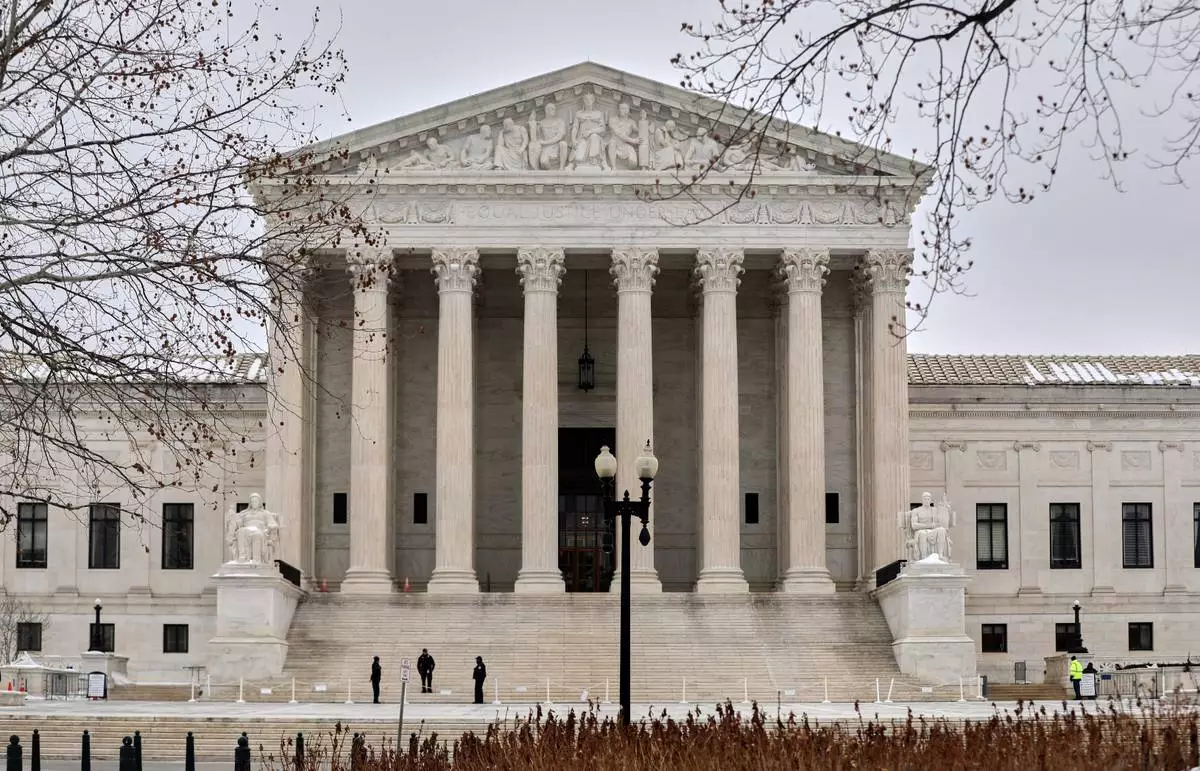
FILE - The Supreme Court is photographed, Feb. 6, 2026, in Washington. (AP Photo/Rahmat Gul, File)
SAO PAULO (AP) — As the war in Iran rattles global oil markets, Brazil is partially shielded by a decades-old buffer against shocks that is both cheap and emits less pollution that causes climate change: Tens of millions of drivers here can choose between filling their tank with 100% sugarcane-based ethanol or a gasoline blend that contains 30% of biofuel.
Brazil’s massive dual-fuel fleet — consisting of vehicles capable of running on any combination of ethanol and gasoline — is unique in its scale. The program, launched in 1975 during the country's military dictatorship, has successfully evolved in democratic times to reduce dependency on foreign oil.
Today, as the latest conflict involving Iran, the United States and Israel enters its fifth week, nations like India and Mexico are looking at the Brazilian model as a blueprint for energy security.
While consumers worldwide face steep price hikes, Brazilian gasoline prices rose just 5% in March — compared to 30% in the United States. Analysts partially credit the stability to a mature domestic biofuels industry that allows the country to withstand geopolitical shocks with minimal risk of fuel shortages.
“Brazil is much better prepared than most countries because it has a viable alternative of this nature,” said Evandro Gussi, president of the Brazilian Sugarcane Industry Association, UNICA.
The timing is particularly fortunate as Brazil’s next sugarcane harvest, beginning in the first half of April, is expected to produce a record 30 billion liters of ethanol — 4 billion more than last year. “That increase alone is equivalent to the total amount of gasoline Brazil imported in all of last year,” Gussi noted.
Despite being a major producer and exporter of crude oil, Brazil still relies on imports to meet its domestic demand for refined fuels. The country currently sources petroleum from the U.S., Saudi Arabia, Russia and neighboring Guyana.
However, ethanol has become the backbone of the daily commute. In 2025, ethanol accounted for 37.1 billion liters of sales, according to state-run Energy Research Company. Though it slightly trails diesel and gasoline in total energy share, its presence at every gas station provides Brazilians with a psychological and economic safety net.
The success of Brazil's biofuels economy is rooted in the state of Sao Paulo, the country's industrial and agricultural powerhouse.
Production here is a mix of high-tech, export-oriented “mega-farms” and smaller family operations like farm Bom Retiro, founded in 1958, whose few dozen workers are now preparing to crop their 40-square-kilometer land (almost 10,000 acres).
Brazil's technology in biofuels is also fostered by years of state-sponsored research. One of them lies outside Sao Paulo, the Science Development Center for Ethanol at the Unicamp university in Campinas. Coordinator Luis Cortez says Brazil's program holds unique advantages unmatched by other nations.
“We have flexibility in ethanol production, in vehicle engines and from the federal government, which sets the percentage of ethanol in the fuel blend," said Cortez. “We have flexibility at three levels.”
Ultimately, he argues, that investment in research ends up making a difference at gas stations.
When burned, biofuels generally emit less carbon dioxide, a greenhouse gas that heats the planet, compared to diesel, oil and gas. Whether biofuels are overall more sustainable is an open question, as land use changes and the methods needed to create them can cancel out any gains in reducing tailpipe and other emissions.
According to the Brazilian Association of Fuel Importers, gasoline refined by the state-run Petrobras — which includes a biofuel blend — is currently 46% cheaper than imported fuel, or 1.16 Brazilian reals ($0.22) less per liter. Similarly, Petrobras diesel is priced at refineries at 63% below import levels.
While the closing of the Strait of Hormuz has not yet caused dramatic shifts in Brazil’s gasoline market, the country is struggling with rising diesel prices. This is because diesel is primarily made of imported crude oil and has a smaller percentage of biofuels.
Unlike the sugarcane-ethanol success story, Brazil’s biodiesel, which is mostly made from soybeans, only makes up 14% of the diesel blend. That figure might rise to the same 30% used in gasoline blends only by 2030, if research and technological developments allow, which means the conflict has brought immediate impact.
Brazil's diesel prices surged by more than 20% in March, prompting President Luiz Inácio Lula da Silva to propose import subsidies through May. Government estimates show that the country has to buy between 20% and 30% of its diesel every month, most of it coming from Russia.
Brazil's authorities say the country imported almost 17 billion liters of diesel last year.
For the 80-year-old leader Lula seeking reelection this October, stabilizing diesel prices is critical to prevent truck driver strikes and keep food inflation in check.
Gussi, the president of UNICA, said that since the latest Iran war several heads of state have approached him to discuss Brazil’s biofuels industry. Among them is Mexican President Claudia Sheinbaum, who said earlier this month she is interested in Petrobras’ technology in producing ethanol from agave, a very popular plant in her country.
“The best news, even in the midst of a situation like the one we are experiencing, is that this solution has a significant level of replicability,” Gussi said.
AP journalist Thiago Mostazo contributed to this report from Campinas.
Follow AP’s coverage of Latin America and the Caribbean at https://apnews.com/hub/latin-america
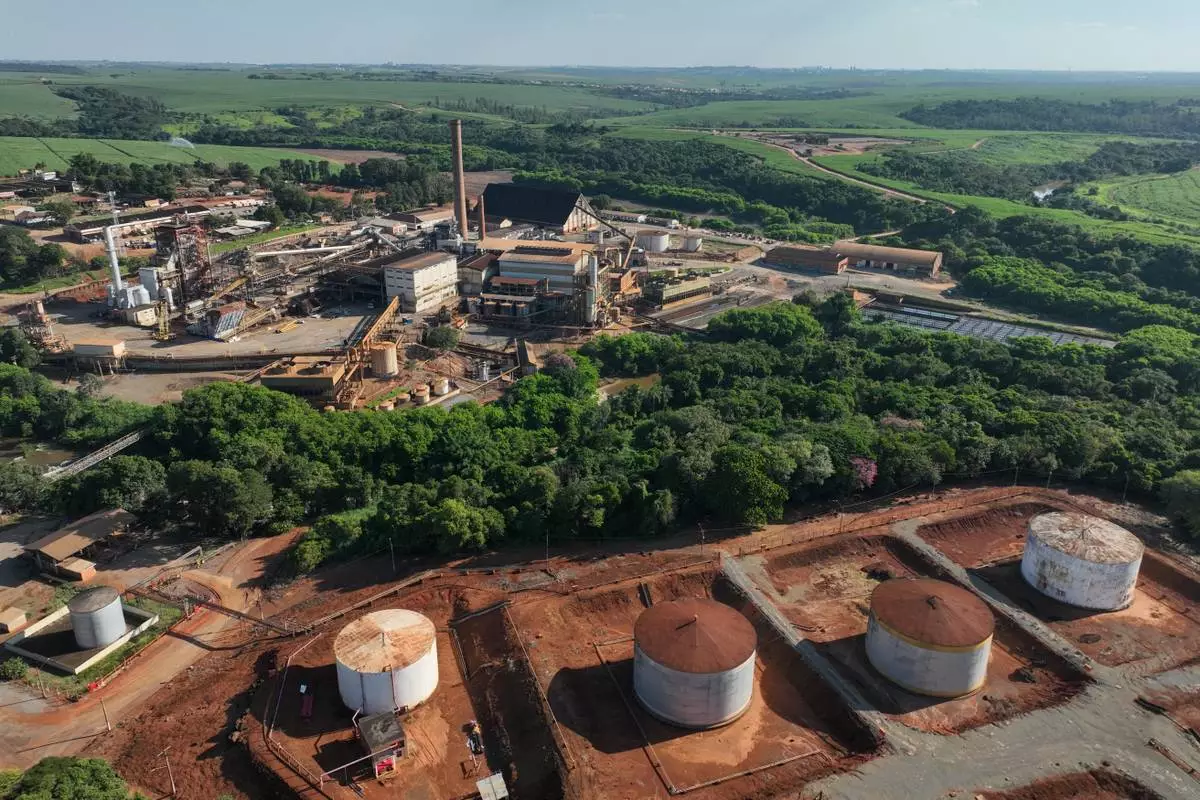
An aerial view of the Ester sugarcane and ethanol plant in Cosmopolis, Brazil, Tuesday, March 24, 2026. (AP Photo/Andre Penner)
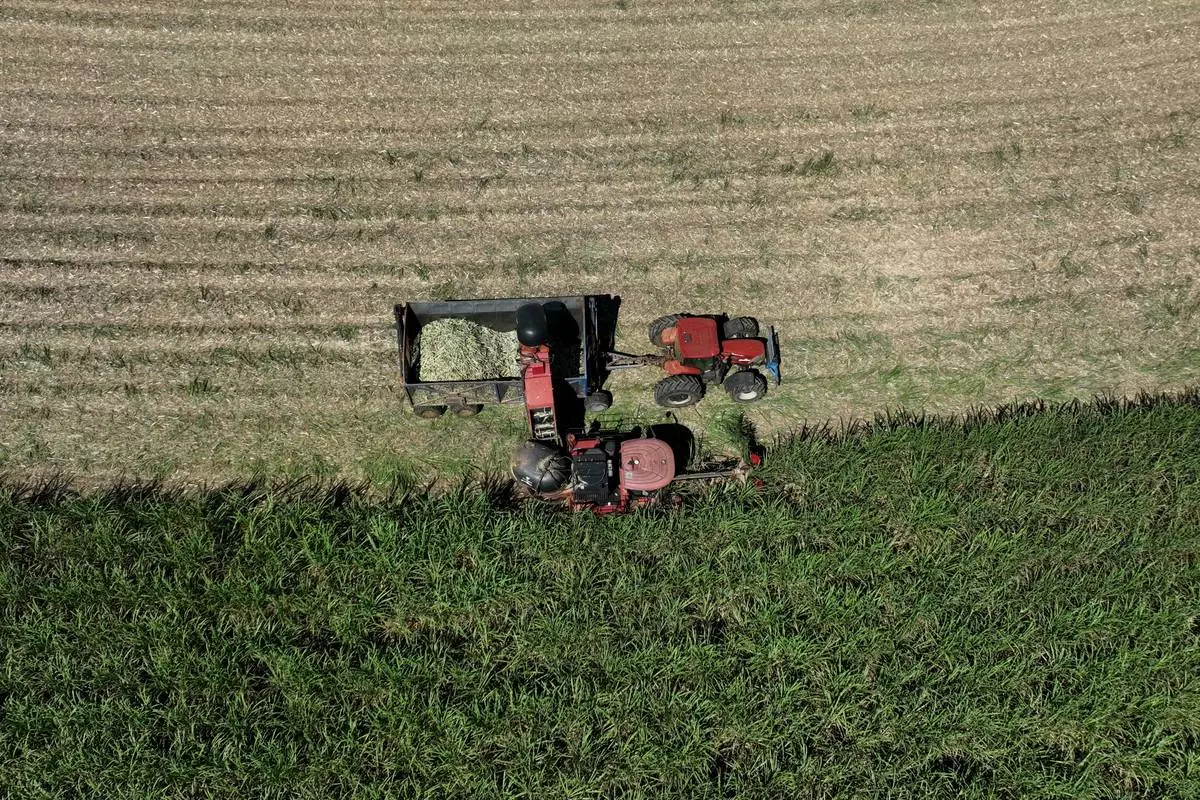
Workers load a tractor during a seedling harvest on a sugarcane plantation at Bom Retiro Farm in Artur Nogueira, Brazil, Tuesday, March 24, 2026. (AP Photo/Andre Penner)
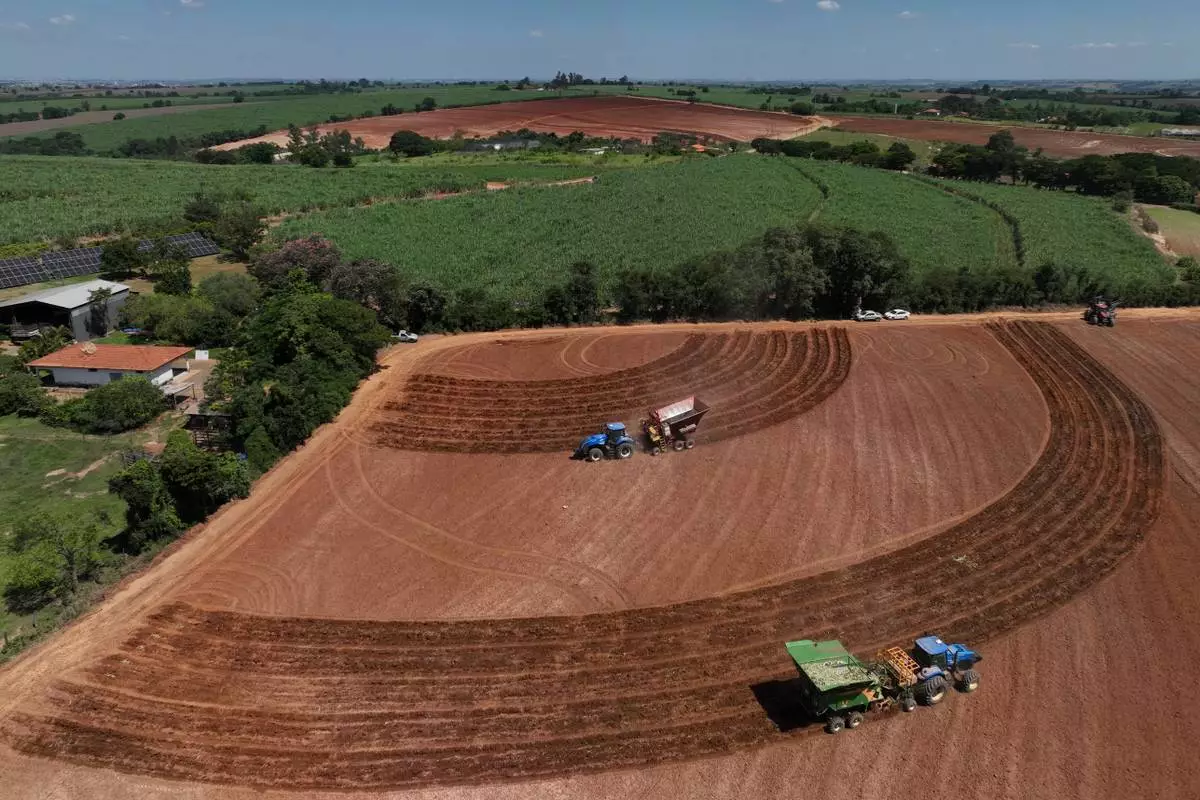
Tractors plant seedlings at Bom Retiro sugarcane farm in Artur Nogueira, Brazil, Tuesday, March 24, 2026. (AP Photo/Andre Penner)
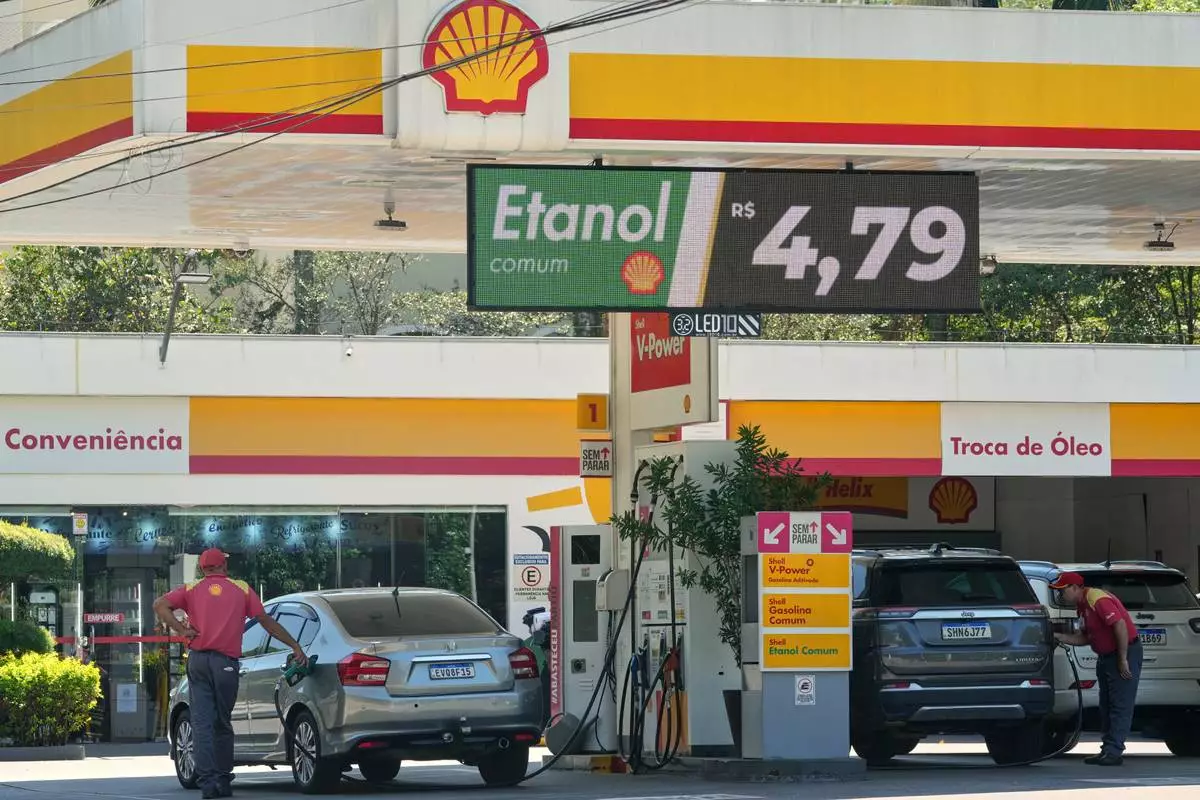
Cars fuel up with ethanol at a gas station in Sao Paulo, Friday, March 27, 2026. (AP Photo/Andre Penner)
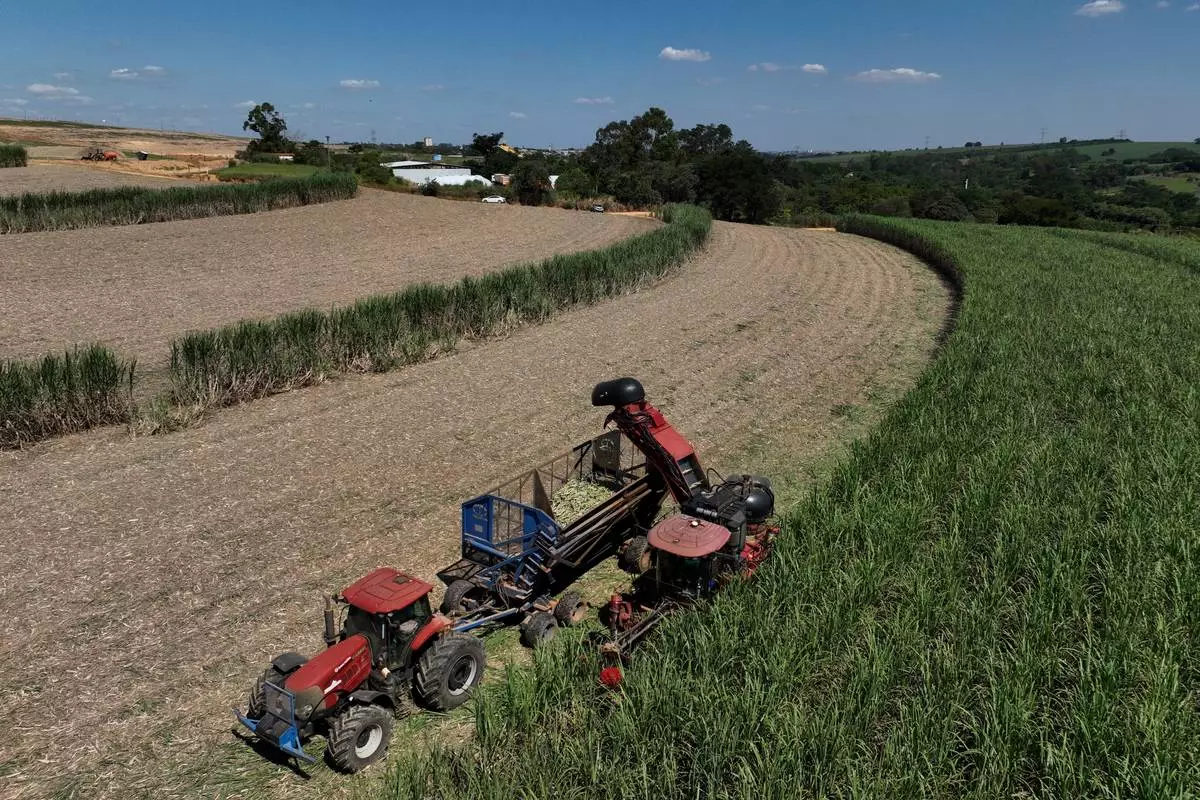
A tractor is loaded during a seedling harvest on a sugarcane plantation at Bom Retiro Farm in Artur Nogueira, Brazil, Tuesday, March 24, 2026. (AP Photo/Andre Penner)