China and Uzbekistan are expanding connectivity with three new direct flight routes being added between the two countries as the development of the so-called "Air Silk Road" enters a new stage.
It comes as China and Uzbekistan deepen cooperation under the Belt and Road Initiative, with closer exchanges in trade, investment, energy, infrastructure and people-to-people ties, and follows the year-long 'Uzbekistan Tourism Year in China' campaign which lasted throughout 2025.
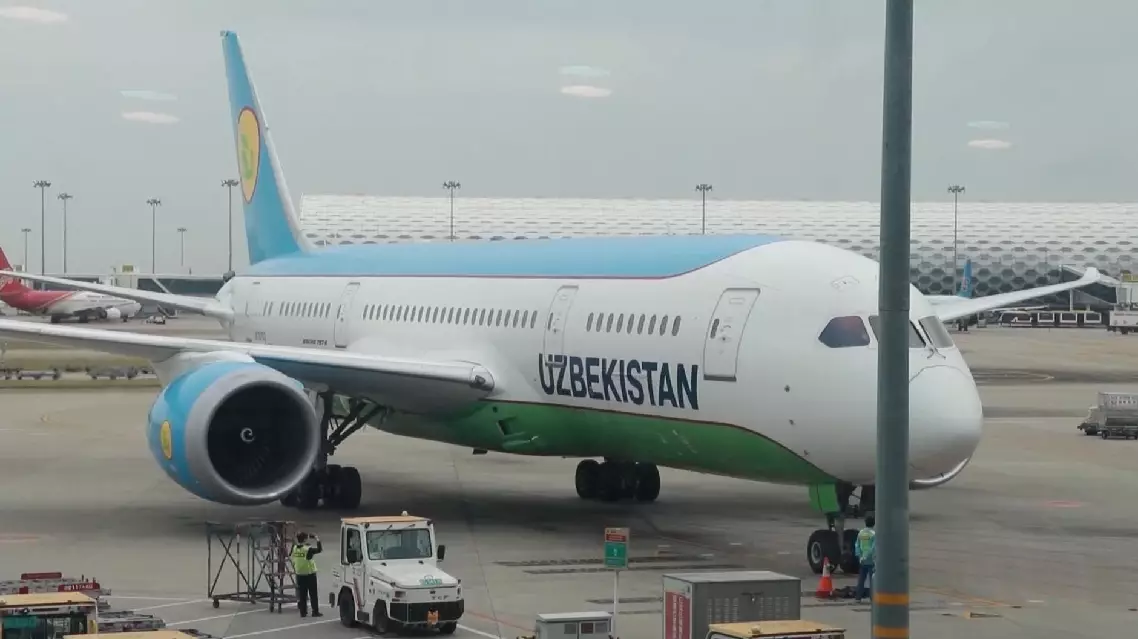
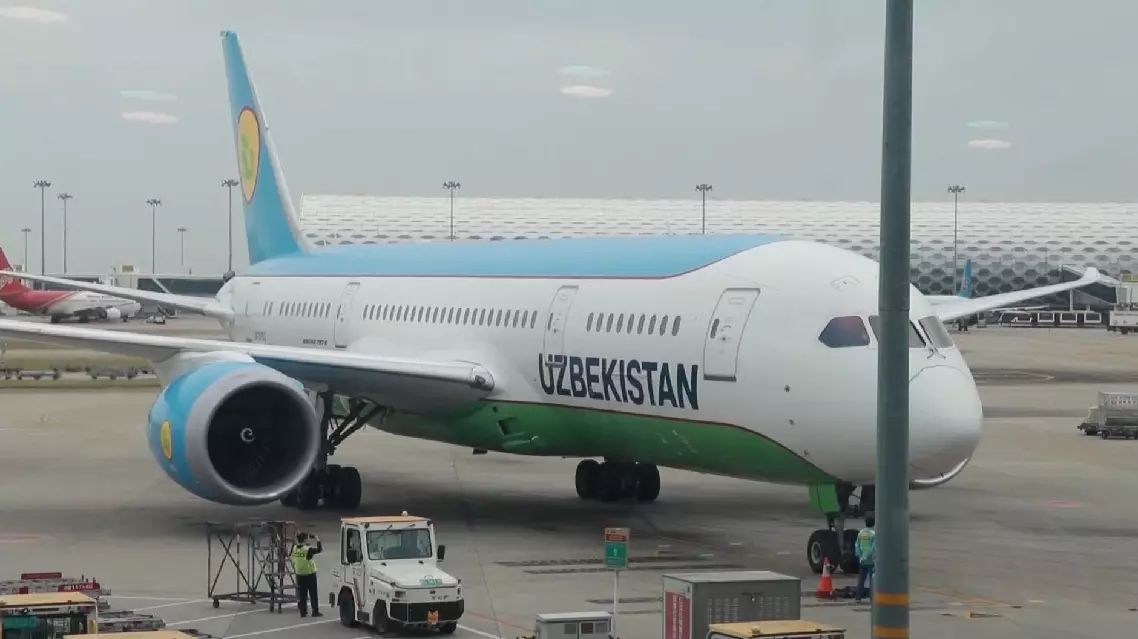
The new routes, operated out of the Uzbek capital Tashkent by Uzbekistan Airways, will see flights running from the eastern sci-tech hub of Hangzhou, the southern metropolis of Shenzhen, and the financial center of Shanghai.
The Shenzhen International Airport on Monday welcomed around 200 passengers who boarded the first direct regular flight from Tashkent, with the majority of travelers happily taking advantage of China's visa-free policy.
"At this time I plan to go to Shenzhen and then to Guangzhou to travel about for 12 days. The free-visa policy is very convenient for us. And this new flight route is very comfortable and convenient," said a tourist arriving on the flight.
A representative from Uzbekistan Airways said the airline is also planning to further expand its presence in more key Chinese destinations.
"It is a great honor for us to open new destinations in China, as we have already opened new destinations before: Urumqi, Hangzhou, Beijing, and now Shenzhen. And in the future, we have destinations such as Guangzhou and Xi'an. So we are glad that every year our destinations multiply and flight frequencies also double," said Kizlarkhon Begmatova, Head of the Press Service of Uzbekistan Airways.
Meanwhile, the airline has also transferred its long-standing Beijing-Tashkent route from the Beijing Capital International Airport to the newer Beijing Daxing International Airport, which provides passengers with access to an extensive domestic transfer network and will allow more scope for the development of Beijing as a key transit hub for routes to Central Asia.
""Currently, at Beijing Daxing International Airport, three airlines operate regular flights on the Beijing–Tashkent route: Uzbekistan Airways, China Southern Airlines, and Uzbekistan's East Wing Aviation. The combined frequency of these three airlines is nearly 13 flights per week. In the future, as exchanges between China and Uzbekistan deepen, I believe airlines will increase flight frequencies according to passenger demand," said Wang Qiang, Deputy Head of the Aviation Business Department of the Beijing Daxing International Airport.
In addition, East Wing Aviation has begun operating regular flights on the Hangzhou-Tashkent route twice a week, while China Eastern Airlines has already opened a direct flight from Shanghai to Tashkent, operating four times a week.
The airline says that while entering the Central Asian market it also hopes to play its part in building up a wider network which can give Uzbek passengers wider access to more destinations across the region.
"The air transportation market in Central Asia has enormous development potential and a significant potential audience. We opened this new route based on market factors. For transit passengers, the new route opens up more possibilities: upon arriving in Shanghai, they can conveniently connect to flights to major cities in China or to destinations in Southeast Asia and Northeast Asia," said Gao Lingyun, Deputy Director of the Marketing Department of China Eastern Airlines.
China has already become Uzbekistan's largest trading partner and a major source of investment, while work on the landmark China-Kyrgyzstan-Uzbekistan railway project is expected to further boost connectivity
China, Uzbekistan open new direct flights in boost for regional connectivity
China and Uzbekistan have opened new direct air routes